
Sports
Kinley Rasmus’ Little League World Series is over, but her legacy will live on

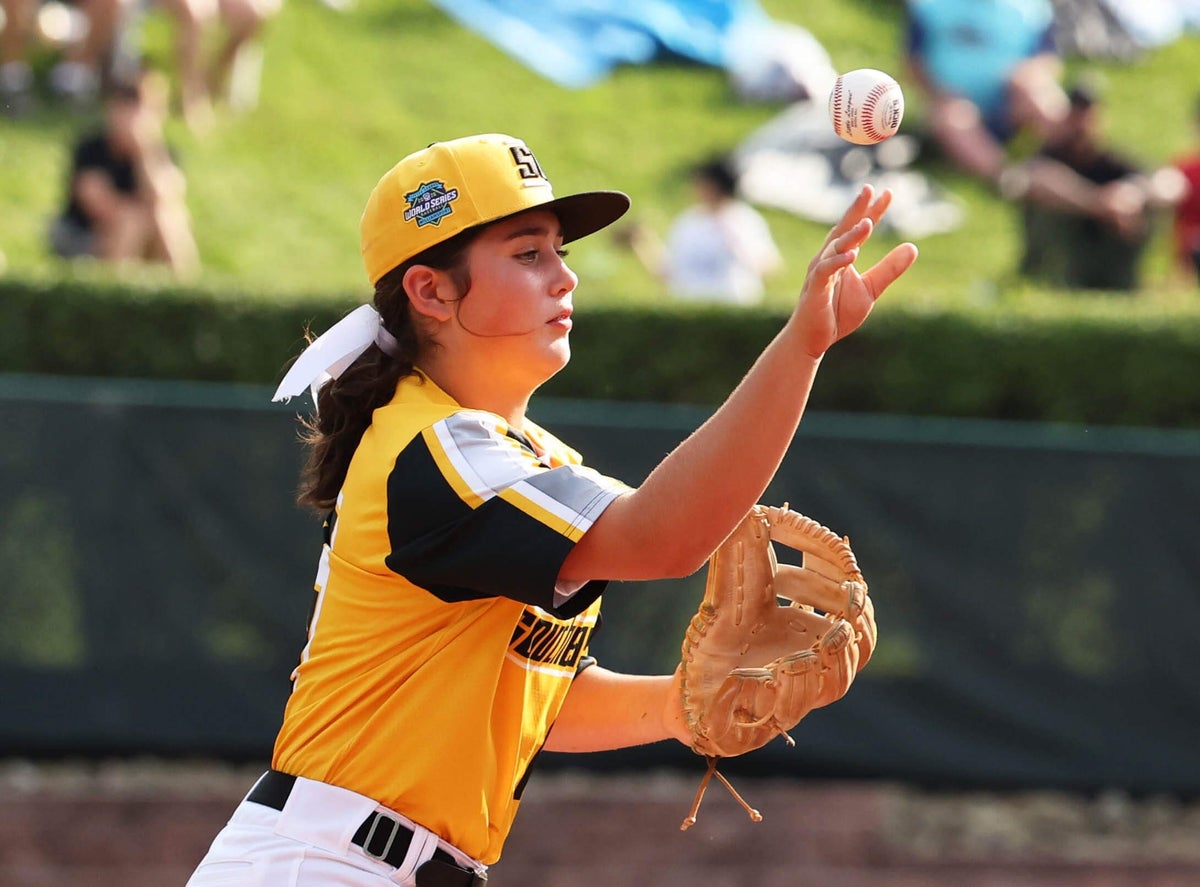
Kinley Rasmus’ portion of the 2026 Little League Baseball World Series story is now written and sealed after her Alabama team was eliminated Wednesday. Her legacy, however, will echo.
Every August, when the LLBWS record books reopen, her name will line them for what she did over the last week in Williamsport.
The 12-year-old two-way star went out fairly quietly, going 0-for-1 at the plate in her Phenix City, Ala. team’s 11-2 loss to Hamilton, Ohio, in the U.S. Elimination Bracket Semifinal. It was her team’s second loss and the end of her run.
But she displayed dominance along the way.
In five games, Rasmus took the mound twice, logging 14 strikeouts. At the plate, she powered her team’s offense, collecting five hits and three RBIs. She tied Mo’ne Davis for the most strikeouts by a girl in a tournament, and set the record for the most hits by a girl.
Just stepping into Williamsport, her name was added to an exclusive group that graced the LLBWS stage. Rasmus became the 25th girl to play in the tournament’s 79-year history and the ninth to pitch in the competition. However, her showing outclassed them all, displaying a shutdown arm commensurate to her pop at the plate.
It runs in her blood. Her father, Cory Rasmus, pitched in MLB, and her uncle, Colby, was a big-league outfielder for 10 years. Her grandfather, Tony, played in the minors but coached Cory and Colby together on the 1999 Phenix City LLBWS team that made the final against the eventual champion from Japan.
Phenix City hadn’t made it to Williamsport in the 27 years since.
Though short-lived, the bar Kinley set on both sides of the ball will live in perpetuity. When the next girl takes the mound at the LLBWS, she’ll be eyeing the strikeout record Rasmus shares with Davis. And when the next girl steps into the batter’s box, she’ll be striving for the mark that Rasmus holds alone.
History now bears the Rasmus name.
There to chase, or simply as a reminder, for years to come.
>

Tottenham Hotspur pursued Savio for 12 months. It took him less than 10 minutes to demonstrate why they paid up to £85million to finally sign him from Manchester City.
The Brazilian was named on the bench for Spurs’ 5-1 victory over Charlton Athletic in the Carabao Cup on Wednesday evening which earned them an away tie against Liverpool in the third round. The first 70 minutes belonged to Mikey Moore, the academy graduate who might leave on loan following Savio’s arrival. Moore opened the scoring with a fantastic left-footed shot from just inside the box and won the free-kick which led to Kevin Danso’s goal with a clever nutmeg on Ivan Mesik.
Unfortunately for the 19-year-old, all anybody was talking about at full-time was Savio’s electric cameo. Having replaced Dominic Solanke in the 71st minute, Savio’s first involvement was to play a crisp one-two with Pedro Porro which led to a good opportunity for Mathys Tel. He then dribbled out of play before being shrugged off the ball in the space of a couple of minutes. It looked like he would need time to adjust to his new team-mates and De Zerbi’s demands. Nobody was prepared for what happened next.
Savio received the ball on the right wing, cut inside and stepped past two defenders before drilling a left-footed shot into the bottom corner. He darted towards the fans in the South Stand and slid on his knees while making a talking gesture with his hands. Maybe it was a dig at the critics claiming Spurs have overpaid for a winger who only scored two goals in 53 Premier League appearances for Man City. It is the third biggest transfer fee in Tottenham’s history following their signings of Mateus Fernandes and Sandro Tonali earlier this summer.
Savio played with even more freedom after scoring for the first time since City’s 3-0 victory over Crystal Palace in May. Savio picked up possession near the touchline and instead of making a simple pass to Fernandes, he tricked Mesik and Rob Apter with a dummy before spinning the ball with the outside of his left foot for the overlapping Pedro Porro.
Savio embarrassed Charlton’s defenders again shortly afterwards. The ball dropped to him in the box and he shaped to shoot with his right foot before flicking it back onto his left. Nathan Assimwe dropped to the floor as his body twisted and contorted in a feeble attempt to keep up with Savio’s dancing feet. The winger’s shot took a deflection off Ben Davies but the crowd did not realise.

Savio’s shot was deflected off Ben Davies for Spurs’ fifth goal (James Fearn/Getty Images)
Savio dropped to the floor in disbelief and then jumped up to lift the corner flag in front of the fans. Porro broke the news to Savio that it was actually Davies’ goal. Savio jokingly waved his hand in protest before hugging Davies.
At full-time, Savio blew a few kisses to the box where his wife, young daughter, brother and mother were sitting alongside Xavi Simons, who is likely to miss the rest of 2026 with an anterior cruciate ligament injury but has a strong bond with Savio from their time together at PSV during the 2022-23 season. Xavi spoke to Savio throughout the summer to convince him Spurs was the right step for his career.
It was the perfect introduction but Spurs have not spent a huge amount of money on Savio so he can tear apart lower league opponents. He will be judged on his ability to perform in the Premier League and, hopefully from next season, in Europe.
“His biggest step and biggest improvement is to increase the number of goals because (with) his qualities he is one of the best wingers,” De Zerbi told reporters after the game. “But the best wingers score many goals. I spoke with him: we put the (target) on 10-12 goals because we need 10-12 goals from the wingers. Last season, I think we suffered too much. Also because the number of goals were not enough to compete for nothing more than that position (17th).”
Richarlison was Tottenham’s top goalscorer last season with 11 and Joao Palhinha, who left at the end of his loan spell from Bayern Munich, was next on five. Mohammed Kudus, Tel, Xavi, Solanke and Brennan Johnson, before he moved to Crystal Palace in January, scored a combined total of 13 league goals. In the most productive season of his career, Savio scored nine goals in 37 appearances for Girona in 2023-24. It will be a challenge to reach double figures this season.

Savio has already made himself popular with Tottenham fans (Richard Heathcote/Getty Images)
There is something slightly bittersweet about Savio stealing the limelight from Moore. The teenager wasted three good opportunities to score in last weekend’s 3-0 defeat to Brentford but he was playing out of position on the right wing. Moore tended to operate on the left or through the middle in the academy, with Rangers and England’s youth teams.
He started on the right against Charlton and grew in confidence after scoring. He kept gliding past defenders and drilling crosses into the box.
Supporters are understandably excited about the amount of money Spurs have spent on new signings this summer but the fear is that the pathway for Moore and Luca Williams-Barnett, who came off the bench in the 77th minute, is being blocked. Moore was close to joining Koln on loan earlier in the window but had to stay because of the lack of forward options. With Savio and Omar Marmoush’s expected arrival, his future now seems unclear.
“It is important for him, it is important for us because he is our player from the academy and we have to understand what the best solution is,” De Zerbi said. “I would like to keep him because he is young but a good player. But we can’t (make) the wrong decision because he needs to play and put games inside of him.”
Savio deserves to soak up the applause but Moore should not be forgotten.
>
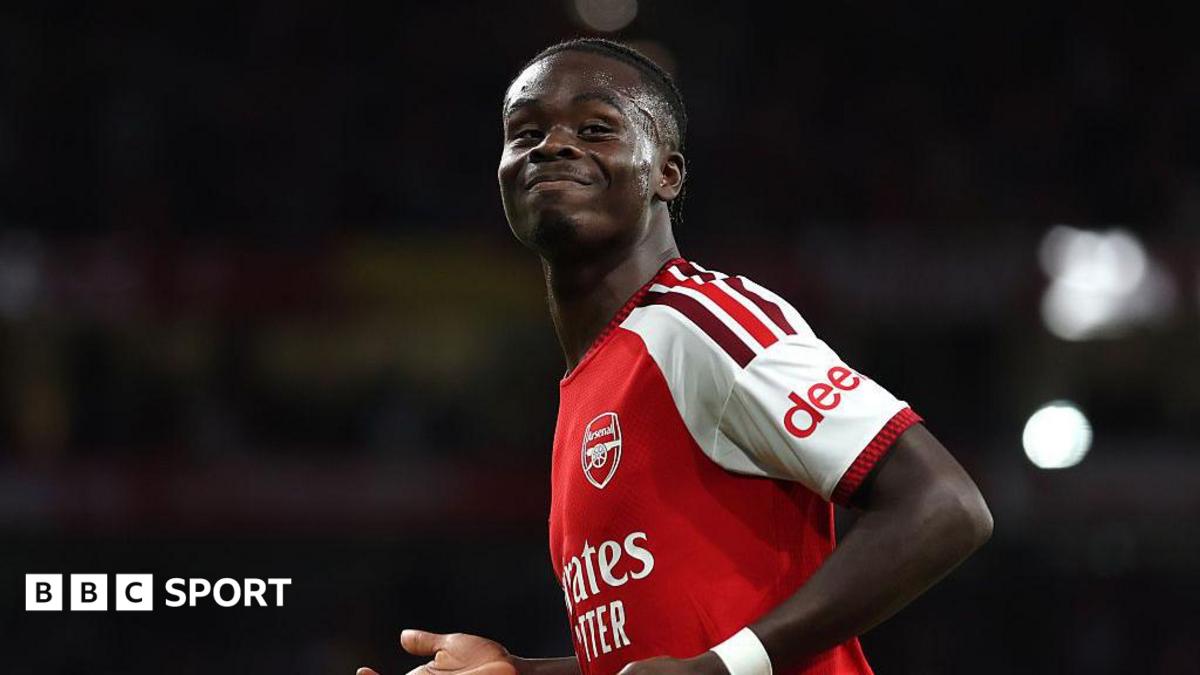
Saka returned from the World Cup and after a break rejoined the Arsenal squad, playing his first minutes of this season in the Community Shield, coming on when the Gunners were already leading Manchester City 3-0.
His acceleration and sharpness during that cameo was something that was lacking towards the end of last season as the winger looked to help his team get over the line.
And after his starring performance against Coventry in the first Premier League game of the season, he hinted that after low minutes at the World Cup and a summer break he felt back to his best.
“I was training a lot so I could be ready for the start of the season and ready to help the team in the way I know I can,” Saka said in the mixed zone after the win.
“It was more about balancing my time off and not having too much of a break. I took seven days off and then started to train again.
“I’ve put in a lot of work since then and I’m feeling good. I just tried to come back in good shape, so I’m on top of my body.”
That motivation seems to have come from the frustration of not achieving England’s goal at the World Cup, with the winger returning to training a few days early.
“The World Cup didn’t necessarily go how I wanted it to, for myself and for the team as well,” he said.
“I felt really hungry after the World Cup, after the season ended. I was looking forward to this new season.”
>

Given the announcement dropped on the day of England’s 3-2 World Cup round-of-16 victory over Mexico, and in the early hours of the morning to boot, you may have been forgiven for missing it.
The news was that Sky had agreed to buy UK broadcaster ITV’s media and entertainment arm, including its free-to-air channels and streaming service, in a deal worth up to £1.6billion (US$2.1 billion).
It’s important to note the transaction has not yet been completed and is subject to regulatory approval, and if it goes through, completion is not expected until the second half of next year — but it would represent a major shakeup in the UK television industry if it does.
In its press release detailing news of the deal, Sky said the partnership would “create a commercial streaming champion for the UK”. But what does it all mean for televised sport? And how could it impact the way football is shown and consumed by audiences in Britain?
The Athletic spoke to numerous industry experts to try to find out.
What’s in this for both Sky and ITV when it comes to sport?
“For Sky, if we focus on the sports perspective, you’re looking at two main positives,” Dan Harraghy, a sports media analyst at Ampere Analysis, tells The Athletic.
“Firstly, being able to move certain bits of content, or certain matches, onto ITV channels can act as a bit of a shop window for Sky coverage.
“Then, with the reach of something like an ITV, being able to move content there attracts more eyeballs and therefore you’re going to generate greater ad revenue, so the advertisers are going to really like that.
“So there is a kind of a monetisable play there, as well as a strategic one. It also creates quite a strong offering when the combined entity goes into rights negotiations, because I think a lot of rights holders do value the combination of revenue with reach.”
For ITV, meanwhile, the major benefit is access to Sky’s greater financial resources.
ITV said it can “already reach around 40million people every week and serves more than 16.5m monthly digital users. Combined with Sky, the business would account for around 20 per cent of all in-home viewing in the UK, second to the BBC and ahead of YouTube”.
In terms of revenue, Paolo Pescatore, a media and technology analyst at PP Foresight, tells The Athletic that Sky generated £10.4billion in revenue in 2024, compared with £2.1bn for ITV’s media and entertainment arm. “That makes Sky roughly five times the revenue scale of the ITV business it is acquiring, even though ITV brings significant incremental mass-audience reach,” Pescatore explains.
Meanwhile, Harraghy says that in terms of financial resources, Sky spends around £2billion annually on sports rights, while Ampere Analysis estimates ITV has paid roughly £200m this year.

Sky Sports’ coverage of the opening Premier League game of the new season last Friday (Michael Regan/Getty Images for Premier League)
“You’re part of an entity that has deeper pockets,” Harraghy says. “Being able to work in conjunction with Sky, when negotiating rights, for example, puts you in a position of strength.”
Tim Westcott, who leads Omdia’s research on TV and video programming and channel distribution, tells The Athletic he wasn’t surprised by the news, as ITV has been the subject of takeover speculation for some time. “But most people probably thought the main interest was in ITV studios, rather than the broadcasting bit, because the broadcasting has really not been growing at all in terms of revenue,” he says.
As part of the deal, Sky will acquire channels ITV1, ITV2, ITV3, ITV4 and ITV Quiz and streaming service ITVX. It will also become an indirect 20 per cent shareholder in ITV when the purchase is finalised. The £1.6billion deal consists of £1.2bn in cash, Sky-owned Love Productions (maker of shows including The Great British Bake-Off, valued at £200m) and up to £200m in performance-related earn-outs.
Asked about the thinking behind the deal, Westcott says Sky was eager to develop its advertising sales, but generally has relatively small audiences compared with ITV.
“I think really the logic of the deal is for Sky to bring the content it owns to a wider audience and monetise it through advertising, as well as its subscription model,” he said. “And from ITV’s point of view, there’s a lot of attractive content that they could take that Sky already has the rights to and exploit it on free-to-air.”
David Murray, a commercial sport and negotiation consultant, says Sky, which is owned by U.S. media company Comcast, is “not the beast it used to be”, while the traditional TV advertising business is struggling because viewing habits were shifting to digital and online.
“So, in those circumstances, it makes sense, because you can combine resources and save costs,” he tells The Athletic. “In theory, it makes the company more efficient, and it reduces competition in the marketplace as well.”
So what could this look like in reality?
Announcing the news last month, Sky said in its press release that “the combined business will deliver more sport free-to-air on ITV services than ever before”.
“There is a possibility of more matches on free-to-air,” Westcott says. “If Sky can carve out some of its rights from pay TV and put them on free TV, without undermining the consumer who’s paying a subscription for Sky Sports or Now TV, but bring the bigger audience that there would be to events, whether it’s the EFL or Premier League, that’s what they would aim to do.
“The Premier League and the clubs wouldn’t want to undermine the fact they have very successfully marketed the Premier League as a pay product by putting too much of it on free TV. At the same time, common sense would say that giving the clubs more exposure and bringing in less dedicated fans, you would think the Premier League would see that as a positive.”
Harraghy says there was an opportunity for Sky to show both live and highlights-package content on ITV’s free-to-air service. Under its public broadcasting licence, the latter must remain free-to-air until 2034.

Former England striker Ian Wright and USWNT head coach Emma Hayes on pundit duty for ITV (John Walton/PA Images via Getty Images)
“There is an opportunity for Premier League matches to move in front of the paywall,” he says. “Strategically for Sky, the consideration is how many games could you put there for it to be worth doing — both as a shop window for Sky’s coverage and to generate additional advertising income — without compromising subscription revenue.
“So, if you put half of the matches free to air, for example, suddenly people are just going to unsubscribe because they’ve got their sports content free to air. There’s a middle ground in there somewhere for them to consider.
“There’s an opportunity to also put highlights programming there as well. It could be an additional competitor to something like (the BBC’s) Match of the Day, being able to put digital highlights and clips on ITVX as well.”
Mike Darcey, formerly of Sky and now the author of the Tellynomics blog, says it could lead to a few Premier League matches on free TV in the future, but tells The Athletic that consumers would likely see a “taster, not a flood, and expect a lot of promotion of Sky Sports”.
So what sports could we see on which channels?
In terms of its sport offering, ITV currently holds the rights to several ‘crown jewel’ events, including the FIFA World Cup, UEFA European Championship, rugby union’s World Cup final and horse racing’s Grand National. Under rules established by the UK government in 1996, these are among the major sporting occasions that must be made available on free-to-air television in Britain.
ITV also holds rights to several other major events not on that list, including rugby union’s Six Nations and World Cup (excluding the latter’s final), the FA Cup (excluding the final) and English Football League.

FIFA World Cup coverage is part of ITV’s offering (Martín Fonseca/Eurasia Sport Images/Getty Images)
This summer, the BBC reported that the government was considering new laws to ensure UK viewers could continue to access streaming and catch-up coverage of these ‘crown jewel’ events for free.
However, as the second-biggest beneficiary of listed events, Murray said there was a risk that being owned by Sky turns ITV into a ‘Trojan Horse’.
“It could push and test the limits of listed events with the ultimate goal of undermining them,” he says. “It also makes an ITV-only bid for the World Cup or Euros more likely, with some content ending up on Sky. For the BBC, the risk of losing those ‘crown jewels’, potentially as well as Match of the Day, makes them a clear loser of such a deal. So there’s some interesting strategic elements there about what happens to those big listed events moving forward.”
Darcey agrees there could be cause for concern about a campaign to relax some of the ‘crown jewel’ rules. “I’m not sure that every single game in a 64-team FIFA World Cup will remain listed, so Curacao vs Iceland might not always be free,” he suggested.
However, any potential change would depend on how the regulations currently in place are interpreted and enforced.
A further scenario that could play out is Sky choosing to put certain events currently broadcast on ITV, such as a major Rugby World Cup clash or a game in that sport’s annual Six Nations tournament, behind its paywall.
Harraghy says a potential worry for consumers is that, among the major sports broadcasters in the UK, a Sky/ITV deal could impact subscription service TNT Sports, potentially weakening competition in the market.
“If Sky suddenly becomes a bit of a standalone entity in the UK market, then that’s never a good sign for fans in terms of price points,” he says. “There’s less incentive for them to compete with anyone to drop prices.”
Is this about battling digital streaming platforms?
Sky explained in its press release how the UK media market is “undergoing a profound and rapid transformation, and as competition for audiences intensifies, scale matters more than ever in order to compete with global streaming giants and YouTube in the UK”.
So is the real story here less about traditional television and more about the battle with the new players in town — such as Amazon Prime, Disney+, Netflix and Apple TV?
“The threat to Sky is from your big digital global platforms that can outbid them if they so choose,” Murray says. “Sport is unique and brings people in year on year, so it potentially becomes a differentiator.”

Champions League coverage on Amazon Prime last season (Julian Finney – UEFA/UEFA via Getty Images)
For Westcott, one of the major disruptors is YouTube.
“YouTube has really got heavily involved in sports, and it does have a huge footprint in terms of the amount of time per day that people spend watching it,” he says. “So I do think that Sky looking to buy a broadcaster is certainly part of that concern about what the future of its business is. Sky has to do something to respond to these global players.”
Harraghy says that, in the UK, we haven’t yet had streamers acquiring sports rights to the same extent as in other markets.
“But we’re starting to see it a little bit more, with Paramount taking the Champions League rights in the UK (from 2027 to 2031), for example,” he says. “That’s the direction of travel in the market. So a combined Sky and ITV entity creates quite a strong proposition in a time when we’re seeing increased competition for eyeballs more broadly across streaming.”
Darcey describes the looming deal as a strong response to the global digital streamers. “In that battle, I think that serious domestic focus and scale, combining strength in subscription and advertising, with a strong spine in sport, is a serious player on the field,” he says.
Francois Godard, a media analyst, agrees. “Without the rise of streamers, this wouldn’t happen,” he tells The Athletic. “Clearly, there must be a response to the streaming channels, and part of this challenge is you run with more than one leg.”
For now, all eyes will turn to the UK’s competition regulator to scrutinise the Sky/ITV deal, which could significantly reshape the British media landscape.
>

Savio and an electric cameo that thrilled Tottenham

Is Bukayo Saka getting back to his best at Arsenal?

What could Sky’s buyout of ITV mean for football-watching in the UK?
-

 movies3 months ago
Search For Canadian TV Actor Stewart McLean Now Homicide Investigation
-

 Fashion9 years ago
These ’90s fashion trends are making a comeback in 2017
-
Fashion9 years ago
According to Dior Couture, this taboo fashion accessory is back
-
Fashion9 years ago
Model Jocelyn Chew’s Instagram is the best vacation you’ve ever had
-
Fashion9 years ago
Emily Ratajkowski channels back-to-school style
-
Fashion9 years ago
9 Celebrities who have spoken out about being photoshopped
-
Fashion9 years ago
Your comprehensive guide to this fall’s biggest trends
-

 Anime3 months ago
Rurouni Kenshin: Hokkaido Arc Manga Takes 1-Issue Break – News