
Macon Blair as Dwight in Jeremy Saulnier’s Blue Ruin
Courtesy of Radius TWC


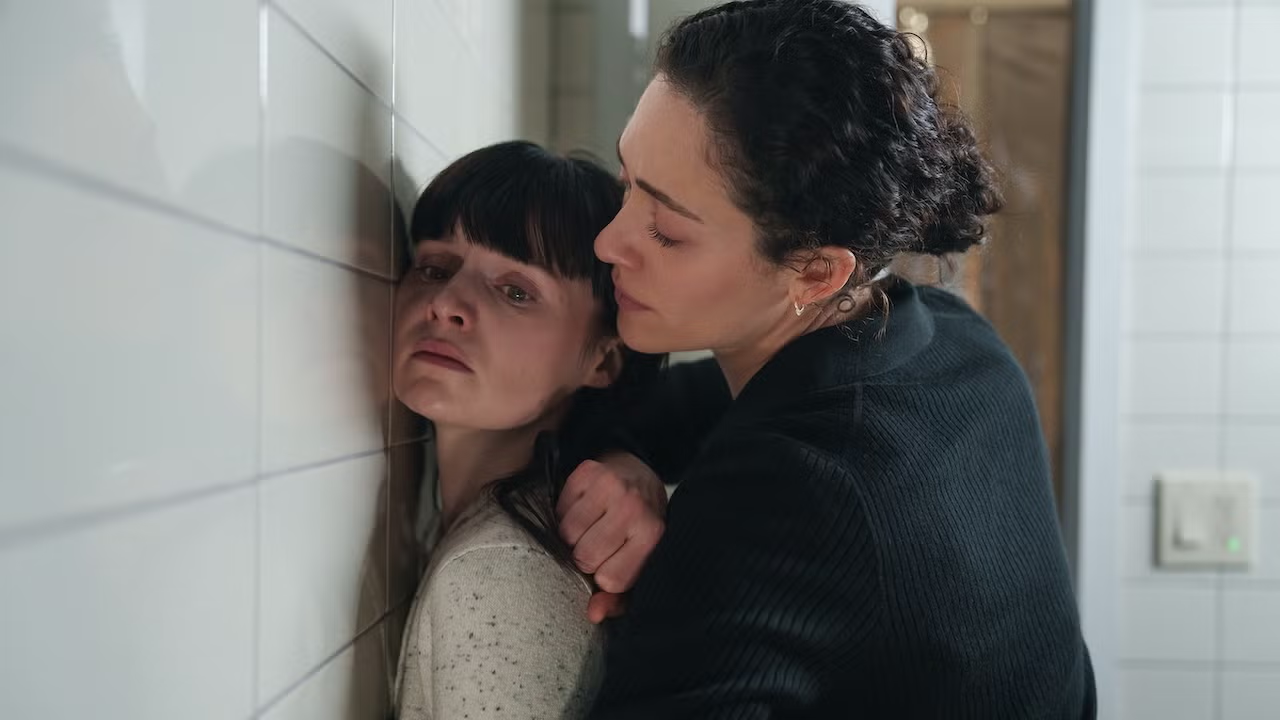
Liz Meriwether’s “Furious” will continue on for a second installment at Hulu.
The crime drama starring Emmy Rossum and Lola Petticrew scored a Season 2 renewal from Hulu, the streamer announced Thursday. The news comes ahead of the debut of the “Furious” Season 1 finale, which drops Sunday.
Since its three-episode premiere on July 27, “Furious” has seen week-over-week viewership growth, with views for the penultimate Episode 7 up 40% from the premiere, based on one-day viewing.
Hailing from Meriwether, “Furious” follows an FBI agent, Alice Black (Rossum) on the hunt for a mysterious and calculating female serial killer (Petticrew). Both walk their own paths toward justice, and as their lives start to intertwine, the line between right and wrong begins to blur, per the official logline.
In addition to Rossum and Petticrew, “Furious” also stars Quincy Tyler Bernstine, Scoot McNairy, Jake Lacy, Rob Delaney, Hope Davis, Rob Yang and Steve Way.
Meriwether created, wrote and executive produced “Furious,” which is produced by 20th Television and Searchlight Television.
Rossum served as an executive producer for “Furious” via Composition 8 alongside Ronald Bass, Matt Olmstead and Sam Hoffman. Brian Kirk also executive produced and directed the first two episodes.
Meriwether shared her hopes for a multiple seasons of “Furious” with TheWrap, saying “It was like, ‘OK, yeah, I have to find an ending where we feel satisfied, but that we can go on.’ “I remember that being a very challenging thing with ‘New Girl,’ getting to the end of the season and being like, ‘We have to wrap up some things, but not all things. We need to create more problems.’”

>
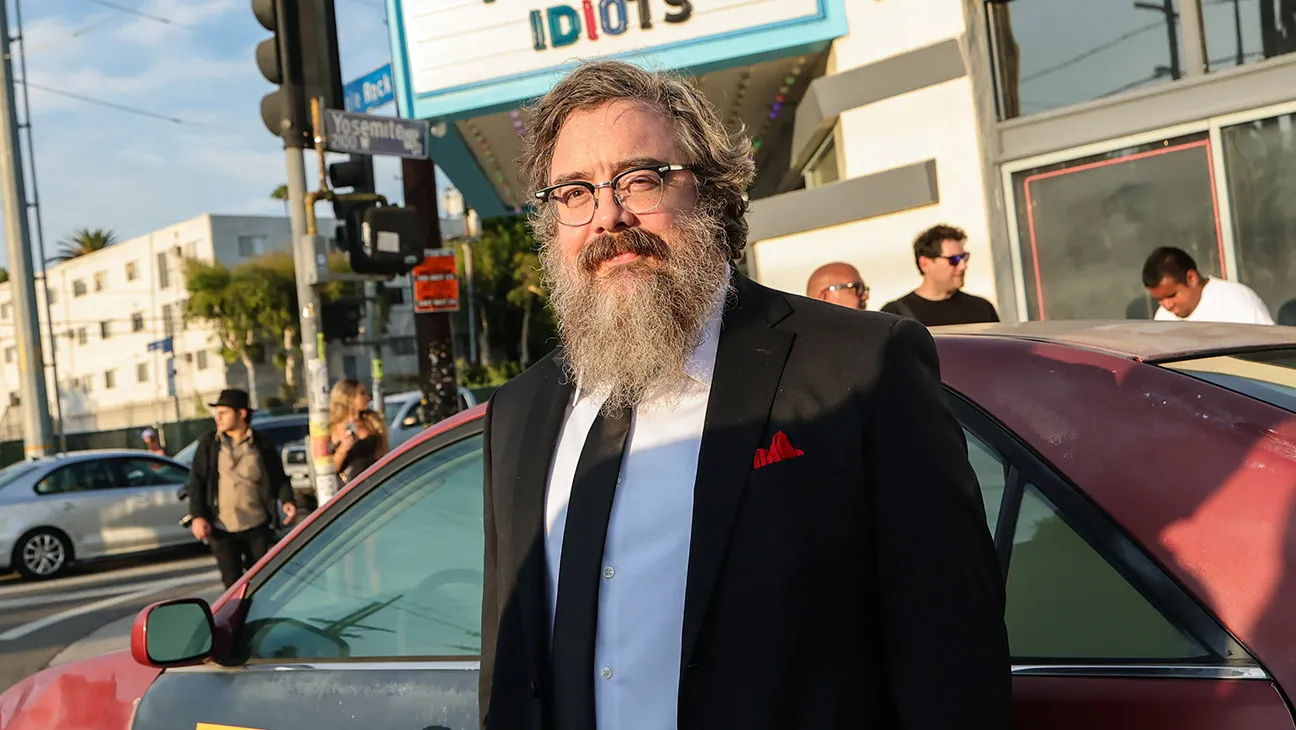
Idiots writer-director Macon Blair has the patience of a saint.
A year ago, just as he was wrapping up The Toxic Avenger’s six-year journey to the big screen, Blair was also preparing to film Idiots — a throwback road comedy that is now completing its own 13-year odyssey to movie theaters.
The story begins back in 2013, a life-changing year for the filmmaker and actor. His starring role in Jeremy Saulnier’s self- and crowd-funded revenge thriller, Blue Ruin, brought the house down at Cannes. Prior to his breakout role at the prestigious festival, Blair had already begun writing what was then known as The Shitheads, having been inspired by Blue Ruin co-producer Alex Orr’s anecdote about highly unqualified transporters that deliver troubled teenagers to treatment centers.
From there, Blair conceived Mark Southard and Davis Hench, two wildly different, aging slackers who are tasked with driving teenage scion Sheridan Kimberly to rehab on behalf of his disengaged billionaire parents. It doesn’t take long for Sheridan to throw his ill-equipped handlers completely off course — and establish himself as one of the most irredeemable characters of the past decade-plus. Originally, Blair and Orr imagined the latter directing Blair as the character of Mark, but their respective roles would shift as time passed.
Blair attempted to set the picture up in the years that followed Blue Ruin’s critically acclaimed release in 2014, but his feature directorial debut instead became I Don’t Feel at Home in This World Anymore, another Virginia-set story about a mismatched pair of disillusioned characters. The dark comedy, starring Melanie Lynskey and Elijah Wood, ultimately won the U.S. Dramatic Grand Jury Prize at 2017’s Sundance Film Festival.
Thanks to his newfound Sundance cachet, Blair finally got the ball rolling on The Shitheads, with Luke Wilson attached as Mark and Tracy Morgan as Davis. That iteration eventually led to Ron Funches taking over for Morgan, but then financing fell through, shelving the project indefinitely as of 2018.
Enter Blue Ruin superfan Dave Franco. Upon seeing Saulnier’s $425,000 master work, he reached out to the writer-director to gush about how much he loved the Blair-led film. He would repeat the process once he saw Blair’s I Don’t Feel at Home in This World Anymore in 2017. Blair responded by sending him the script for The Shitheads, but they both agreed that Franco was too young for the then-40-something part of Mark.
Fast forward to 2024, an older Franco called up Blair to check in on the dormant project now that he was the right age to play the underachieving bullshit artist. He even offered his services as a producer, and Blair subsequently agreed to take the project back out en route to securing independent financing. Franco would also recommend the castings of O’Shea Jackson Jr. as Davis and Mason Thames as Sheridan, per his previous go-rounds with each actor.
Cameras finally rolled in the fall of 2025, launching an accelerated process to ready the film for Blair’s return to Sundance in 2026. The Shitheads at long last premiered in late January at the Park City fest, paving the way for a deal with IFC the following month. The distribution deal wasn’t contingent on changing the title from The Shitheads to Idiots, but once the practicalities of promotion became clear, Blair, Franco, and Orr decided they would be better off with something in a similar vein. The new title of Idiots also serves as the film’s second homage to the filmography of Lars von Trier.
Now that he’s been put through the wringer on his two most recent films, Blair has arrived at a necessary takeaway.
“Like [Toxic Avenger], it was very discouraging when [Idiots] got shelved around 2017 or 2018. But I’m glad that this is the version that got made,” Blair tells The Hollywood Reporter in support of Idiots’ August 28 theatrical release. “I couldn’t see it this way when it happened, but the delay ended up being the right thing for the movie. I need to internalize this lesson now that it’s happened twice.”
When THR caught up with Blair for The Toxic Avenger last year, he relayed the unfortunate update that Saulnier’s upcoming A24 thriller, October, would be the second Saulnier film in a row he would have to miss out on due to scheduling overlap. Blair couldn’t appear in his childhood best friend and producing partner’s well-regarded Rebel Ridge (2024), because he was filming Christopher Nolan’s Oppenheimer at the same time.
Now, however, Blair has some good news and bad news concerning Saulnier’s October, which, like Idiots, falls under their Bonneville Pictures banner.
“Listen, I didn’t lie to you [in August 2025]. At the time, I was not in October, but [now I am]. Just a little tiny bit,” Blair shares. “I saw a cut in progress, and it is something else. It is absolutely something else. They’re still working on it, so it won’t be released this October. I would think it’d be released sooner than [October 2027], though. But I 100 percent don’t know.”
Below, during a conversation with THR, Blair also discusses the spiritual and thematic connection between Idiots and I Don’t Feel at Home in This World Anymore.
***
When we spoke a year ago for The Toxic Avenger’s Aug. 29 release, you were prepping to shoot The Shitheads, aka Idiots, at the time. It’s now going to be released on Aug. 28 — less than a year from when you wrapped filming. Toxic Avenger sat on a shelf for four years after you wrapped filming, so it must be relieving to have a much quicker production turnaround on this one.
Absolutely. The last time we spoke, things were really crazy. I was prepping what at the time was Shitheads and later became Idiots. I went from shooting and post-production right into festival prep and then release prep. So it’s been a sprint for about a full year between then and now, which I love. It feels good to have momentum after waiting so long to figure out what was going to happen with Toxie. It was hard to know this at the time, but that four-year delay ended up being the best thing for it, honestly. Cineverse signed on to distribute it, and in hindsight, I’m grateful for that period of time.
That being said, you’ve been developing Idiots off and on since at least 2017. Can you outline the saga that you went through until you were finally on set last fall?
Well, I wrote it in 2013, and it took a while to get it going. I tried to get it made before I shot my first movie — I Don’t Feel at Home in This World Anymore — in 2016, but I really was not known by anybody at that point, not that I was after my first movie came out in 2017. So we had a tough time, but we came close to getting a version of it made in 2017. It didn’t come off, though. It was a money thing.
It’s not like we kept chasing it ever since then. We put it away for several years, and it just didn’t feel fresh anymore. Everybody then went off and did their own thing. Eventually, it felt like we could take it around to a new bunch of people and try again. That’s what happened [in 2024-25], and the cooling-off period became a necessary part of that.
You started writing the same year as Blue Ruin’s momentous Cannes premiere. Which came first?
I had started writing it while Jeremy [Saulnier] was still in post-production on Blue Ruin. Alex Orr — who was a co-producer and first AD on Blue Ruin — and I got to talking about some other scripts I had written. So we wanted to find something to work on together, and Alex pitched the idea for Idiots [based on an anecdote he heard about highly unqualified drivers transporting teens to rehab]. He then paid me $7,000 to write it, and I felt like I’d hit the lottery.
Macon Blair as Dwight in Jeremy Saulnier’s Blue Ruin
Courtesy of Radius TWC
You mentioned that nobody knowing who you were impeded efforts to get Idiots made in the early days. Your performance as Dwight in Blue Ruin didn’t give you a boost?
Nobody knew me as a director — and even then they barely knew me as an actor. Initially, we were thinking that Alex would direct it — because he had a previous directing credit on Blood Car — and I would play Mark. But then, in the interim, I was able to get I Dont Feel At Home In This World Anymore made first. And because that did well, it sort of shifted the plan. I took the directing role, and Alex produced.
I Don’t Feel at Home’s Sundance win in 2017 catalyzed that momentum until it all fell apart?
Yes, pretty much. I went to Sundance 2017 with the Shitheads script, intending for it to be movie number two. We received a little bit of interest from some places and were able to make an initial deal. But as we got into pre-production, there were issues with the money, and it just went away. It was a bummer at the time, but once again, in hindsight, I’m grateful it happened.
Actors like Luke Wilson, Tracy Morgan and Ron Funches came and went. You actually credit them as “the originals” in the closing credits, something I’ve never seen done before. Tarantino has credited people he cut out, but I’ve never seen it done for actors who were recast. So that’s a classy tribute.
Those dudes are all awesome, and they were part of the process. They were part of the process just as much as the folks that I developed the shots and locations with back in the day. In one way or another, it all influences, downstream, the thing that actually gets made, and I’m grateful to them for that. So it was important to me that they get mentioned in the credits.
The multiverse version of this movie that exists with them is also very cool, but because the financing changed and the ages changed, this new version is just what makes the most sense in my head. It’s the version I wanted it to be. But I remain fond of those dudes. In the midst of it, I got to work on a TV show [Room 104] with Luke, and I would love to work with him again. So it was not a creative thing; it was always a financial thing.
O’Shea Jackson Jr., Dave Franco and Mason Thomas in Macon Blair’s Idiots
Courtesy of IFC Entertainment
How much did you rewrite the script to account for Dave Franco and O’Shea Jackson Jr. as younger leads?
The script only changed a little bit. It was nothing super substantial. The main characters becoming younger just makes better sense based on the way they conduct their lives. So I only changed little things.
Like Toxie, it was very discouraging when the movie got shelved around 2017 or 2018. But having had the time to reorganize the script in my head and grow a little bit, I’m glad that this is the version that got made. I couldn’t see it this way when it happened, but the delay ended up being the right thing for the movie. I need to internalize this lesson now that it’s happened twice.
I asked you previously if you’d ever consider a follow-up to I Don’t Feel at Home In This World Anymore, and Idiots actually feels like a spiritual follow-up to it. That makes sense since Idiots was originally supposed to precede I Don’t Feel at Home. But do you consider these films thematically connected given that they both have odd couples getting crushed by the universe and their own choices within it?
Yeah, for sure. Toxie is in its own ultra-heightened, berserk, Troma-verse world, but these other two exist in this weird fictional pocket of Virginia where I set a lot of the stories that I write. So I do think they’re connected. I don’t know that it’ll ever happen. In fact, I’m sure it probably won’t, but it occurred to me that it would be fun to do a crossover movie where Melanie Lynskey and Elijah Wood’s characters cross paths with Dave and O’Shea’s characters to solve some sort of caper together. That might be fun.
Macon Blair on the set of Idiots
Courtesy of IFC Entertainment
To me, both movies make the point that while shit rains on all of us — quite literally in Idiots’ case — you bear some responsibility before, during and after. Don’t just blame the universe or god, and then use it to justify an equally poor reaction to the problem.
As you said it out loud right now, I’m realizing that they really do have that in common. Melanie’s character, Ruth, in I Don’t Feel at Home and O’Shea’s character, Davis, in Idiots, don’t really like themselves very much. They have to figure out how to take control of their own circumstances, and part of that involves them figuring out how to come to peace with themselves. That is a common thing. Davis is more of a religious person, so his arc is framed in that context. But Ruth’s case has more to do with depression. So it’s the same idea of, What can I do to figure out how I fit into the world? That’s what they’re doing in both movies, and hopefully things work out on the other side for them.
We touched on it earlier, but Idiots premiered at Sundance under the title of The Shitheads. Did you resist the eventual change to Idiots? Or did you always assume you wouldn’t be able to get away with Shitheads?
Well, I assumed we would change it, but we were never forced to do anything. It was a choice Dave, Alex and I made on our own, and I’ve got to give a lot of credit to IFC. They were straight up, like, “If you want to stick with that title, we will back you up.” And they meant that. But I did think we would have to change it, and that bore out when we looked at the information about what would happen on the promotion side of things.
It’s fine at a festival screening, but when we got into the realities of printing posters for theaters and running ads on various platforms, it started to feel like it was going to be a real uphill battle for us. The original title is still amusing to me — and I still think of it in my head as The Shitheads — but it was going to make promotion a lot harder in the long run. It would’ve been a hassle.
The producers and I then got together and were like, “We’re a small movie. We’re coming out in the crowded summertime. We need every promotional advantage we can get.” We decided to switch it up to something that would still encapsulate the tone of the movie. We then spent a weekend brainstorming other titles, and Idiots was the one that won. We also didn’t have to change anything in the actual movie.
So it would’ve been great if we got to keep the original title, but if the trade-off is promoting the movie more broadly without changing the movie itself, that’s fine. I feel super lucky the movie ended up [at IFC following Sundance], and the zig-zags along the way are part of that.
Mason’s character refers to Dave and O’Shea’s characters as “shitheads” in the middle of the film, so I’m glad there’s still a remnant of the original title in that way. I figured the execs would make the case that you should ADR that “shitheads” line to match the new title, but it doesn’t sound like that happened.
Yeah, the “shitheads” line is still there. It was supposed to be a moment of, Oh, they said the title, but now it’s just a line. We did ADR that line to say “idiots” in the original trailers. If you look at the first batch of trailers, Mason’s character does say, “So what now, idiots?” But that was more to get the awareness of the title out there. I wanted to keep the line as it was originally performed in the movie.
Dave Franco, O’Shea Jackson Jr. and Mason Thomas in Idiots
Courtesy of IFC Entertainment
I genuinely believe Mason’s privileged influencer character is one of the most reprehensible characters put to screen in recent memory. To borrow from the movie’s Lars von Trier reference, he’s this story’s antichrist.
Yeah, he’s a monster. Just terrible.
Can one surmise that you don’t think too highly of influencer culture?
I don’t engage with it, so I really wasn’t thinking about it. I was thinking more about how wealthy people can buy their way out of consequences. As the script went on, I added the internet aspect as a detective-story piece, meaning Sheridan gets loose. We’re not going to dust for fingerprints or footprints, and they had to be able to track him down somehow. So we engineered his online persona as a way for them to figure out where to find him. But any influencer commentary was secondary and not what I was thinking. It certainly wasn’t what I was thinking about while writing the original script back in 2013.
It’s really just the evergreen fact that people who have so much money and class status are not held accountable for their reprehensible actions. It was important to me that Mason’s character not be a rascal with bad manners and just needs a little bit of tough love. He’s more like Hannibal Lecter, and he needs to be captured before more people get hurt. So that was the take on the character.
I certainly picked up on the two-tiered justice system, but I also thought Nicholas Braun’s character was meant to illustrate the other side of the influencer coin. You have an actual influencer like Sheridan, and then you have this SoundCloud rapper who desperately wants to be like Sheridan. And yet he performs on his various platforms for an audience of no one.
Not to sound like I’m dodging your point, but if we had made this movie ten years ago, Nick Braun would’ve aspired to be Sheridan in another way. It’d be his pictures on Friendster or some shit. But the point was just that Nick’s character is emulating Sheridan’s poisonous corrupted values, and the internet is a vehicle for that relationship. It’s more about, What are we holding up as aspirational values for people to admire?
You thanked Lars von Trier in the credits. I’m assuming he didn’t show up for a friends and family screening?
(Laughs.) No, it was just because we had the Antichrist poster in there. That story point [where Davis gets fired for taking his church’s youth group to an Antichrist screening] was loosely based on something that happened when I was a kid. At the church that my parents went to, we had all heard about this kerfuffle involving the youth group being taken to the opening weekend of Fatal Attraction. A bunch of kids were taken to see it, and the hubbub surrounding it has always stuck in my brain. So we had to make it a little bit more extreme in this movie.
There’s a lot of Blairs involved in this film, not just your composer brothers, Brooke and Will. Your kids mess around in the motel parking lot at a certain point, too. Do you view your films as family photo albums in a way?
Absolutely. In fact, when the characters are at Kieran Shipka’s character’s grandmother’s house, all those photographs on the wall are photographs of my family, as well as the crew’s families. We got family photos of everybody so that they could exist as set dec. So the movie literally does work as a photo album for a lot of us who worked on the movie. Of course, you want the movie to function as a movie first, but I’ve always liked building in those added layers of meaning. I like noticing that stuff in other movies too.
When your kids grow up, it’ll be cool for them to share these Blair family artifacts with their kids.
Yeah, my older kid is starting to think that he wants to work in movies, so it’s fun to talk to him about how we did certain shots. He’s starting to ask those questions, and while I don’t know if that’s going to last, it’s fun to have that in common right now.
As far as Bonneville Pictures’ upcoming slate, you previously told me that you won’t be in Jeremy Saulnier’s October. Have you seen a few cuts at this point?
Listen, I didn’t lie to you. At the time, I was not in October, but …
He snuck you in!?
Just a little tiny bit. I saw a cut in progress, and it is something else. It is absolutely something else.
With Rebel Ridge, Jeremy challenged himself to not have a high “gore score” for a change. Has he re-embraced his trademark bloodlust?
I have to politely decline any sort of specificities at this point because it is still a work in progress.
Assuming A24 wants the release month to coincide with the title, it looks like October is not coming out this October. And I’m already dreading the thought that they’ll hold it for October 2027. I assume you can’t say one way or the other?
I honestly don’t know, but you’re correct [about October 2026]. They’re still working on it, so it won’t be released this October. I would think it’d be released sooner than [October 2027], though. But I 100 percent don’t know. I’m not in those conversations.
O’Shea Jackson Jr. and Dave Franco in Idiots
Courtesy of IFC Entertainment
Lastly, what day on the set of Idiots made the entire 13-year odyssey worth the wait?
God, it sounds corny, but the very first day. We actually snuck in a little bit of filming during pre-production, and we did a handful of driving scenes with the three guys. There had been so many ups and downs getting to that point, and finally seeing it come to life was really special.
As far as what was the most fun, the hotel stretch was so great. It was a working hotel, and we had our production office there. We also had sets that were built there. A lot of the crew from the hotel are in the movie, and they were just dynamite.
When we were shooting the scene where all the half-naked grocery store managers run out of the hotel in a big stampede, it was just chaos. It was so hilarious to watch from my perspective. All these hotel guests and hotel crew were standing off to the side behind the camera, and they were just like, “What are they doing?” It was delightful.
***
Idiots opens Aug. 28 in movie theaters nationwide.
>
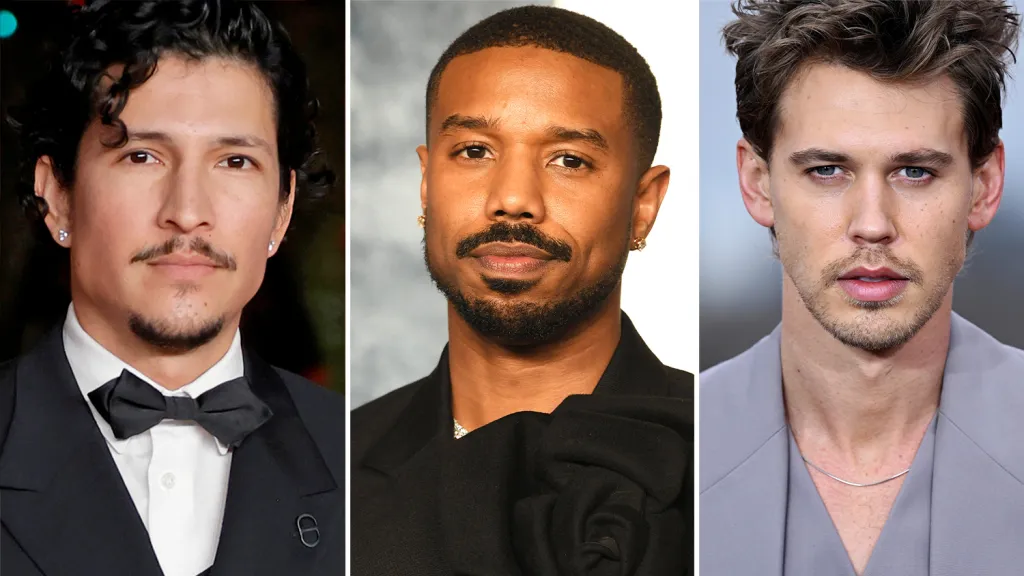
EXCLUSIVE: Danny Ramirez is the latest to join the cast of Universal Pictures and Joseph Kosinski’s Miami Vice ’85 movie starring Michael B. Jordan and Austin Butler. Kosinski will direct the latest feature adaptation of the classic ’80s crime series, which has a script by Dan Gilroy. Alden Ehrenreich, Camila Morrone and Whitney Peak recently joined the cast.
Miami Vice ’85 explores the glamour and corruption of mid-1980s Miami in an all-new version of Miami Vice, inspired by the pilot episode of the landmark Universal Television series that influenced culture and set the style of everything from fashion to filmmaking. The movie will be filmed for Imax and is set for release on May 19, 2028. Production will begin this year. It us unknown who Ramirez is playing in the pic.
The film is produced by Dylan Clark/Dylan Clark Productions and Kosinski. Gilroy’s script is based on characters created by Anthony Yerkovich from the series he executive produced with Michael Mann; Eric Warren Singer wrote an earlier draft of the screenplay. EVP Production Development Sara Scott and Creative Executive of Production Development Christina Hoffrogge will oversee the project for the studio.
Ramirez recently wrapped production on Todd’s Haynes’ De Noche opposite Pedro Pascal as well as Baton, which he also directed and penned. He can be seen next in Marvel’s Avengers: Doomsday.
He is repped by CAA, Anonymous Content, Brillstein Partners and Hansen, Jacobson, Teller, Hoberman, Newman, Warren, Richman, Rush, Kaller & Gellman.
>

Look out USC, UCLA and NYU, because Emerson is having a Hollywood moment.
The school counts Henry Winkler, Jay Leno, Jennifer Coolidge, Denis Leary and Norman Lear among its alumni, along with “Everything Everywhere All at Once” Oscar winners Daniel Kwan and Daniel Scheinert.
Emerson Los Angeles, the Boston school’s satellite campus located on Sunset and Gower in the heart of Hollywood, recently broke out new signage that overlooks the Hollywood sign, a visible marker of its growing footprint in the town.
The milestone lands alongside two leadership moves. Veteran cable exec Doug Herzog, an Emerson alum from the class of 1981, was named chair of the school’s Board of Trustees. And longtime media scholar and educator Ken Rogers, class of 1991, was named the inaugural dean of Emerson Los Angeles.
Emerson College President Jay M. Bernhardt and Rogers spoke with Office With a View about the appointments, how the bi-coastal film school is adapting its curriculum to AI and industry contraction, and what industry jobs students are actually chasing now that didn’t exist five years ago.
How does Doug Herzog becoming chair of your board, and alumni like Pam Abdy, affect the organization?
Bernhardt: Emerson has been an incredibly accomplished media and film school for many decades, and given our size and our history, we absolutely punch above our weight class in terms of our impact in Hollywood. That’s reflected in the alumni who have come out of Emerson, but right now it’s very reflected in two incredible leaders who are Emerson grads. Doug Herzog is our brand new chair of our Board of Trustees, so my boss and the person at the top of the letterhead. Doug is what I sometimes call the king of basic cable. He has had a legendary career greenlighting some of the biggest shows and stars ever on television, in both comedy and music, as the head of MTV and Comedy Central. We’re incredibly lucky to have Doug and the other trustees we have from Hollywood and beyond, who have brilliant experience and ideas. What they share in common is a deep love of Emerson and all that Emerson stands for. I think Pam Abdy (co-chair of Warner Bros. Entertainment) is an extension of the same conversation. She’s coming off an incredible run, not just making beautiful films that touch us on many levels, but also that sell a lot of tickets. We couldn’t be more proud of Pam. She spoke to our board last year, and we’re in regular contact with her. What she and Doug and all the other alums have in common is they really love Emerson and what it gave to them, what doors it opened for them, and they care about ways to give back.

What are the three to five jobs that students want who are leaving school and going into the industry that they didn’t want three to five years ago?
Bernhardt: In terms of what are some of the newer types of jobs that students want to go into, I think it’s the full range of what’s available. We’re beginning to incorporate AI more into our work. We have core principles around AI, and courses that teach students how to use it, but all of them keep human creativity and human imagination at the center. That said, some students are exploring technology-oriented opportunities as more companies and startups are created around this. We’re unique in that we teach students how to shoot on analog as part of their experience, all the way through using AI in current workflows or even new workflows that leverage the technology and everything in between.
Rogers: I’m the dean of the L.A. campus, and here we focus on career readiness and industry engagement in the later stages of a student’s path. What we’re finding is we’re able to adapt to the new directional trends of the industry because we’re here in the heart of Hollywood. The areas students are looking at right now are things like sports media, sports communication, games, podcasting, live events, even unscripted. We’re looking at ways to build the curriculum and student internship experience around those, and of course the creator economy and verticals is a very strong space right now. What’s interesting is how all of these things are integrating with the traditional legacy forms of media, and affecting both their business models and production processes. We’re trying to capture that and make sure students have an edge over other people entering the workforce.
Bernhardt: Live events, live activities and live television are all definite growth areas. Emerson’s been in that space a long time, and we have a lot of alumni who’ve made incredible careers around live performance and live directing. I think there’s going to be a lot more growth around live in the future, not only for film and television but music and other media. A second area that’s really unique to us is comedy. We’re the only college in the country, and the first, with a comedic arts major, which is now 10 years old. This is actually the 50th anniversary of the Emerson Comedy Workshop that Denis Leary started as a freshman here. We’ve been doing comedy at the highest level for decades, and I think we have more alumni working in comedy than probably any other school.
Ken, what are some of the things you are doing to uniquely prepare students, and how does that compare to USC, UCLA or even NYU?
Rogers: I think what’s unique about the Emerson experience is that you’re going to a four year communication, professional, liberal arts-based film school on the East Coast, but you also have the opportunity to get your West Coast legs and figure out how to launch your career from our L.A. platform. We have the largest satellite campus of any major film school that isn’t based here, so we offer the best of both worlds. Right now the direction is integrating career readiness structurally with the academic curriculum, so everything students do here supports the development of their skill sets for entering the workforce directly. We’re also expanding our offerings to recent grads, one to three years out, because the need to adapt, support and reskill is ongoing. We pioneered the satellite internship experience about 40 years ago. This is the 40 year anniversary of Emerson College Los Angeles. We started as a modest program run out of the Oakwood Apartments, and now we have a world class building with 210 beds and a regular cycle of students through it. There are about 30 schools that have satellite programs now, and we’re looking to expand experiential education beyond the internship into lab-based classes, studio integrated learning and team-based collaborative work.
So on that note, how does a bi-coastal education uniquely suit students to the rigors of the modern industry?
Rogers: Film schools are, in some ways, regional. The East Coast experience, the college-going experience of being in Boston, gives you access to incredible intellectual context, the core experience of a small liberal arts college, while also being at a top five industry school. Being able to balance those two experiences only enriches both, and I don’t think there are many schools that can offer that with the same richness and depth. It’s also our scale. Most major film schools are embedded in large, cumbersome research universities, and because we’re a small college, we can give a certain attentiveness to students. We know our students by name. It’s a very intimate school, and that creates a strong affinity among our alumni.
Bernhardt: Ken can answer that not only as our dean of L.A. but as a student. He was an undergrad here in film, then went on to his storied career, so he speaks from personal experience. I’ve worked at universities around the country, and there’s no better place to be a college student than Boston. There’s a reason there are more than 40 colleges and universities throughout New England, because it has so many incredible resources and opportunities that build on and connect to each other. Combining that with the hands-on L.A. experience as an ELA student gives the full picture, and that advantages us over many of our peers.

You previously mentioned AI. What about AI most concerns students who are entering film, television and the agencies today?
Bernhardt: A lot of the concern that everyone has about AI, not only students but faculty, staff and alumni, is the amount of uncertainty around how much disruption it’s going to create. We know it will create change in a lot of different ways, but no one quite knows yet, including the people investing in the technologies, exactly how that’s going to play out. What we focus on here is AI literacy, making sure everybody is aware of what it is, how to use it, and what the ethical and unethical ways to use it are as students. In parallel, we create conditions for AI fluency, where people can become experts, usually in existing workflows. How do we use AI as a tool, much like other technologies before it, to do new things in more productive and creative ways. The anxiety largely comes from a fear of the unknown. People worry about displacing jobs and opportunities, and we worry about that too, which is why we think it’s so important to have AI literacy so students can be competitive. Many employers now tell us they want and expect students to come out with some understanding of how AI works, which is why we lean toward AI literacy for all and AI fluency for those most interested in the technology.
Finally, how do you calm students and parents when all they ask about is contraction, consolidation and so on, and you’re selling an industry that won’t even look the same in five years?
Bernhardt: Part of it is around, even through every disruption and technology innovation in the industry, from silent films until today, it’s grounded in great storytelling, in great human creativity. Humans have been telling stories around the campfire since the beginning of the species, and storytelling is who we are. Hearing stories is what inspires us and touches us emotionally, no matter the media used. Those aspects have not changed, and we don’t think they’re going to change. When we talk to parents or families, or teach students across the courses we offer, it’s still all grounded in story, character and emotion, the things that have always been the basis of the work we do. We also tell them we’re going to help their students position themselves for the most competitive jobs of the future. Our career design center is built so that from the first semester students are here, they’re already thinking about their careers and how to position themselves. And one thing Emerson has as good as or better than anyone else is our alumni network. Our alumni are fiercely loyal to each other and to the college. They call themselves the Emerson Mafia, because they really take care of their own. They watch each other, and they open the doors behind them so others can come through. That’s something I’ve never seen at any other school.
Rogers: We’ve been here before. There have been other moments of disruption and consolidation in this industry, and every time it’s happened, from the coming of sound to the move from film to digital, there’s been a contraction, and we’ve come out of it through growth, expansion and new creative opportunities. We’re working hard to prepare our students to think about where the opportunity creation is in this moment of disruption. We’re thinking about the fundamentals of storytelling, but platform agnostic storytelling. Whether you’re telling that story on verticals, in long form scripted, for unscripted, whatever the platform, there are foundational fundamentals you have to be able to adapt if you’re doing a short form one-minute episode or a multi-season show for a major streamer. It’s about the adaptation, creating new kinds of portfolios. We mentioned AI literacy, making sure students understand new tools, and also business fluency, because the business models are changing, the different ways you can make a living at this are changing. We’re adapting along with that. Students are best prepared to adapt and capture change, so we don’t want to just hunker down and worry. We know there’s growth in these opportunities, and we’re trying to seek that out and prepare students for a future that may seem uncertain right now.

>


Search For Canadian TV Actor Stewart McLean Now Homicide Investigation


These ’90s fashion trends are making a comeback in 2017
According to Dior Couture, this taboo fashion accessory is back
Model Jocelyn Chew’s Instagram is the best vacation you’ve ever had
Emily Ratajkowski channels back-to-school style
9 Celebrities who have spoken out about being photoshopped
Your comprehensive guide to this fall’s biggest trends


Rurouni Kenshin: Hokkaido Arc Manga Takes 1-Issue Break – News