
Entertainment
Boorman and the Devil Director David Kittredge Talks Exorcist II

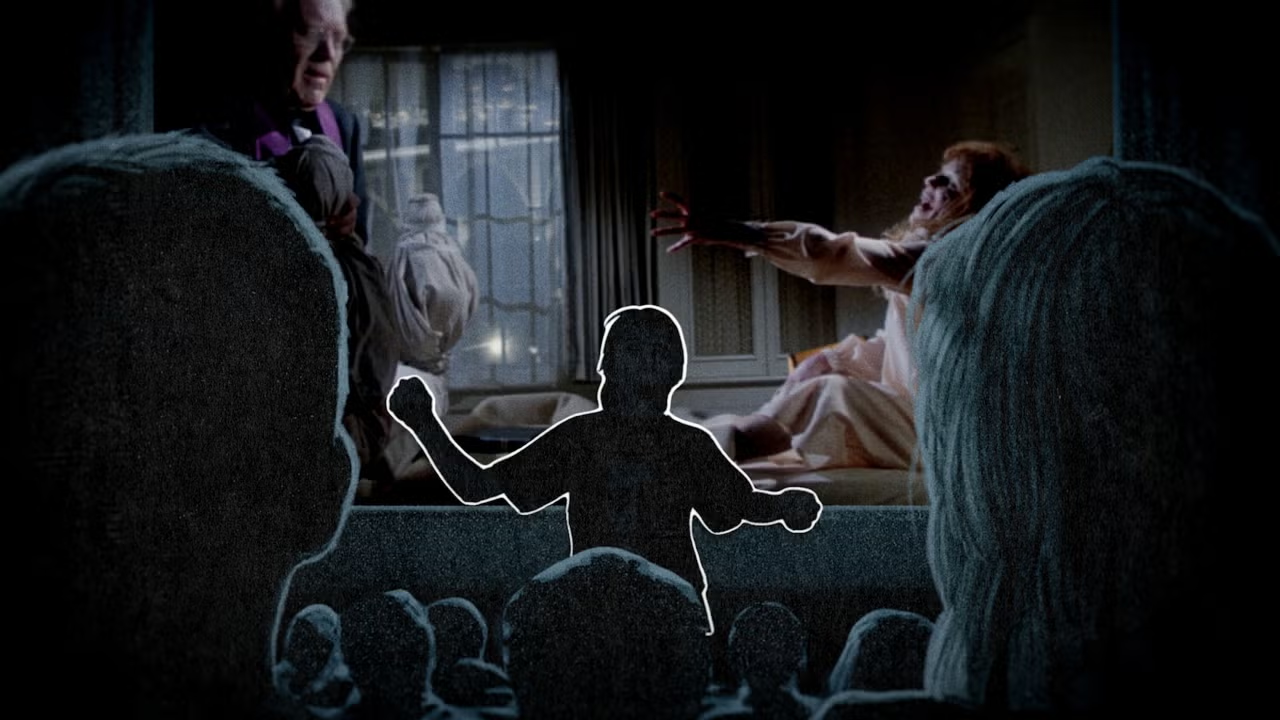
When John Boorman’s gonzo “Exorcist II: The Heretic” opened in 1977 as the sequel to William Friedkin’s original 1973 masterpiece, it was promptly pilloried by critics.
(Gene Siskel, in his zero-star review, recounted how a man at his screening had playfully threatened Siskel’s life “if you say one nice thing about that lousy movie.” The man’s wife made sure the critic knew her husband was kidding.)
Similarly, the movie’s box office disappointed. “Exorcist II” made $30.7 million, compared to the original’s $441.3 million, cementing the perception that the movie wasn’t just bad but was one of the worst movies ever. Over the years that idea was repeated – that it wasn’t just a lackluster sequel but by filmmaker Friedkin’s own measure “a freaking disgrace.”
Time has been kind to Boorman and to “Exorcist II,” and a reappraisal has slowly occurred in the decades since its release. Its outrageousness is now celebrated and its striking dissimilarity to the original is a feature, not a bug. Special edition home video releases have been produced and Boorman, one of our most underrated auteurs, is finally being acknowledged for his influence and artistic achievements.
But the biggest contribution to the continued rehabilitation of “Exorcist II” arrives this week, in the form of “Boorman and the Devil,” a dynamite documentary that charts the production, release and response to Boorman’s film – and the ensuing fallout. It includes a lengthy interview with Boorman himself, along with commentary by filmmakers like Joe Dante (who defended the movie in Film Comment upon its initial release) and Mike Flanagan (who is currently making an “Exorcist” movie for Universal and Blumhouse) and critics like New York Magazine’s Bilge Ebiri, who appreciates what the movie tried to do, even if they don’t love the final product. (Everyone agrees that the berserk score by Ennio Morricone is an obvious highlight.)
“Boorman and the Devil” director David Kittredge said that he was always fascinated by “Exorcist II” but was encouraged to make a documentary on the film by documentarian Jeffrey Schwarz, who pointed out that a number of the principals were aging – so if not now, then when?

Kittredge begrudgingly agreed and reached out to Boorman, whose interviews make up the emotional core of “Exorcist II,” which took some doing.
“It was a bit of a courtship. And he agreed to have me come out to Ireland to shoot him in his home for a day,” said Kittredge. “That was the first interview, and that was back in 2018. And after that interview, I knew I had a responsibility to tell this story because it wasn’t just about the making of this infamous movie from the’ 70s. It was about art and artists and what it means to be an artist and how you have to take risks.”
At the time, as Kittredge points out, Boorman was in an interesting place in his career. In 1972, he had directed “Deliverance,” an intense thriller that was a huge hit for Warner Bros. But he followed it up with “Zardoz,” a divisive sci-fi movie best remembered today for Sean Connery in a red diaper. When they came to Boorman for “Exorcist II,” it carried with it the biggest budget in the studio’s history – Boorman could do anything. And he did.
“So many things that all cross-connected that are of my interest – this moment in the ‘70s where you could have big budgets and take huge risks; and this artist who’s trying to find out where he’s going in his career. That’s what I want to celebrate. I want movies that take crazy risks again,” said Kittredge. “You need to be able to put it on the line, even if it fails.”
Part of what makes “Boorman and the Devil” so fascinating is that it illuminates the studio system at the time that could have allowed for Boorman to go completely unhinged. For one, even though it was the most expensive movie in Warner Bros. history, it still wasn’t that expensive, costing around $15 million. There was also something, that the documentary points out, called “blind bidding,” where theaters would bid on the movies they wanted to play months, sometimes years in advance.
This had an adverse effect on “Exorcist II” because it had to make a release date, even after Boorman got sick because of particulates in the air and production had to be paused. Ironically, in the blowback from “Exorcist II,” blind bidding was put to an end.
“Blind bidding was just the studios basically covering their ass. They would get movies paid for upfront, even after, but way before they finished the movie. Sometimes before they even shot the movie, based on just a cast list, a title, a director, and a synopsis,” said Kittredge. “And it locked the studio into the release date, which in this case was a problem after the movie was shut down because of Borman’s illness and everything running long. They started late. They finished late. All of the post-production was rushed. They did not have a chance to test it and really get the movie to a cut that Boorman was really thrilled with. I think that if Borman had had another six months, it may have been a different film. It may not have been better or more interesting.”
That crunch actually led Boorman to keep editing the movie, even after it was released.

“The ending was the thing that everybody got upset about because it’s a happy ending, and how can this be? It’s an ‘Exorcist’ movie!” said Kittredge. After the movie had come out, they took it and edited out six minutes of footage, which then played the Fox Westwood. (“It did OK,” Kittredge said.)
But the decision was made by Warner Bros. executives not to strike new prints and send those prints out nationwide because the damage had already been done.
“There was no getting people back in the theaters to see it, no matter how you recut it, so the new cut would then play in Europe, and that was the only cut,” Kittredge explained. Today, “Exorcist II” viewing options like the fabulous Shout Factory special edition Blu-ray has both cuts.
One anecdote that didn’t make it into the movie was a story about Richard Burton, who plays a weary priest in “Exorcist II.” They were shooting in Arizona in an attempt to match some footage from Africa, and at the time Burton was very much hitting the bottle. He convinced his assistant to break into a local bar that was closed. They got a fire ax and “busted into the bar to try and get the liquor.” Warner Bros. paid to have this covered up.
If only that kind of passion transferred to the screen.
“There is no performance going on. Here he is, saying the lines. There is nothing behind those eyes. He does not care. He is taking a paycheck,” said Kittredge. “And Boorman was really upset about it.”
Towards the end of the documentary, critic Ebiri puts forth a hypothesis that everybody has a favorite Boorman movie, and appreciation for the director seems to be on an upswing. Not only is “Boorman and the Devil” being released, but earlier this year new 4K restorations of “Excalibur,” released by Arrow, and “Point Blank,” put out by Criterion, have presented two of his masterworks in a way that literally has never been seen before. (“Excalibur,” for example, is showcased in its original theatrical aspect ratio for the first time ever on home video.)
We posed this question to Kittredge. Could “Exorcist II” be his favorite Boorman?
Well, no.
“’Exorcist II’ is in a different category for me. I love this film. I love it for all of its flaws and all of its weirdness. But I think my favorite Boreman movie, if you’re going to say, What is the most John Borman movie? It’s ‘Excalibur,’ and especially that new Arrow 4K, which is beautiful,” said Kittredge.
“John Boorman and the Devil” is in New York this weekend and will expand next weekend. Don’t miss it.

>
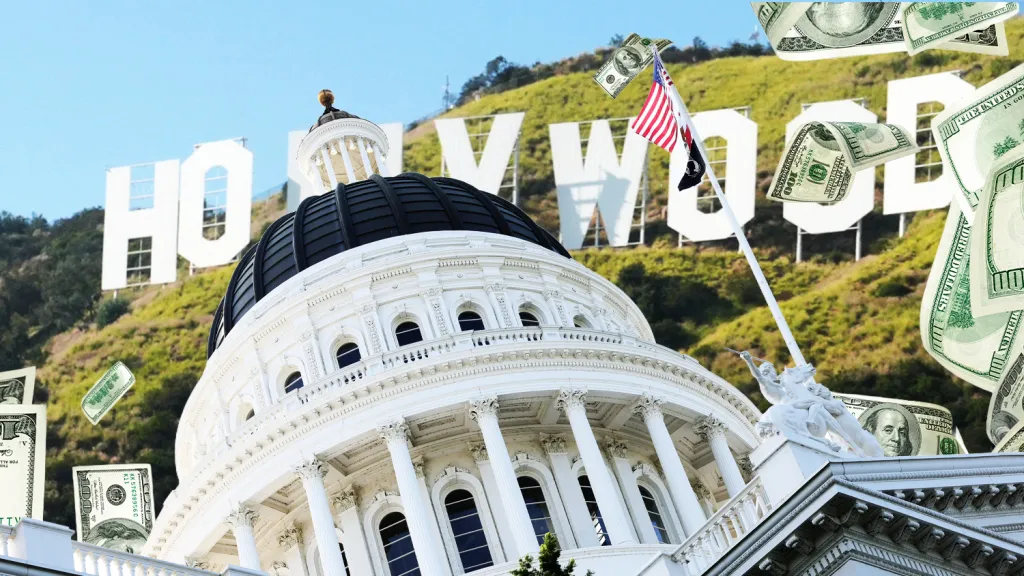
The California production community can breathe a sigh of relief: State lawmakers have officially introduced a bill meant to allow studios a few key exemptions from a recently enacted restriction on corporate tax credits.
AB136, introduced Friday evening, addresses concerns raised from stakeholders including the Motion Picture Association about the threat of undermining the efforts to expand California’s Film & TV Tax Credit pool to $750 million.
Lawmakers have to consider legislation for 72 hours before voting. With that in mind, a vote on AB136 is likely to come Monday evening, hours before the midnight end to the legislative session.
The state budget, passed this summer, seeks to stabilize revenue by preventing corporations from offsetting more than $5 million in tax liability annually for the next three years. Several advocacy groups pushed for a complete exemption, but the solution introduced by lawmakers on Friday evening does fall short of that.
Instead, only independent productions will be completely exempt from the $5 million cap. The legislation also addresses concerns about the payback period for studios that have elected to refund credits for cash. Current law allows studios to get cash instead of claiming the credit against tax liability for a 10% discount on the total with a payback period of five years. The fix accelerates that to two years with just a 5% discount.
The new legislation will also extend the expiration date of the non-refundable tax credits that were issued prior to 2025.
>
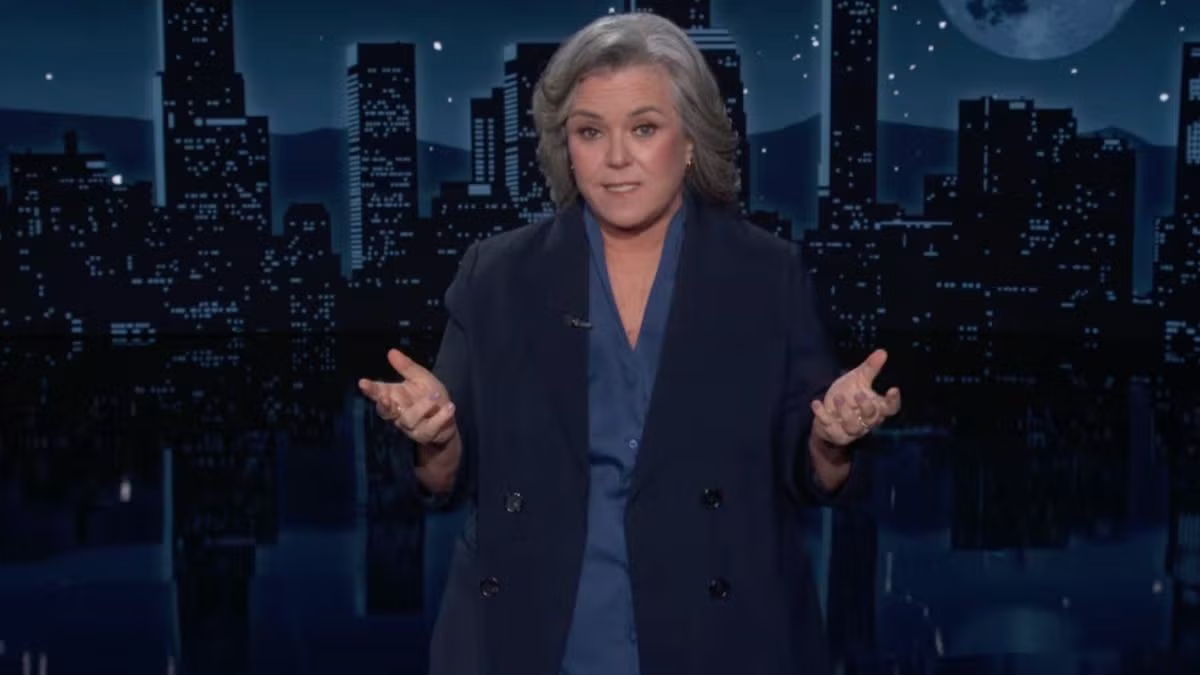
Rosie O’Donnell wrapped up her week guest hosting on “Jimmy Kimmel Live!” to impressive numbers, ranking as the highest-rated summer substitute thus far.
For the week of Aug. 17, O’Donnell averaged a total viewership of 2.17 million and a demo viewership of 237,000 viewers, according to live-plus-three-day viewing figures from Nielsen reported by LateNighter.
O’Donnell’s week of hosting marks the ABC late night show’s most-watched week in both measures since mid-June, before Kimmel tossed the show over to a suite of guest hosts, including Tiffany Haddish, Anthony Anderson, Ike Barinholtz and Colman Domingo.
In fact, viewership for O’Donnell’s week of hosting was up in both categories from the week of Aug. 9, which was headed up by Anderson. Total viewership for O’Donnell was up 40% from the previous week, while demo viewership saw a 34% rise.

With that, “Jimmy Kimmel Live!” maintained its lead on NBC’s “The Tonight Show Starring Jimmy Fallon,” which averaged 1.43 million viewers and 171,000 demo viewers, as well as “Comics Unleashed,” which averaged 654,000 total viewers and 75,000 demo viewers across the same hour.
O’Donnell’s stint hosting also boosted ratings for ABC’s “Nightline” as it picked up at 12:35 a.m. The show averaged 918,000 total viewers – up 11% from the previous week — and 110,000 demo viewers — rising 20% from the previous week.
O’Donnell started her guest hosting week strong. On Monday, Aug. 17, O’Donnell brought in 1.87 million total viewers, according to preliminary Nielsen live-plus-same-day figures reported by LateNighter, which marked the biggest audience for any of Kimmel’s guest hosts so far this summer.
Country music artist Jelly Roll took the baton from O’Donnell for the week of Aug. 24. So far, Jelly Roll’s Monday audience landed at 1.07 million viewers, down 11% from the previous Monday when O’Donnell held the stage. Full ratings for Jelly Roll’s week of hosting will be available next week.

>
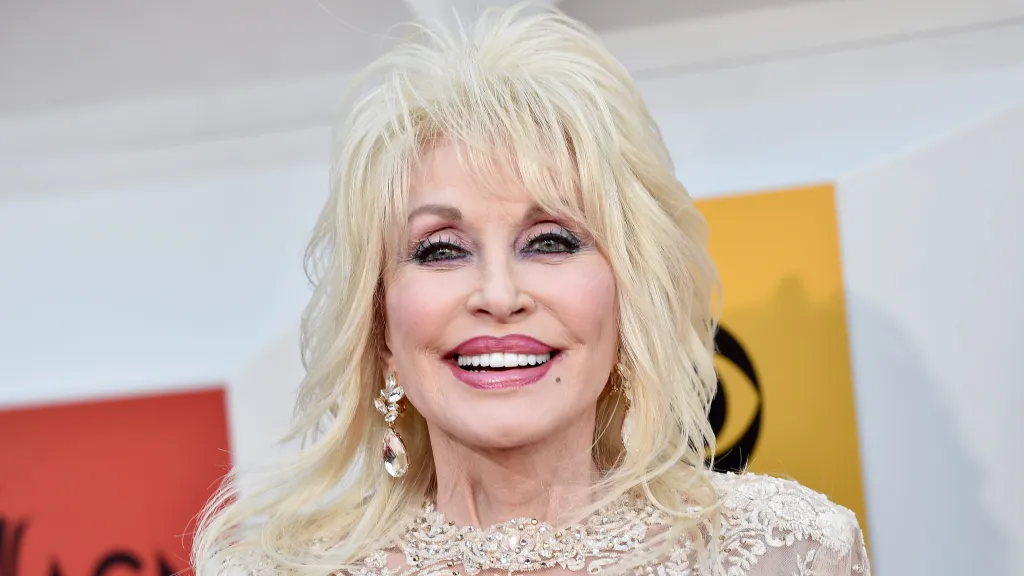
As the world mourns Dolly Parton, Tennessee has plans to immortalize the late Queen of Country while welcoming visitors to Music City.
On Friday, Gov. Bill Lee‘s office announced a partnership with the Nashville International Airport (BNA) in conversations with Parton’s team to rename the airport in honor of the 11x Grammy-winning country pop/songstress, who died at age 80 on Tuesday.
The Metro Nashville Airport Authority will discuss its naming policy and Gov. Lee’s proposal to rename the airport at its Thursday, Sept. 17 meeting.
“Dolly Parton’s extraordinary life is forever woven into the fabric of our state,” said Gov. Lee in a statement. “From her rural mountain home in East Tennessee to global stages, Dolly carried the Volunteer Spirit with her.
“At a place where Tennessee welcomes the world, it is fitting that Nashville International Airport would bear the name of our state’s favorite daughter and greet travelers with the enduring legacy of Dolly’s music, generosity, faith and kindness,” he added.
Born Jan. 19, 1946 in Pittman Center, Tennessee, Parton lived with husband Carl Dean in his native Nashville for several years, and he died there last March at age 82.
Parton’s family announced that she died in Nashville on Tuesday following a brief sickness with cancer. Although she remained busy until her final days, the “I Will Always Love You” artist had dealt with health issues over the past year.
>

CA Lawmakers Compromise With Film Industry On Corporate Tax Credit Cap

Serbian soccer club faces UEFA charges over banners glorifying late war criminal Ratko Mladic

Rosie O’Donnell Wraps Up Jimmy Kimmel Live Week as Top Guest Host
-

 movies3 months ago
Search For Canadian TV Actor Stewart McLean Now Homicide Investigation
-

 Fashion9 years ago
These ’90s fashion trends are making a comeback in 2017
-
Fashion9 years ago
According to Dior Couture, this taboo fashion accessory is back
-
Fashion9 years ago
Model Jocelyn Chew’s Instagram is the best vacation you’ve ever had
-
Fashion9 years ago
Emily Ratajkowski channels back-to-school style
-
Fashion9 years ago
9 Celebrities who have spoken out about being photoshopped
-
Fashion9 years ago
Your comprehensive guide to this fall’s biggest trends
-

 Anime3 months ago
Rurouni Kenshin: Hokkaido Arc Manga Takes 1-Issue Break – News