
Sports
Inside Newcastle’s transfer window: £300m spent, £245m raised and ‘faith tested’ as a new era begins


Even those at the top of Newcastle United accept fans had their “faith tested” during another turbulent summer. Having had to look “deep within our soul” at points throughout a rollercoaster window, they hope that ending with the deadline-day addition of Matias Fernandez-Pardo, an “alpha” target, has left “the faithful feeling rewarded”.
A new era is underway — fresh, youthful, dynamic, exhilarating — a course-correction born from financial necessity as much as footballing logic and “forged in fire”. The old era was a doozy, taking them to the Champions League and a trophy but also leading towards a precipice; a “ticking time-bomb”, according to an insider who, like others quoted throughout this article, spoke anonymously so they could talk freely.
“Newcastle 2.0”, as David Hopkinson, the club’s CEO, described it in an interview with The Athletic, is not about redrawing ambitions but laying foundations. It has meant selling well, buying young and avoiding the boom-and-bust model which saw them narrowly avoid a Premier League points deduction and incur punishment from UEFA in June. As Hopkinson said: “At some point, you’ve got to pay the credit-card bill.”
It has meant flexibility, adapting to unforeseen circumstances and another wave of upheaval. Out went Anthony Gordon, Sandro Tonali and Bruno Guimaraes, for a combined £245million ($331.7m) including bonuses, the fifth-most any club has brought in worldwide. Nick Woltemade followed, joining Juventus on loan on Tuesday, bringing a temporary end to a costly, stylistic mismatch which contributed to throwing Eddie Howe’s Newcastle off-kilter.
In have come eight players — all 24 or under — for roughly £300m, add-ons included, making Newcastle the fourth-highest global spenders. With Howe stepping down and Matthias Jaissle, the 38-year-old German, replacing him, and with plans finally revealed for a new £190m training ground, Newcastle have embraced the shock of the new. There is an element of unknown and risk to what they have done, but it is also calculated and so far, so good; unbeaten in their opening three matches, momentum fuels them.
Last season, Newcastle finished 12th in the Premier League. They fared better in the Champions League and domestic cups, but felt stale and overstretched. Certainty only got them so far. And this is the point: if Guimaraes and Howe going was never part of the plan, business as usual was not an option.
An analogy used internally is renovating a house. Once you have knocked down walls, wires are exposed and the stairs look dangerous. For a time, “it looks like s***”.
Yet Newcastle have got through it. They now don’t look s***. There has been a “relentlessness” to their efforts under Hopkinson and Ross Wilson, the sporting director — with full support from PIF (Saudi Arabia’s Public Investment Fund, Newcastle’s majority owners) through Jacobo Solis, and Jamie Reuben, the minority stakeholder — and a clear vision even when difficulty threatened to cloud things. There is a sense relationships have been strengthened because of it.
A guiding principle has been the events of 12 months ago when Newcastle buckled late and allowed Alexander Isak to join Liverpool for £125m, which was good money but terrible timing, leaving them scrambling to find replacements, the after-effects of which linger. Unpicking that has brought a head-rush of change, but as the dust settles they are clear-eyed and ready to go.
Crucially, they all want to be there. Faith endures.
The starting point for much of what Newcastle have done can be boiled down to a single, pithy phrase: “We had to unf*** ourselves.”
At the end of May, Newcastle agreed to sell Gordon to Barcelona for a fee rising to €80m (£69m, $93m) and tied Lewis Miley to a new contract. The timing of both was deliberate. Newcastle wanted to become more efficient sellers, completing deals on their own terms, while Miley highlighted their pivot towards youth and sent out a message: not everybody was pushing to leave.
Gordon was completed swiftly, earning Newcastle more money than anticipated (with €70m benchmarked). It also scarcely touched the sides. In June, Newcastle were fined €6m and entered into a stringent agreement with UEFA after breaching their regulations.
“This was a decision driven by our economic reality,” Hopkinson told The Athletic. “That sale effectively brought us back into compliance.” It had to happen. “He needs to go and we need him to go,” another insider said.
Selling Tonali to Tottenham was about providing headroom for the changes Newcastle needed to make. Like Gordon, Tonali made it clear he wished to leave; his agent had been on manoeuvres since January. The optics of joining Spurs were not great — they finished 17th in successive seasons — but the money was (for club and player). Newcastle demanded £100m, did not budge and ultimately got it, including only £7.5m in add-ons.
Two players who wanted out had got their wish with minimal fuss, but the same could not be said of Guimaraes. Newcastle did not intend for their captain and tone-setter to move. Ideally, they had earmarked the Brazil international to lead their reset and, internally, they mulled over how their highest-earner could be incentivised. Perhaps in return for a reasonable release clause within a new contract, he would stay another season?
Newcastle’s summer wobbled when news emerged in late June that Guimaraes was fixed on Arsenal. It felt existential. They did not want to sell, but to Howe it was like a fait accompli and pushed him closer to the exit.
After the Isak saga and with Newcastle missing out on a number of leading targets, Howe felt it was now time for him to go, though he remained in post for a fortnight as the club secretly sourced his successor. Jaissle was not an established name, but his appointment brought a form of clarity: there would be no compromise to Newcastle’s vision.

Matthias Jaissle is unbeaten since taking over as Newcastle head coach (Serena Taylor/Newcastle United via Getty Images)
Guimaraes was another plan-shifter and there was irritation with Arsenal’s approach following an early, official bid of £45m. After that, there was silence, except via intermediaries, with Newcastle’s attempts to engage getting them nowhere. “We wanted to push it to a number that was unrealistic,” a source said. “We wanted Arsenal to go away… They didn’t.”
By then, Newcastle were in La Manga, Spain, for their pre-season camp, and waiting for Al Ahli to sanction Jaissle’s release. Guimaraes joined and, as one insider said at the time, “we need to draw the melodrama to a conclusion”.
Guimaraes’ £75m fee was not the perfect outcome — they had hoped for Tonali-esque money — but “a good outcome” based on Guimaraes’ age and the circumstances, and balanced by funds already raised. Importantly, it was all guaranteed and lanced the boil, ridding the dressing room of established-but-restless players.
With others, Newcastle stood firm. Interest in Tino Livramento had been anticipated but did not come after his injury-ravaged 2025-26.
Besiktas had been chasing Joe Willock, who seemed a shoo-in to depart, but an impressive start under Jaissle brought a rethink; a contract extension is possible. Jacob Murphy stayed, despite interest from Nottingham Forest. Nick Pope is also still on Tyneside, even though he has been relegated to third-choice goalkeeper and was made available.
In the spring, Newcastle would have listened to offers for Yoane Wissa, whose £55m signing from Brentford had proved calamitous, yet the DR Congo forward returned from the World Cup full of confidence and has begun the campaign well.
Instead, it was Woltemade, the £64m club-record signing, who left. The German departing was not forecast, given how high his book value remains, but he is even less suited to Jaissle’s football than Howe’s. The hope is that Woltemade regains value with a positive campaign at Juventus. Newcastle insist they are making a profit on the deal, once wages and loan fee are factored in.
Newcastle end the window with the squad’s average age and wage bill significantly reduced.
Unf***ing themselves took multiple forms and involved being fleet of foot.
With incomings, Newcastle’s summer started with a whimper and ended with a bang, a slow-burn of early rejections from high-profile targets which did little to ease a sense of disquiet among supporters.
The message from the top was that Newcastle’s early-summer perception problems were largely down to a necessary but unavoidable “sequencing” of events and they pleaded for fans to “judge us on September 2”.
Their first signing was completed before the World Cup, with Ewen Jaouen (£18.5m) joining from Reims. A 20-year-old goalkeeper acquisition trailed the youthful recruitment policy.
That blueprint prompted excitement among fans, especially when a deal for Victor Munoz appeared wrapped up. Newcastle were adamant they had agreed terms with Osasuna, the player and agent, and had a team on standby in the United States to conduct a medical at the World Cup.
Liverpool’s late gazumping hit hard, given Zadok Yohanna, the 19-year-old winger, had chosen Brighton & Hove Albion over Newcastle. For some supporters, there were alarming echoes of last year’s Hugo Ekitike ‘hijacking’. Internally, Newcastle reviewed the transfer to try to work out what actually happened.
Howe was left deflated that an ideal replacement for Gordon had gone elsewhere, though he did not cast blame, recognising Newcastle still faced issues whenever they went head-to-head with a legacy ‘Big Six’ club. Newcastle swiftly moved on, acquiring Hoffenheim’s Bazoumana Toure for £43m, a player for whom they have high hopes — but the 20-year-old requires refinement and Howe did not deem him ready to start the campaign.
When Sean Steur (£20.1m) arrived four days later, Howe received a bit of a boost. The 18-year-old would need time to adapt, but Howe (and everyone at Newcastle) foresaw a star in the making.
That bounce was short-lived. The news about Guimaraes wanting to leave was followed almost immediately by Johan Manzambi, Newcastle’s top target across all positions, opting for Aston Villa at the final moment.

Newcastle had not wanted to lose Bruno Guimaraes this summer (MI News/NurPhoto via Getty Images)
As with Munoz, Newcastle’s hierarchy thought they had convinced Manzambi to join — other insiders were more sceptical, suggesting “it hasn’t felt right from the start” — and one senior figure had even flown from Los Angeles to Vancouver to connect with the player’s family after Switzerland faced Canada at the World Cup.
Post-Manzambi, some inside Newcastle felt a section of supporters “fell into the abyss emotionally”, while Howe also tipped over the edge. Anticipating Guimaraes’ departure, he came to the conclusion he had little chance of succeeding with an inexperienced squad, having missed out on three leading targets (with long-pursued goalkeeper James Trafford opting to move to Leeds United), and given some fans’ patience was already short regarding the head coach. His fire had burned out.
Howe was not the only senior departure. Steve Nickson, the long-serving head of recruitment, handed in his notice in mid-June, subsequently agreeing to join Championship side Wrexham. Andy Howe, the senior football executive, and Eddie’s nephew, stayed on when the head coach left.
Although Eddie Howe was heavily involved in the window’s first three signings, all were made with club strategy in mind. A successor with a similar philosophy was sought and Newcastle paid Al Ahli around €10m for Jaissle, so certain were they of his potential.
Aladji Bamba was lured from Monaco for an initial £30m while Howe was still in situ. The 20-year-old was a bridge-between-regimes addition, as was Lukas Hornicek, who Newcastle’s data team identified as a future top-class goalkeeper. Newcastle met Hornicek’s €30m Braga release clause before Jaissle was confirmed, ending their search for a new No 1, which had been a summer-long priority.
Once Jaissle arrived, he identified three positions which needed augmenting to aid his new-look 4-2-3-1 formation: full-back, holding midfield and up top, whether a versatile forward or No 10.
Benfica’s Amar Dedic was already being discussed inside Newcastle before Jaissle joined and, having worked under the German at RB Salzburg, he was an obvious £30m acquisition. Newcastle had depleted full-back resources and Jaissle was convinced the 24-year-old’s athleticism was ideal. Going into the summer, recruiting a left-back was on the agenda, though Newcastle feel Dedic and Livramento’s ability to play down both flanks provides enough cover.
The search for a No 6 was less straightforward. Guimaraes’ defection left Newcastle low on experience and creativity. For Jaissle, a defensive midfielder who had preferably played in the Premier League was essential.
Throughout the summer, several players were considered, to varying degrees of seriousness. Tottenham’s Lucas Bergvall and Archie Gray, Stuttgart’s Angelo Stiller, Brighton’s Carlos Belaba, Botafogo’s Danilo and Eintracht Frankfurt’s Hugo Larsson were among them, while overtures were made regarding Victor Froholdt’s availability at Porto.
Newcastle made an offer to Marseille for Pierre-Emile Hojbjerg in early August, though the 31-year-old rejected the move. Newcastle officials also tried to convince Bayern Munich’s Joao Palhinha, also 31, that he should move to Tyneside, but the Portuguese wanted to return home.
Instead, Nico Gonzalez, who had always been on the list but who Newcastle were unsure would become available, emerged as the optimal acquisition, for £48m. The Spaniard was the only intra-Premier League recruit Newcastle made. Only 24 and with room to grow, but also real pedigree, Nico felt like the perfect, window-shaping addition.
“Project Speed” — as some inside the club jokingly referred to it, a reference to Speedy Gonzales, the Looney Tunes character — had been completed successfully.
The decision to present Nico to the St James’ crowd ahead of the West Bromwich Albion Carabao Cup tie was inspired, perpetuating the positivity brought about by the training-ground announcement and opening-day Liverpool draw. Newcastle were not content, though, and with Woltemade made available, an attacker was sought.
Interestingly, Fernandez-Pardo was revered by Howe and would have been Newcastle’s principal target in May, though his initial preference was for Champions League football. A forward they considered last summer, too, Newcastle were given encouragement during the final 10 days that a deal might be possible.
Stuttgart’s Bilal El Khannouss, a No 10, was also discussed, but Fernandez-Pardo was Newcastle’s true focus. Remote club-to-club conversations had proved fruitless, so senior figures travelled by Eurostar to Lille and an initial €60m deal was struck on Monday. The 21-year-old flew to Tyneside and completed his medical that night.
Fernandez-Pardo was, Newcastle insist, “the final piece of a (summer-long) plan carried through to completion” and he takes them to their spending-power limits. They had discussed “keeping their powder dry” but there will now be little scope for January signings (without outgoings). Yet nor are they edging towards an economic precipice. “We’re not sitting here wondering who we will have to sell,” said the insider.

Matias Fernandez-Pardo represented Belgium at the World Cup this summer (Emilee Chinn/Getty Images)
Newcastle’s business has been extensive, leaving them, they hope, with a team which can grow together and provide a platform to return to European football. And, in time, Hopkinson’s big idea is for the club to be “consistently and credibly competing for the top prizes”.
To do that, they had to be different, they had to start again and they had to test their faith.
>

Test your ball knowledge against today’s Who Am I?, Five in Five and Brainteaser.
>
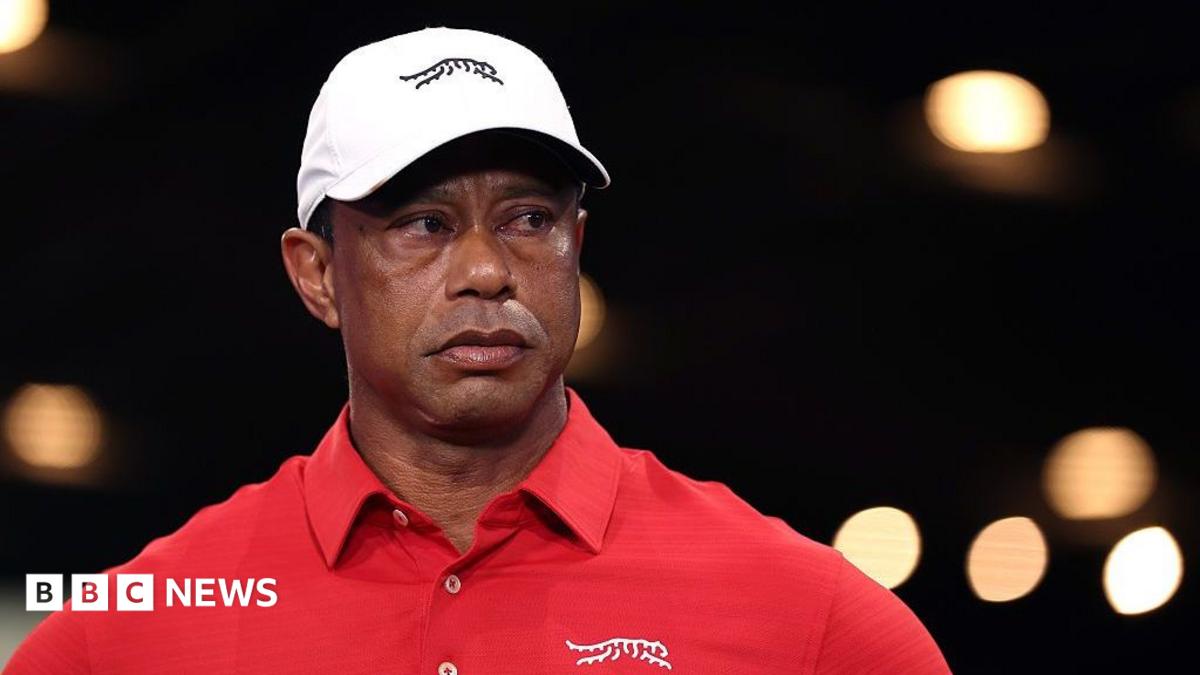
No one was injured in the crash, though Woods had to crawl out through the passenger door to free himself.
Police released body camera footage in April that captured the aftermath of the incident, showing the golfing legend after his vehicle clipped a truck and rolled over.
In the video, Woods appears calm, kneeling on one knee as he tells officers: “I looked down at my phone, and all of a sudden, boom”.
He passed a breathalyser test but declined to take a urinalysis screening for other drugs, Martin County Sheriff John Budensiek said at the time.
Woods told officers he had not consumed alcohol that day. When asked about any prescription medication, he responded, “I take a few”, adding he had done so earlier that morning.
He then listed the medication, though that portion of the footage was redacted.
Officers told Woods they suspected his “normal faculties” were impaired by an “unknown substance”.
Authorities later reported finding two white pills in his pocket, identified as hydrocodone, an opioid commonly prescribed to treat pain.
Woods wrote on social media following the incident, “I know and understand the seriousness of the situation I find myself in today.
“I am stepping away for a period of time to seek treatment and focus on my health. This is necessary in order for me to prioritise my wellbeing and work toward lasting recovery.”
The incident marked Woods’ second arrest on suspicion of driving under the influence.
>

Scotland play Nations League games against Slovenia (twice), Switzerland and North Macedonia during the first international window of the season.
There is better news for Swansea regarding skipper Ben Cabango, who came off with a heel problem during the Blades draw.
He sat out the Derby and Watford games but Matos says the centre-back has a chance of returning to face Wrexham.
Such is Swansea’s form, however, there is no guarantee that Cabango will immediately return to the starting side.
Matos’ team top the Championship having taken 10 points from their first four league games of the season.
They boast the best defensive record in the second tier having conceded only once, at Stoke City on the opening day, so far in the league.
>

Main Staff for ‘Ikyou no Tsume Nuri Minarai’ Announced

Flex your football brain with our daily quizzes

Tiger Woods to change plea after DUI crash arrest in Florida
-

 movies3 months ago
Search For Canadian TV Actor Stewart McLean Now Homicide Investigation
-

 Fashion9 years ago
These ’90s fashion trends are making a comeback in 2017
-
Fashion9 years ago
According to Dior Couture, this taboo fashion accessory is back
-
Fashion9 years ago
Model Jocelyn Chew’s Instagram is the best vacation you’ve ever had
-
Fashion9 years ago
Emily Ratajkowski channels back-to-school style
-
Fashion9 years ago
9 Celebrities who have spoken out about being photoshopped
-

 Anime3 months ago
Rurouni Kenshin: Hokkaido Arc Manga Takes 1-Issue Break – News
-
Fashion9 years ago
Your comprehensive guide to this fall’s biggest trends