
Sports
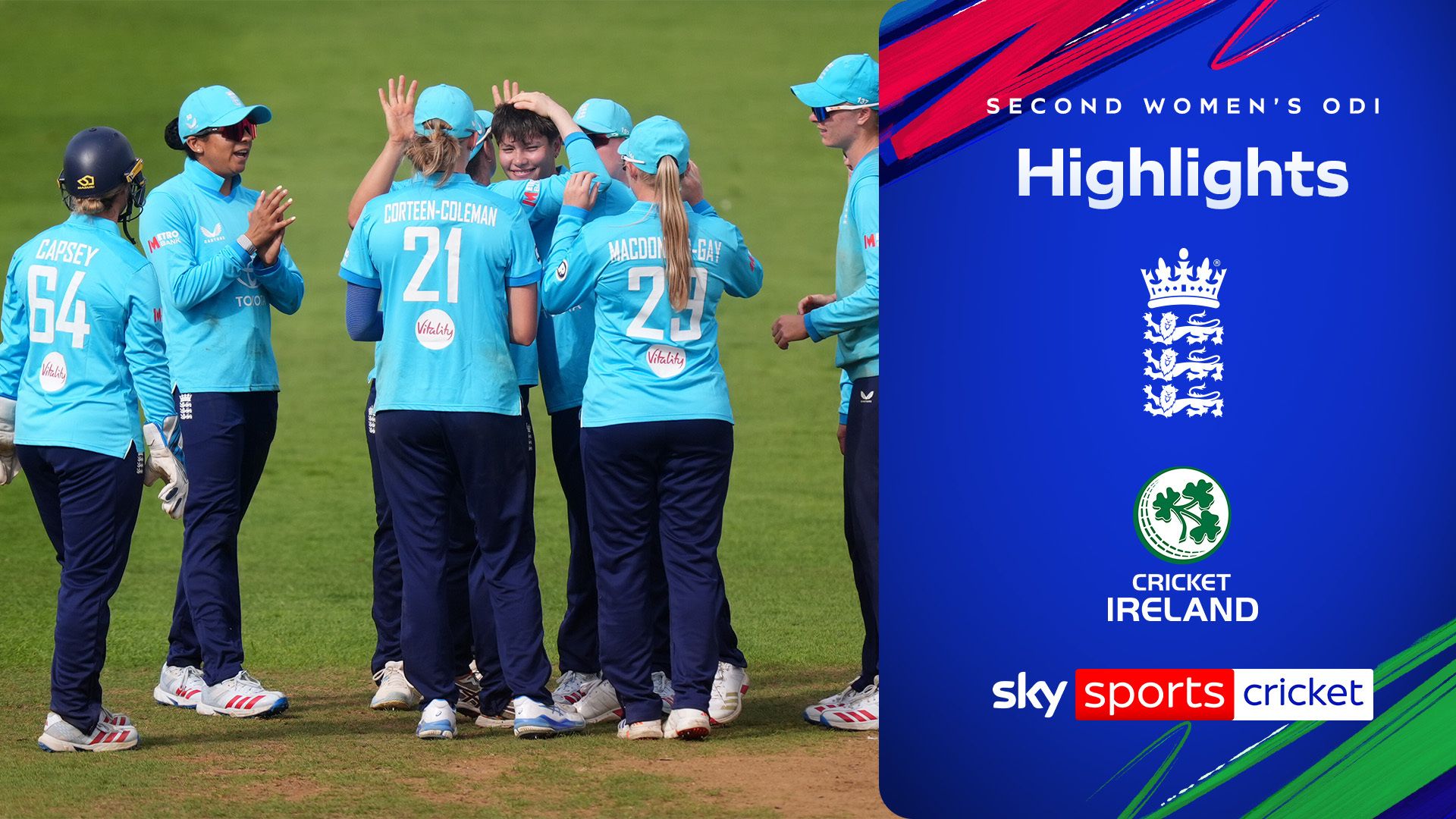
England cruise to series win with six-wicket victory in Derby


Sports
Joe Rodon’s two-month injury lay-off forced Leeds into the market. So what does Melvin Bard offer?

Daniel Farke’s news landed like a sledgehammer on Thursday. Joe Rodon, last seen limping off the pitch in Sunday’s 1-1 draw with Brentford, will be unavailable to Leeds United for eight to 10 weeks with a hamstring injury.
That means the best-case scenario is a return to training before the end of October; at worst, around mid-November. It is bad luck for Rodon, who before this season had only missed three of the previous 129 league games through injury.
The Wales international’s absence comes as a shock. He has been at the heart of the Farke era at Leeds and had recently proved especially important as the roving centre-back on the right of defence.
The upcoming three-week international break — Leeds will not play a game between September 20 and October 10 — softens the blow, but it is a problem Farke has to solve. While James Justin is still needed to cover for Gabriel Gudmundsson at wing-back, it is likely Nico Elvedi slots into the Rodon role.
But if there was any silver lining to this cloud, it was that Rodon’s injury came 48 hours before Tuesday’s 11pm deadline.
The noises coming out of Elland Road over the past week had all suggested that if there were to be any late business, it would be for an forward, and most likely Chelsea’s Mykhailo Mudryk. If a deal for Mudryk failed to materialise, there was no great appetite at Leeds for an alternative.
The Leeds hierarchy were content with what they had, including Wilfried Gnonto, and were unlikely to be tempted by anything else at the 11th hour. And then Rodon’s injury happened.
The idea that a Leeds defender could suffer an injury was hardly a revelation, but it did at least force them to review their defensive shortlists. Would it really be prudent to play four months of football, until the next window, with Justin effectively covering three positions at once?
Melvin Bard emerged as the surprising and welcome solution on the penultimate night of the window. The French left-back has been on the club’s radar for the past two years, but never quite ticked enough of their boxes to justify a transfer before now.
Evidently, before Rodon’s injury, Leeds had again decided against a move for Bard, but a season-long loan allows Farke to assess the 25-year-old with limited risk if he fails to impress.
With a permanent option agreed at £4.3million ($5.8m), it is clear there are limitations to Bard’s perceived potential. He seems unlikely to put genuine pressure on Gudmundsson for a start, but there is a lot in his profile which suggests he could be a very reliable stand-in this season.
Club chiefs have compared him to Justin, the versatile defender who arrived from Leicester City with little fanfare last summer, but proved to be one of the team’s best players in 2025-26, doing the basics well and proving ultra-reliable for Farke, without being spectacular.

The Athletic’s dashboard is a good starting point for getting a handle on what type of player Bard is. He is described as a channel-ball progressor, which means he is keen to make longer passes up the left flank, with some crosses from deep into the team’s attackers, too.
He was fairly involved in Nice’s possession play and frequently went long down the flanks to his winger or a roaming striker. He averaged 17.1 forward passes per game last season, which was the second-most in that team.
His progressive pass zones, shaded most darkly near the halfway line in the opposition half, underline where Bard felt most comfortable passing from for Nice last term. There are two similar examples in Nice’s home clash with Strasbourg from last season which underline this.

In the example above, Bard, on the left, has already taken a look at his striker’s position and movement before receiving the ball from the centre-back. The left-back allows the ball to go across his body and his first touch is the immediate pass, from deep, into space for the striker to latch onto.
The pass finds the striker, who beats the defender and then has the team attacking the area. It was created by Bard’s vision and anticipation.

Later in the game, Bard is seen in a more advanced position. He is making a run into space down the left flank. He is gesturing for the pass to be made as he gets a head start on his opponent.
The pass finds him, now halfway into the opposition half, and we see Bard’s natural inclination to cross from deep or pass earlier, instead of trying to beat an opponent for pace into the final third. As you can see above, there is still plenty of space in front of Bard, but he chooses to chop back.
He sees the run of the striker in the centre and chooses to cross earlier, with the box less crowded, looking for his team-mate. It is an impressively accurate pass and the striker should do better with the header.
Looking back at the dashboard above, you can see the positions Bard played for Nice last season will prove ideal for Leeds’ left side this season: playing left-back or wing-back will be no issue for him.
Bard’s heatmap also illustrates his general reluctance, or inability in Nice’s system, to attack the area. He only took 19 touches in the penalty box last season.

Defensively, the above map shows where Bard made his tackles and interceptions. He may not look to go upfield when attacking, but he is on the front foot and energetic when it comes to sniffing out turnover opportunities.
Only two full-backs in all of Ligue 1 made more interceptions than Bard last term. The image below, from Nice’s home meeting with Saint-Etienne last season, shows the defender’s anticipation and aggression off the ball.

Bard watches in space as Saint-Etienne try to build up play from the back. As the midfielder begins to show where he is going to pass, Bard gets onto his toes, ready to dart. Then he goes and accelerates.
By the time the opponent is ready to take their first touch, Bard has reached him, tackled him and forced the ball out for a throw-in. This is precisely the kind of action which gets Elland Road on its feet, roaring with approval.
Bard is unlikely to feature too much for Leeds over the coming matches. Justin has started well while Gudmundsson has been injured, with the Sweden international now waiting in the wings as the next in line on that left flank.
With Bard in place as cover for Gudmundsson, Justin is freed up to help cover for Rodon in central defence. The wait for minutes will suit the newcomer, who will have time to bed in and train with his new team-mates before being thrust into the demands of Premier League football.
Leeds had looked undercooked and overstretched across their defence, even before Rodon’s injury. But Bard is the reinforcement they needed to allow his team-mates room to breathe.
Additional reporting: Thom Harris
>

When Arsenal host Chelsea this weekend, it could be argued we will be seeing the Premier League’s best attack taking on its best midfield.
While much of the talk this week was around how the reigning champions failed to add to their attacking line-up in the transfer market, less was made of how adding Bruno Guimaraes from Newcastle United has created a formidable set of options for Mikel Arteta.
Martin Odegaard, Declan Rice and Myles Lewis-Skelly have started Arsenal’s first two league games and hardly put a foot wrong.
Odegaard was more influential against Coventry. Rice’s ability to cover ground both offensively with the ball and defensively without it helped Arsenal shift gears in both games, while Lewis-Skelly’s composure on the ball stood out against Coventry, when he made 19 passes into the final third, before he produced a more ‘grown-up’ defensive performance at Villa Park.
Arteta could then call upon Guimaraes, Mikel Merino and Martin Zubimendi. Two World and European champions with Spain and a former Newcastle captain, who also impressed at the World Cup with four assists for Brazil.
Merino glided away from challenges to keep Arsenal in control. Zubimendi was much more combative than he was in the second half of last season, crunching into tackles. Guimaraes was a mix of the two, with an added willingness to pass forward.
When Arteta moved Lewis-Skelly into midfield in May of last season, the Arsenal manager joked about the number of possible line-ups he’d drafted on his iPad. One can only imagine what that iPad has looked like in the past few days.
Arteta’s selection dilemma in midfield is particularly intriguing not just because his options are fit, but because they all offer something different — luxuries Arteta did not have much of last season, when Odegaard and Merino were injured at various points, and he did not start Eberechi Eze in a league game between matchday 17 and 25.

Arteta spoke of not having the opportunity to utilise the different profile of centre-forwards he had in the first half of the campaign, but the same could be said for his midfield.
Lewis-Skelly kept his place in midfield from last season initially due to World Cup players being on holiday, but he has since done so on the merit of his performances. The 19-year-old’s ability to receive the ball on the half-turn and evade pressure, and drive with the ball, make him a unique player.
He started the Community Shield alongside Guimaraes, who may have started Arsenal’s first two league games over Rice had he not suffered a minor injury. The balance of Lewis-Skelly and Guimaraes rotating alongside Odegaard worked against City, but Rice is not a player to drop or rest against Chelsea at home. Should Guimaraes be deemed ready after his cameo at Villa Park, a new midfield configuration could be afoot this weekend.
Arteta summed up what the Brazil international would offer this pre-season when he said: “(Guimaraes) has tremendous timing and intuition to win the ball back and progress plays very fast. He’s comfortable putting people through, moving between the lines, moving in behind. And then he’s a goal threat.”
That skill set could be useful from the start this weekend considering Chelsea’s approach to the first two league matches, and their current midfield limitations.
Alonso’s side have been reminiscent of Arsenal in the 2022-23 season, blowing teams away early on but lacking real control over the course of 90 minutes — seen in their average of 32.4 per cent possession and five goals conceded. That was compounded by the failed deadline-day move for Monaco midfielder Lamine Camara, Enzo Fernandez’s departure to Manchester City and Moises Caicedo’s injury against Brighton & Hove Albion.
Their 3-4-2-1 structure only requires two central midfielders, so they are happy to concede possession and focus play out wide, which makes Arteta’s dilemma twofold.
If Chelsea are happy for Arsenal to have the ball, who are the best options to play incisive forward passes and then who has the awareness and physical capacity to cover the wide areas from central midfield?
Both Lewis-Skelly and Guimaraes have shown that willingness to break lines with their passing. It is how Lewis-Skelly assisted Riccardo Calafiori against City, while Guimaraes has found Kai Havertz and Bukayo Saka with quick passes in behind from deeper in each of his cameos. The Brazil international was Newcastle’s most progressive passer last season, and made six line-breaking passes in the 19 minutes he played at Villa Park.

A player who may have been misinterpreted by neutrals/Arsenal fans while at Newcastle because of their playing style in head-to-head meet-ups, Guimaraes looks like he could add a different dimension to Arsenal’s midfield when regular starts come, akin to Michael Essien helping Chelsea win back-to-back league titles after signing in 2005.
It helps that Rice has been more front-footed in possession too. The 27-year-old could have benefited from being eased into the fray this season, but a driving run against Coventry led to Arsenal’s second goal, and another in the second against Villa resulted in a Saka penalty shout that helped swing momentum the visitors’ way.
He was also more punchy with his forward passes to create openings in the final third, which could be another step in his personal development, as seen below.

Rice hasn’t missed a step defensively either, covering wide areas with ease. Lewis-Skelly has shown an aptitude for more 360-degree defending and dropping to protect his centre-backs and goalkeeper. If Guimaraes is fit enough to start, however, this may be the perfect game for him to display the full extent of his qualities both with and without the ball, considering how combative he could be when facing Arsenal for Newcastle.
Then there is Merino and Zubimendi. Merino played just 20 minutes at Villa Park, but his three take-ons completed ranked joint-second across the Premier League for matchday two. He has previously been used (and scored twice) as a centre-forward against Chelsea, and depending on the game state, another cameo could be welcomed.
Arsenal and Chelsea rarely disappoint when they meet. It’s a London derby and Arteta vs Alonso. Morgan Rogers is facing the side who were interested in him but chose not to reach Villa’s asking price. It is the latest meeting between Kai Havertz and his former club. And of course, the league’s best attack faces its best midfield.
>

Need help with today’s Connections: Sports Edition puzzle? You’ve come to the right place.
Welcome to Connections: Sports Edition Coach — a spot to gather clues and discuss (and share) scores.
A quick public service announcement before we continue: The bottom of this article includes the answers — and hints — for the four categories. So if you want to solve the board hint-free, we recommend you play before continuing.
You can access today’s game here. And when you’re done, try out our limited-edition Connections: Soccer Edition for an extra challenge.
Today’s difficulty
Game No. 711’s difficulty: 2 out of 5
Connections: Sports Edition hints for Sept. 4, 2026

Scroll below for one answer in each of the four categories.
.
.
.
.
.
.
.
.
.
.
.
.
.
.
.
.
.
.
.
.
Yellow: BEAN
Green: MANUAL
Blue: DRESSEL
Purple: CLASS
Connections: Sports Edition answers for Sept. 4, 2026
Scroll below for the full answers to each of the four categories.
.
.
.
.
.
.
.
.
.
.
.
.
.
.
.
.
.
.
.
.
Yellow
Nail a batter with a pitch: BEAN, DRILL, HIT, PLUNK
Green
Skateboarding tricks: 900, HEELFLIP, MANUAL, MCTWIST
Blue
Swimmers with 10+ Olympic medals: DRESSEL, LEDECKY, PHELPS, THOMPSON
Purple
Draft _____: CLASS, LOTTERY, ORDER, PICKS
What is Connections: Sports Edition?
Connections: Sports Edition is The Athletic’s first-ever game, a daily puzzle designed for players to find connections between 16 words on the game board.
The game’s objective is to group words or objects into four groups of four based on commonalities within each group as quickly as possible. Find the groups without making four mistakes. Each puzzle has exactly one solution, so watch out for words or items that seem to belong to multiple categories!
Category examples:
Sports ____ : Fan, Car, Bar, Radio
U.S. Summer Olympians: Biles, Phelps, Ledecky, Lyles
Each category group is assigned a color, revealed as you solve, ranging from straightforward (yellow) to medium (green) to challenging (blue) to tricky (purple).
Who creates the puzzles for Connections: Sports Edition?
That’s me! My name is Mark Cooper, and I create Connections: Sports Edition and work as a managing editor for college sports here at The Athletic. I was previously The Athletic’s managing editor for breaking news.
The next puzzle will be available at midnight in your time zone. Thanks for playing — and share your scores in the comments!
>

Joe Rodon’s two-month injury lay-off forced Leeds into the market. So what does Melvin Bard offer?

Jessie T. Usher & Taye Diggs Among 5 Cast In Sci-Fi Film ‘Syndetic’

The World’s Finest Assassin Gets Reincarnated in a Different World as an Aristocrat Season 2’s Video Reveals More Cast, January Debut – News
-

 movies3 months ago
Search For Canadian TV Actor Stewart McLean Now Homicide Investigation
-

 Fashion9 years ago
These ’90s fashion trends are making a comeback in 2017
-
Fashion9 years ago
According to Dior Couture, this taboo fashion accessory is back
-
Fashion9 years ago
Model Jocelyn Chew’s Instagram is the best vacation you’ve ever had
-
Fashion9 years ago
Emily Ratajkowski channels back-to-school style
-
Fashion9 years ago
9 Celebrities who have spoken out about being photoshopped
-

 Anime3 months ago
Rurouni Kenshin: Hokkaido Arc Manga Takes 1-Issue Break – News
-
Fashion9 years ago
Your comprehensive guide to this fall’s biggest trends