
Anime
Sleep in Human-Sized Poké Ball in the Hokkaido Woods – Interest


Get the chance to sleep at the Poké Ball-Themed Hotel this September
Japanese fractional real estate ownership and vacation home brand NOT A HOTEL announced on Tuesday it has partnered with the Pokémon Sleep game for the Poké Ball-Themed Hotel. The company will start accepting applications for special reservations on September 15.

©Pokémon/Nintendo/Creatures/GAME FREAK
The Pokémon Company streamed a short video featuring a mockup of the hotel and the Pokémon Pikachu, Jigglypuff, Cubone, Snorlax, and Mew:
Pokémon Sleep further revealed on Wednesday that the hotel will be built in Hokkaido.
 ©Pokémon/Nintendo/Creatures/GAME FREAK |
 ©Pokémon/Nintendo/Creatures/GAME FREAK |
 ©Pokémon/Nintendo/Creatures/GAME FREAK |
As of press time, the hotel has not announced its opening date or prices.
Sources: NOT A HOTEL’s X/Twitter account, Pokémon Sleep’s X/Twitter account, Pokémon‘s channel, Poké Ball-Themed Hotel’s website, PR Times, NOT A HOTEL (link 2)
>
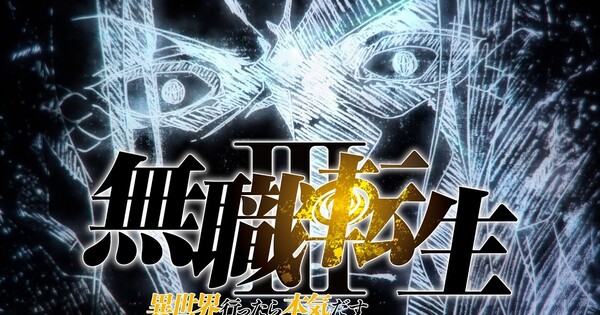
The staff for Mushoku Tensei: Jobless Reincarnation III, the third season of the Mushoku Tensei: Jobless Reincarnation anime, announced in a video on Sunday that the season’s second cours (quarter of a year) will premiere in 2027.

©理不尽な孫の手/MFブックス/「無職転生Ⅲ」製作委員会
The new season covers the “Eris Training Arc” storyline, which started in the 13th volume of the original novel series. The “Chaos Breaker” arc started with the eighth episode on August 16.
The season’s new cast members include:
Yuiko Ōhara performs the new opening theme song “Ketsui no Uta” (Song of Resolve). Mika Nakashima performs the ending theme song “Inori, Owareba” (If the Prayers Are Over). Shinoda, the guitarist and vocalist of the rock band Hitorie, wrote the new song’s lyrics and music. (Hitorie performed the second season’s second opening theme song “On The Frontline.”)
The anime debuted on Tokyo MX and BS11 on July 5. Crunchyroll streamed the anime as it aired, and it is also streaming an English dub.
Seven Seas Entertainment licensed both Rifujin na Magonote‘s original main light novel series and Yuka Fujikawa‘s manga adaptation. The company also licensed Shōko Iwami‘s Mushoku Tensei: Roxy Gets Serious (Mushoku Tensei: Roxy Datte Honki desu) spinoff manga. Seven Seas describes the “epic and influential fantasy” story of the original novels:
Kicked out by his family and wandering the streets, an unemployed 34-year-old shut-in thinks he’s hit rock-bottom—just as he’s hit and killed by a speeding truck! Awakening to find himself reborn as an infant in a world of swords and sorcery, but with the memories of his first life intact, Rudeus Greyrat is determined not to repeat his past mistakes. He’s going to make the most of this reincarnation as he sets off on the adventure of a second lifetime!
Rifujin na Magonote initially serialized the story on the Shōsetsuka ni Narō (Let’s Become Novelists) website from 2012 to 2015. Kadokawa‘s MF Books imprint then began publishing a print version in 2014. The 26th volume shipped in November 2022.
The first part of the novels’ first anime adaptation debuted in January 2021, and the second part debuted in October 2021, after a delay from that July. Funimation streamed the season. Crunchyroll and Hulu are now streaming the anime, including the unaired side-story original video anime (OVA) episode “Eris the Goblin Slayer.”
The second season aired for two cours (two quarters of a year). The first half premiered on Tokyo MX in July 2023 before airing on other networks, and the second half debuted in April 2024. Crunchyroll streamed the season as it aired.
A free-to-play Mushoku Tensei – Isekai Ittara Honki Dasu: Chronicle of Echoes (Mushoku Tensei: Jobless Reincarnation: Chronicle of Echoes) “serious alternate-world x 3D battle role-playing game” launched on July 27. Gree Entertainment is planning and releasing the game, and Asobimo is developing and maintaining it.
Source: TOHO animation‘s YouTube channel
>

©Atsushi Nishigori, CloverWorks/Project GTQ
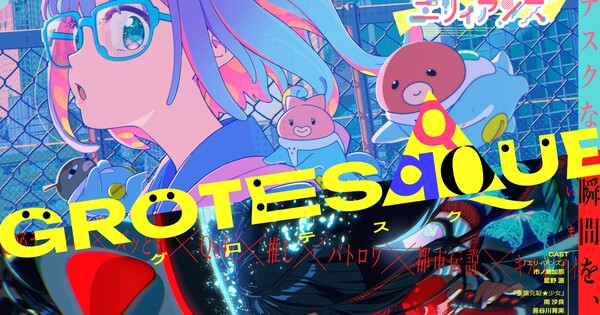
The Japan Society announced on Sunday that that it will host the U.S. premiere of Atsushi Nishigori‘s original anime film Grotesqqque (previously titled Grotesque) in collaboration with CloverWorks and Aniplex of America in New York City on October 8. Director Nishigori will give a pre-screening introduction in-person at the event.
The film will open in Japan on November 6. The film had its world premiere at this year’s Fantasia International Film Festival, which took place in Montreal from July 16-August 2.
The film is an omnibus film of three stories with different worldviews:
- “A(E)liens”
- “Yoroshiku★Girl,” (also known as “4649 Girl,” pronounced as “Yoroshiku★Shōjo,” a pun on the words “Nice to Meet You★Girl” with the literal meaning of the kanji being “Evening Dew Heads to Its Death★Girl.” The numbers 4649 can be read in Japanese as “Yoroshiku.”)
- “Nocturne: Nuit Grotesque” (“Nocturne: Kono Grotesque na Yoru ni,” literally, Nocturne: On This Grotesque Night, romanized in a previous video as “Nocturn: En Cette Nuit Grotesque.”)
Atsushi Nishigori (The IDOLM@STER, DARLING in the FRANXX) is directing the film, and is also writing the screenplay and designing the characters.
The band METALVERSE performs the opening theme song “Shoot Shoot Shoot.” Haoto performs the ending theme song with lyrics by momosu momosu.
The film comes from JOEN, the company jointly established by Sony media subsidiary Aniplex, its CloverWorks animation studio, Production I.G sister company Wit Studio, and publisher Shueisha. CloverWorks producer Yūichi Fukushima and Wit Studio producer Tetsuya Nakatake are the representative directors of JOEN.
Source: Japan Society
>
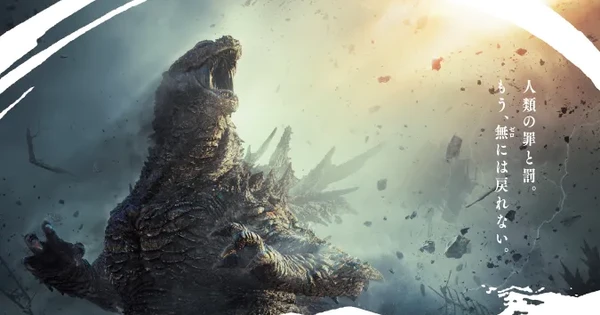
How do you bridge the gap between Godzilla as a force of terror and as a cool guy who fights other monsters? The American 2014 film tried to split the difference between metaphorical horror and “let them fight” fun before turning completely silly in its sequels. The last two JapaneseGodzilla films (Shin Godzilla and Godzilla Minus One) were stand-alone reboots that stripped the King of the Monsters down to his scary roots without another kaiju in sight. Then Minus One became an Oscar-winning global blockbuster, and writer/director/VFX genius Takashi Yamazaki pretty much had to make a sequel — and that means scaling up with another kaiju. How do you deliver the beatdowns fans want while still maintaining consistency with the dark historical drama of Minus One?
Godzilla Minus Zero‘s answer is to make its monster vs. monster fight the scariest you’ve ever seen. As everyone’s correctly guessed by now, King Ghidorah is the big new threat attacking Japan in 1949. Ghidorah’s a different beast in each Godzilla continuity, so I won’t say much about his portrayal here to avoid spoilers, but I’ll say this: we see a lot more of him this time around than we do Go dzilla, and he looks fantastic; Yamazaki’s special effects have leveled up beyond his already striking accomplishments in the first one. I’ll also note something from the press conference that followed the screening: when one critic offered his interpretation of what Ghidorah might be a metaphor for, Yamazaki said he welcomed all interpretations so long as he made the viewer feel a sense of powerlessness. Well, Yamazaki-san, you did your job.
The film’s surprising R rating is earned — though the violence is not excessively graphic, it refuses to sugarcoat the brutality inflicted on civilians in war. One of the new major characters, scientist Kanji Murakami (Min Tanaka), is a survivor of the Hiroshima bombing; we see flashbacks of him discovering his family’s burned bodies and even more PTSD-driven dark thoughts entering his head. Another flashback to the aftermath of Godzilla’s Ginza rampage in Minus One, answering the question of how Noriko (Minami Hamabe) managed to survive that attack in the first place, plays similarly to the Hiroshima scenes. You couldn’t edit this material down to a PG-13, and you wouldn’t want to. This very concern with the consequences of violence, however, might actually make it good for teenagers to see, a moral antidote to the wanton destruction of so many bloodless blockbusters.
If Godzilla Minus Zero has one big weakness in comparison to its predecessor, it’s that it’s so structurally tied into said predecessor that it won’t work nearly as well as its own story. The sequel has some good character development and powerful emotional moments, but it also doesn’t have an arc with the same easy hook as Koichi Shikishima (Ryūnosuke Kamiki) overcoming his kamikaze survivor’s guilt in Minus One. Beyond the spectacular kaiju attacks and the visceral war-horror elements, one’s attachment to the human characters here is more dependent on the attachments already established in the last movie, along with the general historical context that informs its depiction of post-war Japan.
While having fun with pulpier sci-fi plot elements and the inherent excitement that comes with Godzilla (that classic Godzilla theme still hypes one up), Minus Zero ends up being a darker movie than Minus One. Its mission is less one of heroic redemption and more entangled with complications. If Minus One was Star Wars, Minus Zero is The Empire Strikes Back. I don’t know if there will be a Return of the Jedi or if we’re left with a beautifully bleak duology. Of course I want to see more, but if Yamazaki wishes to end it here, he’s still left this series on a strong note. You can’t trust that the world will remain saved, but maybe you can still protect yourself and your family.
>
How the Lions' final defensive play call saved the day against the Jets
Sam Darnold looks like his old self — for better and worse — in shocking loss to Commanders
Sam Darnold looks like his old self — for better and worse — in shocking loss to Commanders
-

 movies4 months ago
Search For Canadian TV Actor Stewart McLean Now Homicide Investigation
-

 Fashion9 years ago
These ’90s fashion trends are making a comeback in 2017
-
Fashion9 years ago
According to Dior Couture, this taboo fashion accessory is back
-
Fashion9 years ago
Model Jocelyn Chew’s Instagram is the best vacation you’ve ever had
-
Fashion9 years ago
Emily Ratajkowski channels back-to-school style
-
Fashion9 years ago
9 Celebrities who have spoken out about being photoshopped
-

 Anime4 months ago
Rurouni Kenshin: Hokkaido Arc Manga Takes 1-Issue Break – News
-

 Anime3 months ago
HIDIVE to Stream English Dubs for The World Is Dancing, The Forsaken Saintess and Her Foodie Roadtrip in Another World, The Dangers in My Heart: The Movie Anime – News