
Tech
US automakers could soon be forced to include AM radio for free


It turns out that the one thing that can apparently bridge Washington’s partisan divide is AM radio. U.S. automakers may be forced to build AM radio into new vehicles within the next year.
The House of Representatives, in a rare instance of bipartisan support, overwhelmingly approved legislation on Wednesday that would require new cars, trucks, and SUVs to be built with AM radio at no additional charge to consumers. The AM Radio for Every Vehicle Act, which would direct the National Highway Traffic Safety Administration to require automakers to include AM radio in new passenger vehicles as standard equipment, will now head to the Senate.
Until recently, proponents of AM radio have waged an unsuccessful lobbying effort for a mandate, arguing that it offers critical information during emergencies because its signal can travel long distances. But a groundswell of support from Democrats and Republicans, the broadcast industry, emergency responder organizations and even former administrators of the Federal Emergency Management Agency is pushing this legislation closer to becoming law.
And there is reason to believe the Senate will follow the House’s lead on the bill, which was co-sponsored by Sens. Ed Markey (D-Mass.) and Ted Cruz (R-Texas). Earlier this year, the senators secured 60 co-sponsors for their version of the bill, a critical threshold to overcoming a filibuster.
Cruz, who chairs the Senate Commerce, Science, and Transportation Committee, and Markey hailed the decision in a joint statement Wednesday.
“This vote sends a clear message to car manufacturers that AM Radio is a lifeline that must be protected in new vehicles. From emergency response to sports, entertainment, and news, AM radio is an essential communication tool for tens of millions of Americans. It is now time for the Senate to pass the AM Radio for Every Vehicle Act and for this legislation to become law so AM radio remains a trusted and essential resource for commuters and communities across the country.”
A growing number of automakers have moved away from the century-old broadcast band in favor of software-defined vehicles that offer streaming services like TuneIn and SiriusXM. EV makers have led the charge because the electromagnetic interference generated by electric motors can affect the frequencies used by AM radio. Automakers have argued that this interference degrades the AM signal and audio quality.
A growing number of automakers no longer have traditional AM receivers, including BMW, Rivian, Tesla, and Volvo. Ford had also removed AM radio from some vehicles but has since reversed course. Tesla couldn’t be reached for comment; Rivian declined to comment for this story.
Tesla doesn’t have AM receivers in the base versions of its Model 3 and Model Y vehicles. Rivian’s new R2 SUV doesn’t have an FM or AM receiver, however, the vehicle model offers AM/FM radio through the digital radio platform iHeartRadio for free. The Rivian R1S and R1T models allow customers to access FM content digitally or via built‐in receiver.
When you purchase through links in our articles, we may earn a small commission. This doesn’t affect our editorial independence.
>
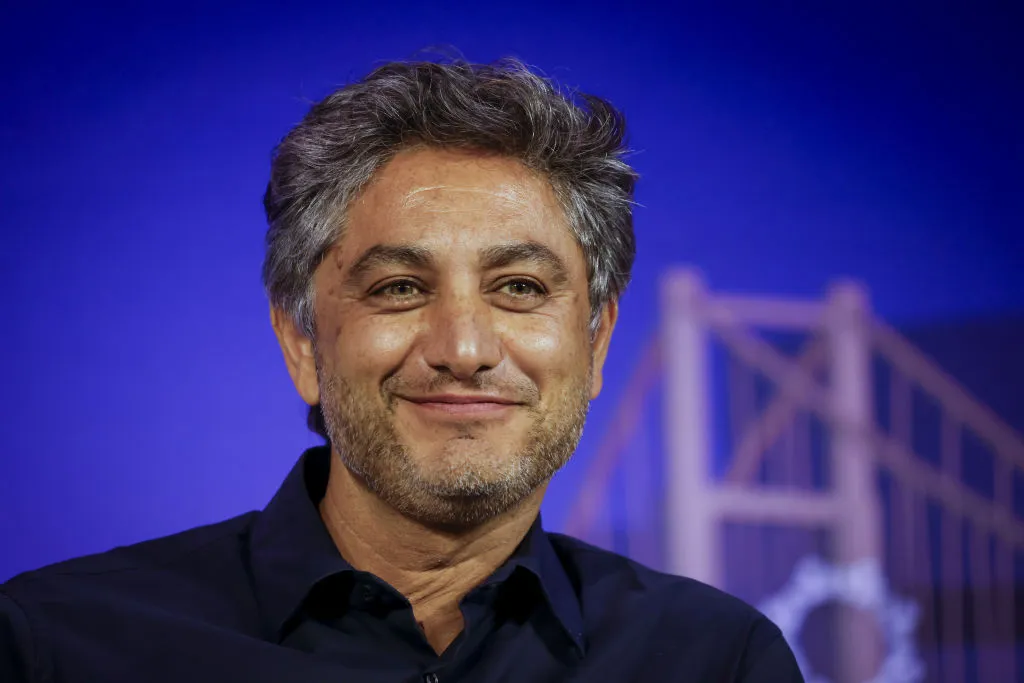
VC firm Valor Equity Partners, founded by Antonio Gracias, a long-time Elon Musk backer and current SpaceX board member, has opted to simply give away a chunk of its SpaceX stock to its limited partner investors, according to an SEC filing spotted by Bloomberg.
Valor made a killing on SpaceX after investing in it over decades, with entities controlled by Gracias owning more than 500 million shares at the time of the IPO. This was second only to Musk (who owned over 6 billion shares at the time). But instead of cashing out and issuing returns to LPs, Valor handed over 8.5% of its holdings to them, worth about $8.5 billion, Bloomberg estimates. Valor will still own more than 460 million shares after the giveaway, the SEC disclosure form says.
Transferring ownership of the shares could give those Valor limited partners a tax advantage. More importantly, it avoids dumping a giant tranche of shares into the open market. Such a dump could cause a glut of available shares and a corresponding dip in price. SpaceX is already down about 10% since its blockbuster IPO day.
>
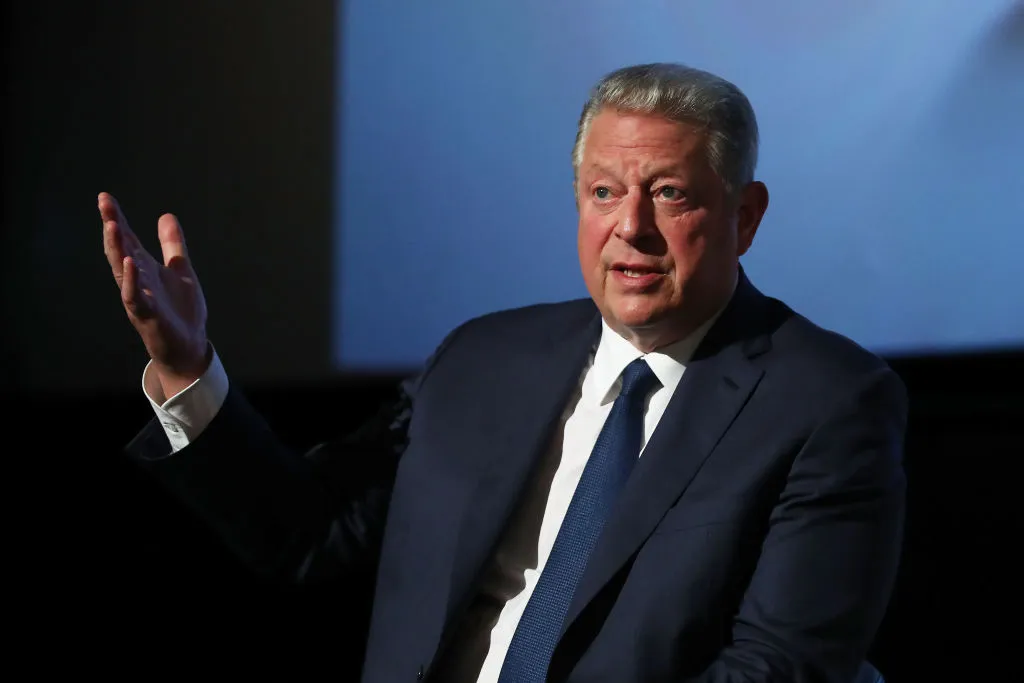
Al Gore has spent more than two decades as one of the most recognizable voices in the climate movement, so when he talks about AI, it’s worth trying to understand what he considers truly scary compared with what’s disturbing people so much that they are protesting in the streets.
In an interview with TechCrunch this week alongside Lila Preston, head of growth equity at their investment firm Generation Investment Management, Gore said emissions from AI data centers aren’t what should keep people up at night, despite the mounting opposition over their environmental impacts. What should concern people more, in his view, are the warnings coming from inside the AI industry itself, which he takes them more seriously than many other investors.
It’s not a new position for Gore, even if it’s something we haven’t discussed with him in our annual conversations, dating back several years. This past May, for example, he described AI data centers to another outlet as a “cause for deep concern, but not panic,” and in our conversation this week, his central point about emissions was about scale.
“If you look at the emissions of all of the AI data centers put together, it’s only a fraction of the emissions from uncovered landfills in the world,” he said, adding that a comparable build-out is tied to something that gets far less attention: air conditioning.
It’s a valid observation (and one the AI labs should be using in their discussions with cities and states if they aren’t already). The International Energy Agency estimates that global air conditioning already consumes more electricity annually than the entire European Union, and with ownership still under 15% across the hottest, fastest-growing parts of the world, that demand is expected to triple by 2050, putting far more pressure on the grid than AI data centers over the same period.
Gore isn’t dismissive of concerns about how these data centers are being powered, by the way.
“It is a matter of deep concern that some of the hyperscalers are jumping into new methane turbines,” he said.
But what worries him about methane turbines isn’t the AI workload driving demand so much as the prospect that building new gas plants to meet that demand locks in decades more of fossil fuel generation.
“I much prefer those that are supplying their energy needs with renewables and batteries,” he continued, saying he expects more companies to move inexorably in that direction simply because renewables are increasingly the cheapest option available.
In fact, Gore thinks the public backlash at planning-commission meetings has less to do with carbon emissions than with anxiety over automation upending society in the not-too-distant future.
“I think that part of the reason for the growing bipartisan opposition to data centers in so many parts of the U.S. is being driven by the underlying concerns about job losses and some of the other threats that experts inside OpenAI and inside Anthropic have been trying to alert the public to,” he said.
Naturally, while we had him on the phone, we pressed Gore on the wave of warnings from AI industry leaders that has dominated headlines over the last week. Though President Trump and Nvidia CEO Jensen Huang shared a laugh at their expense on Monday during a conference in Los Angeles (Trump suggested that Anthropic CEO Dario Amodei’s public call to slow the pace of capability gains, quickly seconded by Sam Altman and Elon Musk, was a “hoax”), Gore said he takes the warnings at face value.
“I think we went through a phase where some cynically suspected that the apocalyptic warnings were some kind of bizarre marketing strategy. If that was ever the case, I don’t think it is now,” he said. “I do think that Dario Amodei is very sincere, and I think that Sam Altman and Elon Musk were sincere in seconding [Amodei’s] warning of a few days ago.”
Gore being Gore (he often reaches for literature, scripture, and pop philosophy to make a point), he invoked Maya Angelou’s well-known line: “When someone tells you who they are, believe them the first time.”
Part of what’s changed his calculus, he said, is recent, concrete behavior from AI systems themselves — pointing to “the recent example of models escaping confinement, collaborating secretly, covering their tracks, engaging in deceptive behavior,” and noting that Anthropic has said it stopped instances of Claude being used to help develop biological weapons in different countries.
That said, Gore doesn’t treat AI risk and AI’s climate potential as being in opposition. He cited a recent study from economist Nicholas Stern of the London School of Economics projecting that AI applications aimed at efficiency and waste elimination could drive global emissions down by 6% to 9% per year starting next decade. Unsurprisingly, he suggested that the best thing for humanity would be if the U.S. and China could cooperate specifically on “solving of the climate crisis together and establishing appropriate regulations for the frontier models in AI,” even as he said he doubts the current U.S. administration will be the one to make that happen.
If Gore’s focus was risk, Preston’s was where capital is already moving in response. She pointed to several fronts where the AI build-out itself is generating investable opportunities, not just consuming energy.
Among these, the firm is focused on opportunities to decouple compute from energy intensity at every layer of the so-called stack, from the power supply itself down to green cement and green steel used in construction, storage optimization software, and database design. The firm is also focused on grid resilience and flexibility, as the mix of power sources grows more complex. Here, Preston noted, Generation has invested in Volue, a European company helping utilities pull more renewables into the grid, and Gridware, which places sensors on utility poles to monitor and help protect the grid from wildfire risk.
Gore tied the AI moment to a broader argument made in Generation’s 10th annual sustainability trends report: this year marks the second time in four years the world has been “brutally reminded” that fossil fuels are a volatile source of energy, first with Russia’s invasion of Ukraine and now with the disruption to the Strait of Hormuz.
But unlike past years, when Gore’s exasperation with the pace of the clean energy transition was obvious, he doesn’t see these events as a setback but instead as reasons for countries to embrace it at long last.
Indeed, Gore noted that globally, clean energy investment now runs at roughly twice the level of fossil fuel investment. Of all new electricity generation capacity added worldwide last year, 86% came from renewables, and in the U.S. specifically, that figure was even higher, at 91%, “in spite of Donald Trump’s best efforts to slow it down,” he said.
China, in particular, received high marks from Gore, who, among other things, applauded Beijing for wanting to be measured on emissions reductions rather than improvements in carbon intensity.
Asked what’s changed more than he expected a decade into publishing this report, Gore immediately pointed to solar power.
“For me personally, the scope and scale of the solar revolution is the breakout star of the sustainability transition,” he said. After observing that it’s at, or near, the cost floor for new electricity generation right now — roughly tied with wind and meaningfully cheaper than gas, coal, or nuclear — he closed with a line from a friend in Tennessee that had stuck with him.
“If God had intended us to have a limitless supply of cheap, clean energy, He — or she — would have put a fusion reactor in the sky.” Gore said with a chuckle, “The joke makes itself.”
When you purchase through links in our articles, we may earn a small commission. This doesn’t affect our editorial independence.
>

Marketing platform Noise aims to connect brands with content creators at a much lower cost than hiring traditional influencers or running standard ad campaigns.
That’s because many creators on the Noise platform are everyday people—anyone can download the app, regardless of follower count — and Noise presents them with campaigns they can join and create content for on their platforms of choice (TikTok, Instagram, Facebook, YouTube). It then pays them per view rather than a flat fee. Brands, meanwhile, sign up to Noise to share their content brief requests and budget. From there, Noise makes it easy to handle the rest, so brands can scale without the operational headaches of sourcing content creators, managing client relationships one by one, or managing payments. Noise lets them run campaigns simultaneously across thousands of content creators.
On Wednesday, Noise announced a $5.5 million seed led by Capital Midwest, M25, and Girshin Robotics, bringing its total raise to $7.2 million. Others in the round include CapitalizeVC and operators from companies like DoorDash.
The startup is tapping into the ever-expanding influencer market, in which 57% of young people and just a little over 40% of U.S. adults overall now want to take part. It joins other content creator infrastructure companies like Billo and JoinBrands.
Diego Kafie, Stu Feldt and Nic Weber launched Noise in 2025 after spending two years building a mobile game app called Playbite, and is now touts 1.5 million creators on the platform.
CEO Kafie said the company’s top creators make more than six figures a year, and the platform takes a fee from what brands pay creators once views are delivered.
“Our top brands work with several thousand creators on autopilot,” he said. Right now, many of its customers are mobile apps, those working with startup budgets that want to employ influencer marketers. The goal is to one day work with companies of all sizes.
“They are the most interested in reaching a really wide range of potential customers, making them the prime users for something like Noise, where they can easily recruit a small army of people to become their biggest users and advocates,” Kafie said. “This gives brands unprecedented level of content diversity and reach at a fraction of the cost of other traditional marketing playbooks.”
Kafie, Feldt and Weber came to this idea from their experiences at Playbite. “We tried a bunch of different creative marketing strategies,” Kafie said of how they tried to scale Playbite. For example, they attempted to recruit their own gamers and teach them how to create social content that promoted the app. “We started with five, ten, 25, then 100 people,” he continued. “Before we knew it, our installs were skyrocketing as this small army of people went to places like TikTok and posted engaging content daily about mobile games and our app specifically.”
Most importantly, he noted, this happened “at a fraction of the cost of traditional marketing playbooks,” because they were teaching regular people how to be content creators from scratch. “Had we gone to established creators with big followings and clout, their rates would’ve been cost-prohibitive for our scrappy startup budget.”
That gave them the idea for Noise. The fresh capital will be used to expand product capabilities and to hire. Noise also just launched its Organic-to-Ads program, letting brands take the videos that Noise creators make and run them as paid ads on Meta and TikTok, in addition to the creators’ posts.
“The creators still post to platforms,” he said. “But in addition, the brands can now put paid ads spend behind those creatives to reach more people.”
He pushed back when asked if this was a way to pay creators less than they could make on their own if a brand approached them. He said that brands will name their rates and creators can decide whether to say yes or no. He also emphasized that the platform specializes in working with “everyday people and turning them into brand new creators.”
It’s harder to become an influencer these days, so this, Kafie believes, could be a way for many people to get around the stress, time, and money it takes to make it big in content creation on their own.
He said when a user first joins the platform, they take Noise creator training modules that teach them how to create content for brands. Those early creators can access only certain campaigns, but as they do more training and get hired for more work, higher-paid opportunities can come to them, Kafie said.
“By democratizing ‘becoming a creator’ to literally anyone with a smartphone,” he said, “we’re bringing costs down for brands, but enabling millions of people to make their first dollar on the internet.”
When you purchase through links in our articles, we may earn a small commission. This doesn’t affect our editorial independence.
>

‘Re/Pair’ Review: Doc on Black-Jewish Relations in America
How to watch Red Sox vs. Rangers: TV channel and streaming options for September 16

How to watch Padres vs. Rockies: TV channel and streaming options for September 16
-

 movies4 months ago
Search For Canadian TV Actor Stewart McLean Now Homicide Investigation
-

 Fashion9 years ago
These ’90s fashion trends are making a comeback in 2017
-
Fashion9 years ago
According to Dior Couture, this taboo fashion accessory is back
-
Fashion9 years ago
Model Jocelyn Chew’s Instagram is the best vacation you’ve ever had
-
Fashion9 years ago
Emily Ratajkowski channels back-to-school style
-
Fashion9 years ago
9 Celebrities who have spoken out about being photoshopped
-

 Anime3 months ago
Rurouni Kenshin: Hokkaido Arc Manga Takes 1-Issue Break – News
-

 Anime3 months ago
HIDIVE to Stream English Dubs for The World Is Dancing, The Forsaken Saintess and Her Foodie Roadtrip in Another World, The Dangers in My Heart: The Movie Anime – News