
movies
Box Office: ‘Resident Evil Posts Record Franchise Previews Of $8M-$9M

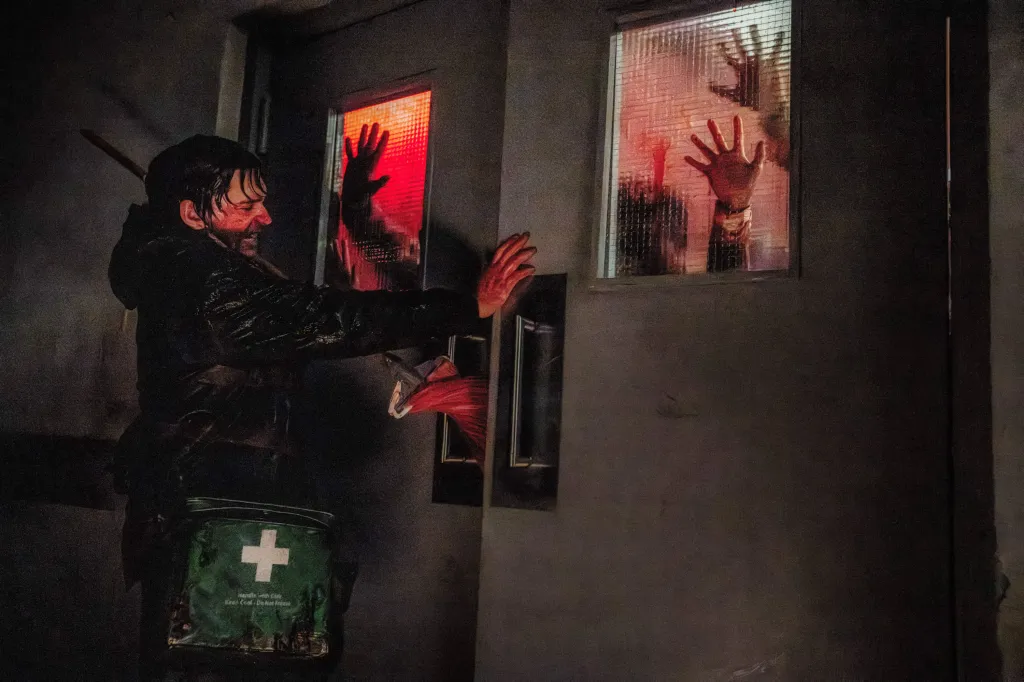
Buckle up your 4DX seat because it’s gonna be a fun weekend as out of the gate, Zach Cregger‘s take on Resident Evil is already posting the best previews ever for the franchise with tonight north of $8M and maybe even north of $9M.
Similar to how this Resident Evil is posting the series best critical score on Rotten Tomatoes (now at 96% certified fresh), so is it posting the best audience score as well at 91%. On Rotten Tomatoes, the previous best audience score belonged to the original 2002 film at 67%.
Previews for the Sony/Constantin R-rated feature adaptation of the Capcom video game began at 2PM stateside.
Tonight’s estimated take easily decimates the franchise’s previous high (which wasn’t much), 2016’s Resident Evil: Final Chapter which posted $1M. That was the first time a Resident Evil movie posted seven digits in its previews.
But get a load of this: Resident Evil‘s previews even on the low-end scorch Cregger’s Weapons ($5.75M previews, $43.5M opening), Scream 7 (yes, $7.8M, $63.6M opening, but put a pin in that one), Mortal Kombat 2 ($5.2M, $38.5M), Sonic the Hedgehog 3 ($6.5M, $60.1M; yes, we know that’s a family film, but it’s based on a video game. Calm down).
Here’s the thing, the Friday/preview-to-Saturday holds for some previous Resident Evil movies are pretty good with The Final Chapter +1.4% between those two days, the original 2002 movie +1%, and Resident Evil: Afterlife -9%, the series previous record domestic opener at $26.6M). The point is, because it’s horror, and because it’s a different iteration of Resident Evil from the previous Milla Jovovich films, the wait-and-see is just how front loaded this movie is. Scream 7 was a completely different animal in the return of Neve Campbell to the franchise and tracking sources tonight, advise not to comp Resident Evil to that horror pic (at least not yet). It was Cregger’s vision here to make a more authentic adaptation of the games which he has avidly played.
The net $75M Constantin/Sony production of Resident Evil is playing in PLFs and Imax, with the latter format’s 70MM still on a crusade with The Odyssey (about 35 auditoriums).
Tonight’s figures come from distribution sources, not the studio, so take everything with a grain of salt.
>
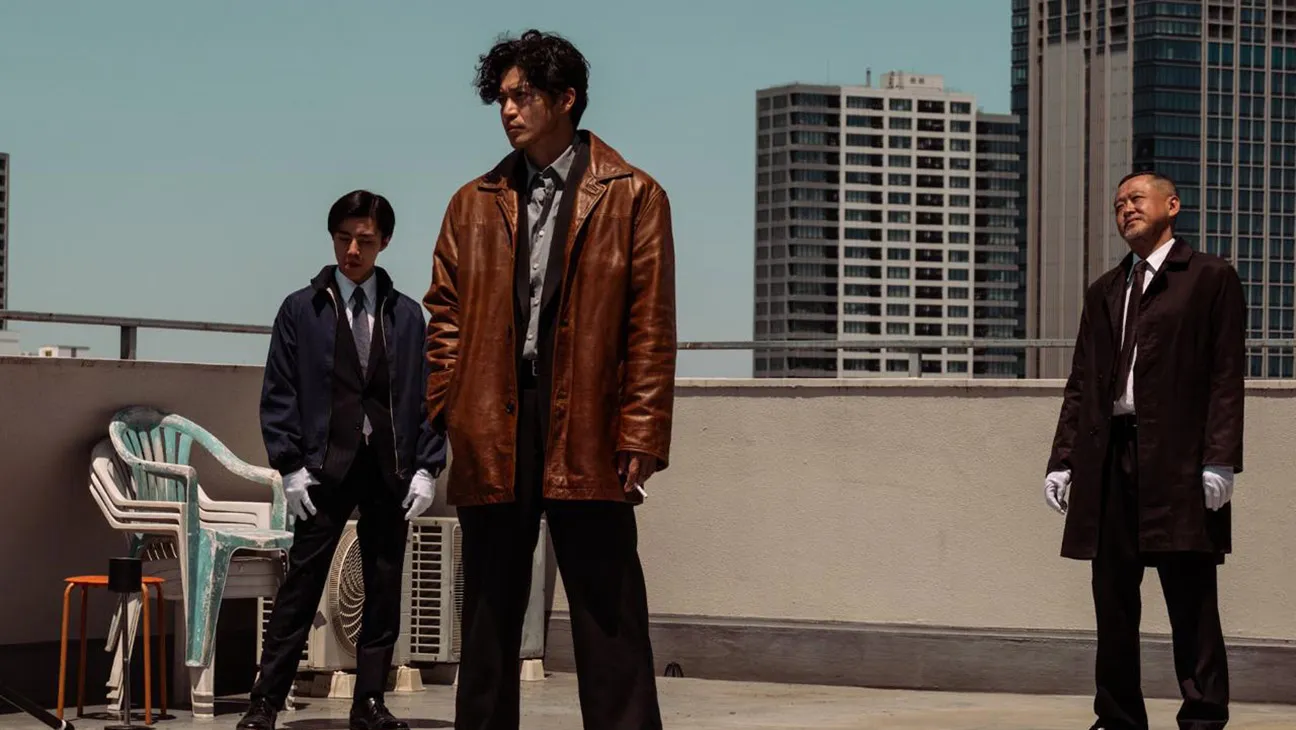
The first in a planned series of international sequels, Bad Lieutenant: Tokyo gets things off to a mostly inauspicious start, despite enlisting the magnetic Shun Oguri as the latest incarnation of the seedy, morally hollow detective to whom the films owe their title. It’s closer in terms of plot machinations to Abel Ferrara’s 1992 original with Harvey Keitel than to Werner Herzog’s wildly eccentric 2009 follow-up, Bad Lieutenant: Port of Call New Orleans, a snug fit for Nicolas Cage’s gonzo extremes. But that doesn’t mean the choppy narrative ever gathers much steam.
What’s surprising is that prolific Japanese cult director Takashi Miike, known for explosions of operatic violence, gore and perversion in breakthrough films like Auditon and Ichi the Killer, delivers a franchise entry that aspires to be a hardboiled crime thriller but lacks the electricity to build suspense or even tension. While devout Miike-heads might feel sated by the one or two amped-up set pieces and the characteristic strain of dark humor, this is by far the weakest of the three Bad Lieutenants.
Bad Lieutenant: Tokyo
The Bottom Line
A sluggish neo-noir oddly lacking in tension.
Venue: Toronto International Film Festival (Special Presentations)
Cast: Shun Oguri, Lily James, Shotaro Mamiya, Liv Morgan, Jun Kunimura, Hiroshi Tachi, Shuhei Nomura, Nanase Nishino, Yuka Kouri
Director: Takashi Miike
Screenwriter: Daisuke Tengan
Rated R,
1 hour 48 minutes
The characters played by Keitel and Cage in previous installments both experienced a drug-fueled spiritual crisis. A cynical cop with a long history of investigating the yakuza underworld, Yabuki (Oguri) doesn’t appear to have much on his mind beyond feeding his meth habit, playing ping pong and doing drugs with a couple of giggly Korean sex-workers, and keeping the loan sharks at bay as he attempts to pay off — or recklessly increase — his gambling debts. He is occasionally troubled by guilt over his role in the death of a partner 15 years earlier, but those thoughts surface in surreal dream states rather than serious self-reflection.
Yabuki’s marriage is already in such a shambles that even his preteen kids are losing their faith in him. He scarcely blinks when he comes home and finds a note from his wife saying she has left with the children and telling him not to try to find them.
With the yakuza syndicates in a transitional state as old clans dissolve and new ones are formed deeper underground, his colleagues in law enforcement call on Yabuki’s expertise when a naked body turns up, an extensively tattooed young gangster whose neck has been neatly snapped. Yabuki recognizes the victim but withholds that information from the cops, instead using it to chip away at his debts.
While that investigation is ongoing, another spate of murders comes to light as Ishizuka (Shotaro Mamiya), a disenfranchised yakuza soldier fresh out of prison, wanders around town with a hefty machete delivering payback to anyone who betrayed him. He starts with his wife, chopping her up and then rolling her remains into meatballs, served up in planter boxes on the terrace for crows to feast on — inarguably the movie’s most quintessentially macabre Miike touch.
More criminal than cop in the eyes of many, including himself, Yabuki is an outsider at the precinct. But he hangs around long enough to be roped into assisting American FBI agent Gwen Birgssen (Lily James) in an investigation. Gwen has been dispatched to Tokyo to track down Megan (current Women’s World Champion WWE wrestler Liv Morgan), the missing daughter of a prominent U.S. congressman who came to Japan to study the art of sushi and got sidetracked by drugs and thugs. It later emerges that in addition to crack and raw bar cuisine, Megan has a thing for short dudes with impressive body ink.
It’s this thread more than anything that derails any plot momentum, partly because James is so woefully miscast, assuming an unconvincing Southern Fried drawl you might expect to find in a regional theater staging of Tennessee Williams. The Brit actress has obviously put in time on the fight training, demonstrating nimble moves in a nightclub brawl with no bearing on the plot. It does serve, however, to get both Gwen and Yabuki so sexually charged that they tumble into bed together. The old fight-and-f*ck combo never fails.
Miike appears to have minimal interest in dialogue-driven scenes. That’s too bad because Gwen and Yabuki have a few of them in which key information is possibly shared. Between James’ garbled twang, Oguri’s unsteady command of English (the actor fared better in that regard in Godzilla vs. Kong) and a muddy sound mix, much of their conversation is incomprehensible. Which might be for the best considering the increasingly bonkers twists of the script by Daisuke Tengan, who collaborated with Miike on Audition and the hit samurai epic, 13 Assassins.
The two investigations do eventually intersect of course, which happens when another slender tatted-up young gangster turns up dead and the victim’s father (Jun Kunimura, immortalized as Boss Tanaka in Kill Bill: Vol. 1) cuts Yabuki a deal to clear all his debts with the Chinese mob if the cop delivers the killer to him. The inevitable bloodbath happens, along with lots more meatballs for the hungry crows and revelations about how Megan gets her freak on. But the cases are resolved too haphazardly to make us care much, especially when it involves Gwen, the least persuasive gunslinger in the history of movies, snarling “Motherfucker” as she plugs a mobster full of lead.
Like much of Miike’s work, the visuals are equal parts slick and rough-edged, and the Shinjuku setting, specifically the red-light Kabukicho district with its warren of back alleys, bars and brothels, supplies plenty of shadowy atmosphere, often stained with neon. But the movie is way too busy to keep all its plates spinning and if not for the fact that Oguri is so watchable with his mop of unruly hair and sleepy deadpan delivery, there would be very little here to recommend. But Miike fans might even give Bad Lieutenant: Tokyo a stamp of approval just for one scene of major mayhem, in which Yabuki does some virtuoso driving, plowing through yakuza scum while protecting the lives of … a bunch of cute kids? Don’t even ask.
>

EXCLUSIVE: Josh Katz, a longtime UTA Partner and Motion Picture Talent Agent, has left the company after a 30-year run.
We’re told Katz was pushed out, though sources close to the agency indicated that he left of his own accord. Katz himself declined to comment when contacted by Deadline: No next destination was given.
It’s expected that Katz will remain in the industry, though whether or not he’ll bring clients with him to his next venture is not yet clear. During his time at UTA, he worked with talents such as Rhea Seehorn — the Better Call Saul star fresh off her first Emmy win for Pluribus — along with Rob Delaney, Josh Duhamel, SNL alums Bill Hader and Bobby Moynihan, Nicholas Braun, Nick Offerman, Jessica Biel, Emerald Fennell, Michael Showalter, and many more.
Katz has been a partner at UTA since 2013. A homegrown talent who grew up loving movies, he joined the agency through the mailroom in 1996 — set on a path toward becoming an agent when he read an essay from its co-founder Jeremy Zimmer, who served as CEO for nearly 13 years, ending in June 2025.
A native New Yorker, Katz came to UTA after graduating from SUNY Albany.
>

“You can easily imagine my indignation at seeing this revered institution become the subject of such a bitter struggle over one man’s name and unchecked ego,” wrote Kennedy Center honoree Barbra Streisand. She was referring to President Donald Trump‘s attempts to close down or, in his words, issue a warning that the center would be “ripped down” unless a renovation plan is carried out and his administration gets recognition for it.
Trump has long complained that the center is old and needs to be renovated. Congress included more than $250 million in the One Big Beautiful Bill Act last year for just that. But since Trump’s takeover of the center weeks into his second term, the institution has seen a drop in ticket sales and, after the president’s name was added to the complex in December, another wave of artist cancellations.
What followed was a saga in which Trump’s name was added on the front of the building and then, when order by a judge, it was removed. But a tarp was then placed over the entire edifice as if to hide it.
Trump posted on Truth Social earlier this week that the renovation will not take place unless courts lift a judge’s order that has prohibited his name from being enshrined on the facade of the complex. Then came the president’s threat on Wednesday that the center may be ripped down unless a renovation plan is carried out and his administration gets recognition for it.
A federal judge today said that the Kennedy Center must give the court 30 days notice before proceeding on any demolition of the complex.
Sharing a photo of herself and the late president, streisand noted that the center was renamed in the wake of Kennedy’s death as a memorial, and for good reason.
“The Kennedy family and other American leaders wanted a meaningful way to preserve his legacy. Re-naming the Cultural Center in JFK’s honor was a fitting choice, because he was a true champion of the arts.”
In fact, being honored by the center meant something greater that other awards.
“In 2008, I was deeply honored to be included in the 31st annual class of Kennedy Center Honorees. For me, and for so many artists, that honor represented something larger than a career recognition. It represented a belief in the importance of art to the life of a democracy.”
She continued, “That is why what is happening to the Kennedy Center is so galling and painful to witness.”
Another reaction came from Kennedy’s niece, Maria Shriver, who wrote on Tuesday, “That a sitting president would not let any renovations to a public building go on unless he gets to first put his name in the said building… What a sad state of affairs. What a tragedy. Actually, how small minded, how narcissistic. Actually great men, devoted to public service and the public good do not act like this.”
>
England squad announcement: Thomas Tuchel announces selection for Nations League fixtures
The Sydney Sweeney advert and what it says about the marketing of women in sport
Premier League predictions: Tottenham vs Aston Villa, Brighton vs Arsenal and rest of GW5
-

 movies4 months ago
Search For Canadian TV Actor Stewart McLean Now Homicide Investigation
-

 Fashion9 years ago
These ’90s fashion trends are making a comeback in 2017
-
Fashion9 years ago
According to Dior Couture, this taboo fashion accessory is back
-
Fashion9 years ago
Model Jocelyn Chew’s Instagram is the best vacation you’ve ever had
-
Fashion9 years ago
Emily Ratajkowski channels back-to-school style
-
Fashion9 years ago
9 Celebrities who have spoken out about being photoshopped
-

 Anime3 months ago
Rurouni Kenshin: Hokkaido Arc Manga Takes 1-Issue Break – News
-

 Anime3 months ago
HIDIVE to Stream English Dubs for The World Is Dancing, The Forsaken Saintess and Her Foodie Roadtrip in Another World, The Dangers in My Heart: The Movie Anime – News