
Tech
Meta’s Muse Charm looks like a Tamagotchi, but it’s tapping into a much newer trend


Is Meta’s just-announced Muse Charm a playful device that will make AI more approachable to everyday consumers, or will it be yet another flop in a long list of AI hardware gadgets that didn’t take off, like the AI Pin, Rabbit, or Friend pendant? Reactions, so far, have been mixed. What the Charm is, however, is on-trend.
Like it or not, the form factor could potentially appeal to Gen Z consumers who, in this post-Labubu era, have already been into various dangling items from keychains and bags. It’s all part of a broader kitschy, retro-inspired shift in their approach to fashion and technology.
Already, Gen Z has created a market for things that dangle, with everything from lip glosses to hand sanitizers to sunblocks to fragrances and more turned into bag charms, primarily targeted at women.
Hailey Bieber’s viral Rhode lip case, which stuck the lip gloss onto a phone case, had a big influence on this idea that beauty products could also be fashion accessories, as did its other beauty-focused bag charms. (The brand saw $212 million in annual net sales from a lineup of roughly 10 products, Vogue noted last year, as the company announced its billion-dollar exit to Elf Beauty.)
Then there was the Labubu craze, which saw sales of the so-ugly-it’s-cute fuzzy monster bag charm explode, growing Pop Mart (the Chinese retailer behind the product)’s revenue to $1.8 billion in 2024, a 7x jump from 2019. While demand for the Labubu itself has since faded, the concept of the decorative bag charm has not. One analyst firm estimates the global bag charm market will grow to over $1 billion by 2030.

Today, bag charms can be characters, bedazzled beauty products, or other whimsical designs or objects, like Coach’s coveted cherry charms, a Gen Z favorite. They’ve proven popular because they’re a means of expressing your personality, just as humans have done for ages through their fashion choices, makeup, and jewelry.
Similarly, Meta’s Muse is a customizable character; you design your own avatar, which makes the AI agent a reflection of you, too.
And, as many have pointed out, Muse Charm’s form factor recalls a Tamagotchi, the pocket-sized digital virtual pet that became a major toy fad in the late 90s and again in the mid-2000s.
However, the Tamagotchi is not the most current reference. It seems the Muse Charm is actually a twist on what some young people are already doing with their Apple Watch. Often meant as a way to repurpose an older device, the concept of the Apple Watch keychain or charm has been growing in popularity, fueled by TikTok videos showing different ways to use the watch when not on your wrist.
On retailers like Amazon and Walmart, and marketplaces like eBay and Etsy, there are thousands of Apple Watch keychains, straps, pendants, lanyards, clips, and bag charm cases now available in nearly every style you can think of. As you might expect, these keychain watches are often being adopted by younger women as a fashion accessory first, rather than a piece of technology.
This all then intersects with the broader retro-tech trend, which has seen older tech like digital cameras, flip phones, iPods, CDs, cassette tapes, home phones, and wired earbuds making a quiet comeback.
This vibe shift in tech comes as young people describe the addictive, algorithm-driven feeds and “soulness” nature of technology as making them feel more disconnected, which has also fed into this trend of wanting tech they can touch and feel. (One startup, Clicks, is even bringing back the physical phone keyboard in a BlackBerry-inspired device, for instance.)
For Gen Z, these physical objects help them feel more connected with the technology they’re using and offer a sense of control over a world where technology has become so deeply integrated into our lives that it no longer feels like a choice to use it.
Young women, again, have been at the forefront of this trend, with some even crafting their own portable, mini computers, “cyberdecks,” which they fit inside clamshell purses or custom cases, and bedazzle with jewels, flowers, stickers, pearls, and other items to make them feel more personal.

That brings us back to the Muse Charm. While it’s clearly designed with the tech-as-fashion-accessory trend in mind, that doesn’t mean it will be a hit.
Meta has abused consumer trust over the years to such an extent that it may never fully recover.

To name just a few examples: the tech giant had to settle with the FTC over charges that it deceived consumers by making users’ private information public without their consent, and has been penalized by the FTC for numerous privacy-related violations. In 2023, the FTC charged Meta with violating a privacy order that was filed after the 2019 settlement. It’s also been repeatedly hauled before Congress over its harms to minors, has lost or settled multiple lawsuits over the same topics, and has seen various whistleblowers outing its abuses.
These careless privacy practices could ultimately see Meta lose the battle to be the consumer AI of choice…unless, of course, consumers decide that the “devil you know” is better than the one you don’t. (Especially when the latter are those warning AI will could put an end to the human race).
Meta’s end game, after all, is highly-targeted, highly-personalized ads. If that’s the privacy tradeoff in gaining access to free AI — Meta said it will monetize Muse by taking a small fee from transactions — consumers could be willing to take the risk.
When you purchase through links in our articles, we may earn a small commission. This doesn’t affect our editorial independence.
>
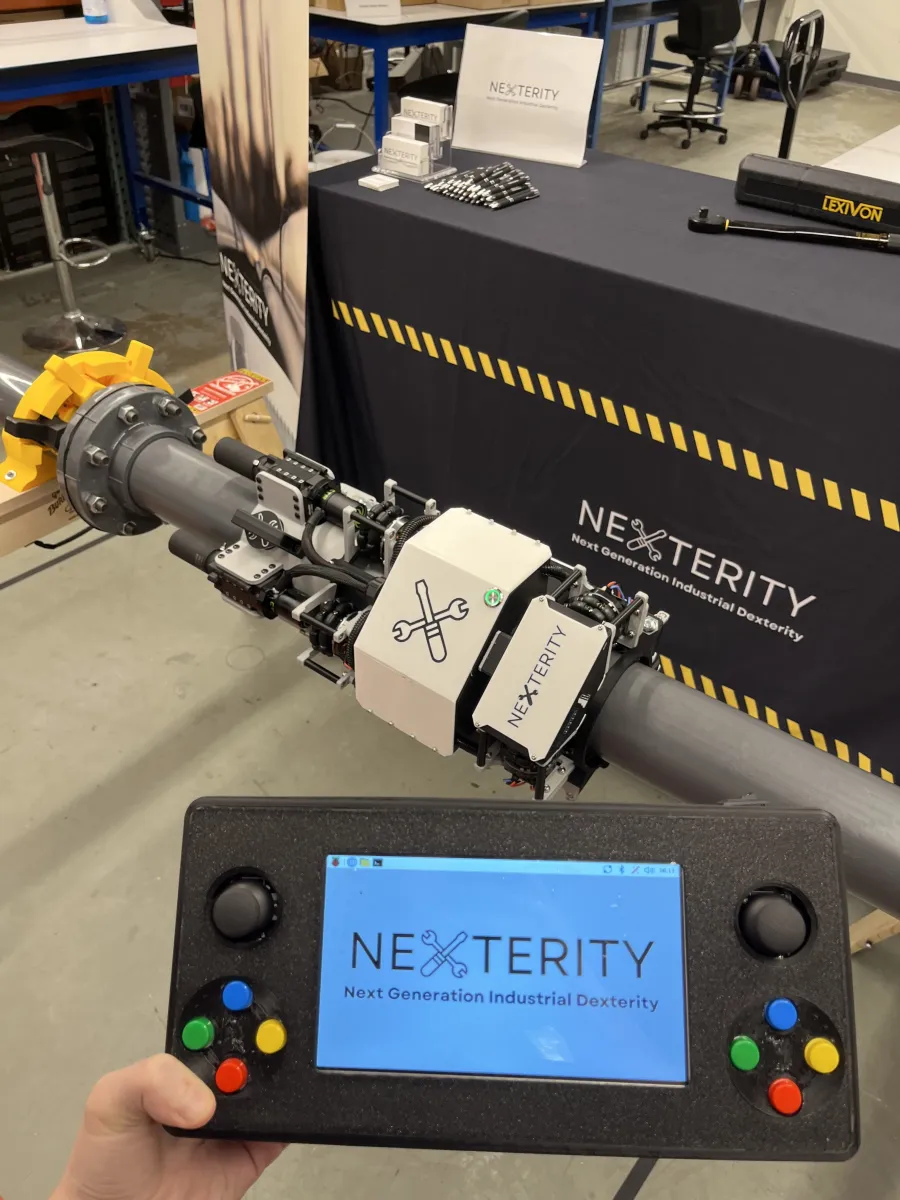
Lindsey Elliott is big into bolts. At last year’s Bolting Symposium — the 13th annual — she said the highlight was playing “Bolting Bingo” against the many self-proclaimed “torque dorks” who were in the room.
A former engineer and planner at ExxonMobil, Elliott has spent years thinking about how to improve the infrastructure that moves oil, gas, and petrochemicals. Bolts are what she landed on. Specifically, the bolts that connect sections of pipe (technically called “bolted flange joints”). These bolts require hard, physical work to loosen and tighten, and are the source of many pipefitters’ injuries. Like many trade industries, there’s also a labor shortage.
“Those people get really tired when they’re asked to work 12 hours a day for three months in a row,” she told TechCrunch. “I’ve talked to pipefitters across the U.S. across Canada, and just repeatedly have been told North American pipefitting productivity is notoriously low.”
The solution Elliott came up with at her startup Nexterity, which is one of the Startup Battlefield 200 selected to participate in TechCrunch Disrupt, is a remote-controlled robot that can handle this part of the job. It’s the kind of idea that could fundamentally change this particular blue collar job if widely adopted, making the workers safer and more productive.
Think: more dork, less torque.
The robot comes in two main pieces that fit around a pipe. Powered by batteries, the robot can slide across the pipe once it’s attached and quickly loosen and tighten four bolts at a time.
Elliott said Nexterity has developed a few different configurations of the robot to fit different standard pipe sizes, but they’re all small enough to fit in a Pelican case and be carried by a single worker. That makes them easy to deploy to new sites — flexibility that is crucial to Nexterity’s business model of treating the robot like rental construction equipment.
Elliott said she arrived at this particular design as a result of conversations she’s had over the last few years — not just at the Bolting Symposium, but also with members of the Pressure Vessels & Piping Division of the American Society of Mechanical Engineers.
“What I learned from the people, the torque dorks per se,” she said, “is that 80% of our pipes are between two to eight inches in diameter, or what they call NPS2 to NPS8. And so when you have that much repeatability, you have a fantastic candidate for automation.”
It’s a pretty straightforward idea, but one that Elliott believes has a lot of upside.
“I think it would shock a lot of people just how big this market is,” she said. “I mean, day to day, most of us don’t think about piping infrastructure, but even water, wastewater, water treatment, food and beverage, mining, nuclear, any kind of green and sustainable manufacturing facility — they all use the same kind of piping.”
When you purchase through links in our articles, we may earn a small commission. This doesn’t affect our editorial independence.
>
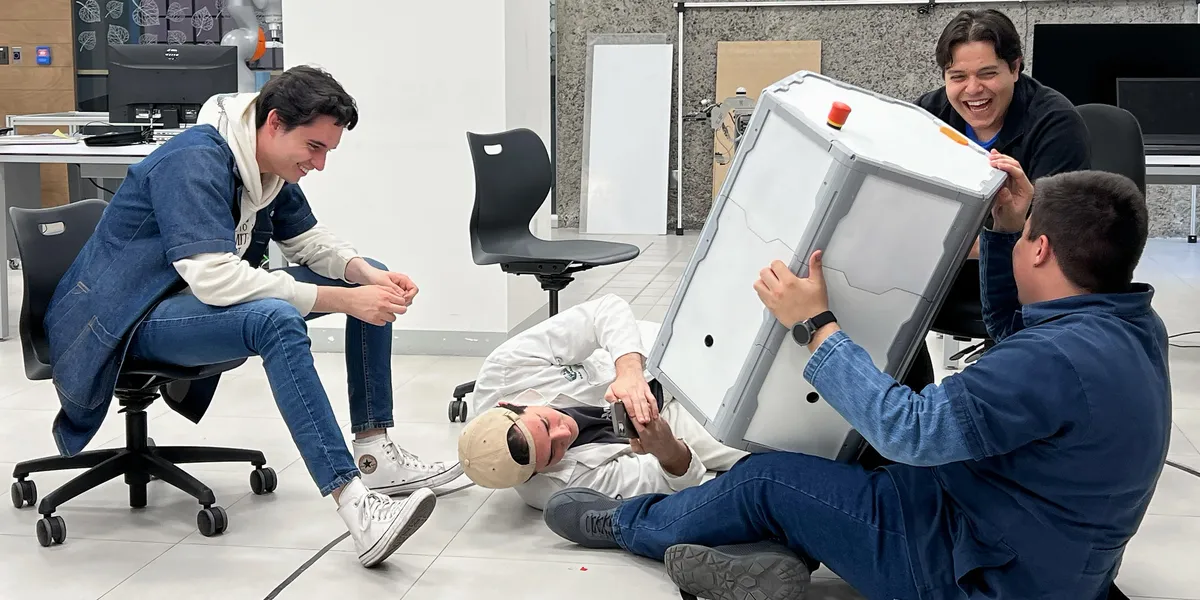

In Guadalajara, Mexico, many high schools have motivated teachers and talented students with an interest in science, technology, engineering, and mathematics, but they lack access to advanced tools such as robotics laboratories. The resources shortfall limits the students’ opportunities for hands-on learning on cutting-edge applications.
A team from ITESO, Universidad Jesuita de Guadalajara, is working to change that. Through the EPICS in IEEE initiative, a multidisciplinary group of 15 engineering students, faculty advisors, and IEEE Guadalajara Section volunteers developed RoboMeshA. The portable, self-contained educational platform brings robotics and AI experiences into classrooms.
EPICS is administered by IEEE Educational Activities and funded by the IEEE Robotics and Automation Society.
A mobile laboratory
Rather than requiring a school to build a dedicated computer lab or install complex software, RoboMeshA operates as an all-in-one mobile learning network.
“RoboMeshA brings robotics and AI to students who don’t have access to specialized facilities or preinstalled software,” says team member Fernando Vidal Luna, an IEEE student member and a mechatronics engineering major at ITESO.
Students connect directly to the platform from a user-friendly web browser. They can interact with the robot manually or use its control modes to watch it move and detect and avoid obstacles.
“The project combines mechanical design, embedded systems, control engineering, computer vision, and AI into a single robotic system that functions as a mobile learning laboratory,” says faculty advisor Jorge A. Lizarraga.
The team says young students are interested in technology, programming, and robotics but don’t have an opportunity to work with systems that combine mechanics, electronics, software, and control.
“RoboMeshA allows students to see how all these disciplines work together in a tangible and understandable way,” says team member José S. González, who also is studying mechatronics engineering.
The team has built two units and is developing a modular coupling framework to expand the system’s capabilities for research and classroom demonstrations. The structured system design approach connects independent software components while minimizing internal dependencies, enabling four RobotMeshA robots to operate together.
Overcoming design challenges
The team faced significant hurdles while designing the project.
“One key challenge involved the robot’s structural design,” Luna says. “It wasn’t only about making a chassis where all the components fit and the design had sufficient stability, rigidity, and weight distribution. It was also about ensuring that the electronics were protected while still being accessible for maintenance, testing, and modifications.”
“It was also challenging to design a platform that could be used by students with different levels of experience,” González adds.
“When students realize the technology they develop can inspire others and improve lives, engineering becomes far more meaningful.” —Luis Fernando Luque-Vega
The team partnered with the CETI Colomos and Prepa ITESO high schools to validate the platform in classroom settings.
“We wanted the first interactions with the robot to be simple and intuitive,” González says, “such that students could simply power the robot, connect to its network, and begin interacting with it, rather than having to deal with software installation, extensive configuration, or troubleshooting.”
Engineering with social impact
Many of the students who participated were from ITESO’s applied professional projects program. The experience offered them practical training in project management, system integration, and user-centered design.
The team also presented a research paper and a project poster in May at the Engineering Congress of the Jesuit University System.
“Seeing a design move from a digital model to a physical system was invaluable,” González says. “Working with students from different backgrounds taught us to listen to end users and design for their actual needs.”
Project lead Luis Fernando Luque-Vega, an IEEE member, says he’d like the venture to serve as a blueprint for engineering education.
“I hope RoboMeshA is adopted by schools, universities, and IEEE student branches across Mexico and internationally as a model for integrating technical innovation with community engagement,” Luque-Vega says.
By pairing engineering talent with community service, initiatives such as EPICS in IEEE demonstrate how targeted support can turn academic concepts into real-world solutions.
“When students realize the technology they develop can inspire others and improve lives, engineering becomes far more meaningful,” Luque-Vega says.
For more information on service-learning opportunities, visit the EPICS website.
From Your Site Articles
Related Articles Around the Web
>

We’re closing in on the last couple of weeks until TechCrunch Disrupt 2026 kicks off! To help everyone in your network gain new tech insights, discover emerging tech, and make impactful connections that move the needle, we’ve opened up a 50% discount on a second ticket across all ticket types.
This BOGO offer is live until the Disrupt doors open on October 13 at 8 a.m. PT. Buy one pass to Disrupt 2026 and get 50% off a second of the same ticket type.
This is a short window to bring someone with you — and get more out of being there. Bring a colleague. A co-founder. A partner. This offer ends when San Francisco’s Moscone West doors open on October 13 at 8 a.m. PT. After that, prices go up, and you’ll be paying more for the same access. Lock in your 50% off a second pass savings now.
You’ll get more out of Disrupt if you don’t go alone
Not one person can cover Disrupt on their own. This conference is built to bring your co-founder, partner, colleague, or friend and share the new insights and connections that are being made
From October 13-15 in San Francisco, 300+ showcasing startups and 10,000+ founders, investors, and tech leaders come together for three days of 200+ tactical sessions led by 250+ tech leaders across six industry stages, roundtables, and breakouts. Unparalleled AI-powered matchmaking drives conversations and connections that move fast and change trajectories.
When you attend with a colleague, peer, or partner, you don’t just experience more — you make better use of what you hear and who you meet. You can:
- Get into more rooms and more conversations.
- Compare what you’re hearing on the spot.
- Split up and cover more ground.
- Leave knowing what you’re going to do next.
It’s a simple shift, but it changes the outcome. Find your ticket match for you and your plus-one and save up to $450.

From idea to IPO, this is where startups figure out what’s next
Disrupt brings together 10,000 startup and VC leaders focused on what it takes to build and scale right now. Disrupt is for you if you’re:
- Evaluating opportunities.
The value comes from connecting with people working through the same challenges and learning from those who’ve already done it. Explore the Disrupt events page to see what’s planned.
Who you bring matters — choose the right pass
This buy one, get one 50% off deal applies when you purchase two of the same ticket type for Disrupt by October 13 at 8 a.m. PT, making it easy to bring someone from your team.
Investors, find your next deal faster
Buy one investor pass and get a second one for 50% off — up to a $450 savings. Connect directly with founders, access curated networking, and spend time where deal flow happens. Bringing another investor or partner helps you compare signals and act faster.
Founders, build investment momentum
Buy one founder pass and get a second one for 50% off — a $425 savings. Meet investors aligned with your stage, challenge your thinking, and hear what’s working from operators. Attending with a co-founder or teammate helps you divide and move quickly.

Operators, build, ship, and scale with more clarity
Buy one attendee pass and get a second one for 50% off — up to $412 savings. Built for product, engineering, growth, and go-to-market teams, this pass gives you access to stages, breakouts, and networking to optimize your roadmap to revenue systems.
Non-profits, apply what’s next to real-world impact
Buy one non-profit pass and get a second one for 50% off — a $237 savings. Connect with builders and investors and explore how emerging tech applies to your work. Bringing a peer helps turn what you hear into something usable.
Students, get in early and start building your network
Buy one student pass and get a second one for 50% off—a $175 savings. Learn from founders and investors and start building your network early. Attending with a peer helps you navigate more and make stronger connections.
Explorers, see what’s emerging up close
Buy one Expo+ pass and get a second one for 50% off — a $162 savings. Go behind the scenes of disruptive startups. Use the show floor to scout talent, demo emerging tech, and land your next role at a high-growth company, while covering more ground with your plus one.
You’re not just choosing a ticket, you’re creating momentum
The value of this limited-time discount goes far beyond saving on a second Disrupt pass. It’s about deepening relationships and making the most of the time you’ll spend in San Francisco. It’s the difference between attending and turning conversations into deals, hires, and next steps.
This offer is only here for five days. Buy one pass and get a second pass for 50% off while you still can. Once the offer ends, the opportunity to attend together at this price does too.
Lock in both passes before Disrupt doors open on October 13
Buy one pass. Get 50% off the second of the same ticket type. Decide who you’re bringing, and lock in your two passes before doors at the venue open at 8 a.m. PT on October 13. Secure your passes now for Disrupt and amplify the value you get from being here.
And if it’ll be just you attending, save up to $200 before prices increase tomorrow, September 25, 11:59 p.m. PT. Don’t miss out on any of these ticket savings and one of the most anticipated tech conferences of the year.

When you purchase through links in our articles, we may earn a small commission. This doesn’t affect our editorial independence.
>

Uefa fears impact of Premier League spending in transfer market

Man Utd borrow another £90m to take debt to more than £1.1bn

Berlanti/Schechter To Produce Amazon MGM’s ‘Hang The Decorators’
-

 movies4 months ago
Search For Canadian TV Actor Stewart McLean Now Homicide Investigation
-

 Fashion9 years ago
These ’90s fashion trends are making a comeback in 2017
-
Fashion9 years ago
According to Dior Couture, this taboo fashion accessory is back
-
Fashion9 years ago
Model Jocelyn Chew’s Instagram is the best vacation you’ve ever had
-
Fashion9 years ago
Emily Ratajkowski channels back-to-school style
-
Fashion9 years ago
9 Celebrities who have spoken out about being photoshopped
-

 Anime4 months ago
Rurouni Kenshin: Hokkaido Arc Manga Takes 1-Issue Break – News
-

 Anime3 months ago
HIDIVE to Stream English Dubs for The World Is Dancing, The Forsaken Saintess and Her Foodie Roadtrip in Another World, The Dangers in My Heart: The Movie Anime – News