
‘Primetime’
Courtesy of A24


Nearly 20 years ago, Luke Dittrich received an email inquiring about his interest in reporting out a story about Chris Hansen and To Catch a Predator. He had never seen the show and was unaware of the fatal incident that spurred the note: The suicide of assistant district attorney Bill Conradt, who’d been caught by the watchdog group and Dateline NBC partner Perverted Justice in expressing sexual interest in an adult posing as a 13-year-old boy. He killed himself just as the show’s camera crew was planning to enter his home in Murphy, Texas, for what was supposed to be in line with Predator’s tradition of filming sting operations in real time. Dittrich’s task would be to report out what could lead to such a harrowing tragedy taking place on a popular TV show — and the resulting article, “Tonight on Dateline This Man Will Die,” unfurled that and more.
A New York Times best-selling and National Magazine Award-winning writer, Dittrich had spoken to To Catch a Predator’s infamous host, Chris Hansen, in what he now describes as a “contentious” conversation that plays out in the longform article’s final section. He had all but lived inside his mind for months, through several trips to Texas and a submerging into the dark, complex web of the Conradt case and the true-crime phenomenon that surrounded it. And then, once his piece was published, he moved onto other stories. He did not follow Predator’s short-lived run from there, where Hansen’s career went, or how the show lived on in ways no one could have predicted.
And then he got another call a few years ago, inquiring about the rights to his article, which were available. This all led to Primetime, Lance Oppenheim’s fever dream of a film which dramatizes the world of To Catch a Predator and builds toward the show’s misbegotten trip to Texas. (It hits theaters via A24 on Friday.) Robert Pattinson portrays Hansen in an at times uncanny, at other times wildly impressionistic performance, working off of a script by debut screenwriter Ajon Singh that is entirely its own creation, while sharing key DNA with the article on which it’s based.
It’s been a surreal moment for Dittrich, then, returning to a world he’d long left behind as, more than anything else, a casual observer. In conversation with The Hollywood Reporter, he speaks about visiting the set, his memories of Hansen at the time, and how his perspective on what he wrote about has changed in the time since.
‘Primetime’
Courtesy of A24
So you’re approached by Esquire with the idea for a longform story on To Catch a Predator, coming off of the tragedy in Texas. What was your relationship to the show at that point?
The thing was, I’d never watched an episode of To Catch a Predator. I hadn’t been following the news that closely. I was at the time living a pretty isolated life, up in the Yukon Territory. I had a toddler-aged daughter. When that email came in, I was actually down in Chile on my way to run a marathon in Antarctica for another story. I had a lot going on and wasn’t watching much TV.
I got on my laptop and started watching archived episodes of To Catch a Predator and found it, like most people do, extremely compelling television. But there was also something just sort of unusual and dark and strange about it. I basically then instantly begged Dave Katz [then an editor at Esquire, now editorial director of The Hollywood Reporter] to let me go down to Dallas as soon as I got back from Antarctica, which is what I did. I spent two long reporting trips in and around Dallas while working on the story. They were amazing and memorable reporting trips for me.
Some highlights were just sitting in a motel room one afternoon furiously trying to figure out how to work this DVD burner that I had bought at the local Circuit City in order to make copies of a bunch of raw footage from NBC that I had gotten from a source and needed to return to the source as soon as possible. I remember sitting in another motel room with this tough, brilliant police detective named Gator who had been actively involved in what played out in Texas. In the middle of our interview, as he’s going through his role in the events, he just began sobbing…. I remember walking through the house that is featured at the end of the movie and just trying to steep in it.
And then as often happens, you move on to other stories. I finished writing the article, it came out, I talked about it a little bit, and then I sort of put it aside and I certainly had never been following the evolution of Chris Hansen’s career. I’d occasionally hear that he had talked smack about the article in some podcast, but I wasn’t really paying attention.
When did Hansen and To Catch a Predator come back into your orbit, via the movie?
It was less than four years ago, maybe three and a half years ago or so. I got another email out of the blue from a producer at Range, William Iannaccone, who said, “Hey, I read this article of yours about To Catch a Predator and I loved it and I just wanted to know if the rights were available.” I got on the phone with him and he was super smart and had this clear vision for it and seemed extremely driven to make something happen. I’d had conversations with producers like that before, about other stories, and usually nothing ends up happening. But this one, I sold the rights, I crossed my fingers, and then lo and behold.
Had there been any adaptation interest, or stops and starts, beforehand? Since we’re approaching 20 years since it was published.
I don’t really want to go into any specifics about it. At some points I’d gotten certain inquiries, and I also consulted on the documentary, Predators, which I think speaks to the enduring interest of this moment in history. Primetime and my article share DNA, but they’re completely different animals in a lot of ways. But I’m thrilled and proud to be associated with Primetime in any way because it’s just a super powerful piece of work.
Chris Hansen
Jason Mendez/Getty Images
Through your reporting of the article, what was your read on Chris Hansen at the time?
The tough thing for me about that question — and it’s a legitimate and it’s a good question — is that I put my feelings all on the page. What makes him an interesting character is he’s a complicated character and it’s very hard to summarize in a sentence or two what makes him so interesting, but he is indelible and so is the show. The show is operating on various levels and it’s catering to various kinds of appetites that we have as humans. But I’m a lousy critic. It’s a struggle for me to figure out what makes something good or powerful. I can just engage with it with my feelings and go from there.
I don’t have anything particularly pithy to say about Chris Hansen. He clearly was an interesting character to me, but more than that, what drew me to the story was just the tick-tock narrative of what played out during that moment in history. That’s one of the things that’s fascinating when I think about how Lance and Ajon and the whole cast and crew of Primetime were coming to this story. When I was working on my article, I was in this sort of little time capsule restricted by the boundaries of that particular place in time. I couldn’t see over the horizon in terms of the ripple effects that event may or may not have had.
What were the biggest challenges in reporting the story out?
You spend a lot of time trying to convince people to open up to you. Some of the people that ended up being my central sources for the story — I approached them in the first days of being on the ground in Texas, and they refused to talk to me, refused to talk to me, refused to talk to me until I talked to a whole bunch of other people that had been in their orbit. They got through them some sense of my approach to the story and realized that maybe he’s sort of okay to talk to. On my second trip back to Texas, the doors began to open for me. That’s not atypical with this sort of story, but it’s one thing that stands out.
Going back to Gator crying in the motel room — it’s a story about entertainment, but it’s also a story about some fairly violent and brutal events. I remember getting, from the Texas Rangers, a hold of the crime-scene photos that were all very explicit and bloody. One of the last interviews I did on the story was finally getting Chris Hansen on the phone, and we ended up having a fairly contentious conversation. I haven’t talked to him since.
That interview was eight months later. You relay it in the article, obviously, but what do you remember about it being contentious?
I remember I had a ton of questions and we ultimately didn’t have time to get through all of them. By that time, I had been steeping in his voice and persona for so long, and so it seemed very strange to suddenly hear his real voice in my ear. He has such a distinctive voice, which I think Pattinson captures so effectively. Our conversation is pretty well-detailed in the article, but at that point I had some hard questions for him that he didn’t particularly want to engage with.
Did the opportunity to talk to him ever come up again? He is generally not press-shy.
I have never crossed paths with him since then, and I haven’t sought him out either. I have no idea if he would be receptive to anything. You live within it for a period of several months, and then you move on unless you get pulled back in a strange and surreal way — as happened here, briefly.
So over the last few years, what has it been like to then revisit him, both with the documentary and with this film? Has your perception changed at all?
I should say also my revisiting him — I didn’t have creative input into the film. I sold the rights and then I did get to visit the set, which was an amazing experience; I had a tiny sense of where they were going with it. But I never read the script. It was just last Wednesday that I saw it for the first time. I’m actually psyched that that was how it was because it was like unwrapping a gift all at one time and just seeing what they had done.
Coming to the story now and looking at it then, my perspective is that even though the movie is deeply rooted in this particular time and place — Lance and Ajon, certainly principally, but also Robert Pattinson and Skyler Gisondo and Merritt Wever and all these people, you’re seeing this weird overlap between entertainment and criminal justice, and you see these two domains that maybe should be kept separate, suddenly melding together in interesting and perhaps disturbing ways. You could see this as the start of entertainment leeching into and swallowing up an increasing number of domains certainly in America over the last 20 years, which has had impacts on a variety of domains within our culture and our consciousness.
What did you make of Pattinson’s performance, vis-à-vis the guy you’d reported on so deeply?
I think it was incredible. I don’t have anything particularly articulate to say about it except for that it’s moving, it’s funny, it’s dark, it’s surprising. The whole film in a way is this dark, hilarious, disturbing, propulsive gut-punch of a film.
Skyler Gisondo in Primetime.
Courtesy of A24
There’s some interesting symmetry between your article and the film, still. For instance: Dan Schrack, who was the To Catch a Predator decoy actor involved in the Texas episode, in many ways serves as your way into the story — and similarly, Gisondo’s composite character, who is also named Dan and cast as a decoy as the film begins, helps frame Primetime’s narrative. Did that strike you at all?
I loved his character and I was lucky enough to be on the set during the [final-act] scene where he’s sitting in the car and Pattinson is there talking to him, which is a very powerful scene. Good acting is so far outside of my wheelhouse that it’s almost magic when you watch something like that. To see something that’s so emotive and unexpected and powerful on screen that it gives you chills is one thing, but then on the set they do it — and then they reset in one minute, and then they do it again, and they’re somehow able to tweak it each time a little way. It’s an incredible thing to watch, and I’d never had a chance to watch people at the top of their games in that field from such close range before.
The whole movie is certainly rooted in the facts of the case. It’s not a documentary, but there was a lot very similar to it. I’d walked through the real house almost 20 years before, and it was a very surreal experience for me to feel like it had suddenly been transported to another state and was now part of this movie set. There are moments of startling accuracy and realness within that film.
Did anything, by contrast, jump out at you as something that wasn’t necessarily within your scope of reporting, or where you saw the opportunities of fiction filmmaking come to the fore?
The film is a dramatization of real events, but there was nothing specifically that I watched where I felt like, “Oh, this feels wrong,” or anything like that.
What was your role as consultant on the Predators doc? I imagine that was your first return to the To Catch a Predator universe, and that film is very concerned with the lasting impacts of the series.
I traveled to Texas with David and his crew and was there for some of the shooting down there. I had some discussions with them, and I helped them get a hold of some footage as well. But in neither case did I really have any creative role.
What did you take away from the doc when you watched it?
Certainly, the documentary taught me a lot about all these offshoots of To Catch a Predator that now exist on YouTube. I do think that the documentary and Primetime both speak in some sense to the weird, continuing cultural impact that the show, which didn’t run for a particularly long period of time, continues to have — not just on TV or online, but also in other realms of American culture.
>
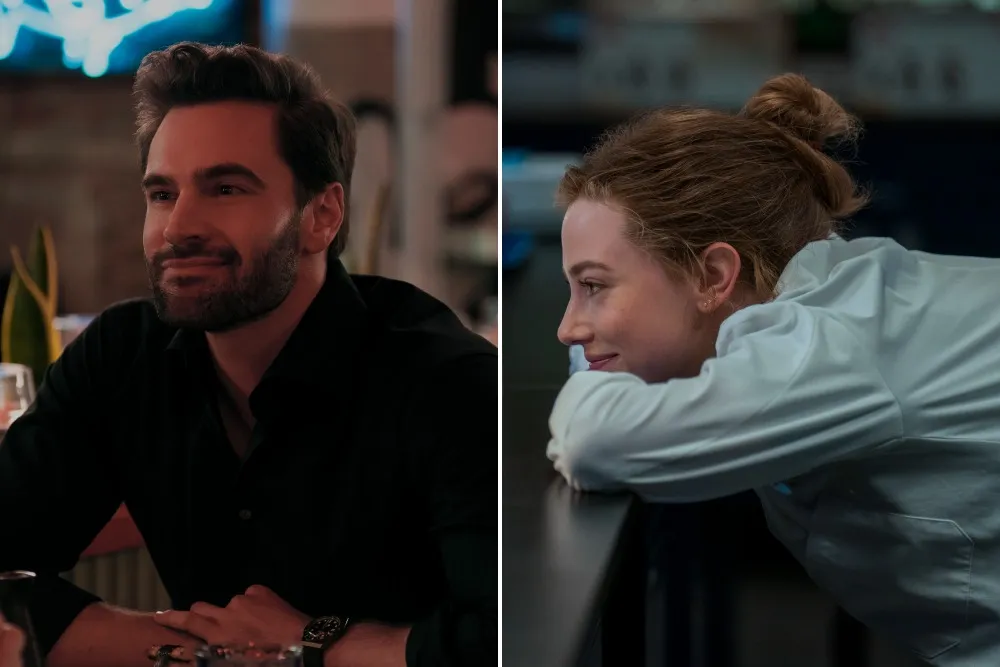
SPOILER ALERT: This post spoils the entirety of Prime Video‘s The Love Hypothesis movie.
Editor’s Note: Trigger Warning – The following contains mention of sexual harassment. Help is available at the National Sexual Assault Hotline: 1-800-656-4673.
A cathartic scene towards the end of The Love Hypothesis, adapted from the best-selling book by Ali Hazelwood and now streaming on Prime Video, reaffirms the already solid bond between Olive Smith (Lili Reinhart) and her best friend Anh (Rachel Marsh), the foundational relationship at the heart of the love story.
After all, it’s for Anh that Olive starts the “harebrained,” to quote Hazelwood, scheme of fake dating one of Stanford University’s most notorious professors, Adam Carlsen, also known as Dr. Evil for his exacting manner with graduate students. Unfortunately, Adam’s supposedly “close” friend and colleague, Harvard’s Dr. Tom Benton (Arty Froushan) gets between Olive and Adam momentarily when he sexually harasses Olive, but he can’t come between her and Anh.
“It really speaks to their friendship and how they view one another that Olive goes to her to her best friend. Of course she goes to her best friend. She’s assaulted and looking for comfort and to finally admit the truth – something that’s been weighing on her – that she does feel guilty about for lying to her friend, even though it is for her friend’s benefit,” Lili Reinhart told Deadline.
Tom weasles his way between Adam and Olive professionally as well when he offers Olive a spot on his lab bench for her pancreatic cancer research the following year, but he injects the offer with the threat that she would need to sleep with him to earn the spot, trapping her in a hotel room under the guise of bringing her a coffee. In the hotel lobby, he corners Dr. Carlsen as and hints that Adam might hold Olive back all the way in California when she leaves to continue her research in Boston.
“Of course, she’s going to go to her safe space when something like that happens, and she doesn’t have family. Her family is Anh,” Reinhart continued. “So she goes to Anh and finally reveals the truth and tells her what happens with Tom Benton in in the hotel room. It’s a climactic moment between the two, and for the plot, obviously, but also just for Olive having kept all of this inside. I think it finally just has to come out, and it’s cathartic to see her have that release with her best friend.”
Costar Bateman wouldn’t use the word “excited” for the scene in which he embodies a Darth Vader march to go confront Tom about the issue and put the perpetrator in his place.
“When an abuse of power takes place, there’s no such thing as a winner. But in terms of addressing something that’s taken place like that, it felt, I guess, good to be able to do it because these things operate in the shadows. When people behave like this and abuse their power like that, the only way it can continue is if it is allowed to continue, if it’s concealed and hidden from people,” Bateman told Deadline. “So to do what Adam does, which is to kick the door down literally and expose that, it’s incredibly brave. It could risk a lot of things, but it’s the only way that behavior like that is stopped. So I guess it felt good in the moment for the character to be able to do that, but honestly, that sort of section of the film is such a delicate one that. There was no great moment for it.”
The confrontation, captured on social media, makes way for the final step in the equation of a romantic comedy or drama that contains a third act breakup or dissolving of a fake relationship – the admission of feelings between the couple in question. After Olive catches the video, she runs to the building where Adam has just interrupted Tom’s lecture, ready to have a conversation about where they stand.
“It’s a huge scene. It’s where they admit they love each other. That scene was challenging for many different reasons. It was so important for us to make that scene right. So many things had to land to make that scene a success. There was a lot of discussion about the things that they say to each other because it is going off the cuff from the book,” Reinhart said. “The language that they use has to be within their world. They are using science still when they’re talking about love because they’re hiding behind it. It’s funny, they’re trying to be honest with each other, they’re still hiding behind these words that are so flowery and sciencey, and these phrases that they’re throwing out there because they’re being vulnerable with each other, and that’s scary.”
RELATED: 11 Major Differences In ‘The Love Hypothesis’ Movie Vs. Ali Hazelwood’s Novel
In true scientist fashion, Olive first proposes that she received ‘false positive’ results, or made a Type 1 Error, from their fake dating “experiment,” meaning she fell for Adam and assumed he reciprocated her feelings. He then introduces the concept of a false negative or Type Two error, meaning he projected that he didn’t love Olive when he did. They then draw the conclusion that he ultimately “contaminated the experiment,” by pretending there was no affect when there was (his feelings for her), so she proposed they start over with their project.
“I think we got it there. We landed the plane, and I think it’s a beautiful scene. But even just playing with the ‘I love yous.’ That scene was being massaged up until the day we shot it, and even on the day, we were still playing with different versions of it,” Reinhart said. “It was a very talked about and highly discussed scene because we wanted it to be perfect.”
Bateman also pointed out that the classic get together for real moment stood out with specific aspects that make it unique in the broader canon of romantic comedy and drama films.

L-R: Lili Reinhart and Adam Bateman in ‘The Love Hypothesis’
Photo by Philippe Bosse
“Because we have the benefit where we are now in 2026, we have so many romantic comedies that are part of our consciousness. We all know the momentum, where they’re going. It’s hard not to fall into cliché. So that was very important for us to make it feel very real to [Adam and Olive],” he said. “I think the science helped that because it was unique to this story, so it made it feel fresh. I still remember shooting that scene, and it surprised me that it was there.”
“I can still remember [Lili] calling ‘Adam,’ and I turn, and the scene, it surprised me that it was there, which was great. I think it sort of felt very authentic in that way, and I love playing it. It was really fun, and even reading it, I sort of go, ‘Whoa!’” Bateman continued. “In the romantic comedies, that sort of chasing them down at the airport moment, there’s a build up to it. Whereas this, it happened because it’s all to do with the Tom Benton stuff, and then she sees the phone [recording] of it. It happens so quickly; it almost sneaks in the back door, and suddenly you go, ‘Oh my God, I’m at that moment in the movie, and I didn’t really see it coming.’”
RELATED: Which Ali Hazelwood Books Are Becoming Movies? ‘The Love Hypothesis,’ ‘Deep End’ & More
>
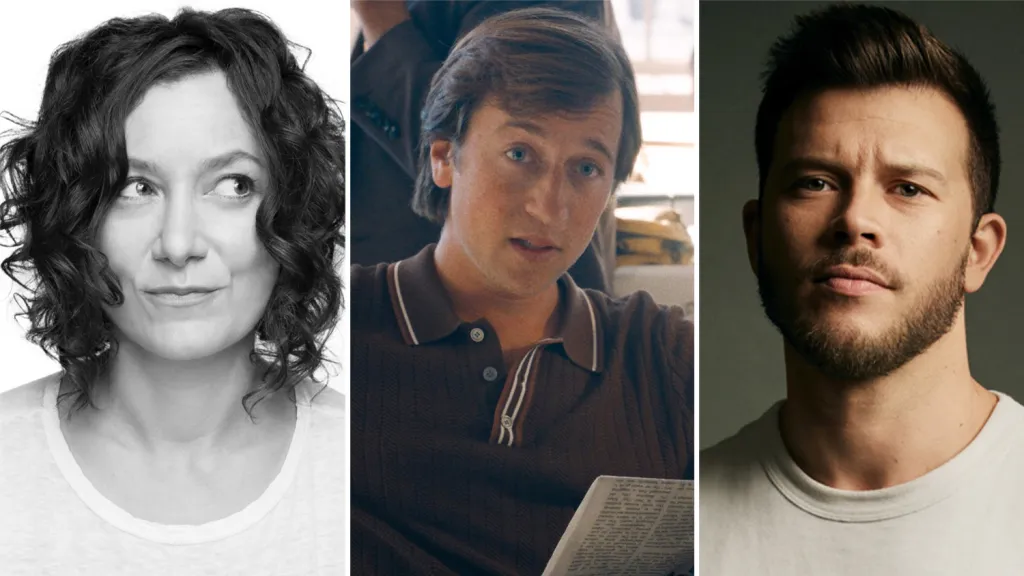
EXCLUSIVE: Sara Gilbert is set to play an “important journalist” opposite Skyler Gisondo’s Jimmy Olsen and Jimmy Tatro’s titular ape in The People v. Gorilla Grodd, HBO Max’s upcoming Superman spinoff series, we hear.
In the half-hour comedy series, a superintelligent ape is convicted of murdering his father, the King of Gorilla City. In an eight-part “true” crime docuseries, the Daily Planet’s Jimmy Olsen reopens the case, investigating whether Gorilla Grodd was wrongly convicted in one of Metropolis’ most famous murder trials.
Glibert joins a cast that includes several Superman actors reprising their roles — Beck Bennett as Steve Lombard, Mikaela Hoover as Cat Grant, and Wendell Pierce as Perry White — as well as new cast additions Mary Holland, Eduardo Franco, Arian Moayed, Dan Perrault, Andrew Leeds, and Tim Baltz.
It’s under wraps as far as which notable journalist in the James Gunn and Peter Safran DC-verse Gilbert will portray. It’s certainly not Lois Lane, as that character is currently played by Emmy winner Rachel Brosnahan, and it’s not Cat Grant. Other notable journos in the DC-verse include Lana Lang played by Annette O’Toole in the feature Superman III; Vesper Fairchild, voiced by Rachel Maddow in the CW Batwoman series, and Gotham’s Vicki Vale played by Kim Basinger in the original 1989 Tim Burton Batman movie.
Tony Yacenda and Dan Perrault, creators of the 2017 Netflix true-crime satire series American Vandal, serve as showrunners, writers, and EPs, with Yacenda set to direct all eight episodes. DC Studios’ Co-Chairmen & Co-CEOs James Gunn and Peter Safran also serve as EPs. The People v. Gorilla Grodd is from DC Studios in association with Warner Bros. Television.
Gilbert earned two Emmy noms playing Darlene Conner on the hit ABC series Roseanne, a role she reprised on the series revival The Conners. She serves as EP alongside Michael Showalter on the Sony TV/Amazon series The Pradeeps of Pittsburgh. Gilbert recently wrapped production on the Netflix live-action series Scooby-Doo: Origins opposite McKenna Grace, André 3000, and Paul Walter Hauser. Her list of TV credits also includes The Big Bang Theory, The Comeback, Bad Teacher, Will & Grace and more. Feature credits include 80 for Brady, High Fidelity, Riding in Cars With Boys and Poison Ivy which landed Gilbert a supporting actress Independent Spirit Award nomination. She’s repped by Gersh and Entertainment 360.
>
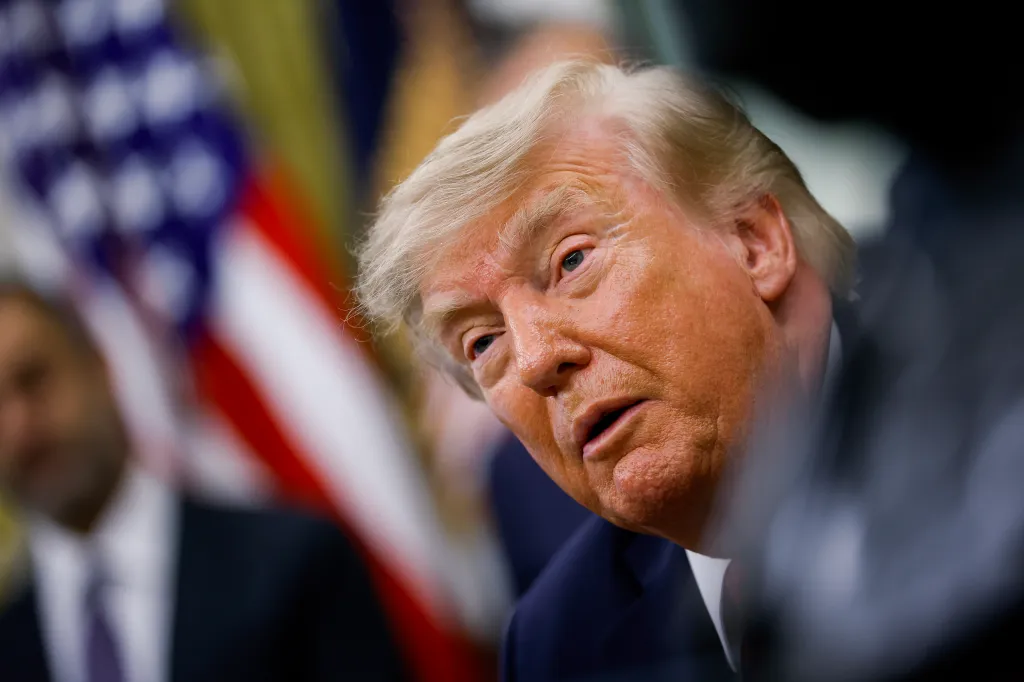
An Iowa judge has tossed out Donald Trump‘s lawsuit against the Des Moines Register and pollster Ann Selzer, concluding that the president and his allies “stretch both Iowa statutory and common law beyond their current bounds, turning speech that enjoys the highest category of First Amendment protection into a liability.”
Trump has sued over Selzer’s pre-election 2024 poll that showed Kamala Harris ahead by three points. As it turned out, Trump won Iowa by more than 13 points. Trump filed suit under a state consumer fraud law, and Rep. Marianne Miller-Meeks (R-IA) later joined his case as another defendant, as did former State Sen. Bradley Zaun.
Iowa District Court Judge Scott Beattie wrote in his opinion, issued on Wednesday, “Election polling is speech protected by the First Amendment, both because it involves a conversation between a pollster and a voter and because the poll itself is speech. Reporting such a poll during a presidential and congressional election year is speech about a matter of public concern, occupying the summit of the pyramid of First Amendment values. The First Amendment has its fullest and most urgent application to speech uttered during a campaign for political office.”
Trump claimed that because of the poll, his campaign devoted more resources to the state. But the judge rejected the notion that the poll was commercial speech.
The judge wrote that the lawsuit “identifies no act any Plaintiff took because of a poll. Roughly seventy-two hours separated the first publication from the close of the election. Within that period, according to reporting the Petition relies upon, President Trump publicly rejected the poll as ‘a fake poll’ conducted by ‘a Trump hater’ who had ‘oversampled, by a lot, Democrats.’ A party who publicly called the poll false did not rely on it, whether or not it was fabricated.”
A spokesperson for Trump’s legal team did not immediately return a request for comment.
Bob Corn-Revere, chief counsel for the Foundation for Individual Rights and Expression, wjp led Selzer’s defense, said in a statement, “We’re pleased that the court recognized what we’ve said all along: This lawsuit was laughable from the beginning and never should have been brought. The First Amendment does not allow anyone in government, least of all the president, to punish people under the banner of ‘fake news.’”
Selzer said in a statement, “Polling is a social science, not clairvoyance, and no responsible pollster can guarantee an election outcome. What we can guarantee is that we will follow the data wherever it leads, even when the results are uncomfortable or unexpected.” She added that she was grateful that the judge’s ruling “recognizes these principles and reaffirms the fundamental freedom to pursue and publish the truth without political interference.”
>


Search For Canadian TV Actor Stewart McLean Now Homicide Investigation


These ’90s fashion trends are making a comeback in 2017
According to Dior Couture, this taboo fashion accessory is back
Model Jocelyn Chew’s Instagram is the best vacation you’ve ever had
Emily Ratajkowski channels back-to-school style
9 Celebrities who have spoken out about being photoshopped


Rurouni Kenshin: Hokkaido Arc Manga Takes 1-Issue Break – News


HIDIVE to Stream English Dubs for The World Is Dancing, The Forsaken Saintess and Her Foodie Roadtrip in Another World, The Dangers in My Heart: The Movie Anime – News