
Adam Driver and Miles Teller in Paper Tiger.
Courtesy of Neon


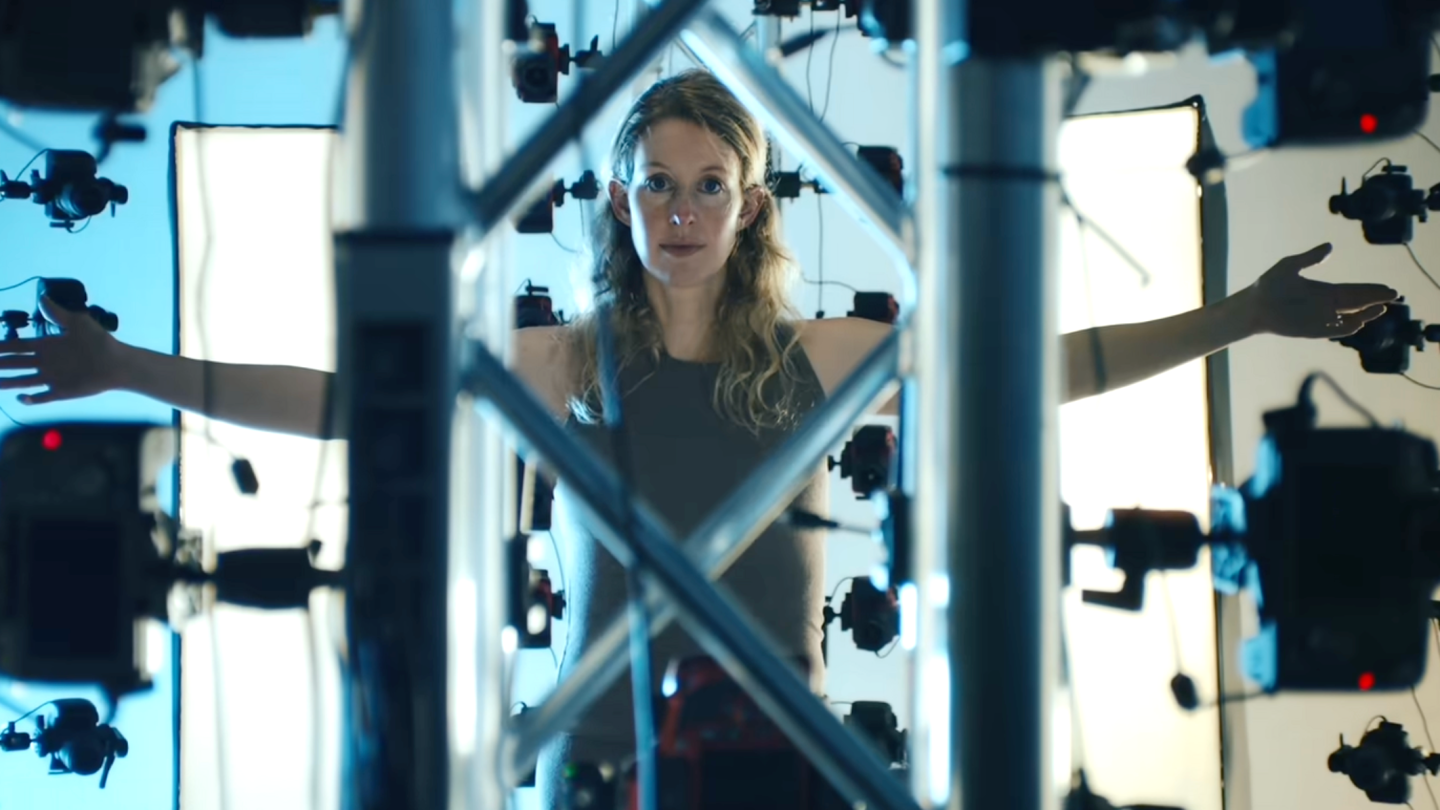
You can see everything … and perhaps more than you wanted to?
A24‘s hugely buzzy Elizabeth Holmes documentary You Can See Everything has just been given a R-rating.
But it’s the reason for the rating for the Nathan Fielder and Lance Oppenheim documentary that’s raised eyebrows among some online. The MPA stated the rating is for “language” (as you might expect) and “graphic nudity” (oh-oh, really?).
In the film, Fielder moves in with Holmes and her husband, William Evans, for an intensely candid portrait of the disgraced Theranos founder in the period before her incarceration.
Fan reaction has been, as you might expect, rather playful: “If I see anything less than everything I’m demanding a refund!” and “I’m beginning to wonder if this is actually what the title comes from…” and “Non-zero chance it’s graphic nudity of Nathan Fielder. Even odds, actually.”
We don’t want to spoil. But we will tease an explanation for the rating — but don’t read the following if you don’t want to know anything: One person in the documentary goes full frontal.
The ratings follows another tempest-in-a-teapot bit of You Can See Everything news on Thursday when a typo in the film’s official trailer went viral, with fans becoming convinced the confusing-looking error was intentional — until A24 fixed it.
You Can See Everything will be released in theaters Oct. 16, following its brief festival tour.
The Hollywood Reporter‘s critic wrote that in You Can See Everything, “What begins as a fascinatingly intimate portrait of a deluded or disingenuous scammer reveals as something even wilder, more ambitious and less predictable, until we’re left to ponder what value a personal truth has at all.”
>
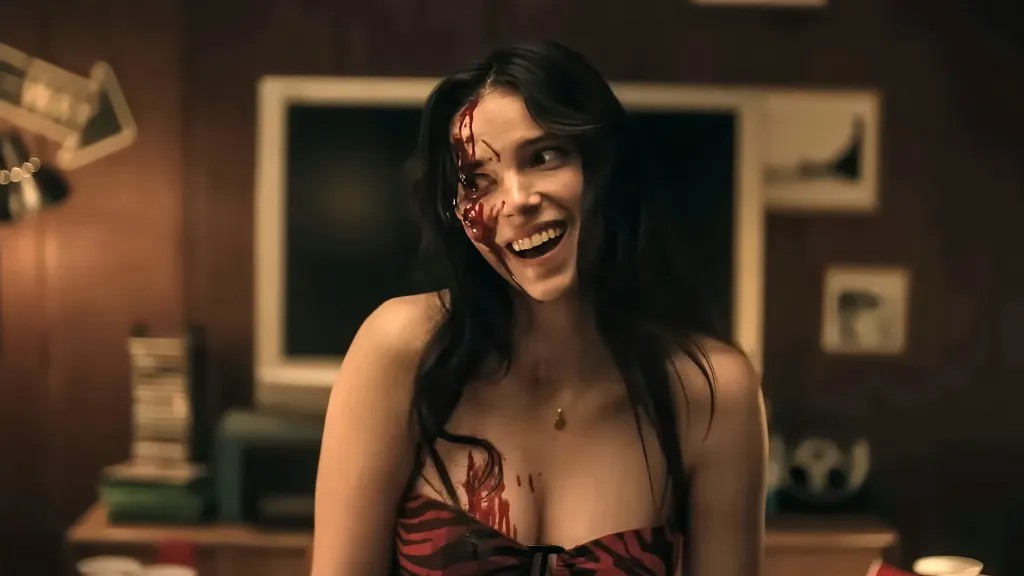
William Goldman’s adage that “nobody knows anything” never gets old.
If studios and financiers knew what was going to work every time, everyone would be rich and the industry would be a lot less interesting.
The old saying reared its head today at the Zurich Summit when filmmakers and brokers behind the year’s horror phenomenons Backrooms and Obsession admitted that they didn’t know their films were about to go stratospheric. There’s absolutely no shame in admitting that. No one knew quite how enormous both films would become, even if many clearly believed in the films and the filmmakers.
“You know, it’s funny,” CAA Media Finance Co-Head Roeg Sutherland mused during a panel on the independent business. “We have a colleague in our department who sold Obsession. I can promise you, we had no idea that Obsession was going to become Obsession.”
CAA co-repped the domestic deal with Capstone, selling the Curry Barker-directed movie out of Toronto for around $14M to Focus. The film went on to make a staggering $264M in the U.S. alone off a $1M budget. It took $520M global.
But believing in a filmmaker is where it starts, added Sutherland.
“I think the most important thing, is less about IP and genres, though those things can be important, but it’s always about the filmmaker. Whether it’s an established filmmaker or a discovery, it has to be someone that you’re willing to go on a ride with. You never know what’s going to happen. But that’s the central element that will decide whether a movie is gonna be good or bad. The filmmaker is the person you’re betting on.”
In an earlier panel, Backrooms director Kane Parsons was asked whether he contributed to the distribution and marketing of the A24 smash. While A24 clearly mounted a brilliant campaign, Parsons admitted that there was a level of uncertainty over what the film could do and who exactly it would reach.
“The truthful answer”, the 20 year-old said about the horror film that took a whopping $400M global off a $10M budget, “is that I don’t think there was a real sense of what it would be prior to the release of the film. I don’t. Even at the height of projections.”
Parsons added that he didn’t know whether the film would truly click with fans of the creepypasta genre, but that he “liked to think we did the core idea that they were expecting”. Clearly he did, and plenty more.
Later in the day, CAA Media Finance co-head Sarah Schweitzman also noted the serendipitous element to this summer’s record-breaking $4.7BN domestic box office. But also to the success speaking to a desire for authenticity and irreverence.
“When you look at the landscape today, the movies were so amazing this year, and they’re so different to what they’ve ever been, and unexpected in achieving the success that they’ve they’ve achieved. There is no way in which you can categorize the film business as unhealthy, because it’s burgeoning, it’s booming. I think that also speaks to where we are politically. There’s a lot time for irreverence. It’s a time for saying things that are maybe unpopular or maybe scary, but there’s a real underground belief and desire to hear the truth, which is not necessarily something that everyone is encouraged to do right now.”
>
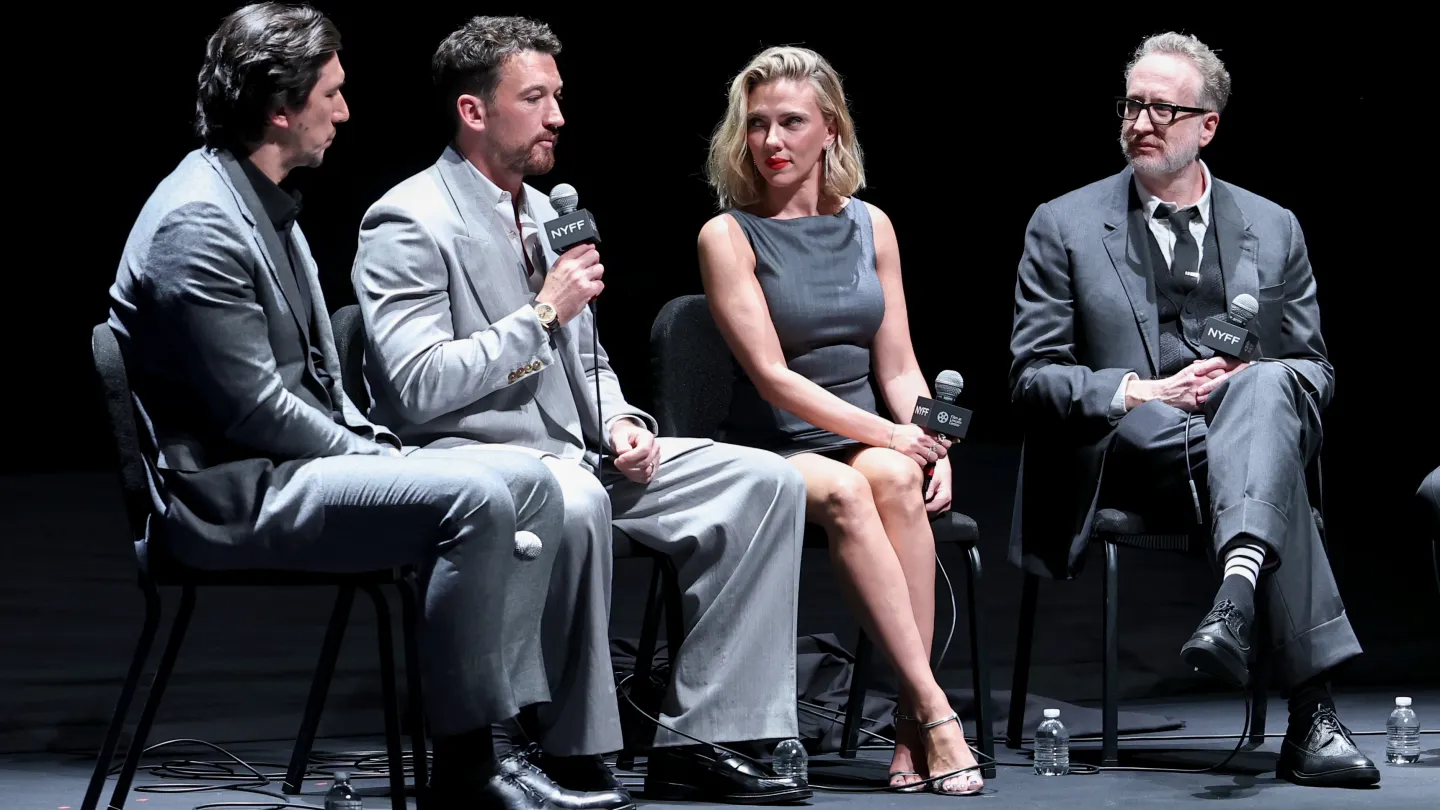
There are worse ways to be introduced when you’re about to unveil your new film as the Opening Night selection of the New York Film Festival, as “one of the great living American filmmakers.” But that’s exactly what Artistic Director Dennis Lim said as he brought Paper Tiger director to the stage at Lincoln Center’s Alice Tully Hall on Friday evening.
Gray has a long history with the festival, having closed it with The Lost City of Z and marked its anniversary with a special screening of Armageddon Time. But still, this felt different — as Gray himself noted in his moving introductory remarks, reflecting on growing up a few miles away from the Upper West Side. He remembered, after telling his parents he wanted to become a movie director, their skeptical reply: “How are you ever going to do that?” Gray then looked to the full house inside the theater and said, visibly taken aback: “Well, here I am.”
The general feelings around Paper Tiger feel distinct from Gray’s past films as well. Although a consistent critical darling, the Queens native hasn’t been able to break into the Oscar race in his career thus far, and at this point seems overdue — certainly, it wasn’t hard to think so hearing Lim’s comments framing the relaunch of Paper Tiger, which has not screened publicly since its world premiere in Cannes. The film had been widely acclaimed on the Croisette, and despite the jury overlooking the drama — as has, frustratingly, been a pattern for Gray’s movies at the festival over decades — it was being primed to roar with its fall launch by distributor Neon.
Adam Driver and Miles Teller in Paper Tiger.
Courtesy of Neon
Indeed, this one has arrived with the bells and whistles that typically elude the rollout of a Gray movie; its mix of bold classical filmmaking and rich memoiristic undertones is ideal for placing the movie in the context of his career. In his introduction, Lim spoke about how difficult it is to make personal, independent American films in the current climate; earlier this month, he called Paper Tiger “miraculous” in an interview with The Hollywood Reporter for just that reason. In a season dominated by international directors and blockbuster hits, that framing stands out.
Paper Tiger stars Miles Teller and Adam Driver as Irwin and Gary Pearl, brothers in 1986 Queens, caught in a scheme that puts their family’s lives at risk. Gray’s tight screenplay weaves these crime-thriller bones into textured family drama, with the plot coming to hinge on Irwin’s wife, Hester (Scarlett Johansson), considering how best to protect her sons and ensure their future, while also contending with her own personal crisis.
Shown on a 35mm print at Lincoln Center, this North American premiere was warmly received, with the core cast all on hand. As THR reported last week, Teller will campaign as a lead in the film — Irwin POV opens and closes the film — with past Oscar nominees Driver and Johansson going supporting. The best-actor race may be too competitive for Teller to make much of a dent, but the transformational work of Driver and Johansson, who’ve earned raves for Paper Tiger, could gain traction (and help push the film as well) coming off of the NYFF momentum.
“We were on such a small set…and also it was extremely hot, and when you have a group of actors hanging around with everybody on top of each other — honestly, that’s a labor of love. You do it because you love to do it,” Johansson said in the post-screening Q&A. “You end up hanging out and talking and sharing stories and feeling closer…. You have to survive the day, and it’s hard making movies, and it’s very hard making movies [like this].”
>
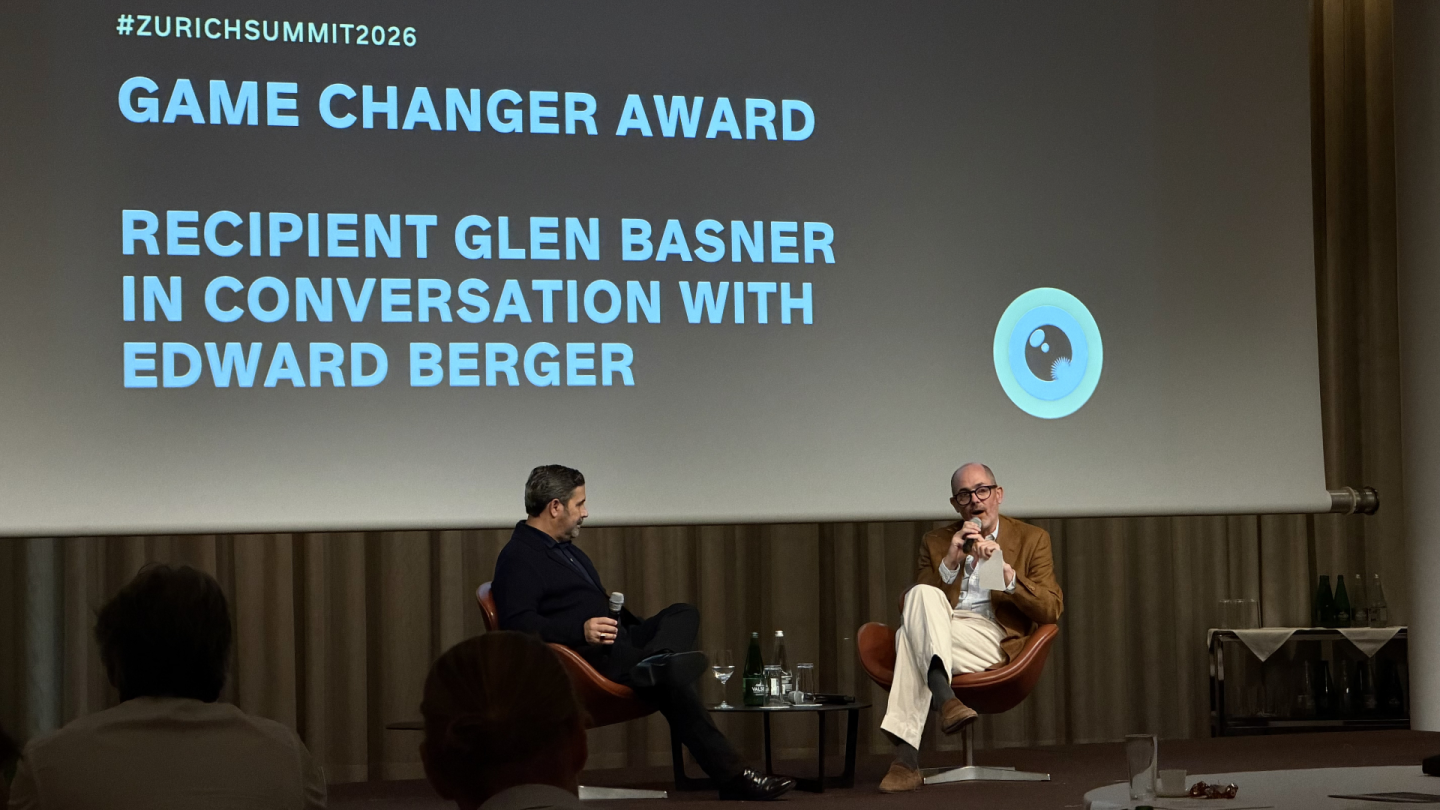
Quite the bromance unfolded on stage at the Zurich Film Festival Summit as Oscar-winning filmmaker Edward Berger held a session with FilmNation Entertainment founder and CEO Glen Basner, who is this year’s Game Changer award recipient.
Basner, being honored for what the festival described as his “outstanding achievements, excellent cinematic taste, and significant contributions within the film industry,” has helped make FilmNation one of the dominant players in the independent film business, backing awards-season and commercial hits including Anora, Promising Young Woman, Arrival, The Big Sick, and, crucially, Berger’s Academy Award-nominated Conclave.
“Glen, I’m so proud to have had the opportunity to make a film with you. I’m so happy to know you. I’m so happy to call you a friend, and I want to congratulate you on your wonderful career, for all the great movies, for all the filmmakers that you’ve inspired, that you’ve instilled confidence in,” said Berger after an hour-long discussion in which the two reflected on their time together, a chaotic film climate, and why great storytelling will always be at the heart of Basner’s work.
At this year’s Zurich Film Festival, Basner is producing three movies in the lineup: Florian Zeller’s Bunker with Javier Bardem and Penélope Cruz, A Talent for Murder with Helen Mirren and I Play Rocky, which proved a real crowd-pleaser at TIFF.
Mostly, however, the two creative partners — both of whom worked at indie production and sales company Good Machine early on in their respective careers — focused on the making and success of Conclave. Berger’s 2024 masterpiece starred Ralph Fiennes as Cardinal Thomas Lawrence, the dean of the College of Cardinals, who is tasked with overseeing the election of a new pope at a time when he is personally experiencing a crisis of faith.
Berger shared an anecdote about feeling “in a real panic” when the film had sold in most territories apart from the U.S. in Cannes a few years back. He then recalled, after nearly finishing the film, that he desperately wanted it to go to the Venice Film Festival. “Or at least show them the movie and see if they’d show it,” said the Swiss-Austrian. “This was in May and Glen, we got on the phone — and I hated Glen — he said, ‘I don’t know. I’m not sure the movie’s ready. Don’t rush it.’ And then: ‘Is it going to be expensive? We don’t have American distribution in place yet.’”
But Berger really wanted to hit the Lido with Conclave (the film would later earn its world premiere in Telluride). “Glen said, ‘Okay, let’s test the movie. Let’s show it to a few people, to friends and family, and see how it does. And if it does really well, let’s just finish it.’ And Tessa [Ross, of House Productions] was of the same opinion, by the way. Tessa also said, ‘I think you’re still missing something, and I don’t know what it is.’ And no one could really formulate it,” Berger explained.
They tested the movie, and it “tested just okay,” he continued. “It was an argument to say, ‘Okay, why don’t we just sit on it and wait a little bit?’ And those really are professorial decisions and creative decisions that made me, that pushed me. And this is going back to Good Machine. This is what I really took from Good Machine: You can always do better,” Berger told Basner. “We make mistakes as filmmakers. We make mistakes as producers, as financiers, [in] sales. We oversell it. We undersell it. Movies fail. […] So I really learned: ‘Let’s look at it again.’ Maybe it can be better. Maybe we can do better. Whether it’s a budget, whether it’s a contract, or whether it’s a cut of the movie.”
“[I had] absolute gratitude to you,” Berger continued. “You were right, I was wrong.” Basner quipped back: “The film was finished… We technically could have been ready for Venice that year.”
Basner said his decision-making dates back to their time at Good Machine. “We always talk about how we want to work on films that inspire us and that we think we understand. And if the marketplace doesn’t get it yet, that’s okay. We’re going to move forward, and we’re going to let them understand why this film is so exciting at a later time. But after that, we’re then going to work like hell to create the environment where that filmmaker can really go and achieve their vision in the purest sense.” He continued about Conclave, demonstrating an impressive knack for knowing when to give directors the appropriate space: “We don’t know if we knew how to unlock it, [otherwise] we would have suggested it. We didn’t know that it was definitely going to be unlocked the way that you ended up doing so, but we knew that we just needed to give you a little bit of time and space to work through and get it to the great place that it did.”
They even had a “few hundred thousand dollars” left over, per a self-proclaimed “frugal” Berger. Basner insisted that the money be spent on improving the film. “It was really inspiring to get that call from you and have the opportunity to make the movie better again, just for being better,” Berger said.
The men touched on why Focus Features became the right home for Conclave in the U.S., with Berger explaining that he was terribly nervous about theatrical distribution there and what that path would look like. “I was so close to the film for so long,” he said. “You were championing Focus […] you were confident that they would be the right partner. And I really kept thinking, ‘Well, what about the streamers? Maybe it’s safer there,’” said Berger. “What gave you the confidence? Again, I’m super grateful for that as well.”
Basner simply told him that “the first thing you learn over time [is] we’re never really exposed the same way that a director is exposed when the movie goes out there. If we make a film that doesn’t succeed, the press aren’t writing about, ‘It’s another shitty film from FilmNation!’ They’re talking about the filmmaker and the actors, and with that understanding comes real responsibility and humility, where these are important decisions in terms of the success and what happens for that filmmaker going forward.”
“But there are sme films that when you watch it,” said Basner, “they’re just undeniable. And Conclave is a fucking amazing movie. We knew it, and we believed and Focus believed that it would have the greatest impact.”
Conclave proved an audience hit as well as an award darling, generating over $125 million at the global box office on a $20 million budget. Its popularity furthered when the real-life Pope Francis died in 2025.
Aside from Conclave, Berger and Basner reflected on the evolution of FilmNation over the last 20 years. They discussed what’s stayed consistent as the company has continued to expand globally, what helps him bolster buyer confidence in a risk-averse industry — and why a film’s budget never equates to its value.
Basner lauded the films he’s in Zurich with, including the “nostalgic” I Play Rocky, which he believes will inspire audiences heading to the theater, and the upcoming FilmNation slate. “This year we will make four films and a television series, and we already have four films in pre-production and hope to make another three. So right now it’s about maintaining the same high-quality standards, but it’s really about more, and with that, being very much okay with taking more risk than maybe we would have some years ago,” beamed Basner.
Earlier at the Zurich Summit, Backrooms director Kane Parsons reflected on helping to save the summer box office, while AMPAS CEO Bill Kramer doubled down on that big YouTube move.
The 22nd Zurich Film Festival runs Sept. 24-Oct. 4.
>


Search For Canadian TV Actor Stewart McLean Now Homicide Investigation


These ’90s fashion trends are making a comeback in 2017
According to Dior Couture, this taboo fashion accessory is back
Model Jocelyn Chew’s Instagram is the best vacation you’ve ever had
Emily Ratajkowski channels back-to-school style
9 Celebrities who have spoken out about being photoshopped


Rurouni Kenshin: Hokkaido Arc Manga Takes 1-Issue Break – News


HIDIVE to Stream English Dubs for The World Is Dancing, The Forsaken Saintess and Her Foodie Roadtrip in Another World, The Dangers in My Heart: The Movie Anime – News