
Adam Driver and Miles Teller in Paper Tiger.
Courtesy of Neon


Note: This story contains spoilers from “A Different World” Season 1.
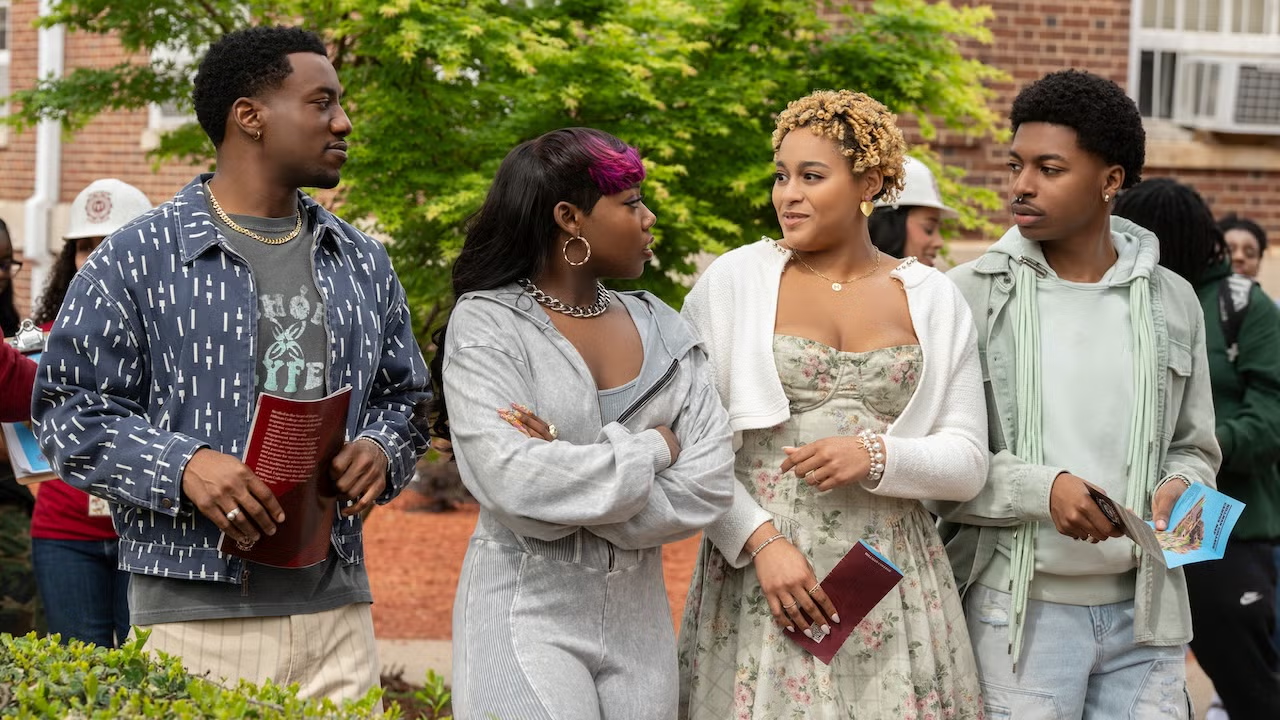
Netflix’s “A Different World” reboot introduces viewers to the next generation of students at fictional HBCU Hillman, anchored by Deborah (Maleah Joi Moon), the youngest child of Whitley (Jasmine Guy) and Dwayne (Kadeem Hardison), who reprise their roles from the original sitcom.
Deborah gets a crash course to Hillman alongside a fresh crop of freshmen that quickly bonds them together, and, as is the case at a college campus, romances are sparked left and right. But, by the end-of-the-year gala in the Season 1 finale, nearly all of those couples are torn apart.
It’s even more complicated than that for Deborah, who tries to find her way back to Shaquille (Cornelle Young IV) — despite the fact that he hooked up with her RA Candace (Renee Harrison) — but has the double whammy of finding out not only that he block her, but he’s said to be transferring out of Hillman.
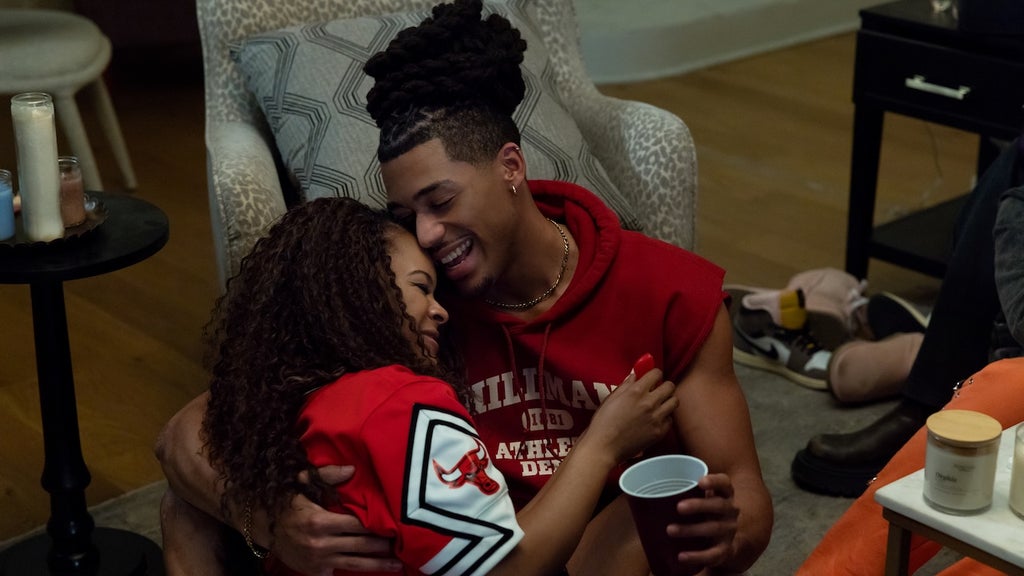
“I think that put her in the headspace of, ‘I think it’s over,’” showrunner Felicia Pride told TheWrap, explaining that by the time she gets to her dorm room and sees Ellington (Vincent Jamal Hooper) making a rose-filled romantic gesture, she can only think, “here’s Ellington in front of me … acknowledging how he feels about me and I have feelings for him too.’”
But that doesn’t mean Shaquille is out of the picture forever, with Pride saying, “I think you can write yourself out almost anything, including death if you have ever watched soap operas.” “We were very specific about how we wrote all these cliffhangers so that we had different options on how we could get out of them,” she said.

It’s not just Deborah who struggles with romantic woes in the friend group (more on that below), but things take a much more serious turn for Ghanian-Nigerian student Kojo (Chibuikem Uche), who is approached by an ICE agent asking for his papers.
“The ICE storyline was something that we really wanted to pursue and make sure that we got right,” Pride said, noting the seeds planted about ICE starting at convocation when Dwayne says “they want to deport us” to Kojo’s parents. “Having him approached on campus is real because there certain campuses where administration has allowed ICE to be on campus … we wanted to address that.”
The presence of ICE is just one of the issues plaguing HBCUs that are raised and discussed in “A Different World,” with Pride noting political consciousness was a non-negotiable for herself and Debbie Allen, who returns as a director and EP. It was Allen who brought on Pride to the project after working with her on “Grey’s Anatomy.” The conversation below has been edited for length and clarity.
TheWrap: Why did it feel like the right time to revive “A Different World?”
Pride: [Debbie Allen] said something that really felt like an urgent charge in the moment, which was “now’s the time to hear from young America, especially young Black America.” That was something that I could definitely get with because I was hesitant, of course … I grew up on the show in real time — the legacy of the show, the responsibility — but … I felt that charge that she made.
How did you want to balance having so much of the original cast back while welcoming in the next generation?
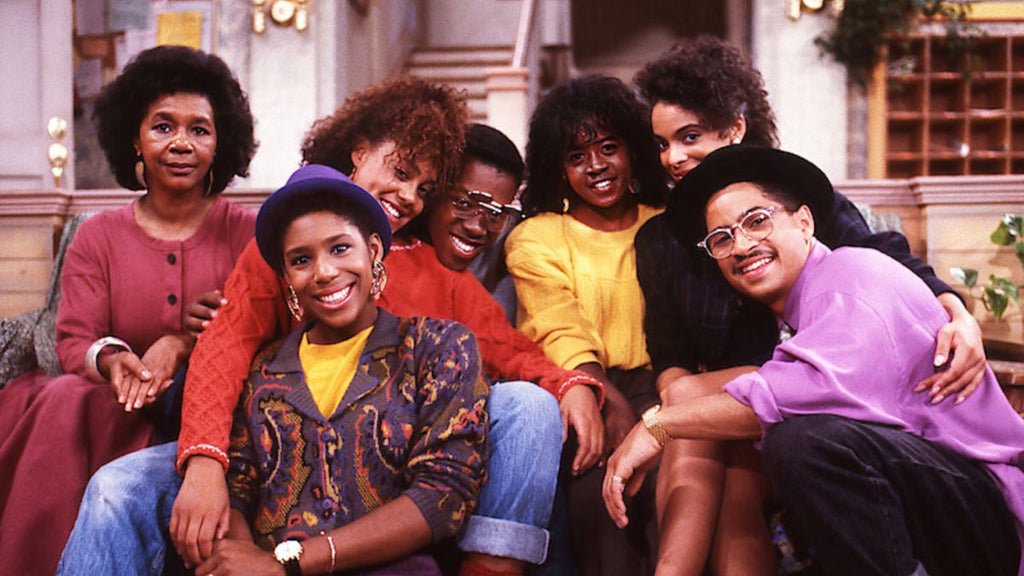
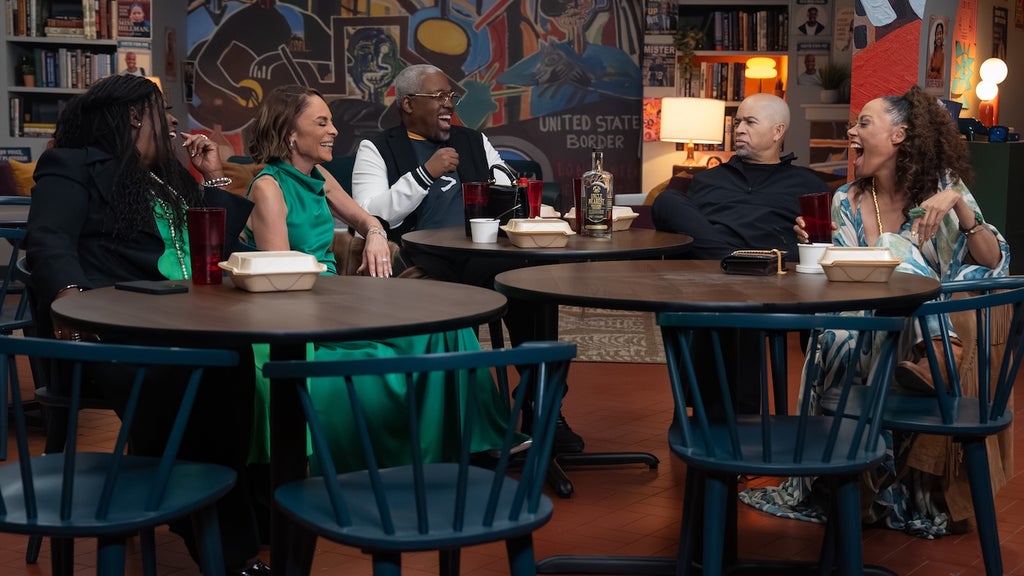
Debbie was keeping the legacy cast warm, as she likes to say, because they were trying to make the show in different ways, [with] different folks for years. So once it seemed like we were going to do it, the legacy cast was really, really excited. For me, it was about finding organic ways for them to be attached to our new brilliant cast … but also to have our legacy cast have organic relationships to Hillman, so that they could be around in organic ways. So we see Dwayne as provost, Whitley’s on the board, Ron because his son, Freddie is a professor.
“A Different World” fits into Netflix’s slate of YA-centered shows. What conversations did you have about tone with Netflix?
We definitely worked a lot on the tone. It is different from the original. It’s not a straight sitcom with set-up to joke. It’s more of a dramedy where we have high moments of drama, and then we have these laugh-out-loud moments. [We wanted to] focus on the relationships of these young folks, and what it feels like to be young and at a HBCU today was really important to us. We established an HBCU council that was like an advisory board of sorts for the writers’ room, and we also replicated that on set. We had current HBCU students on set that we could ask questions to, ask about their experiences, because that was really what was important for us for the YA-ness of it all to make sure that it felt relevant and authentic.
The show was filmed at several different HBCUs. Why was that important for you?
In the move from multicam to single cam, it really allowed us to have a more immersive experience at Hillman and see Hillman in ways that we never had previously, so we had the pleasure to film at Spellman, Morehouse and Clark, and that gave us just the texture and opened up our world in such beautiful ways. But it also helped with our authenticity because 59% of our background were current HBCU students and alum, and so when we’re in these scenes, we feel the authenticity of these current students because they know what it is to be at school today.
We actually did a casting call at Howard University, and we were able to cast Hazel, who’s played by Kennedi Reece, who just graduated in May, so she was still a student while we were shooting the show, so to have her authenticity and experiences infused into Hazel was amazing.
The show doesn’t cut corners about how HBCUs are being targeted, both by those seeking to incite violence, but also politically via budget cuts and DEI policies. How did you want to approach these issues?
The question we asked ourselves was, what issues are HBCUs facing today, and what issues are HBCU students at HBCUs facing today? And those were big, big issues that we were seeing that were very prevalent across HBCUs … because all HBCUs aren’t the same, but they do experience similar challenges. We explore things like immigration and ICE because it’s just so prevalent as well in our communities and beyond, and then … we explore neurodivergence, we explore sexual identity and sexual health … there’s a range of issues that we thought about what young people in particular are experiencing.
How did that Summer Walker cameo happen?
That was also our advisory board, our HBCU council. When we were thinking about performers at homecoming, we got a list from all our council members that were on set in the moment, like “who do y’all want to see? Who should be performing?” Summer Walker was on most of their lists. She’s also Atlanta-based, so that worked out perfectly. We were so happy with with being able to land her, and she came and did an amazing job.
Do you have some of those other artists bookmarked for potential other seasons?
Exactly.
What happened in that warehouse fire?
We made some cuts in the explanation of it, but Deborah was the one who actually rented the warehouse, and some kids put off some fireworks in it, and it caused a fire, and she was held liable for it.
I was surprised by Hazel’s reveal that she’s a long-distance boyfriend this whole time. What went into that twist?
Everybody’s messy. That was the thing … this is college life. They’re all making mistakes, but they’re all kind of learning from them. Her longtime boyfriend, we learn in the finale, got accepted into Hillman, so it’ll be interesting to see if we get a Season 2 … what he’s like and how that might bump up against what Hazel is trying to do.
Whitley and Dwayne come back together by the end of the season. What inspired their journey?
Relationships are hard, and the thing is, Whitley and Dwayne are soulmates. Life gets in the way, and for me, I wanted to use it as inspiration for couples who life may have gotten in the way, and that’s okay. That happens, but that you can find your way back to each other.
“A Different World” Season 1 is now streaming on Netflix.

>
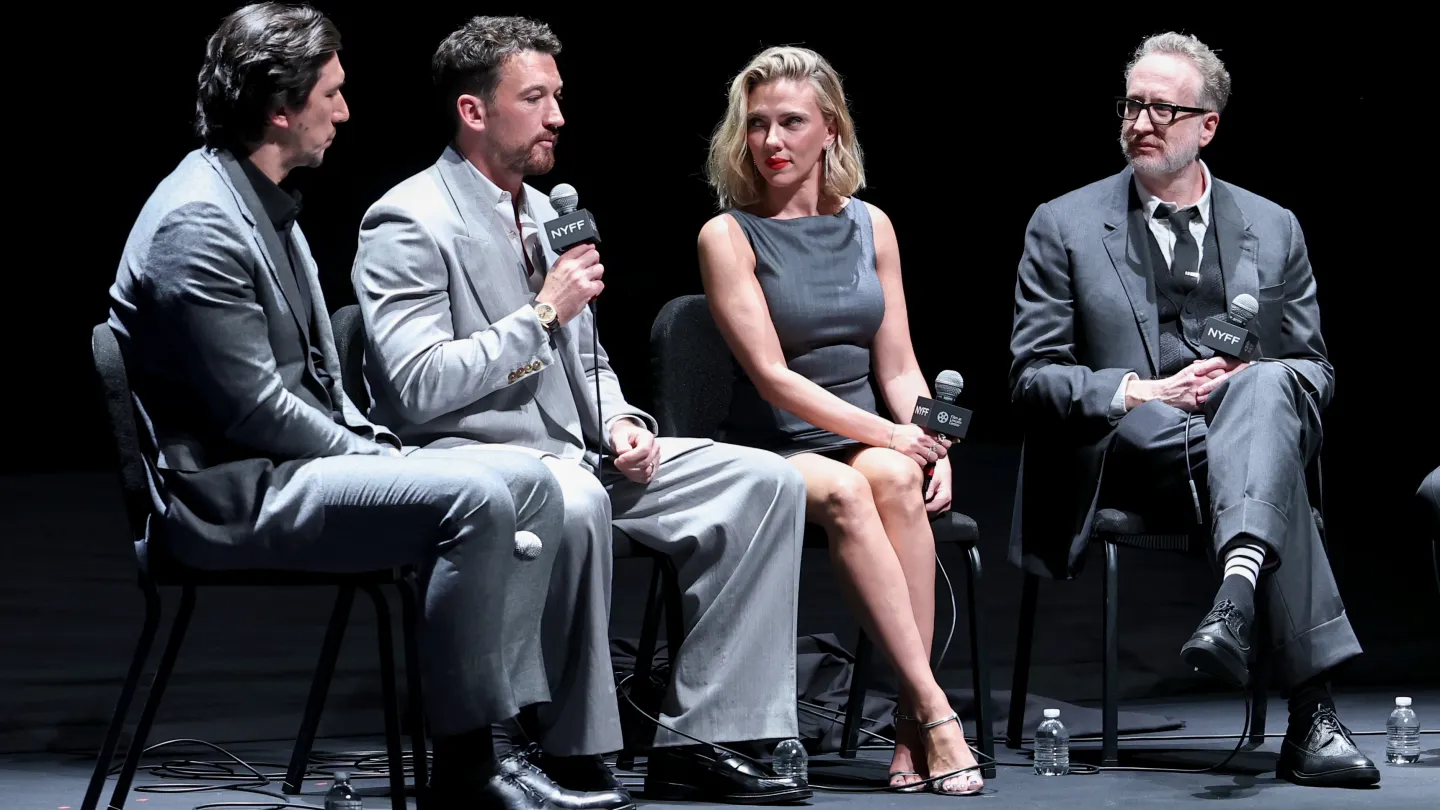
There are worse ways to be introduced when you’re about to unveil your new film as the Opening Night selection of the New York Film Festival, as “one of the great living American filmmakers.” But that’s exactly what Artistic Director Dennis Lim said as he brought Paper Tiger director to the stage at Lincoln Center’s Alice Tully Hall on Friday evening.
Gray has a long history with the festival, having closed it with The Lost City of Z and marked its anniversary with a special screening of Armageddon Time. But still, this felt different — as Gray himself noted in his moving introductory remarks, reflecting on growing up a few miles away from the Upper West Side. He remembered, after telling his parents he wanted to become a movie director, their skeptical reply: “How are you ever going to do that?” Gray then looked to the full house inside the theater and said, visibly taken aback: “Well, here I am.”
The general feelings around Paper Tiger feel distinct from Gray’s past films as well. Although a consistent critical darling, the Queens native hasn’t been able to break into the Oscar race in his career thus far, and at this point seems overdue — certainly, it wasn’t hard to think so hearing Lim’s comments framing the relaunch of Paper Tiger, which has not screened publicly since its world premiere in Cannes. The film had been widely acclaimed on the Croisette, and despite the jury overlooking the drama — as has, frustratingly, been a pattern for Gray’s movies at the festival over decades — it was being primed to roar with its fall launch by distributor Neon.
Adam Driver and Miles Teller in Paper Tiger.
Courtesy of Neon
Indeed, this one has arrived with the bells and whistles that typically elude the rollout of a Gray movie; its mix of bold classical filmmaking and rich memoiristic undertones is ideal for placing the movie in the context of his career. In his introduction, Lim spoke about how difficult it is to make personal, independent American films in the current climate; earlier this month, he called Paper Tiger “miraculous” in an interview with The Hollywood Reporter for just that reason. In a season dominated by international directors and blockbuster hits, that framing stands out.
Paper Tiger stars Miles Teller and Adam Driver as Irwin and Gary Pearl, brothers in 1986 Queens, caught in a scheme that puts their family’s lives at risk. Gray’s tight screenplay weaves these crime-thriller bones into textured family drama, with the plot coming to hinge on Irwin’s wife, Hester (Scarlett Johansson), considering how best to protect her sons and ensure their future, while also contending with her own personal crisis.
Shown on a 35mm print at Lincoln Center, this North American premiere was warmly received, with the core cast all on hand. As THR reported last week, Teller will campaign as a lead in the film — Irwin POV opens and closes the film — with past Oscar nominees Driver and Johansson going supporting. The best-actor race may be too competitive for Teller to make much of a dent, but the transformational work of Driver and Johansson, who’ve earned raves for Paper Tiger, could gain traction (and help push the film as well) coming off of the NYFF momentum.
“We were on such a small set…and also it was extremely hot, and when you have a group of actors hanging around with everybody on top of each other — honestly, that’s a labor of love. You do it because you love to do it,” Johansson said in the post-screening Q&A. “You end up hanging out and talking and sharing stories and feeling closer…. You have to survive the day, and it’s hard making movies, and it’s very hard making movies [like this].”
>
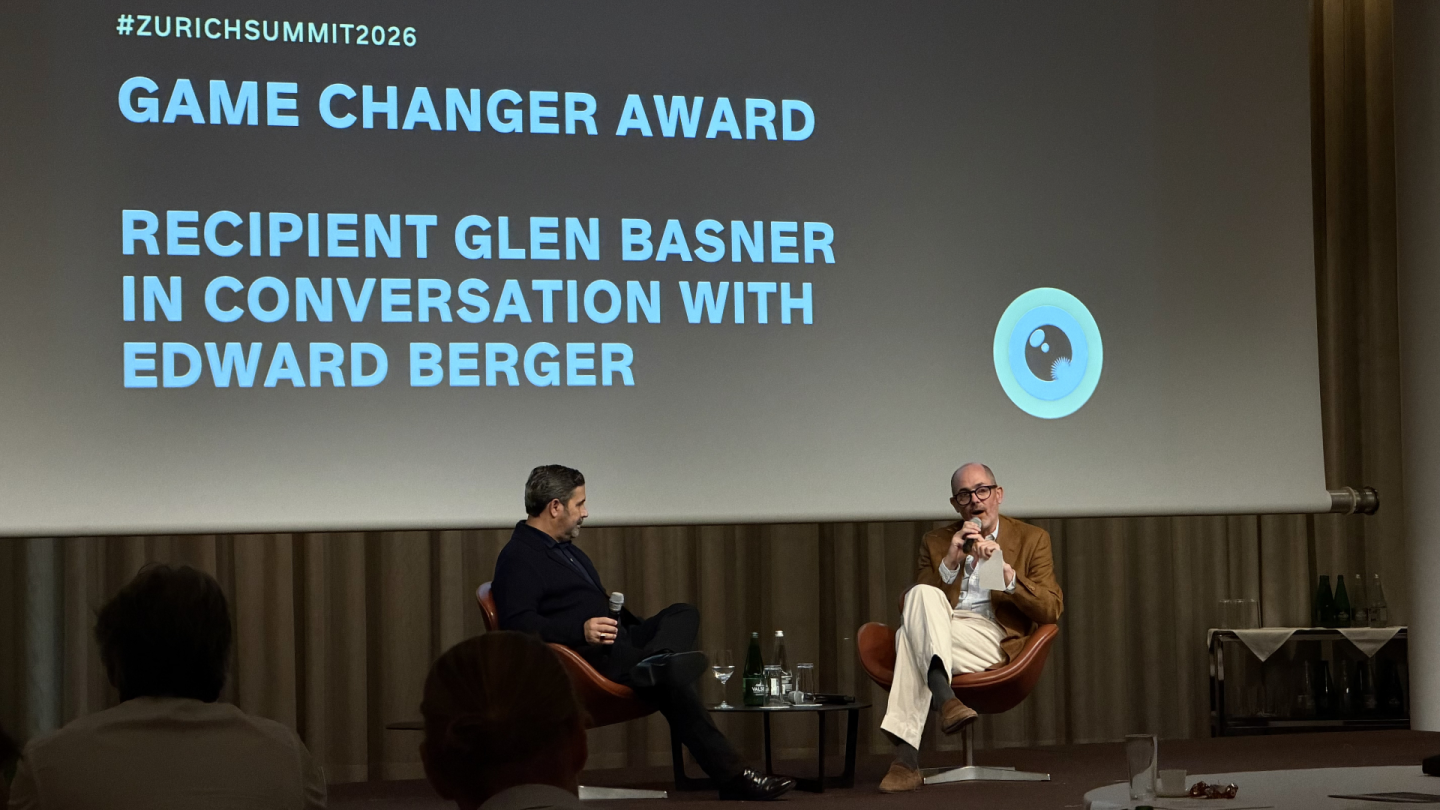
Quite the bromance unfolded on stage at the Zurich Film Festival Summit as Oscar-winning filmmaker Edward Berger held a session with FilmNation Entertainment founder and CEO Glen Basner, who is this year’s Game Changer award recipient.
Basner, being honored for what the festival described as his “outstanding achievements, excellent cinematic taste, and significant contributions within the film industry,” has helped make FilmNation one of the dominant players in the independent film business, backing awards-season and commercial hits including Anora, Promising Young Woman, Arrival, The Big Sick, and, crucially, Berger’s Academy Award-nominated Conclave.
“Glen, I’m so proud to have had the opportunity to make a film with you. I’m so happy to know you. I’m so happy to call you a friend, and I want to congratulate you on your wonderful career, for all the great movies, for all the filmmakers that you’ve inspired, that you’ve instilled confidence in,” said Berger after an hour-long discussion in which the two reflected on their time together, a chaotic film climate, and why great storytelling will always be at the heart of Basner’s work.
At this year’s Zurich Film Festival, Basner is producing three movies in the lineup: Florian Zeller’s Bunker with Javier Bardem and Penélope Cruz, A Talent for Murder with Helen Mirren and I Play Rocky, which proved a real crowd-pleaser at TIFF.
Mostly, however, the two creative partners — both of whom worked at indie production and sales company Good Machine early on in their respective careers — focused on the making and success of Conclave. Berger’s 2024 masterpiece starred Ralph Fiennes as Cardinal Thomas Lawrence, the dean of the College of Cardinals, who is tasked with overseeing the election of a new pope at a time when he is personally experiencing a crisis of faith.
Berger shared an anecdote about feeling “in a real panic” when the film had sold in most territories apart from the U.S. in Cannes a few years back. He then recalled, after nearly finishing the film, that he desperately wanted it to go to the Venice Film Festival. “Or at least show them the movie and see if they’d show it,” said the Swiss-Austrian. “This was in May and Glen, we got on the phone — and I hated Glen — he said, ‘I don’t know. I’m not sure the movie’s ready. Don’t rush it.’ And then: ‘Is it going to be expensive? We don’t have American distribution in place yet.’”
But Berger really wanted to hit the Lido with Conclave (the film would later earn its world premiere in Telluride). “Glen said, ‘Okay, let’s test the movie. Let’s show it to a few people, to friends and family, and see how it does. And if it does really well, let’s just finish it.’ And Tessa [Ross, of House Productions] was of the same opinion, by the way. Tessa also said, ‘I think you’re still missing something, and I don’t know what it is.’ And no one could really formulate it,” Berger explained.
They tested the movie, and it “tested just okay,” he continued. “It was an argument to say, ‘Okay, why don’t we just sit on it and wait a little bit?’ And those really are professorial decisions and creative decisions that made me, that pushed me. And this is going back to Good Machine. This is what I really took from Good Machine: You can always do better,” Berger told Basner. “We make mistakes as filmmakers. We make mistakes as producers, as financiers, [in] sales. We oversell it. We undersell it. Movies fail. […] So I really learned: ‘Let’s look at it again.’ Maybe it can be better. Maybe we can do better. Whether it’s a budget, whether it’s a contract, or whether it’s a cut of the movie.”
“[I had] absolute gratitude to you,” Berger continued. “You were right, I was wrong.” Basner quipped back: “The film was finished… We technically could have been ready for Venice that year.”
Basner said his decision-making dates back to their time at Good Machine. “We always talk about how we want to work on films that inspire us and that we think we understand. And if the marketplace doesn’t get it yet, that’s okay. We’re going to move forward, and we’re going to let them understand why this film is so exciting at a later time. But after that, we’re then going to work like hell to create the environment where that filmmaker can really go and achieve their vision in the purest sense.” He continued about Conclave, demonstrating an impressive knack for knowing when to give directors the appropriate space: “We don’t know if we knew how to unlock it, [otherwise] we would have suggested it. We didn’t know that it was definitely going to be unlocked the way that you ended up doing so, but we knew that we just needed to give you a little bit of time and space to work through and get it to the great place that it did.”
They even had a “few hundred thousand dollars” left over, per a self-proclaimed “frugal” Berger. Basner insisted that the money be spent on improving the film. “It was really inspiring to get that call from you and have the opportunity to make the movie better again, just for being better,” Berger said.
The men touched on why Focus Features became the right home for Conclave in the U.S., with Berger explaining that he was terribly nervous about theatrical distribution there and what that path would look like. “I was so close to the film for so long,” he said. “You were championing Focus […] you were confident that they would be the right partner. And I really kept thinking, ‘Well, what about the streamers? Maybe it’s safer there,’” said Berger. “What gave you the confidence? Again, I’m super grateful for that as well.”
Basner simply told him that “the first thing you learn over time [is] we’re never really exposed the same way that a director is exposed when the movie goes out there. If we make a film that doesn’t succeed, the press aren’t writing about, ‘It’s another shitty film from FilmNation!’ They’re talking about the filmmaker and the actors, and with that understanding comes real responsibility and humility, where these are important decisions in terms of the success and what happens for that filmmaker going forward.”
“But there are sme films that when you watch it,” said Basner, “they’re just undeniable. And Conclave is a fucking amazing movie. We knew it, and we believed and Focus believed that it would have the greatest impact.”
Conclave proved an audience hit as well as an award darling, generating over $125 million at the global box office on a $20 million budget. Its popularity furthered when the real-life Pope Francis died in 2025.
Aside from Conclave, Berger and Basner reflected on the evolution of FilmNation over the last 20 years. They discussed what’s stayed consistent as the company has continued to expand globally, what helps him bolster buyer confidence in a risk-averse industry — and why a film’s budget never equates to its value.
Basner lauded the films he’s in Zurich with, including the “nostalgic” I Play Rocky, which he believes will inspire audiences heading to the theater, and the upcoming FilmNation slate. “This year we will make four films and a television series, and we already have four films in pre-production and hope to make another three. So right now it’s about maintaining the same high-quality standards, but it’s really about more, and with that, being very much okay with taking more risk than maybe we would have some years ago,” beamed Basner.
Earlier at the Zurich Summit, Backrooms director Kane Parsons reflected on helping to save the summer box office, while AMPAS CEO Bill Kramer doubled down on that big YouTube move.
The 22nd Zurich Film Festival runs Sept. 24-Oct. 4.
>
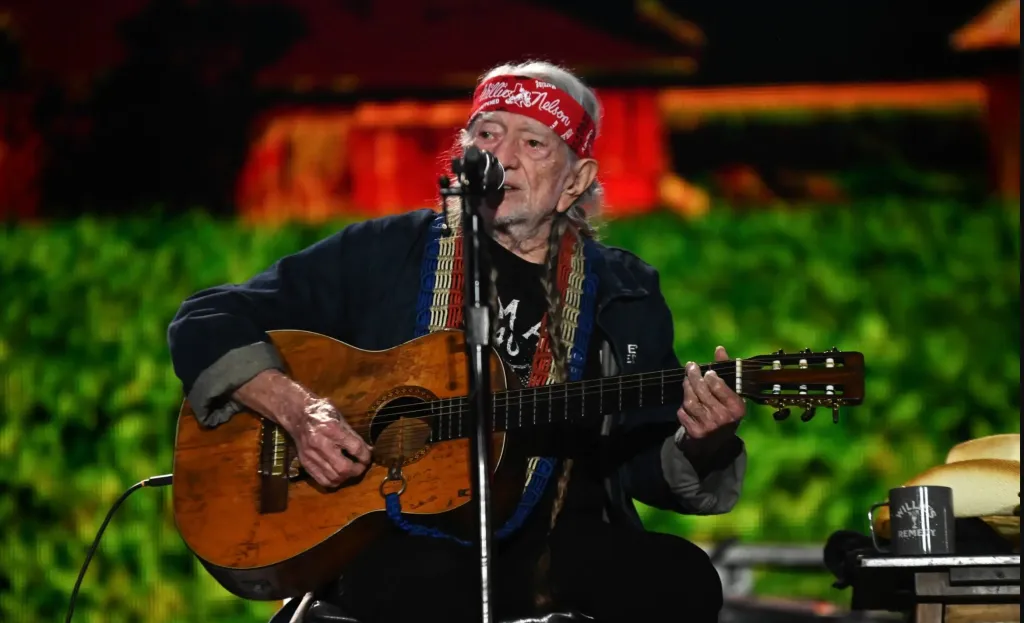
Farm Aid, the annual music festival to raise funds and awareness for American family farms, will be broadcast tonight on CNN from 7-11 pm/ET, 4-8 pm/PT. The benefit concert marks the second consecutive partnership with CNN.
Performers expected to play at the Virginia Beach fest are Willie Nelson & Family, Neil Young and the Chrome Hearts, John Mellencamp, Dave Matthews & Tim Reynolds, Margo Price, Nathaniel Rateliff, Turnpike Troubadours, Lukas Nelson, Ty Myers, Mike Campbell & The Dirty Knobs, Jesse Welles, Sierra Ferrel, Mon Rovîa, I’m With Her, Amythyst Kiah, Lily Meola and Chris Pierce.
CNN Anchors John Berman and Laura Coates will co-anchor tonight’s special coverage and CNN Chief Climate Correspondent Bill Weir will provide on-the-ground reporting.
Other ways of watching are:
>


Search For Canadian TV Actor Stewart McLean Now Homicide Investigation


These ’90s fashion trends are making a comeback in 2017
According to Dior Couture, this taboo fashion accessory is back
Model Jocelyn Chew’s Instagram is the best vacation you’ve ever had
Emily Ratajkowski channels back-to-school style
9 Celebrities who have spoken out about being photoshopped


Rurouni Kenshin: Hokkaido Arc Manga Takes 1-Issue Break – News


HIDIVE to Stream English Dubs for The World Is Dancing, The Forsaken Saintess and Her Foodie Roadtrip in Another World, The Dangers in My Heart: The Movie Anime – News