

movies
James Gray Interview: ‘Paper Tiger’, His Career And New York (Exclusisve)

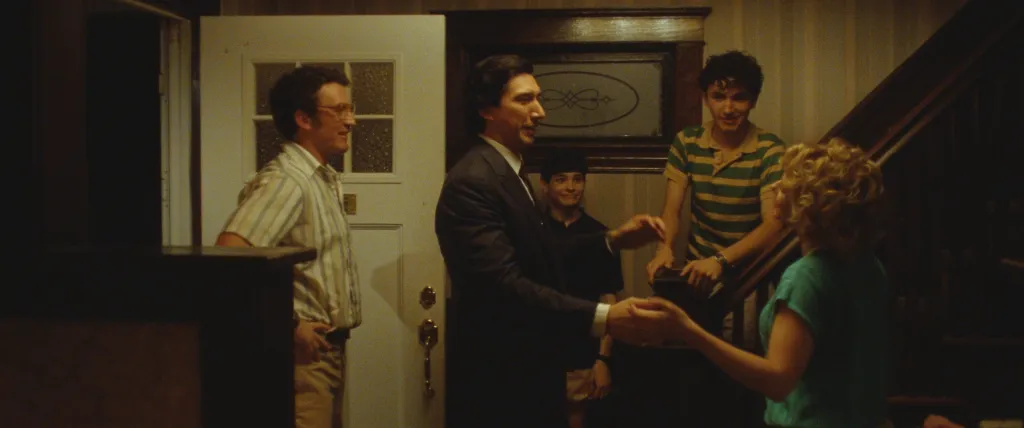
James Gray has quite a track record this century when it comes to appearing in the official competition at the Cannes Film Festival. Starting in 2000 with only his second feature The Yards, he has had six films in competition including We Own The Night (2007), Two Lovers (2009), The Immigrant (2013), Armageddon Time (2022) and this year’s Paper Tiger. (Ironically, the only major festival where he won a prize was Venice, where he won the Silver Lion for his 1994 debut film Little Odessa.)
But while Gray deservedly remains a favorite son of Cannes. It’s not the only festival that favors him whenever it can, as will be apparent tonight as Paper Tiger makes its North American debut at the New York Film Festival, its opening-night selection. It will mark his fourth film at the NYFF in his hometown city (he grew up in Queens), but the first as the prestigious opener. In 2016, his brilliant Lost City of Z was the closing-night film and the only one of his NYFF attractions that didn’t first premiere in Cannes.
James Gray in Cannes
Amy Sussman/Getty Images
The NYFF runs through October 12 and will also feature world premieres of Tony Gilroy’s Behemoth, Luca Guadignino’s Artificial, Godzilla Minus Zero, Tom McCarthy’s The Statement and Ava DuVernay’s 14th among a host of other films over the next three weeks including several from Cannes.
So though he already premiered Paper Tiger in Cannes, Gray considers its NYFF launch a very big deal, not least because so many of his movies are set in New York (this being his seventh) and it is a tribute not just to him but also the city itself. Paper Tiger, which will open on November 13 right in the heart of awards season, got a strong critical reception and is using its NYFF slot as the start of distributor Neon’s awards campaign — the rare time Gray says he has had a movie opening in the thick of Oscar season. Neon will be prominently campaigning it and its star cast including Miles Teller for Lead Actor, and Adam Driver and Scarlett Johansson in Supporting, as well as Best Picture, and Gray for Directing and Original Screenplay among other categories.
The movie once again has personal connections for Gray, an intense drama centering on family and two brothers who get involved in a scheme that sounds promising but of course is not all it is cracked up to be. As they collide with the Russian mafia, family bonds begin to break, a health crisis plays out for one of the characters, and all experience life changing consequences.
The film was shot on 35MM using some vintage equipment and Gray is particularly excited that the NYFF premiere will be projected on film as it was intended, and he tells me it looks stunning. I talked to him this week about this new milestone in his career and what it means to open the festival.
DEADLINE: This is your first time opening the prestigious New York Film Festival, top of the perch. How does that feel to have Paper Tiger get this kind of recognition?
JAMES GRAY: I don’t think of it that way. Maybe it’s my biggest attribute or my biggest flaw, I don’t know. I don’t really view it like that. It’s uncomfortable for me to view movies competitively ever in that way. And so top perch, it’s a huge honor. Let me just stipulate that. I’m grateful that they asked me to do it and it’s great. So I’m not looking a gift horse in the mouth, but it’s uncomfortable for me only in the respect that I just want it to be about the festival and about the film and people enjoying it.
DEADLINE: It’s an interesting thing because this is your sixth film that comes from a debut in Cannes. And so people have gotten a taste of it. It’s been reviewed, I reviewed it, a lot of people. This though is a launch for America, and getting it out there now in real time to get people to notice the film because it’s going to open in theaters. It’s an important thing, don’t you think, opening a festival like this?
GRAY: Oh, absolutely. Also, let’s be very honest here. The Cannes Film Festival has its magic, but it is a very strange environment in which to premiere a movie. And I know I’ve been there many times, but I say this actually from a position of experience. There’s a kind of bubble thing that happens there and you’re either a beneficiary of, or sometimes a victim of, context with the other works that are in competition. And when you have something that’s opening in the United States many months later, it is very helpful, in fact, almost necessary to allow people to see the film unattached to the rest of the Cannes bubble because it somehow allows people to see the film for what it is without the sort of added noise. So you’re right, it’s quite essential. I know people don’t think context matters, but it really does. So what I’m hoping is that people just see the film really for itself. It was very well received in Cannes. This is not me being churlish, but it’s just that it’s a New York movie. It’s the right place for this to be.
L-R: Scott Morris, a guest, Anthony Katagas, Adam Driver, James Gray, Miles Teller and Rodrigo Teixeira at the ‘Paper Tiger’ premiere in Cannes
Aurore Marechal/Getty Images
DEADLINE: Looking at your filmography you seem to like to go back and continually want to shoot in New York in places where you grew up and stories that even have a personal connection. I mean, this film is, again, I think a very personal one for you, as was Armageddon Time, which even shot in your old neighborhood. So is that where you’re at right now as a filmmaker in your head, the last two films particularly?
GRAY: I’ll go back to doing stuff that’s outside of the realm of my autobiographical experience probably on the next film, but it’s hard. I don’t have a career-path thing in my head which I’m trying to execute. I’m simply trying to express where I am emotionally with each film. And with something like Lost City of Z, at that time I had just finished making a period film in New York, which took place in 1921, which was very different from my other films, centered around a woman and called The Immigrant.
I really loved the kind of expansiveness of Lost City. I was anxious to just break the mold completely for what I was doing and to do an adaptation, to try my best at a kind of David Lean thing. I may well do that again. In fact, on the next one, I may well do it. But for now, being the age I am, coming out of Covid was a big deal, a kind of introspective quality to spending time in your house for two years with your whole family. I think that led to a certain kind of focus on interiority. I probably will go outside of the realm again after this one.
Let me also say I think it’s actually a sign of how, and I have to emphasize this, how fortunate I have been because it’s very rare that an American, particularly a filmmaker, gets to do things repeatedly in a very personal way. Now I make the films for a budget, they’re small, but in order that people don’t lose money and everyone feels okay at the end that’s a good thing. So you kind of get left alone, but at the same time, it’s been a tremendously rewarding thing to mine my most intimate impressions in a way. I was educated by my heroes when I was a kid seeing (Fellini’s) I Vitelloni, but also then seeing Amarcord, which are almost two sides to the same coin made, what, 20, 25 years later or whatever it was, 1951 to ’73. So to me, it’s the highest calling and I feel tremendously fortunate to be able to do it.
DEADLINE: Yeah, and Two Lovers actually goes right to what you’re talking about there too with that influence that you had with that film.
GRAY: Absolutely. I mean, the whole point also is to try, and in America we have a tradition, which I suppose actually ironically is not really American. It comes from Europe, comes from Billy Wilder out of Austria, Germany; William Wyler was a Swiss German; Hitchcock, British; Lubitsch, Fritz Lang. None of these guys was American. And so the whole American film tradition, if we call it that, of narrative, they used genre to express a personal state. And I suppose the big break would be Rossellini who said personal cinema’s where it’s at. I find myself between these camps, stealing from genre in classical form, but also trying to express something very direct and intimate.
DEADLINE: That’s pretty good company to be stealing from.
GRAY: No, no, I’m not saying I’m as good as they are. Please. Last thing I need in life is my brother to call me up and say, ‘What, you think you’re Rossellini?’ I’m saying you steal from the best, you know what I mean?
DEADLINE: It’s good to be an American filmmaker still talking that way and still being able, like you just said, for a budget, to be able to make these kinds of movies. We don’t see them as much.
GRAY: Well, I’m very lucky, but there are a huge number of very talented filmmakers. I mean, you can express yourself in very different ways. I know that Paul Thomas Anderson wasn’t a waterbed salesman in 1973, but that’s a very personal film, Licorice Pizza. So he’s able to express himself personally, even if it’s not autobiographical, or even Chris Nolan’s movies, even though the scale of Dark Knight is enormous, there’s something that he gets at very personal with Heath Ledger. So you can do it. It’s not about the facts of your life. There are a number of filmmakers who are able. Even someone like David O. Russell, whose comic timing is so incredibly good, but it comes from him, who he is. Each filmmaker from my generation, I’m speaking specifically, has a way of expressing themselves personally through different means.
I see also people slightly younger than I am with Damien Chazelle and with Ari Aster, you see also a real desire even when working outside of the confines of the autobiography to do something that’s about interiority and our intimate impressions. So it’s just that I’ve been very fortunate in this particular register to be able to do something that’s both personal and actually autobiographical at the same time.
DEADLINE: And I think it’s really cool you shot on film. You’ve gone back to film after a little detour with Armageddon Time into digital, and now it’s 35MM. And so they’re going to see it at this New York premiere the way they showed them in the old days.
GRAY: It does have an effect. It’s incredible. I was almost poo-pooing the 35-millimeter print idea because I like DCP quite a bit. I have a very clear memory, Pete. You’d go to the movies and it would be like a giant hair in the gate out of focus. I don’t romanticize any of that stuff, so I’m sort of in favor of DCP a lot of the time. But I will tell you, I just saw the print and it is a thing of beauty. When they brought up the idea, I said, “Guys, you have to do it.” And you realize that what we miss with 35-millimeter print is the elusiveness, the imperfectness of the image is actually weirdly part of the magic. You don’t want perfection. The movement within the gate, the dirt, all of that stuff lends to, as Walter Murch once said, “imperfection allows art to breathe.”
DEADLINE: Now, this movie, Paper Tiger, I thought was so intriguing in terms of what you are interested in, your Russian background, and particularly at that time in 1986. What fascinates you about that period? Because Armageddon Time was also involved in the ’80s.
GRAY: Well, it’s a great question because the whole idea of it is that you’re seeing it now. Back in the ’80s, you had the end of a moment where you had the American system, market economics, and you had the socialist dictatorships of the Soviet Union and communist China. And so what happened? Market reforms begin to come in China, and the Soviet Union begins to crumble… and Chernobyl obviously really emphasized what was going on there. And that alternative to the market fell away. So the model became only American capitalism. Now, I’m in favor of that because I think it’s the best of all systems we’ve devised so far. It’s led to tremendous explosion of wealth, but it has its huge drawbacks, and one of them is the kind of brutality in the system. And so when I had decided to make this film, it was that time period because it’s when the competition of systems started to fall away.
DEADLINE: It’s very relevant to what we’re looking at now. A lot of these kind of themes running through this movie, you could say that was then and it’s the same now. It’s actually worse now what we’re seeing with the billionaire kind of thing.
GRAY: Absolutely. And Pete, the origin of, you’re exactly right, this whole idea of the oligarch, this is born around that period and it really calcifies when [Boris] Yeltsin takes power in ’91, when the Soviet Union idea falls away, that was the oligarchs asserting their power. But where do the oligarchs come from? It’s from this kind of cultural undertow. Now we didn’t know, but you know this, we didn’t discuss this in 1986. We didn’t know anything about any of this.
DEADLINE: How important was casting this with actors from New York, like Scarlett, also Adam who lives there, and even Miles who is from New Jersey?
GRAY: With a New York movie, it doesn’t matter what you’re doing. You’re going to get somebody who goes, “What? You talking like deez?” But that is the truth. At some point, you have to address the fact that I don’t talk like I’m from Chicago. So in order to get it right, I almost felt like the shortcut. Scarlett is a New Yorker and gets it completely, and her accent is completely accurate. Now, some people are going to say, “Oh, she sounds so New York, blah, blah, blah.” But that’s the truth of it. So I wanted to get past having an actor from England do it, and just get the real thing. And if it’s too much for people, that’s their issue.
DEADLINE: Can I ask you about the Aeschylus quote you put up on the screen that opens the film? It seems to really sum it all up theme-wise. “Let there be wealth without tears; enough for the wise man who will ask no further.” I mean that is a key thing really relating to the time we are living in right now.
GRAY: Yeah, exactly. At some point, we have to reckon with the fact, and I think making as much money as you can is great. I don’t have an issue with that. That’s fine. But I don’t think that’s the only thing that matters in your life. I think that people who consider only that, they’re in for a world of hurt because love matters much more. Connection, the human connection is much more important. Aeschylus knew some things, but it was not just because I want it to be, I hope it doesn’t come across as pretentious… it is just so you understand the bigger context of what’s going to come.
DEADLINE: About the importance of family and the real definition of wealth.
GRAY: And it’s partly because it’s ingrained in us that we’re supposed to keep growing, keep getting richer, this idea. And he (Miles Teller’s character) says it, he says, “I had everything.” Hard to know that.
DEADLINE: You have Neon distributing this movie, which is interesting to me because apart from Anora, horror, some others, they’ve been doing a lot of foreign-language pictures and that sort of thing. This is a little bit different for them.
GRAY: It is. I mean, I have to say, I have had a fantastic time with them. I mean, they are so respectful, but not too respectful. I don’t claim to have knowledge about exactly how to release and market a movie in 2026. I’m not sure anybody does, by the way. And they’re very happy to push back when I’m being silly, but they’re also really happy to listen, and they’re really open, and they love the film, and they want to support it, and that’s all you can ask for. They’ve been great.
DEADLINE: Oh, that’s cool. And they’re going to do a big Oscar campaign, I’m hearing. They’ve already figured out who’s supporting, who’s leading, all that stuff that goes with the territory.
GRAY: Yes, that’s the first time in my career actually, which is weird, but you see why it’s happened because generally the films don’t come out (in the fall season), so this is the first time I’ve had a picture come out at this time frame and with people who want to support it in that way. It’s wonderful.
>
Continue Reading
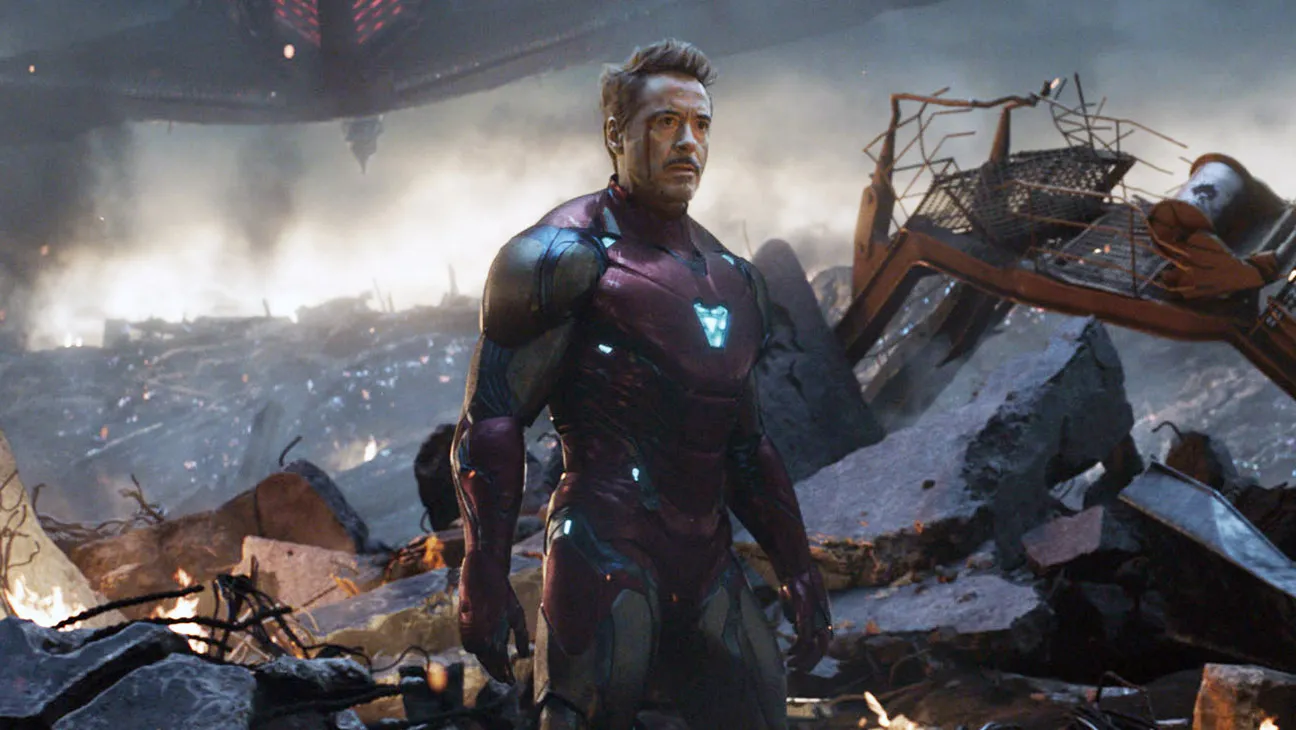
Avengers: Endgame is returning to the big screen to do battle with sophomore holdover Resident Evil as a slew of prominent titles newcomers look to make this an interesting weekend at the box office.
Disney releases Avengers Endgame: Encore on 3,060 North American screens on Friday, seven years after Marvel Studios‘ 2019 superhero blockbuster first hit theaters. The rerelease scored $3.8 million in Thursday previews, with the studio projecting that the film’s return will gross around $25 million domestically and another $25 million to $30 million from overseas markets. In its initial run, Endgame launched in April 2019 to a record-setting opening weekend of $1.2 billion globally before claiming No. 2 on the all-time worldwide chart with a cume of $2.7 billion.
Avengers Endgame: Encore includes an exclusive look at the action from Marvel Studios’ Avengers: Doomsday, set to hit theaters Dec. 18. Both films come from directors Anthony and Joe Russo and will be available on Infinity Vision screens, as the new certification for premium large format theaters launches this weekend.

Robert Pattinson in Primetime.
Courtesy of A24
Elsewhere, Robert Pattinson plays journalist Chris Hanson in Primetime, which A24 releases in more than 2,800 North American theaters. Collecting $2.7 million in Thursday previews, the movie is tracking to open with a domestic sum between $12 million and $16 million. It holds an 86 Rotten Tomatoes score from reviewers, with The Hollywood Reporter chief film critic David Rooney calling it a “peak Sleaze TV rerun, for whoever wants it.” Merritt Wever, Skyler Gisondo and Phoebe Bridgers round out the cast for director Lance Oppenheim.
Brad Pitt stars as a Special Forces officer stranded with his combat dog in the wilderness in Heart of the Beast, hitting 3,400 North American theaters from Paramount Pictures. David Ayer’s feature grossed $2 million in Thursday previews, and the studio expects it to end up with $17 million to $20 million domestically for the weekend. Carrying an $82 million budget after being greenlit by the previous Paramount regime, Heart of the Beast stands at 87 percent critical approval on Rotten Tomatoes, with THR critic Frank Scheck writing that it “packs a surprising emotional punch.”
Brad Pitt in Heart of the Beast.
Paramount Pictures
DreamWorks Animation unveils Forgotten Island, with Universal Pictures releasing the original animated feature in 3,548 North American locations. H.E.R., Liza Soberano and Dave Franco lead the voice cast for the movie that the studio is projecting to open in the mid-teens.
Forgotten Island grossed $1.8 million from Thursday previews, combined with paid advance screenings on Sunday and Monday. Carrying a budget of $80 million, the film focuses on two friends magically transported to an island rooted in Philippine mythology. Forgotten Island has a 96 percent critic approval rating on Rotten Tomatoes, with Scheck writing for THR that it is “an exciting original.”
Also battling at the box office this weekend is Screen Gems’ Resident Evil after director Zach Cregger’s video game adaptation raced to $60.1 million to set a franchise record in its opening weekend.
>

EXCLUSIVE: Ben Wang (Karate Kid: Legends) and Minnie Mills (The Summer I Turned Pretty) have wrapped on Admissions, an indie road trip flick from first-time feature filmmakers Aimee Pham and Kai Sampadian.
Both written and directed by the duo, the indie follows two college admissions officers, played by Wang and Mills, with opposing views of the admissions system. During a recruitment road trip across Illinois, they must confront the uneasy reality of deciding who gets to move forward while their own futures remain uncertain.
The film was shot in Chicago and throughout Illinois, with support from the Illinois Film Production Tax Credit. CJ Kari exec produced alongside producers Elias Ginsberg, Christian Vergara and Jake Prine. Danni Varenhorst, Sophie Pelosi, Jillian Le and Olivia Schwartz served as co-producers.
Pham and Sampadian are an L.A.-based pair of USC alumni whose script Place to Be was selected for the 2025 Black List. Their short film House Rules premiered at the Seattle Asian American Film Festival, where it won the Audience Choice Award for Favorite Narrative Short, and later screened at the Brooklyn Museum. They’re repped by Untitled Entertainment, CAA and Vainshtein Law.
Wang is coming off of Brian, a coming-of-age comedy that premiered at SXSW where he stars alongside William H. Macy and Randall Park, and David Wain’s Gail Daughtry and the Celebrity Sex Pass, which premiered at Sundance. He previously led Disney+’s series American Born Chinese. Additional credits include The Long Walk, Karate Kid: Legends, 2024’s Mean Girls and Disney+’s Chang Can Dunk. He’ll next be seen in The Hunger Games: Sunrise on the Reaping and is repped by Artists First, Stewart Talent and Schreck Rose Dapello.
Mills has been seen on Prime Video’s The Summer I Turned Pretty and Netflix’s Obliterated. Other credits include the indie California Scenario, which premiered at the Santa Barbara Film Festival, and Wait, Your Car?, which premiered at Cannes in 2025. She is repped by Untitled Entertainment, Paradigm and Yorn Levine.
>
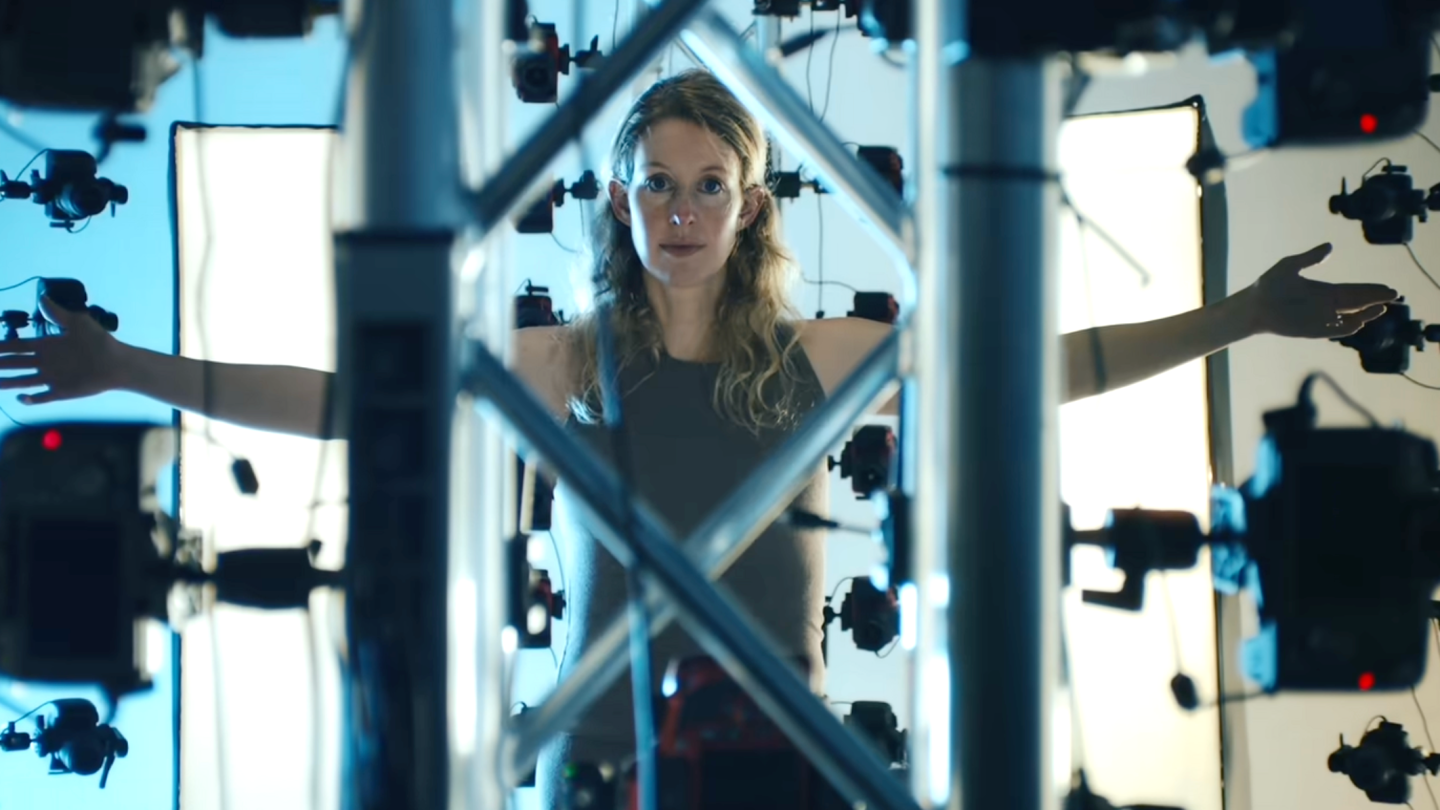
You can see everything … and perhaps more than you wanted to?
A24‘s hugely buzzy Elizabeth Holmes documentary You Can See Everything has just been given a R-rating.
But it’s the reason for the rating for the Nathan Fielder and Lance Oppenheim documentary that’s raised eyebrows among some online. The MPA stated the rating is for “language” (as you might expect) and “graphic nudity” (oh-oh, really?).
In the film, Fielder moves in with Holmes and her husband, William Evans, for an intensely candid portrait of the disgraced Theranos founder in the period before her incarceration.
Fan reaction has been, as you might expect, rather playful: “If I see anything less than everything I’m demanding a refund!” and “I’m beginning to wonder if this is actually what the title comes from…” and “Non-zero chance it’s graphic nudity of Nathan Fielder. Even odds, actually.”
We don’t want to spoil. But we will tease an explanation for the rating — but don’t read the following if you don’t want to know anything: One person in the documentary goes full frontal.
The ratings follows another tempest-in-a-teapot bit of You Can See Everything news on Thursday when a typo in the film’s official trailer went viral, with fans becoming convinced the confusing-looking error was intentional — until A24 fixed it.
You Can See Everything will be released in theaters Oct. 16, following its brief festival tour.
The Hollywood Reporter‘s critic wrote that in You Can See Everything, “What begins as a fascinatingly intimate portrait of a deluded or disingenuous scammer reveals as something even wilder, more ambitious and less predictable, until we’re left to ponder what value a personal truth has at all.”
>

Sports2 minutes ago
Cole Palmer misses too many opportunities to play for England – Thomas Tuchel

Tech3 minutes ago
Meta is putting its muscle behind Muse as the AI app takes off

Entertainment5 minutes ago
Bleecker Street Taps Frank Martinez as Head of Distribution
-

 movies4 months ago
Search For Canadian TV Actor Stewart McLean Now Homicide Investigation
-

 Fashion9 years ago
These ’90s fashion trends are making a comeback in 2017
-
Fashion9 years ago
According to Dior Couture, this taboo fashion accessory is back
-
Fashion9 years ago
Model Jocelyn Chew’s Instagram is the best vacation you’ve ever had
-
Fashion9 years ago
Emily Ratajkowski channels back-to-school style
-
Fashion9 years ago
9 Celebrities who have spoken out about being photoshopped
-

 Anime4 months ago
Rurouni Kenshin: Hokkaido Arc Manga Takes 1-Issue Break – News
-

 Anime3 months ago
HIDIVE to Stream English Dubs for The World Is Dancing, The Forsaken Saintess and Her Foodie Roadtrip in Another World, The Dangers in My Heart: The Movie Anime – News