
movies
‘Godzilla Minus Zero’ Review: Monster Mayhem Rules in Thrilling Sequel

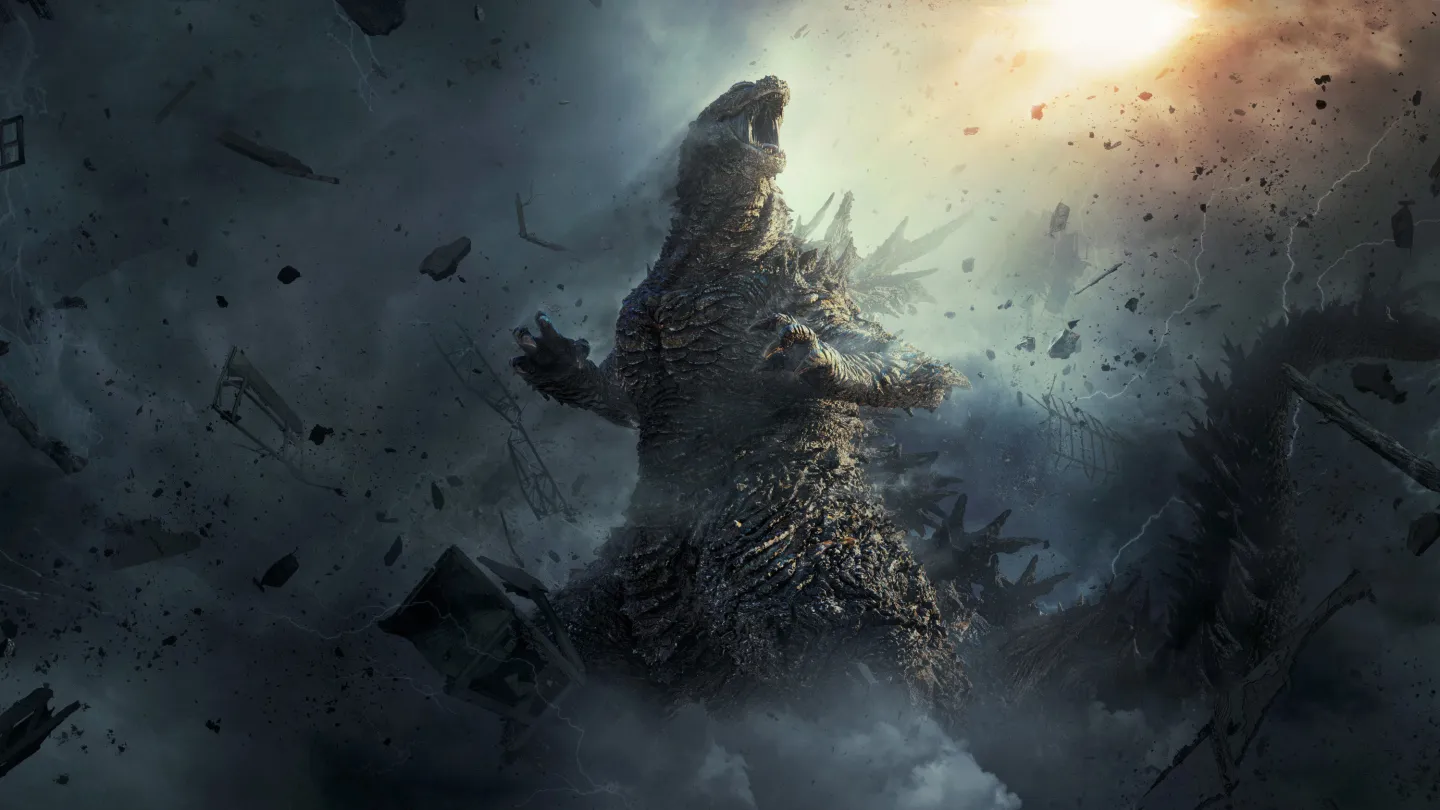
Writer, director and VFX wizard Takashi Yamazaki three years ago reinvigorated Japanese production titan Toho’s seven-decade kaiju franchise with Godzilla Minus One, which delivered amply on monster mayhem with sophisticated (and Oscar-winning) effects, but perhaps more importantly, grounded the creature feature in affecting humanistic drama. By dividing the film’s attention between mass destruction and the raw pain of post-WWII trauma, reconstruction and societal reintegration — not to mention the atomic allegory — Yamazaki boldly reimagined the property while honoring the roots of the series’ 1954 original.
That same meticulously balanced duality is evident in the director’s approach to the scaled-up sequel, Godzilla Minus Zero, an equally thrilling jolt of marauding monster action anchored by tender themes of family, friendship, camaraderie and personal courage. These are characters about whom we come to care deeply, and Yamazaki trusts his audience to know the value of time spent observing human relationships, ennobling the horror with tangible emotional stakes. Following its world premiere at the New York Film Festival, GKIDS will release the film in the U.S. Nov. 6.
Godzilla Minus Zero
The Bottom Line
A radioactive blast.
Venue: New York Film Festival (Spotlight Gala)
Release date: Friday, Nov. 6
Cast: Ryunosuke Kamiki, Minami Hamabe, Yuki Yamada, Kuranosuke Saski, Jun Kunimura, Mio Tanaka, Sakura Ando, Masami Nagasawa, Min Tanaka, Hidetaka Yoshioka
Director-screenwriter: Takashi Yamazaki
Rated R,
2 hours 15 minutes
While the 1949 setting might be expected to make the aftermath of war recede into the past, it’s no less acutely felt here, with resonant moments touching on the complicated perceptions of the Japanese people toward America and the outsize impact on the rest of the world of its military industrial complex. World War II may be over, but its vicious cycle of loss, destruction and power-flexing continues.
At the risk of angering the spoiler police — a cue to stop reading now if you’d rather go in blind — the new film ushers in another legendary kaiju first seen in 1964. Promotional materials for the most part refer evasively to “a new threat,” but fan anticipation and advance media have pretty much let the badass three-headed dragon out of the bag.
Just as Japanese life appears to be returning to some kind of peacetime normalcy, with Godzilla exiled to the ocean depths and believed to have been killed in the previous movie, King Ghidorah comes swooping in with massive wings generating hurricane-force winds, ripping apart an entire town in the opening action.
There’s a ton of sci-fi mythology in the Godzilla series concerning the origins of Ghidorah the Explorer, a creature at various times under the control of alien invaders and time-traveling human terrorists, which supposedly arrived on Earth inside a meteorite intent on detroying the planet, much as it had destroyed Venus thousands of years earlier. Yamazaki wisely ignores all that geek lore, instead treating the dragon as simply another killer Monsterverse freak with regenerative powers, inevitably destined to fight a death match with Godzilla for alpha status.
Just as Godzilla can charge up his radioactive dorsal plates and shoot nuclear-level heat rays at his targets, Ghidorah has his own neat trick and three gaping fanged mouths with which to deploy it. The creature design is magnificent, with the huge wingspan and writhing tangle of elongated necks and tails cranking up the menace, while the ferociousness of the monster’s faces is enhanced to great effect by growling and roaring that can sound almost like an evil cackle.
The mega-dragon spews out electromagnetic energy in the form of gravity beams; some of the most outstanding sequences involve those lightning-like bolts wrapping antigravitational forcefields around buildings, trains and anything else in Ghidorah’s path, sucked up into the air and then smashed to the ground for maximum wreckage.
The heart of the previous film was former WWII kamikaze pilot Koichi Shikishima (Ryunosuke Kamiki) — stunned by the loss of his parents and crushed by guilt over his conduct in the dying days of the war — daring to dream of a life of domestic contentment only to see that dream repeatedly put in jeopardy.
More or less given no choice, Koichi welcomed a young woman, Noriko (Minami Hamabe), into his home in the rubble of Tokyo, along with Akiko (adorable Sae Nagatani), the orphaned child she had found alone and terrified. Two years on, this found family are inextricably bound together, with flinty neighbor Sumiko (Sakura Ando, so memorable in Hirokazu Koreeda’s transcendent Shoplifters), who also lost her family during the war, serving as “Auntie,” to lend a hand with Akiko.
Once Ghidorah’s rampage spreads fresh terror, Noda (Hidetaka Yoshioka), the former naval weapons engineer now heading up the government’s Disaster Countermeasures Bureau, begins working on defense plans. He signs up his old comrades from the previous film along with a couple of new ones, meteorological forecaster Aoyama (Masami Nagasawa) and Professor Murakami (Min Tanaka), who lost his family in Hiroshima and may have a hidden agenda.
Veteran Jun Kunimura (much better served here than in the Takashi Miike dud Bad Lieutenant: Tokyo) also turns up as a doctor studying the effects of exposure to Godzilla’s cellular tissue on people involved in the attacks of Minus One. This phenomenon impacts Noriko, who miraculously survived the devastating Ginza attack last time around and has shown remarkable resilience, with her wounds healing at an uncanny rate.
Yamazaki infuses tenderness into not just the core family but also the extended group, bound by profound fondness as much as by horrific shared experience. With Ghidorah dictating that the fight will now be airborne, Koichi is eager to get back in the pilot’s seat, compelled by a sense of duty to his country but also by lingering survivor’s guilt.
Nodo wrestles with his own guilt over the countless deaths caused during the war by weapons he designed; he will not hear of Koichi putting his life at risk again and possibly robbing Akiko of a father. Nodo agrees only to bring the pilot on as an advisor, but Koichi is not easily deterred. The same goes for Noriko, whose medical condition may have the potential to be weaponized.
Nodo and his crew set up a command center in Matsumoto City, where Aoyama determines that they can track Ghidorah as the creature responds to the electromagnetic force of a fast-moving storm system.
Around this point Godzilla — fully regenerated and pissed as hell — resurfaces offshore. Given that heavy artillery and bombs have failed to slow down Ghidorah for long, Murakami calls Godzilla’s reappearance “divine providence,” insisting that setting the two monsters against each other is their only hope. Via some ingenious plotting, that entails a plan to lure the beasts into proximity, using a system tested by the professor in a cheeky homage to Hitchcock’s The Birds.
The resulting clash of the legendary kaiju is a rip-roaring smackdown in a movie that keeps awing the audience with exhilarating action and then continually one-upping itself in the dustups that follow. I’m fairly sure I stopped breathing during a tense scene in which Godzilla bears down on a seaplane attempting a hurried liftoff.
While Spider-Man: Brand New Day generated plenty of sparks and Dune 3 and Avengers: Doomsday are still to come, it’s interesting that some of the most pulse-pounding, intense and inventive action sequences on screens this year have been in two East Asian films — Godzilla Minus Zero and Hope. Stand down, Hollywood.
As he demonstrated in Minus One, Yamazaki’s command of big-ass destruction spectacle is breathtaking, this time overseeing a significantly larger VFX team that makes the monsters not only mighty physical presences but also part of an immersive environment in which we experience the full force of their earth-shaking power. This is some of the most impressively seamless integration of major-scale CGI in recent memory.
But the masterstroke of Yamazaki’s direction is the skill with which he ensures that the human drama remains no less compelling than the monster faceoffs. The film also benefits from initially making Godzilla the underdog in the fight, bringing back the creature’s representation in Japanese culture of nuclear trauma, natural disasters and the pervasively heavy anxiety that gripped the nation in the postwar years. Watching the Minus movies, you realize how much the lack of that cultural specificity limits the American Godzilla entries and how much these latest two Japanese films serve as a reclamation.
While the action in those U.S. productions, notably Godzilla vs. Kong, can pack a visceral charge, the human element generally is forgettable and the mythology sketchy. But the characters here are richly developed, especially Koichi and Noriko, played with a mix of determination and vulnerability by Kamiki and Hamabe that fosters genuine emotional investment in them as both individuals and as a makeshift family; and the wonderful Yoshiyoka’s avuncular Noda, who has some of the film’s most affecting moments.
As she was in the previous film, Ando’s hard-edged but soft-hearted Sumiko is a droll scene-stealer, and Nagasawa’s Aoyama is a terrific addition — it’s great to see a woman with authority and sharp intuition on the science team, even if she’s not immune to self-doubt.
The first Japanese feature shot in IMAX, the movie looks stunning, with so much detail and nimble movement packed into returning DP Kozo Shibasaki’s frames. Period production design by Anri Jojo and Wataru Hirai is understated but evocative. And the score by another repeat collaborator, Naoki Sato, is a marvel, ranging from brooding apprehension, with solemn choral elements, to thunderous symphonic bursts for the big clashes. With the plot door open to another sequel, here’s hoping Yamazaki will keep on making new entries in this hugely entertaining series. And while we’re raiding the Toho kaiju vaults, bring back Mothra!
>
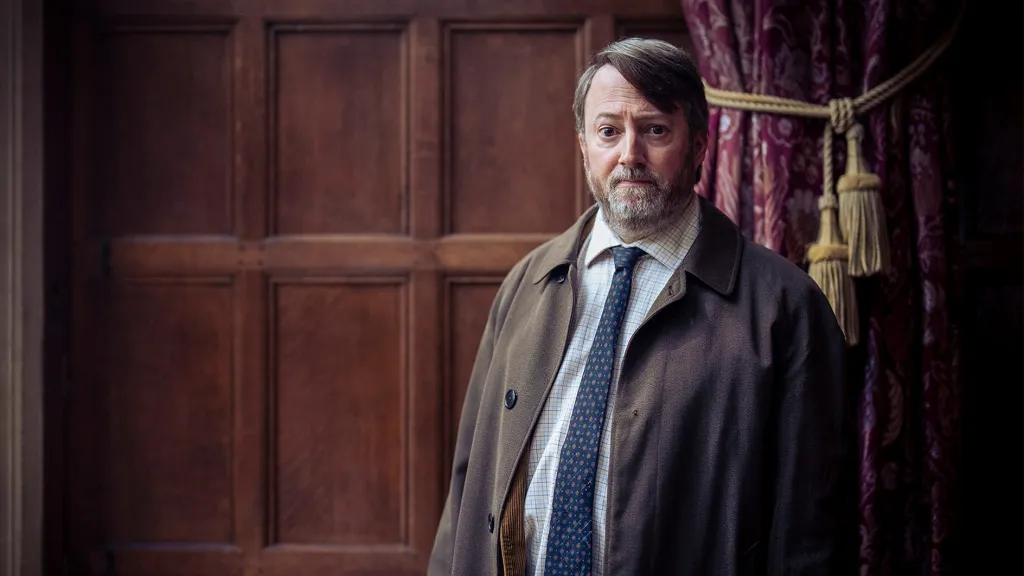
BBC and BritBox comedy-drama Ludwig has gone from strength to strength as it becomes the UK’s most-watched scripted launch of the year so far.
The first ep of Season 2, which wrapped last week, has now been watched by an audience of 9.1 million, according to Barb data from overnights.tv. This places it ahead of the likes of Prime Video’s The Night Manager with 8.7 million and fellow BBC comedy-drama Small Prophets (7.6 million).
The BBC was celebrating the milestone this morning and said this places Ludwig ahead of all rival scripted shows across both broadcasters and streamers. On the unscripted side, it still cannot match The Traitors from earlier this year, also for the BBC, which was watched by a consolidated audience of 13.3 million.
Ludwig stars David Mitchell as John Taylor, a reclusive puzzle maker who pretends to be his brother when he goes missing and infiltrates the local police station to investigate, before becoming embroiled in other cases. Mark Brotherhood is creator, Big Talk produces and the show, which has already been recommissioned for a third season plus Christmas special starring David Suchet, also stars Anna Maxwell Martin and Izuka Hoyle.
Big Talk boss Kenton Allen said: “Ludwig is a gloriously eccentric detective at the heart of a show that has never played by the usual rules, so to see more than nine million people embrace him is genuinely thrilling. Mark Brotherhood has created that rare thing: a clever, funny, warm-hearted show that audiences seem to have made part of their lives.”
Ludwig Season 2 ended last Thursday to 1.6 million overnight viewers but catch-up on BBC iPlayer has been where it has amassed serious numbers. The first season broke out at a time when audiences were looking for cozy viewing and was the BBC’s top-rated scripted show of 2024.
>

EXCLUSIVE: Empire Studios, Rascal Entertainment, Green 13 Films and VMI Worldwide have partnered on Snow Predator, a survival thriller directed by Coz Greenop.
The film has been written by Charley McDougall and is currently shooting at Shinfield Studios in the UK.
The film stars Daniel Stisen, Eloise Lovell Anderson, Jason Flemyng, Genevieve Chenneour, Jack McEvoy, Daniel O’Reilly, Jack Parr, Cole Anderson James, Crystal Wright, Melina Farahani, Neve O’Reilly, Mya Greenop and Tim Cullingworth-Hudson.
The synopsis reads: After Betty (Anderson) inherits a remote cabin from her estranged father, Andy (Flemyng) the young thrill-seeker ventures deep into the frozen Canadian wilderness with her friends, only to become trapped by a brutal storm and hunted by a relentless polar bear — forcing a Search and Rescue team, headed up by Scott (Stisen) into a deadly race to reach them before it does.
The film is produced by Charley McDougall, Jamie McLeod-Ross, Luke Adams, Andre Relis and Jessica Russo.
Daniel O’Reilly, Jade Jelly, Julie Paquit, Mickey Guerin, Bradley Stryker and Rustin Matthew serve as Executive Producers. Becca Hirani of EMRJ Entertainment serves as production manager.
McDougall said in a statement: “The ambition is to make something that feels and delivers the kind of visceral, edge-of-your-seat experience audiences want from this genre.”
VMI Worldwide is handling worldwide sales.
>

EXCLUSIVE: GK Barry agency HLD Talent has signed content creator and By Babes co-founder Heather Bowling.
The social media star, business owner and neurodiversity advocate is joining up with the likes of Barry, Mariam Musa and Shakira Khan at the London-based HLD, which is lead by creators agent Hannah Holland.
She is known as a the co-founder of By Babes, a UK-based and community-driven beauty and cosmetics brand, and creates much of her content around the company’s focus and products.
HLD called her “bold, ambitious and completely herself” and noted that she has a “built an incredibly loyal and highly engaged audience who have grown with her and who are invested in far more than just the content she creates.”
Bowling appeared on Season 5 of Footasylum’s YouTube series Locked In and made an appearance on Barry’s podcast Saving Grace.
“As she enter this next chapter, we’ll be working together to build on everything she’s already created, while opening up new opportunities across premium fashion and beauty, entrepreneurship, media, presenting and beyond,” said HLD in a statement.
Bowling was previously with Insanity.
>

Lone Wolf and Cub Deluxe Edition Manga Wins Ringo Award – News
How much will Micah Parsons' return actually help the ailing Packers?

BBC’s ‘Ludwig’ Is Most-Watched UK Drama Of The Year So Far
-

 movies4 months ago
Search For Canadian TV Actor Stewart McLean Now Homicide Investigation
-

 Fashion9 years ago
These ’90s fashion trends are making a comeback in 2017
-
Fashion9 years ago
According to Dior Couture, this taboo fashion accessory is back
-
Fashion9 years ago
Model Jocelyn Chew’s Instagram is the best vacation you’ve ever had
-
Fashion9 years ago
Emily Ratajkowski channels back-to-school style
-
Fashion9 years ago
9 Celebrities who have spoken out about being photoshopped
-

 Anime4 months ago
Rurouni Kenshin: Hokkaido Arc Manga Takes 1-Issue Break – News
-

 Anime3 months ago
HIDIVE to Stream English Dubs for The World Is Dancing, The Forsaken Saintess and Her Foodie Roadtrip in Another World, The Dangers in My Heart: The Movie Anime – News