
Entertainment
Digger Review: Tom Cruise and Alejandro González Iñárritu’s Misfire


Alejandro González Iñárritu and Tom Cruise were made for each other, if no one else. One is a cinematic daredevil whose films are fueled by the tension between ego and mortality — a mad virtuoso obsessed with staging elaborate stunts that externalize his inner being into the stuff of outsized spectacle, and do so with a kamikaze effortfulness so extreme that even (or especially) their most grandiose work can make it seem like the person behind them is hiding from reality instead of rendering it larger than life. The other is Tom Cruise.
By different means, toward different ends, both men have consistently risked their creative and/or actual lives as they’ve reckoned with the limits of what they can accomplish with a movie camera. Through projects like “Birdman,” “Bardo,” and the “Mission: Impossible” sequels, both men have dedicated the most recent stretch of their careers to blurring the line between the art and the artist. Not as a bid to elide some kind of moral reckoning (easy as it is to see Cruise’s ascension into “The Savior of Movies” as a calculated rebrand), but rather as an effort to explore — or transcend — the relationship between reality and the stories that people choose to tell about themselves.


In that light, I suppose it was only a matter of time before Iñárritu and Cruise finally combined their powers/personas to make the ultimate movie about self-delusion. And so we arrive at “Digger,” a raw and modest little movie that has no ambition beyond poking some fun at the absurdity of its own existence.
Just kidding. LOL. ROTFL, even. The third chapter in a loose trilogy of postmodern films examining the value of creativity at a time when reality has become stranger than fiction, “Digger” is a mega-budget “Dr. Strangelove” riff so detached from human truth that its most believable character is a one-eyed animatronic cat named Maggie — a VistaVision satire so high-concept that it would be more accurate to measure its running time in altitude than minutes.
Like “Birdman” and “Bardo” before it, Iñárritu’s biggest swing (and most endearing folly) self-reflexively hinges upon the various ways that people make sense of living in a world that has abandoned its logic. An $125 million+ Brechtian funhouse that’s been constructed with the craft of a basilica and the obviousness of a bad “SNL” cold open, “Digger” uses its ostensible premise — a trillionaire oil tycoon who doesn’t give a shit about climate change triggers an ecological catastrophe with his name all over it — to plumb the myopia that’s defined the 21st century, and might also be required to survive it.
To say that Iñárritu’s characteristically belabored script (co-written by Sabina Berman, Alexander Dinelaris, and Nicolás Giacobone) reinvents itself at the end of its first and second acts would be the kind of understatement that the “Babel” director has never been capable of, but it’s safe to say that “Digger” sustains a clear, meta-textual interest in its central idea: The world is deteriorating faster than our collective imagination can keep up. They say that comedy is tragedy plus time, and this is a film that fracks that equation for every molecule of hot air that it can — a film that laughs at our compulsion to narrativize the past at the same time as it awes at our failure to appreciate how fucked things have gotten in the present.
“We tell ourselves stories in order to live,” Joan Didion wrote; Iñárritu counters that we might just kill ourselves in the process. With “Digger,” he’s finally identified self-delusion as the world’s most valuable resource.
What else can I say about this movie without revealing its secrets? Tom Cruise is Digger, that much I can tell you. Digger Rockwell, to be precise. Equal parts Les Grossman, Daniel Plainview, and Foghorn Leghorn, Digger is basically a pair of whiskey-soaked finger-guns made flesh, and Cruise — ensconced inside Kazu Hiro’s seamless latex prosthetics, which include wrinkly jowls and a serious paunch — inhabits the guy with the same physical commitment that made Ethan Hunt into such a living spectacle. I’m not sure I’ve ever seen an actor require so many decrepit flourishes just to play a character who’s roughly his same age, but his performance works as intended even when you bump against the Tom Cruise of it all, and there’s no denying the thrill of watching him apply his signature intensity to a role as strange as this one.
Like most people who are rich enough to do so, Digger lives in a cloistered world of his own design, to the point that his Xanadu-like mansion has framed paintings for windows, his antler-horned mirrors reflect his image to infinity, and world leaders come to him so that he doesn’t have to leave the house. His cat Maggie is a 30-year-old Khao Manee who looks as if she’s been rotting in his lap for the better part of a decade, but Digger refuses to accept the fact that she might die one day, even though it seems like she already has.

Digger likewise refuses to accept that any harm might come from the “small” crack his crew has caused in the Arctic ice shelf, but that changes — or at least threatens to — after a methane fireball erupts from the ground, kills everyone at the outpost, and sends a “Manhattan-sized” chunk of Greenland speeding toward Europe (the constantly changing comps used to describe the iceberg’s girth is one of this movie’s only digestible jokes). The next thing we know, the rectal cancer-stricken President of the United States — a red-cheeked John Goodman, making his performance in “Barton Fink” seem like a model of restraint — has set up an impromptu SCIF in Digger’s war room, and a small army of Pete Hegseth caricatures (along with a misused Michael Stuhlbarg as the vice president) have gathered to discuss nuking the mass with as little personal fallout as possible. If they could enter the launch codes with their dicks, they would.
The Major T.J. “King” Kong” vibes are strong, even if these scenes are scripted with a political acuity that cleaves closer to Ed Sheeran than Terry George. (The movie later doubles back to insist that these scenes are meant to be unfunny, a claim that would carry more weight if the scenes were anything else on purpose instead.) Riz Ahmed is there, entombed in his role as a frazzled scientific advisor who recognizes the severity of the situation. Sandra Hüller occasionally sneers in from the sidelines as well, the “Toni Erdmann” legend acquitting herself well in the underwritten role of Digger’s half-sister, in part because the movie invites her to act above it all — it’s not her most demanding work.
Eventually, after a patience-thinning 30 minutes that’s only enlivened by the simple slapstick of people tripping over Digger’s shovel, the fuller scope of Iñárritu’s vision is revealed, and the movie graduates from the soft targets of its opening act (e.g. environmental pillaging, apocalyptic chauvinism, god-king strongmen) to the more abstract and self-involved concerns I alluded to above: most of all the extent to which narrative has become the prevailing force in our world, both individually and on a global scale. “Digger” opens up a new plot thread in its second act — one that it visits far too briefly, and that I missed every time the movie returned to the dead-end story of its eponymous tycoon, who basically spends the rest of his screentime doing damage control for his character in lieu of being able to mitigate the disaster he’s caused.
As with every time that “Digger” heightens its concept even further into the stratosphere, this big reveal — which is neither the last of its kind, nor the most satisfying — is accompanied by a strange whiff of self-deprecation; whenever Iñárritu’s opus expands its scope, it does so in a way that knowingly calls attention to the disconnect between the film’s exertion and its lack of impact. Dennis Gassner’s extraordinary production design, Emmanuel Lubezki’s Bruegel-esque cinematography, Cosmo Sheldrake’s off-kilter music (a throwback to the days when every Kaufman-like comedy required a Jon Brion score), and the rest of the impeccable craftwork are all in service to a movie that constantly questions its own value in the face of its story’s extinction-level events.

The beauty of the craftwork allows those questions the chance to feel sincere instead of self-serving, but — and please stop me if you’ve heard this one before — Iñárritu’s grandiosity makes it impossible for him to pose them on a human scale. The ideas are seldom the problem in his films. On the contrary, the issue once again is that his spectacle-driven simulacra is rooted in the lies we tell ourselves rather than the truths we hope to bury underneath them, and so his hyper-conceptual comedies invariably seem as if they’re built on the watery quicksand of a mixed metaphor.
True to form, “Digger” is a hat on a hat on a hat on a hat, with Iñárritu frantically hoping to pile them tall enough that they stand on their own without tipping over. That anxiety is endemic to the comedy in his films, which has never been more exasperating than it is here. As in “Birdman,” Iñárritu tries to combine the time signature of a “New Yorker” cartoon with the syncopation of a nervous breakdown (or at least a Howard Hawks movie), and the whole movie feels out of tune as a result. To paraphrase the great Kyle Cooke, “Digger” should be fun, but it’s not even funny, and the sweaty clumsiness of its punchlines and sight gags only serve to make the script’s galaxy-brained satire feel more like the stuff of an IMAX-sized JibJab cartoon.
Iñárritu unsurprisingly fares better when he trades slapstick for Hieronymous Bosch-like surrealism during the middle portion of “Digger,” which more fully embraces the whole Roy Andersson on steroids aesthetic of a pallid movie in which everyone looks as ashen and half-dead as Digger’s cat. These sequences are no less contrived than the rest of this malformed blockbuster, but their growing emphasis on performativeness helps to paint a target that Iñárritu actually knows how to hit.
“Digger” peaks with a purgatorial scene in which Cruise saunters through a crowded assembly hall of the damned and monologues — for something like 10 straight minutes — about the disconnect between our hatred toward oligarchs like him, and our dependence they afford the masses to “bask in the comfort of [our] unremarkable lives.” Not only is it the closest we’ll ever come to seeing America’s definitive movie star do Broadway, but it also resonates with the meta-narrative of Cruise’s screen career. The Digger Rockwell of Planet Hollywood, Cruise was (partially) to blame for the bigger is better culture that led us to a place where a single blockbuster miscalculation could threaten the entire studio system. And like the character he plays here, Cruise has credibly made the case that he’s the only person capable of digging us out of that mess.
If “Digger” bombs as hard as I fear it will, it may prove to be a more damning portrait of self-delusion than Iñárritu ever intended.
Then again, the reason why “Digger” is a nobler and more rewarding failure than “Birdman” or “Bardo” is because it doesn’t have to pretend that Digger Rockwell is a real person. He’s a living cartoon who’s exempted from the human foundation that was missing from those earlier films, and — for all of this movie’s psych-outs and detours — that allows Iñárritu to address his existential crises with a greater directness and degree of relatability. You wouldn’t believe where “Digger” goes even if I spelled it out with full spoilers, but its darkly (and at least somewhat inadvertently) hilarious final shot delivers on the essence of a future-facing movie about how readily we have to normalize the absurdity of the present in order to endure it — a movie that extrapolates a wry and all too real vision of mass psychosis from the self-delusion of its own making.
Grade: C+
Warner Bros. will release “Digger” in theaters on Friday, October 2.
>

The Digger reviews do not hold back.
The positive reviews contain strong superlatives praising Alejandro G. Iñárritu‘s bold new film starring Tom Cruise, and the negative reviews are utterly scathing.
Is Digger a 5-out-of-5 “audacious, risky, terrific fun” — like The London Evening Standard says?
Or is Digger a one-half-of-a-point out of 5, “a film full of mostly talented people doing the worst work of their careers” — as Slant says?
Right out of the gate on Rotten Tomatoes, the Warner Bros. film is hovering around a dead even 50 percent split.
In Digger, a nearly unrecognizable Tom Cruise plays an oblivious oil tycoon whose drilling in Greenland dislodges an ice shelf from a glacier that’s going to cause a global disaster. He must race to prove that he’s humanity’s savior before the ecological accident wreaks havoc on the planet. The film also stars Riz Ahmed, Sandra Hüller, John Goodman, Michael Stuhlbarg and Jesse Plemons.
Here are some of the official reviews of Digger from top critics:
The Hollywood Reporter: “A climate crisis satire so smug and bombastic it makes Adam McKay’s Don’t Look Up seem almost innocuous. Digger is basically what happens when you put two outsize egos together with nobody holding the reins to keep their most self-indulgent impulses in check … so meta that you watch in excruciating weariness as [the film] disappears up its own ass and then realize to your dismay that there’s another eardrum-shattering hour left to endure …It’s difficult to imagine mainstream audiences ever wanting to be a part of this bludgeoning ordeal.”
IndieWire: “Digger is a mega-budget Dr. Strangelove riff so detached from human truth that its most believable character is a one-eyed animatronic cat named Maggie — a VistaVision satire so high-concept that it would be more accurate to measure its running time in altitude than minutes …Digger is a hat on a hat on a hat on a hat, with Iñárritu frantically hoping to pile them tall enough that they stand on their own without tipping over … If Digger bombs as hard as I fear it will, it may prove to be a more damning portrait of self-delusion than Iñárritu ever intended.”
New York Post: “[Cruise’] first real stinker in nearly 10 years … Audiences will urgently want to leave after the first five minutes … this is not simply a case of poor Tom being trapped in a lousy movie. He’s just not very good, even as a cartoony caricature with no depth. Cruise did this kind of thing vastly better when he played Les Grossman in Tropic Thunder. I would’ve rather seen Nicholas Cage or Woody Harrelson as Digger.”
Empire: “This is the film’s chief problem — that it appears more concerned with itself than with the audience. Its apparent message — that the planet’s dying and we’re complicit, as much as we crave villains to blame — is delivered in almost hectoring terms, often in loud monologues …If the whole isn’t successful, elements are. Emmanuel Lubezki’s cinematography and Dennis Gassner’s production design achieve the Kubrickian grandeur Iñárritu clearly intends. Cruise emerges with a win, reminding us how riveting he can be as an actor, not just as a movie star.”
Deadline: “For me it is like a return to the kind of adventurous films in cinema’s groundbreaking era of the 70’s, but it isn’t easily defined … [Cruise’s] range is undeniable but here it is off the charts, especially in a stunning 10 minute monologue Digger delivers that admits guilt but seeks to place the blame collectively on all of us… Iñárritu again proves he is one of the most original and fascinating filmmakers working today. Digger is the kind of movie we don’t see often on this scale, an ambitious satire that entertains, takes chances, sparks arguments, but is thrillingly alive as cinema designed to make us look at ourselves, hopefully wake up before it is too late, and ask the question: ‘what the hell are we doing?”
BBC: “Most people won’t go to see it – and some people who do will walk out halfway through. But that doesn’t mean that Digger is a failure …Personally, I loved it. Some of its excesses are, well, a bit too excessive, and most viewers will wish it was shorter. After about 90 minutes, you get tired of close-ups of Goodman yelling while snake-sized veins bulge out of his forehead. But when Cruise is clambering all over the set, delivering thunderous lectures on the oil industry, I couldn’t help grinning at the gargantuan scale of his performance, the conviction of the script’s grim environmental message, and Iñárritu’s antic style.”
The Wrap: “Digger is what happens when you give the week’s worst Saturday Night Live sketch an inexplicably large budget and delusions of grandeur … In Digger, Tom Cruise also plays a villainous Foghorn Leghorn, but his version is a seductive, intriguing enigma that takes center stage. It’s the kind of movie about evil billionaires that evil billionaires would enjoy, which makes it the worst kind of movie about evil billionaires.”
The Los Angeles Times: “Alejandro González Iñárritu’s Digger is a bizarre stunt made on a big studio budget, a climate change satire that’s a self-conscious hybrid of Stanley Kubrick and Bertolt Brecht … But the horrible hijinks in Digger are so close to reality that, exiting the film, I was less sure than ever that humanity will still be around. There’s no hope in Digger, only a seductive, mischievous malevolence that, by design, feels empty as soon as the end credits… while I don’t entirely love this strange comedy, I’m giddy that it’s lurched into existence.”
USA Today: “Digger crafts an unorthodox, complicated narrative with colorful archetypes that reflect the power players in our own world, so their goofy semi-villainy leans amusing and a little depressing. It might also prove divisive for audiences, which could keep a deserving Cruise out of an ultra-competitive Oscar race … Iñárritu does give the movie heart, however, and with his star really going for it in a fashion he hasn’t in quite a while, one can at least appreciate its earnest aims.”
The Guardian: “As with Adam McKay’s Don’t Look Up, there may be a tacit consensus, understandable at some level, that at least we have a big mainstream movie which is talking about the biggest issue of our time, and we have a duty to suspend critical objection. Digger certainly resonates with Donald Trump’s greedy urge to despoil the Arctic and everywhere else. Yet there is something glib and overblown here. This film finds itself in a postmodern hole. And what do you do when you’re in a hole?”
The London Evening Standard: “Tom Cruise is back with a bang in the Oscars ring in his best performance since 1999’s Magnolia … There are beautiful aftershocks to Iñárritu’s cinematic coup as this gallops towards a heartbreaking warning about where the real world is right now with fossil fuels and climate change … Audacious, risky, terrific fun and — for at least half the planet — the wildest ride you’ll get this year.”
The Austin Chronicle: “Ever heard that old saying, this meeting could have been an email? Similarly, rather than being a film, Digger could have been a burning bag of dog poop delivered to Adam McKay’s doorstep … A seeming broadside at heavy-handed Hollywood advocacy flops like Don’t Look Up, it’s a scathing pastiche of everything that makes such movies insufferably sanctimonious. Yet Birdman director Alejandro G. Iñárritu’s obvious technical genius as a filmmaker cannot overcome the plain fact that Digger is both insufferable and sanctimonious.”
The Globe and Mail: “All these preening, obnoxiously self-satisfied moments, and so many more, add up to a movie so convinced of its own brilliance that it cannot see it is in fact the most banal variety of idiot: loud, ugly and forever oblivious to its own shortcomings …There is no overarching strategy to Digger, just endless scheming from a cinematic charlatan who should have been buried by Hollywood two or three movies ago.”
Slant: “…a film of ideas, a rambunctious gathering of mostly talented people doing the worst work of their careers … Digger is González Iñárritu’s purported cri de coeur against our wealth-and-resources-hoovering overlords, but somehow it still manages to be a shameless Tom Cruise ego stroke. The actor shrieks, preens, and postures. He spits bilious remarks at anyone in his line of sight, particularly during a gaseous monologue about mankind’s reliance on fossil fuels. And, of course, true to both Digger and the man playing him, everyone but himself is the problem … Digger’s teeth are about as sharp as a decades-old pair of dentures.”
Digger opens in theaters Oct. 2.
>
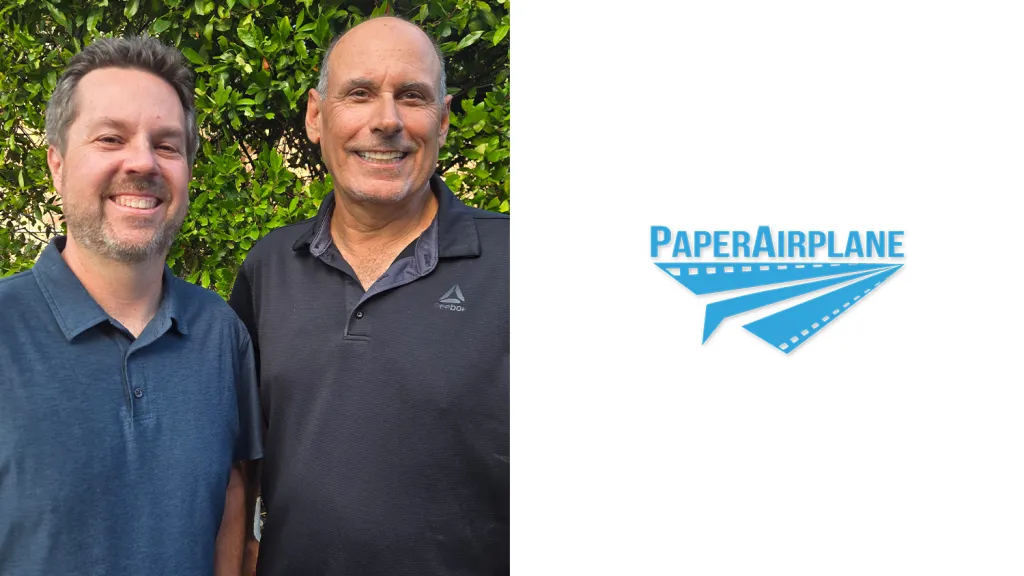
EXCLUSIVE: The Hangar, the digital asset management platform from exhibitor and distributor theatrical marketing corp PaperAirplane, has clocked over 2 million downloads.
The Hangar is a first-of-its-kind digital interface that connects exhibitors with studio partners whereby the former can access movie marketing materials. Lionsgate distribution vets Mike Polydoros and Will Preuss opened the doors to PaperAirplane and launched The Hangar at the height of the pandemic in October 2020 when only a handful of cinemas were open.
Their mission was to solve a longstanding challenge for exhibitors: to quickly and efficiently access approved marketing materials from studio partners. The company works with every major studio, exhibitor and theatrical content provider in North America as well as Imax, Dolby, CJ 4DPlex (ScreenX), DBox and Coca-Cola. Since its creation, The Hangar’s volume of digital marketing assets has increased more than fivefold.
“When we launched The Hangar back in 2020, we had no idea we would be creating a vital piece of industry infrastructure,” said Polydoros, Co-Founder and CEO of PaperAirplane Media. “We were simply trying to solve a very real problem exhibitors faced in accessing approved marketing materials. Seeing the platform surpass two million downloads is a testament to the collaboration between studios and exhibitors, and to the industry’s commitment to making theatrical marketing more efficient and effective.”
“Our studio partners immediately recognized the value of having greater visibility into how marketing assets were being utilized,” added Preuss, President and Co-Founder of PaperAirplane Media. “For the first time, they could clearly see which assets were driving engagement and which materials were not being used. That insight has helped create more efficient campaigns, stronger collaboration, and better outcomes across the theatrical marketplace.”
“Our mission remains simple,” added Polydoros. “We want to simplify workflows, strengthen campaigns, and provide studios and exhibitors with the tools they need to maximize theatrical attendance. Crossing the two-million-download milestone validates that vision and motivates us to continue innovating for the industry we love.”
Other services offered by PaperAirplane include The Tower, a group sales management platform that centralizes communication, streamlines lead management, and provides real-time visibility into group sales activity. To date, The Tower has managed more than 10,000 group sales leads and helped facilitate millions of dollars in theatrical group sales revenue across multiple film campaigns.
The company also has Flight Plan, a theatrical distribution campaign dashboard designed to give distribution and marketing teams a centralized view of every component of a theatrical release, and make more informed decisions throughout a title’s theatrical lifecycle. The platform aggregates campaign activity across several channels and initiatives, providing studios with instant visibility into key marketing, promotional, exhibitor, media, and performance metrics through a single interface.
In addition, PaperAirplane has produced nearly 75,000 studio-approved digital marketing assets for major studio campaigns and has worked directly with independent distributors to support exhibitor marketing initiatives for more than 250 theatrical releases. Those films have collectively generated nearly a half billion in domestic box office.
Earlier this year, PaperAirplane expanded further with its National Radio & Media Ambassador Division, connecting theatrical campaigns with local radio personalities and media ambassadors in North America.
The company has also introduced The Kiosk, a grassroots audience activation platform that empowers moviegoers to serve as advocates within their communities, helping studios generate word-of-mouth awareness and attendance.
News about PaperAirplane’s milestone with The Hangar comes during Cinema United’s Fall Summit conference with exhibitors.
Other stats about The Hangar:
–Social media videos repped the most downloaded asset this summer, repping 27% of all downloads. Social Media Graphics followed at 23%, while Digital Lobby Posters comprised 19% of downloads. Web Banners accounted for 12%, and Production Stills represented approximately 8%, underscoring the growing importance of digital audience engagement and localized marketing efforts.
–Annual asset additions increased from 2,454 assets in 2020 to more than 61,000 assets in 2025.
–Industry partners increased from 11 to more than 105 studios, distributors and content partners between PaperAirplane’s launch and today. The company covers 27 global territories with The Hangar now averaging around 360 unique users daily, 1,000 weekly users, and 1,800 monthly users.
>
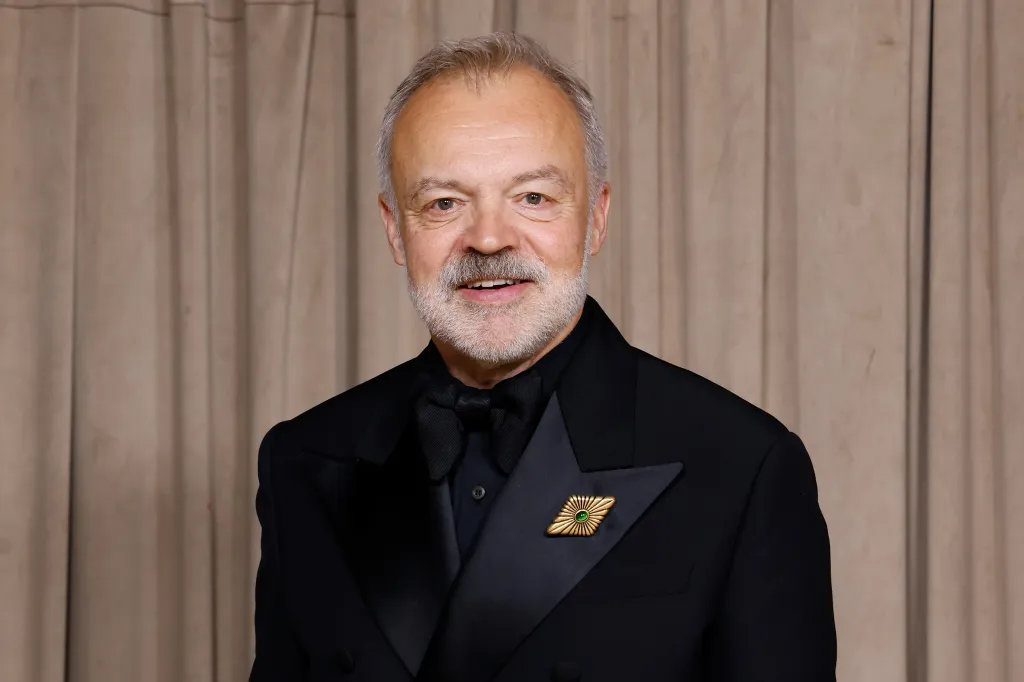
British chat show host Graham Norton has said booking top guests is getting harder as studios and record labels “focus all their energy into other places and platforms,” as he ponders how difficult it has become to launch talk shows.
Taylor Swift’s bestie Norton said it is “very hard to stay relevant and say we are still an important part of a promotional tour” now that stars want to advertise projects via podcasts or on YouTube.
He was responding to a question at the RTS London Convention on whether a new chat show could launch, but joked instead: “I feel like we might end up being the last chat show on Planet Earth.”
While Norton said he “tries to make sure the guests have a nice time,” he said he is sometimes surprised at the things they refuse to do compared with what they will do online.
“We ask them to show a picture from their year book and they say ‘no’ and we say ‘alright’ and then I’ll be on YouTube and they are eating f***ing hot wings,” he joked.
As he pondered the future of British chat shows, he said he has given up on his hope of having a “job share” following the cancelation of The Claudia Winkleman Show after one season.
The BBC show hosted by The Traitors host was supposed to air when The Graham Norton Show was off-air in the spring, meaning there would be no clashes between the two programmes produced by Norton’s production company So Television.
However, after one season, Winkleman candidly acknowledged she was “just too nervous to enjoy it” and would be stepping back.
Norton said plans had been in place for a long time to launch Winkleman’s show alongside his and a replacement will likely never be found.
He said he thought his old friend Winkleman was “really good at it” but accepted her decision.
Norton was speaking at the RTS London Convention after talent including Jeremy Clarkson and Steven Knight.
>

Tom Cruise ‘Digger’ Movie Reviews Are Brutally Split
How to watch Red Sox vs. Yankees: Game 1 TV channel and streaming options for September 29

AI-powered app maker Wabi pivots to a messaging experience
-

 movies4 months ago
Search For Canadian TV Actor Stewart McLean Now Homicide Investigation
-

 Fashion9 years ago
These ’90s fashion trends are making a comeback in 2017
-
Fashion9 years ago
According to Dior Couture, this taboo fashion accessory is back
-
Fashion9 years ago
Model Jocelyn Chew’s Instagram is the best vacation you’ve ever had
-
Fashion9 years ago
Emily Ratajkowski channels back-to-school style
-
Fashion9 years ago
9 Celebrities who have spoken out about being photoshopped
-

 Anime4 months ago
Rurouni Kenshin: Hokkaido Arc Manga Takes 1-Issue Break – News
-

 Anime3 months ago
HIDIVE to Stream English Dubs for The World Is Dancing, The Forsaken Saintess and Her Foodie Roadtrip in Another World, The Dangers in My Heart: The Movie Anime – News