
Simon & Schuster Books for Young Readers


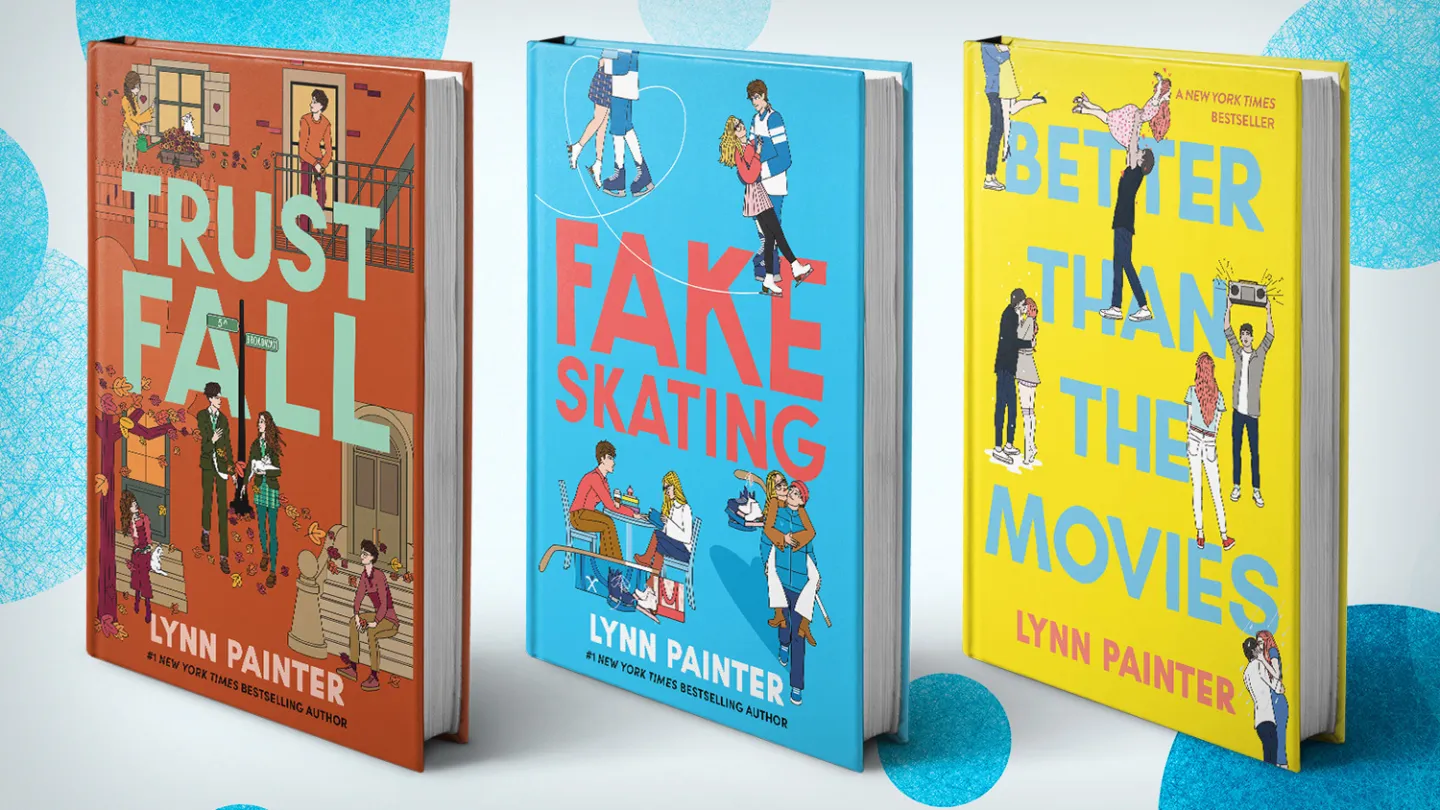
Author Lynn Painter still can’t quite believe her own life.
Fifteen years of rejection letters trying to land a literary agent has given way to a run that reads like one of her own plots: a Sony adaptation of her breakout YA novel Better Than the Movies now in production, a set visit with her family watching actors bring her characters to life, a casting announcement for the next adaptation of her book and a growing shelf of romance titles that stretch from teen rom-coms to adult fiction.
“Every single day, there’s something,” Painter tells The Hollywood Reporter. “I get an email from Sony like, ‘Hey, we’re gonna announce the cast today,’ and I’m like, what? Every day in my life right now is me just going, ‘What?’ It’s the greatest thing ever.”
Moments before the author’s chat with THR, the casting for Sony’s film adaptation of her novel Fake Skating was announced to be Amélie Hoeferle and Graham Campbell. Josh Boone is directing from a script penned by Morgan Lehmann and Victoria Bata and revised by Boone and his writing partner Knate Lee.
Painter says she saw Hoeferle and Campbell’s chemistry reads and couldn’t be happier with the decision. She recalls Boon sending her a video of the two actors with the author immediately thinking, “This could be magic.”
As the adaptation for Fake Skating is making leeway, Painter’s other adaptation Better Than the Movies is already filming with Julia Hart directing and David Iacono and Beatrice Kitsos starring. The author says she visited the set just last week. Seeing her debut novel come to life has been a “surreal” experience for the author who is still trying to comprehend it’s even happening in the first place.
“I don’t know anything about the movie industry, or I didn’t, [but] I’m learning really quickly,” she says. The author may not be steering the adaptation herself, but credits the team of creatives for instilling a genuine back-and-forth collaboration, given that it was readers, not studios, she says, who first found her characters Wes, Liz, Dani and Alec.
Hart and producer Jordan Horowitz, who also wrote the Better Than the Movies script, kept a line open throughout the writing process, regularly texting Painter to check whether specific scenes matched her original intent. “They’re very protective of the fact that readers found them first,” Painter says, adding that she trusts the filmmakers to hear her out if something felt off — though so far, nothing has: “They also are so good at what they do. … It’s kind of a perfect world.”
She also found solace knowing she and Hart were aligned from their very first conversation, largely because Hart immediately zeroed in on what Painter sees as the real engine of the book: Liz’s relationship with her mother and her coming-of-age arc, rather than the will-they-won’t-they romance alone.
“Right away from the get-go, I could tell that she and I see the story from the same place,” she tells THR. “Yes, it’s a rom-com, but I feel like the story isn’t just Wes and Liz finding each other attractive. It’s so much more nuanced than that with their lifetime of moments. I told them I feel like we wrote this whole thing together because they get it so much. The way they see it is the way I see it.”
She also teases that there isn’t “a lot that is different from the book” in the film and any changes are made to make sequences more concise while still hitting the same “emotional point.”
“I could never do an adaptation on my own because you’re taking a 350-page book and making it into a 100-page script. It takes a lot of knowing what you’re doing to not feel like you’re losing two-thirds of a book when you do it,” she says.
Painter is mum when it comes to delving further secrets from the set but did tease she got a glimpse of the machinery behind a single scripted moment — a rain-soaked car accident scene (book fans know the one) that required a full stunt team, safety vests and rigged rain towers.
Painter quips that she simply sat at her computer at the time and wrote “rain“ but now had to watch a meeting about how to logistically film the scene. She laughs, “Now they have 25 people out on a road in safety vests trying to figure out where they go off the road and how to make the rain towers work.”
As for Iacono and Kitsos’ take on her beloved characters Wes and Liz, Painter admits it was “a little bit freaky” with how good they were with portraying what she originally imagined. “Almost a better Wes and Liz than Wes and Liz in my head,” she assures. She says now she only pictures them when thinking of the characters: “Beatriz and David just blew me away.“
With filming already underway for one of her book adaptations and the other slated for a 2027 release, Painter can’t help but be reflective with the whirlwind of her career thus far. But Painter’s path to this moment wasn’t fast.
She spent roughly 15 years trying to land a literary agent before getting traditionally published, absorbing rejection after rejection with no guarantee of a breakthrough. “All I ever wanted was to see my book in a bookstore,” she said. That drawn-out struggle, she said, is precisely what makes the current moment feel earned rather than expected, and it sharpened her instinct to protect what got her here in the first place: the writing itself. “I don’t ever want to do anything to mess with that,” she said, “because first and foremost, that’s my favorite thing.”
Painter’s next book spotlight falls on Trust Fall, a book she describes as unusually personal. The book, released on Tuesday, is set in New York in the fall, something Painter drew on from her lifelong love of autumnal rom-coms and a fascination with the city she’d never visited while growing up in small-town Nebraska. Writing it gave her an excuse to travel there for research. “You see it on TV, and you just know, ‘That’s my place.’ And then the first time I went, I was like, I was right. It is my place.”
Simon & Schuster Books for Young Readers
The novel’s fish-out-of-water premise — a Midwestern protagonist dropped into a Gossip Girl-style world — comes directly from Painter’s own background, growing up outside a small town “where people socialize in cornfields on summer nights because there’s nowhere else to go.” Pairing her protagonist Julia against a wealthy, city-bred love interest Damion let her build the enemies-to-lovers dynamic she keeps returning to. And returning to it, by her own admission, is unavoidable. She admits that even while drafting her current work-in-progress, she pitched her editor a fake-dating plot yet again. “She’s like, ‘Maybe we don’t want to do fake dating again,’” Painter said. “And I’m just like, ‘But are you sure?’”
Fake-dating or not, Painter hopes to keep delivering romance stories both in the YA and adult genres. Thus far her novels have covered hockey romance, fake dating, cowboys, football and more. When it’s suggested there’s a Lynn Painter novel to align with any interest, she laughs and says “I got you!”
Inspiration for her novels comes at random moments, she says. She cites her next adult romance releasing in the spring, Cowboy Like Me, as an example given it was her “riff off of an old black-and-white Christmas movie Christmas in Connecticut.”
Other times she could be driving when an idea sparks: “I’ll be at a stoplight and I’ll put some notes in my notes app, and then I’ll go back to it later and make it into a story. So it’s really random. My brain is a chaotic, weird place.”
Lynn Painter
Jackson Okun
Asked about the difference between writing YA and adult romance, Painter said she doesn’t consciously shift approach — she starts every book simply wanting to write a rom-com, and the age of the characters imposes its own constraints later. As for what keeps her drawn to YA, the author explains it’s the specific emotional volatility of adolescence: “This strange time in your life where you straddle adulthood and childhood,” she says, describing how a single song tied to a two-week crush can still ache years later. However, she notes, “Adult books feel easier for me to draft and a little bit lighter even though reality is probably a little more harsh when you’re an adult.”
But whatever the concept, Painter knows the story will be a romance, a genre she has always loved and read. “It’s the joy of the happy ending and the comfort of what that entails,” she explains. “And seeing which trip this is gonna take. Which journey am I gonna go on before they end up together? That’s what I love about the genre.”
Painter is bullish on where romance is headed, pointing to the genre’s notable renaissance in adaptations and expansion into broader representation on the page and screen — with room still to grow. “Is there enough? Probably not. But it’s nice that it’s expanded in a thoughtful way,” she says.
But amid a rom-com renaissance, the author has a theory on the genre’s decline in the 2010s: It wasn’t audience fatigue but a notable drift away from what made rom-coms work in the first place — and what’s always existed in romance books. “They started trying to make rom-coms that were missing all the elements,” she said — the sense of two people truly seeing each other, rather than a thin premise for attraction. “The joy and the comfort of a rom-com is you know they’re gonna end up together,” she said. “We want those relationships, those [stories of] this person’s really seeing the other person, and those moments that bring people together. And that’s always been there in books.”
But her closest read on the current moment is personal: after years of a career that felt “impossible,” she’s now shuttling between book tours and adaptation meetings, still stunned by what has become of her work so far.
“Not to make it sound like a total after school special thing, but you literally have no idea what’s in store tomorrow. All of the years where I was trying so hard to make something happen in publishing and it wasn’t happening, I didn’t daydream about stuff like this, and it was impossible that it would happen,” she says.
No matter how big the Hollywood buzz gets, Painter remains fiercely grounded in the simple spark that started it all.
“I just want to sit and write my stupid little ‘Are they gonna kiss stories?’ So as long as I stay true to that it’s bringing me joy, and hopefully that joy filters through the process and comes out the other end.”
>
The Digger reviews do not hold back.
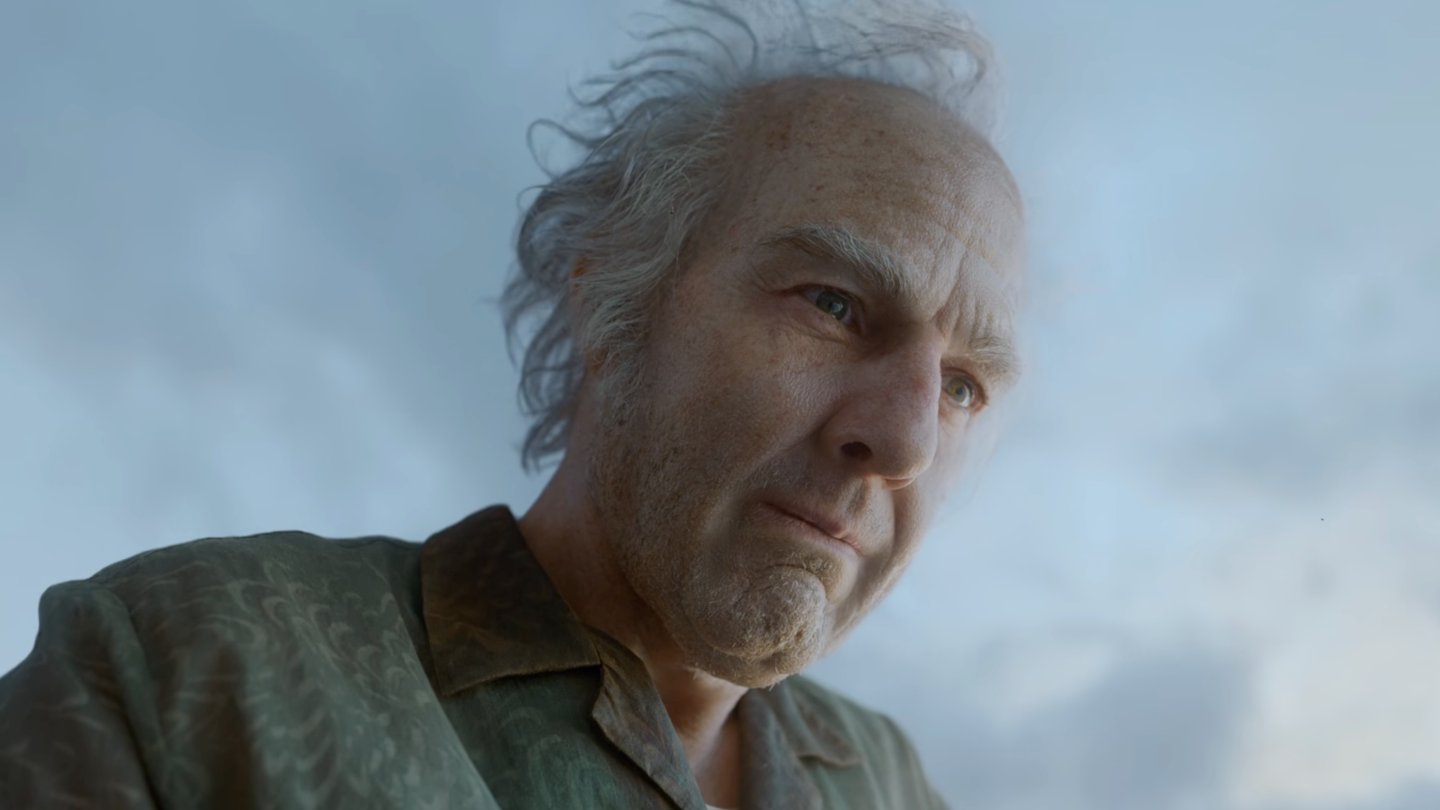
The positive reviews contain strong superlatives praising Alejandro G. Iñárritu‘s bold new film starring Tom Cruise, and the negative reviews are utterly scathing.
Is Digger a 5-out-of-5 “audacious, risky, terrific fun” — like The London Evening Standard says?
Or is Digger a one-half-of-a-point out of 5, “a film full of mostly talented people doing the worst work of their careers” — as Slant says?
Right out of the gate on Rotten Tomatoes, the Warner Bros. film is hovering around a dead even 50 percent split.
In Digger, a nearly unrecognizable Tom Cruise plays an oblivious oil tycoon whose drilling in Greenland dislodges an ice shelf from a glacier that’s going to cause a global disaster. He must race to prove that he’s humanity’s savior before the ecological accident wreaks havoc on the planet. The film also stars Riz Ahmed, Sandra Hüller, John Goodman, Michael Stuhlbarg and Jesse Plemons.
Here are some of the official reviews of Digger from top critics:
The Hollywood Reporter: “A climate crisis satire so smug and bombastic it makes Adam McKay’s Don’t Look Up seem almost innocuous. Digger is basically what happens when you put two outsize egos together with nobody holding the reins to keep their most self-indulgent impulses in check … so meta that you watch in excruciating weariness as [the film] disappears up its own ass and then realize to your dismay that there’s another eardrum-shattering hour left to endure …It’s difficult to imagine mainstream audiences ever wanting to be a part of this bludgeoning ordeal.”
IndieWire: “Digger is a mega-budget Dr. Strangelove riff so detached from human truth that its most believable character is a one-eyed animatronic cat named Maggie — a VistaVision satire so high-concept that it would be more accurate to measure its running time in altitude than minutes …Digger is a hat on a hat on a hat on a hat, with Iñárritu frantically hoping to pile them tall enough that they stand on their own without tipping over … If Digger bombs as hard as I fear it will, it may prove to be a more damning portrait of self-delusion than Iñárritu ever intended.”
New York Post: “[Cruise’] first real stinker in nearly 10 years … Audiences will urgently want to leave after the first five minutes … this is not simply a case of poor Tom being trapped in a lousy movie. He’s just not very good, even as a cartoony caricature with no depth. Cruise did this kind of thing vastly better when he played Les Grossman in Tropic Thunder. I would’ve rather seen Nicholas Cage or Woody Harrelson as Digger.”
Empire: “This is the film’s chief problem — that it appears more concerned with itself than with the audience. Its apparent message — that the planet’s dying and we’re complicit, as much as we crave villains to blame — is delivered in almost hectoring terms, often in loud monologues …If the whole isn’t successful, elements are. Emmanuel Lubezki’s cinematography and Dennis Gassner’s production design achieve the Kubrickian grandeur Iñárritu clearly intends. Cruise emerges with a win, reminding us how riveting he can be as an actor, not just as a movie star.”
Deadline: “For me it is like a return to the kind of adventurous films in cinema’s groundbreaking era of the 70’s, but it isn’t easily defined … [Cruise’s] range is undeniable but here it is off the charts, especially in a stunning 10 minute monologue Digger delivers that admits guilt but seeks to place the blame collectively on all of us… Iñárritu again proves he is one of the most original and fascinating filmmakers working today. Digger is the kind of movie we don’t see often on this scale, an ambitious satire that entertains, takes chances, sparks arguments, but is thrillingly alive as cinema designed to make us look at ourselves, hopefully wake up before it is too late, and ask the question: ‘what the hell are we doing?”
BBC: “Most people won’t go to see it – and some people who do will walk out halfway through. But that doesn’t mean that Digger is a failure …Personally, I loved it. Some of its excesses are, well, a bit too excessive, and most viewers will wish it was shorter. After about 90 minutes, you get tired of close-ups of Goodman yelling while snake-sized veins bulge out of his forehead. But when Cruise is clambering all over the set, delivering thunderous lectures on the oil industry, I couldn’t help grinning at the gargantuan scale of his performance, the conviction of the script’s grim environmental message, and Iñárritu’s antic style.”
The Wrap: “Digger is what happens when you give the week’s worst Saturday Night Live sketch an inexplicably large budget and delusions of grandeur … In Digger, Tom Cruise also plays a villainous Foghorn Leghorn, but his version is a seductive, intriguing enigma that takes center stage. It’s the kind of movie about evil billionaires that evil billionaires would enjoy, which makes it the worst kind of movie about evil billionaires.”
The Los Angeles Times: “Alejandro González Iñárritu’s Digger is a bizarre stunt made on a big studio budget, a climate change satire that’s a self-conscious hybrid of Stanley Kubrick and Bertolt Brecht … But the horrible hijinks in Digger are so close to reality that, exiting the film, I was less sure than ever that humanity will still be around. There’s no hope in Digger, only a seductive, mischievous malevolence that, by design, feels empty as soon as the end credits… while I don’t entirely love this strange comedy, I’m giddy that it’s lurched into existence.”
USA Today: “Digger crafts an unorthodox, complicated narrative with colorful archetypes that reflect the power players in our own world, so their goofy semi-villainy leans amusing and a little depressing. It might also prove divisive for audiences, which could keep a deserving Cruise out of an ultra-competitive Oscar race … Iñárritu does give the movie heart, however, and with his star really going for it in a fashion he hasn’t in quite a while, one can at least appreciate its earnest aims.”
The Guardian: “As with Adam McKay’s Don’t Look Up, there may be a tacit consensus, understandable at some level, that at least we have a big mainstream movie which is talking about the biggest issue of our time, and we have a duty to suspend critical objection. Digger certainly resonates with Donald Trump’s greedy urge to despoil the Arctic and everywhere else. Yet there is something glib and overblown here. This film finds itself in a postmodern hole. And what do you do when you’re in a hole?”
The London Evening Standard: “Tom Cruise is back with a bang in the Oscars ring in his best performance since 1999’s Magnolia … There are beautiful aftershocks to Iñárritu’s cinematic coup as this gallops towards a heartbreaking warning about where the real world is right now with fossil fuels and climate change … Audacious, risky, terrific fun and — for at least half the planet — the wildest ride you’ll get this year.”
The Austin Chronicle: “Ever heard that old saying, this meeting could have been an email? Similarly, rather than being a film, Digger could have been a burning bag of dog poop delivered to Adam McKay’s doorstep … A seeming broadside at heavy-handed Hollywood advocacy flops like Don’t Look Up, it’s a scathing pastiche of everything that makes such movies insufferably sanctimonious. Yet Birdman director Alejandro G. Iñárritu’s obvious technical genius as a filmmaker cannot overcome the plain fact that Digger is both insufferable and sanctimonious.”
The Globe and Mail: “All these preening, obnoxiously self-satisfied moments, and so many more, add up to a movie so convinced of its own brilliance that it cannot see it is in fact the most banal variety of idiot: loud, ugly and forever oblivious to its own shortcomings …There is no overarching strategy to Digger, just endless scheming from a cinematic charlatan who should have been buried by Hollywood two or three movies ago.”
Slant: “…a film of ideas, a rambunctious gathering of mostly talented people doing the worst work of their careers … Digger is González Iñárritu’s purported cri de coeur against our wealth-and-resources-hoovering overlords, but somehow it still manages to be a shameless Tom Cruise ego stroke. The actor shrieks, preens, and postures. He spits bilious remarks at anyone in his line of sight, particularly during a gaseous monologue about mankind’s reliance on fossil fuels. And, of course, true to both Digger and the man playing him, everyone but himself is the problem … Digger’s teeth are about as sharp as a decades-old pair of dentures.”
Digger opens in theaters Oct. 2.
>
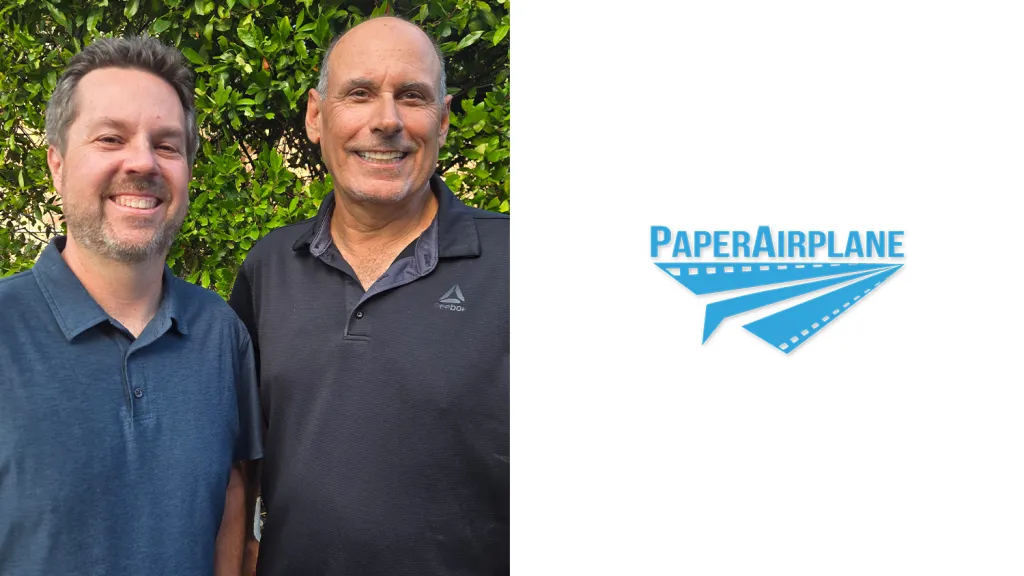
EXCLUSIVE: The Hangar, the digital asset management platform from exhibitor and distributor theatrical marketing corp PaperAirplane, has clocked over 2 million downloads.
The Hangar is a first-of-its-kind digital interface that connects exhibitors with studio partners whereby the former can access movie marketing materials. Lionsgate distribution vets Mike Polydoros and Will Preuss opened the doors to PaperAirplane and launched The Hangar at the height of the pandemic in October 2020 when only a handful of cinemas were open.
Their mission was to solve a longstanding challenge for exhibitors: to quickly and efficiently access approved marketing materials from studio partners. The company works with every major studio, exhibitor and theatrical content provider in North America as well as Imax, Dolby, CJ 4DPlex (ScreenX), DBox and Coca-Cola. Since its creation, The Hangar’s volume of digital marketing assets has increased more than fivefold.
“When we launched The Hangar back in 2020, we had no idea we would be creating a vital piece of industry infrastructure,” said Polydoros, Co-Founder and CEO of PaperAirplane Media. “We were simply trying to solve a very real problem exhibitors faced in accessing approved marketing materials. Seeing the platform surpass two million downloads is a testament to the collaboration between studios and exhibitors, and to the industry’s commitment to making theatrical marketing more efficient and effective.”
“Our studio partners immediately recognized the value of having greater visibility into how marketing assets were being utilized,” added Preuss, President and Co-Founder of PaperAirplane Media. “For the first time, they could clearly see which assets were driving engagement and which materials were not being used. That insight has helped create more efficient campaigns, stronger collaboration, and better outcomes across the theatrical marketplace.”
“Our mission remains simple,” added Polydoros. “We want to simplify workflows, strengthen campaigns, and provide studios and exhibitors with the tools they need to maximize theatrical attendance. Crossing the two-million-download milestone validates that vision and motivates us to continue innovating for the industry we love.”
Other services offered by PaperAirplane include The Tower, a group sales management platform that centralizes communication, streamlines lead management, and provides real-time visibility into group sales activity. To date, The Tower has managed more than 10,000 group sales leads and helped facilitate millions of dollars in theatrical group sales revenue across multiple film campaigns.
The company also has Flight Plan, a theatrical distribution campaign dashboard designed to give distribution and marketing teams a centralized view of every component of a theatrical release, and make more informed decisions throughout a title’s theatrical lifecycle. The platform aggregates campaign activity across several channels and initiatives, providing studios with instant visibility into key marketing, promotional, exhibitor, media, and performance metrics through a single interface.
In addition, PaperAirplane has produced nearly 75,000 studio-approved digital marketing assets for major studio campaigns and has worked directly with independent distributors to support exhibitor marketing initiatives for more than 250 theatrical releases. Those films have collectively generated nearly a half billion in domestic box office.
Earlier this year, PaperAirplane expanded further with its National Radio & Media Ambassador Division, connecting theatrical campaigns with local radio personalities and media ambassadors in North America.
The company has also introduced The Kiosk, a grassroots audience activation platform that empowers moviegoers to serve as advocates within their communities, helping studios generate word-of-mouth awareness and attendance.
News about PaperAirplane’s milestone with The Hangar comes during Cinema United’s Fall Summit conference with exhibitors.
Other stats about The Hangar:
–Social media videos repped the most downloaded asset this summer, repping 27% of all downloads. Social Media Graphics followed at 23%, while Digital Lobby Posters comprised 19% of downloads. Web Banners accounted for 12%, and Production Stills represented approximately 8%, underscoring the growing importance of digital audience engagement and localized marketing efforts.
–Annual asset additions increased from 2,454 assets in 2020 to more than 61,000 assets in 2025.
–Industry partners increased from 11 to more than 105 studios, distributors and content partners between PaperAirplane’s launch and today. The company covers 27 global territories with The Hangar now averaging around 360 unique users daily, 1,000 weekly users, and 1,800 monthly users.
>
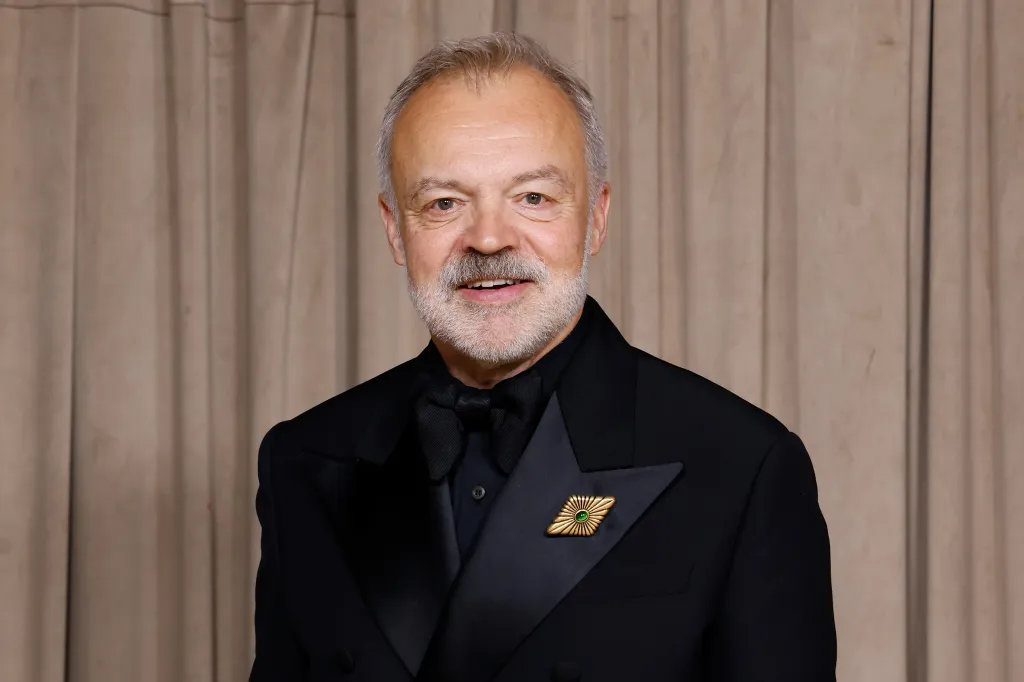
British chat show host Graham Norton has said booking top guests is getting harder as studios and record labels “focus all their energy into other places and platforms,” as he ponders how difficult it has become to launch talk shows.
Taylor Swift’s bestie Norton said it is “very hard to stay relevant and say we are still an important part of a promotional tour” now that stars want to advertise projects via podcasts or on YouTube.
He was responding to a question at the RTS London Convention on whether a new chat show could launch, but joked instead: “I feel like we might end up being the last chat show on Planet Earth.”
While Norton said he “tries to make sure the guests have a nice time,” he said he is sometimes surprised at the things they refuse to do compared with what they will do online.
“We ask them to show a picture from their year book and they say ‘no’ and we say ‘alright’ and then I’ll be on YouTube and they are eating f***ing hot wings,” he joked.
As he pondered the future of British chat shows, he said he has given up on his hope of having a “job share” following the cancelation of The Claudia Winkleman Show after one season.
The BBC show hosted by The Traitors host was supposed to air when The Graham Norton Show was off-air in the spring, meaning there would be no clashes between the two programmes produced by Norton’s production company So Television.
However, after one season, Winkleman candidly acknowledged she was “just too nervous to enjoy it” and would be stepping back.
Norton said plans had been in place for a long time to launch Winkleman’s show alongside his and a replacement will likely never be found.
He said he thought his old friend Winkleman was “really good at it” but accepted her decision.
Norton was speaking at the RTS London Convention after talent including Jeremy Clarkson and Steven Knight.
>


Search For Canadian TV Actor Stewart McLean Now Homicide Investigation


These ’90s fashion trends are making a comeback in 2017
According to Dior Couture, this taboo fashion accessory is back
Model Jocelyn Chew’s Instagram is the best vacation you’ve ever had
Emily Ratajkowski channels back-to-school style
9 Celebrities who have spoken out about being photoshopped


Rurouni Kenshin: Hokkaido Arc Manga Takes 1-Issue Break – News


HIDIVE to Stream English Dubs for The World Is Dancing, The Forsaken Saintess and Her Foodie Roadtrip in Another World, The Dangers in My Heart: The Movie Anime – News