
Tech
Singapore’s New $7.8 Billion Chip Fab Will Produce 44,000 Wafers a Month

Singapore expands its semiconductor industry with VSMC’s $7.8 billion fab, targeting 44,000 wafers a month and volume production in 2027.
The post Singapore’s New $7.8 Billion Chip Fab Will Produce 44,000 Wafers a Month appeared first on TechRepublic.
>
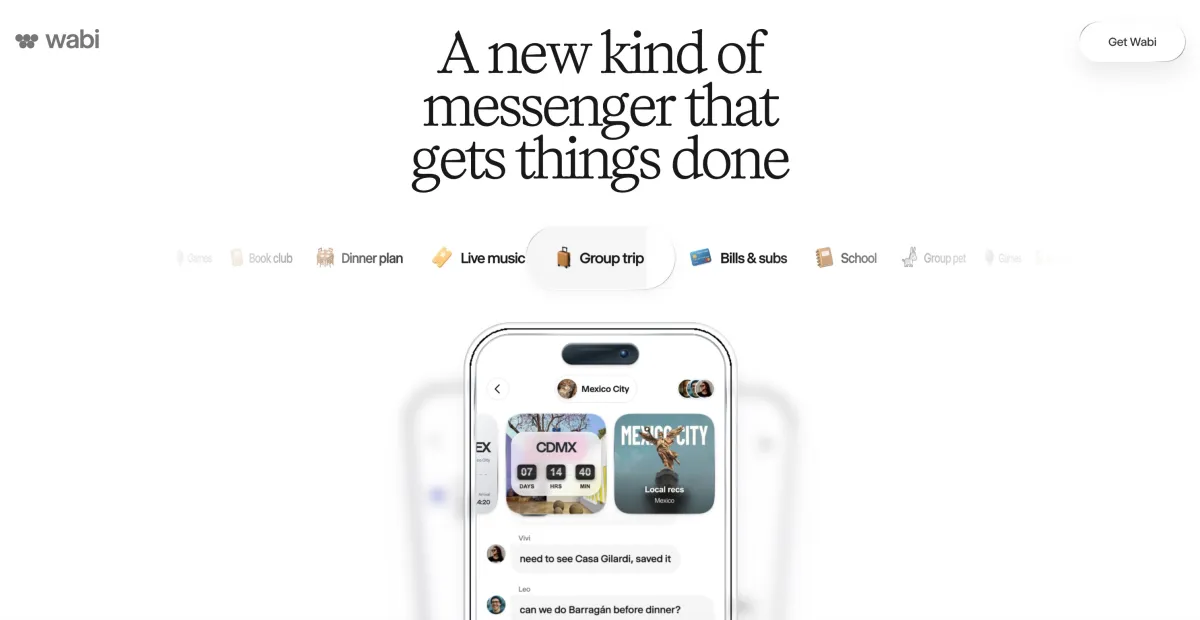
Wabi, the AI startup that allowed anyone to use prompts to build apps, is undergoing a slight pivot as demand for AI agents, like Meta’s Muse and Instinct, takes off. The company announced this week that Wabi is now becoming an AI messenger of sorts — but one that’s still capable of making apps to help you get things done.
The startup’s founder Eugenia Kuyda, who previously founded the AI companion startup Replika, described Wabi 2.0, as the new experience is called, as a “personal agent that does stuff for you and builds the interface you need in the moment.”
It’s a similar value proposition to that offered by the original version of Wabi — but one that users will interact with in a different way. Instead of positioning itself up against other vibe-coding tools, Wabi 2.0 aims to compete more directly with AI agents that combine both conversations and productivity tasks in a single interface.
It also comes as companies like OpenAI and others are thinking about how apps will work inside their more generalized chatbot user interfaces; for instance, OpenAI today announced at its Dev Day an update to ChatGPT’s plugins, which will allow apps to offer interactive experiences within ChatGPT, and where the app’s name gets pinned in a more visible spot on ChatGPT’s sidebar.
In a post on X, Kudya explained how Wabi’s new experience will make more sense for consumers, who want to do more than just type to an agent.
“The more you use a chat-only agent, the worse the experience gets. Your history and ongoing tasks end up buried in one endless scroll. People don’t just want to type-type-type; They want to tap-tap-tap, scroll, and look. They love what agents can do, but they also like software,” she wrote. “The most powerful agent will be the one that combines both.”
The idea is that as a user asks the agent to perform a task, it could create a user interface on demand to help complete whatever the request may be. For instance, Kudya suggested users could build things like a calorie tracker, a weightlifting log, and a weight tracker, which would be accessible in her thread about health-related topics.
In another thread focused on family, users could create a calendar of the kids’ activities, a language learning app, an app that keeps up with local kid-friendly events, and other things that relate to parenting, household management, or the kids’ interests.
“So far, personal agents have been one person, one chat, a stream of one-off tasks. We think the future is your agent, your apps, and your people in one place, running the parts of life that matter most, together,” wrote Kudya.
The new Wabi 2.0 app is currently only available by invite code, which are being doled out on X, too.
When you purchase through links in our articles, we may earn a small commission. This doesn’t affect our editorial independence.
>
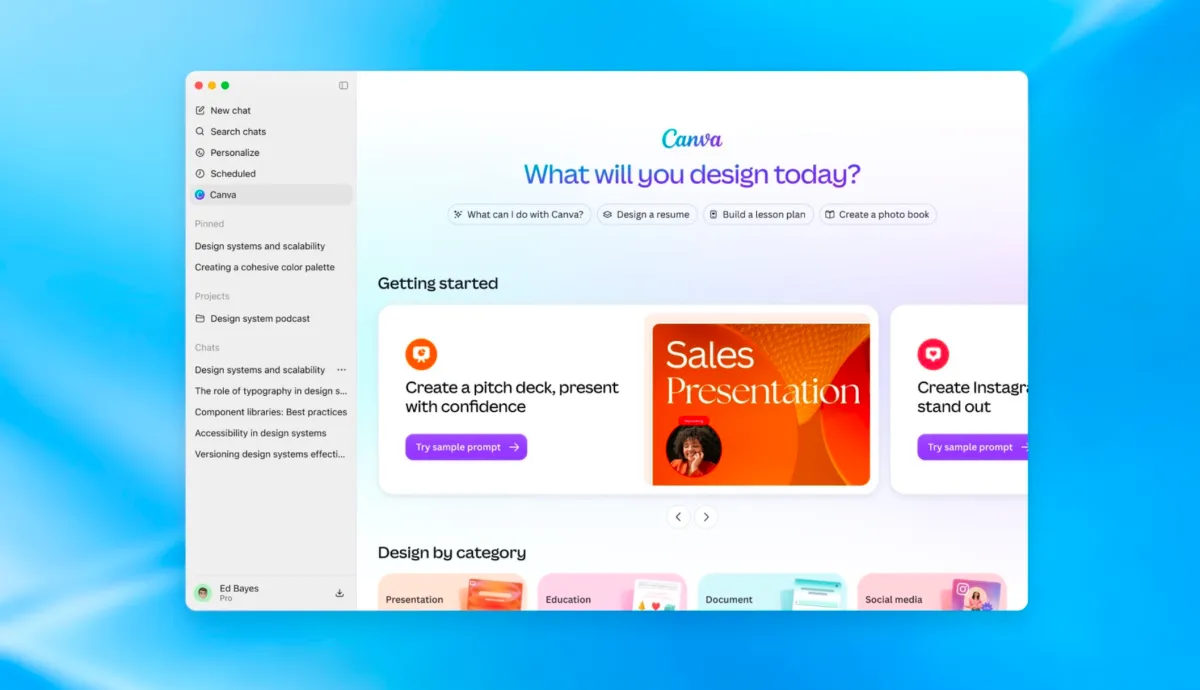
OpenAI isn’t only coming after productivity software with ChatGPT’s new Pages, Slides and Space features — the AI lab is now targeting any application that could work better when integrated with ChatGPT.
At the company’s Dev Day presentation on Tuesday, the AI company said it is now allowing developers to build their own app-like experiences within ChatGPT using plugin extensions.
OpenAI already supports plugins, which connect ChatGPT to everyday tools like Slack, SharePoint, Airtable and Google Drive, but the new plugin extensions will give apps a dedicated home in the ChatGPT sidebar.
Plus, developers will be able to build interactive panels that let users work with their tools while they’re chatting with ChatGPT. This experience can also include file viewers that support whatever file formats the developer’s product uses, the company notes.
In addition, OpenAI says it’s making it easier for developers to build plugins, and streamlining the discovery process for end users. Devs are getting a new Plugin Creator tool for building, and can submit them to the plugin directory via a redesigned flow that offers clearer feedback.
Meanwhile, the company says it has improved how plugins are ranked and recommended within its directory, as well as when they’re surfaced in conversations. When users choose a plugin to work with, they can approve its access needs individually as well.
In addition, ChatGPT Sites, the lightweight websites users can build with ChatGPT, can host these plugins, too. For example, this would let someone share their apps with colleagues, who can use it with their own connected data and permissions.
OpenAI also said it’s adding support for the proposed MCP Events specification, which would allow plugins to start automations based on events in a connected app. The company is also making automations easier to add and manage.
When you purchase through links in our articles, we may earn a small commission. This doesn’t affect our editorial independence.
>

President Donald Trump announced on Tuesday that the White House is launching America.gov, an AI chatbot intended to help people find government services and other information.
Google confirmed that it is a partner on this launch and that its AI model, Gemini, is involved, but it’s unclear if other AI companies also contributed.
“Instead of forcing citizens to search through the endless maze of tens of thousands of government websites and rules… you’ll now have one front door for every single question,” Trump said in a post on X.
Making government services easier to navigate is a worthwhile goal, but is an AI chatbot the best way to do this? Large language models are not infallible and remain prone to hallucinations. In fact, CNN recently reported that the U.S. military nearly launched an armed operation against a Chinese vessel it believed was carrying components for nuclear weapons. The military aborted the mission at the last minute after realizing that the supposed threat was just an AI hallucination.
If someone receives faulty information from America.gov, it probably won’t trigger nuclear warfare, but a mistake can still have serious consequences. People might rely on this chatbot to access information about applying for food stamps, renewing their visas, or filing taxes, where errors could mean missed deadlines, denied benefits, or penalties.
>

‘Blue Beetle’ star Xolo Maridueña to Make Broadway Debut in ‘Buena Vista Social Club’

Tom Cruise ‘Digger’ Movie Reviews Are Brutally Split
How to watch Red Sox vs. Yankees: Game 1 TV channel and streaming options for September 29
-

 movies4 months ago
Search For Canadian TV Actor Stewart McLean Now Homicide Investigation
-

 Fashion9 years ago
These ’90s fashion trends are making a comeback in 2017
-
Fashion9 years ago
According to Dior Couture, this taboo fashion accessory is back
-
Fashion9 years ago
Model Jocelyn Chew’s Instagram is the best vacation you’ve ever had
-
Fashion9 years ago
Emily Ratajkowski channels back-to-school style
-
Fashion9 years ago
9 Celebrities who have spoken out about being photoshopped
-

 Anime4 months ago
Rurouni Kenshin: Hokkaido Arc Manga Takes 1-Issue Break – News
-

 Anime3 months ago
HIDIVE to Stream English Dubs for The World Is Dancing, The Forsaken Saintess and Her Foodie Roadtrip in Another World, The Dangers in My Heart: The Movie Anime – News