
L-R: Lance Oppenheim, Nathan Fielder and the New York Film Festival’s Dennis Lim
Jill Goldsmith/Deadline


“I love to express things without words,” Léa Seydoux told our own Anne Thompson at this year’s Cannes Film Festival. In Marie Kreutzer’s “Gentle Monster,” which premiered at the festival this May, the actress plays a character who allowed her to, in her own words, “discover the story as it unfolds … through her perspective, and she has to face all these different emotions. She doesn’t want to be in denial. I had to express so many contradictory feelings.”
And the film offers some serious denial for Seydoux to play with. We’ll let the film’s official logline take it away: “When a police raid shatters her life, concert pianist Lucy (Léa Seydoux) must protect her son and confront how little she knows her husband after he is accused of an unspeakable crime in this tense thriller about trust and survival.”


The film’s newest trailer doesn’t give too much away, instead (wisely) focusing on Seydoux’s stricken expressions as things get steadily worse as still more is revealed. Pay attention for a brief shot of her Lucy looking utterly bereft in an elevator, a quick cut from one of the film’s most transfixing reveals.
Out of Cannes, David Ehrlich wrote that “among other things, this tough and unflinching social drama is a study in how painful it can be for a rhetorical question — like ‘Would I lie to you, baby?,’ for example — to sour into the stomach-churning stuff of an urgent mystery. For the terms of a relationship to change faster than the facts of the matter are able to keep up with, let alone the feelings that might attend to them. ‘There is no “off button” for pedophilia,’ someone explains to Lucy at one point. There isn’t an ‘off button’ for love either.”
The film is Kreutzer’s first film after her critically acclaimed film “Corsage,” which was Austria’s submission for Best International Feature at the 95th Academy Awards. The film also stars Jella Haase, Laurence Rupp, and Academy Award nominee Catherine Deneuve.
“Gentle Monster” opens in select theaters on Friday, October 30 before streaming on Netflix on November 18. Watch the film’s newest trailer below.
>
Production company Anonymous Content is entering a new era where they are looking to become a financier in the film marketplace, rather than just a “fee-for-hire production company,” which will allow them to finance their own projects.
For one of the new projects, announced during the Bloomberg Screentime conference Thursday, Anonymous has commissioned author Nicholas Boggs, to write the script for a feature film adaptation of Boggs’ Baldwin: A Love Story, along with his partner, author Marlon James, author of The Disappearers. The project will be co-produced with Higher Ground.
Additionally, the company, backed by Laurene Powell Jobs’ Emerson Collective, said it will look to move into live events including Broadway and potentially move into the content creation space. This comes after the Emerson Collective made a “material investment” in the company in January, alongside Walker’s appointment as CEO.
“So there’s no doubt that the content creators, these independent content creators, figuring out how to have a portal to that community, that community of writers, that community of creators in places that we don’t normally go, and making sure we have team members who can have tentacles in those places,” Walker said. “And then looking at things like theatrical, and looking at different ways for us to work. And when I say theatrical, I mean Broadway. I mean live events.”
As part of this new era, under Walker, who joined in January after serving as the president of the Ford Foundation, the company is also reconstituting the board, with Jobs joining as a board member, alongside former HBO CEO Richard Plepler.
“We have been a fee-for-hire production company. We have not invested for the most part. We have not been lead, in part because we haven’t invested. The board now and Emerson has made it possible for us to become a financier in the market, so we’ll be able to co-finance, finance, take the lead in financing in film,” Walker said.
“It’s necessary because fee-for-service is a bad way to build a company,” Jobs added.
They added that this will mean the balance sheet for the company will increase, but that the company will have “an envelope” with which to make the financing decisions.
“It’s is a slight, subtle change in priorities when you look for excellence, when you look for the highest quality, when you look for material that moves humans and touches us and stays inside us and reminds us of what we’re capable of, if that’s your number one, and then making money is number two, then you actually end up making films that people really want to see that,” Jobs said.
More to come.
>
>
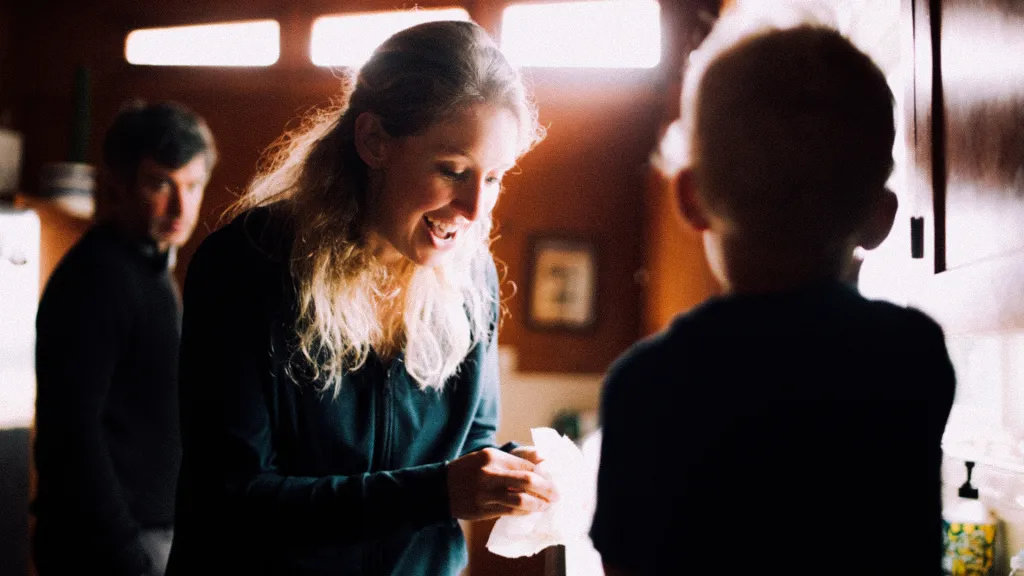
“I guess we should just start at the beginning, and tell us how this happened,” New York Film Festival artistic director Dennis Lim asked filmmakers Nathan Fielder and Lance Oppenheim at a Q&A after a screening of You Can See Everything on Wednesday night.
It was the second public showing of the documentary, which was filmed in and over years and blew the roof off the Telluride Film Festival (see Deadline review). It’s a hard-to-describe flow of verité filmmaking unspooling in real time at the San Diego home of disgraced biotech entrepreneur Elizabeth Holmes in the days before she reported to Bryan federal prison in Texas. The Stanford dropout and Theranos founder is still serving a 10-year sentence for defrauding investors in the high-profile case.
Fielder and Oppenheim said the project, oddly, was launched during a magic show the two friends attended in L.A. in 2023, at the height of Holmes’ notoriety. “A magician there asked for a celebrity’s name, and someone called out ‘Elizabeth Holmes’,” Oppenhiem said. “I was like, so interesting. Elizabeth Holmes.” He said he “had just heard that she was looking for someone to document her life and that she had reached out to A24.”
Fielder was also curious. “I knew that she hadn’t… spoken to anyone in, I think, seven years. Total silence.” He didn’t necessarily see a documentary brewing “because it felt like the story was very told. But I was really curious to meet her, just as a personal thing.”
Holmes’ epic rise and fall was the subject of an HBO documentary and a Hulu miniseries starring Amanda Seyfried.
Fielder called A24, and went to meet Holmes. “I remember having this weird experience… where I’m like, “She seems so genuine at times. But then I’m like, no… I know she’s a liar… It was a weird mental thing.” Homes has always insisted she did nothing wrong.
She agreed to let the cameras into the home she shares with with her partner Billy Evans and their two young children.
Fielder made no promises to A24. “We don’t know what the story is. But we want to see what happens,” he said. The studio said, “‘OK, that’s fine. And if you want to pull the plug anytime, you can.’ Which was amazing.”
L-R: Lance Oppenheim, Nathan Fielder and the New York Film Festival’s Dennis Lim
Jill Goldsmith/Deadline
They started filming. “And after, Lance and I would talk about what we thought happened there, and we’d completely disagree on… what we thought was happening. And we were like, ‘Oh, this is really interesting, if we can’t agree on what’s happening, there’s something here.’ And our curiosity sort of just like drove us from there.”
The filmmakers ultimately moved from one camera to three, shooting 16 hours a day with two small crews of which no more than four individuals were in the house at any one time. “We had a wide lens that would cover the whole house so if something happened, we wouldn’t miss it. And then the other two … lenses could be wide but then also zoom, so we could basically capture everything,” said Oppenheim.
“We were trying… essentially, to just take all the pressure away from any moment, so they wouldn’t really know what we were interested in necessarily.”
“Actually, we didn’t always either,” Fielder added.
“One thing we realized with the [initial] one camera that’s panning, which you see in some of the earlier scenes, is that the moment you say something to someone you want to see their face the moment they hear it. Especially in a movie like this, where you’re trying to evaluate if someone’s being honest or not. And when you have to swing, you’re missing a few seconds. And you realize this is maybe a problem in this kind of thing,” Fielder said.
He himself went from solely behind the camera to very much on, registering reactions to Holmes, including to her circular responses to questions like did she know her claims about Theranos’ blood-testing kit were false.
Fielder said he has no idea why she and Evans granted them the access they did.
“It’s so hard to understand… Maybe there was a sense that inviting someone who was a friend of theirs, no one would take that seriously. So I don’t know. It’s so hard to speculate as to why.”
You Can See Everything opens in theaters October 16.
“I cannot tell you how weird it was that we were there,” Fielder said. “Why I’m excited for the movie to come out is I’m really curious to hear what everyone else thinks and what they make of certain things. I think it will actually help me understand… So I’ve been looking forward to this release for a while.”
>


Search For Canadian TV Actor Stewart McLean Now Homicide Investigation


These ’90s fashion trends are making a comeback in 2017
According to Dior Couture, this taboo fashion accessory is back
Model Jocelyn Chew’s Instagram is the best vacation you’ve ever had
Emily Ratajkowski channels back-to-school style
9 Celebrities who have spoken out about being photoshopped


Rurouni Kenshin: Hokkaido Arc Manga Takes 1-Issue Break – News


HIDIVE to Stream English Dubs for The World Is Dancing, The Forsaken Saintess and Her Foodie Roadtrip in Another World, The Dangers in My Heart: The Movie Anime – News