
Tech
Kevin Mandia’s new ‘agent swarm’ security startup Armadin raises $255.5M at $2.5B valuation


Kevin Mandia, best known as the founder of cybersecurity startup Mandiant that sold it to Google for $5.4 billion in 2022, has raised $255.5 million for his latest startup, Armadin, at a valuation of more than $2.5 billion, the company announced on Thursday.
The Series B round was led by Andreessen Horowitz and Accel, with Bain Capital Ventures, Redpoint, 8VC, Ballistic Ventures, Google Ventures, In-Q-Tel, Kleiner Perkins, and Menlo Ventures joining in.
The new round comes just six months after Armadin raised a $190 million Series A in March. It has now raised more than $445 million.
Armadin is offering enterprises a new kind of always-on security by reimagining defense testing for the AI era. Instead of traditional penetration tests, where hired guns attempt to break in and report on the weaknesses they find, Armadin runs always-on agentic swarms, who chain together vulnerabilities to hack in. The idea is to help organizations find and seal holes before any bad guys (or even AI labs with rogue agents), can use use agentic tech against them.
>
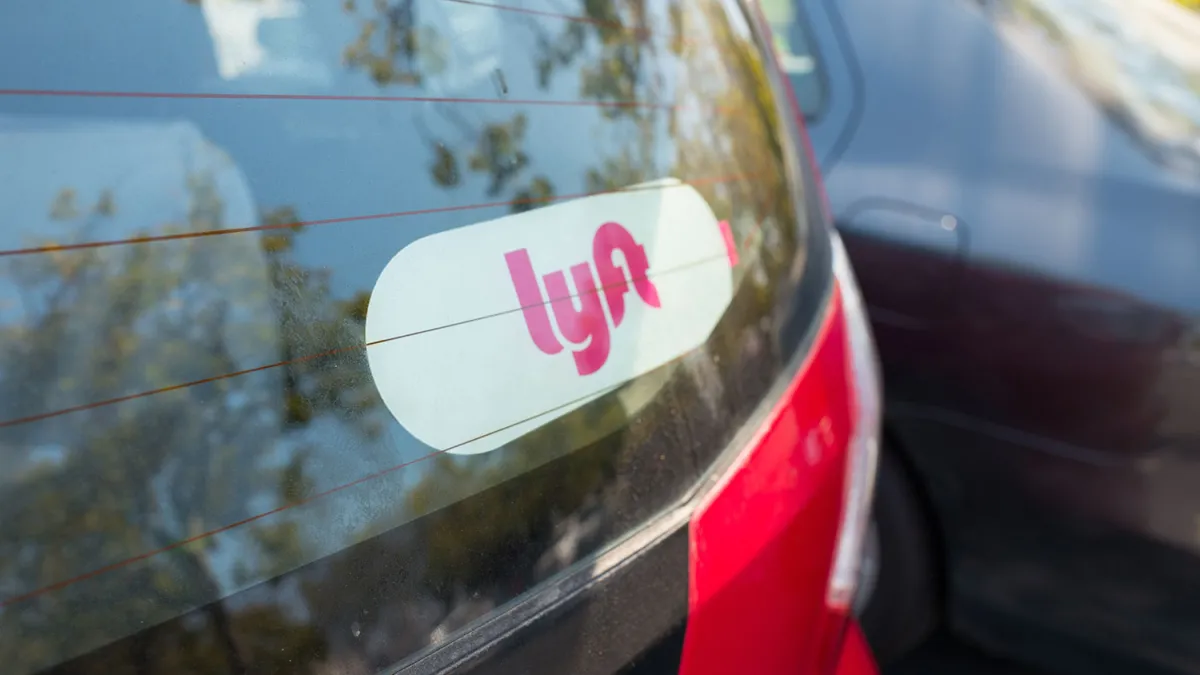
Lyft has agreed to pay $272.5 million to settle a lawsuit accusing the ride-hailing company of violating California law by misclassifying drivers as independent contractors, instead of employees.
The company said in a regulatory filing that it believes the settlement will allow it to avoid the “costs and distraction of protracted litigation and enable management to maintain its focus on executing its business objectives.”
Lyft could not be reached for comment.
The settlement stems from a lawsuit filed by the California Labor Commissioner’s Office in August 2020 that accused Lyft of treating drivers as independent contractors rather than as employees, as required under state law at the time.
The lawsuit alleged that drivers were denied minimum wage and overtime as well as other benefits and protections provided to employees, including paid sick leave and timely wage payments.
“This settlement is about the workers who came forward and spoke up. Their voices made this outcome possible,” California Labor Commissioner Lilia García-Brower said in a statement, adding that the LCO will forgo its share of the settlement and direct those funds to drivers who filed wage claims.
The settlement, which still must be approved by a judge, covers alleged violations from April 6, 2016 to December 15, 2020 — a period California was grappling with whether workers in the booming gig economy were independent contractors or an employees.
Today, drivers for app-based transportation services like Lyft and Uber are classified as contractors after voters passed ballot measure Proposition 22 in 2020. The ballot measure provided a carve-out from Assembly Bill 5, a state law passed in 2019 that required companies like DoorDash, Lyft, and Uber to classify gig workers as employees, entitling them to minimum wage, workers’ compensation, and other benefits.
Even after AB 5 took effect, Lyft, Uber, and other companies that relied on gig workers continued to classify their drivers as contractors. That eventually led to legal action from the LCO, California Attorney General and the City Attorneys of Los Angeles, San Diego and San Francisco, as well as private actions filed under California’s Private Attorneys General Act. The cases were coordinated in San Francisco Superior Court in September 2021.
The settlement closes this legal chapter, at least for Lyft. Uber still faces an LCO lawsuit that makes similar allegations.
When you purchase through links in our articles, we may earn a small commission. This doesn’t affect our editorial independence.
>

In December 2025, about a month before the U.S. invaded Venezuela and captured its president, Nicolás Maduro, President Trump had a secret meeting with Elon Musk, Time magazine reports. This was roughly seven months after Musk left his role in the Trump administration at the Department of Government Efficiency (DOGE).
During this meeting, Trump “spent hours” talking to Musk’s Grok chatbot, including asking how Venezuelans would respond to the capture of their president, a source told Time. Just a few months earlier, in September, Trump began ordering U.S. military strikes against Venezuelan boats that Trump alleged were involved in drug trafficking.
People had apparently been turning to Grok asking about the boat strikes and political climate in Venezuela, as the Atlantic reported at the time. So Grok told Trump that Maduro was a “deeply unpopular dictator and that many Venezuelans would likely celebrate his downfall,” Time reported.
When such celebrations indeed happened after the U.S. invaded on January 3, Trump apparently “came away thinking Grok was ingenious,” that source told Time.
So perhaps it should come as no surprise that in June of this year, the Pentagon’s head of AI said that the military used Gov Grok to deploy and strike targets during the Iran War.
While Grok isn’t the only AI model serving the DoD (OpenAI also has an agreement and Anthropic has been in a back-and-forth over how its models can be used for military intelligence and in modern warfare), Grok may become an even bigger favorite under this administration. Earlier this week, the Pentagon announced that Musk and Anduril’s Palmer Luckey have been tapped to co-lead a study about how advanced technology is, and can be, used in battlefields.
>

When Igor Dobrianskyi looks at a car dealership lot, he sees a wasted opportunity.
“Millions and millions of used cars are sitting on parking lots, depreciating and losing value,” Dobrianskyi said in a recent interview, adding that there are 76,000 dealerships in the United States. “At the same time, there are people who need a car for a few months, but the options are actually very limited and expensive.”
Dobrianskyi’s new startup, MyMonthlyCar, aims to connect both sides of that equation through an online platform that offers flexible month-to-month rentals from local dealerships. MyMonthlyCar was selected for the 2026 Startup Battlefield 200, a cohort of promising early-stage startups that have earned a spot to exhibit at this year’s TechCrunch Disrupt, taking place October 13 to 15 in San Francisco.
MyMonthlyCar, which is registered in Delaware and based in Florida, was co-founded by Dobrianskyi; CPO Kostiantyn Gitko; and CTO Vadym Zotov. All three are from Ukraine, said Dobrianskyi, who moved to the U.S. with his wife and young daughter after the Russia-Ukraine war began.
MyMonthlyCar does what its name suggests, with one twist: The startup only rents used cars on a month-to-month basis; no short-term options here. But it does give dealerships the chance to offer customers a rent-to-own option.
“So we don’t bring them only customers to rent on a monthly basis; we basically bring them the clients who potentially can buy this car as well,” he said.
MyMonthlyCar doesn’t charge dealerships to list cars on its website. Instead, MyMonthlyCar charges dealers 10% of each transaction. It also charges the customer a separate 10% fee.
The idea for MyMonthlyCar stems from Dobrianskyi’s previous experience in the industry. The founder owned a car rental company in Ukraine, but the lack of financing options there limited his ability to scale. In 2016, he launched a peer-to-peer car marketplace called SizeCar, where owners rent their cars to other drivers, much like Turo does today. SizeCar eventually spread to 40 European cities.
The startup has signed on seven dealerships to test the service and is working with an insurance broker to finalize its own insurance program, which will let customers choose among different types of coverage.
“Insurance is the key for this business, and you need to have your own insurance as a platform,” he said, noting that the No. 1 question from dealers was about insurance and liability coverage.
Despite its early-stage status, the founders have bullish projections for the startup. They plan to sign on 100 dealerships with 2,000 monthly rentals and $300,000 in revenue in the company’s first year of operation, which will kick off later this year once the insurance program launches. Over the next five years, the goal is to generate $42 million in revenue, Dobrianskyi said.
The startup has yet to raise venture capital and is currently bootstrapped. But Dobrianskyi said the plan is to raise a seed round, with the funds helping the company hire more developers to build out the platform, including an AI tool to help dealers identify which cars are best to rent out at any given time.
To check out MyMonthlyCar and the other startups that are part of TechCrunch’s Startup Battlefield competition (as well as to network with the folks funding them), join us next month at Disrupt.
When you purchase through links in our articles, we may earn a small commission. This doesn’t affect our editorial independence.
>
How to watch Blackhawks vs. Mammoth: TV channel and streaming options for October 1

Nations League: Craig Bellamy speaks out over abuse after Norway triumph
NHL commissioner Gary Bettman says trade protection has gone past 'original intention'
-

 movies4 months ago
Search For Canadian TV Actor Stewart McLean Now Homicide Investigation
-

 Fashion9 years ago
These ’90s fashion trends are making a comeback in 2017
-
Fashion9 years ago
According to Dior Couture, this taboo fashion accessory is back
-
Fashion9 years ago
Model Jocelyn Chew’s Instagram is the best vacation you’ve ever had
-
Fashion9 years ago
Emily Ratajkowski channels back-to-school style
-
Fashion9 years ago
9 Celebrities who have spoken out about being photoshopped
-

 Anime4 months ago
Rurouni Kenshin: Hokkaido Arc Manga Takes 1-Issue Break – News
-

 Anime3 months ago
HIDIVE to Stream English Dubs for The World Is Dancing, The Forsaken Saintess and Her Foodie Roadtrip in Another World, The Dangers in My Heart: The Movie Anime – News