
Anime
Unhappy with Endings – This Week in Anime

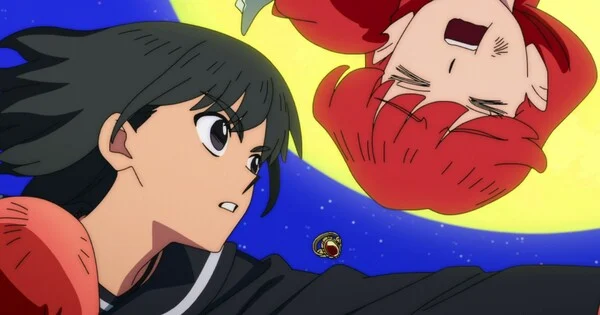
In the wake of Goodbye, Lara‘s finale, Sylvia and Coop discuss anime endings that left viewers wanting.
The views and opinions expressed by the participants in this chatlog are not the views of Anime News Network.
Spoiler Warning for discussion of the series ahead.
Crunchyroll streams Wonder Egg Priority, Tokyo Ghoul: Root A, Fullmetal Alchemist: Brotherhood, The Promised Neverland, Panty & Stocking with Garterbelt, and The Day I Became a God, and Goodbye, Lara.
Netflix streams Neon Genesis Evangelion, End of Evangelion, and Steel Ball Run.
Prime Video streams Mobile Suit Gundam GQuuuuuuX and New PANTY & STOCKING with GARTERBELT.
Rebuild of Evangelion Films available on VODs.
Fullmetal Alchemist (2003) and Super Dimension Fortress Macross are out of print.
Coop
I don’t know about you, Sylvia, but it seems to me that folks have strong feelings about their endings.
Sylvia
Coop, I have a strong feeling about ending this column right now. Why have you brought this evil upon us? That’s not the kind of ending we’re talking about, and you know it. My disappointment is immeasurable and my day is ruined.

© 1997 khara/Project EVA.
The final two episodes of Neon Genesis Evangelion are the poster child for such endings, but that’s just the tip of the iceberg, baby. In fact, it sounds like there was some consternation swimming around a recent fishy favorite of yours, right, Sylvia?

© Kinema Citrus/Goodbye Lara PARTNERS
We at “This Week in Anime” (specifically you and I) preempted some of those reactions earlier in the season with our Dog Chess column. So I cannot say I was surprised. But I am nevertheless kinda bummed about it.

© Kinema Citrus/Goodbye Lara PARTNERS
Since we talked about it last time, I’ve been a little more in touch with discussion around Lara’s ending than the series itself. It’s been sort of an End of Evangelion summer in my part of the woods. However, everything I’ve heard has me more intrigued to pop in and finish it for myself. Same with Wonder Egg Priority, which apparently is great until that last episode…and came up in the Lara conversation.

© Kinema Citrus/Goodbye Lara PARTNERS

© MARVEL
 © Kinema Citrus/Goodbye Lara PARTNERS |
 © Kinema Citrus/Goodbye Lara PARTNERS |
 © Kinema Citrus/Goodbye Lara PARTNERS |
 © Kinema Citrus/Goodbye Lara PARTNERS |
The show then timeskips 6 months ahead and shows Lara saying her goodbyes to the other characters, culminating in a parting with Mari at the train station.
 © Kinema Citrus/Goodbye Lara PARTNERS |
 © Kinema Citrus/Goodbye Lara PARTNERS |
 © Kinema Citrus/Goodbye Lara PARTNERS |
 © Kinema Citrus/Goodbye Lara PARTNERS |
It’s abrupt. It’s bittersweet. And its various minutiae have been dissected all sorts of ways over the past week and a change. Frankly, there’s too much I’d want to say and write to adequately argue my piece, and that’s not really the point of this column. But I do want to draw attention to what you just said: you’ve seen more discussion about the ending than about the rest of the series. And that, I think, does Goodbye, Lara a disservice.

© 1997 BE-PAPAS,SAITO CHIHO/SHOGAKUKAN,SHOKAKU,TV-TOKYO.
There’s no such thing as a “perfect ending” in life (and media, except Revolutionary Girl Utena), and works that embrace that truth are just as important as the ones where the girl gets the girl. Honestly, what you’ve told me has me going, “So what if after finding Utena, Anthy breaks things off so she can figure herself out a bit more?” Not a romantic ending, but a potentially realistic one.

© Kinema Citrus/Goodbye Lara PARTNERS
In our social media-poisoned reality, though, tribalism and conspiracy are king. Discussions don’t happen. It’s all different sides posting past each other, shadowboxing conveniently flimsy cutouts of their opponents. People invent circumstances and motivations out of nothing. People who haven’t even watched the show feel compelled to chime in because it happens to be a popular topic, and their voices can be amplified as loud or louder than others depending on the size of their following and the whims of the algorithm. In this way, a contentious ending becomes a different monster entirely, feeding the discourse machine without nourishing any thoughtful conversation. And that’s the shit that rankles me.
And I’m not saying I’m above that! Even now, I feel the compulsion to shadowbox my mental projections of what this column’s comment section is going to look like. But there’s no good reason for me to do that—to reduce the entirety of Goodbye, Lara to a series of gotchas that own my opponents in the marketplace of ideas.

© Kinema Citrus/Goodbye Lara PARTNERS

© SOTSU・SUNRISE
Here’s an example of one worth getting upset over—Mobile Suit Gundam GQuuuuuuX. Not for overindulging in a meta narrative about escaping the original series’ looming cultural shadow, but for giving Tōru Furuya a featured cameo in its finale. This aired over a year after the actor admitted to having an abusive affair with a fan. I don’t care if he was “the original Amuro” or if they were short on production time. If SEGA could hastily rip Pierre Taki out of Judgment and rebuild all of his character’s assets because of cocaine charges, Khara and Sunrise could’ve brought in a new actor to record one line for this.
Sometimes, though, you see problems on the horizon and just don’t want to acknowledge them. Since you brought it up earlier, and since it was brought up in conversation with Goodbye, Lara, I will swallow my sadness and mention Wonder Egg Priority, which holds the distinction of the most heartbreaking (derogatory) anime ending I’ve ever had to grapple with. It’s in a league of its own. And it legit pissed me off to see people comparing it to Lara‘s conclusion. Y’all don’t even know. I was there. I had to sit down and review that after nearly three months of huffing copium. It hurt me. I hated this.

© WEP PROJECT
I will still go to bat for a lot of Wonder Egg Priority, and probably more than most people will. But this is one ending where I believe it truly drags down everything that came before it.
Reading through your review, I get the impression that just stopping before the finale might be the best way to approach this one. There’s nothing wrong with watching or playing through most of something and going “I’ve got what I wanted out of this,” then peacing out. Though I’ll admit that my morbid curiosity will likely lead me to watching the whole thing anyway. There are probably some lessons to be learned from how Wonder Egg beefs it on the dismount.

© WEP PROJECT

© BIGWEST ©HARMONY GOLD
Though beloved, Macross is known quite well for its famously messy production and its similarly jumbled conclusion. However, it’s not just the finale that has a less-than-sterling reputation; it’s the eight episodes that led up to it as well. While I see that final arc as an intriguing postwar denouement to the main Macross tale, there are many who do not. Heck, series director Noboru Ishiguro might’ve been in that camp too if his old interview with AnimEigo from their ye olde DVD boxsets is to be believed—an interview I wrote about for Zimmerit a while back.

© Zimmerit
Slipping into his shoes for a minute, I totally get why Ishiguro was likely not a fan of something his team had to scramble even more to produce.
Case in point, Hideaki Anno has come up with no fewer than three different endings to Evangelion, each of which represents a distinct creative vision, and each of which inspires a wide array of reactions. The original TV ending is most infamous, though, due to its stylistic and abstract departure from what audiences had come to expect from Eva. Yet if you watch it with an open mind, it stands on its own as an appropriately psychological conclusion to Shinji’s arc. It represents a clear artistic vision. However, the consensus continues to view it as an “incomplete” version of the story eventually told by End of Evangelion.

© 1997 khara/Project EVA.
And that’s a good point! Once-controversial endings can become less contentious as time goes on and audiences reevaluate things. Like I will still see people recommend skipping Eva‘s TV ending and going straight to End of Evangelion—which is wrong, mind you—but at least that’s better than sending death threats to the director.

© khara
For me, this is why Thrice Upon a Time hits so hard. After spending three films trying to avoid another attack, you finally have one and realize that it’s time you have an honest conversation with yourself about it. A conversation that doesn’t involve beating yourself up or blaming those who’ve done wrong by you, but accepting all of it for what it is and trying your best to move forward. Who’s to say you won’t have another attack, but trying to constantly replay (or “redo” in this case) everything isn’t going to help either. I love that Shinji, myself, and perhaps Anno reached that conclusion by the end of this whole odyssey.
Oddly enough, it seems like Evangelion actually did hit me at a tender time. I just wasn’t in high school.

© Sui Ishida/Shueisha,Tokyo Ghoul Production Committee
Fullmetal Alchemist is perhaps THE example when it comes to anime-original endings and adaptations overall. The 2003 series covered much of the manga’s early goings-on before going off in its own direction with Arakawa’s blessing. Six years later, Brotherhood was produced at the same studio, Bones, and cleverly swerved around the already adapted material. The studio already made a delicious FMA cake with its own distinct flavorings; why completely copy it to make a new one? Also, that first cake ruled. Actually, both cakes rule.

© KAIU SHIRAI,POSUKA DEMIZU/SHUEISHA,THE PROMISED NEVERLAND COMMITTEE
Although admittedly, that’s more of a season-wide problem than one concentrated just in the ending.
Sounded like a legit case of “promises” broken from the rumbling I’d heard about it.
“Never” should have been the operative word there.
I guess you could say that it…never landed.

© 2010 GAINAX/GEEKS

© TRIGGER・今石洋之/NPSG製作委員会
But more relevantly, the good ol’ “Gainax Ending” sprung out of titles like the aforementioned Evangelion and Gunbuster, in which the finale takes some sort of wild last-minute swing that catches most audiences off guard… And also makes them wonder if the studio blew all their budget earlier on in production.
Personally, I think the takeaway from most “Gainax Endings” is that women can do anything.
After reviewing my notes, I concur. Women can do anything.

Please don’t mention “ill-fitting end credits sequence;” I’m still traumatized by how you began this column.
A truly terrible ending we’ll remember for generations to come.
>
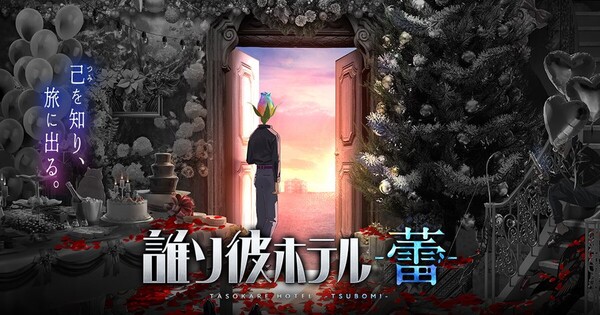

The official website for the Tasokare Hotel -Tsubomi- smartphone game announced on Wednesday that the game is ending service on November 30 at 12:00 p.m. JST.
Sales of in-game currency have halted. Players can request refunds until the game ends service. Following the end of service, players will still be able to open the app, but they will not be able to access game content.
Tasokare Hotel -Tsubomi- launched in March 2025. It is a sequel adventure game with a new protagonist and characters, new story, and revamped game system.
SEEC‘s Tasokare Hotel game launched for iOS and Android in 2017 and has over 1.1 million downloads worldwide. A remake with new elements and features titled Tasokare Hotel Re:newal launched for iOS and Android in Japan in December 2022, and the remake game’s Steam version launched in Japan in January 2024.
The mobile game inspired a television anime on Tokyo MX in January 2025. The anime streamed on Prime Video, It’s Anime YouTube channel, Tubi, Plex App, Anime Onegai, TVING, bilibili, and Anime Key in over 100 countries and territories.
It’s Anime! describes the anime adaptation’s story:
“TASOKARE HOTEL” is a hotel that is engulfed in twilight all day long, with no distinction between day and night.
It exists as a place between life and death, where souls unable to decide whether to move on to the afterlife or return to the present world can rest their wings.
The protagonist, Neko Tsukahara, wanders into “TASOKARE HOTEL” without remembering who she is or why she’s there.
Guided by the hotel staff, she is led to her room.
“There should be items related to the customer’s memories in the room. These might serve as clues to help the customer regain their memories.”
While searching for a way to return to the present world and remembering who she is, she encounters a certain incident…
The game’s original author Benoma Ray and concept creator SEEC stated that the anime version incorporates “developments that add unique charm only possible in this medium,” and that they have “crafted a work that will bring new surprises and emotions even to fans of the original [game].”
The original game also inspired both a stage play and a webtoon.
Sources: Tasokare Hotel -Tsubomi- game’s website, 4Gamer (簗島)
>
2nd season debuted on Thursday
Netflix began streaming on Thursday an English-dubbed version of the second promotional video for the second season of the television anime of Kōcha Agasawa‘s The Ramparts of Ice (Koori no Jyōheki or Ice Castle Wall) manga. The video features the four-piece band THE BEAT GARDEN‘s opening theme song “Escort.”

© 阿賀沢紅茶/集英社・TVアニメ「氷の城壁」製作委員会
Superfly perform the ending theme song “Hanakage.”
The second season premiered on Thursday. The new season again airs on Thursdays at 11:56 p.m. (10:56 a.m. EDT) on TBS and 27 affiliated channels. It also streams on Netflix, as well as other services in Japan.
The manga centers on Koyuki Hikawa, an aloof high school student who has a hard time getting close to others, and who builds a wall between herself and other people. Although she spends her time alone at school, for some reason Minato Amemiya keeps getting closer to her. The frustrating story of youth follows the lives of four somewhat complicated individuals: Koyuki and Minato, plus the popular girl Miki and the laid-back boy Yōta.
The cast includes:
Mankyū (Pui Pui Molcar the Movie: MOLMAX, Sumikkogurashi – Good to be in the corner, The IDOLM@STER Shiny Colors) is directing the anime at Studio KAI. Yasuhiro Nakanishi (Kaguya-sama: Love is War, Toilet-Bound Hanako-kun, Mecha-Ude: Mechanical Arms) is in charge of the series scripts. Miki Ogino (Osana Najimi no Carbou) is designing the characters. Kanade Sakuma and Natsumi Tabuchi are composing the music.
The first season premiered on TBS and 27 affiliated channels on April 2 at 11:56 p.m. in Japan. The season then debuted globally on Netflix on April 2, and it is also streaming on other services in Japan.
Agasawa (You and I Are Polar Opposites) originally serialized the manga as a webtoon on the LINE Manga app from January 2020 to April 2022. Shueisha published the manga’s 14th and final compiled volume (reorganized for volume format) in February 2025.
The manga ranked at #15 for male readers in the 2024 edition of Takarajimasha‘s Kono Manga ga Sugoi! (This Manga Is Amazing!) guidebook in December 2023, and also was nominated for the 69th Shogakukan Manga Awards in 2023. The manga placed second in May 2024 in the “Vertical Scroll Comic” section of the second Rakuten Kobo E-book Awards. Additionally, the manga ranked #2 on AnimeJapan’s sixth “Most Wanted Anime Adaptation” poll in 2023.
>
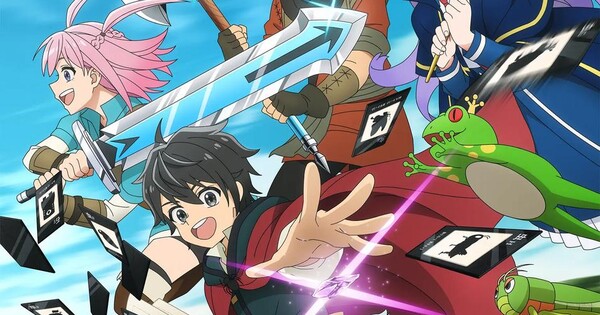
In a never-ending sea of isekai titles where our protagonists are reborn into wealth as a child or adolescent and are overpowered, Hell Mode should, theoretically, be a breath of fresh air: Our protagonist—formerly a hardcore gamer named Kenichi Yamada, now named Allen—is reincarnated as a newborn baby into absolute poverty, with summoner abilities that are unique but demand a truly staggering amount of grinding for him to learn, let alone level up. This is because Allen (or, depending on how you see it, Kenichi) has been reborn into the world of a game that he’s playing on the hardest possible difficulty with the hardest possible settings—the game’s Hell Mode. Indeed, our protagonist sought out a grind-heavy trudge, and for better or for worse, he found it.
While not as much of a slog as its light novel source material, few introductions in anime are as slow and tedious as Hell Mode‘s—which follows Allen’s life as an adult-brained, newborn baby trying to grind levels by doing simple tasks like throwing rocks, at least at the beginning. Because nothing says thrilling like watching someone throw rocks at trees while they think about their stats. He does soon move beyond the realm of rock throwing, to be fair, but never beyond obsessively thinking about his stats. And since there’s nothing in the realm of story this season, you’re definitely going to notice how much Allen thinks about his stats, because there’s not much of anything else going on. Ironically, this gives this anime a slowness that it was obviously trying to avoid, considering how breakneck fast things are happening in this anime compared to the light novel.
I seriously can’t emphasize enough that flawed as this anime is, it’s still an infinitely easier way to consume Hell Mode‘s anime than its source material, which gives way too much real estate on each page to the granular details of Allen’s stats. The pacing is infinitely faster by comparison, and you don’t have to wade through Allen going through stat screen after stat screen after stat screen. Still, that doesn’t mean the pacing is great in Hell Mode, nor is it without its overly detailed explanations of Allen’s stats. Hell Mode very obviously revels in the fine details—the hyper-specific hows and whys—of Allen’s leveling up process. It’s numbers all the way down, and for those of us non-accountants, it does feel like, well, Hell Mode having to sift through it all to get to anything else. Or at least, it would be if there was anything else to get to.
When you take all the numberslop of it all out of the equation, there’s not really anything left in this season of Hell Mode since that’s all this season revolves around. Allen promotes himself from throwing rocks at trees to getting his summons to fight monsters that, up until the very end, never rise above mid-tiers. To emphasize: Allen isn’t personally fighting them; he’s having his summons do the work for him. And these fights lack the spectacle, hype-factor, or cool choreography you might crave in an anime fight, because they often boil down to glorified animal attacks.
There’s something to be said for how in the background there’s a little bit of political intrigue and worldbuilding, but nothing that ever comes to fruition in a way that’s meaningful or memorable in this season. The characters, similarly, have nothing going for them. Allen, especially, is so obnoxious as a protagonist, because he’s only concerned with his stats. He comes to care for his new family, but it always feels firmly secondary to his stats obsession, and it raises a lot of questions about his previous life that never get discussed, so it’s easy to shrug this off.
Unfortunately, the only other memorable thing about Hell Mode—for better or for worse—is how it’s home to some of the all-time worst CG I’ve ever seen in an anime. It’s astonishing how dated it looks. Broadly speaking, CG in anime gets a bad rap and usually at least looks serviceable—but there’s no defending the CG in Hell Mode. The 2D animation isn’t fantastic, but I’ve certainly seen worse. It’s nothing exceptional, but it’s fine. But the CG is extremely jarring, blocky, moves poorly, doesn’t always look like it’s on the same plane as everyone and everything else, and there’s really no better word for it: It’s ugly. Plain and simple, it’s hideous. And all the summons, all the monsters—those are all in CG. Meaning, yes, you’ll be seeing a lot of it.
Finally, as far as sub versus dub goes for this anime, this is definitely a sub watch. Less because the Japanese voice actors do such a great job (although it’s worth saying plainly that they all do a fine job—nothing exceptional, but fine nonetheless), and more because the dub just lacks the oomph you’d want from known, powerhouse talent like Luci Christian (Allen) and Natalie Rial (Krena).
Hell Mode is a show that, in theory, sounds like it should be so much cooler, and so much more clever, than it actually is. This would-be adventure series about a hardcore gamer trying to optimize a speedrun to the top of the food chain is bogged down by a lack of any story, no interesting characters, boring fights, and way more stats and numbers than it needs. But weirdly specific as it is, if you wanted to ever wanted to combine the thrill of rock throwing, with the excitement of stat screens, and the joy of terrible CG, you might have finally found the show for you.
>
How does Kirk Ferentz’s Iowa keep doing this? ‘We’re not in the entertainment business’

World’s first enhanced geothermal power plant completed in just 23 months

‘Gentle Monster’ Trailer: Léa Seydoux in Marie Kreutzer Drama
-

 movies4 months ago
Search For Canadian TV Actor Stewart McLean Now Homicide Investigation
-

 Fashion9 years ago
These ’90s fashion trends are making a comeback in 2017
-
Fashion9 years ago
According to Dior Couture, this taboo fashion accessory is back
-
Fashion9 years ago
Model Jocelyn Chew’s Instagram is the best vacation you’ve ever had
-
Fashion9 years ago
Emily Ratajkowski channels back-to-school style
-
Fashion9 years ago
9 Celebrities who have spoken out about being photoshopped
-

 Anime4 months ago
Rurouni Kenshin: Hokkaido Arc Manga Takes 1-Issue Break – News
-

 Anime3 months ago
HIDIVE to Stream English Dubs for The World Is Dancing, The Forsaken Saintess and Her Foodie Roadtrip in Another World, The Dangers in My Heart: The Movie Anime – News