

movies
Jeremy Strong Defends Method Acting: ‘Never My Intention to Interfere’

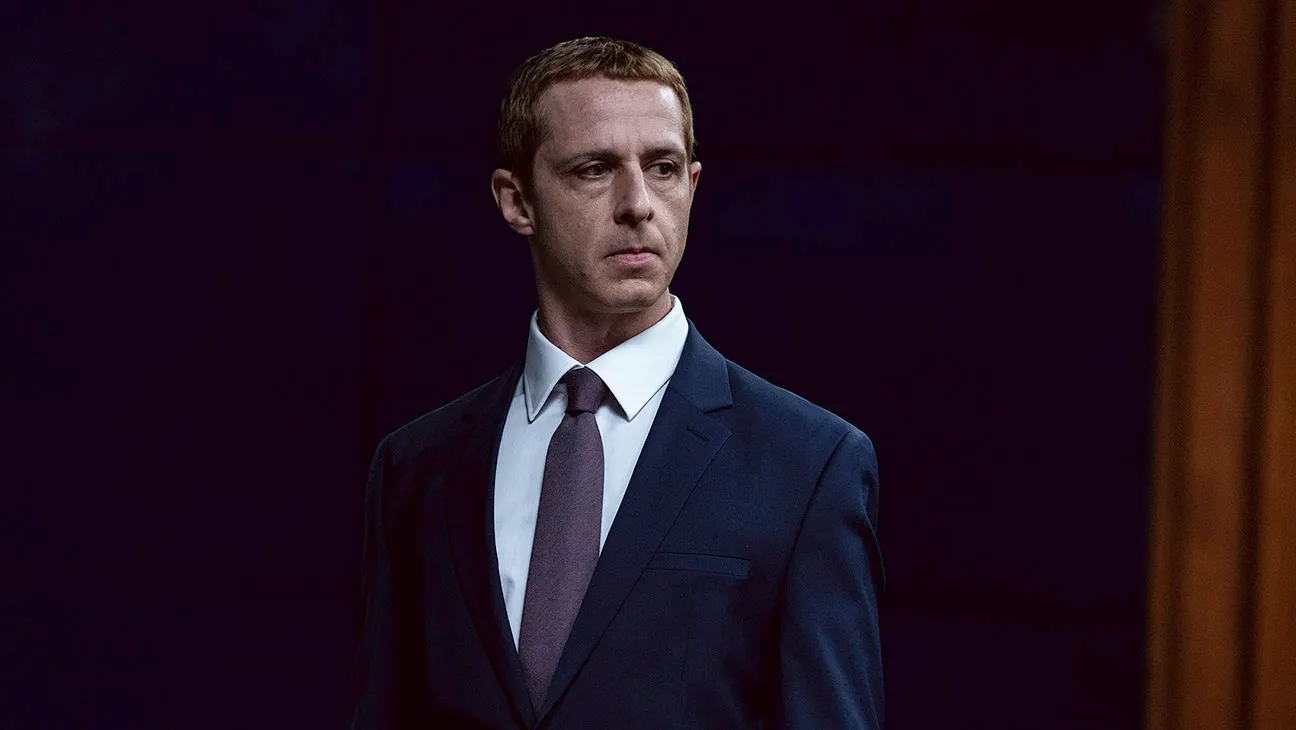
Jeremy Strong says it’s “never my intention to interfere” with the people he works with when method acting, but he doesn’t believe he “need[s] to apologize” for his approach.
The Succession actor is a known method actor, which he has led to criticism from his peers in the past. When speaking with David Remnick for The New Yorker Radio Hour podcast, the host asked Strong if he feels his tendency to do research on his characters and bring that knowledge into his performance is “appreciated by the people around you.” Remnick specifically cited his Oscar-nominated turn in The Apprentice, where he added a scene to the film that wasn’t in the original script.
“I think I can’t really speak to that,” the actor said. “Of course, some people seem to have been… it is never my intention to interfere with anyone else’s experience or anyone else’s way of working. First, do no harm, right? But commit to fucking what you’re doing, and utterly.”
He was then asked if he gets frustrated by others who are not at the same level of commitment, to which Strong responded, “No, just meaning that I’m just there to commit utterly to serving the material.”
“So, if some people feel that I’m taking it too seriously, or it changes the molecules in the room in a way that makes something uncomfortable, I guess that’s something that I don’t feel that I need to apologize for,” he said. “Because I believe, and I think the directors that I work with all believe, that it’s in service of the material, and I personally think that a lot of the reactions to it are of a personal nature.”
Strong will next star in Aaron Sorkin‘s The Social Reckoning as Meta CEO Mark Zuckerberg. The director recently told The New York Times that Strong treated his co-stars “the way he imagines Mark [Zuckerberg] treats the people around him.”
Sorkin explained, “Jeremy does a lot of his own work. He does a tremendous amount of work before he shows up on your set. He did not speak in his own voice on the set or walk the way Jeremy walks.”
“I told all the other actors in his scenes: ‘Guys, he’s not going to be hanging out with you at craft service. He’s not going to be yucking it up with you between takes. He’s probably not going to speak to you at all. He is going to treat you the way he imagines Mark treats the people around him,’” he added. “And that’s what happened. You cannot argue with the results.”
Brian Cox, Strong’s former Succession co-star, shared his criticism of his method acting in a viral New Yorker profile, where he said, “I’ve worked with intense actors before. It’s a particularly American disease, I think, this inability to separate yourself off while you’re doing the job.”
The Troy actor has made many remarks about Strong’s method, saying previously, “It’s not good for the ensemble. It creates hostility. That’s the problem.”
Of his reaction to the profile, Strong previously told The Hollywood Reporter, “It was painful for it to be put out to the world, maybe in a less compassionate way than I would’ve hoped.” He added, “I felt that I had a safe forum at The New Yorker. I felt that I had a safe forum to share those things — and ultimately that experience was put in doubt.”
When asked if he was hurt by his co-stars coming off as being dismissive of his process, Strong said, “Yeah,” adding, “But a lot of that is just things that are presented out of context or with a certain agenda. I know what everybody said, and there was an angle and a narrative that was being presented. Which is not to say that there was never friction between my co-stars. We’re a family in every sense of the word. But foundationally, there’s deep respect and even love.”
>
Continue Reading
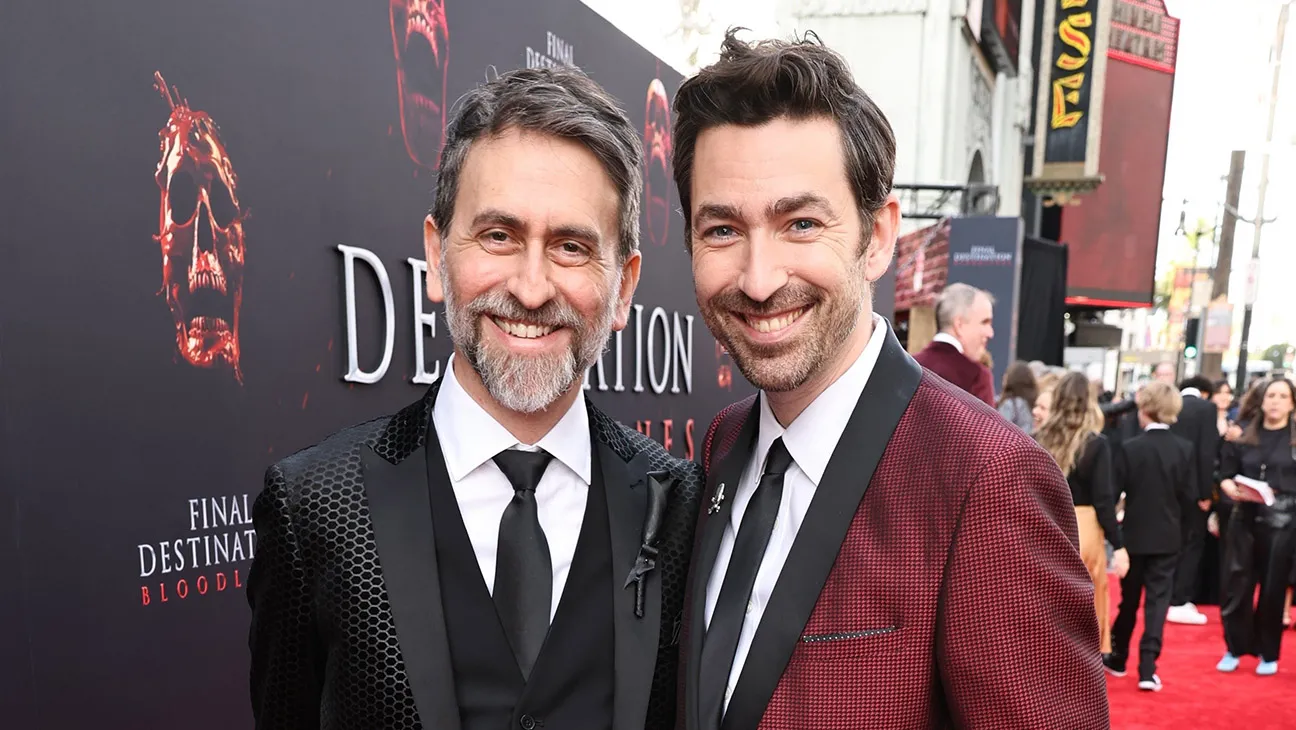
Zach Lipovsky has done good business with gory horror movies.
Lipovsky and longtime collaborator Adam B. Stein’s 2018 dark sci-fi thriller Freaks, starring Emile Hirsch and Bruce Dern, was an unlikely box office hit, having made over $375 million worldwide during its theatrical run. “That film changed our lives,” he tells The Hollywood Reporter from the Sony Pictures studio lot in Culver City, California.
Freaks effectively transformed the filmmaking duo from B-movie mavens to hot commodities in Hollywood after the dystopian drama world premiered at the Vancouver Film Festival (VIFF). “I grew up in Vancouver. We made the first film in Vancouver. And as a teenager I went to the Vancouver Film Festival, and got a super pass to not only see five films a day, but go to press screenings for three weeks before the festival,” Lipovsky recalled.
That festival play gave a young Lipovsky a crash course in world cinema. “I remember seeing filmmakers up on the stage, presenting their films and wishing one day that would be me,” he added. After Freaks –— which featured 7-year-old Chloe (Lexy Kolker) being locked in a ramshackle suburban home by her protective and paranoid father, played by Hirsch — Lipovsky and Stein are returning to Vancouver with their follow-up Freak 2 to screen on Saturday night at the Rio Theatre.
“The first film was very much about a girl who can’t leave her house, and really wants a mom. And in the second film, she’s now much older. So she doesn’t want a mom. What she wants is a friend,” he explained. “And how do you find a friend, and how do you build a relationship in a world where society wants you dead,” Lipovsky adds as he teases Freaks 2.
Paramount Pictures has already picked up the sequel where Amanda Crew is a mother and Lorelei Olivia Mote plays her daughter, as both look to survive a world that wants to wipe out “freaks” like them as they seek vengeance for their family. Freaks 2 also follows hot on the heels of Lipovsky and Stein directing Final Destination Bloodlines, the sixth installment of the supernatural horror franchise that grossed over $285 million at the worldwide box office.
“It’s very hard to believe I’m sitting here on the Sony lot where we have our first look [deal] now. And we have a whole building of people now working with us to make movies, which is very surreal,” Lipovsky adds as he and Stein met nearly 20 years ago as rival competitors on On the Lot, the Fox filmmaking competition series from Steven Spielberg and Mark Burnett.
“We didn’t win, and we were off the lot,” Lipovsky recounted. But, two decades later, he and Stein are in-demand movie directors at work on projects like the Long Lost short story adaptation for Amblin and Universal, as writers on Chris Columbus’ Gremlins 3 and for Sony the animated Venom movie and Metal Gear Solid.
Getting known around Hollywood still has Lipovsky pinching himself. “Over 20 years of making movies, you get very used to things not happening, and very used to people saying something’s happening, and then it doesn’t happen. So when things start to click into place, your brain has a very hard time trying to accept that it’s actually real,” he added.
Lipovsky also puts himself and Stein becoming bankable in Hollywood after Freaks and Final Destination Bloodlines down to the recent summer box office success of breakout horror pics Backrooms and Obsession. “Horror is one of the few genres where it’s normal for audiences to show up in theaters for original movies,” Lipovsky argues. “It’s the voice of the authors that are creating the work that audiences are becoming attracted to, and even more so when the work is original, and Hollywood is definitely starting to pay attention to that.”
Lipovsky will be accompanied at the VIFF screenings for Freaks 2 by his mother, who as a single parent cast aside her own aspirations to become a movie director to work as a TV producer at Knowledge Network, a local Vancouver network. “Becoming a director back in the [19]80s wasn’t really a career path for many women, and she’s always been there by my side, and for her to see the kind of levels to which I’ve been able to create movies has been amazing,” he recalled.
One of the VIFF screenings for Freak 2 will also be at the city’s historic Park Theatre, an art deco movie house that Lipovsky helped save from closure as a private investor along with Osgood Perkins, Mike Flanagan, Sean Baker and Finn Wolfhard.
“It’s very special to be able to do the screening there, with a lot of the people that made the movie and a lot of my old friends in the audience and within minutes of where we shot the movie,” he insisted.
>
On paper, director Tom McCarthy‘s latest film, A Statement might appear to be a dense polemic, hardly the stuff of exciting moviemaking. It centers on a 1980 Florida conference dealing with the effects of Carbon Dioxide emissions on the environment, gathering politicians, academics, scientists and environmentalists from around the U.S. to talk about the subject for four sessions over two days, and tasked with coming up with an agreed-upon statement on how to deal with the problem. The screenplay is largely taken from actual transcripts of the meeting, and is an adaptation by McCarthy and his co-writers Thomas Bidegan and Noé Debré of the Nathaniel Rich book, “Losing Earth: A Recent History”. Ready to line up for this one, folks?
Even though the density of the subject matter made my eyelids droop Trump-style a bit in the beginning, I have to say just trust in McCarthy whose very urgent Spotlight won the 2015 Best Picture Oscar and whose filmography includes such rich character studies as Win Win, The Station Agent, and The Visitor. His movies are all about people, and so, not surprisingly, is this one. Although this is all largely set around a large table in the St. Pete Beach Ce Sar Hotel conference room, and deals with a lot of dialogue around various conceits that might sail over your head, thanks to a smart approach to the basic material and the outstanding cast of wonderful actors hired to bring it to life, this becomes anything but a polemic. It is an entertaining, sly, humorous, enlightening, and even moving story of an effort by a group of mere human beings trying to come together for the good of the planet and deliver a simple statement on how to save us from ourselves. It is a quirky and unexpected period piece about a time when we weren’t so divided that it could be possible to have a civil discourse, even on a hot button topic. Ah, the good old days.
Taking place in late October of 1980, just days before Ronald Reagan would defeat Jimmy Carter to become President, the timing of this conference in retrospect was crucial. The dawning impact of climate change was just coming into view (a global climate conference preceded this one a year earlier), but it was a time well before it would become such a polarizing political issue pitting us against each other on an issue about which there should be no argument. Seeing it play out now 46 years later, it is a bit mind boggling to see how far we haven’t come under a President and current administration that twice has canceled us out of the Paris Climate Agreement and enthusiastically welcomed the return of fossil fuels, coal, no regulations, and free reign for corporate America. Viewed now this film’s simple truths and debate over these inconvenient truths take on an importance and realization that not only have we not made much progress after four and a half decades, but we are sailing backwards to oblivion. If that sounds depressing, think again. A Statement, with its modest ambitions, comes just at the right time to remind us that no matter how divided we can be, we do share a common humanity – or once did – that hopefully can make a difference. The actual end result of this conference may not have been encouraging at the time, but by focusing on the people and disparate personalities who at least tried to come together in a room with potato salad and cold coffee we get the feeling all is not lost – even now when it all seems so dire. Guess I am an eternal optimist. I have to be. This is actually, oddly, a feel good movie in its own peculiar way.
Beware: A Statement does not follow a familiar usual three act structure for a movie. It all takes place at this hotel, where there is also a wedding going on that will figure delightfully as the weekend progresses, but basically the participants enter the room, introduce themselves, and start talking serious issues, no back stories on any of them. The Master Of Ceremonies here is ever confident Tom Jorling (Paul Rudd), assisted by atmospheric science expert Robert Cunningham (Noah Robbins) in keeping it all on track and power- pointing all the ideas that come up. Among the most prominently focused on here are an engaged activist with Friends Of The Earth, Rafe Pomerance (Evan Peters); Department Of Energy Carbon expert Dr. David Slade (Paul Giamatti) who may be out of a job after the election; a didactic M.I.T. Nuclear Engineer Dr. David Rose (John Turturro) with a lot of definite opinions; Public Health scholar Anne Marie Crocetti (Amy Ryan) who doesn’t say much until she does; legal scholar from Commission on Air Quality Edith Brown Weiss (Tatiana Maslansky) who may not be board; and personable but skeptical staff member John Perry (Jason Clarke), all among many others we meet and hear from.
Somehow, with major help from ace cinematographer Stuart Dryburgh, McCarthy keeps this all on track as a movie, a story of us, a group of unique personalities, strangers who come together with one purpose but also, in the end, show us we are, first and foremost more alike than not. A Statement is truly cinematic, even if the bones of it looks like it could have been a play. Reminiscent in some ways of Sidney Lumet’s landmark first feature, 12 Angry Men, McCarthy finds an exciting way to shoot this tight room without ever being rote. Although using the actual transcript can be challenging the filmmaker has found a clever way in as a human experience, and when you have actors on the level of Rudd, Giamatti, Turturro, Ryan, and on and on delivering the text we are in good hands.
McCarthy and his writers also smartly take us out of the conference room at the end of day one and invent interactions between the group into the night that also lets us get to personally know some of these people who likely will not see each other again. A lot of it is quite amusing. Who knew the M.I.T. guy Turturro plays could also be a hell of a wedding party crasher, or that the terrific scene-stealing Robbins’ atmospheric science expert Rob would hook up, so to speak, with the older stenographer Bernadette (played by the magnificent Nina Arianda). Their budding connection is ultimately quite a touching one. Ryan’s character is a largely quiet participant given a come-to-jesus moment toward the end that rivals Atticus Finch. Maslansky delivers the tough love from her character with deep conviction that keeps us riveted. The can-do-no-wrong Giamatti scores again here as the Energy Department veteran who has been to 300 of these types of conferences and has another lined up in December, just par for the course for a dedicated public servant hoping to make a difference in his – and our – humdrum life.
You get the feeling everyone in this room hopes to make a difference, and what they each have to say should be heard, but it is, in the end, the human comedy McCarthy untangles in bringing all of them together for a single collective goal that makes A Statement such a rewarding and heartfelt experience. I wanted to spend more time with this bunch, i was sorry to see them all go off to their own lives somewhere, maybe with a bit more knowledge that the mission that brought them to this Florida beach hotel conference room is one still worth pursuing.
Interestingly on the same weekend Alejandro G. Inarritu’s Digger opens, a divisive satire with a sober message about the devastating costs of ignoring the climate crisis, that film feels, to use earthquake terminology, like an aftershock to a calamity for the human race who stuck their heads in the sand and ignored the warnings. A Statement , very different in tone and attitude, and taking place right at the beginning when something could still be done, is the foreshock. Attention must be paid.
A Statement had its World Premiere today at the New York Film Festival and will be released in 2027. It is a gem. Producers are Jonathan King, David Levine, Jim Whitaker, Rae Baron, McCarthy, Jonathan Schwartz, Nick Shumaker, Bard Dorros and Mary Aloe.
Title: A Statement
Festival: New York Film Festival
Distributor: Sony Pictures Classics
Director: Tom McCarthy
Screenplay: Thomas Bidegan, Noé Debré and McCarthy
Cast: Paul Rudd, Evan Peters, Amy Ryan, Paul Giamatti, John Turturro, Tatiana Maslansky, Jason Clarke, Noah Robbins, Zach Woods, Nina Arianda, Mary Catherine Garrison, Michael Chernus, Tom McPherson, Dylan Baker, Michael Cerveris, Alan Eisenberg, Christopher Denham, Adrian Martinez.
Running Time: 1 hour and 44 minutes
>

To borrow the title of a vintage Supertramp album that predates the events of this movie by five years: “Crisis? What crisis?” In truth, that’s the attitude of a tiny minority gathered in a Florida hotel conference room for 36 hours in 1980 in Tom McCarthy’s engrossing verbatim drama, A Statement. But it reflects the frustrating stalemate at which the group of 20 scientists, environmental activists, bureaucrats, academics and policymakers arrive after a marathon session of back-and-forth on climate change. And it typifies where we still are today as global CO2 emissions continue to hit record highs despite growing clean energy adoption.
Echoing the methodical approach he applied to investigative journalism in Spotlight, writer-director McCarthy brings exacting attention to long stretches of wonkish process and debate, somehow making the talkathon dramatically and visually dynamic. But the film’s biggest asset is its excellent and uncommonly egalitarian ensemble cast, each of them given moments to shine in sharp characterizations.
A Statement
The Bottom Line
Talky but stimulating and incisively acted.
Venue: New York Film Festival (Spotlight)
Release date: Friday, Dec. 4
Cast: Paul Rudd, Evan Peters, Amy Ryan, Paul Giamatti, John Turturro, Tatiana Maslany, Nina Arianda, Jason Clarke, Noah Robbins, Zach Woods, Mary Catherine Garrison, Michael Chernus, Dylan Baker
Director: Tom McCarthy
Screenwriters: Noé Debré, Thomas Bidegan, Tom McCarthy, adapted from Nathaniel Rich’s book Losing Earth: A Recent History
1 hour 51 minutes
No one is going to call A Statement an exciting movie; it doesn’t have the stirring emotional pull of another film set in a Florida hotel, Regina King’s One Night in Miami, which imagined a 1964 conversation about the Black struggle between Malcolm X, Sam Cooke, Jim Brown and Cassius Clay, as the boxer was still known at that time.
Unlike King’s film, which was adapted from a largely fictionalized play, McCarthy and his French co-writers Noé Debré and Thomas Bidegan took a brief chapter from Nathaniel Rich’s 2019 climate science book Losing Earth: A Recent History as their source, folding in word-for-word transcripts for sections set in the conference room of the Don CeSar Hotel, an imposing pink palace that sits on the beach in St. Petersberg. But A Statement might just as easily have been a stageplay; the mere fact of having the entire principal cast in one room for much of the time contributes to the theatrical feel.
McCarthy moves through the set-up with admirable economy, conveying in onscreen text that Congress, in response to reports about the effect on the climate of burning fossil fuels, assembled the group of experts with a mandate to write a statement on how best to address the problem. Or whether even to call it a problem. That turned out to be an insurmountable challenge, even if those present, after a day-and-a-half of discussion, debate and compromise, are closer to being on the same page — or at least willing to acknowledge the cause for concern.
Early on, one of the participants tells a joke about how many scentists it takes to change a lightbulb: “We don’t know for sure. We need to put more money into research.” That kind of hurdle applies equally to government, chiefly represented by David Slade (Paul Giamatti), the cynical director of the Energy Department’s Office of Carbon Dioxide Effects.
Slade is by no means alone in questioning the urgency to take action, given the uncertainties of the research; he hammers the view that America’s carbon emissions are small compared to those of other continents. But he indirectly points up the major difference that climate change was a nonpartisan issue 46 years ago, on the eve of Ronald Reagan being elected to his first term, when he observes, “Well, presidents come and go, but if there’s one thing we will always agree on, it’s science.” The presence of a rep from Exxon (Eli Bildner) anticipates the outsize influence the oil and gas industry would have on climate control.
While the cast is uniformly strong and clearly bouncing off one another like theater pros, inevitably there are standouts. In addition to Giamatti, they include Paul Rudd as conference moderator Tom Jorling, struggling to keep the conversation productive, to ensure that everyone is heard, and to steer the room toward a consensus statement. Evan Peters is punchy as Rafe Pomerance, a director of Friends of the Earth, simmering with anger that so few people share his alarm. John Turturro injects sly humor into MIT nuclear engineer Dr. David Rose, a superbrain who invokes the Egyptians as a civilization that failed to heed warning signs. And Jason Clarke is amusingly flippant as John Perry, a meteorologist turned government science authority.
Despite intimate knowledge of the projected patterns for global warming, Perry maintains that humanity will have roughly a century to adapt once definitive findings are released, blithely suggesting that the American population can be relocated to landlocked states. Theories like that prompt legal scholar Edith Brown Weiss (Tatiana Maslany) to comment during a break, “Why is there no agenda? It feels like the blind leading the annoying.”
The writing in the non-transcript scenes outside the conference room is expertly chiseled, far more so than McCarthy’s collaboration with Debré and Bidegan on 2021’s swiftly forgotten cross-cultural drama Stillwater.
The women in the room are very much a minority and both Edith and public health official Annemarie Crocetti (Amy Ryan) at various points are made to feel out of their depth. But both speak up forcefully as the discussion wears on. Ryan is electrifying when Annemarie cuts in just as time is running out on day two, urging everyone to consider the issue a human problem.
The other woman on hand is stenographer Bernadette (Nina Arianda), who becomes cozy during breaks with Robert Cunningham, a young atmospheric sciences expert played with nervy energy by a terrific Noah Robbins. When he asks Bernadette how she manages to remain detached while matters of such gravity are being discussed, the DC veteran calls it a professional necessity. But as she sits off to the side, catching every exchanged glance or nervous silence in the room, the arguments start to inch under her skin. This happens after a wonderful interlude during which Dr. Rose, Bernadette and Robert all crash a wedding downstairs in the hotel ballroom and she takes the perspectives of both men on board.
As is to be expected of a meeting that took place relatively early in the climate-science trajectory, discussions of renewables are inconclusive. Dr. Rose grows frustrated when the proposed wording focuses on solar and wind energy but excludes nuclear, with someone inevitably bringing up the Three Mile Island power plant accident the previous year. He seems as surprised as Edith when she speaks up in support of his pushback against the exclusion of nuclear energy.
Some will likely question the point of A Statement given that the movie ends in collective failure, with the group unable to formulate a statement. But as a microcosm for the ongoing conversation about global warming, it’s effectively sobering, enhanced immeasurably by Stuart Dryburgh’s nimble cinematography and Bryce Dessner’s appropriately pensive score. At any rate, as a reflection on the climate crisis, it has much more to say than Digger.
>
Sports3 minutes ago
Tarik Skubal reaches 101.1 mph in Game 1 win: 'Just trying to match the temperature'
Sports9 minutes ago
Bill Belichick's Tar Heels are getting better, but no one seems to care
Sports14 minutes ago
NBA hires search firm to identify Cathy Engelbert's replacement as WNBA commissioner: Sources
-

 movies4 months ago
Search For Canadian TV Actor Stewart McLean Now Homicide Investigation
-

 Fashion9 years ago
These ’90s fashion trends are making a comeback in 2017
-
Fashion9 years ago
According to Dior Couture, this taboo fashion accessory is back
-
Fashion9 years ago
Model Jocelyn Chew’s Instagram is the best vacation you’ve ever had
-
Fashion9 years ago
Emily Ratajkowski channels back-to-school style
-
Fashion9 years ago
9 Celebrities who have spoken out about being photoshopped
-

 Anime4 months ago
Rurouni Kenshin: Hokkaido Arc Manga Takes 1-Issue Break – News
-

 Anime3 months ago
HIDIVE to Stream English Dubs for The World Is Dancing, The Forsaken Saintess and Her Foodie Roadtrip in Another World, The Dangers in My Heart: The Movie Anime – News