
Bill Burr, Wunmi Mosaku, Jeremy Allen White, Mikey Madison, Jeremy Strong, Betty Gilpin and Aaron Sorkin
Sean Zanni/Getty Images for Sony Pictures Entertainment


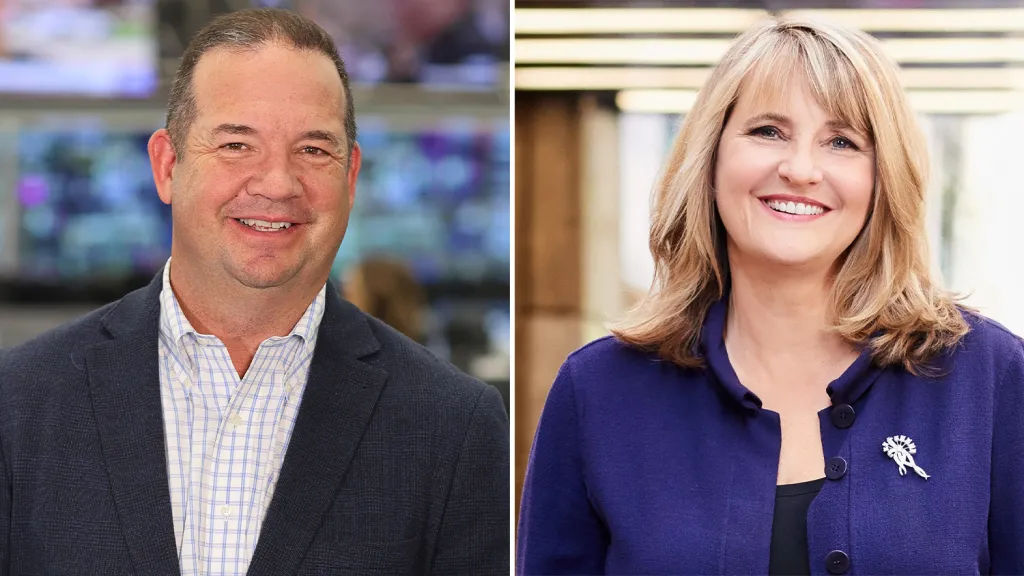
Chris Wayland will succeed Valari Staab as president of NBCUniversal Local, overseeing NBC and Telemundo local stations and other outlets.
Staab disclosed her plans to retire earlier this year, and will work with Wayland in the coming weeks, with the transition before the end of the year, according to Cesar Conde, chairman of NBCU News Group.
In addition to 11 NBC stations and 31 Telemundo stations, NBCU Local also includes four regional sports networks, three national multicast networks and 17 streaming channels, along with LXTV Productions and Skycastle.
Wayland joined NBCU in 2019, and has led NBC10 Boston, Telemundo Boston and NBC Sports Boston. Conde wrote in a memo to staffers that Wayland “has been instrumental in the growth of NBC10 and was a key leader in the development and launch of the NBCUniversal Boston Media Center.”
“Chris understands the power and importance of local media, and I know he will be an outstanding leader for NBCUniversal Local,” Conde wrote.
Staab has been with NBCU for more than 15 years and has spent 46 years in local TV and journalism.
“Under her leadership, what began as 10 NBC-owned stations grew into NBCUniversal Local’s nationwide, multiplatform portfolio of 50 media properties,” Conde wrote.
“Her impact can be seen not only in the organization she helped build, but in the generations of broadcasters and leaders she has supported and developed along the way,” he wrote.
In a statement, Staab said, “What gives me the greatest confidence is knowing that Chris leads with both vision and heart. He values our people, our culture, and the relationships that have been foundational to our success.”
Wayland previously was an executive at Tribune Media, Sinbeam Television and WHDH-TV.
>
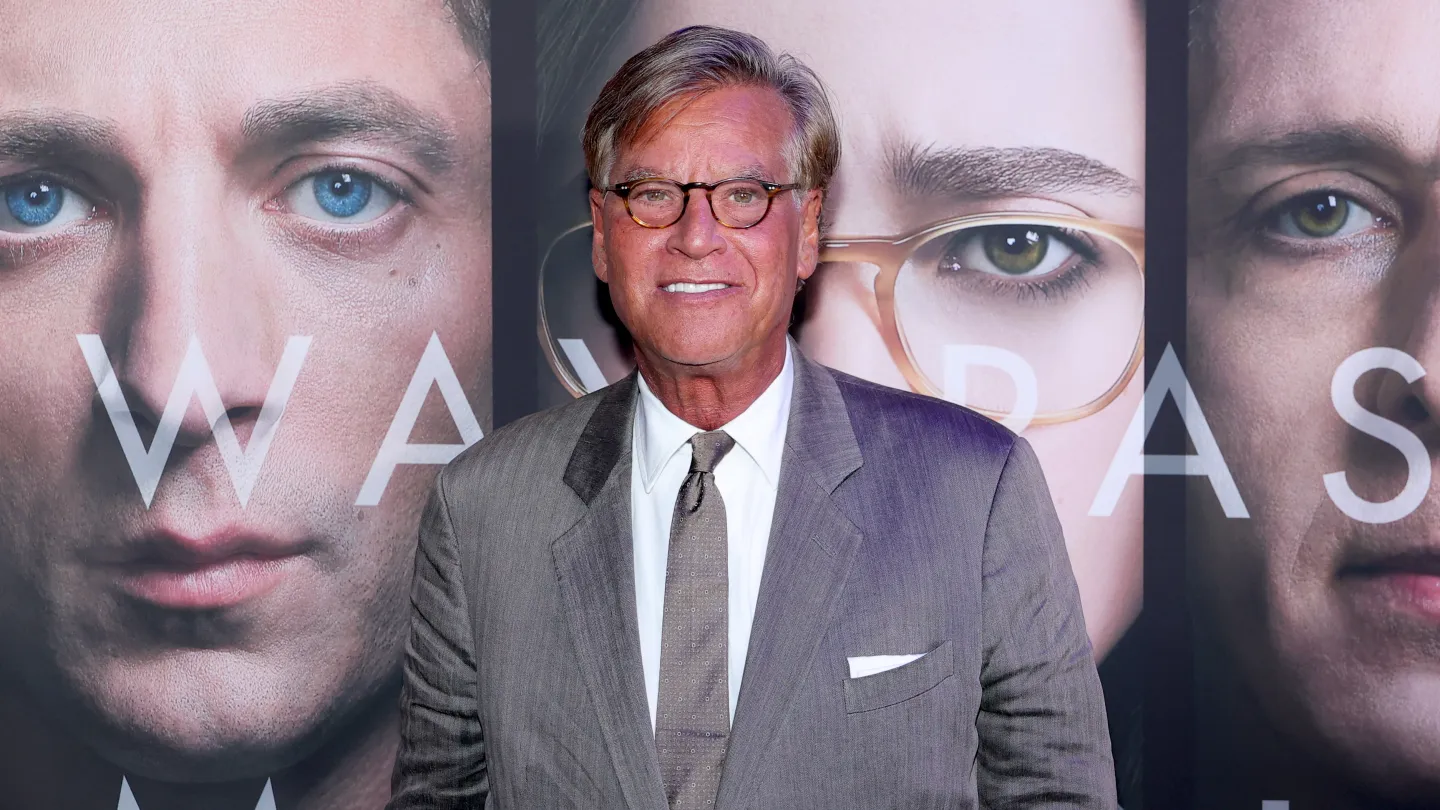
Aaron Sorkin knows the way he wrote Mark Zuckerberg in The Social Network may not have always landed exactly as he intended.
“We were surprised after The Social Network came out that there were two reactions to Mark, split along generational lines,” Sorkin told The Hollywood Reporter Sunday night at the New York premiere of his new film The Social Reckoning. “If you were a little bit older, you saw it as a cautionary tale, which is what it was intended to be. If you were a little bit younger, surprisingly, you saw it as an inspirational story. ‘Oh wow, I can drop out of school and have an idea and be a billionaire.’”
“There’s a thing when somebody becomes a billionaire that everybody gets enamored with them, and you’ve got to be like, ‘All right, well, how did you make that money?’” said comedian and actor Bill Burr, who portrays Zuckerberg’s legal counsel in the upcoming film. “I look at [Zuckerberg] as that’s what corporations do. They poison our food supply. They’ve made synthetic heroin. You know those Waymo cars? They’ve killed like 90 people, and they just get a fine. How many people can you kill in a car? They operate with impunity. So as much as this is about social media, it’s about this nerd robber baron era that we’re living in.”
In The Social Reckoning, a film Sorkin has described not as a sequel but “as a new movie I wrote pretending I had never written The Social Network,” who is at the story’s center is noticeably different. This time, the dramatization follows the 2021 Facebook leak, led by former Facebook employee and whistleblower Frances Haugen (played by Mikey Madison) and reported by former Wall Street Journal and current Reuters reporter Jeff Horwitz (Jeremy Allen White). For the writer, producer and director, the decision to not do a continuation wasn’t “because I was worried about backlash, and I really didn’t think of it as re-centering or changing anything.”
With The Social Reckoning, Haugen and Horwitz become the lens through which this Facebook story is told, while Zuckerberg, portrayed by frequent Sorkin collaborator Jeremy Strong, is a supporting character — the result of what the new film demanded, the filmmaker explained. “It’s not just that he’s older now or that he’s made $120 billion; the company’s worth a trillion dollars and has three billion users. It’s no longer a social media company. It’s no longer about keeping in touch with your friends from school. Now they’ve added a newsfeed, and that newsfeed is run by an algorithm. So you’re getting different news than I’m getting, than he’s getting, than they’re getting. We’re all living in our own world,” Sorkin said.
“It gets really hard when we’re looking at our phones, when we’re looking at X and Facebook and Instagram. It’s confusing. I don’t blame people. I blame these companies. It is hard to differentiate. It’s tough, but they know exactly what they’re doing,” emphasized White. “That was the realization I had. I think I gave these companies the benefit of the doubt before I approached this work and started to do the film. I was like, ‘Well, maybe it’s just the genie’s out of the bottle, the monster’s out of the cage. It’s wreaking havoc, and they’ve lost control.’ The truth is, of course they understand exactly what’s going on. It is purposeful. There is intent. They want all of our attention. They want all of our eyes.”
For Burr, corporations like Meta that have publicly attributed certain policy choices to free speech protections have come to exemplify how “free speech is a sliding scale and certain people have more free speech than other people.” It’s a narrative around Facebook that has grown and shifted in the decade and a half between The Social Network and The Social Reckoning.
Bill Burr, Wunmi Mosaku, Jeremy Allen White, Mikey Madison, Jeremy Strong, Betty Gilpin and Aaron Sorkin
Sean Zanni/Getty Images for Sony Pictures Entertainment
But despite what the leaks revealed about Facebook’s algorithms, what Zuckerberg and the company’s leadership knew about their impacts and even the fact that “Meta’s lawyers, when they found out about this movie, sent Sony a strongly worded letter,” according to Sorkin, both the filmmaker and Sony boss Tom Rothman don’t see the tech mogul necessarily as a bad guy or villain.
“I wouldn’t, and I don’t think Aaron would use that characterization. I think what has happened in the many years since that first film — that was the dawn of social media — is that anyone would have or could have foreseen that there would be as many ills as good. So now the world is wrestling with the ills of social media, and it’s storytellers’ jobs to confront the problems in our world,” Rothman told THR ahead of the premiere. “I’m a free speech absolutist too, but I know you can’t yell ‘fire!’ in a crowded theater. I know that there is a difference between free speech and falsehood.”
“He’s making bad decisions that are hurting us,” added Sorkin. “But in dramatist terms, he’s not a villain. He’s an antihero. A villain has bad intentions. They want the money, they want revenge, that kind of thing. An antihero, the intentions are good: ‘I want to connect everybody in the world.’ But the way an antihero goes about doing it, the decisions they ultimately make are bad.”
How Sorkin wanted to portray Zuckerberg is present in Strong’s performance and aligns with the actor’s general approach to playing characters audiences have seen as both antiheroes and villains. “Aaron is always examining the fault lines in our society, and I’ve been interrogating those things, but he’s a writer like Mozart is a composer. He’s that good,” the actor told THR on the carpet. “All I can do is try to be as accurate and truthful as I can and take responsibility for that in what I’m rendering, in the person that I’m rendering, and certainly not set out to vilify him. I’m not interested in making judgments.”
In terms of how he worked to inhabit Zuckerberg — a role The Social Network star Jesse Eisenberg turned down after no longer wanting to be associated with the character and person — Strong noted that Sorkin’s writing played a pivotal role in how he was able to “take a piece of material and internalize it.” But he also had “to do an immense amount of work preparing to walk onto that set and to be inside a life, to be totally dialed into it, so that it’s a second skin and that I believe in what I’m doing.”
“And it’s absurd. What we do is absurd. I’m not Mark Zuckerberg, right? But my job for the time I make this movie is to believe that I am with authority. And that requires a great deal of concentration — which I think people project all kinds of nonsense onto — and a lot of trust between Aaron and I,” he continued. “And Aaron extends me an immense amount of trust, so I think my job is to meet that trust with as much courage as I can muster and be willing to go way the fuck out on a limb and maybe go up in flames. That’s the risk I have to take. When he asked me to do this one, Sarah Polley wrote a book recently called Run Towards the Danger, and that’s what I have to do: run towards the danger.”
With the potential of lawsuits from Facebook and Zuckerberg, the whole film may be doing that alongside Strong. According to Sorkin, “We’ve all been concerned, but the lawyers are there to act as a shield.”
“What Hollywood has done occasionally, not in the beginning, but certainly since the ’50s and the ’60s, is played its part in speaking truth to power,” added Rothman. “That’s what this film does, and that’s why we’re proud of it.”
The Social Reckoning hits theaters on Friday.
>

Love might be in the air with a forthcoming romantic-comedy indie film.
Production has begun on filmmaker Marie Jamora’s We Could Be in Love, The Hollywood Reporter has learned. Jasmine Curtis-Smith (The Time That Remains), yao (Sinners), Jamie Chung (Copperhead), Lou Diamond Phillips (Gangland), Tamlyn Tomita (Karate Kid Part II) and Airline Inthyrath (aka RuPaul’s Drag Race alum Jujubee) round out the cast for the feature that starts shooting next month on location in New York and Manila, Philippines.
We Could Be in Love centers on Jasmine Aquino (Curtis-Smith), a working-class Filipina American woman who falls for Ambrose Lee (yao), the affluent heir to a Chinese-Filipino dynasty. Their burgeoning relationship leads to challenges involving class divides and deep-seated prejudices.
Jamora, a Filipina director who grew up in Manila, helms the film from a script by Terence Chen (Meet Cute in Manhattan). Producers include Geri Leigh Tiu and Sonca Nguyen for Tiger & Dog Production, alongside Annie Huang. Chen, Thea Jacinto Ugarte and Jon-Adrian “JJ” Velazquez are executive producing. Hannah Kittell is the costume designer, while Dino-Ray Ramos serves as cultural consultant.
“I grew up in the Philippines watching all the Hollywood rom-coms with my mom,” says director Jamora, who has helmed episodes of Queen Sugar and Matlock and is attached to the thriller feature Imprint. “Now that I have the opportunity to direct an Asian-led romantic comedy outside the traditional American studio system, it’s so exciting to lean into the cultural nuance, authenticity and heart that global audiences are craving. Jasmine and yao bring a special combination of warmth, depth and chemistry to their characters. I cannot wait to share our film with the world.”
Adds writer and executive producer Chen, “At its core, We Could Be In Love is a classic, swoon-worthy romance that doesn’t shy away from the real cultural and economic friction points within our communities. We are thrilled to be filming in New York and Manila and capturing the vibrant, modern backdrop of these cities.”
>
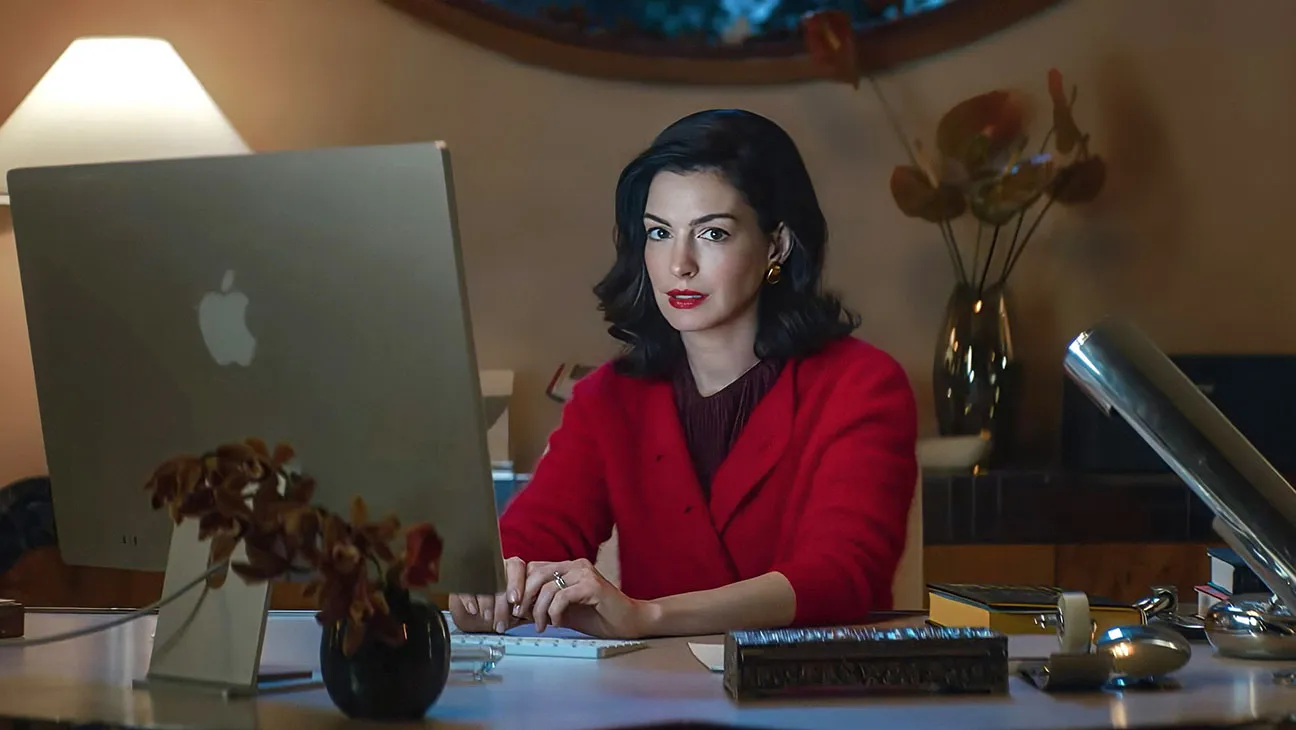
[Warning: This story contains spoilers for the Verity film].
The ending of Verity has fans divided: Did Verity Crawford tell the truth in her manuscript, or was the letter Lowen found at the end of the movie telling the true story?
Like fans of the movie, and Colleen Hoover’s book on which the movie is based, star Anne Hathaway (who plays the titular character in the film), has her own thoughts.
“Letter,” Hathaway tells The Hollywood Reporter when asked if she’s team manuscript or team letter. “The reason that I’m letter, and I know that a lot of people who are team manuscript, they’re like, ‘No, she just wrote the letter to cover her you know what.‘ I’m like, she’s a terrified woman being very, very careful. And this is my thing about the manuscript: There’s a passage where Lowen is describing it, and she’s like, ‘I’ve got to be honest, this book isn’t very good, and it’s really just a lot about sex.’ And she’s just like, ‘I was pretty bored during the next 100 pages,’ but she said how much she was surprised that she liked Verity’s writing, and I think that if Verity really was this no good, villainous, horrible evil murderess that she’s made out to be, don’t you think the book that she would have written about herself would have been excellent?”
She adds: “I don’t know. I don’t trust Lowen. I don’t think Lowen’s well, and I think she sees herself as a victim in all situations, and I definitely don’t trust Jeremy. He goes from zero to crazy angry, real fast.”
Verity follows Lowen Ashleigh (played by Dakota Johnson), a struggling writer hired to finish the bestselling book series of renowned author Verity Crawford after an accident leaves her incapacitated. While working at the Crawford home, Lowen discovers a secret manuscript containing Verity’s apparent autobiographical notes, raising disturbing questions about her past and sending her spiraling over what to believe. Josh Hartnett stars as Verity’s husband Jeremy.
In a separate interview with THR, Hoover admits her own read of what‘s real has shifted. “When I wrote the book and ended it how I ended it, I was in Lowen’s perspective. It was first-person from Lowen, so I was just as confused as she was, and I’ve carried that with me until recently. I had to read it again for the first time after watching the film, and I think the film influenced me. I’ve actually gained a whole new perspective, and I still don’t know.”
Director Michael Showalter isn’t sure where he stands, either. “All the actors have their own version of what they believe is true, and I wanted to honor each of their versions,” he says. “So I’m agnostic.”
Verity hit theaters this Friday and nabbed the top spot on the domestic box office chart, earning $32.6 million from 3,510 North American locations. Its budget was $40 million.
>


Search For Canadian TV Actor Stewart McLean Now Homicide Investigation


These ’90s fashion trends are making a comeback in 2017
According to Dior Couture, this taboo fashion accessory is back
Model Jocelyn Chew’s Instagram is the best vacation you’ve ever had
Emily Ratajkowski channels back-to-school style
9 Celebrities who have spoken out about being photoshopped


Rurouni Kenshin: Hokkaido Arc Manga Takes 1-Issue Break – News


HIDIVE to Stream English Dubs for The World Is Dancing, The Forsaken Saintess and Her Foodie Roadtrip in Another World, The Dangers in My Heart: The Movie Anime – News