
Entertainment
What Can’t Be Mentioned Review: A Beloved Incest Drama Gets a Sequel


“In the spring of 2011, at the age of 18, my brother Matthew got his first real girlfriend,” explains Jackie (Tallie Medel) in voiceover at the beginning of “The Unspeakable Act,” written, edited, and directed by Dan Sallitt in 2012. “I had somehow thought that he and I had an unspoken agreement that we belonged to each other,” she continues, “which was really pretty stupid of me.”
Those words kick off Jackie’s final year of high school as she confronts her longstanding unrequited desire for her brother. Matthew (Sky Hirschkron), who’s aware of and patient with his sister’s feelings for him, and understandably wants to put some distance between them to explore other relationships, including some he might actually consummate. His decision to set boundaries sends Jackie into a spiral. She has trouble keeping food down, she can’t sleep, and she constantly badgers her brother for information about his new girlfriend, that is until he dumps her. Jackie’s yearning for Matthew still burns bright after he departs for college, but his absence forces her to build a life outside of her attraction to him, even if she thinks about him while sleeping with guys in her class.


Sallitt’s greatest coup in “The Unspeakable Act” is his refusal to treat his characters as pawns in service of a “shocking” premise. Jackie and Matthew are mostly typical teenagers with full social lives and creative hobbies. They have opinions on literature, music, and sex. They’re close with their mother but distant from their older siblings. Medel and Hirschkron portray their characters as intelligent, self-aware people guaranteed to chart respectively fruitful paths, even if they occasionally get in their own way. They are profoundly regular, except for that one thing.
But as much as Sallitt doesn’t sensationalize Jackie’s amour fou, a provocation unto itself, he also approaches her unconventional infatuation, and Matthew’s responsive equanimity, with appropriate gravity. Her feelings for her brother are real, which means that she has to actually deal with them if she wants to be a part of society. Her emotional tumult stems from her realization that she can’t continue into adulthood still pining for Matthew, which inevitably means that she won’t remain as emotionally close to him. With “The Unspeakable Act,” Sallitt honed in on a crucial coming-of-age lesson: you can’t always get what you want.
Fourteen years later, Sallitt returns with “What Can’t Be Mentioned,” a sequel to “The Unspeakable Act” that picks up roughly a decade later when Jackie, now in her late-twenties, learns that Matthew is about to have a child with his partner Lily (Kit Zauhar, director of “Actual People” and “This Closeness”). While Jackie exhibits all the outward trappings of stable adulthood, mainly a good job as a professional therapist and a shared apartment with her boyfriend Anthony (Kyle McCormack), Sallitt quickly reveals cracks in the façade. She experiences newfound sexual incompatibility with Anthony that eventually pushes them both into sex therapy, complete with awkward take-home exercises that Jackie struggles to take seriously. She seems to excels at her job, yet she also admits to feelings of countertransference with a forty-something client who privately worries that her two children might be exploring their sexuality with each other.
Sallitt depicts Jackie’s personal and professional struggles as specific hiccups that might manifest for anybody. But he also casts them in the shadow of her youthful attraction to Matthew, which may still be lingering in her subconscious like a party guest that has overstayed their welcome. When she receives news about Matthew’s impending child, she treks upstate for a week ostensibly to reconnect with him and her partner, whom she describes to Anthony as “okay, but totally not good enough for him.” Instead of ingratiating herself to the couple, however, she spends the week getting tanked on red wine and probing Lily with deliberately provocative questions about her bisexuality and how pregnancy has impacted her sex life with her brother.
Lily responds with monk-like composure in response to Jackie’s rude queries. (“My parents are hippies,” she says calmly. “Talking about sex is like talking about the laundry.”) Sallitt crucially abstains from underlining the irony that Jackie can’t process that Matthew and Lily’s shared disposition makes them compatible. Zauhar matches Hirschkron’s even-keeled temperament even when Lily tries to coax more information about Jackie from Matthew. Is she an alcoholic? “She just likes to cut loose some times. She’ll be fine when she’s back home,” Matthew calmly responds. Is she gay? After all, people hide it from those closest to them all the time. “Believe me, she’s not gay,” Matthew insists. A secret that can’t be uttered forms a small fracture between the happy couple that might balloon over the years.
“Mentioned” runs a little over an hour, making it the rare film where you wish the filmmaker expanded his work by even 10 or 15 minutes, maybe to further enrich some of its muted conflicts, or even just to give the viewer a little more time with the characters. Sallitt replicates the formal style of “Unspeakable” in “Mentioned” (static compositions, no camera movement), but changes the editing rhythm to sharper cuts that capture the more rigid routine of professional young adulthood. He also deepens the world of “Mentioned” by peppering in references to characters from “Unspeakable”: Jackie’s childhood therapist Linda (Caroline Luft) makes an appearance over Zoom to offer advice, and Matthew mentions speaking to their mother and eldest sibling Will. (Meanwhile, their second-oldest sibling Jeanne, whom Jackie predicts will one day leave and never look back in “Unspeakable,” is never mentioned.) Sallitt strives for an understated continuity that signals a fully lived-in world bursting with unspoken history.
“Unspeakable” and “Mentioned” are distinct enough entities that one could conceivably watch the latter without having seen the former and still feel fulfilled. However, “Mentioned” is obviously a richer text in the context of “Unspeakable,” if only to fully appreciate how Medel reinterprets Jackie between the two films. They convincingly develop their character’s previously restrained adolescent instability into matter-of-fact adult neuroticism without sacrificing any complexity. They bring a familiar but ultimately more mature charge to Jackie’s scenes with Matthew, who Hirschkron commits to portraying as almost defiantly unflappable. (He may have moved on from reading Mueller to “Stoner,” but he’s still basically the same person as he was in “Unspeakable.”) Medel lends Jackie a spiky, unpredictable quality even when they’re sitting in a chair and glaring at whomever will catch their eye. Most of the acclaimed, visible performances this year can’t muster that level of intrigue.
In a Filmmaker interview upon the release of “Unspeakable,” Sallitt perceptively comments that he doesn’t “see Jackie’s incestuous desire as a transitory thing or part of her passage to adulthood.” Instead he thinks “it’s just the way she is, and she will have to keep a lid on that desire in order to live comfortably, will have to cultivate other aspects of herself.” “Mentioned” effectively progresses from this specific vantage point, with Mendel at times depicting Jackie like she’s managing a chronic condition, and Hirschkron capturing a sibling’s unique sympathies for their sibling’s pain. The final couple scenes of “Mentioned” illustrate Sallitt’s updated perspective over the interim near-half decade, which feels discomforting but ultimately hard won. It turns out that if you try sometimes, you just might find that you get what you need.
Grade: B
“What Can’t Be Mentioned” premiered at the 2026 New York Film Festival. It is currently seeking U.S. distribution.
>

EXCLUSIVE: Indie publisher Spiegel & Grau has teamed with The Black List to bring its full catalog of frontlist and backlist fiction and nonfiction books to the platform’s material discovery database, enabling industry professionals to identify and explore published books for adaptation.
The partnership is The Black List’s first with an independent publisher.
Spiegel & Grau are best known for award-winning books such as Just Mercy by Bryan Stevenson and Piper Kerman’s Orange is the New Black and recent bestsellers Beartooth by Callan Wink, The Fire Agent by David Baerwald and Margaret Renkl’s The Comfort of Crows.
Film and television adaptations currently underway from the Spiegel & Grau catalogue include Culpability by Bruce Holsinger, under development; Everything/Nothing/Someone by Alice Carrière, under development with producer Lauri Firstenberg/IF Innovation Foundation; Go As A River by Shelley Read, under development with producers Paula Mazur and Mitchell Kaplan at Mazur Kaplan Company (The Guernsey Literary and Potato Peel Society, All The Bright Places), The Boys by Katie Hafner, under development with producers Ross Katz (In The Bedroom, Lost In Translation) and Jonathan Krauss; among others.
Popular, yet-to-be-adapted Spiegel & Grau catalogue on blcklst.com include Freyja by Margrét Ann Thors; Forest Euphoria by Patricia Ononiwu Kaishian; and Out of the Sky by Matti Friedman.
Using their free Black List industry accounts, professionals in the film, television, theater, and publishing industries can now search and browse titles from the Spiegel & Grau catalogue alongside the existing resources hosted on the platform. The integration expands access to published books (including fiction and nonfiction titles) as potential IP).
Spiegel & Grau books can be found via searching by title, author, genre and other associated book information available on blcklst.com. Metadata provided by Spiegel & Grau includes additional information such as a published book’s imprint, book cover art, book description, and more.
This initiative also makes it easier for Spiegel & Grau authors to list their published books in their Black List profile quickly and efficiently, according to S&G. When Spiegel & Grau authors add titles to their Black List profiles, key project fields will be pre-populated, reducing manual entry and ensuring accurate, consistent information across the platform.
Liza Wachter, Spiegel & Grau President and Director of Film and Television, said, “This partnership opens our catalog to the film and television industry in a new way. We’re proud to be the first independent publisher to partner with The Black List.”
“As a reader, I’ve been a fan of Spiegel & Grau for most of my adult life; it is a dream to be partnering with them on this initiative, The Black List’s second with a trade publisher, our first with an indie publisher. The Spiegel & Grau catalogue will be a great resource for TV/Film industry members searching IP for adaptation,” said Randy Winston, Creative Director of Fiction at The Black List.
>
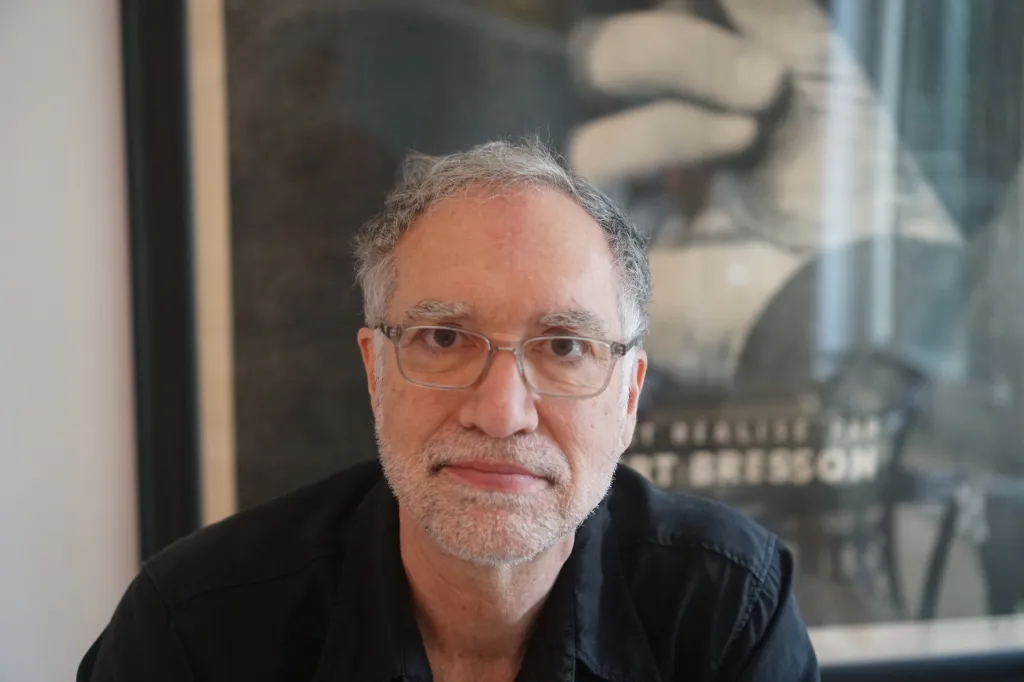
EXCLUSIVE: Jim Taylor, the Academy Award and Golden Globe-winning screenwriter known for his longtime creative partnership with filmmaker Alexander Payne on a series of lauded, darkly comedic character studies, has inked with Paradigm for representation.
Payne and Taylor first collaborated on the Laura Dern-led indie satire Citizen Ruth, following that up with the Tom Perrotta adaptation Election, a dark comedy starring Matthew Broderick and Reese Witherspoon that brought them an Oscar nomination for Best Adapted Screenplay and scored Independent Spirit Awards wins for Picture, Director and Screenplay, bringing Witherspoon her first Golden Globe nomination.
Taylor and Payne won the Golden Globe for Best Screenplay for About Schmidt, an existential dramedy whose stars Nicholson and Kathy Bates earned Oscar nominations. Two years later, the duo won the Academy Award for Best Adapted Screenplay for Sideways, the celebrated wine country dramedy starring Paul Giamatti, Thomas Haden Church, Virginia Madsen and Sandra Oh, based on the 2004 novel by Rex Pickett. The film earned Academy Award nominations for Giamatti, Handen Church and Madsen for acting, as well as Payne for directing. In addition, Taylor and Payne won a BAFTA Award for Best Adapted Screenplay.
Outside of his collaboration with Payne, Taylor is known for his creative partnership with his wife, Oscar-nominated filmmaker Tamara Jenkins (The Savages). Together, they adapted the Nick Hornby novel Juliet, Naked into the 2018 film starring Rose Byrne and Ethan Hawke.
Taylor was a producer on Payne’s 2011 film The Descendants, starring George Clooney, which was nominated for five Oscars and won two Golden Globes. Together, they’re currently adapting an Election sequel, based on Perrotta’s 2022 novel Tracy Flick Can’t Win, for Paramount, with Hello Sunshine and Bona Fide producing.
Taylor continues to be represented by Untitled Entertainment and attorney John Diemer at Goodman, Genow, Schenkman.
>
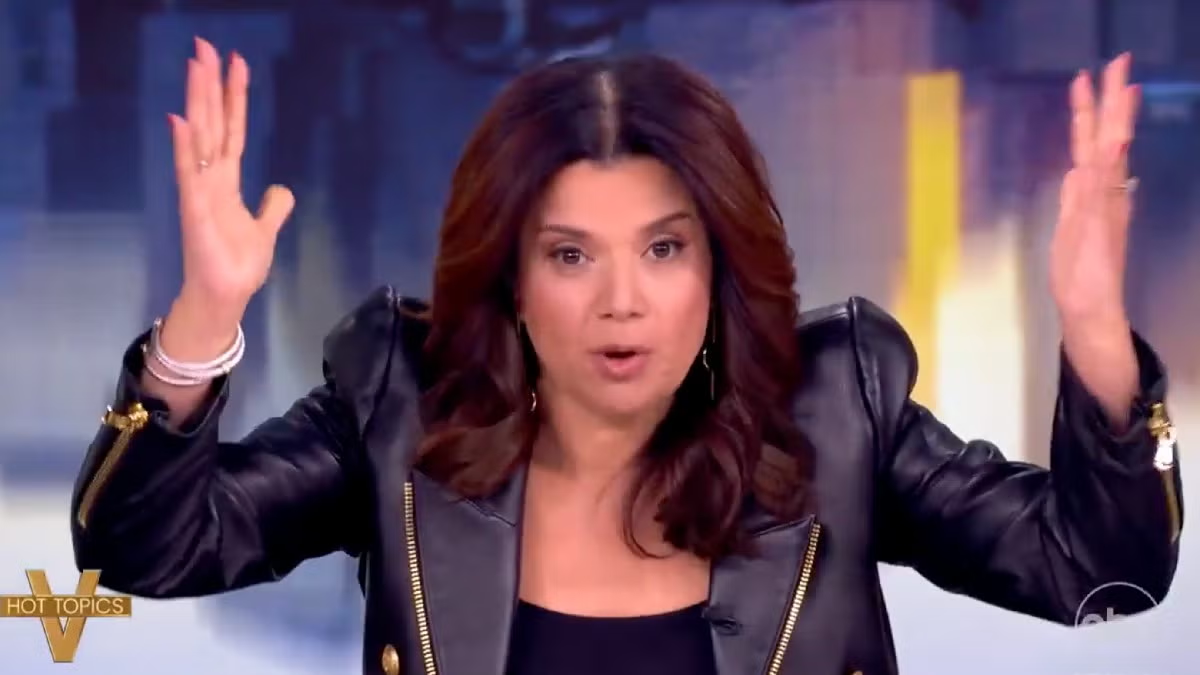
Senator Thom Tillis expresses regret for voting for several Trump appointees in his new book, but “The View” host Ana Navarro wasn’t buying it on Monday morning. So, she called the North Carolina Republican out directly to his face.
Tillis stopped by the ABC talk show to promote said book, “How to Lose Friends and Antagonize Presidents: The Trouble with Sycophants, Courage Outsourcing, and Partisan Group Think.” During the interview, the hosts pressed him on multiple votes he’s made, including voting to confirm former Fox News host Pete Hegseth as Defense Secretary, which Tillis has openly expressed regret for.
“I like you, and I think you say a lot of of truth, but you kind of break my heart,” Navarro said bluntly. “And you do it — I feel you were very inconsistent in this book because, on the one hand, you go through all of the reasons why Hegseth was unqualified. You go through all of the reasons why [Kristi] Noem was unqualified. You kept calling her like an unqualified dog killer, and yet you voted for them.”

Tillis conceded as much, and added that both sentiments remain true. But that only upset Navarro further.
“Then you regretted the Hegseth vote, but you just voted to confirm Todd Blanche who, you in the book, say you objected to the bogus investigation he reopened on James Comey and his involvement in a reparations fund for the January 6th people,” she continued. “So you know you’re voting for people who are rubber stamped and unqualified, but you keep doing it, Thom!”
Tillis doubled down in his support of Blanche in response, defending it in part by saying “in politics, you’ve got to play the hand that’s dealt you.” Tillis insisted that, based on Blanche’s experience, the man is the best fit “to try and give the president honest upward feedback.” Navarro didn’t buy that either.
“Oh come on! He doesn’t even want to look at — there’s nothing to look at when a Russian oligarch just paid for Donald Trump Jr.’s wedding,” she shot back. “And he’s saying there’s nothing here to see. So he’s not giving Donald Trump any pushback.”
“The View” airs weekdays at 11 a.m. ET on ABC.

>

Spiegel & Grau’s Catalogue Now Available On The Black List Platform
Bruins’ Fraser Minten, Mason Lohrei and the promise of upside

Screenwriter Jim Taylor Signs With Paradigm (EXCLUSIVE)
-

 movies5 months ago
Search For Canadian TV Actor Stewart McLean Now Homicide Investigation
-

 Fashion9 years ago
These ’90s fashion trends are making a comeback in 2017
-
Fashion9 years ago
According to Dior Couture, this taboo fashion accessory is back
-
Fashion9 years ago
Model Jocelyn Chew’s Instagram is the best vacation you’ve ever had
-
Fashion9 years ago
Emily Ratajkowski channels back-to-school style
-
Fashion9 years ago
9 Celebrities who have spoken out about being photoshopped
-

 Anime4 months ago
Rurouni Kenshin: Hokkaido Arc Manga Takes 1-Issue Break – News
-

 Anime3 months ago
HIDIVE to Stream English Dubs for The World Is Dancing, The Forsaken Saintess and Her Foodie Roadtrip in Another World, The Dangers in My Heart: The Movie Anime – News