
Tech
Cal AI’s 19-year-old founder just raised $10M for his new AI startup


Zach Yadegari, the teen co-founder of calorie tracking app Cal AI, has launched Persona, a new AI agent startup, and already raised $10 million. Vine Ventures led the round, with Z Fellows founder Cory Levy and Collective Global participating.
In March, MyFitnessPal acquired Cal AI for an undisclosed sum after it zoomed ahead of the older calorie app in the app store rankings. The deal was big enough to convince Yadegari and his co-founders to sell the company after it had pulled in over $30 million in annual revenue in under two years, MyFitnessPal told TechCrunch at the time.
Yadegari and his co-founders originally went to work for their new owner, continuing development on Cal AI, but he left the bigger company in June, he tells TechCrunch. He then went right to work on his next idea. (He is working with another co-founder who has yet to be announced.)
That idea is Persona, a personal AI assistant similar to Instinct or Meta’s Muse but with a hardware component that will soon be available: a $179 wearable band.

That makes Persona somewhat more like Bee, the wearable AI device that Amazon acquired in 2025, but Persona’s device differs in several ways, Yadegari tells TechCrunch. For one, it won’t be ambient AI, meaning it won’t always be listening and recording. The band will have a button that activates the assistant, or it can be set up to activate with the flick of one’s wrist.
Yadegari also says that Persona is designed with user privacy in mind. Persona doesn’t run its AI model or store user data on the device. Instead, the model runs in Persona’s cloud, and user data is sent there. The assistant protects privacy by encrypting data in transit and at rest. Users can also delete their data, the company says.
In this way, it is promising that user conversations stay private and cannot be sold to advertisers or data brokers.
The team is also baking in safeguards to protect the assistant against phishing and prompt-injection attempts, Yadegari says. These are two areas that can plague agents, say AI labs like OpenAI.
Plus, he promises that Persona’s agent can’t see a user’s credit-card details and that purchases will require the user’s approval, with payment handled through external providers such as Stripe Link. Link is Stripe’s secure wallet designed for use by agents.
Although user data won’t be sold to advertisers, the startup’s current business model does rely on ads. Yadegari says the company will show advertised wares during shopping research. But he says that the agent will present unbiased recommendations because the agent won’t know which of the items are advertised. For example, if someone is researching office chairs, he says, “the agent knows their preferences” and will show them chairs that match those preferences, some of them sponsored results.
The bands are expected to be available in December, and an app is in the works. In the meantime, Persona has launched as a free beta product in which users work with the assistant via iMessage text messages. It has attracted “a few thousand beta users,” Yadegari said. The band has also already generated “five figures in preorder revenue.”
Like other consumer AI assistants, he says, Persona can order food or rides, take notes, book travel, answer questions and emails, among other tasks.
“All of the utility apps that you use on your phone day-to-day, whether those are apps for shopping, whether it’s Uber, DoorDash, your email — these are all collapsing and will collapse into a single super app powered by an AI assistant,” Yadegari said.
Eventually, he hopes to make Persona even more proactive. “It can offer help and solve problems before you even know you have a problem, and overall be more seamless with your life, so that you don’t need to stare at a rectangle in your hand all day.”
Come see Zach Yadegari speak at TechCrunch Disrupt on “How to create viral growth and capitalize on it.” Disrupt takes place October 13-15 at the Moscone Center in San Francisco. Before Cal AI, Yadegari built his first business in the ninth grade and sold it for $100,000 when he was 16.
When you purchase through links in our articles, we may earn a small commission. This doesn’t affect our editorial independence.
>
Singapore’s new AI guidelines require banks to oversee third-party AI risks, with phased compliance deadlines beginning in October 2027.
The post Singapore’s New AI Guidelines Hold Banks Accountable for Third-Party Tools appeared first on TechRepublic.
>
Healthleap raises $38 million to expand AI that analyzes hospital records for overlooked health risks, as questions remain about clinical accuracy and patient care.
The post Healthleap Raises $38M for AI That Spots Hidden Health Risks in Hospitals appeared first on TechRepublic.
>
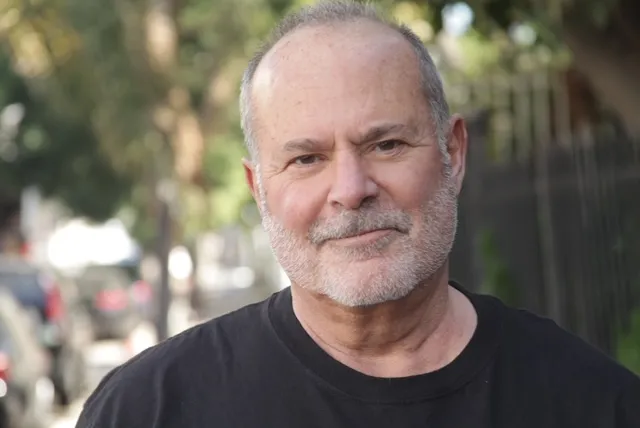
Richard Bronson, an entrepreneur who recently launched a startup called Commissary Club, has an unusual background for a founder: in a previous life, he spent time in prison.
In the 1980s, Bronson worked for the notorious Stratton Oakmont — the corruption-riddled brokerage firm that was run by Jordan Belfort, the so-called “Wolf of Wall Street” whose story became a 2013 film. The firm collapsed in the mid-1990s under the weight of misconduct accusations.
Bronson was a partner at Stratton, but left after a year to start his own firm in South Florida. He was quite successful in that venture, until he wasn’t.
“I built a $100 million business taking these small cap companies public,” Bronson told TechCrunch. “Some of the success, however, came through breaking the law — securities laws — and ultimately, as I knew inevitably would happen, I had to pay the price. I lost everything, and most significantly, my freedom. And I was sent to federal prison for a couple of years.”
Bronson has been out of prison for a long time now, but he has never forgotten the struggles he had when he initially emerged from prison.
“Nobody would hire me, despite all of my education and work experience and everything else. I was like completely radioactive,” he said.
Bronson’s experience after prison helped inform his current startup, an employment-focused social media platform called Commissary Club, which takes its name from the store inside a prison where inmates buy snacks and toiletries. The site is specifically marketed to ex-cons, and uses AI to help them navigate the often confusing process of finding employment and housing after they reenter the world.
“I could not help but notice how little assistance was available to people coming out of prison,” said Bronson. “If it was this bad for me, what about the guys I was in prison with who had very little education and very little job experience? What were their chances?”
Commissary Club also has a social component, which Bronson said he added because he knows how isolating the post-prison experience can be. “It’s almost like Facebook,” he said, “where people can not only find job, and get the help with the jobs and the housing and access to benefits, but they find the other missing ingredient that’s existentially important to them that isn’t satisfied elsewhere. They find community.” Judging by the site, Commissary Club also appears primed to become a referral network, and it offers a way for users to find dates.
For now, Bronson’s startup is a team of two — just him and his co-founder, Roman Kissin, who Bronson called the technical mind (or “the brains”) behind the project. Kissin previously worked for eBay and IBM and, between 2022 and 2025, served as the CTO of LexisNexis, according to his LinkedIn profile.
The site is free at first, then switches to paid. Users get “the first 10 applications for free, and then we bundle the next at $149 for 10 applications, or $14.99 each,” Bronson told TechCrunch. Some may balk at that for-profit model, and for people just out of prison, it may be a tough sell.
Yet Bronson sees it as a win-win — a business that can help a community that few others are trying to help.
“People immediately assume, ‘Oh, is this a nonprofit?’ And the answer is no,” said Bronson. There’s a strong mission component, certainly,” he continued,” and I have devoted my life, when I came out of prison, to helping my brothers and sisters with records. Part of it is because I just felt so remorseful for the shit that I had done. I still wake up every day regretting choices I made.
“But we’re going after a huge, huge market that nobody — I mean nobody — does anything about,” said Bronson. “People talk about AI taking away employment and people losing jobs. I look at it differently. We’re building AI that creates employment for people that society left behind.”
Bronson’s Commissary Club was selected for this year’s TechCrunch Startup Battlefield 200, as part of TechCrunch’s storied Battlefield Competition; come join us next week in San Francisco to see the competition live.
When you purchase through links in our articles, we may earn a small commission. This doesn’t affect our editorial independence.
>
Singapore’s New AI Guidelines Hold Banks Accountable for Third-Party Tools

Brian Robbins’ Big Shot Lands Film Rights for ‘CookieRun’ Game

Tonda Eckert: Southampton coach on Spygate experience
-

 movies5 months ago
Search For Canadian TV Actor Stewart McLean Now Homicide Investigation
-

 Fashion9 years ago
These ’90s fashion trends are making a comeback in 2017
-
Fashion9 years ago
According to Dior Couture, this taboo fashion accessory is back
-
Fashion9 years ago
Model Jocelyn Chew’s Instagram is the best vacation you’ve ever had
-
Fashion9 years ago
Emily Ratajkowski channels back-to-school style
-
Fashion9 years ago
9 Celebrities who have spoken out about being photoshopped
-

 Anime4 months ago
Rurouni Kenshin: Hokkaido Arc Manga Takes 1-Issue Break – News
-

 Anime3 months ago
HIDIVE to Stream English Dubs for The World Is Dancing, The Forsaken Saintess and Her Foodie Roadtrip in Another World, The Dangers in My Heart: The Movie Anime – News