
A still from Royal Mail’s Christmas ad



Qatar’s Doha Film Festival (DFF) has unveiled the International Feature Film Competition lineup for its second edition which is due to take place this November.
The fifteen titles include Hosam Abu Dan’s Gaza-shot drama Thirteen in Gaza, a coming-of-age drama about a motherless thirteen-year-old living with her father in a Gaza displacement camp without privacy or protection. It won the NETPAC Award in Toronto in September.
It is among four Palestinian films in competition alongside Muayad Alayan’s Venice–selected Conversation with the Sea about a Palestinian man caught in the crosshairs of Israeli bureaucracy over a social security debt for his son who drowned in the Red Sea some two decades previously.
They also include Rabab Khamis’ documentary Sama, which will world premiere in the festival. It revolves around a ten-year-old girl who collects plastic and cardboard in Deir al-Balah in Gaza to sell as fuel and help sustain her family.
Mohanad Yaqubi’s Revolutionaries Never Die, taking its cue from 113 reels of films preserved by Lebanese filmmaker Jocelyne Saab, will also compete. It won the Special Jury Prize in the Filmmakers of the Present competition at Locarno over the summer.
They are among 11 films in the main competition supported by the Doha Film Institute (DFI), which oversees the festival.
The unveiling of the selection is a sign that the DFI is confident the event will go ahead in spite of regional instability caused by the U.S.-Iran-Israel war.
Qatar is a key mediator in indirect talks between the U.S. and Iran, at the same time as negotiating directly with the latter for a regional non-aggression security framework.
Further titles from the Arab world include Concrete Land by Asmahan Bkerat, following an Afro-Palestinian Bedouin family on the outskirts of Amman as luxury villas close in around them. Filmed over eight years, the filmmaker’s debut feature premiered in the Semaine de la Critique at Locarno.
Moroccan director Tala Hadid will present Bardi, about the centuries-old equestrian tradition of Tbourida, which premiered in the Currents section at the New York Film Festival.
As previously announced Yemeni Scottish director Sara Ishaq’s The Station, set against the backdrop of a women-only petrol station in war-torn Yemen, both opens the festival and competes.
Out of sub-Saharan Africa, Cameroonian director Auguste Bernard Kouemo competes with House of the Wind, which debuted in the Venice Film Festival’s Orizzonti sidebar winning its Special Jury Prize and the Lion of the Future for a Debut Film.
Also out of the region, is My Semba by Hugo Salvaterra. It follows three orphaned siblings in Luanda who fight for dignity through faith, fury and verse. The film won the Feature Film Competition Award at the International Film Festival Innsbruck.
Asia is represented by Thai director Sompot Chidgasornpongse’s 9 Temples to Heaven, about a family which visits nine temples in a single day in the hope of keeping their grandmother alive. The film debuted in Cannes Directors’ Fortnight. It went on to win Best Director and Best Actor in the Asian New Talent Award at the Shanghai International Film Festival and is Thailand’s submission for the 99th Academy Awards.
Also out of Asia are Zou Jing Cannes Critics’ Week Fipresci-winner A Girl Unknown, about a girl abandoned at birth who passes between three families, and Rafael Manuel’s Filipiñana about teenage tee-girl at a Manila country club who begins to uncover the violence beneath its manicured lawns.
The latter film won the World Cinema Dramatic Special Jury Award for Creative Vision at Sundance and is Philippines submission for the 99th Academy Awards.
Further contenders include Chilean director Manuela Martelli’s The Meltdown, which premiered in Cannes Un Certain Regard and is Chile’s 99th Academy Awards entry, and Alessandra Sanguinetti’s The Illusion of an Everlasting Summer, following two cousins on the Argentine Pampas through the photographer’s lens over 25 years. It won the Golden Leopard in the Filmmakers of the Present competition at Locarno.
Rounding out the selection is Tin Castle by Alexander Murphy follows an Irish traveller family, two parents and ten children, threatened with eviction as they fight to preserve their way of life in an old caravan.
“This year’s features competition reflects great ambition. The 15 films from across the world are united by the courage, imagination and urgency of their filmmakers. Each has travelled a remarkable journey, and it is deeply meaningful that Doha is a part of that journey, ensuring that these powerful works are seen, shared and remembered,” said Fatma Hassan Alremaihi, CEO of Doha Film Institute and Director of DFF.
The competition will feature a jury of five industry experts who select winners in Best Narrative (with prize money of US$75,000), Best Documentary (US$50,000), Best Artistic Achievement for feature narrative or documentary (US$45,000), and Best Performance (US$15,000) categories. A certificate of Special Mention will also be presented to a feature narrative or documentary.
The festival expands on the DFI’s long-running family-focused festival of Ajyal which ran for more than a decade during the same period.
Alongside the DFI, key partners on Doha Film Festival include Katara, Media City Qatar, Film Committee and Visit Qatar.
The festival will unfold from November 19 to 27.
>
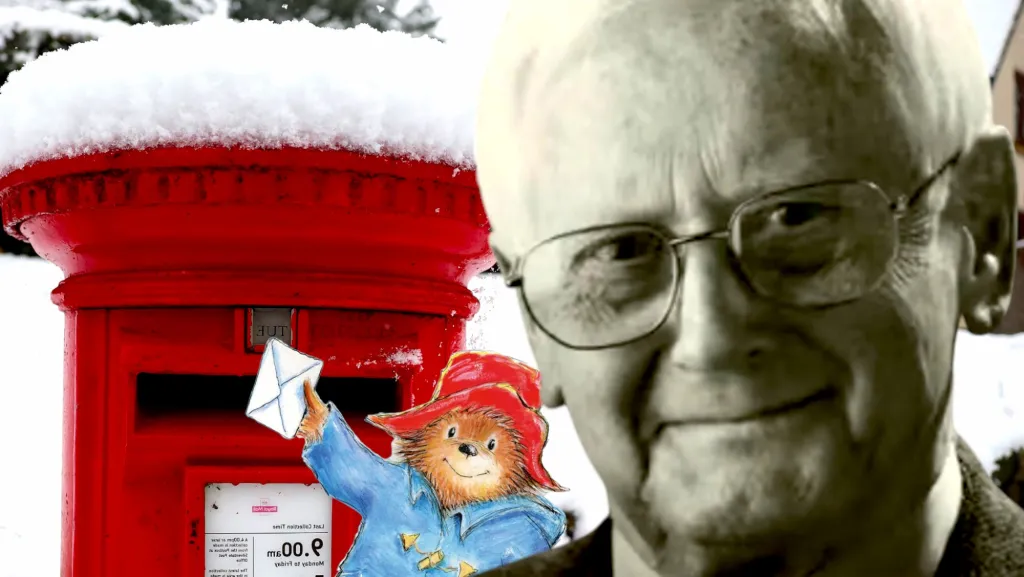
EXCLUSIVE: Lucy Wynne can’t just watch TV. She’s usually scribbling, talking, or scrolling with half an eye on the big screen. On the day she heard her dead Dad’s voice reverberate around her living room, Wynne froze. It was November 2025, 11 years after her father had passed. She had been reminded of his anniversary just days earlier in a Facebook Memory, but the sound of his voice was a visceral jolt.
“F***ing hell, that was Dad. Did you hear that?” she turned to her husband. “No, don’t be stupid,” Darren replied. “It f***ing was,” Wynne exclaimed. She was certain because her father’s voice was his work. When he spoke, his words were heard, not just in Wynne’s childhood home, but in homes across the UK. Paul Vaughan was the voice of the BBC’s heavyweight science series Horizon, and Radio 4’s esteemed arts show Kaleidoscope. He narrated Threads, the atomic bomb drama burned into the brains of a generation of Brits. Vaughan was even the voice of Paddington audiobooks.
And now, on an unremarkable autumnal evening in Buckinghamshire, Wynne was convinced that Vaughan had returned to her in a Royal Mail Christmas ad on ITV. It was not a welcome apparition. Instead of fond memories of her father, Wynne was filled with dread. She thought it was unlikely Vaughan had ever worked for Royal Mail. He certainly hadn’t provided a voiceover from the afterlife. Wynne feared that Vaughan’s voice was somehow recreated without permission. “Bloody bollocks,” she told her husband. “Somebody’s done something.”
A still from Royal Mail’s Christmas ad
The Royal Mail’s 2025 festive campaign (scroll to the end of this story to hear the audio) celebrated how Christmas cards can bring loved ones together. The ads tell mini-stories of people posting heartfelt messages and end with the same slogan, spoken by a mellifluous male narrator: “Royal Mail, it’s so much more than just a card.” The campaign celebrates tangible human interaction, but in doing so, misled its audience.
Responding to questions from Deadline, Royal Mail, Britain’s 500-year-old postal service, admitted that it used artificial intelligence to deliver its festive message to the nation. Instead of paying an actor or voiceover artist to deliver the ad’s slogan, Royal Mail commissioned the ad’s producers to cut the human from the loop. A Royal Mail spokesperson said this is “increasingly common,” but not so common that the company was prepared to be transparent about its editorial choice at the time the ad aired. We only know about the use of AI because Wynne just so happened to recognize what she thought was her father’s voice. But was it Paul Vaughan?
The “so much more than just a card” campaign was overseen by an ad agency called Darwin & the Machines. The agency worked with independent producer Untold Studios to film the human stories at the heart of the campaign, using real actors in the UK. Darwin & the Machines subcontracted the voiceover to a company called Fameplay, an AI specialist based in Czechia. Fameplay is backed by Czech Media Invest, which is chaired by Daniel Křetínský, whose EP Group also happens to own the Royal Mail.
A UK source who worked on the advert told Deadline that Fameplay’s Juraj Felix, a close associate of Křetínský, was present during filming and was evangelical about using AI. “He was obsessed with AI voiceover,” the source said. “The production team told him that it was not a great idea to use AI in connection with such a venerable British brand, but they saw a business opportunity.”
Royal Mail was aware of the plan, but a spokesperson insisted that the voiceover was “not designed to replicate any specific individual.” But what if the Christmas card campaign unintentionally replicated a specific individual? Vaughan’s voice was warm, authoritative, and unmistakably English. “When God speaks, he uses Paul Vaughan’s voice,” observed a Daily Telegraph obituary. His broadcasting, advertising, and audiobook work means there is a wealth of professional material in the public domain featuring his words. In short, Vaughan is exactly the kind of voice that is ripe for training an AI model.
ElevenLabs Summit in London in 2026
Deadline asked Fameplay a series of questions about how it generated the Royal Mail voice, and the company insisted no reference to Vaughan was used in its generative prompts. We can reveal that Fameplay licensed its AI technology from ElevenLabs, the $22 billion AI audio giant that counts Matthew McConaughey among its investors and has a partnership with Michael Caine. Deadline posed similar questions to ElevenLabs, but the company would only confirm that the Royal Mail narration was not a direct voice clone of Vaughan. Asked whether its AI model might have been trained on material voiced by Vaughan, meaning that generic prompts could generate something that sounded like him, ElevenLabs declined to comment.
Royal Mail told Deadline that the advert’s producers “carried out checks and advised that these did not identify any resemblance concerns.” The trouble is that Wynne did identify resemblance concerns. As Vaughan’s daughter put it, there is an “inflection in his voice that no one else has.”
Wynne’s instinctive response is supported by academic study. Dr Nadine Lavan, a voice psychology expert at Queen Mary University of London, said her research shows that family members are very good at recognizing the voice of a loved one. “With Wynne recognizing the voice from the advert as being Paul, we can conclude the voice is very similar,” Lavan said.
Audio analysis supports this conclusion. Vincent Hughes, a professor of forensic speech science at the University of York, said there was “considerable phonetic similarity” between the voice in the Royal Mail ads and that of Vaughan. His analysis was limited by the brevity of the Royal Mail audio, but it was enough for him to conclude that there was material overlap in “segmental patterns,” meaning the pronunciation of consonants and vowels, and “overall voice quality,” sometimes referred to as the “timbre” of a person’s voice.
Deadline also compared the Royal Mail ad with other Vaughan audio using three different open-source AI analysis tools. All three said there were enough similarities to conclude that there was a good chance the AI-generated voice was the “same speaker” as Vaughan.
“It’s outrageous,” said Wynne. “He could have died two weeks ago, for all they knew. He could have been in the care home for the past 10 years, slowly losing his capacity for speech, and then all of a sudden, he’s on the bloody telly. They have not bothered to do their background searches to figure out who this voice is.”
Wynne added that Vaughan would have hated the idea of AI taking away work from voiceover artists. “Pay the money and get somebody in to do the job,” she argued. Wynne has not received an apology from the Royal Mail after complaining. The company told Deadline: “We understand the concerns raised and have taken them seriously.” ElevenLabs has added Vaughan to its No Go Voices, meaning his voice cannot be directly cloned on its platform in the future.
Paul Vaughan
Peter Caulfield, an actor who founded the Nicola Coughlan-backed Save Our Voices Now campaign, said Vaughan’s expertise and unique delivery would have made him a perfect pick for the Royal Mail ad, so it was little wonder the company was drawn to a very similar voice. “Using AI in this way, whether inadvertently or not, without thorough checks, can result in a company stealing a voice from the grave and causing great upset to the family involved,” Caulfield added.
Ultimately, for critics of the Royal Mail ad, it serves as a cautionary tale about artificial intelligence. It is a reminder of the murky ways in which AI models are trained and the lack of accountability when they spit out synthetic results with real-world consequences. Wynne’s story also shows that AI is now infiltrating our daily media diets, without us even realizing. It reveals that even when national institutions like the Royal Mail sell us idealistic visions of authentic human connection, they are prepared to turn to a machine to tell their story.
Below is a video comparing the Royal Mail ad’s AI voice with authentic audio of Paul Vaughan from the BBC and a Paddington audiobook.
>
If you purchase an independently reviewed product or service through a link on our website, The Hollywood Reporter may receive an affiliate commission.
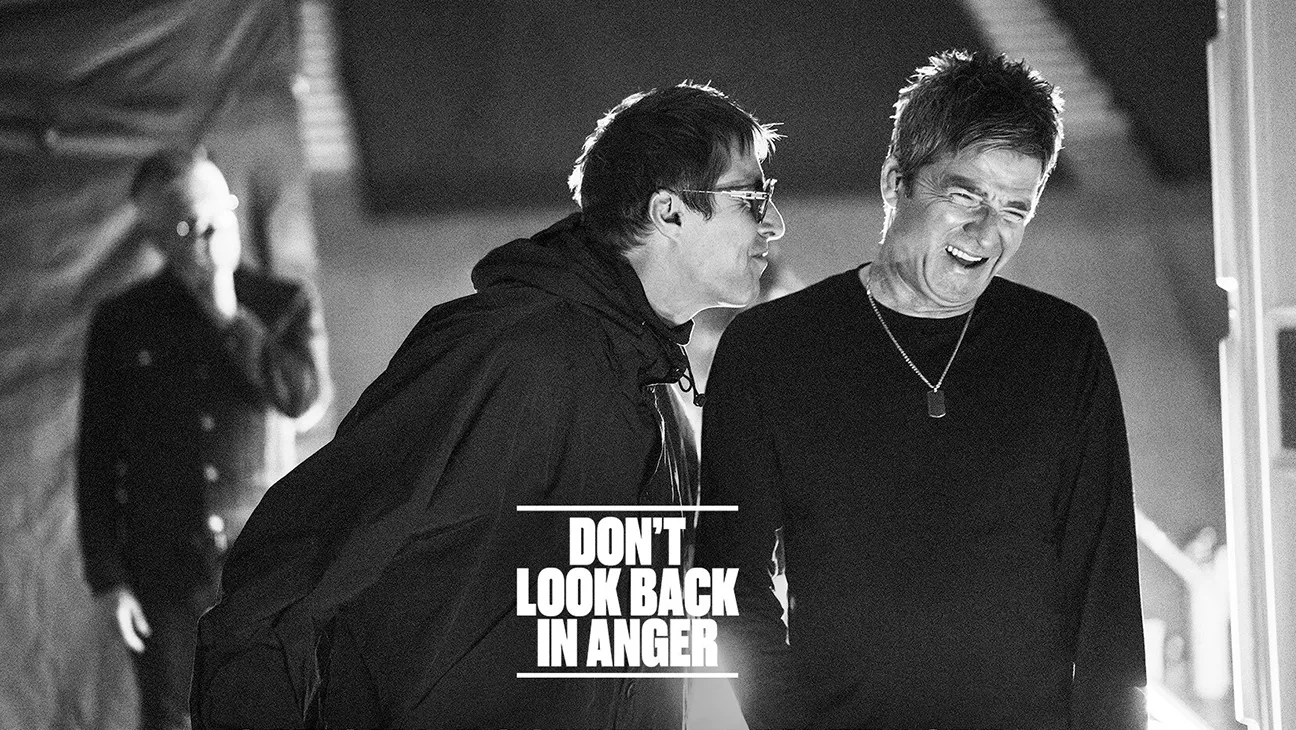
Part concert film, part interview-driven doc, Oasis: Don’t Look Back in Anger provides a backstage (and front-stage) pass to the band’s blockbuster 2025 reunion tour. It also marks the Gallagher brothers’ first joint interview following their 15-year estrangement.
On Oct. 9, the documentary hits Disney+, and while the service doesn’t offer a free trial of its own, Disney+ is included in any of DirecTV’s Signature packages, which do offer a five-day free trial. This means new subscribers can tune it at no cost.
At a Glance: How to Watch Oasis: Don’t Look Back in Anger
Following its September 2026 theatrical release, Don’t Look Back in Anger makes its streaming debut on Friday, Oct. 9 on Disney+, with plans starting at $11.99 per month for the ad-supported package.
While the streamer doesn’t offer a trial period directly, fans can get free access through any of DirecTV’s Signature packages, as all four plans include the Disney+ and Hulu bundle and offer a five-day free trial.

Five-day free trial; packages from $19.99 per month
Disney+/Hulu is included in any of DirecTV’s signature packages: Entertainment, Choice, Ultimate or Premier. Plus, DirecTV offers a five-day free trial for its streaming service, meaning new subscribers can tune in for a limited time at no cost.
Learn more about each plan option, including how to build your own channel lineup (starting at just $19.99 per month), at directv.com.
Don’t Look Back in Anger is giving viewers unprecedented access to Oasis and the Gallagher brothers. Per the official film synopsis, “Oasis: Don’t Look Back In Anger charts Liam and Noel Gallagher’s triumphant reunion tour, Oasis Live ‘25. Created by Steven Knight, it is an uplifting account of the biggest musical event of 2025, capturing the experience of the band and their fans across the world. It includes rehearsal, backstage, and onstage access as well as the first joint interviews with Noel and Liam in over twenty years.”
>
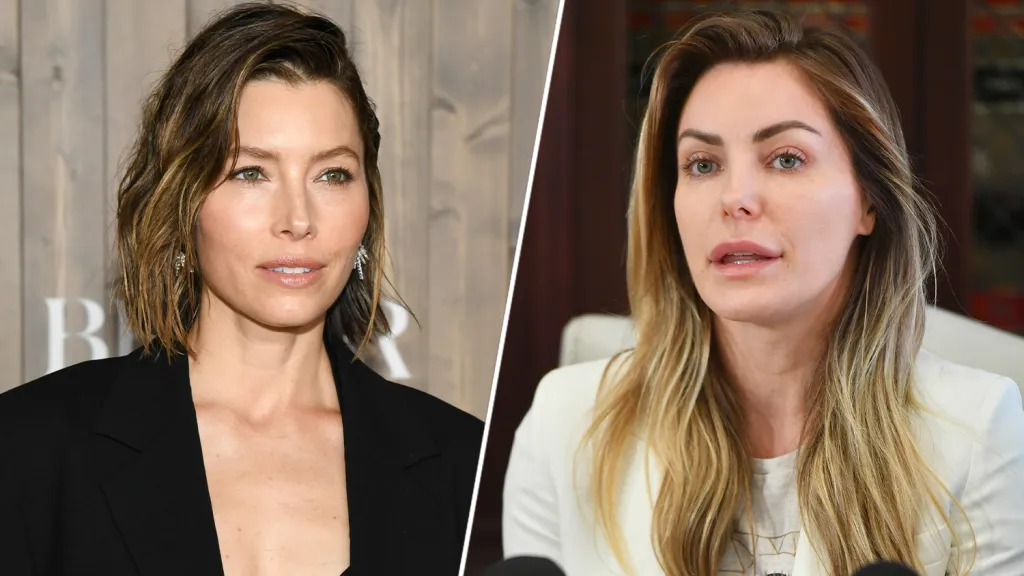
Nearly a decade after his death, Hugh Hefner‘s widow is expressing her disapproval of a coming-of-age story inspired by her late husband.
Crystal Hefner, who was married to the Playboy founder from 2012 until his death at age 91 in 2017, shared a screenshot of an Instagram DM she sent to Jessica Biel asking her to “please reconsider” starring as Hugh’s fictional wife in Lorraine Nicholson’s Searchlight pic Playmates.
“Please reconsider playing Hugh Hefner’s ‘wife’ if this film intends to romanticize him or the Playboy world,” wrote Crystal in the message. “I was actually his wife, and I experienced sexual, emotional, financial and physical abuse in that relationship. Many other women have come forward with allegations of rape, coercion, drugging and exploitation as well. There are also deeply troubling concerns involving minors. I hope everyone involved in this film takes the time to listen to the women who lived it before helping Hollywood turn it back into nostalgia.”
Written and directed by Nicholson, and inspired by her childhood friendship with Hugh Hefner’s kids, Playmates is described as an LA-set coming-of-age story following 13-year-old know-it-all Elle (played by Indiana Elle), who considers the Playboy Mansion her second home. During her time at the Mansion, Elle meets Anna (Lily-Rose Depp), one of seven hopefuls vying to be Playmate of the Month. The two form an unlikely friendship and try to help each other get what the other wants most, a magazine cover and a boy.
Crystal added in a post, “Regarding the film, I hope it’s not something that will glorify Hugh Hefner. With women in the leading roles, my hope is that the film ultimately delivers a message of empowerment: that women can find fulfillment, independence, and a sense of self beyond Playboy.”
With Bill Pullman playing Hugh Hefner, we’re told Biel’s character is a fictional role not inspired by any of his three wives.
Since Hugh Hefner’s death in 2017, Crystal has opened up about the toxic environment of the Playboy Mansion and the abuse she said she endured during her time there, with other Playboy models sharing similar experiences in recent years.
>


Search For Canadian TV Actor Stewart McLean Now Homicide Investigation


These ’90s fashion trends are making a comeback in 2017
According to Dior Couture, this taboo fashion accessory is back
Model Jocelyn Chew’s Instagram is the best vacation you’ve ever had
Emily Ratajkowski channels back-to-school style
9 Celebrities who have spoken out about being photoshopped


Rurouni Kenshin: Hokkaido Arc Manga Takes 1-Issue Break – News


HIDIVE to Stream English Dubs for The World Is Dancing, The Forsaken Saintess and Her Foodie Roadtrip in Another World, The Dangers in My Heart: The Movie Anime – News