
Entertainment
Rabbit Drama Pilot Ordered at ABC

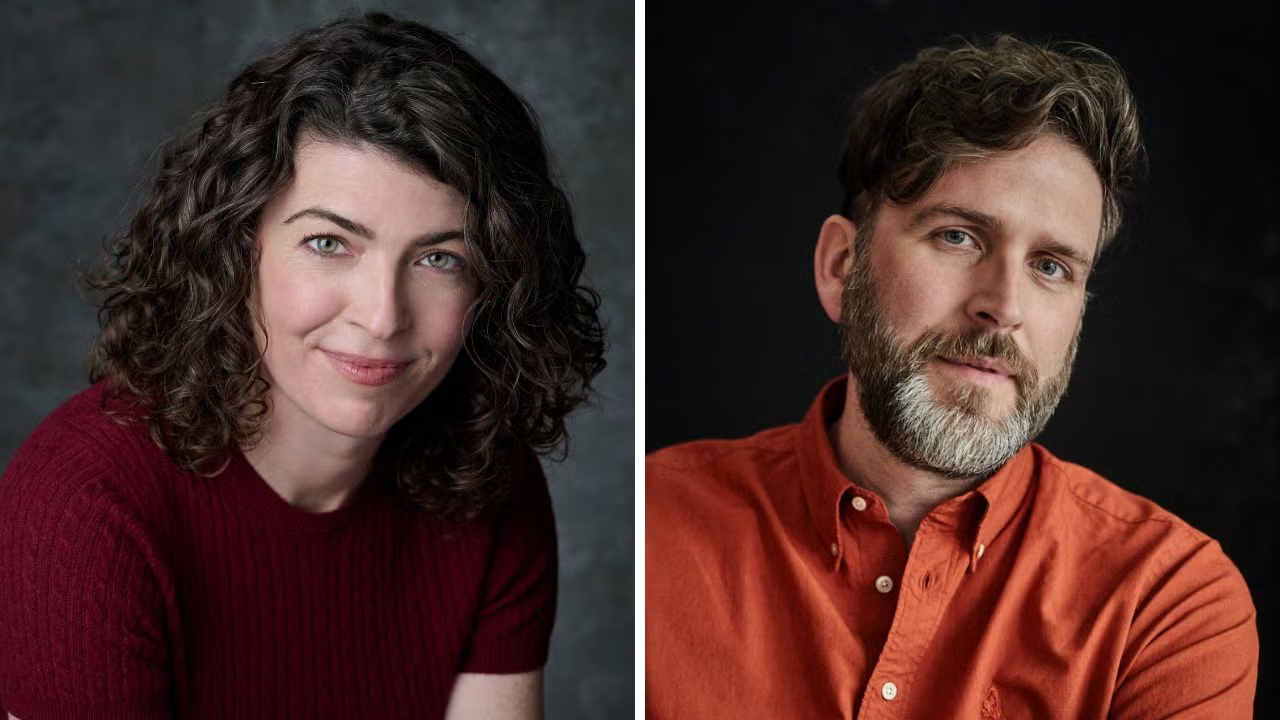
Drama series “Rabbit,” based on the British television hit “Ludwig,” has received a pilot order at ABC with Megan Ganz and Humphrey Ker set to write and executive produce.
The husband and wife duo previously worked together on the Apple TV comedy “Mythic Quest.” This project will be part of Ganz’s overall deal at 20th.
The drama series will follow Mark, a puzzle writer known as Rabbit, as he is thrust from his solitary life into the Cambridge, Mass. police department after his homicide detective twin brother goes missing. There he poses as his brother to investigate his mysterious disappearance and discovers that his puzzling abilities are a significant asset.
Ker previously worked as an actor, appearing in “Curb Your Enthusiasm” and “It’s Always Sunny in Philadelphia.” He recently wrote for both seasons of “SNL UK.” Ganz has written for several comedy series, including “It’s Always Sunny in Philadelphia,” “The Last Man on Earth,” “Modern Family” and “Community.”
Jon Steinberg, Dan Shotz, Mark Brotherhood and David Mitchell will executive produce the series with Kenton Allen executive producing for Big Talk.
“Ludwig” became the BBC’s biggest new scripted show of 2024, garnering 13.1 million views on its first episode. David Mitchell and Anna Maxwell Martin starred in the British detective dramedy series.
More to come…

>
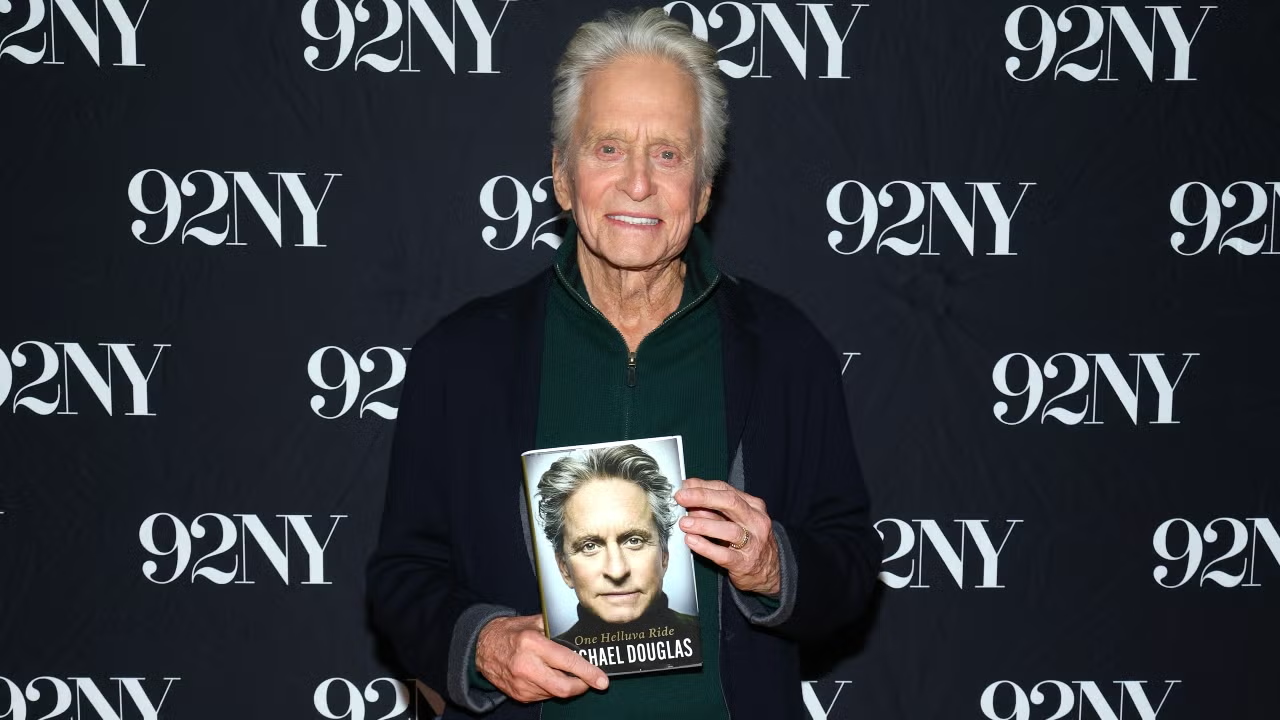
Michael Douglas is ready to talk.
He is, after all, the star of such certifiable classics as “Romancing the Stone,” “Wall Street” (which he won an Oscar for) and “The American President” and the producer of “One Flew Over the Cuckoo’s Nest” (another Oscar), “Face/Off” and “Flatliners,” so you know he has stories. His just-released memoir, “One Helluva Ride,” contains many of these stories, as he expertly weaves behind-the-scenes details from some of his most beloved projects with personal anecdotes about living in the shadow of his famous father (Kirk Douglas), his various relationships and his battle with stage IV cancer.
This is one of the best books you’re likely to read about filmmaking, period – entertaining, insightful and at times very moving. It’s open and honest about what a pain-in-the-ass the filmmaking process is and Douglas is open about his deficiencies, never trying to sugarcoat or breeze over uncomfortable details. Instead, he leans into them and explains why he is the way he is. And you hang on every word.
In a wide-ranging interview with TheWrap, Douglas said that he started thinking seriously about writing the book after he finished filming his last major project, 2022’s Apple TV miniseries “Franklin.” Shane Salerno, a screenwriter, author and the founder of the Story Factory (responsible for everything from Michael Mann’s “Heat 2” novel to that terrific “Once Upon a Time in Hollywood” making-of book), had been pushing him for years to write his memoir. Finally, Douglas relented, bringing on Salerno as a co-author. (Early work on the book was done with Mike Fleming, Jr. from Deadline.)
“I found great pleasure out of not doing anything and not working,” Douglas said.
He also found himself thinking about the chaos of our world (“probably the worst times I can remember in my entire lifetime”) and how he was able to find beauty in the smaller joys of life. (He remains hyper-aware of the situation and calls himself an “activist” and a “news junkie.”) It was during this reflection that he thought about how his father Kirk wrote nine books, some following his stroke when he was having difficulty speaking. One of those books was his autobiography, 1988’s “The Ragman’s Son.” (In the book he mentions that he’s probably now best known as Michael’s father.)
“We had quite a legacy and I was the prince of the nepo-babies. I think that got me going too. I saw that he and I, we’d probably done about 115 movies collectively, spanning about 80 years, and I couldn’t think of any other family that had quite achieved what we had in this movie business. It was a hell of a legacy,” Douglas said.
He’s 82 now and acknowledged that he has a couple of kids (with wife Catherine Zeta-Jones) in their 20s. “I don’t know if I’ll be seeing my grandchildren,” he admitted. “One Helluva Ride,” he said, will serve as a great family history and that, between his own book and Kirk’s, will be able to cover a wide swath of Douglas lore.
There was another reason he wanted to write the book too.

“My memory sucks,” Douglas said. “The chance to go back and relive and look at these pictures and remember which year and you touching base with a lot of the people that I talk in the book, reminding each other about stories that are coming out for the first time in the book, it was a chance to enjoy my life more because I had forgotten a lot of stuff,” Douglas said.
He credits Salerno, who encouraged him to write the book “for years” and thanked him for the support that he had given Douglas following his cancer diagnosis, delivering tongue-in-cheek emails to Douglas every day, “cheering me on.” “I thought, Where the hell did this guy come from? He had a mission and would have the energy to push me along,” Douglas said.
Together, they pulled the book together in 18 months.
There are themes that pop up throughout “One Helluva Ride.” One of them is Douglas’ search for a father figure after Kirk proved obtuse and oftentimes borderline abusive, particularly when Michael was younger.
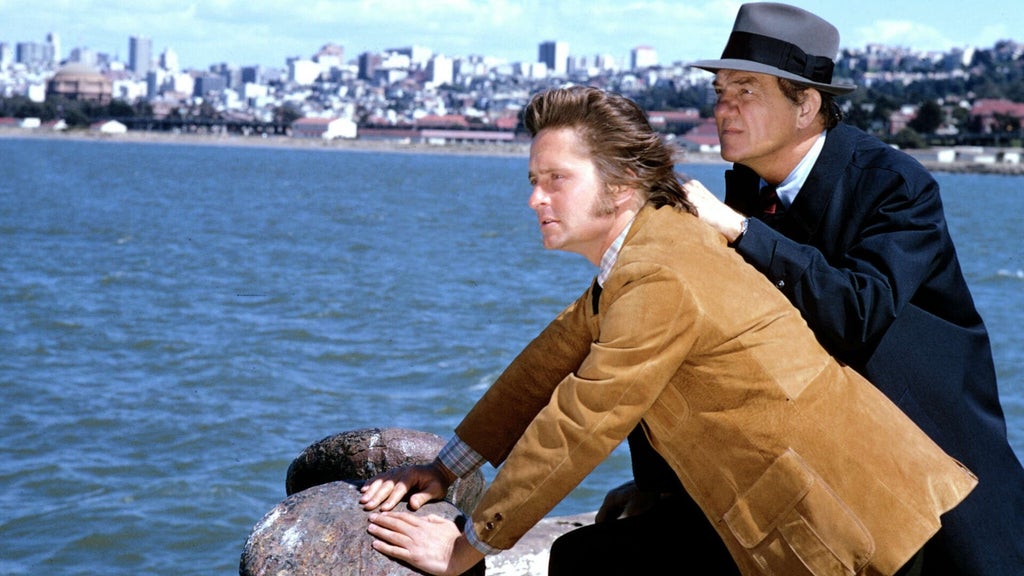
Still, he longed for a connection with Kirk (it ultimately wouldn’t come until after Kirk’s stroke) and sought that connection in others – with his stepfather Bill Darrid and with Karl Malden, Douglas’ costar in the hit primetime show “The Streets of San Francisco.” (In an amazing coincidence, it was Malden who gave Kirk the inspiration for his Americanized name. He was born Issur Danielovitch and liked the hard consonant start of Karl’s name. Thus, Kirk was born. Kirk later had a house in Palm Springs; the pool was shaped like a giant “K.”)
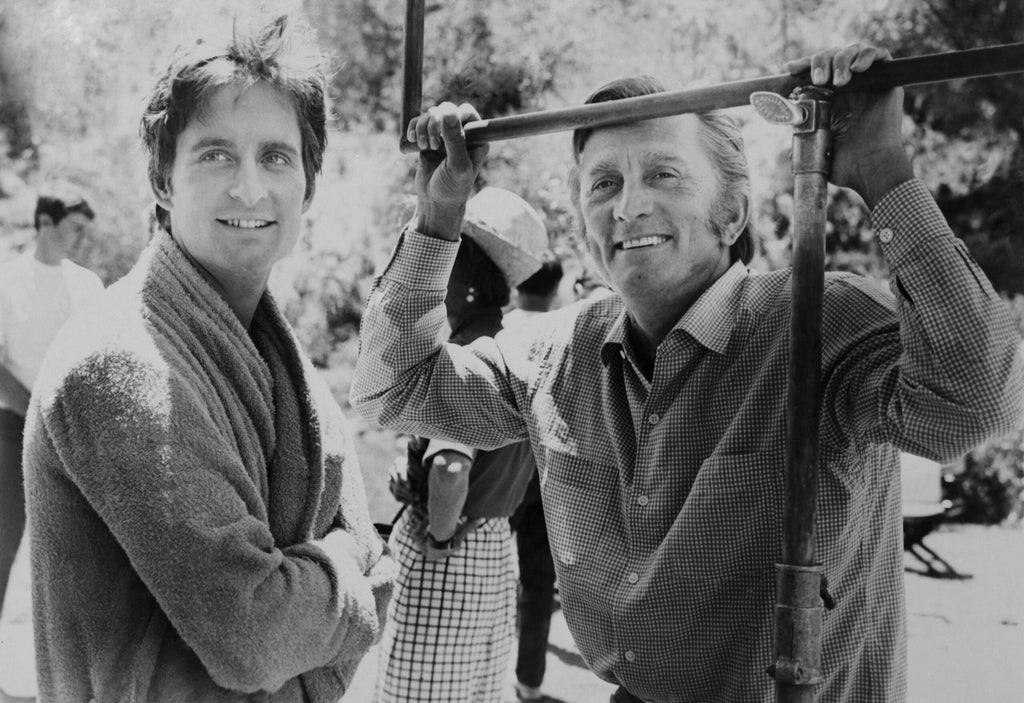
“My folks got divorced when I was five. It had been a pretty embattled, hostile relationship and full of not-fond memories. I moved back east with my mother when I was five and Kirk was beginning his career out there and, as most actors are, particularly after you become a star, was extremely self-involved. Not taking away from him, because the more I got older and more in my business, I recognize just how self-involved one can be from other people,” said Douglas.
Still, he was quick to point out that he was “extremely fortunate that my mother remarried a lovely man, Bill, who was really my surrogate father.” He said that even Kirk admitted and acknowledged Darrid’s role in Michael’s life “and thanked him.”
“That was actually when I saw my dad in a new light – he was grateful because he felt guilty that he didn’t have the time that he wanted to really spend with us, and when he did have the time, it was so intense and nervous.” (Douglas often writes in the book about how Kirk’s unpredictable temper caused him to walk on eggshells, unsure of when Kirk would blow.) This was, as Douglas said, “the days when they’re making five or six movies a year,” and he only saw his father intermittently or on film sets. There are some great photos in the book.
When Michael started working on “The Streets of San Francisco,” he reconnected with Malden, whom he remembered from his childhood. He described Malden as a “mentor I couldn’t have dreamed of having, and I wasn’t aware at that moment.”
“But in hindsight, what an incredible mentor he was, in terms of his work ethic, in terms of him working hard for every other actor to be as good as they can,” said Douglas. “That was really where I began to understand that it’s the whole package. Paul Newman used to talk about this. Paul Newman only wanted to work with the best actors he could. It elevates everything. From then on my career progressed, and I was really always looking for material and what I thought would be a really good movie, and never really ever considered whatever part my role played to make this movie as good as it could be.”
According to Douglas, this attitude actually hurt his career in the early days; he was so interested in the movie that it largely overshadowed his acting career.
“I had this this weird phenomenon where I’m in a hit television series, which I leave after four years to produce my first movie, which wins an Oscar and then my first four movies as an Oscar winner are hits – ‘The China Syndrome,’ ‘Romancing the Stone,’ ‘Jewel of the Nine’ and ‘Fatal Attraction.’ So I’m a big Hollywood producer, which I never anticipated. But I’m still this television actor trying to get into the movies,” Douglas said.
He was developing “Starman” with John Carpenter but the studio wouldn’t cast him in the role. “I wasn’t approved,” Douglas said. “I would have done it if they had wanted to do it. They said no, we’ll do it with Jeff Bridges.”
Even “Romancing the Stone,” which would be one of Douglas’ biggest hits, establish (finally) Robert Zemeckis as an A-list director and spawn a just-as-successful sequel a little more than a year later, wasn’t originally meant for him – and he was the producer!
“I’d gone through a number of actors who passed because they didn’t want to be in a picture where the girl had a better part. They really wanted Deborah Winger for the part, and then I finally got Kathleen, and then I was able to get in, but no, I wasn’t originally meant for it,” Douglas explained.
Another theme that runs through the book is how revenge fueled Douglas both professionally and personally. There’s a great anecdote where Brian De Palma was offered “Fatal Attraction” but didn’t want Douglas as part of the cast; De Palma left, Adrian Lyne stepped in and the movie made nearly $350 million at the box office and became a part of the zeitgeist, with Douglas and Glenn Close appearing on the cover of Time Magazine with the headline “The Thriller is Back.” Years later, De Palma ran into Douglas and apologized for the experience. Douglas coldly told him it was too late now.
He was annoyed at how he was treated early on in his career, when Hollywood saw him as a television actor.
“I’ve carried a lot of grudges against the separation of television actors and film acting,” Douglas said.
But this chip-on-his-shoulder attitude wasn’t kept solely to his work. Later in the book, he recounts how several doctors had misdiagnosed a lump in his mouth that turned out to be stage IV cancer. After receiving the proper diagnosis, he went back to each of the doctors he had seen earlier to tell them off. To Douglas, revenge, for lack of a better word, is good.
“I probably think of it as inheriting some of my father’s genes. Kirk probably had more stamina and more tenacity and more rage than anybody I know. I think part of his rage came from the fact that he was an Ashkenazi Jew, who many times people didn’t realize he was Jewish, and heard a lot of antisemitic talk in his presence growing up, which is part of what gave him that,” said Douglas.
Growing up, Michael, after kids found out about his famous father, would tease him, making assumptions that he was a “spoiled kid or arrogant or whatever.” “It took me a long time to interpret a lot of people’s attitudes towards me, where I was trying too hard to be nice and then realizing, Oh no, they have a pre-assumption and therefore they’re going to shit on me,” Douglas said.

Acting didn’t come naturally; he was beset by stage fright which, in the book, he connects to the nervousness he felt around Kirk. Once someone told him, “The camera can tell when you’re lying.” Douglas said he started looking at the camera like an “X-ray machine.” And not just because the cameras “were huge back then.”
Stage fright didn’t pass until he was making “Fatal Attraction” (there’s a great bit in the book where he suggested that, in the throes of passion, with his pants around his ankles, he duck walks). But the grudges remained.
“I think that was just part of the baggage which comes with being a nepo baby. Forget being an actor. How could I ever be the person, the man that my father was? I developed a little bit of tough skin. I wasn’t hostile and angry my whole life, and certainly everything changed when I got my cancer,” Douglas said.
Before his cancer, he had it all – a thriving production company, a healthy acting career, but he was “overwhelmed.” “My marriage was in tough shape. I was having issues with one of my sons. I was into alcohol and drugs and there were a few years in there where it was just strained,” Douglas said.
Parts of the book reads like a fucked-up version of “Forrest Gump,” where Douglas intersects with historical figures in unusual ways. For his first Hollywood movie, he got his hair cut by Jay Sebring, and Sharon Tate was in the salon; they would both be murdered just a few years later by the Manson family. (He was also living in one of Terry Melcher’s houses; Melcher owned the house where Sebring and Tate were killed.)
The cameraman that Douglas shadowed for his role in “The China Syndrome” accompanied U.S. Congressman Leo Ryan to Guyana to investigate the Peoples Temple and was murdered on the runway by Jim Jones’ thugs as they tried to make their escape. And Diane Thomas, the screenwriter of “Romancing the Stone,” died tragically in a Porsche that Douglas had purchased for her after the success of the film.
“You took them in stride at the time, but yeah, I mean I was there for some major moments,” Douglas said. At one point, he was living in a house with his then-wife when their cats were murdered; Douglas said police instructed him to get a gun and if he killed anybody to drag their body in the house so they could claim it as a home invasion.
Then there was the time when, the year after he won the Oscar for “Wall Street,” he arrived at the Academy Awards to an FBI agent warning him that someone was going to attack him. “Your life is being threatened. Someone is going to stick you with an HIV-positive needle,” Douglas said. He shrugged. “What can I tell you?”
Particulars of the threat at the Academy Awards remained elusive. Douglas said that there were undercover agents in the audience that night and that they think it might have been tied to Jodie Foster somehow. (Douglas went on stage after all and awarded her the Best Actress Oscar for “The Accused.”)
The HIV-needle attempt wasn’t new; as a child someone tried to kidnap him, and while shooting “The Streets of San Francisco,” there were reports that a group of Black terrorists targeting white people had wanted to take him out. “For a couple of episodes I had to act with a bulletproof vest underneath my outfit, and you’re sitting there in downtown San Francisco, looking up at windows all around, going, Holy shit!” Douglas said.
Not that all of the stories in “One Helluva Ride” are so grim. One particularly amusing bit involves Douglas paying for his college tuition by selling marijuana he had bought in California, back in New York. (When he turned 21, Kirk gave him $10,000 and told him “good luck” and never paid for anything again.)
“It was the early times of that world and it just seemed to make sense at a point when I guess I should have tried to get a loan from the school,” Douglas said. “It was a secret from the family for a long time.” He couldn’t remember the exact figures but “you could buy a kilo for $75 in California and sell it for over $500 on the East Coast.” He swears he only did it twice.
“Dad had always been throwing me up in front of my other brothers – ‘Look at your brother. He never asked me for anything. I gave him some money when he turned 21 and that was that.’ My brothers were all tired of hearing about me,” Douglas said.
When he was in his 30s, Michael said to Kirk, “Remember that one Christmas when you bought me two beautiful soft leather Italian suitcases? Well, each one could fit 22 kilos. Only reason I’m really telling you, Dad, is because you’re a little rough on the kids about ‘oh your brother never asked for anything,’ well thank God they weren’t drug dealers.”
Much has been made about the book’s revelation that Douglas and Turner had an affair on the set of “Romancing the Stone.”
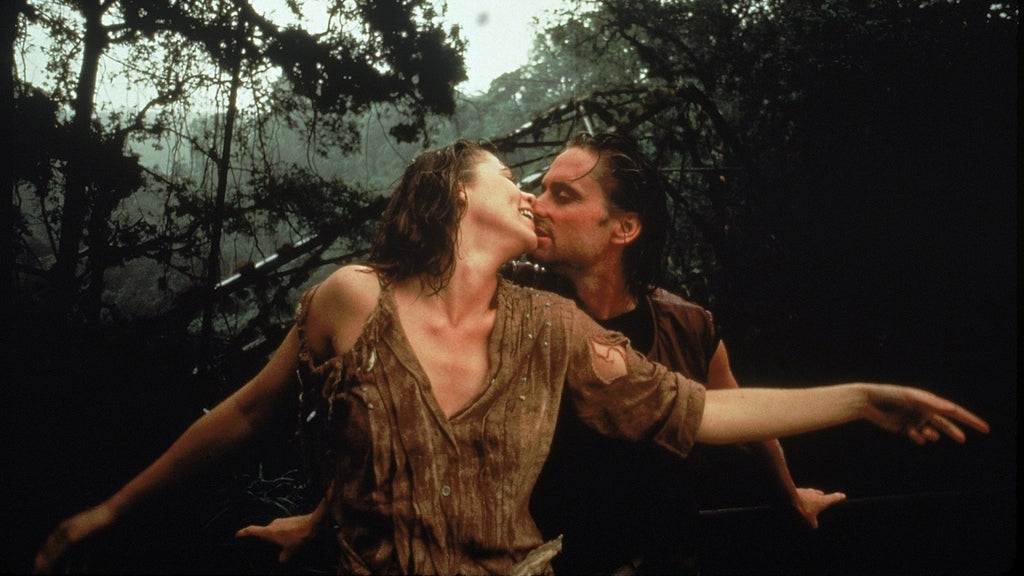
“Usually, if you want to write about something, it’s more than just simply the sexual aspect of that relationship, and she was just such an incredible partner on the first picture we did, ‘Romancing the Stone.’ It was such a difficult production, and I was the producer as well as the actor in it,” Douglas said. “It was a deep friendship. It started out with deep respect and then slid into an intimacy. And I was so appreciative of her talent as an actress, her patience and support for me as the producer, and I really couldn’t imagine many actresses putting up with a lot of the scenes.”
Things would get more turbulent on the second film, with Douglas suing her for $25 million when she threatened to walk. She hired Roy Cohn as her lawyer, which was just a precursor to what Douglas describes as “all the difficulties and nightmares of the sequel” which included (but were not limited to) a disastrous air accident that killed several people, a script that never really worked and the cast and crew having to flee Morocco ahead of schedule.
Still, he said, they made another movie together (Danny DeVito’s “War of the Roses”) and “remain good friends.” “I admire her,” Douglas said.
Quickly, I asked him about some projects that are either not covered in “One Helluva Ride” or glossed over.
On “Disclosure,” an adaptation of Michael Crichton’s hot-button novel, where Douglas played an executive who is sexually harassed by his female boss (Demi Moore). He said he was drawn to the role reversal of a man getting harassed by a woman and admitted he gravitated towards provocative films. “I like to try to give two hours of entertainment. You know, entertainment is the only crucial thing for two hours. But if you have a little food for thought afterwards, so much the better,” said Douglas.
With “Face/Off,” which he produced, he hired Hong Kong director John Woo, who had made a couple of movies in America but really hadn’t been able to import the style and staging that made him such a force overseas. “Face/Off” allowed western audiences to get full, uncut Woo. He compared it to hiring Zemeckis, who had two Steven Spielberg-produced bombs under his belt (“Used Cars” and “I Wanna Hold Your Hand”) but who Douglas still believed in, or even Czech director Miloš Forman for “One Flew Over the Cuckoo’s Nest.” “I saw a couple of his Asian pictures and I thought they were really good,” Douglas said. “One of the beauties of our industry is the international flavor.”
And when it comes to David Fincher’s “The Game,” which is barely mentioned in the book, he said that he enjoyed the process – to a point. “Dave was a great guy. It just was exhausting. Exhausting in the takes, take after take after take,” said Douglas. “He’s a brilliant director and I love him. But I could have killed him.”
On the opposite side of things is his relationship with Steven Soderbergh. He said that on “Traffic,” Douglas was talking to a border guard (“a real guy”) and “he starts rolling. It was about a three-page scene, and there’s no cut. No stop, and so it just carried on.” At one point Soderbergh took Douglas to his trailer and Soderbergh said, “Take a good look, because that’s the last time you’ll see it.” (It was on the set of “Traffic” that Soderbergh asked Douglas if he’d ever thought about playing Liberace. The movie would eventually get made, after he completed his cancer treatment, at HBO and would serve as a late-career triumph for Douglas.)

If modern audiences known Douglas from anything, it’s probably his role as the elder Ant-Man in a series of Marvel Studios movies. Douglas said that he was hired for the project by Edgar Wright, who then left the film over creative differences with Marvel brass.
“He’s a very talented guy. I could see how Marvel might be scared about a guy as independent as he is,” Douglas said about Wright. “I had never done a green screen movie, and that was sort of post-cancer. I was thinking, Well, what haven’t I done? I’m always curious and have great respect for green screen actors – for imagination and their ability. Loved the first one. Had a great time. Signed up and then I just felt it just went downhill from there. And maybe the company was overwhelmed with the amount of stuff they were doing.”
Has he closed the door on the MCU?
“I’ve never said no to anything,” Douglas said.
In fact, he recently reunited with Oliver Stone, who directed Douglas to an Oscar for “Wall Street” (some of the most fascinating material in the book is about the making of the film and how Stone didn’t initially want him in the role of Gordon Gecko) and in the legacy sequel “Wall Street: Money Never Sleeps,” for the autobiographical “White Lies.” Douglas’ character serves as a surrogate for Stone’s father. All this time later, he’s still interested in the role of fathers and sons. “It was a small part I play, but a pleasure,” Douglas said.
Now that he’s written his own autobiography. Which of his famous friends should do it next?
Jack Nicholson wouldn’t do it, Douglas said. “Warren Beatty’s really interesting too,” Douglas said. But he doubts Beatty will write one either.
“They’re going to die with their secrets,” Douglas said.
Thank God Michael Douglas didn’t die with his.
“One Helluva Ride” is available wherever you buy your books.

>
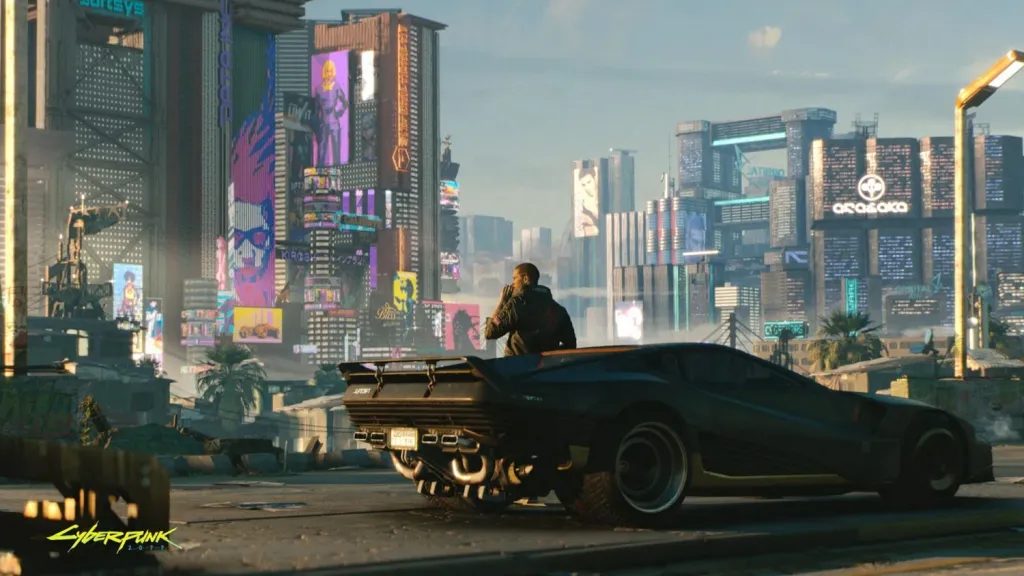
EXCLUSIVE: Paramount Pictures is developing a live-action film set in the Cyberpunk 2077 universe, based on CD Projekt Red’s best-selling action-adventure RPG.
Lorenzo di Bonaventura is attached to produce alongside CD Projekt Red the Poland-based award-winning video game developer and the franchise rights holder.

The game is set in the fictional cyberpunk metropolis of Night City in California, within the dystopian Cyberpunk universe. At the center of the game is V, a mercenary who gets reluctantly imbued with a cybernetic “biochip” containing an engram of legendary rockstar and terrorist Johnny Silverhand. As Silverhand’s consciousness begins overwriting V’s own, the two must work together to separate from each other and save V’s life by confronting the Arasaka Corporation, a powerful megacorporation acting as the de facto ruler of the city.
Cyberpunk 2077 has sold over 40 million copies worldwide, while its expansion, Cyberpunk 2077: Phantom Liberty, has sold 15 million copies.
Paramount has seen a lot of promise in the video game world as of late as Cyberpunk 2077 is one of several video game adaptations on the slate. Those include the upcoming Street Fighter adaptation that Paramount is co-producing with Legendary. That film bows on October 16. They also have a movie based on the Call of Duty games that has Peter Berg directing and co-writing the script with Taylor Sheridan.
>
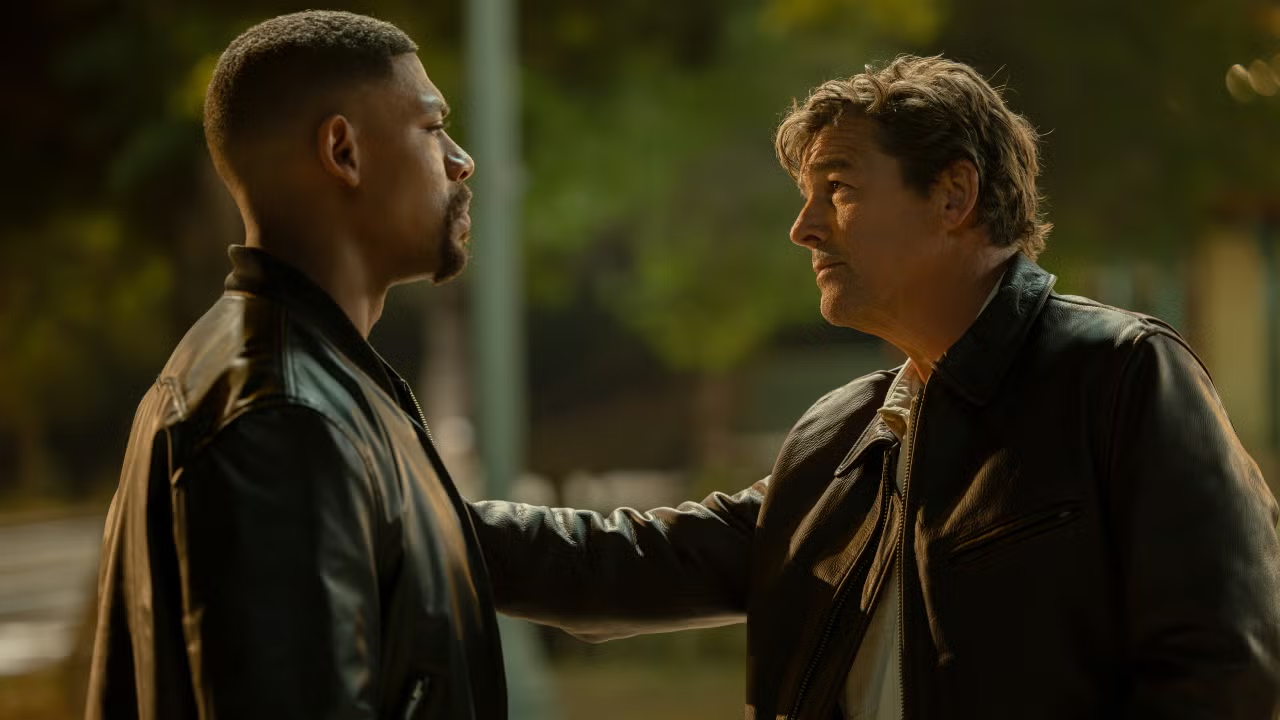
“Lanterns” wrapped up its first season to record-breaking ratings.
The season finale, which dropped on Sunday on HBO and HBO Max, brought in 10.5 million viewers globally and 7.2 million viewers in the U.S. across three days of crossplatform viewing, according to Nielsen and internal numbers from Warner Bros. Discovery.
The finale viewership marks an all-time high both globally and in the U.S., with global viewership rising 13% from the premiere audience of 9.3 million while the U.S. audience rose 9% from its premiere viewership of 6.6 million.
For comparison, the penultimate Episode 7 tallied 7 million viewers in the U.S. within its first three days of availability on HBO and HBO Max.
Overall, “Lanterns” is averaging 19.3 million viewers globally, cementing its spot among the top five HBO series launches in platform history.
Viewership for the series premiere has doubled its premiere first week as the series gains viewers throughout the show’s eight-episode run, with the first episode now approaching 30 million viewers.
More to come …
>
How to watch Maple Leafs vs. Golden Knights: TV channel and streaming options for October 8

Google brings agentic AI to Gemini, starting with businesses

Michael Douglas Reveals All in New Memoir One Helluva Ride
-

 movies5 months ago
Search For Canadian TV Actor Stewart McLean Now Homicide Investigation
-

 Fashion9 years ago
These ’90s fashion trends are making a comeback in 2017
-
Fashion9 years ago
According to Dior Couture, this taboo fashion accessory is back
-
Fashion9 years ago
Model Jocelyn Chew’s Instagram is the best vacation you’ve ever had
-
Fashion9 years ago
Emily Ratajkowski channels back-to-school style
-
Fashion9 years ago
9 Celebrities who have spoken out about being photoshopped
-

 Anime4 months ago
Rurouni Kenshin: Hokkaido Arc Manga Takes 1-Issue Break – News
-

 Anime3 months ago
HIDIVE to Stream English Dubs for The World Is Dancing, The Forsaken Saintess and Her Foodie Roadtrip in Another World, The Dangers in My Heart: The Movie Anime – News