
Theo Rollason, courtesy of Theo Rollason


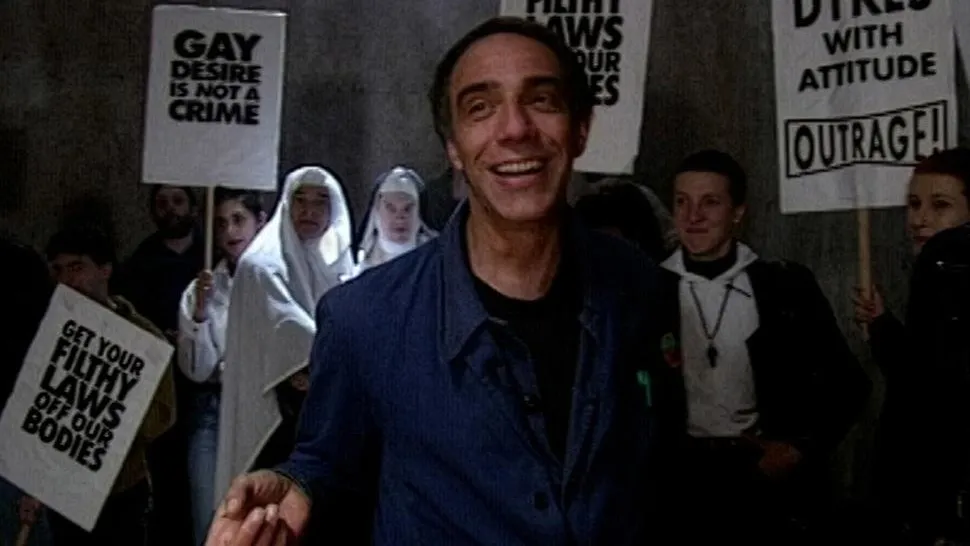
There is much to discover and much to think about when watching British creative Theo Rollason‘s Queer Edward II.
Their directorial feature debut provides an intimate look behind the scenes of a film set of legendary British director and gay rights activist Derek Jarman, including such famous names as Tilda Swinton and costume designer Sandy Powell. What is more, you can expect a pack of beagles let loose, drag nuns taking a smoke break and an incident involving queer rights activists and British pop star Cliff Richard, who was rehearsing for a tour on the same studio lot where the film was shot, among other things. Of course, you also get an insider’s look at how Jarman’s 1991 film Edward II, his gay love story with a bloody ending, came to life.
But Queer Edward II also puts a spotlight on the harsh political climate that queer people in Britain were facing back then – at a time when the climate has turned harsher again. “With anti-trans rhetoric and attacks on queer rights again intensifying, I hope the film can function not simply as a snapshot of a historical moment, but as a reminder of what collective resistance can look like – and what role art has to play,” Rollason explains.
The film weaves together archival footage. Irish cinematographer Seamus McGarvey, who later became known for the likes of Atonement, The Hours, Nocturnal Animals and The Greatest Showman, was actually invited by Jarman to shoot behind the scenes. The resulting 30 hours of footage remained unseen for decades – until Rollason was asked to look through them.
Queer Edward II, a Lightborn Films production in association with March 13th and John Gore Studios, world-premiered at the 83rd Venice International Film Festival and is now screening at the 70th edition of the BFI London Film Festival (LFF), starting on Oct. 11. After Hours and Cinephil are handling sales on the doc.
Rollason talked to THR about how they got involved in the film – and ended up directing it, surprising scenes and the current political climate, particularly regarding gay rights.
Parts of the film feel really timely again. How early did you realize that?
Really early on when I started watching the footage. One of the first things that struck me was how it felt like a lot of things they were talking about on sets, even stuff that didn’t make the final cut, felt so contemporary. And then the next realization was: Oh my God, how depressing! A lot of the problems that they’re facing are still completely contemporary. And even over the course of making the film, a lot of things have come up that have felt particularly relevant to what was going on.
That guided the shape of the film to some extent. I guess that sounds like a bit of a contradiction but on the one hand, I wanted it to feel incredibly contemporary, but at the same time, the film doesn’t leave its period, and I wanted it to be very evocative of a super specific period – this late ’80s, early ’90s moment in Jarman’s life, but also in gay right’s history.
i kept being surprised how recent a past I was seeing in the doc and started reading up more detail about various things you show. How does that make you feel, and do you expect other viewers to do the same?
Yeah, I hope so. It definitely opened my eyes. Part of the reason that the film became what it is and has this focus on queer rights was really because I didn’t realize how recent this was and how bad it was not so long ago. I think a lot of people are aware of the AIDS crisis in the ’80s and the significance of that. But coming off the back of that, there was all of this legislation that was pretty awful and generally, there were a lot of homophobic attitudes, still quite extreme, even as late as the 1990s.
I think because there have been a lot of positive steps forward in the last decade, it’s possible to make that seem more like it’s ancient history. But really, it’s my parents’ generation. Section 28 [, introduced by the government of Margaret Thatcher, which prohibited local authorities from “promoting homosexuality”], which gets mentioned a bit in the film, was a really huge deal in the U.K. That was only repealed in 2003 while I was at school, and I wasn’t really aware of that happening at the time because I was too young,
Realizing how little I really knew about this made me first a bit ashamed, and then feel a bit like, “No, wait, this is great. There’s an opportunity to put all of the research that I’ve done into this film!” I hope it makes people go out and find more about it because what you can fit in a film is just a tiny little thing. But I wanted to put in just enough so that people will get on Google or read a book, or whatever.
Theo Rollason, courtesy of Theo Rollason
We have mentioned progress over the decades, but there has also been a recent backlash against queer rights…
That’s another interesting parallel [between today and the period shown in the doc]. In that period, things had gotten a bit better. And then, largely as a byproduct of the scaremongering around the AIDS crisis, there was a sense of things going backwards. And if you look at public opinion polls from that period in the U.K. about people’s attitudes towards being gay, they’re much more accepting until around this mid-’80s point, and then they start dropping off a bit.
So, that was another really interesting parallel: What happens when things start to get bad again. How do you respond? So, one of the questions in the background of the film is about the protests [by queer activists that are depicted].
It’s awful, but we’re not [beyond these debates]. In the U.K. and in a lot of other places, trans rights have just really quickly become a real and completely out of proportion issue, just a really nasty issue. The way that people talk about trans people in the U.K. is just awful, and it just has such a resonance with the way that LGBT people were being talked about back then – I suspect largely as scapegoats for lots of other issues.
How did you end up directing Queer Edward II?
I didn’t join the film as director. I mean, there wasn’t really a film as such. I was invited to look at the tapes. I like Derek Jarman and am interested in the process of filmmaking itself. I was working as an archivist, and so was used to watching large quantities of material with a historical bent and giving a perspective. I watched the stuff, and I was really blown away.
And then they made you the director?
I started editing together scenes just to kind of give a sense of what could be there. At first, it was really just a sizzle, and then a sizzle turned into 40 minutes, and 40 minutes turned into an hour, and by that point, it was kind of a adraft of the film. I guess at some point it just went from I’d love to help out because this is a subject really close to my heart to pitching it as a film and bringing on a small team around that.
’Queer Edward II’
You had made shorts before, right?
Yes, I have made fiction shorts before, but I wasn’t planning on making a documentary. I watch a lot of documentaries, and I love the documentary form. But I wasn’t desperate to make a documentary. I just loved the material and got so excited by what it could be.
Could we see you make more docs?
Yeah, probably the big revelation is that I would definitely keep making documentary films alongside fiction. I found it really interesting, and I especially loved the archival-only way of making something. It is a very different proposition from picking up a camera and going and filming things.
The research process was really exciting, and then it felt like a puzzle to assemble. “Okay, we want a scene where this happens, but it doesn’t exist, and we can’t go out and shoot it. So, okay, well, what’s another way of telling the story?” There was never a script as such. It was really about responding to the material we had and then finding additional material from all sorts of different sources and piecing it all together.
‘Queer Edward II’
Brenda Prince/Bishopgate Institute
I was fascinated to see the likes of Tilda Swinton and other famous names in Queer Edward II…
It’s amazing how many people came through the Derek Jarman school of filmmaking. He worked with the same people a lot of the time, and would bring in new people, and they became part of the filmmaking family. And it’s just amazing how many of those people went on to become extremely successful. Sandy Powell, who is in the film, became a celebrated costume designer, and one of her first breaks was through Derek’s films.
Sandy Powell and Tilda Swinton are also executive producers on the film. How did that happen?
Well, the first person we got involved was Seamus McGarvey, and then I met Simon Fisher Turner, the composer of loads of Derek Jarman films. I told him that I’d been looking at and working on this footage and asked if he would want to have a look. He watched it and then sent it on to Tilda, and then we went from there.
There’s still a very strong network around the people who worked with Derek, and we just got really nice responses, and people would just say: “Tell me what I can do to help.” It was just amazing. We weren’t going to people askingh for money to fund this film or help us get loads of prestige. I think that was the attitude of working on a lot of Derek’s films. There wasn’t ever a lot of money to go around or resources, but it was just people getting stuck in. When you mention a filmmaker or an artist like Derek, people get what it’s about. It was about just come and get involved in whatever way you want to do.
>
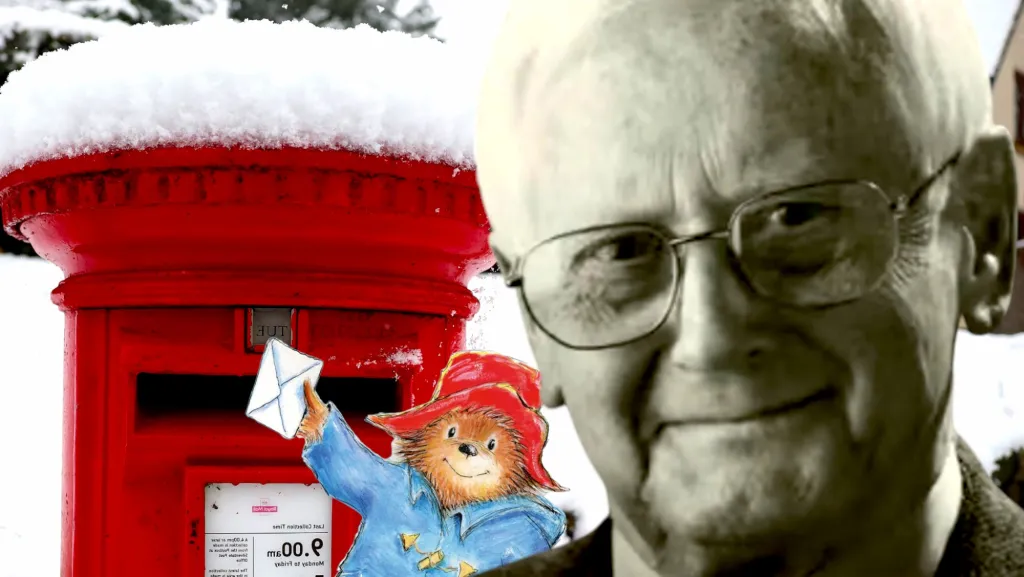
EXCLUSIVE: Lucy Wynne can’t just watch TV. She’s usually scribbling, talking, or scrolling with half an eye on the big screen. On the day she heard her dead Dad’s voice reverberate around her living room, Wynne froze. It was November 2025, 11 years after her father had passed. She had been reminded of his anniversary just days earlier in a Facebook Memory, but the sound of his voice was a visceral jolt.
“F***ing hell, that was Dad. Did you hear that?” she turned to her husband. “No, don’t be stupid,” Darren replied. “It f***ing was,” Wynne exclaimed. She was certain because her father’s voice was his work. When he spoke, his words were heard, not just in Wynne’s childhood home, but in homes across the UK. Paul Vaughan was the voice of the BBC’s heavyweight science series Horizon, and Radio 4’s esteemed arts show Kaleidoscope. He narrated Threads, the atomic bomb drama burned into the brains of a generation of Brits. Vaughan was even the voice of Paddington audiobooks.
And now, on an unremarkable autumnal evening in Buckinghamshire, Wynne was convinced that Vaughan had returned to her in a Royal Mail Christmas ad on ITV. It was not a welcome apparition. Instead of fond memories of her father, Wynne was filled with dread. She thought it was unlikely Vaughan had ever worked for Royal Mail. He certainly hadn’t provided a voiceover from the afterlife. Wynne feared that Vaughan’s voice was somehow recreated without permission. “Bloody bollocks,” she told her husband. “Somebody’s done something.”

A still from Royal Mail’s Christmas ad
The Royal Mail’s 2025 festive campaign (scroll to the end of this story to hear the audio) celebrated how Christmas cards can bring loved ones together. The ads tell mini-stories of people posting heartfelt messages and end with the same slogan, spoken by a mellifluous male narrator: “Royal Mail, it’s so much more than just a card.” The campaign celebrates tangible human interaction, but in doing so, misled its audience.
Responding to questions from Deadline, Royal Mail, Britain’s 500-year-old postal service, admitted that it used artificial intelligence to deliver its festive message to the nation. Instead of paying an actor or voiceover artist to deliver the ad’s slogan, Royal Mail commissioned the ad’s producers to cut the human from the loop. A Royal Mail spokesperson said this is “increasingly common,” but not so common that the company was prepared to be transparent about its editorial choice at the time the ad aired. We only know about the use of AI because Wynne just so happened to recognize what she thought was her father’s voice. But was it Paul Vaughan?
The “so much more than just a card” campaign was overseen by an ad agency called Darwin & the Machines. The agency worked with independent producer Untold Studios to film the human stories at the heart of the campaign, using real actors in the UK. Darwin & the Machines subcontracted the voiceover to a company called Fameplay, an AI specialist based in Czechia. Fameplay is backed by Czech Media Invest, which is chaired by Daniel Křetínský, whose EP Group also happens to own the Royal Mail.
A UK source who worked on the advert told Deadline that Fameplay’s Juraj Felix, a close associate of Křetínský, was present during filming and was evangelical about using AI. “He was obsessed with AI voiceover,” the source said. “The production team told him that it was not a great idea to use AI in connection with such a venerable British brand, but they saw a business opportunity.”
Royal Mail was aware of the plan, but a spokesperson insisted that the voiceover was “not designed to replicate any specific individual.” But what if the Christmas card campaign unintentionally replicated a specific individual? Vaughan’s voice was warm, authoritative, and unmistakably English. “When God speaks, he uses Paul Vaughan’s voice,” observed a Daily Telegraph obituary. His broadcasting, advertising, and audiobook work means there is a wealth of professional material in the public domain featuring his words. In short, Vaughan is exactly the kind of voice that is ripe for training an AI model.
ElevenLabs Summit in London in 2026
Deadline asked Fameplay a series of questions about how it generated the Royal Mail voice, and the company insisted no reference to Vaughan was used in its generative prompts. We can reveal that Fameplay licensed its AI technology from ElevenLabs, the $22 billion AI audio giant that counts Matthew McConaughey among its investors and has a partnership with Michael Caine. Deadline posed similar questions to ElevenLabs, but the company would only confirm that the Royal Mail narration was not a direct voice clone of Vaughan. Asked whether its AI model might have been trained on material voiced by Vaughan, meaning that generic prompts could generate something that sounded like him, ElevenLabs declined to comment.
Royal Mail told Deadline that the advert’s producers “carried out checks and advised that these did not identify any resemblance concerns.” The trouble is that Wynne did identify resemblance concerns. As Vaughan’s daughter put it, there is an “inflection in his voice that no one else has.”
Wynne’s instinctive response is supported by academic study. Dr Nadine Lavan, a voice psychology expert at Queen Mary University of London, said her research shows that family members are very good at recognizing the voice of a loved one. “With Wynne recognizing the voice from the advert as being Paul, we can conclude the voice is very similar,” Lavan said.
Audio analysis supports this conclusion. Vincent Hughes, a professor of forensic speech science at the University of York, said there was “considerable phonetic similarity” between the voice in the Royal Mail ads and that of Vaughan. His analysis was limited by the brevity of the Royal Mail audio, but it was enough for him to conclude that there was material overlap in “segmental patterns,” meaning the pronunciation of consonants and vowels, and “overall voice quality,” sometimes referred to as the “timbre” of a person’s voice.
Deadline also compared the Royal Mail ad with other Vaughan audio using three different open-source AI analysis tools. All three said there were enough similarities to conclude that there was a good chance the AI-generated voice was the “same speaker” as Vaughan.
“It’s outrageous,” said Wynne. “He could have died two weeks ago, for all they knew. He could have been in the care home for the past 10 years, slowly losing his capacity for speech, and then all of a sudden, he’s on the bloody telly. They have not bothered to do their background searches to figure out who this voice is.”
Wynne added that Vaughan would have hated the idea of AI taking away work from voiceover artists. “Pay the money and get somebody in to do the job,” she argued. Wynne has not received an apology from the Royal Mail after complaining. The company told Deadline: “We understand the concerns raised and have taken them seriously.” ElevenLabs has added Vaughan to its No Go Voices, meaning his voice cannot be directly cloned on its platform in the future.
Paul Vaughan
Peter Caulfield, an actor who founded the Nicola Coughlan-backed Save Our Voices Now campaign, said Vaughan’s expertise and unique delivery would have made him a perfect pick for the Royal Mail ad, so it was little wonder the company was drawn to a very similar voice. “Using AI in this way, whether inadvertently or not, without thorough checks, can result in a company stealing a voice from the grave and causing great upset to the family involved,” Caulfield added.
Ultimately, for critics of the Royal Mail ad, it serves as a cautionary tale about artificial intelligence. It is a reminder of the murky ways in which AI models are trained and the lack of accountability when they spit out synthetic results with real-world consequences. Wynne’s story also shows that AI is now infiltrating our daily media diets, without us even realizing. It reveals that even when national institutions like the Royal Mail sell us idealistic visions of authentic human connection, they are prepared to turn to a machine to tell their story.
Below is a video comparing the Royal Mail ad’s AI voice with authentic audio of Paul Vaughan from the BBC and a Paddington audiobook.
>
If you purchase an independently reviewed product or service through a link on our website, The Hollywood Reporter may receive an affiliate commission.
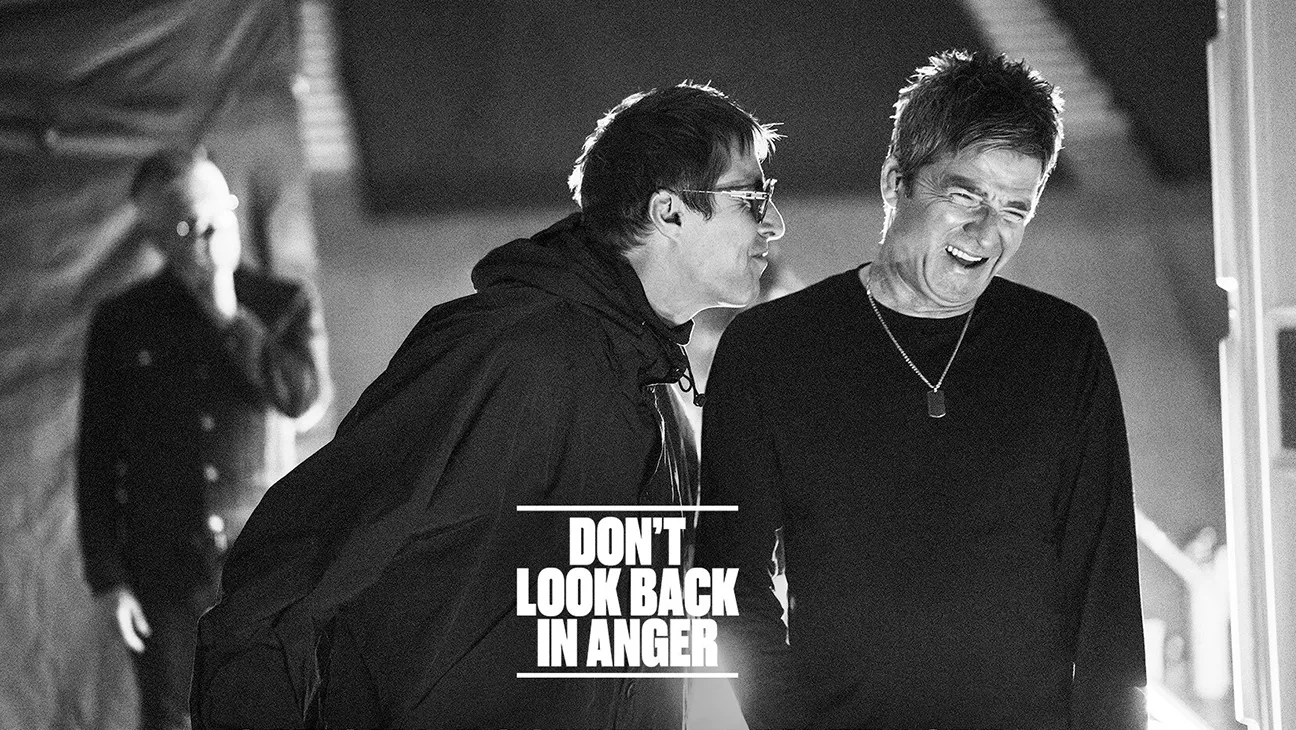
Part concert film, part interview-driven doc, Oasis: Don’t Look Back in Anger provides a backstage (and front-stage) pass to the band’s blockbuster 2025 reunion tour. It also marks the Gallagher brothers’ first joint interview following their 15-year estrangement.
On Oct. 9, the documentary hits Disney+, and while the service doesn’t offer a free trial of its own, Disney+ is included in any of DirecTV’s Signature packages, which do offer a five-day free trial. This means new subscribers can tune it at no cost.
At a Glance: How to Watch Oasis: Don’t Look Back in Anger
Following its September 2026 theatrical release, Don’t Look Back in Anger makes its streaming debut on Friday, Oct. 9 on Disney+, with plans starting at $11.99 per month for the ad-supported package.
While the streamer doesn’t offer a trial period directly, fans can get free access through any of DirecTV’s Signature packages, as all four plans include the Disney+ and Hulu bundle and offer a five-day free trial.
Five-day free trial; packages from $19.99 per month
Disney+/Hulu is included in any of DirecTV’s signature packages: Entertainment, Choice, Ultimate or Premier. Plus, DirecTV offers a five-day free trial for its streaming service, meaning new subscribers can tune in for a limited time at no cost.
Learn more about each plan option, including how to build your own channel lineup (starting at just $19.99 per month), at directv.com.
Don’t Look Back in Anger is giving viewers unprecedented access to Oasis and the Gallagher brothers. Per the official film synopsis, “Oasis: Don’t Look Back In Anger charts Liam and Noel Gallagher’s triumphant reunion tour, Oasis Live ‘25. Created by Steven Knight, it is an uplifting account of the biggest musical event of 2025, capturing the experience of the band and their fans across the world. It includes rehearsal, backstage, and onstage access as well as the first joint interviews with Noel and Liam in over twenty years.”
>
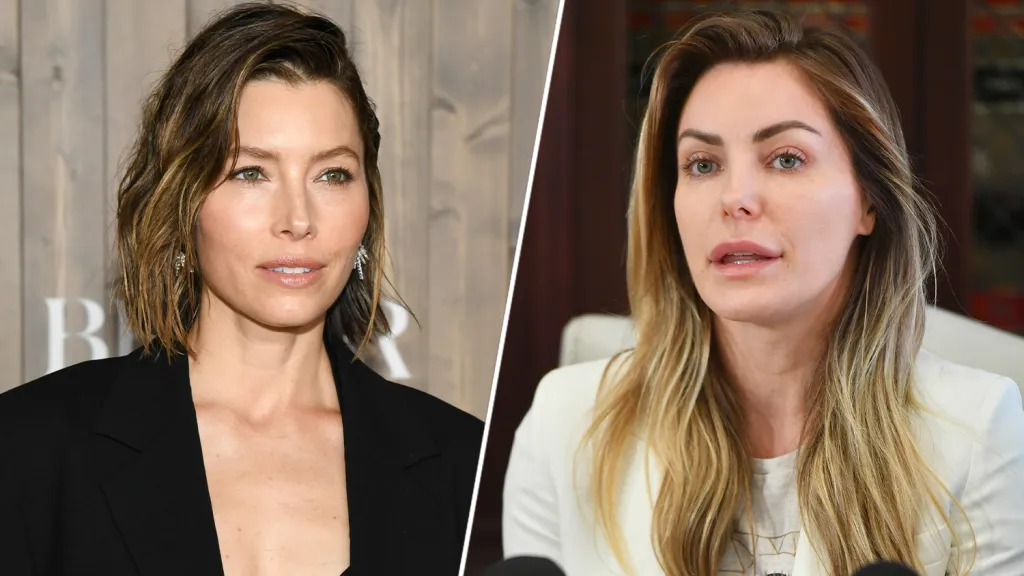
Nearly a decade after his death, Hugh Hefner‘s widow is expressing her disapproval of a coming-of-age story inspired by her late husband.
Crystal Hefner, who was married to the Playboy founder from 2012 until his death at age 91 in 2017, shared a screenshot of an Instagram DM she sent to Jessica Biel asking her to “please reconsider” starring as Hugh’s fictional wife in Lorraine Nicholson’s Searchlight pic Playmates.
“Please reconsider playing Hugh Hefner’s ‘wife’ if this film intends to romanticize him or the Playboy world,” wrote Crystal in the message. “I was actually his wife, and I experienced sexual, emotional, financial and physical abuse in that relationship. Many other women have come forward with allegations of rape, coercion, drugging and exploitation as well. There are also deeply troubling concerns involving minors. I hope everyone involved in this film takes the time to listen to the women who lived it before helping Hollywood turn it back into nostalgia.”
Written and directed by Nicholson, and inspired by her childhood friendship with Hugh Hefner’s kids, Playmates is described as an LA-set coming-of-age story following 13-year-old know-it-all Elle (played by Indiana Elle), who considers the Playboy Mansion her second home. During her time at the Mansion, Elle meets Anna (Lily-Rose Depp), one of seven hopefuls vying to be Playmate of the Month. The two form an unlikely friendship and try to help each other get what the other wants most, a magazine cover and a boy.
Crystal added in a post, “Regarding the film, I hope it’s not something that will glorify Hugh Hefner. With women in the leading roles, my hope is that the film ultimately delivers a message of empowerment: that women can find fulfillment, independence, and a sense of self beyond Playboy.”
With Bill Pullman playing Hugh Hefner, we’re told Biel’s character is a fictional role not inspired by any of his three wives.
Since Hugh Hefner’s death in 2017, Crystal has opened up about the toxic environment of the Playboy Mansion and the abuse she said she endured during her time there, with other Playboy models sharing similar experiences in recent years.
>


Search For Canadian TV Actor Stewart McLean Now Homicide Investigation


These ’90s fashion trends are making a comeback in 2017
According to Dior Couture, this taboo fashion accessory is back
Model Jocelyn Chew’s Instagram is the best vacation you’ve ever had
Emily Ratajkowski channels back-to-school style
9 Celebrities who have spoken out about being photoshopped


Rurouni Kenshin: Hokkaido Arc Manga Takes 1-Issue Break – News


HIDIVE to Stream English Dubs for The World Is Dancing, The Forsaken Saintess and Her Foodie Roadtrip in Another World, The Dangers in My Heart: The Movie Anime – News