
Entertainment
Submit Your Short Film to Corto Condorello 2026


You will be redirected back to your article in seconds
Exclusive: The second edition of Piccolo America’s premier shorts festival Corto Condorello is seeking submissions through November 6. Nicolas Winding Refn will serve as jury president.
ad
>
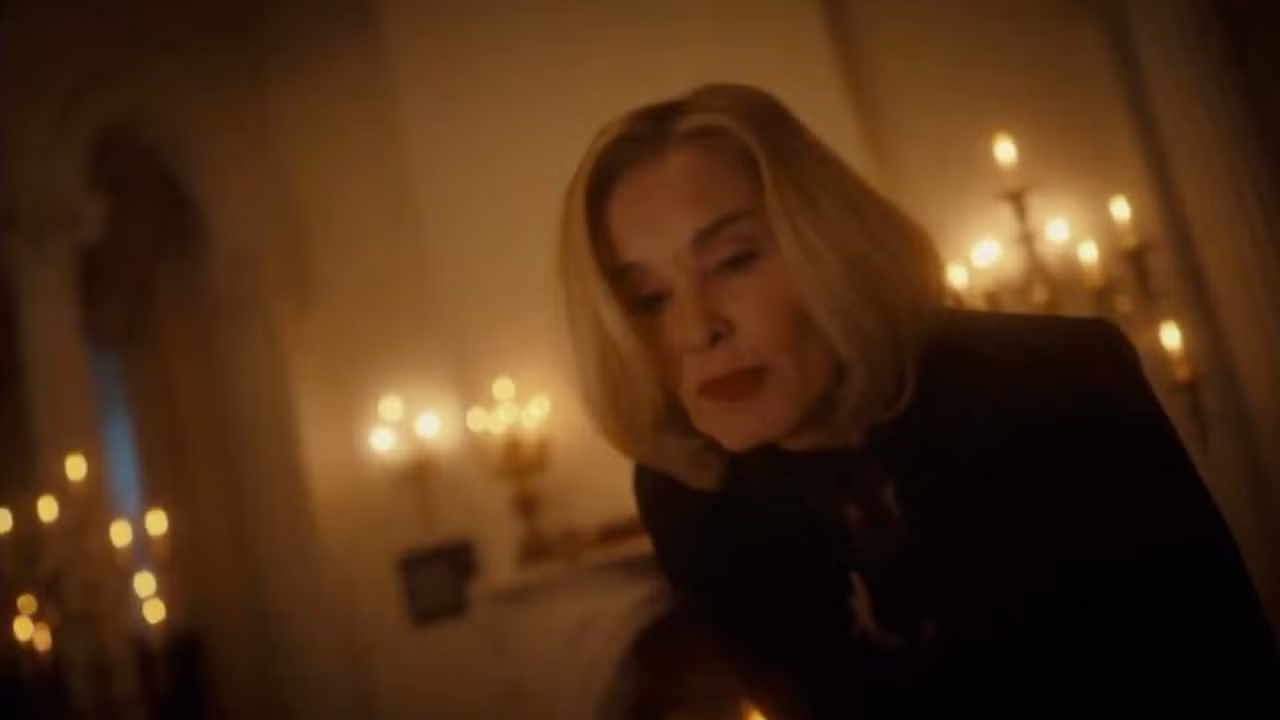
Note: This story contains spoilers from “American Horror Story: 13” Episodes 7-8.
Ding, dong, the baddest witch in town is back! “American Horror Story: 13” finally brought back Former Supreme Fiona Goode (Jessica Lange) for its Avengers-style crossover season, just when the witches needed her the most.
Last we checked in on the Murphyverse’s favorite witch coven they had taken a major loss, after Supreme Cordelia Goode (Sarah Paulson) was killed by “Hotel” killer James Patrick March (Evan Peters) and his band of historical serial killers — at the order the mysterious Mr. Nas (Paul Anthony Kelly), who appears to be Satan himself collecting sacrificed souls in order to rise and conquer the world.
Just as all hope seemed lost, Fiona and some other fan-favorite friends returned to rally the troops at Miss Robichaux’s Academy. But there’s still a big foe to defeat and lots of mysteries left to unravel. Look below for the highlights from Episodes 7-8 of “American Horror Story: 13.”

Episode 7: “The Baddest Witch of Them All”
The episode kicked off right after Cordelia’s murder, with Madison Montgomery (Emma Roberts) bracing the witches for battle. Mallory (Billie Lourd) watched over the Supreme’s body as the other witches hunted down the serial killers in the house — while James played the piano in the background almost the entire installment.
Madison and Queenie (Gabourey Sidibe) took on Jeffrey Dahmer (Seth Gabel), and made a meta reference about, of course, tuning into his season of “Monster.” Madison fangirled a bit over the serial killer before he stabbed her unconscious, but Morwenna (Alex Consani) — one of the new witches this season with resurrection powers — healed her with ease. Then they burned Jeffrey alive — or I guess, dead again.
With Cordelia dead, and apparently too far gone to be revived, Madison took the lead during the offensive against the killers. Meanwhile Coco (Leslie Grossman), a witch with the power to detect calories and people’s metabolism first introduced in “Apocalypse,” began to sense a presence burning way too much energy.
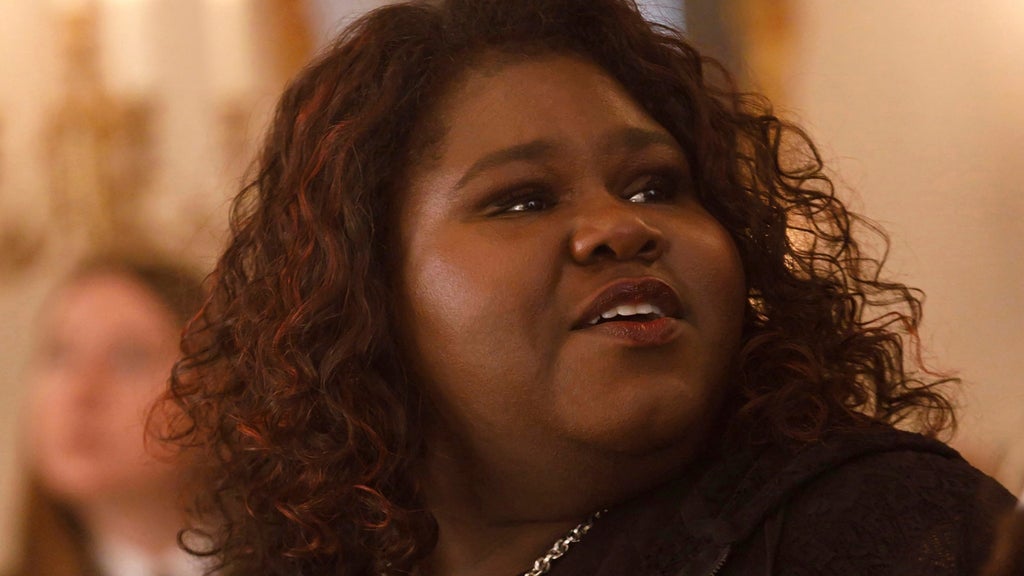
Combining Queenie’s voodoo doll powers and Coco’s metabolic powers, the witches teamed up to kill the Zodiac killer — apparently a diabetic — while Madison and Morwenna worked together to try to bring Cordelia back to life. Mallory also sent the Nightstalker back in time to his old neighborhood so he can get beaten to death, and Ophelia (Avantika) promised to keep the secret about her fellow witch’s time-travel powers.
Then as James continued to play, the front door of the Academy opened … It was Fiona! In for a rude awakening at the sight of her dead daughter. But she didn’t stop to mourn, as she immediately started sparring with James — after he finally got up from the piano. He tried to recruit her for Satan’s cause, but Fiona wasn’t brought back by the devil. It was Cordelia’s spell that summoned her back from hell.
She handily turned James’ killer conspirators to her side, and they violently destroyed him. Then she killed them just as easily with her powers. After returning to her daughter’s body, the witch used her powers to bring Cordelia back to life.
“You summoned me and I came,” Fiona told her daughter. There wasn’t much time for pleasantries though, with Fiona telling the witches it’s time to gang together to save the world.

Episode 8: “Hell No”
Back to knotty pine we go! This episode kicked off with a heartwarming reunion between Fiona and Cordelia, reminiscing on how they used to curl up together when Cordelia would get sick as a child.
Fiona told her daughter about her experiences in hell, and how being stuck reliving her memories and mistakes helped her see the error of her past behavior. Cordelia was willing to let it all go, knowing she needed her mother’s strength to help defeat the looming darkness to come. Fiona decided that helping Cordelia develop the strength to become “a Supreme for the ages” would be her penance.
Through a sludgy autopsy and a hidden snake inside one of the killers’ bodies, Cordelia and Fiona deduced that the devil was behind the attack. Which lead Cordelia to descend to hell to find Papa Legba (Orlando Jones) — a friend of the devil’s and gatekeeper of hell — for help.
The visit was less than friendly, as Papa quickly but temporarily blinded Cordelia — an echo to her fate in “Coven” before rising to become Supreme. She lured him out of hell with the knowledge of Fiona having escaped through Cordelia’s spell; she wanted to make a deal to let the knowledge of her spell die with her, in exchange for a way to defeat Satan. But Papa said he couldn’t do that without summoning Marie Laveau (Angela Bassett) into the picture. The twist? One soul must go down to hell in order for another to come up.
Fiona volunteered, flashing back to her long tenure in the “knotty pine” maze. But Cordelia knew that Fiona would be the only person capable of convincing Marie to help their cause; so Queenie ended up making the sacrifice instead. She ended up reuniting with racist torturer Delphine LaLaurie (Kathy Bates) down there, as the most annoying customer at the endless customer line at Chubbe’s Fried Chicken — the voodoo witch’s version of hell. Don’t worry though, Queenie got her revenge: deep-frying Delphine’s face and making her taste her own skin.
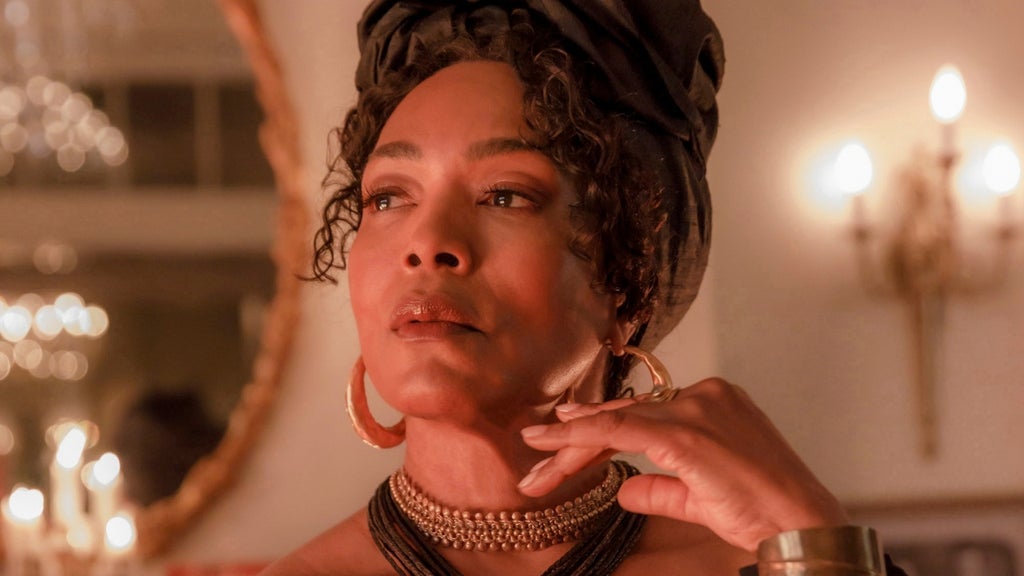
Back in the land of the living, Marie arrived for another face-off with Fiona. But Papa stopped their reading session quickly, assuring them that white and Black magic must work together to defeat the devil, “or everything you know and love will die.”
Fiona and Marie agreed to a detente, and they officially join forces to defeat the devil. How will they do it? Will the internet survive when Constance and Fiona inevitably end up in the same room? Where is this going with only five episodes left?
See you next week.
“American Horror Story” releases new episodes Thursdays on FX and streams the next day on Hulu.

>
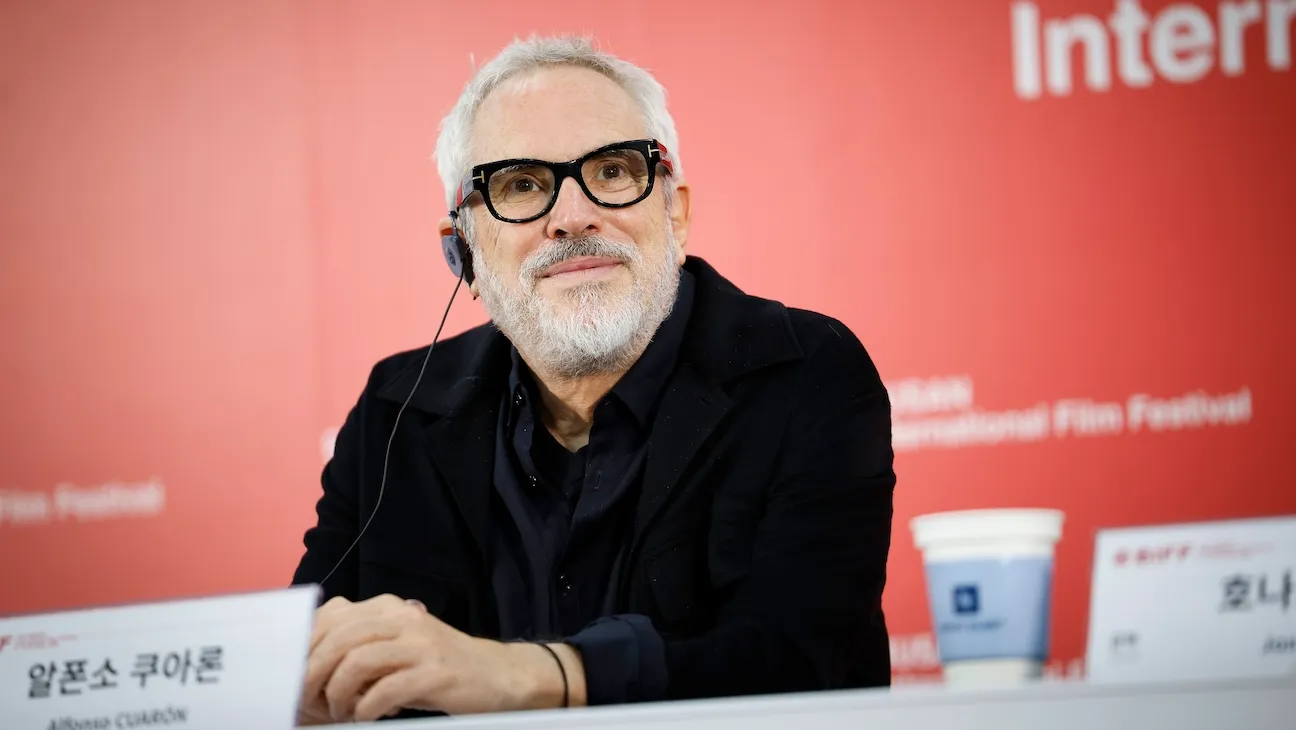
In the impeccable filmography of Alfonso Cuarón, Harry Potter and the Prisoner of Azkaban undoubtedly stands out a little. The film is beloved by fans as one of the strongest installments of the Harry Potter franchise, but it’s also one of the few projects that the multi-Oscar-winning director of Gravity and Roma didn’t develop and write himself.
Cuarón admits he was “a little reluctant to do it” when the opportunity to take on the world of Harry Potter first came his way, but he says making the film was nonetheless one of the most rewarding experiences of his career.
Speaking at the Busan International Film Festival in South Korea on Thursday, Cuarón said, “In many ways, Harry Potter gave me many things — one thing is two of the most beautiful years of my life.”
“I learned so much,” he continued. “I had no idea about visual effects before, but then after Harry Potter it was like second nature. And the whole collaborative work with people who were at the very top of their games — the best production designer, the best cinematographer, like amazing people working together.”
Cuarón also suggested that the industry cachet he gained from the franchise film’s success allowed him to pursue the passion project that has become one of his most acclaimed works among film buffs.
“I had written Children of Men before, and nobody wanted to do it,” he explained. “Then I did Harry Potter, and after, I was able to make Children of Men. So, I have nothing but gratitude towards Harry Potter,” he said.
Cuarón made his first trip to South Korea this week to attend the Busan festival, Asia’s leading cinema event, alongside his filmmaker son Jonás Cuarón, who is presenting his latest feature, Campeón Gabacho, at the event. After attending an Imax screening of his contemporary sci-fi classic Gravity, the elder Cuarón sat down for a master class discussion moderated by Korean director Yeon Sang-ho, best known internationally for his zombie movie sensation Train to Busan. The two directors became acquaintances after that film’s success, with Cuarón later executive producing Yeon’s 2025 mystery thriller Revelations.
The conversation caught Cuarón in a reflective mood, with his observations offering as much life wisdom as insight into filmmaking craft.
“Your films often feel extraordinarily precise and meticulously constructed, yet there is always a sense of life within the frame, as though something unexpected could happen at any moment,” Yeon told Cuarón, adding that he felt this quality particularly strongly in Children of Men. “For a director, do you think control and the unexpected are opposites to each other, or is it only through rigorous control that you can create the conditions to truly embrace the unexpected?” he asked.
“I tend to prepare a lot, and I tend to think and imagine the way that I want the film to be in my head — but then reality starts to shape it,” Cuarón replied. “But isn’t life like that? In many ways, in our lives, we have ideas and expectations. But something I have learned is that if we want to hold onto our expectations against the reality that is presented, we create unhappiness, and also we create a disconnection with the process of life.”
Cuarón said that age and experience have taught him “to prepare and to be ready for things, but at the same time to accept what life brings.”
“That’s when life takes you to incredible places that you would not have expected,” he said, adding, “In that sense, I think the filmmaking process is very connected to the process of life.”
Cuarón said his penchant for long takes — with Children of Men, again, boasting several of recent cinema’s most famous examples — derives from his interest in creating opportunities for instinct and “cinematic miracles” within a process of obsessive technical preparation.
“You prepare and you control in order for the unexpected to happen and to allow it to come to life,” he said.
“I like to shoot very long, continuous takes, because there’s only so much you can control,” he explained. “There’s one thing that you can never control inside those shots, and that is time. Time is flowing completely differently from take to take. The positions, the relationship between actors and camera, and how the light is changing. That’s also the reason I like to shoot natural light as much as possible, because of the accidents of light, the accidents of weather.”
He added: “You have a clarity of what you’re looking for, and then life is just going to not give you that — it’s going to give you something even better, something that you couldn’t have thought of.”
Cuarón said he’s also learned over the course of his career to recalibrate how he measures the success of his creative output, too.
“The rule is that every time I finish a film, I try to dissect what I learned on that film — because I really believe that the only reason to make a film is for what you learn for the next one. Success has nothing to do with the results at the box office, or with critics or awards. It’s about what you learned and how you grow as a filmmaker.”
In comments evocative of his recent social media posts in support of his friend Alejandro González Iñárritu’s frostily received new feature Digger, Cuarón argued that a film’s ultimate value takes time to be perceived.
“I have to say that the film on which I learned the most is probably the film that was least successful on every single front,” he explained. “Children of Men, when it was released, was a film that had very mediocre reviews. It was a box office flop. Nevertheless, nowadays it’s the one that probably people talk about the most. So in that sense, [on] success, only time will tell.”
Yeon later told Cuarón that when he began making films as a younger man, he did so “in an attempt to understand the world.”
“But at a certain point,” he added, “filmmaking made me realize just how little I understand about life. After making films for so many years, has your way of seeing the world become clearer, or has it become more ambiguous?”
“More ambiguous, thank god,” Cuarón replied. “When I was younger, film was everything, and life was only part of film. I guess, now, I embrace life more. Life is just incredible. Film, for me, remains a very important part, but it’s just a part. It doesn’t make the whole of life anymore.”
>
>
Wild find their game, but too late to dig out of early hole vs. Lightning: Takeaways

AHS 13: Inside the Coven Reunion

Animator Kenichirou Katsura Dies at 59
-

 movies5 months ago
Search For Canadian TV Actor Stewart McLean Now Homicide Investigation
-

 Fashion9 years ago
These ’90s fashion trends are making a comeback in 2017
-
Fashion9 years ago
According to Dior Couture, this taboo fashion accessory is back
-
Fashion9 years ago
Model Jocelyn Chew’s Instagram is the best vacation you’ve ever had
-
Fashion9 years ago
Emily Ratajkowski channels back-to-school style
-
Fashion9 years ago
9 Celebrities who have spoken out about being photoshopped
-

 Anime4 months ago
Rurouni Kenshin: Hokkaido Arc Manga Takes 1-Issue Break – News
-

 Anime3 months ago
HIDIVE to Stream English Dubs for The World Is Dancing, The Forsaken Saintess and Her Foodie Roadtrip in Another World, The Dangers in My Heart: The Movie Anime – News