
Sofia Wylie as Grace in ‘The Body’
Netflix


Hong Kong filmmaker Ann Hui, who received the Camellia Award at the opening of Busan International Film Festival, shared her experiences of being a woman filmmaker in a male-dominated industry at a festival press conference, along with her thoughts on how Hong Kong cinema has evolved.
When asked how other women had helped shape her career, Hui said she’d had five women bosses when she entered the industry back in the ‘70s who had welcomed her and helped her to become established as a filmmaker.
“I was lucky because my first five bosses really supported me, gave me freedom and support, and allowed me to do what I wanted with the TV programs I was making. They were only criticizing me to make my work better,” Hui said.
“Afterwards I met people who were not so nice, so I really want to talk about these five women in my masterclass. Some were company bosses and there were some actresses as well. It’s true that I seem to learn much less from men. I don’t know why because I’m not unfriendly with them, but perhaps it’s like karma in Buddhism, I don’t work with them as well.”
Hui started her career working for Hong Kong broadcaster TVB, back then an incubator for Hong Kong’s new wave of pioneering filmmakers, before moving into features, many of which have won awards at major festivals, spanning the ‘80s to the present day.
Her body of work includes an early trilogy about the Vietnamese boat people – Below The Lion Rock, The Story Of Woo Viet and Boat People – which was followed by films in a variety of genres including The Romance Of Book And Sword, Eighteen Springs, All About Love, A Simple Life, which won best actress in Venice, and The Golden Era, which won best director at Taiwan’s Golden Horse. Her most recent work, Elegies (2023), a documentary about Hong Kong poetry, opened Hong Kong International Film Festival and was nominated for the Golden Horse Awards.
Looking back at developments in the Hong Kong film industry since the ‘70s, Hui also talked about the changing status of female filmmakers. “When I worked in TV in the ‘70s, and later when I made my first film, I tried my best to work on subjects like cops and robbers that men do,” Hui remembered. “I wanted to prove that women can do what men do.”
“But once I’d fulfilled that intention, I got back to subjects that really interest me; about the predicament of people in modern-day society, which is also quite a lot about women. It wasn’t intentional to make women’s stories, that’s just the way it turned out.”
She also observed that when she started her career, there were many women directors in television, but only two or three in the film industry. Now there are about 10-20 women directors actively working in the Hong Kong industry, she observed (including many that have had films screen in Busan, Hong Kong and Tokyo film festivals, including Norris Wong, Oliver Chan, Heiward Mak, Jessey Tsang and Cheuk Wan-chi).
“Nowadays their position has become much better,” she continued. “Back in the ‘70s, I felt under pressure to have very masculine habits and dress like a man. It was almost like pretending to be a man when I’m on set. But nowadays, the female directors do not hide their gender when they’re working, and don’t mind coming across as quite feminine. They’re also much more conscious in the way they’re trying to make films telling women’s stories, which I think is totally legitimate.”
While saying that she felt “very jealous” of developments in Korean cinema, Hui said she’s also encouraged by the new generation of Hong Kong filmmakers, who have a different approach to the freewheeling and commercially driven filmmakers of the ‘80s and ‘90s.
“Despite the lack of investment, the young filmmakers in Hong Kong are still very dedicated, hardworking, and talented. I feel that if they have an opening, they will be able to make better films than we did, because in the ‘80s and ‘90s it was all about entertainment. There was a lot of volume but very little content.
“But now the filmmakers are trying their best, perhaps because it’s so difficult to raise investment, they put a lot of effort into the planning and some of the film are really good.”
She also mentioned the big improvements in acting in Hong Kong cinema. “Back in our era, most of the actors and actresses came from soap operas or beauty pageants. Now they all come from the Hong Kong Academy of Performing Arts, so they have a really solid foundation in acting. They also have really professional ethics.”
While accepting the Camellia Award at Busan’s opening ceremony, Hui mentioned that it was getting “more difficult for her to make films” as she turns eighty next year. She joked in the press conference about being worried that she’s trip on the red carpet because she’s not so steady on her feet these days.
But she also said that she’s still enjoys making movies and is currently developing some ideas, so she’s not ready to announce her retirement just yet. “My judgment and understanding has not been reduced, in fact experience gives you a deeper understanding. So I still want to make films because I want to convey this new understanding that I have now in my films.”
Jointly presented by BIFF and Chanel, the festival’s Camellia Award honors pioneering women filmmakers who advance the role of women in Asian cinema. Previous recipients have included Korean production designer Ryu Seong-hie (Decision To Leave) and Taiwanese filmmaker and actress Sylvia Chang (Love Education, Daughter’s Daughter).
>

Peaky Blinders producer Banijay wants the U.S. to know its name.
On stage at MIPCOM today, Banijay Entertainment Executive Chairman Jeff Zucker talked up the huge independent studio’s reputation in other parts of the world and confirmed a U.S. scripted push was likely.
“Scripted is an area we will look to develop in the years ahead. We are well capitalised and ambitious, and we see an opportunity,” he said.
“Banijay does not always get enough credit for the scripted strength it already has,” he added. “It has produced major titles that have topped the charts on Amazon, Netflix and Apple, with more projects coming. Given our combined capabilities and new capitalisation, the U.S. represents a fresh opportunity in scripted.”
His comments come after Banijay Entertainment and the RedBird IMI-owned All3Media merged to create a massive Europe-based production and distribution studio with pro forma revenues of over $8B, making it the largest independent studio in the world.
The company now houses the likes of The Traitors, Big Brother, Black Mirror, Midsomer Murders, Survivor and Deal or No Deal, and its production companies are making the upcoming Beatles movies, along with formats for the likes of Netflix and Prime Video in various territories.
Chatter in the early stages of MIPCOM have centered around what comes next for companies such as Banijay, Fremantle and ITV Studios, the latter of which is set to become a standalone business if Sky completes its takeover of ITV.
We understand Banijay is serious about its ambitions in the states, with acquisitions an option. Earlier this year, Banijay was linked with a takeover of Hunger Games studio Lionsgate, but Zucker played his cards close to his chest today on stage in Cannes.
“We are not going to be specific, but Banijay does not need anything and is open to great ideas,” he said. “That is the advantage of having shareholders who are well positioned, well capitalised and ambitious. We will continue to be opportunistic and look to grow, but we do not have to do anything. There is no company we feel we must acquire.”
Both Banijay and All3Media had far smaller profiles in the U.S. than in the UK and Europe, despite having extensive production businesses there. Banijay Americas companies make the likes of Below Deck, MasterChef and The Real Housewives of Atlanta, Big Brother and Vanderpump Villa, while All3Media America is behind The Traitors, Gordon Ramsay Uncharted and Undercover Boss.
Marco Bassetti, Banijay Entertainment’s CEO, also indicated a focus on the American scripted market, where Banijay has made few inroads to date. “At the moment, we are primarily in Europe, Brazil, Mexico, Australia and India,” he said. “We are not yet deeply involved in the U.S. scripted market, although that may change in the future.
“We have fantastic talent within the group that can continue to create successful scripted shows. Recent examples include the Culpables trilogy, which became Amazon’s most-watched movie franchise, as well as The Responder, Peaky Blinders and many others.
“There is a significant opportunity in scripted. But we need to enter markets with the right people and the right intellectual property, and we need to invest in the institution. Scripted takes much longer to generate a return than some other parts of the business.”
‘Nothing To Be Jealous Of’
Bassetti, who has been CEO of Banijay in various guises since 2013, provided a bullish read of his company’s position in the market following the All3 deal.
“I cannot believe how far we have come, but I believe we have a fantastic future ahead,” said Bassetti. “We can now consider ourselves not only a production company but an entertainment company – we can be compared with some of the biggest European and U.S. studios. We have nothing to be jealous of when it comes to companies such as Sony and the other major studios.”
Zucker and Bassetti had taken to the stage at MIPCOM Cannes today for a keynote talk about the story of Banijay. The session began with an extended VT promoting unity between the Banijay and All3 businesses, with an adapted version of Louis Armstrong’s ‘Cheek to Cheek’ playing underneath a high-tempo video showcasing their content and union.
Early in the session, Zucker provided some background on the dance that led to the merger and revealed that Bassetti had called him a little over a week after RedBird IMI closed its takeover of All3 in 2024.
“The rationale for the call was to float the idea that All3’s English-language expertize and Banijay’s global IP exploitation business could together create a stronger business,” said Zucker.
“All3Media had a strong position in English-language markets, fantastic companies and a very strong digital business, added Bassetti. “What they were missing was our large international footprint. We have people all over the world and the ability to exploit intellectual property across live entertainment, sport, digital and other areas.
“We felt that combining the two companies could create one of the strongest businesses in our landscape. That is why I made the call. We always believed it could be a good combination.
“There was also a broader industry reason. Today, it is important to have a significant footprint and the financial capacity to invest in and retain talent. We have a fantastic creative network, with around 25 people coordinating creativity around the world across scripted and unscripted. Together, we have even more potential.”
Banijay founder and chairman Stephane Courbit later met with Zucker in New York, though full merger talks didn’t begin until the following year, once RedBird IMI had ended talks with ITV over ITV Studios.
RedBird IMI had “fairly lengthy discussions with ITV Studios” of around six to nine months that “ultimately did not go anywhere,” said Zucker.
“By then, we were about a year into our ownership of All3Media,” he added. “Not long after that, we began speaking with Banijay, and those discussions took another six to nine months. Here we are, two years after acquiring All3Media, and we could not be more excited to be here talking about it.”
>
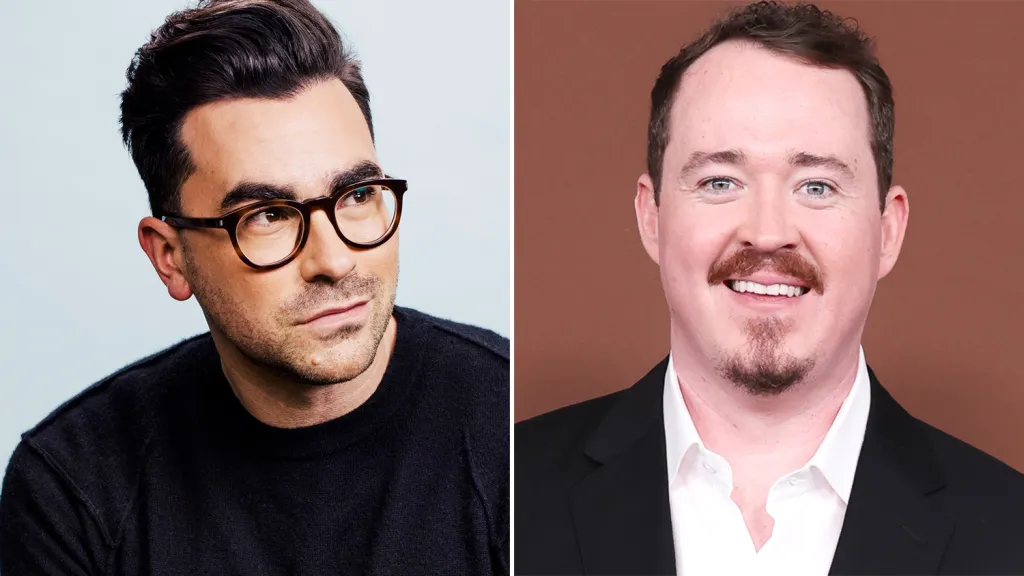
Dan Levy is not holding back his thoughts on Shane Gillis‘ Saturday Night Live monologue.
The Schitt’s Creek star posted an Instagram reel Sunday night, slamming Gillis. It opens with him saying “Women wearing short shorts at the gym does not make them whores. It makes the men calling them whores misogynists. There’s a difference there. By the way, I’ve seen more men’s nipples at the gym than I’ve ever seen women showing their bodies off.”
Levy was responding to the portion of Gillis’ monologue in which he said “I haven’t been to the gym in so long, I didn’t know women just dress like whores now. Look, I’m sorry, there’s no other way to describe [it]. Have you seen it? I’ve seen it. You’ve seen the shorts?”
Gillis went on to describe them as “those neon,” “artificial bait-colored” ones where “the wrinkles go around the cheeks and all combine at the butthole.“
And don’t look!” Gillis added. “You’re not allowed to look. For real! Don’t look, ‘cause they are filming.”
Levy, who hosted SNL himself in 2021, continued, “I’m speechless that something like that can exist on live national television. And to be perfectly honest, more men need to be standing up in opposition to it because it’s complacency that has created the environment in which women are sexually assaulted and it’s a ‘conversation’ as opposed to a ‘crime.’”
“Men need to be defending women more,” he continued. This is not a women’s issue, this is an everybody issue. Because the more that men objectify women in the media, the more that other men see them as objects and treat them as objects. They are not objects, they are superior human beings to men, okay? And I’m sorry if this gets me in trouble with the internet, but f—!”
Gillis also accidentally dropped an F-bomb in a Dr. Seuss-inspired sketch, which he apologized for.
Gillis previously hosted SNL in 2024 and 2025. They were his first appearances after he was fired in 2019 prior to making an appearance as a cast member on the late-night show, an executive decision made by network NBC after his previous anti-Asian and anti-gay comments were resurfaced.
>
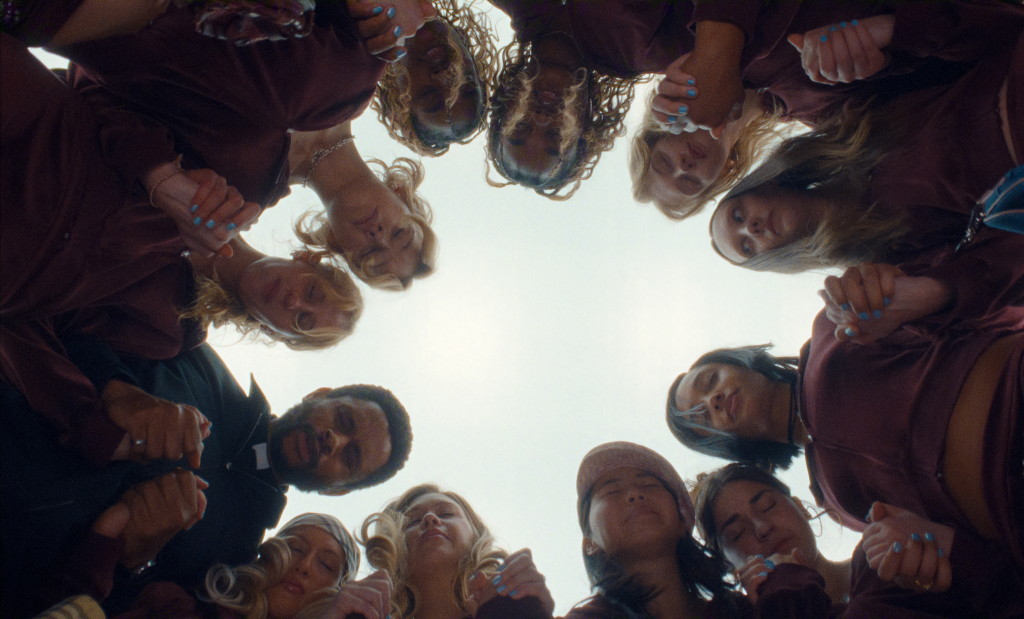
The trailer for Netflix’s high school-set horror series The Body, has arrived just in time for spooky season. The show premieres November 11 on Netflix.
This raunchy teen psychodrama from creator Quinn Shephard (Not Okay, Under the Bridge) takes the intense pressures, rivalries, and intimacy of high school female friendships and treats them with almost biblical, high-stakes importance – all set in the fun backdrop of the early 2000s.
“Can a person really contact the devil?” a student asks in the opening of the clip, answered by an instructor that “Lucifer wouldn’t be a true foe if he couldn’t be summoned, would he?”
It looks like another student gets a bloody nose as the red liquid drips onto her desk in class and a curious classmate asks how one would know if Lucifer was present.
“There would be signs,” the ominous answer reveals.
The Body centers around a dance team, who audition three new girls for their squad in tryouts, telling them to roar like their mascot, the Lions. Sofia Wylie’s Grace stands in the middle of the trio, the girl to her right cheering normally and the girl to her left, Lisbeth (Geena Meszaros) roaring animalistically. Lisbeth gets invited to some sort of costume party, where a dance-team initiation goes very wrong.
Sofia Wylie as Grace in ‘The Body’
Netflix
As a result, the whole town starts asking the same question: “What happened to Grace?”
The girls scramble to cover up what happened at their shindig, agreeing to not tell anyone they had it and also omit that drugs were present.
Tension builds across the school as Sara Boustany’s Elise is carried out of what looks like mass, winking at students in the pews as she hangs limply.
Sara Boustany as Elise in ‘The Body’
Netflix
The clip ends with Shirley Chen’s Maddie googling “Is my friend possessed by the devil?”
The Body consists of eight episodes, starring Kristina Bogic, Sara Boustany, Sofia Wylie, Geena Meszaros, Shirley Chen and The Traitors winner Gabby Windey. Still more cast include Nnamdi Asomugha, Jackson Kelly, Orlando Norman, Emily Roman, Kyra and Phallon Pierce, Bella Neuspiel and Sarah Abbot. Amy Israel, Peter Chernin and Johs Stern executive produce for North Road alongside Riley Keough, Gina Gammell and Sacha Ben Harroche for Felix Culpa.
See more new images released by Netflix below:
L to R: Bella Neuspiel as Katie, Shirley Chen as Maddie, Sara Boustany as Elise in ‘The Body’
Netflix
L-R: Kyra Pierce as Bailey, Bella Neuspiel as Katie, Sara Boustany as Elise, Sarah Abbot as Olivia, Geena Meszaros as Lisbeth, Shirley Chen as Maddie, Emily Roman as Claire, Phallon Pierce as Brit in ‘The Body’
L-R: Orlando Norman as Steven, Marcel Ruiz as Tyler in ‘The Body’
Netflix
L-R: Kristina Bogic as Anya in ‘The Body’
Netflix
L-R: Gabby Windey as Coach Miller, Geena Meszaros as Lisbeth, Kristina Bogic as Anya, Shirley Chen as Maddie in ‘The Body
Netflix
Jackson Kelly as Leo in ‘The Body’
Netflix
L-R: Orlando Norman as Steven, Kristina Bogic as Anya, Marcel Ruiz as Tyler, Sara Boustany as Elise, Emily Roman as Claire in ‘The Body’
Netflix
Nnamdi Asomugha as Father Samuel Franklin in ‘The Body’
Netflix
Geena Meszaros as Lisbeth in ‘The Body’
Netflix
>


Search For Canadian TV Actor Stewart McLean Now Homicide Investigation


These ’90s fashion trends are making a comeback in 2017
According to Dior Couture, this taboo fashion accessory is back
Model Jocelyn Chew’s Instagram is the best vacation you’ve ever had
Emily Ratajkowski channels back-to-school style
9 Celebrities who have spoken out about being photoshopped


Rurouni Kenshin: Hokkaido Arc Manga Takes 1-Issue Break – News


HIDIVE to Stream English Dubs for The World Is Dancing, The Forsaken Saintess and Her Foodie Roadtrip in Another World, The Dangers in My Heart: The Movie Anime – News