
Anime
Blue Thermal’s Kana Ozawa Announces New Manga – News

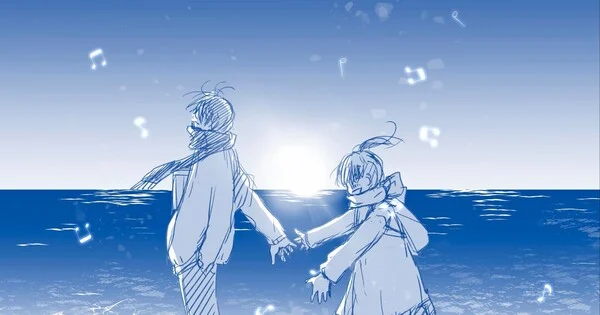
Ozawa to launch new manga Ao Sansan in December
Manga creator Kana Ozawa announced on their X (formerly Twitter) account on Thursday a new manga titled Ao Sansan (Blue Brilliance), which will start serialization in December. Other details such as the manga’s publication medium will be revealed at a later date. Ozawa stated that the manga is a new story that they have been developing for the past few years.

©Kana Ozawa
Ozawa launched the Blue Moment manga on Kadokawa‘s Comic Bridge Online website in November 2018. Kadokawa published the manga’s second compiled book volume in September 2020. The manga inspired a live-action series in 2024.
Ozawa’s Blue Thermal -Aonagi Daigaku Taiiku-kai Kōkū-bu- (Aonagi College Sports Festival Aviation Club) manga ran in Shinchosha‘s Monthly Comic @Bunch magazine from April 2014 to November 2017, and Shinchosha published five compiled book volumes for the manga (the manga’s fifth volume mentions that only the “first part” of the story has concluded). Ozawa launched a prequel manga titled Blue Thermal: First Flight on the LINE Manga app in November 2021, and ended it in January 2022. Shinchosha published the manga’s one compiled book volume in February 2022.
The main manga’s anime film adaptation premiered in Japan in March 2022. Eleven Arts and Shout! Factory released the movie on home video.
Source: Kana Ozawa‘s X/Twitter account
Disclosure: Kadokawa World Entertainment (KWE), a wholly owned subsidiary of Kadokawa Corporation, is the majority owner of Anime News Network, LLC. One or more of the companies mentioned in this article are part of the Kadokawa Group of Companies.
>

Ace Combat 8: Wings of Theve debuts at #1
Japan’s Game Ranking: September 28-October 4
| 1 | PS5 | Ace Combat 8: Wings of Theve | Bandai Namco Entertainment | 63,013 | 63,013 | 10/02/2026 |
| 2 | PS5 | Dynasty Warriors 3 Remastered Complete Edition | Koei Tecmo Games | 18,724 | 18,724 | 10/01/2026 |
| 3 | NSw | Rhythm Heaven Groove | Nintendo | 15,894 | 1,065,816 | 07/02/2026 |
| 4 | NSw 2 | Fire Emblem: Fortune’s Weave | Nintendo | 12,787 | 166,646 | 09/17/2026 |
| 5 | NSw 2 | Minecraft Dungeons II | Nippon Microsoft | 12,093 | 12,093 | 09/30/2026 |
| 6 | NSw 2 | Dynasty Warriors 3 Remastered Complete Edition | Koei Tecmo Games | 11,684 | 11,684 | 10/01/2026 |
| 7 | NSw 2 | Derby Stallion 2 | Game Addict | 7,819 | 37,155 | 09/24/2026 |
| 8 | NSw 2 | Xenoblade Chronicles 2 | Nintendo | 5,780 | 5,780 | 10/01/2026 |
| 9 | NSw 2 | Splatoon Raiders | Nintendo | 5,403 | 676,605 | 07/23/2026 |
| 10 | NSw | Tomodachi Life | Nintendo | 5,318 | 1,623,422 | 04/16/2026 |
| 11 | NSw 2 | Mario Kart World | Nintendo | 4,650 | 3,043,716 | 06/05/2025 |
| 12 | NSw | Sullyland Nursery Rhyme | Idea Factory | 3,971 | 3,971 | 10/01/2026 |
| 13 | PS5 | Ghost of Yotei Complete Edition | Sony Interactive Entertainment | 3,216 | 3,216 | 10/01/2026 |
| 14 | NSw | Muchi Muchi Pork! & PinkSweets Boosted | City Connection | 3,193 | 3,193 | 10/01/2026 |
| 15 | PS5 | Onimusha: Way of the Sword | CAPCOM | 3,088 | 113,175 | 09/04/2026 |
| 16 | NSw 2 | Elden Ring Tarnished Edition | FromSoftware | 3,020 | 43,259 | 08/28/2026 |
| 17 | NSw | Minecraft | Nippon Microsoft | 2,713 | 4,286,436 | 06/21/2018 |
| 18 | NSw 2 | Dragon Quest XI S: Echoes of an Elusive Age – Definitive Edition | Square Enix | 2,432 | 13,276 | 09/24/2026 |
| 19 | NSw 2 | Pokémon Pokopia | Nintendo | 2,194 | 1,132,285 | 03/05/2026 |
| 20 | PS5 | EA Sports FC 27 | EA Games | 2,089 | 11,962 | 09/25/2026 |
Source: Famitsu
>
Anime
Spy×Family, Jujutsu Kaisen, Witch Hat Atelier Manga Rank on NYT October Bestseller List – News
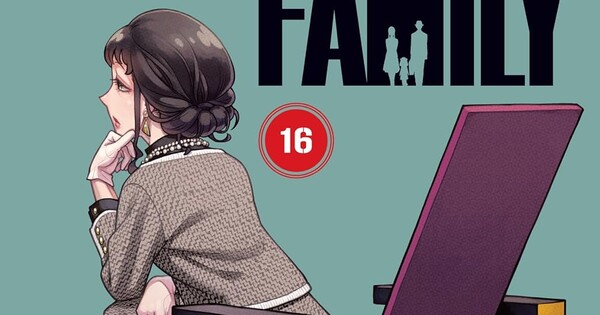

© Tatsuya Endo, SHUEISHA Inc., Viz Media
The 16th volume of Tatsuya Endō‘s SPY x FAMILY manga ranked at #6 on The New York Times’ monthly Graphic Books and Manga bestseller list released in early October.
The manga on this month’s list include:
The first volume of Jujutsu Kaisen ranked at #7 in September. The eighth volume of Kagurabachi ranked at #9 and the first volume of The Summer Hikaru Died ranked at #15 in the same month.
The New York Times posted its first updated Graphic Books and Manga bestseller list in October 2019, and it is one category of the newspaper’s current bestseller lists.
Source: The New York Times’ Graphic Books and Manga list
>

Hans Christian Andersen‘s 1837 literary fairy tale wasn’t necessarily a natural fit for Japan. Japanese mermaids, as readers of Rumiko Takahashi know, are more likely to grant immortality if you consume their flesh than to fall in love with a human. But the strange metamorphosis of storytelling can always bring us something new. When Andersen’s tale was first translated into Japanese in the later Meiji period – Takasu Baikei translated it in 1904 – it became part of the storytelling landscape. While scholars like Lucy Fraser have examined the question of what the appeal was, I’ll let you explore that on your own, because what we’re here to talk about is not why anime and manga love The Little Mermaid, but the many forms her story has taken over the years. From 1975 through 2026, mermaids have swum through Japanese pop culture in ways that are both unique and deeply indebted to Andersen’s original.

© PRODUCTION REED 1991
History’s Long Tail
First, let’s take a brief look at the literary history that was in play long before anime and manga became regular features. Part of this is understanding that Andersen’s tale is what’s called a “literary fairy tale.” This means that it’s a fairy tale-style short story made up solely by the author. Most of what we call “fairy tales” are stories that exist all over the world and were passed down through oral tradition. These stories constantly evolved depending on who told them, and specific countries had their own versions. These fairy tales are all classified using the Aarne-Thompson-Uther system, whereby they’re all assigned a tale type number – so, for example, Little Red Riding Hood is ATU333. Any story that meets the basic criteria of ATU333 is classified as a Little Red Riding Hood story, even if it features a bear or an ogress instead of a wolf – or no red headwear at all. But a literary fairy tale lacks that history, and there’s an argument that the stories’ original form in print gives them less leeway to evolve. (Some folklorists lament that fairy tales stopped changing when collectors like Joseph Jacobs and The Brothers Grimm wrote them down, providing “definitive” versions.)

© Pushkin Press
It’s fitting, then, that one of the best-known print takes on the mermaid story in Japanese publishing is a short story. Jun’ichiro Tanizaki’s The Siren’s Lament appeared in 1917, not long after Andersen’s story was translated into Japanese. Tanizaki’s tale owes little to Andersen beyond its use of the Western mermaid. It instead draws on the freak shows of the 19th century, when a “mummified mermaid” known as the Feejee Mermaid made the sideshow rounds. Tanizaki’s mermaid is sometimes interpreted to be representative of the exotic allure of the Occident, although the text itself feels more like a lament for a freedom that has been snatched away. Later, in the 1960s, parodic versions of Andersen’s tale appeared, such as Abe Kobo‘s 1962 Legend of the Mermaid, while in the 1980s and 90s, feminist takes on the story emerged, such as Yumiko Kurahashi’s Cruel Fairy Tales for Adults (1984) and Yuko Matsumoto’s Fairy Tales of Very Sinful Princesses (1996).

© Kiyokawa Asami
Mermaid Manga
Mermaid manga runs the gamut of all possible mermaid expressions. From Goth to magical girls, there’s a wide range of mermanga out there, and plenty have been translated into English. Sadly, one that has not is Yuki Yoshihara‘s 2003 Ningyo Ōji. You may be familiar with Yoshihara’s brand of unhinged josei smut from Viz‘s release of Butterflies, Flowers (although her Aisuru Hito is my hands-down favorite), and the short stories in Ningyo Ōji are no exception – one is a romance between a Catholic priest and a succubus, for example. But the title story, which translates to “Merman Prince,” is a particularly interesting take on the mermaid love story. The merman the heroine meets is, quite literally, gender fluid: they can change the gender of their human body at will. (And yes, the heroine has sex with them no matter what.) While at first this just looks like Yoshihara doing her usual thing, merfolk have often been a symbol for trans folk, as their lower halves don’t allow for obvious genitals. Yoshihara’s gender-fluid merperson is therefore more than an excuse to draw both straight and queer love scenes; it expresses how merfolk defy our typical gender stereotypes and norms. Since Yoshihara very often disguises a “love is love” message in her works (again, possibly just as an excuse to draw more varied love scenes and stories), Ningyo Ōji stands out as a perfect example of the theme.

© Flower Comics
The equation of mermaids with sex isn’t limited to romances, though. Junko Mizuno‘s Mermaid Princess (2003; clearly a good year for mermaids), now sadly out of print in English, features a dark tale about sex work and exploitation. In Elizabethan times through the 18th century, the word “mermaid” was slang for a sex worker (which changes the meaning of a few lines in Shakespeare’s A Midsummer Night’s Dream), so Mizuno is drawing on a legitimate body of work for her manga. Cutting down the number of mermaid sisters from six to three, Mizuno’s fishy ladies lure human men to their undersea pleasure palace, where they sleep with and consume them. But when the youngest sister, Ai, falls in love with human Suekichi, things get very weird very quickly. Mermaid Princess plays with Andersen’s tale and old slang terms in ways that can get very strange (there are aliens and dragons involved), and the result is a mishmash of themes and plots. But it still manages to hearken back to Tanizaki’s The Siren’s Lament in the alluring qualities of the mersisters and sister Julie’s fate, proving that Mizuno isn’t just creating her world out of whole cloth – she’s aware of the historical and cultural contexts she’s working within.

© Akihito Tomi
That’s also true of Akihito Tomi‘s A Sinner of the Deep Sea (2020). The basic premise is to ask what would happen if The Little Mermaid had a best friend. Ryuu plays Andersen’s mermaid, with one important twist on the norm: she’s portrayed as less desperately in love with human Yuki than with the idea of a forbidden romance. Jo, Ryuu’s best friend, is determined to make sure that Ryuu doesn’t get punished beyond what she ought to be– and she quickly unearths the truth that merfolk have always had the medication (a pill in this version) to turn tails into legs. Ryuu’s situation is one that she was essentially manipulated into, with people taking advantage of her romantic nature and crush on a human. The most important piece of this retelling – besides the exquisite art – is Tomi’s take on the mermaid’s love for the human prince. It’s easy to forget in most strict reinterpretations of Andersen’s story that the mermaid is only fifteen years old. Most people don’t end up with the person they think they’re madly in love with at that age, and Tomi’s Ryuu (who is, it must be said, an adult) demonstrates that if someone had been there with her and had listened to her, things might have turned out differently. Much as we can read Romeo and Juliet as being pushed together by Friar Lawrence to solve their parents’ problems, Ryuu is manipulated into her position by merfolk seeking societal change.
Ryuu isn’t the only heroine to be directly tied to Andersen’s fairy tales in manga, of course. Seira, the protagonist of Reiko Shimizu‘s Moon Child (1988-1992), is the actual reincarnation of the original Little Mermaid. But it’s much more common for mermaid manga to use the basic idea of mermaids and Andersen’s story to do something completely different. Yū Itō‘s Ningyohime 2001 -Aqua- (1997) uses the idea of looking for mermaids as the basis for its otherwise basic love story, while Yoshino Fumikawa and Miya Tashiro‘s In the Name of the Mermaid Princess (2021-2023) uses the plot as a way to explore racism and ableism in a fantasy setting. Even Osamu Tezuka tackled mermaids in Angel Hill (1960-61) in a variation on the themes that is distinctly his own. And of course we can’t forget Mermaid Melody: Pichi Pichi Pitch (2003) and its sequel (2021), where Pink Hanamori has her mermaid’s beautiful voice be the basis for a magical girl story.

© 2003 Pink Hanamori
Mermaid Anime
As you know, Mermaid Melody: Pichi Pichi Pitch also received an anime adaptation in 2003-2004, spanning an impressive ninety-one episodes, and it’s not the only magical girl story to dabble in mermaids – the Pretty Cure franchise not only includes Cure Mermaid in 2015’s Go! Princess Precure but also an actual mermaid princess from an undersea kingdom in 2021’s Tropical-Rouge! Precure. Laura (whose name is close enough to Lara of 2026’s Goodbye, Lara that we can’t discount a link) is a much more selfish mermaid than we typically see in retellings of the tale. She’s interested in saving her kingdom, yes, but her ultimate goal is to become the next queen, and that informs her every action. By the time she’s able to transform into Cure La Mer, she’s also undergone a transformation into a less selfish person, but the point of her character is to counterbalance the series’ villain, the Witch of Delays. Like other little mermaids before and after her, Laura must cope with the witch’s demands – in this case, to not move forward. It’s an interesting take on the story, because the sea witch in this case is trying very hard not to allow the plot to progress: something that might have saved Andersen’s original mermaid while also offering a perhaps unintentional commentary on what happens when folklore is written down.

© ABC-A 東映アニメーション
The gold standard when it comes to accuracy (in animated form), however, is the 1975 The Little Mermaid anime film. Closely adhering to Andersen’s original, the story follows Marina, the youngest of six mermaid sisters, as she yearns for the surface and falls in love with a human prince…whose comment on that is that if he can’t marry the woman he loves, he may as well marry the silent girl who appeared out of nowhere. It’s a perfectly fine movie, but perhaps not for children, and not just because the mermaids are all topless with only their hair covering their breasts. It doesn’t shy away from the plot’s tragedy the way other adaptations tend to; we know Marina’s love isn’t returned and that she’ll never use the knife her sisters traded their hair for. The sea witch in this version could also be very frightening to a younger audience, although older fans will appreciate the fact that she’s a manta raymaid – it’s the best design for her I’ve ever seen, unique, scary, and striking.

© TOEI CORP.
It’s perhaps not surprising that most anime adaptations don’t follow in the 1975 film’s footsteps, although 2026’s Goodbye, Lara comes close. Building on Andersen’s original and wearing influences from many earlier versions of the tale in print, animation, and live-action, Goodbye, Lara follows its mermaid princess through Andersen’s story and then has her reborn to try again. In this iteration, a princess must provide the Light to keep the merfolk kingdom alive, and Lara is the princess everyone’s hopes rest on, although the story of her late mother Rigmor and Aunt Grace perhaps should be a warning about doing so. Lara’s story takes a page from Yoshihara’s book (albeit a much less sexy one) in that it ultimately explores what “true love” is. In the original Andersen, the prince doesn’t feel that for the mermaid. In Lara’s first life, fear conquers any love he might have felt. Was Lara’s inability to kill him to save herself an indication that what she felt was true love? And now that she’s been given a second chance, is there one form of love that’s more true than another? As of this writing, the final episode hasn’t aired, so I can’t give you an answer – but perhaps that’s the point. In 1975, Marina comments that “although [the prince’s] heart will never be mine, I have learned true love.” Goodbye, Lara takes that line and examines it closely, providing more questions than answers.

© Kinema Citrus/Goodbye Lara PARTNERS
There are plenty of other explorations of the mermaid’s tale. 2008’s Ponyo from Studio Ghibli takes the unusual step of making its mermaid a child rather than a teen, removing romantic love from the equation and instead playing with themes of exploration and other forms of love. (Scholar Deborah Ross remarks in her essay “Miyazaki’s Little Mermaid: A Goldfish Out of Water” that she loves that this is a purely nonsexual take on the tale.) 1991’s The Adventures of the Little Mermaid is a much more kid-friendly version of the story, where Marina and Prince Justin can switch between land and sea thanks to a magic pipe and have to defeat the sea witch to be together in a very Saturday morning-style show. The one certain thing is the eternal appeal of mermaids – whether they live or die at the end of their stories, Andersen’s original tale captured something that has always and continues to fascinate storytellers. In some form, his Little Mermaid will swim forever.
>
Why the Edmonton Oilers' top line is off to a historic start to 2026-27 season

Microsoft president says UK is best placed to drive AI regulation
Microsoft president says UK is best placed to drive AI regulation
-

 movies5 months ago
Search For Canadian TV Actor Stewart McLean Now Homicide Investigation
-

 Fashion9 years ago
These ’90s fashion trends are making a comeback in 2017
-
Fashion9 years ago
According to Dior Couture, this taboo fashion accessory is back
-
Fashion9 years ago
Model Jocelyn Chew’s Instagram is the best vacation you’ve ever had
-
Fashion9 years ago
Emily Ratajkowski channels back-to-school style
-
Fashion9 years ago
9 Celebrities who have spoken out about being photoshopped
-

 Anime4 months ago
Rurouni Kenshin: Hokkaido Arc Manga Takes 1-Issue Break – News
-

 Anime3 months ago
HIDIVE to Stream English Dubs for The World Is Dancing, The Forsaken Saintess and Her Foodie Roadtrip in Another World, The Dangers in My Heart: The Movie Anime – News