
‘Being Heumann’


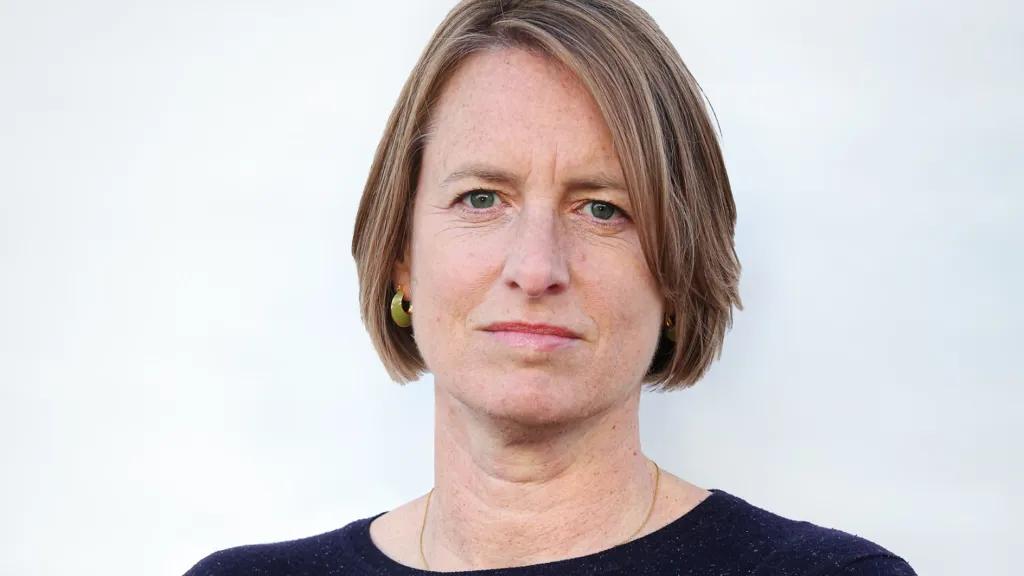
The BBC‘s new news chief has revealed that one of her top priorities will be winning back young viewers.
In her first message to staff since being named director of news last week, Rachel Jupp said that BBC News must “adapt urgently” to ensure the UK broadcaster is meeting audiences where they consume content.
In an email seen by Deadline (copied in full below), the former Panorama editor wrote: “People are changing how they get their news and too many of them, particularly younger audiences, aren’t finding us.
“We need to adapt urgently – we need to be where they are, with journalism made for them. To do that we need to be clear about how we can improve, we need to test new ideas, and we need to judge our success on outcomes, not just activity.”
The latter comment echoed words from Matt Brittin, the BBC’s new director general. Brittin told staff last week: “I’d like us to celebrate activity less, and outcomes more.”
Jupp, who started her new role on Monday, officially replacing Deborah Turness, acknowledged that there is uncertainty in the newsroom about job cuts. She plans to share more information about savings plans later this month.
“I know you’ll want to know about the savings we need to make to meet our budget. We will set out some of our proposals this month and others will come later. I will announce changes as soon as I can, and recognise that uncertainty is difficult,” she said.
BBC News announced in June that it was canceling shows like Radio 4’s The World Tonight to save £25M ($33.5M), but the division still needs to find another £25M of savings in the coming months, meaning many journalists are bracing for more bad news.
Listing her priorities, she added: “Support distinctive, quality journalism. I’ll be asking for original reporting, sharp analysis and more investigations, all delivered to the highest editorial standards.”
Jupp, previously BBC News‘ director of news documentaries and long-form journalism, now oversees the biggest newsroom in the UK. She will be paid a salary of £400,000 ($528,000), which is £50,000 less than her predecessor.
Dear all,
Today is my first day as Director of News, and I want to start with some thank yous. Firstly for the warm and generous welcome you’ve given me since my appointment was announced.
I appreciate the year has been difficult for BBC News, with leadership changes and the need to make savings, to live within our budget. I know many of you are going through changes in your teams and I understand the personal impact that can have.
Thank you for the professionalism and commitment you have all shown. I want to particularly thank Jonathan Munro for his work over the last eleven months. He has provided vital stability and leadership to the division through a really tough time for the BBC, and thank you to Fiona Crack, for her stewardship of the World Service during this time.
I am so proud to be leading BBC News. Every day, our teams report from places others can’t or won’t go to. We break stories, deliver editorial excellence, explain a complicated world and hold power to account, for audiences across the UK and in 45 languages around the world. Our work is incredibly important. As Matt said last week, a key part of the BBC’s public service mission is pursuing the truth and it’s time to recommit to that and reinvent how we do it. For me, that means high quality journalism, wherever our audiences are. The need for accurate and independent journalism has never been greater.
I know people want a clear sense of direction about the future of BBC News. My priorities will be:
To support distinctive, quality journalism. I’ll be asking for original reporting, sharp analysis and more investigations, all delivered to the highest editorial standards.
To reach audiences where they are, embracing new platforms, formats and ways of telling our stories. I want to think about creative, engaging storytelling, for whatever platforms our audiences are on.
To build a sustainable BBC News, using technology and innovation to work more efficiently and live within our means.
People are changing how they get their news and too many of them, particularly younger audiences, aren’t finding us. We need to adapt urgently – we need to be where they are, with journalism made for them. To do that we need to be clear about how we can improve, we need to test new ideas, and we need to judge our success on outcomes, not just activity.
I’ve been addressing the challenges of digital transformation throughout my career. I started at Channel 4 News, where I was a producer, news editor, output editor and then Head of Home News. I joined the BBC as Deputy Editor of Newsnight and then became Editor of Panorama. More recently I’ve worked across BBC Content, led the BBC’s work on generative AI, and been Director of News Documentaries and Long Form.
I’ve always loved working in News, and I want to provide the opportunities I’ve had for the next generation of journalists. I also know that it’s a demanding career – I have three children, and I want journalism to be compatible with supporting your family, and enjoying life. To help others manage competing priorities, I sponsor the BBC’s Parents’ Network.
As Director of News, you can expect me to be visible, to be engaged in editorial discussions and to be open about the decisions we need to make. Trust matters – internally and externally – and it is built through listening, through communication and through action. I have a collaborative approach, and I want us to work closely with other colleagues, including in Nations and Local, in Content and in Studios.
Over the next few months I’ll be visiting newsrooms across the UK and meeting many of the international teams. I want you to be honest – share work you’re proud of, tell me what’s working and what isn’t.
I know you’ll want to know about the savings we need to make to meet our budget. We will set out some of our proposals this month and others will come later. I will announce changes as soon as I can, and recognise that uncertainty is difficult.
But I am determined that the changes we make now will mean that BBC News will thrive in the future, and that our vital journalism will continue to be as valuable, and valued, as it’s always been.
I’m hosting an all-staff call on Wednesday where I’ll talk more about my vision and priorities – and you can ask me anything. Other members of the News Board will be there too. A calendar invitation will be sent shortly. If you can’t make it, feel free to send questions in advance. You can also always email me – I want to hear about your ideas.
Thank you for everything you do. I’m looking forward to working together.
Rachel
>
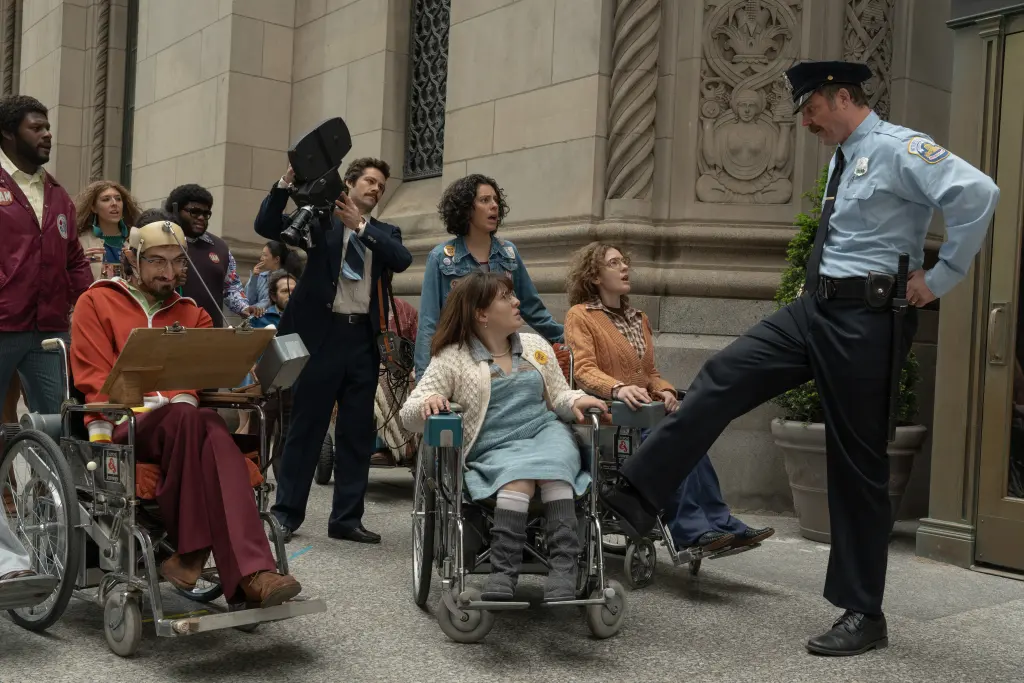
UPDATED, 9:20 AM: Apple Original Films has released the first extended trailer for Being Heumann, the new film from Oscar-winning CODA filmmaker Siân Heder. Watch it above, and see the first-look teaser below.
Apple Original Films on Wednesday released a teaser trailer for Being Heumann, the new film from Oscar-winning CODA filmmaker Siân Heder that is gearing up for its world premiere next week as the opening film of the Toronto Film Festival.
The film tells the true story of disability-rights advocate Judy Heumann, played by Doctor Who alum Ruth Madeley. Based on Heumann’s memoir, it centers on the year 1977, when Heumann led more than 100 disabled people to take over the San Francisco Federal Building, kicking off a 28 day sit-in — the longest occupation of a federal building in U.S. history.
The protesters form a tightly bound community, refusing to leave until the government enforces section 504 of the Rehabilitation Act, which required all federal spaces to become accessible.
Mark Ruffalo plays the bureaucrat who stands in the protesters’ way. Dylan O’Brien, Jon Beavers, Rob Delaney and Ray Fisher also star in the pic, which will debut in select theaters November 6 before dropping on Apple TV on November 13.
Being Heumann screens in Toronto on September 10 at Roy Thomson Hall; the fest is also world premiering that day Prima Facie starring Cynthia Erivo and The Assassin(s) from Korean filmmaker Hur Jin-ho.
TIFF runs September 10-20.
Watch the Being Heumann teaser above below, along with photos and the poster:
‘Being Heumann’
Ruth Madeley in ‘Being Heumann’
>

Mystery still surrounds the fatal shooting on the set of Alec Baldwin’s Western Rust, an incident that claimed the life of cinematographer Halyna Hutchins. Did the actor pull the trigger on a prop gun as he rehearsed a scene (he denies that), or did the weapon malfunction and misfire? How did a live round get into the revolver and who brought the lethal ammunition to the set? Why were prosecutors in Santa Fe, NM so intent on charging Baldwin with a crime for what many impartial observers — though not all — saw as a tragic accident?
The answers to some of those questions are provided in the new documentary The Trial of Alec Baldwin, directed by Rory Kennedy, which opens in Los Angeles on Friday. The film begins by dispelling one false rumor – that Baldwin initiated the project as some sort of attempt to repair his damaged reputation. Text on screen states flatly, “Baldwin was given no editorial control, nor did he provide any financial support or receive any compensation.”
Kennedy underscored that point at the Bend Film Festival in Oregon over the weekend, where the documentary played. At a Q&A that followed the screening, the Oscar-nominated filmmaker told the audience it wasn’t Baldwin who came up with the documentary idea, but the other way around. “I approached him,” she clarified.
They had met many years before the Rust tragedy. “I have known Alec probably for 20 years,” Kennedy said. “I would say we were friends. We wouldn’t go out and have dinner, but I knew him. Alec is actually a great supporter of documentaries and is associated with the Hamptons Film Festival and also does a summer doc series. And so I’ve been lucky enough over the years to have a number of my films be a part of that. I’ve gotten to know him largely through that.”
The documentary project began at a point when it didn’t appear the actor would face criminal allegations.
Alec Baldwin in ‘Rust’
Rust Movie Productions LLC
“When we entered this story,” Kennedy told the festival audience, “it really seemed like the Rust story was going to be resolved pretty early on and that [the documentary] was really going to be much more of a biopic with the Rust story interwoven maybe as a through line, kind of the backbone of it, but would be pretty thin. And then it just kept coming back and continuing. And we were always there when it had sort of dramatic turns.”
Alec Baldwin hugs his attorney Alex Spiro at the conclusion of his trial for involuntary manslaughter in First Judicial District Court on July 12, 2024 in Santa Fe, New Mexico.
Ramsay de Give-Pool/Getty Images
Those dramatic turns included Baldwin and Rust armorer Hannah Gutierrez-Reed being charged in January 2023 with involuntary manslaughter. A few months later, the charges against Baldwin were dropped. But then in January 2024 a grand jury indicted Baldwin on felony involuntary manslaughter charges and special prosecutors re-filed their case. The prosecution of Baldwin, the film strongly suggests, had less to do with the evidence than with the special prosecutor’s personal animus toward him as a Hollywood star with a history of volcanic behavior.
“It just seemed pretty clear that people were going after him and he was being taken to task [for the Rust shooting] in a way that seemed not entirely justified or fair,” Kennedy observed. “And then it started raising questions about how in this day and age with the internet and social media, we hold people to justice outside of the judicial system. Then as the film and the story unfolded, you started seeing how that narrative in social media started impacting the justice system.”
Director Rory Kennedy at the Deadline Hollywood Portrait Studio during the 2026 Sundance Film Festival on January 25, 2026 in Park City, Utah.
Josh Telles for Deadline
Kennedy described the larger concerns raised by the Baldwin prosecution. “You start thinking, okay, how does this kind of [social media] chatter that we’re all doing… how is it affecting our larger institutions? How is it affecting government, for example? …How is it affecting the judicial system? I think it’s an important question that we should be observing and asking ourselves.”
Baldwin, it becomes clear, was being tried twice – in the court of public opinion and in a court of law. The film builds to an astonishing crescendo, resulting in the case being dismissed in the middle of the trial (I won’t give away what happened. Close watchers of the case, including my colleague Dominic Patten who covered it for Deadline and appears as an expert in the documentary, know the ins and outs, but they came as a revelation to me).
Hilaria Baldwin (R) speaks to her husband Alec Baldwin during his trial on involuntary manslaughter in First Judicial District Court on July 12, 2024 in Santa Fe, New Mexico.
Ramsay de Give-Pool/Getty Images
There would seem to be plenty for Baldwin to appreciate about Kennedy’s film, given how the court case ended. And yet…
“When they [Baldwin and wife Hilaria] initially saw the film, they did not like the film,” the director reported. The cause of their displeasure has to do with scenes woven throughout that illustrate how Baldwin got his reputation for angry outbursts – confrontations with paparazzi through the years, for instance. Kennedy also explores a serious stain on Baldwin’s reputation from 2007 – the infamous voicemail he left for his then 11-year-old daughter Ireland in which he called her a “rude, thoughtless little pig.” That ugly lambasting came in the context of a bitter custody battle over Ireland between Baldwin and his ex-wife Kim Basinger.
It’s a crucial piece of background because the special prosecutor referred to that incident in private communications in which she expressed loathing for the actor. “Because the prosecutors were, in my opinion, going after his reputation and not after what he did on the set,” Kennedy said, “we had to show what that reputation was, and we had to show it honestly.”
A bit too honestly, perhaps, for Baldwin’s liking. “I think it was just very hard [for him] to see all that… showing his ex-wife in there and then [him wondering], ‘Why are we doing that?’ Well, the only way to really get to the voicemail is to understand that history, to understand what the motivation of the voicemail was. And you can’t get there without having that context.”
Baldwin seems to be warming to the film, after hearing feedback from viewers.
“I think he’s now come around and is much more supportive of it,” Kennedy noted. “I think there are a lot of people who say… this film is important and in many ways redeems him and also really helps people understand him and understand what he went through and understand the injustice of what happened to him.”
>
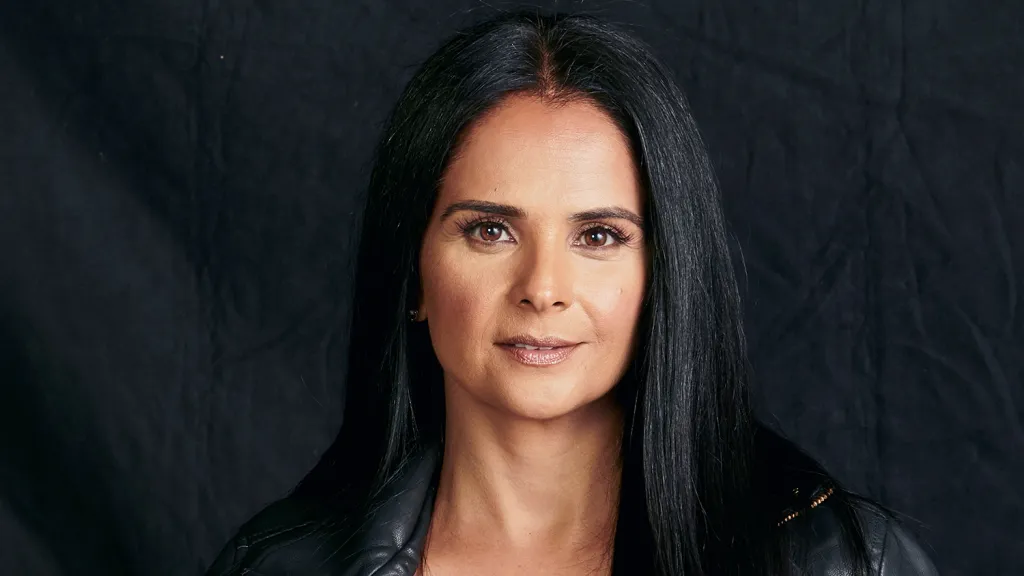
Bela Bajaria has moved on from Netflix‘s failed attempt to buy Warner Bros. Discovery (WBD).
As the ink dries on the Paramount-WBD deal, and the newly-minted Skydance plots its vision, the content chief backed up her boss Ted Sarandos in saying that WBD was “always a nice to have at a certain price, not a must have at any price.”
“We were never going to [spend over the odds],” she told an audience at MIPCOM. “We are financially disciplined. We knew what we had and what the opportunity was.”
She was of course referring to Netflix’s eventually failed $83B bid to buy the storied studio, which ended up selling to David Ellison’s Paramount-Skydance for a far superior $110B, creating Skydance.
Bajaria said Netflix is now focused instead on the goal of “keeping doing what we’re doing with the same investment, keeping our eye on the ball, making great things that people love around the world.”
And there’s plenty of room still to grow, she added, pointing out that Netflix occupies around 5% of global audiences’ TV time, leaving a huge slice of the pie.
Bajaria was in Cannes talking up Netflix’s global strategy, which goes well beyond huge hits like La Casa de Papel and Squid Game. “There are so many of these titles that go all around the world,” she added, pointing out that Canadian original Below is currently number one in more than 80 countries including France.
Bajaria didn’t address the reported layoffs taking place at the streamer but said Netflix will continue to “expand,” something it has always done despite opposing moves from the competition.
“When others have scaled back at different times we have continued to be consistent and grow our investment and expand what we do,” she added. “For me that is the most important thing.”
She was also robust in responding to the notion that there is too much content out there.
“We can see on Netflix our members watch a lot and they have lots of different moods and tastes,” she added. “We don’t programme for a narrow demographic. We can see that audiences want variety.”
Bajaria was speaking at MIPCOM on the same day as the likes of Jeff Zucker, Marco Bassetti, Pedro Pina and Kate Phillips.
>


Search For Canadian TV Actor Stewart McLean Now Homicide Investigation


These ’90s fashion trends are making a comeback in 2017
According to Dior Couture, this taboo fashion accessory is back
Model Jocelyn Chew’s Instagram is the best vacation you’ve ever had
Emily Ratajkowski channels back-to-school style
9 Celebrities who have spoken out about being photoshopped


Rurouni Kenshin: Hokkaido Arc Manga Takes 1-Issue Break – News


HIDIVE to Stream English Dubs for The World Is Dancing, The Forsaken Saintess and Her Foodie Roadtrip in Another World, The Dangers in My Heart: The Movie Anime – News