
Sofia Wylie as Grace in ‘The Body’
Netflix


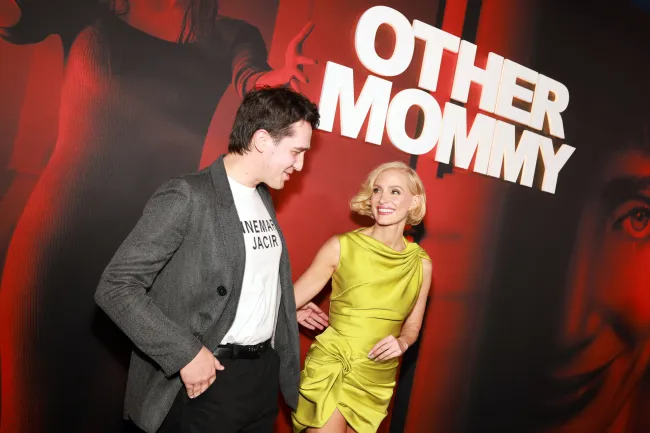
Christopher Nolan probably wasn’t expecting “The Odyssey” to help launch one of the year’s most successful horror movie marketing campaigns. But when Universal tied the first trailer for “Other Mommy” to screenings of Nolan’s take on Homer’s epic in July, audiences got a nasty surprise.
Featuring Jessica Chastain as a monstrous and weirdly bendy maternal entity with a knack for appearing where she shouldn’t, the “Other Mommy” trailer terrified many unsuspecting Nolan fans and quickly became a genre meme in its own right. (Suffice to say, you almost couldn’t visit digital horror spaces this summer without seeing Chastain’s mutated neck slinking out from beneath a table.)


Three months later, the marketing campaign has officially paid off. “Other Mommy,” Rob Savage’s adaptation of Josh Malerman’s 2024 horror novel, “Incidents Around the House,” has scared up an estimated $27.5 million domestic opening, claiming top spot at the box office.
With another $17.7 million overseas, the Blumhouse-Atomic Monster production has earned $45.2 million worldwide. That’s an impressive debut for a movie that critics largely… hated. Like, really, really hated. Right now, “Other Mommy” holds an abysmal 18 percent approval rating on Rotten Tomatoes, with IndieWire giving the film a comparatively generous C+. Audiences haven’t been much kinder.
Just 47 percent of verified moviegoers on Rotten Tomatoes rated “Other Mommy” positively, while Letterboxd users have settled on a dismal 2.3 out of 5 stars. It got a miserable D+ CinemaScore over the weekend, too. For comparison, that’s the lowest grade recorded by the audience polling service since Francis Ford Coppola’s “Megalopolis” in September 2024.
Universal successfully sold audiences on the promise of a terrifying and emotional horror experience starring an Oscar-winning actress. And while the finished film does have its defenders, “Other Mommy” hasn’t inspired nearly as much enthusiasm as its promotion did.
That’s not necessarily a problem for a studio celebrating a box office hit, but it does complicate the question of how long that success can last. After months of making “Other Mommy” seem like the scariest movie of the year, what happens when the advertising turns out to be the best part?
The “Other Mommy” trailer worked because audiences didn’t need to know anything about the movie to be genuinely scared of the clip promoting it. The first preview opens with an innocent domestic exchange between a mother and daughter that abruptly transforms into something strikingly disturbing. It’s a remarkably simple and effective piece of filmmaking, anchored in a compelling balance of tenderness and terror that Savage’s feature struggles to sustain.

Placing that preview ahead of “The Odyssey” was especially clever. Rather than limiting the “Other Mommy” campaign to genre enthusiasts already inclined to seek out scary trailers, Universal introduced its new villain to a massive audience that hadn’t necessarily signed up to meet her. And Nolan’s epic had some spectacular monsters of its own. In his review, IndieWire’s David Ehrlich praised the film’s gruesome Cyclops sequence as a showcase for the filmmaker’s “latent skill as a horror director.”
Between the head-chewing giant and a preview of Chastain’s heart-stealing contortionist, moviegoers got quite the double feature. The resulting reactions became their own publicity machine, which translated into both headlines covering audience reactions and measurable “Other Mommy” interest.
Boxoffice Pro reported a noticeable bump in its own tracking after “The Odyssey” trailer placement, while broader industry forecasts climbed as high as $35 million before cooling later in the summer. The outlet ultimately forecast a $17 million to $22 million debut, which the film comfortably exceeded.
The studio didn’t stop at one viral scare, either. Subsequent promo materials continued to emphasize Chastain’s grotesquely elastic role, with an eye-catching outdoor ad campaign spotlighting the character’s unsettling expression and making her movie recognizable at a glance.
It’s an elegant and simple strategy, really. Take an Academy Award winner, make her look like something that crawled out of a nightmare and let the public imagine the possibilities for you. Unlike the increasingly complicated supernatural mythology of Savage’s completed project, “Other Mommy” publicity needed almost no explanation to work.
Unlike some literary adaptations, the film also didn’t require audiences to know much of anything about Malerman’s source novel or Savage’s previous work as a horror director. That familiarity has certainly worked in the movie’s favor among some viewers, particularly those invested in its maximalist approach to both familial melodrama and semi-surreal scares.

That said, Universal’s campaign seemed less interested in cultivating those audiences than in reaching people who would have a strong reaction to a two-minute trailer. Rather than selling “Other Mommy” on its creative pedigree, the studio let a first impression do the heavy lifting.
Of course, previews are supposed to make upcoming releases look good. What’s more unusual is how effectively “Other Mommy” sustained that impression without much help from the critical establishment. Press screenings were scheduled unusually close to release (IndieWire didn’t screen the film until Thursday night, less than 24 hours before the movie opened nationwide), leaving little opportunity for reviews to influence the social conversation before audiences started buying tickets.
And despite some viewers sincerely connecting with Chastain’s performance and Savage’s sensitive approach to the material, the publicity conversation around “Other Mommy” appears to have been far more limited than its viral advertising campaign. One could argue that’s a missed opportunity for both entertainment journalists and the artists behind the movie, whose storytelling ambitions deserve attention beyond their most marketable scares. In prioritizing the immediate impact of its advertising, Universal may have strengthened “Other Mommy” as a financial event but undercut it as a cultural one.
The imagery of “Other Mommy” was arguably more successful than the surrounding story, even in the complete context of Savage’s film. And while there’s nothing inherently dishonest about that approach to marketing, how this movie does next weekend will tell us a lot about what it means when audiences are promised an experience the real film doesn’t support for enough people who see it.
Some moviegoers have already made that distinction themselves. As one Letterboxd user put it, “the surprise drop of the first trailer was way scarier and better than the actual movie.” Other reviewers have echoed the sentiment, with some specifically lamenting that the film’s most effective scare had been spoiled months before they saw it. In that sense, “Other Mommy” may have been a victim of its own promotional success.
And Blumhouse certainly knows the difference between a scary movie and a so-called “scary” movie. The horror powerhouse has spent years building major Hollywood releases around premises that practically advertise themselves. Take the murderous swimming pool in “Night Swim,” or the sinister teddy bear in “Imaginary.” Both titles arrived in 2024 with easy-to-read monsters that nevertheless got lukewarm receptions — but their box office performances tell us slightly different stories.

“Night Swim” opened to $11.8 million domestically before plunging 61 percent in its second week, earning just $4.6 million. Meanwhile, “Imaginary” debuted at $9.9 million domestically and held up considerably better, dropping roughly 44 percent to $5.6 million. Neither release became a theatrical phenomenon, but each earned more than $40 million worldwide — suggesting even mediocre horror films can get respectable returns when their premises are appealing enough.
On the opposite end of the spectrum for Blumhouse is “M3GAN,” the killer doll whose online popularity helped propel her 2023 debut to $30.4 million domestically. Unlike “Night Swim” and “Imaginary,” the original “M3GAN” largely delivered on the ridiculous fun that was promised by its trailer. The result was a remarkably strong second-weekend hold, slipping just 40 percent to $18.3 million. It eventually earned more than $180 million globally.
Crucially, “M3GAN” also had critics on its side, earning a 93 percent approval rating on Rotten Tomatoes. That figure is worlds away from the 18 percent currently held by “Other Mommy.” Both films had the ingredients to turn their title characters into memes and their theatrical debuts into events, but Universal was able to turn genuine widespread love for M3GAN into fuel for a celebratory marketing spectacle that only got more entertaining as it grew. That same victory lap for Chastain’s twisty antagonist seems unlikely, and under the exceptionally divisive circumstances, even reaching for it risks looking smug.
Still, “Other Mommy” has already accomplished something significant for Blumhouse-Atomic Monster. Its $27.5 million domestic debut marks the company’s biggest domestic opening weekend of 2026 so far — surpassing “Obsession” (which grew over time as a word-of-mouth victory) and even the latest “Insidious” installment. Combined with a strong international start, that’s a promising financial position for an original horror movie with a reported $19 million production budget, before marketing costs.

Horror audiences are also notoriously unpredictable, and a dismal CinemaScore doesn’t automatically guarantee an equally dismal theatrical run. Next weekend should offer a clearer picture of whether Universal has created another enduring genre attraction or simply convinced millions of people to show up for an exceptionally good commercial.
For Blumhouse, there’s a larger question of trust. The company’s reputation was built partly on persuading audiences to take chances on inexpensive, surprising horror outings — often with little more than a compelling premise to go on. That goodwill is valuable, but it isn’t inexhaustible. And while a great trailer can convince someone to buy a ticket once, persuading them to take that chance on you again is… a whole other mother.
>
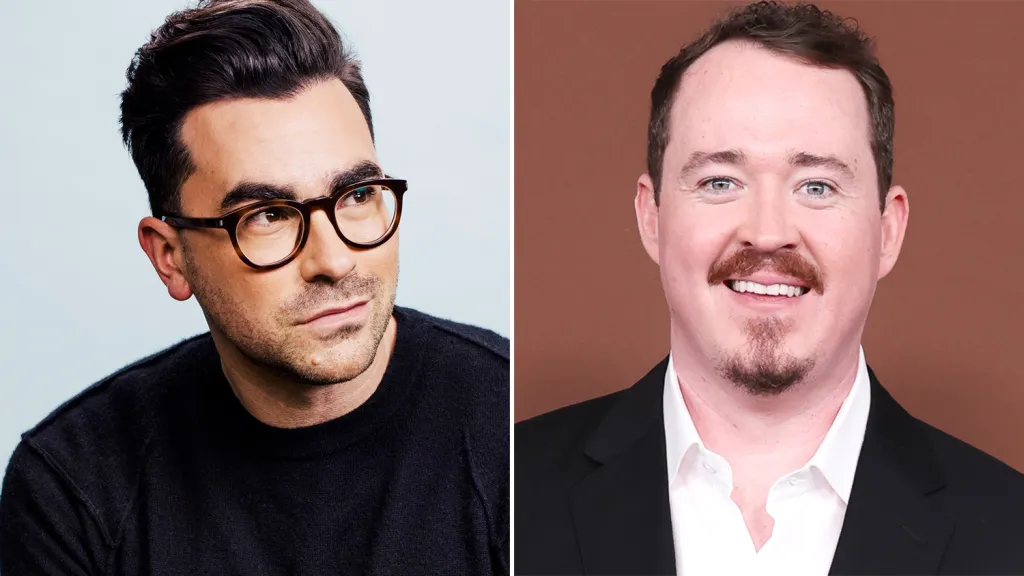
Dan Levy is not holding back his thoughts on Shane Gillis‘ Saturday Night Live monologue.
The Schitt’s Creek star posted an Instagram reel Sunday night, slamming Gillis. It opens with him saying “Women wearing short shorts at the gym does not make them whores. It makes the men calling them whores misogynists. There’s a difference there. By the way, I’ve seen more men’s nipples at the gym than I’ve ever seen women showing their bodies off.”
Levy was responding to the portion of Gillis’ monologue in which he said “I haven’t been to the gym in so long, I didn’t know women just dress like whores now. Look, I’m sorry, there’s no other way to describe [it]. Have you seen it? I’ve seen it. You’ve seen the shorts?”
Gillis went on to describe them as “those neon,” “artificial bait-colored” ones where “the wrinkles go around the cheeks and all combine at the butthole.“
And don’t look!” Gillis added. “You’re not allowed to look. For real! Don’t look, ‘cause they are filming.”
Levy, who hosted SNL himself in 2021, continued, “I’m speechless that something like that can exist on live national television. And to be perfectly honest, more men need to be standing up in opposition to it because it’s complacency that has created the environment in which women are sexually assaulted and it’s a ‘conversation’ as opposed to a ‘crime.’”
“Men need to be defending women more,” he continued. This is not a women’s issue, this is an everybody issue. Because the more that men objectify women in the media, the more that other men see them as objects and treat them as objects. They are not objects, they are superior human beings to men, okay? And I’m sorry if this gets me in trouble with the internet, but f—!”
Gillis also accidentally dropped an F-bomb in a Dr. Seuss-inspired sketch, which he apologized for.
Gillis previously hosted SNL in 2024 and 2025. They were his first appearances after he was fired in 2019 prior to making an appearance as a cast member on the late-night show, an executive decision made by network NBC after his previous anti-Asian and anti-gay comments were resurfaced.
>
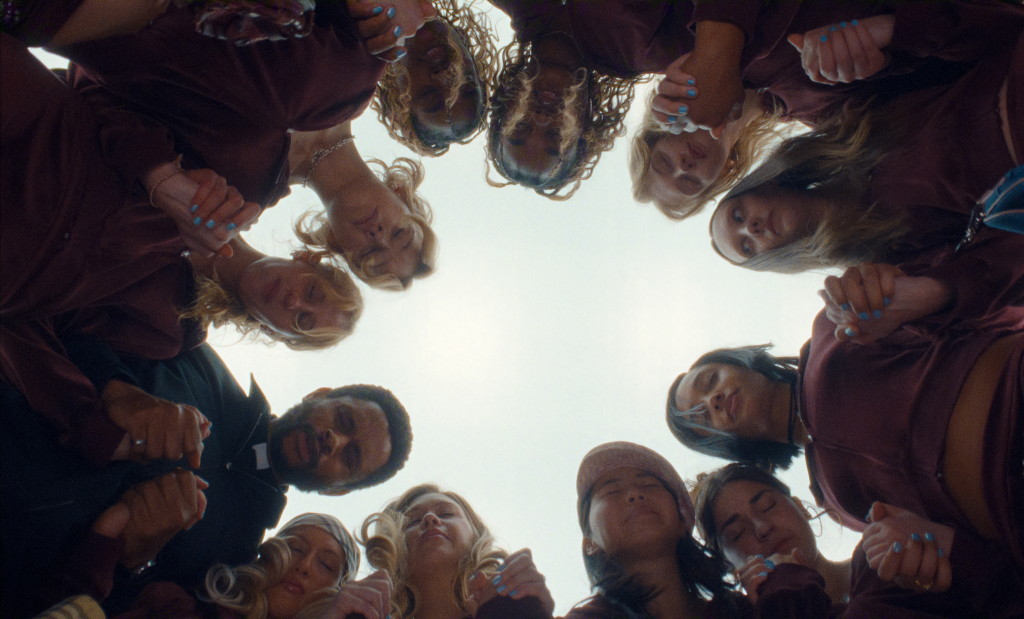
The trailer for Netflix’s high school-set horror series The Body, has arrived just in time for spooky season. The show premieres November 11 on Netflix.
This raunchy teen psychodrama from creator Quinn Shephard (Not Okay, Under the Bridge) takes the intense pressures, rivalries, and intimacy of high school female friendships and treats them with almost biblical, high-stakes importance – all set in the fun backdrop of the early 2000s.
“Can a person really contact the devil?” a student asks in the opening of the clip, answered by an instructor that “Lucifer wouldn’t be a true foe if he couldn’t be summoned, would he?”
It looks like another student gets a bloody nose as the red liquid drips onto her desk in class and a curious classmate asks how one would know if Lucifer was present.
“There would be signs,” the ominous answer reveals.
The Body centers around a dance team, who audition three new girls for their squad in tryouts, telling them to roar like their mascot, the Lions. Sofia Wylie’s Grace stands in the middle of the trio, the girl to her right cheering normally and the girl to her left, Lisbeth (Geena Meszaros) roaring animalistically. Lisbeth gets invited to some sort of costume party, where a dance-team initiation goes very wrong.
Sofia Wylie as Grace in ‘The Body’
Netflix
As a result, the whole town starts asking the same question: “What happened to Grace?”
The girls scramble to cover up what happened at their shindig, agreeing to not tell anyone they had it and also omit that drugs were present.
Tension builds across the school as Sara Boustany’s Elise is carried out of what looks like mass, winking at students in the pews as she hangs limply.
Sara Boustany as Elise in ‘The Body’
Netflix
The clip ends with Shirley Chen’s Maddie googling “Is my friend possessed by the devil?”
The Body consists of eight episodes, starring Kristina Bogic, Sara Boustany, Sofia Wylie, Geena Meszaros, Shirley Chen and The Traitors winner Gabby Windey. Still more cast include Nnamdi Asomugha, Jackson Kelly, Orlando Norman, Emily Roman, Kyra and Phallon Pierce, Bella Neuspiel and Sarah Abbot. Amy Israel, Peter Chernin and Johs Stern executive produce for North Road alongside Riley Keough, Gina Gammell and Sacha Ben Harroche for Felix Culpa.
See more new images released by Netflix below:
L to R: Bella Neuspiel as Katie, Shirley Chen as Maddie, Sara Boustany as Elise in ‘The Body’
Netflix
L-R: Kyra Pierce as Bailey, Bella Neuspiel as Katie, Sara Boustany as Elise, Sarah Abbot as Olivia, Geena Meszaros as Lisbeth, Shirley Chen as Maddie, Emily Roman as Claire, Phallon Pierce as Brit in ‘The Body’
L-R: Orlando Norman as Steven, Marcel Ruiz as Tyler in ‘The Body’
Netflix
L-R: Kristina Bogic as Anya in ‘The Body’
Netflix
L-R: Gabby Windey as Coach Miller, Geena Meszaros as Lisbeth, Kristina Bogic as Anya, Shirley Chen as Maddie in ‘The Body
Netflix
Jackson Kelly as Leo in ‘The Body’
Netflix
L-R: Orlando Norman as Steven, Kristina Bogic as Anya, Marcel Ruiz as Tyler, Sara Boustany as Elise, Emily Roman as Claire in ‘The Body’
Netflix
Nnamdi Asomugha as Father Samuel Franklin in ‘The Body’
Netflix
Geena Meszaros as Lisbeth in ‘The Body’
Netflix
>
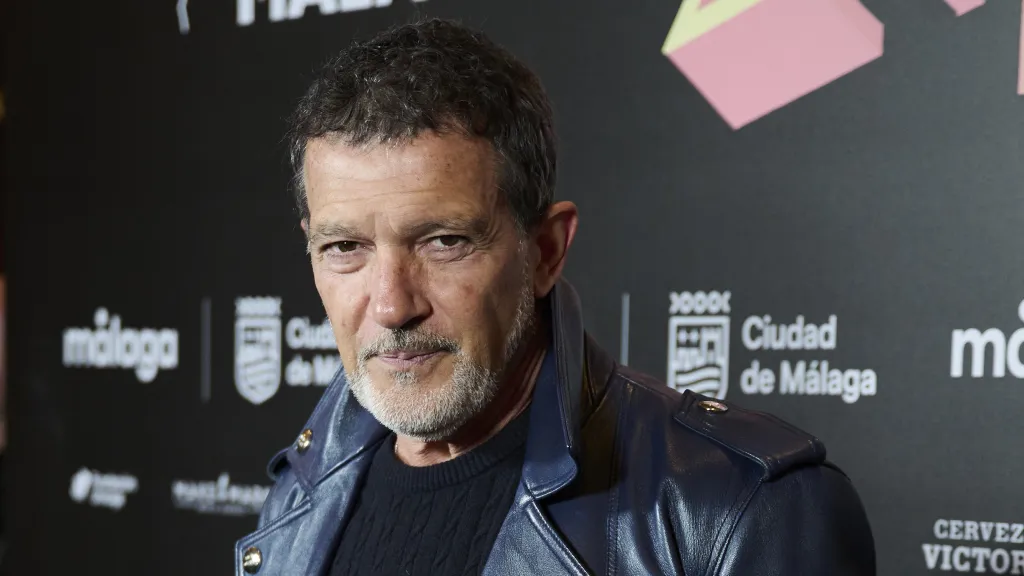
Antonio Banderas has signed on to star as Spanish conquistador Hernán Cortés in Cortés, a feature film directed by French filmmaker Paul Mignot from a screenplay by Nicholas Kazan.
Production is already underway in Paris, with additional shooting scheduled in Spain.
Utopai Studios and Ex Machina Studios are partnering on the project. Marco Weber is producing. Utopai Studios will lead sales and distribution in the United States, Canada, Asia, the Middle East and Africa. Ex Machina Studios will lead sales and distribution across most of Europe, Latin America, Australia and New Zealand.
The film’s synopsis reads: Set in 1519, Cortés begins in Cuba, where a restless soldier hungry for glory seizes command of an expedition to the Yucatán and sails without permission. After landing on the coast of what is now Mexico, he meets Marina, an enslaved Indigenous woman and gifted linguist who becomes indispensable to his advance. As Cortés turns fragile alliances, faith, and fear into instruments of conquest, Marina watches him transform from a daring outlaw into a self-anointed messiah.
“Cortés is exactly why we built Utopai Studios,” said Cecilia Shen, Co-Founder and CEO of Utopai Studios. “Our job is to build the production around that vision. Nicholas has written an extraordinary screenplay, Paul has a clear cinematic point of view, and Antonio brings the humanity needed at the center of it. We want to give them the ability to make the film they set out to make.”
Mignot’s previous credits include the historical feature Vaincre ou Mourir. He has also directed campaigns for BMW, Porsche, Audi, Lexus, Jeep, L’Oréal, Louis Vuitton, and Emporio Armani.
Kazan received Academy Award and Golden Globe nominations for his adapted screenplay for Reversal of Fortune. His screenwriting credits also include Frances, Patty Hearst, Matilda, Fallen, and Bicentennial Man.
>


Search For Canadian TV Actor Stewart McLean Now Homicide Investigation


These ’90s fashion trends are making a comeback in 2017
According to Dior Couture, this taboo fashion accessory is back
Model Jocelyn Chew’s Instagram is the best vacation you’ve ever had
Emily Ratajkowski channels back-to-school style
9 Celebrities who have spoken out about being photoshopped


Rurouni Kenshin: Hokkaido Arc Manga Takes 1-Issue Break – News


HIDIVE to Stream English Dubs for The World Is Dancing, The Forsaken Saintess and Her Foodie Roadtrip in Another World, The Dangers in My Heart: The Movie Anime – News