
Entertainment
Sebastian Stan Interview on ‘Fjord’ Politics, ‘Batman: Part II’


Sebastian Stan disappears into his roles, from his Oscar-nominated performance as Donald Trump in “The Apprentice” to the disfigured actor in “A Different Man,” which won him Berlin’s Silver Bear and the Comedy Golden Globe. Stan was also unrecognizable as metal rocker Tommy Lee in Emmy-nominated “Pam & Tommy.”
Stan also altered his look dramatically, shaving his head in his latest incarnation in Cristian Mungiu’s Palme d’Or-winning “Fjord,” in which he plays the Romanian patriarch of a family of five children, with his “A Different Man” costar Renate Reinsve as his Norwegian wife. After they move to a small town in Norway, they run into dramatic cultural differences as the local child protection services take their children away in order to investigate suspected physical abuse.


Of course, Stan is most famous for his nine Marvel features and TV spinoffs as Bucky Barnes the Winter Soldier. That supporting character returns to theaters on December 18 in “Avengers: Doomsday.” But we’ll have to wait until February, 2028 to see Stan again as Harvey Dent/Two-Face in DC’s long-delayed “The Batman: Part II.”
For the moment, on a warm fall day, Stan talks about “Fjord” at Neon’s lower Manhattan offices.
The following interview has been edited and condensed for clarity and length.
Anne Thompson: I don’t know any other actor who disappears the way you do. It isn’t like we think of you as Sebastian Stan. We think of you as whoever you’re playing. Is that OK? Is that what you want?
Sebastian Stan: I’m accepting that route because a lot of people lately, like Chloe Zhao, have said to me, “This is what you do now. You’re not going to look like yourself.” And the timing of these movies back to back has been serendipitous. I didn’t set out consciously to transform physically. I was in this Marvel thing for many years, and I looked one way, and I saw somehow my life get smaller on the streets here, walking around and felt to some extent I was getting pigeonholed in this thing.

So people do recognize you as Bucky Barnes.
Yeah, and it still happens for that character, and it’s heartwarming, and it’s amazing, and it helped inspire me to want to seek out things that would allow for something else. Because, as Cristian Mungiu recently put it, this movie will liberate me and the audience to do something without this judgment of, “oh there’s that actor doing that thing you know.” When I was a kid, nobody judged you for putting on wigs and things, you would get up there and it’d be free and you’d walk different. That’s part of my relationship to trying to remain in love with [making movies]. It’s hard, because a lot of things go wrong and things fall apart, you get rejected, or the movie sucks, or you suck. There’s a lot of things about this business that will constantly want to derail you.
“The Apprentice” had a strange route through differing European and American reactions.
It had a bad reaction. It reminded me that this is not always about being liked, and it’s not always about being safe, and you’re going to have to go and talk about these things for months, right, and promote it, and you’re hoping there’s something there. There’s going to have to be something more that you’re going to say than “I love movies.”

How did you and Mungiu put your distinctive look together?
He was adamant that he didn’t want Renate and I to be recognized in a way that would distract from this family or the story. I said, “Whatever you want to do.” I did not think he wanted this bald head or whatever. We’d gone over [to Romania] because she and I had rehearsals in January, February before we started shooting in March, and we started going to these services of this religious sect, doing some research, integrating her into the Romanian culture. We had camera tests, and tried on clothes and glasses, and then he said he wanted to shave my head.
I called the prosthetics guy who did help me with the Trump chin, and he did the “Pam & Tommy” stuff, and he did some teeth for me, and that was it. My favorite part was going to set the first day, and there’s no hair and makeup. There’s nothing: “great!” We were right in it. It was so nuts and bolts. There’s nothing glamorous about the movie. Nobody had some special room or trailer. We were all living in this weird hotel that Henrik Ibsen used to go to. We’d walk to set into this home every day, surrounded by these mountains. So the isolation helped us stay in it. I was surrounded by Romanian people, and so I was speaking Romanian all the time and I was doing the accent. I think all of that contributed.
This movie gave you a chance to return to your roots.
One way I had into this movie was, when I first read it, I understood the kids, because I left Romania when I was eight, and I went to Vienna with my mom. She was a single mom, a pianist at the time, then became a piano teacher, remarried an American in Vienna. We were there for four years, and then when I was 12, I moved to the States. I never wanted to speak Romanian. I did not want to have an accent. I did not want to be different. I even begged her, funny enough, to let me be named Christopher because I thought my name was weird. She named me after Sebastian Bach. I understood the kids being different and the shame of that self-awareness, and feeling like you need to make allies rather than enemies. That made sense to me, even with my character, this idea that you want to be left in peace and not stick out. And when you’re a kid, it’s brutal. You’re either part of the playground rules or you’re not.
Where were you exactly in the States?
Outside of New York City in Rockland County. I grew up in Suffern and Nyack. I went to this camp, Stagedoor Manor in the Catskills, and that’s where I met my manager, who I’m still with.
Did you feel comfortable with your reunion with your Romanian side?
First of all, 80 percent of the crew was Romanian, and I’m already aware of my own bullshit. They were going to smell me, with the accent and everything. I’ve always spoken fluently the language. I had this accent because I was not from there. Cristian Mungiu is like the Martin Scorsese, the Steven Spielberg. He can pick anybody to play this role, and he goes and picks the kid that left and became Americanized. I didn’t know if they were going to judge me for that.
It was totally the opposite: I was welcomed and embraced. They were throwing a flag over me. I was worried when the movie would come out in Romania, which it hasn’t yet. I never thought I would be going back in some way. My mom hasn’t seen the movie; she’s going to see it on Sunday for the first time, and the way I met Cristian was at his movie, “The Graduation,” in 2016 at the New York Film Festival with my mom. So on Sunday it’ll be this funny moment where we’re all back together.
The Romanian father is reserved and contained. You’re not trying to make us like you.
People have strong feelings about the movie. I love a good knee-jerk reaction because I always feel like it means it’s getting to some truth that’s not explored. We’ve been talking about the movie, and I keep referencing Cristian’s movies, this idea of the cinema to express rather than impress, right? And I feel the same way with actors.
Our job is not to use any melodrama or sentimentality to manipulate or rope the audience into the situation. He also doesn’t do a lot of close-ups, and he does these long one-shot, multiple takes, just one shot, no cuts scenes. I had never worked that way before. I’d also come off of playing these larger than life characters, and I wanted to find something more nuanced and restrained. The character reacts very differently than you or I would if your kids are being taken away.
Both Renate and I instinctively were wanting to “let us go there.” But there’s a belief system to these people. And there’s a magnifying glass to them, so everything they do is being watched, and there’s allegations against them. There’s a reason that they’re behaving the way that they are. One of them is this belief system that no matter what happens, you know that there’s a higher power, a higher spirit that will figure itself out. You got to trust, and you got to keep your emotions in check, and you can’t try to manipulate the situation. Just be as Zen about it as you can.
And did you also understand culturally what the parental rules of the game were with this family and with this man?
It feels now the timing has to be right for these roles and certain movies. I have a kid now. I was in my mid-40s already when we shot this, I had been with a partner. We had discussed kids. I had lost my dad a few years before. I had gotten to a place where I was looking forward, and I could see as far back as I could see forward. And I was asking myself, “What are the things that I’ve inherited from my parents? What are the things that I want to pass on to my kid? What works? What doesn’t work?” And so I was in a headspace where I could understand what was happening here. Because to me, the movie is about kids. How do we raise kids today? That’s how I saw it.
Looking back at the male Romanian male father figures, my father and I also grew up with my grandfather. They were strict, stern, no emotions, restrained. No expression of affection. It wasn’t considered manly. That’s not how I am. I’m not doing that with my kid. But also I’ve had therapy. I’m in this creative space. I was never spanked or whatever. I was lucky because, for a large part, I grew up with women. I was not in an environment where I experienced that level of strictness.

The reaction to this movie fascinates me, starting in Cannes. On the one hand, you get the Palme d’Or, which was a surprise?
One hundred percent. On the day, all that was communicated was Cristian was asked to stay, and I thought that meant he won director or screenplay. And Renate said, “Well, let’s go anyway,” and I said, “OK.” I was finding out in real time what was happening.
But the other reactions were all over the place as to how people interpreted the movie. It’s not trying to make points, it’s trying to open up questions.
There’s two things. One is we have to look at our level of tolerance now, and what availability do we have for further questions? Because it seems with what’s going on in the world, perhaps what people want at times, you can argue, is escapism, or they want positivity, or they want nostalgia. They want to look back at the “good old days,” but with only selective thinking. I hear all these things about the ’90s, but people are forgetting how in the ’90s we could actually still have a conversation and disagree, and we could still find nuance in point of view and in different topics. And the fact that has eroded is scary.
The movie is going to age well. At the core the movie does require a certain self-analysis perhaps, which I don’t know if people are willing to do. What I am reacting to is the absolutism as it applies to whatever it is, whether it’s a belief system, whether it’s a certain difference that we’re seeing in somebody else that’s not falling in line with the rest of us. The movie does make its case. I suspect it’s for one reason: that we all, on a primal level, understand that removing children from their family is not right.
Right.
Whether it’s in Norway and their breastfeeding baby, whether it’s in Norway from a “religious family,” or whether it’s on the border of Mexico, or in Gaza, or anywhere, it’s easy to go, “oh, they’re conservative. I’m done, I’m out.” The movie’s showing me that we are so programmed now to immediately label it black or white, red or blue, not seeing the thread that it’s for the kids. But I do feel like the family needs to also evolve.

Well, to recognize how to adapt to cultural differences. But the movie is a little hazy about what the father may have actually done.
That’s on purpose. I mean, it’s such an interpretive thing for a viewer, depending on their situation, it’s better to leave it at that.
Are you going back to Marvel? Is there more to come?
I know there’s this other film that’s meant to shoot next year, but I haven’t heard anything about it. There’s a lot of people waiting to see when it’s going to happen. I don’t know if it’s on the schedule yet.
And you’re fine if it is going to happen.
I value loyalty a lot. Maybe it’s because I’m a Leo. I’m grateful for what that world has done for me. It gave me consistency, and it gave me sustainability for many years. I never made it to the real starting five. I’ve been always off the bench. I think it gave me a longer lifespan over there. And then it also allowed me to go and play for other teams.
What’s happening with the delayed DC “The Batman” sequel?
We’re in a very deep, deep winter on the Batman movie.
So that’s for 2028, right?
Right. On the weekends, I’ve been doing Spanish classes because next year I’m going to do this movie with this Chilean director that I love, Felipe Galvez, who did this movie, “The Settlers.” His new film is about Pinochet and his arrest in London when he was trying to be extradited by the Spanish and the Chileans at the same time, and to be held accountable for all these crimes. Spanish is a little bit closer to Romanian because it comes from Latin. And so I play a character not of Spanish descent, a European that speaks Spanish fluently and English in the movie.
“Fjord” is currently playing in theaters.
>
>
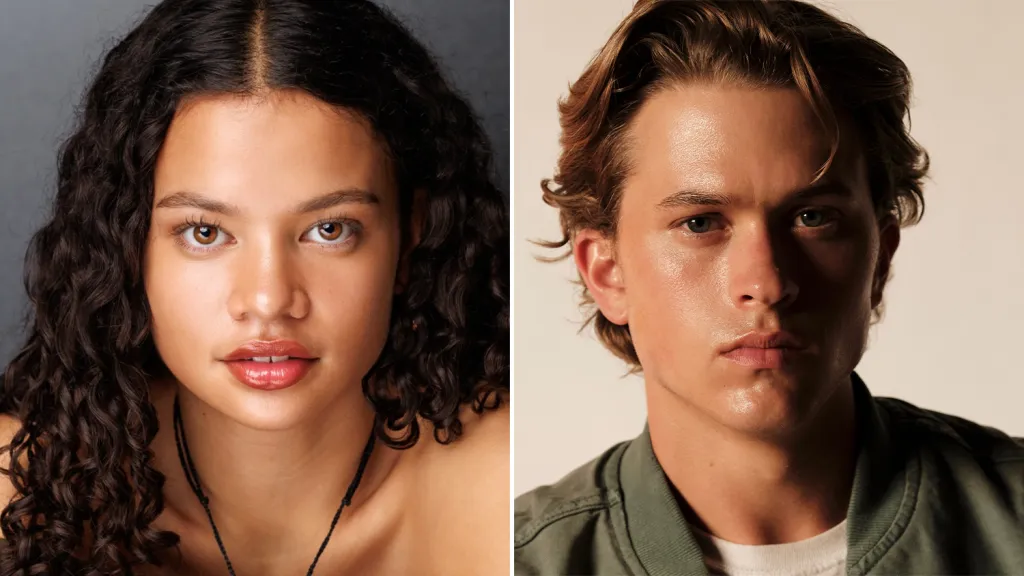
EXCLUSIVE: Catherine Laga’aia, star of Disney’s live-action Moana, and Deacon Phillippe (Brother Save Us) are set to star in Spaceship Earth, the new Disney+ pilot inspired by the Disney World EPCOT attraction of the same name.
Character details are being kept under wraps. The project, announced in August, hails from Jason Fuchs (IT: Welcome To Derry), Michael Waldron (Loki) and 20th Television.
In Spaceship Earth, when a mission to avert an imminent global cataclysm goes awry, a small band of teenagers from Earth’s past and future must join forces to confront a threat as vast and mysterious as time itself.
Fuchs and Waldron wrote the pilot, with Fuchs serving as showrunner and exec producing via Five Ten Productions. Waldron is also exec producing, along with pilot director Lee Toland Krieger, Adam Fishbach of Fishbach Productions, and Adam Fasullo of Anomaly Pictures.
Laga’aia landed the title role opposite Dwayne Johnson in Moana following a worldwide casting search; the film released to over $323M in worldwide grosses this summer. Previously, the Australian actress co-starred in Prime Video’s limited series The Lost Flowers of Alice Hart. Next year, she’ll be seen leading the thriller Crashout from filmmaker Nick Annas. She is repped by CAA, Venture Entertainment Partners, The Agency at AIPA, and Jackoway Austen Tyerman.
Phillippe is currently in production on Better Than the Movies, an anticipated Netflix rom-com based on the bestselling YA novel by Lynn Painter. Previously, he wrapped his first leading role in Brother Save Us, an indie drama from Jesse Behrenwald. Also to be seen coming up in Frankie Shaw’s Miramax flick 4 Kids Walk Into a Bank, he is repped by CAA, LBI Entertainment, and Ziffren Brittenham.
>

Cynthia Erivo knows when to say “yes” and “no” to roles, and she hopes her new film will cause a debate about how the word “no” is received in human relationships and society.
That was one of the takeaways from the star’s jam-packed Monday Screen Talk during the 70th edition of the BFI London Film Festival (LFF), which runs through Oct. 18.
In a wide-ranging chat, the Emmy, Tony and two-time Grammy winner and three-time Academy Award nominee discussed her career, including her latest film, Prima Facie, in which she plays a lawyer who becomes a rape victim. Erivo previously told THR that the work on the film would make her “feel sick and angry.”
The star hopes that the film can help start a debate about “preconceived notions about how Black women particularly experience pain” and consent more generally, along with how we hear and accept a “no” in a broader sense. “We expect more violence for her to feel the pain. We expect her to be more in pain than we see,” Erivo shared. “And hopefully, when people watch this movie, you will understand that it’s a violent act.”
She also said: “Consent is sometimes hard for all of us to comprehend. That it’s a big complex thing that is more to do with the way we receive ‘no’ than the way we see a ‘yes.’ Now we can have a conversation about that more than about the rape. It really is about the consent and the way her lack of consent is received.”
During her appearance, Erivo also lauded the intimacy coordinator and her co-star Daniel Ings. About Ings she said that he, “from the beginning, was very, very kind and immediately wanted to have a conversation about how we could be protective of one another and how we could be helpful in those places, at those moments, so that we could go as far as we needed to go, and then come back again.”
And she argued: “I think not enough credit is given to intimacy coordinators. They’re often given a hard time for the work that they have to do on the set. But the work that they do is really important, and it isn’t just about choreographing a scene, a sex scene, a love scene, romantic scene — it’s about sometimes having to not just choreograph these really hard, harrowing scenes but also making sure that everybody comes back to their bodies safely.”
Erivo on Monday also mentioned sharing a “no” quite regularly when she is offered roles, highlighting: “I feel like I have an internal metronome that tells me when something is right for me, and when something is not.” As a result, “I say no to a lot of things,” the actress explained.
When portraying real people, she said she is “playing these women who brought wonderful things into the world, probably because I care about these women very deeply, and I want the world to see them as they were — in all their complexity and all their greatness, and some of their failings, because they’re human. What I love about these women, I guess, is the deep humanity that each of them holds and carries.”
When Erivo was approached about Prima Facie, “I just knew immediately that I wanted to do this because I knew how important it was,” the star recalled. “I also I had this feeling that it was more important than I was even aware of, and I wanted to be part of it.”
With her production company, she is looking to tell complex stories with complex characters, including vehicles for great young actors. Erivo mentioned, for example; that she wants to find something interesting for Demi Singleton.
Questioned about her own mentors, she shared that Michelle Yeoh is among the great stars who are checking in with her and “looking out for me.” Erivo even recalled, to audience laughter, that Yeoh asked her in between Wicked scenes when she would direct for the first time. And she shared: “She asks me the question every time I see her.”
>

Man City fans’ bananas ‘brought a lot of fun back’, says former striker Imre Varadi

Texas’ Kawacon Anime, Gaming Convention Ends After 5 Years – News

Lauren Price rules out Claressa Shields but hints at big showdown
-

 movies5 months ago
Search For Canadian TV Actor Stewart McLean Now Homicide Investigation
-

 Fashion9 years ago
These ’90s fashion trends are making a comeback in 2017
-
Fashion9 years ago
According to Dior Couture, this taboo fashion accessory is back
-
Fashion9 years ago
Model Jocelyn Chew’s Instagram is the best vacation you’ve ever had
-
Fashion9 years ago
Emily Ratajkowski channels back-to-school style
-
Fashion9 years ago
9 Celebrities who have spoken out about being photoshopped
-

 Anime4 months ago
Rurouni Kenshin: Hokkaido Arc Manga Takes 1-Issue Break – News
-

 Anime3 months ago
HIDIVE to Stream English Dubs for The World Is Dancing, The Forsaken Saintess and Her Foodie Roadtrip in Another World, The Dangers in My Heart: The Movie Anime – News