
Anime
Bringing Magic Knight Rayearth to a New Generation with Director Yui Miura



©CLAMP, ST/KODANSHA, TMS, TV-Asahi
Over 30 years since the original anime premiered in Japan, Magic Knight Rayearth is returning with an all-new adaptation to entice fans new and old this October. The new series, animated at Sung Hoo Park‘s E&H production and in collaboration with the original anime’s producer TMS Entertainment, is directed by Yui Miura, who hopes to tap into the charm that can only be found in classic anime series.
In this interview, we discuss the current trend of adapting older series featuring the isekai plot device (before the term was widely coined) and how older series focus on growth over wish fulfillment.
Magic Knight Rayearth is a beloved series in Japan, the United States, and abroad. What first attracted you to working on this project?
Yui Miura: As we were optimizing our production structure, the timing and all the necessary circumstances aligned almost miraculously. I was fortunate to be approached about this project at exactly the right moment, and we’re truly grateful for the opportunity to be part of it.
While “isekai” stories have become increasingly popular in the last decade, even in the ’90s, there were many stories where female protagonists get transported to a magical world. What do you think makes Magic Knight Rayearth different from modern isekai? What makes these female-led stories interesting for modern audiences?

MIURA: The biggest difference is that Magic Knight Rayearth is a story about growth and the sacrifices that come with it, rather than one about cheat abilities.
In many modern isekai series, protagonists either begin with—or quickly obtain— cheat abilities that allow them to effortlessly overwhelm their opponents. Much of the appeal lies in the wish-fulfillment of watching an unstoppable hero dominate every battle.
By contrast, Hikaru, Umi, and Fū are simply three ordinary junior high school girls who are suddenly summoned to the isekai (fantasy) world of Cefiro. They take up swords, suffer injuries, shed tears, and gradually awaken both their magical powers and inner strength as they overcome their fears and insecurities. This journey of personal growth is one of the defining charms of 1990s isekai fantasy.
Even today, many stories aimed at female audiences center on romance. In the first arc of Magic Knight Rayearth, however, what drives Hikaru, Umi, and Fū is not romantic feelings for boys, but the powerful bond they share and their promise to make it back to Tokyo together. Their genuine sisterhood—built on mutual respect and supporting one another through their weaknesses—is something I believe modern audiences who appreciate independent relationships can deeply relate to.
In the latter half of the story, they don’t simply carry out the mission they’ve been given. They begin questioning what principles should govern this world and ultimately make the choice that will determine its fate. Rather than waiting for someone else to save them, they take control of their own destiny. I believe this image of strong women choosing their own path embodies exactly the kind of empowerment that resonates with today’s anime fans.
Do you have any history with the original Magic Knight Rayearth anime or manga? Are there any CLAMP stories that are your favorite?
MIURA: It’s embarrassing to admit, but until I was approached about this project, I had never read any of CLAMP‘s works. Magic Knight Rayearth was my first introduction to their work.
When it came time to revisit the character designs with Satomi Watabe-san, what was the approach? Did you want to maintain a retro, shojo-feel, or update certain elements for this new version?
MIURA: Keeping faithful to the original manga as our top priority, I asked her to create strong visuals that would still resonate with modern audiences.
Is there a moment from the manga that you were most looking forward to adapting for the anime series?
MIURA: The ending of the first arc. I hope you’ll look forward to it!
When it came time to cast Hikaru, Umi, and Fuu, what kind of voice were you looking for in each character, and what made Sakura-san, Takahashi-san, and Okubo-san the right fit for their roles?
MIURA: When casting, we were careful to be as faithful as possible to the characters as they were portrayed in the original manga. Interestingly, the entire staff naturally found themselves saying, “This is the one!” for each role.
Can fans of the series expect the new anime to follow the previous anime’s story, the manga’s story, or something entirely different?
MIURA: We based the story on the original manga while incorporating additional episodes that further enrich the audience’s understanding of the original work.
Were you able to use any new technology techniques for this new series’ special effects animation (such as magic spells) and the Legendary Rune Gods?
MIURA: We’re using VFX techniques that simply weren’t possible back in the 1990s. At the same time, we’ve been careful to preserve the atmosphere of the original work.
What’s one message or feeling you hope viewers take away from this version of Magic Knight Rayearth?
MIURA: Many modern isekai stories are set in worlds that closely resemble RPGs, where game-like systems—such as status screens and guilds—provide the framework that keeps the story moving.
At first glance, Magic Knight Rayearth also seems to follow the classic RPG formula, with Clef telling the protagonists to become Magic Knights and save the world. However, at the heart of the story—particularly in the conclusion of the first arc—the audience is confronted with a profoundly bitter truth: the cruelty of fighting to preserve the very system that governs the world. I hope viewers will experience and appreciate the depth of this almost mythic drama.
>
Bandai Namco Europe announced on Monday that Bandai Namco Entertainment‘s Synduality Echo of Ada game will end its online service after May 2027, and will transition to an offline version.
With the end of the online service, updates and events will no longer be available after the content scheduled for October.
Sales of in-game items including the “SYN COINS” tokens will end on December 18. The launch of the transfer of save data to local save data is also scheduled for December. The end date of the online service is scheduled to be announced in March 2027, and transition to the offline game is scheduled after May 2027.
The game launched on January 24, 2025 (January 23 in Japan) for PlayStation 5, Xbox Series X|S, and PC via Steam.
Sony describes the game:
The year is 2222. It has been years since Tears of the New Moon, a mysterious rain, poured and wiped out almost the entire human race. The poisonous rain gave birth to deformed creatures devouring for humans, and humanity fled from the danger. As means for survival, the humans then build an underground haven; Amasia. In this new built dystopian city, on a pursuit of maintaining their existence, they run into an Artificial Intelligence named Magus. Not knowing how things will work between them, the story of how Humans and AI coinciding and trying to find their truths begin.

©SYNDUALITY Noir Committee
The game is part of Bandai Namco Filmworks and Bandai Spirits‘ Synduality project, which includes the television anime Synduality: Noir. The anime’s first cours premiered in July 2023. Disney+ streamed the anime exclusively worldwide as it aired in Japan. Hulu streamed the anime in the U.S. The second cours (quarter of a year) premiered on the TV Tokyo, TV Osaka, TV Aichi, TV Setouchi, TV Hokkaido, and TV Q Kyuushuu channels in January 2024. Disney+ exclusively streamed the second cours starting a day later in Japan.
While the game is set in the year 2222, the anime is set 20 years after in 2242.
The franchise also has a manga spinoff titled Synduality: Ellie, focusing on the titular character, which launched in Kadokawa‘s Monthly Comic Alive magazine in July 2023. The second and final compiled book volume shipped in Japan in January 2025. Hiroshi Mishima drew the manga. The manga also has a novelization under Kadokawa‘s MF Bunko J label.
The franchise also has a separate novel spinoff “photo story” titled Synduality: Kaleido, which launched in Hobby Japan‘s Monthly Hobby Japan magazine in July 2023.
Source: Bandai Namco Europe’s website and YouTube channel, Synduality Echo of Ada game’s Japanese website
Disclosure: Kadokawa World Entertainment (KWE), a wholly owned subsidiary of Kadokawa Corporation, is the majority owner of Anime News Network, LLC. One or more of the companies mentioned in this article are part of the Kadokawa Group of Companies.
>

© 2002-2026 株式会社ケンユウオフィス
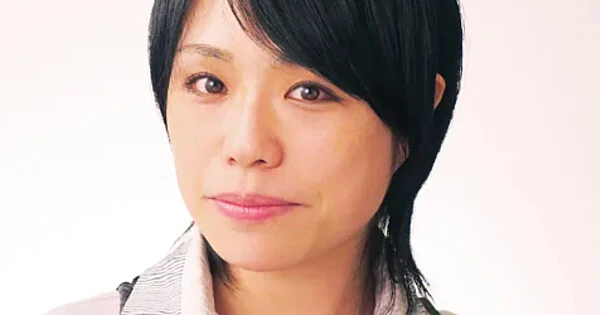
Talent agency Kenyū Office announced on Monday that voice actress Asami Yaguchi died suddenly on Saturday. She was 47. A private funeral service with only close relatives in attendance is being held in accordance with the family’s wishes.
Oricon News reported that the agency stated that Yaguchi “passed away suddenly due to heart failure,” but the agency’s obituary announcement did not state the cause of death.
The agency’s staff stated in the announcement that Yaguchi has supported the company from its early days, and described her as cheerful, great at taking care of other people, and a big favorite of late voice actor Kazuya Tatekabe.
Yaguchi was born on July 31, 1979 in Saitama Prefecture, and she made her professional debut in 2002. She voiced Kuchipatchi in the 2007 Let’s Go! Tamagotchi anime series and Tamagotchi the Movie. She reprised the role in the 2009 Tamagotchi! television anime series, and its sequel Tamagotchi! Yume Kira Dream in 2012, and Tamagotchi! Miracle Friends in 2013. Yaguchi also voiced Katina Tarask in Super Robot Wars OG: Divine Wars and Super Robot Wars OG: The Inspector, Tarlant in Fantastic Children, Eleonore Von Wittenburg in Dies irae, and Gintoki Sakata (during childhood) in the Gintama series.
Yaguchi voiced the characters Katina Tarask and Eleonore Von Wittenburg in the video games Super Robot Wars Original Generations and Dies irae 〜Interview with Kaziklu Bey〜, respectively. She also voiced Pith in the Arknights game, and Young Eliwood in Fire Emblem Heroes.
Sources: Kenyū Office agency’s website, Oricon News
>

© にゃんにゃんファクトリー・講談社/ヤニねこ製作委員会
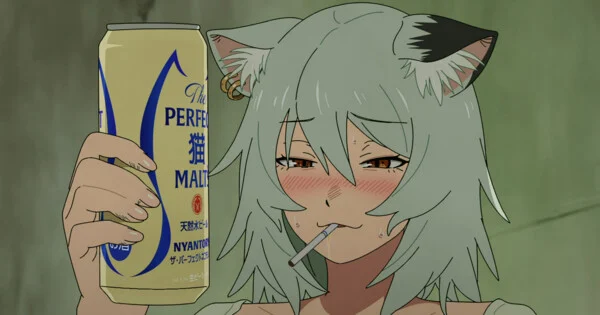
There was a period of time about halfway through this season where I thought Chainsmoker Cat might make a genuine swerve towards dramedy, or at least dark comedy as pitch black as Yani Neko’s lungs. These catgirls all live such ramshackle, hardscrabble lives that I was certain one of them would end up six feet under before the season ended. My money was on Aruko, whose incredibly visible alcoholism was teetering right on the edge of self-annihilation from the moment we watched her almost choke on all of that rainbow-sparkle vomit.
Here, at the end of the line (for now, at least), I am glad that Chainsmoker Cat didn’t go for such a dark shift in tone. Yes, our characters remain dysfunctional addicts and enablers whose worst instincts are constantly colliding against the barriers and restrictions placed upon them by their poverty and their minority status, but damn it if they don’t keep on trucking despite it all anyways. If the show has anything to say about addiction and immaturity keeping people stuck in their lives, it’s that none of us on this side of the screen are really any different from Yani Neko and her pals (feline features notwithstanding). Everybody farts, poops, shares tasteless jokes with their friends when they think nobody else is listening, stinks if they go too long without a shower, indulges in a vice or two, and at the end of each day, tries to do their best to make it to the next one.
In that sense, it is only right that Chainsmoker Cat straddles the line of darkness and destitution without ever losing sight of its wackiest and weirdest sensibilities, because that’s just how life goes for most people, I reckon. The world is, on its best days, an absolutely deranged place to try and carve out your little corner of existence in peace. Sometimes it’s more sad than funny, but I’d like to think that the weird days outnumber the woeful ones, by and large.
This final episode of Chainsmoker Cat‘s remarkably consistent and engaging season does nothing more or less than give us another day in the lives of these stinky fuzzballs, and I don’t think I would want it any other way. Yani Neko helps Saori find a little enjoyment in a tasty crepe snack before our resident human attempts to get back into the saddle of publishing comics. After getting mad at a game, Hameko loses her mind and goes absolutely feral in a wonderfully animated little sequence. Another hilarious bit involves the Landlord discovering the extent of his beastfolk fetish when Shunran plays along with Saori’s gambit and creates a whole drag persona. Then there’s Yakuko, always the most empathetic and relatable of the gang, who goes on a bender of her own after being fired for what sounds like discrimination over her vaguely felonious history.
You’d think I’d be used to it after twelve whole episodes, but I am still marveling over how the anime with the extended jokes about giant, sentient erections and reality-altering farts has become one of the year’s most genuinely cozy comfort watches. Anyone who knows me will understand just how much it means for me to drop the “cozy” label with such casual abandon. I am usually the curmudgeon that rejects any of these new games or shows that seem to be aggressively catering to the “cozy” alternatives of traditional fare. I guess I just need all of those stories to feature more fetid halfway-houses filled with criminals, addicts, sex-freaks, and mercurial tricksters.
It helps that there are still glimpses of hope, even in the darkest crevices of Yani Neko’s many different yet equally noxious orifices. I worry for how long Imoko can hold on to her innocence and dignity if she keeps orbiting the antics of her older sister. At least there’s someone in this anime besides Yakuko and the Landlord who is mildly concerned about Aruko living in this booze-soaked den of iniquity. As much as I love all of the gremlins shacking up in this apartment, there’s no question that they’re a questionable influence on the next generation of catgirls. While I am not sure that Yomuko serving as a bikini model for Saori’s smutty manga is a literal sex crime, you can’t blame Officer So-and-So for being more than a little suspicious of just what the hell is going on in this apartment.
Then again, maybe living life a bit closer to the edge (and in closer proximity to Yani Neko’s sanity-destroying butthole) is exactly the kind of life experience that Yomuko needs to take her writing to the next level? After all, as we’ve seen time and again, these girls always come back around to lift and spur each other forward, even if that spurring is occasionally in the direction of dangerous misadventures and addictive chemical substances. I can only hope that we get more of this wonderful show sooner rather than later, because I think I’m in the same boat as Yani and Co. There’s no better way to shave years off your lifespan by indulging in self-destructive behavior and immature shenanigans than by doing it with a bunch of great friends.
Episode Rating:
Chainsmoker Cat is currently streaming on
Netflix and OceanVeil.
James is a writer with many thoughts and feelings about anime and other pop-culture, which can also be found on BlueSky, his blog, and his podcast.
The views and opinions expressed in this article are solely those of the author(s) and do not necessarily represent the views of Anime News Network, its employees, owners, or sponsors.
>

Bringing Magic Knight Rayearth to a New Generation with Director Yui Miura
Lando Norris apologizes to Franco Colapinto for 'some drivers shouldn’t be in Formula 1’ comments
Six key questions for the Los Angeles Kings after training camp
-

 movies4 months ago
Search For Canadian TV Actor Stewart McLean Now Homicide Investigation
-

 Fashion9 years ago
These ’90s fashion trends are making a comeback in 2017
-
Fashion9 years ago
According to Dior Couture, this taboo fashion accessory is back
-
Fashion9 years ago
Model Jocelyn Chew’s Instagram is the best vacation you’ve ever had
-
Fashion9 years ago
Emily Ratajkowski channels back-to-school style
-
Fashion9 years ago
9 Celebrities who have spoken out about being photoshopped
-

 Anime4 months ago
Rurouni Kenshin: Hokkaido Arc Manga Takes 1-Issue Break – News
-

 Anime3 months ago
HIDIVE to Stream English Dubs for The World Is Dancing, The Forsaken Saintess and Her Foodie Roadtrip in Another World, The Dangers in My Heart: The Movie Anime – News