
Tech
Google is killing off Gemini’s Gems in favor of ‘skills’

As all-in-one AI agents like Meta’s Muse and Instinct take off, Google announced it’s shutting down the Gemini feature known as “Gems,” which had allowed users to build custom AI assistants for specific tasks. However, the work users invested in creating the Gems won’t be destroyed. Gems will be automatically migrated to “skills” that can be used across different AI tasks.
Details about the change are being shared in the Gemini app, where a message warns users that Gems will become skills starting on November 17, 2026. The company said it will migrate the Gems to the new format, so users won’t have to do anything to make the transition. The Gems themselves will remain usable until then.
Launched in 2024, Gems were meant to help users teach their AI to perform certain tasks without having to repeat the instructions. For instance, some of Google’s pre-made Gems had included a learning coach, a brainstorming assistant, a career guide, a coding partner, and an editor. Users could also make Gems for their own needs, like a running coach, nutritionist, or vacation planner. These custom assistants could also be shared with others, which Google had hoped would help make its Gemini AI app more popular.

The news of Gems’ shutdown is another example of why Google shouldn’t be so quick to give every new AI feature its own brand name, icon, and prominent placement in its app’s navigation — especially if it’s going to shuffle things around over time, merging one feature into another. (To be clear, this has been a failing point of Google’s strategy long before the AI era. At one point, for instance, the company was operating multiple different messaging and communication apps at the same time.)
Yet, even as skills, the former Gems still aren’t as consumer-friendly as just typing in text to a chatbot like Meta’s Muse. Instead, Google notes you’ll have to enter a forward slash “/” in a task thread to select the skill you want to use — a user interface that engineers, not regular folks, tend to prefer.
Gems’ wind-down was first reported over the weekend by 9to5Google.
When you purchase through links in our articles, we may earn a small commission. This doesn’t affect our editorial independence.
>

Tesla has secured $30 billion in fresh credit lines that it could use to help scale the new products it is currently working on: the Cybercab robotaxi, Optimus robot, and Tesla Semi.
The company announced Tuesday that Citibank has agreed to a $20 billion three-year delayed-draw term loan facility. Wells Fargo also signed an $8 billion five-year revolving credit facility, and a $2 billion revolving credit facility with a 364-day term.
Tesla said in a regulatory filing that it doesn’t plan to draw on these loan facilities this year. The company has already projected that it will spend at least $25 billion on capital expenditures for 2026. Tesla finished the second quarter of this year with around $9 billion in debt and a pile of cash (and investments) north of $40 billion.
All three of these new products have required new manufacturing lines. In the case of the Semi and the Optimus robot, the company has taken the approach of building out new dedicated factories.
>
The focus of OpenAI’s Dev Day on Tuesday may have been on its agentic assistants known as Dots, or its new AI models, but combined, the AI company’s announcements pointed towards a bigger plan: a disruption of the traditional app store model. Taken together, today’s announcements turn ChatGPT itself into the place where software can be discovered, launched, and used by people and agents alike.
In addition, OpenAI introduced a way for people to bring their ChatGPT identity with them, while also allowing them to use their existing AI allowance in third-party apps.
This isn’t the first time OpenAI has experimented with how apps could operate within its familiar chatbot interface, but the current vision feels more fleshed out than before.
For starters, the comapny is turning ChatGPT itself into a surface for launching apps. The chatbot, which the company says now has 1.2 billion weekly users, has yet to fully capitalize on its potential as a discovery mechanism for finding and using apps that work with AI.
To change that, ChatGPT will begin to make app suggestions within the flow of conversation when it recognizes that a particular app could help the user complete their task. From there, the user will be able to connect the app and begin using it directly within ChatGPT.
This is also aided by the expansion of ChatGPT’s plugin architecture, which now supports extensions.
This allows app developers to build interactive panels where users can work with their tools while they’re chatting with ChatGPT. This essentially turns the apps and services that users would have previously used via the web or through a native desktop or mobile app into something that’s operated directly within ChatGPT.
Developers that sign on with the system can build AI-native versions of their apps through ChatGPT, the same way they would through the open web or a mobile app store. As more and more discovery happens through AI chat, it’s a distribution channel that’s hard to pass up.

Users get an incentive to use that channel too, because “Sign in with ChatGPT” will let them bring their AI allowance with them. (OpenAI has 16 launch partners on this effort, including Cognition’s Devin, Notion, Vercel, T3, OpenClaw, and Dactyl, but plans to add more soon, it says.)
In a demo at OpenAI’s Dev Day event, the company showed off how its own new meeting app could work inside ChatGPT, showing upcoming meetings from the user’s calendar. Here, the user could easily choose to use AI to take meeting notes, then receive a summary of follow-up items when the meeting wrapped.
In another example, users would work with design-focused apps like those from Figma and Adobe to work on revisions of their current project or use a particular feature that would have otherwise required a standalone app.
The apps can be shared with others, like work colleagues, in the lightweight websites ChatGPT now produces. From these ChatGPT sites, a user’s coworkers could sign in to the app with their own credentials and permissions, making the software experience personalized to them.
OpenAI also talked about improvements to how developers submit plugins for review — OpenAI’s version of Apple’s App Review process, if you wil. Now, developers will be able to track their review, see what needs to be fixed, request a human review, and update their plugin’s tools without starting their whole submission over.
The company also announced a new enterprise app marketplace where partners can market their services. At launch, there are some 30-plus partners offering their app through the OpenAI Marketplace, including Adobe, Figma, Sierra, Decagon, HubSpot, Salesforce, ServiceNow, Harvey, Legora, Palo Alto Networks, CrowdStrike, Baseten, and others. Eligible customers can apply part of their OpenAI commitment toward approved partner software, OpenAI said.
Beyond turning ChatGPT into an app discovery tool where users connect with apps directly, OpenAI’s embrace of agents is gently pushing users into a new era where they don’t have to think as much about which app to use or why, relying instead on their AI agents’ suggestions.
With the launch of its autonomous AI agents known as Dots, agents will navigate the web for you, executing the tasks that need to be done in their own cloud infrastructure. Each Dot has its own cloud computer and browser, and can also use connected apps. Compare this to the old model, where users who wanted to manage some type of project — like building a website or coordinating a meeting calendar — would have to download different apps to their computer or phone to make that happen.

Now, users will instead tell an AI agent what they want to have done, and it will simply do it for them. In some cases, the agent’s work may require access to another AI model or a particular application. But this is something the agent may bring to the user, rather than the other way around — where the user is the one to go out and seek the particular tool for the job.
As OpenAI explains, the Dots will be able to connect to its ecosystem of now over 4,000 apps.
What’s more, the Dots can be proactive, perhaps jumping in to offer help with a project or bug, or handling a task the user forgot — but all done with the user’s approval. The Dots will perform what OpenAI calls “proactive research” in the background using connected apps in a read-only mode, but users would still have control over the actions they take.
This system could give app makers another way to reach customers outside of Apple and Google’s app stores. For instance, users could subscribe to a service through the app maker’s website, then connect that account to ChatGPT or Codex for their agent to use. OpenAI has not said, however, that these features would eliminate the need for separate third-party subscriptions or other charges.
Notably, OpenAI didn’t tease any plans on this front today, instead focusing on how it’s building the discovery, distribution, and interface pieces to counter the app store model, along with an identity layer and a mechanism for sharing a user’s existing ChatGPT AI allowance. It did not announce plans Tuesday for a billing or revenue-sharing system that’s comparable to the economic layer of traditional app stores.
When you purchase through links in our articles, we may earn a small commission. This doesn’t affect our editorial independence.
>
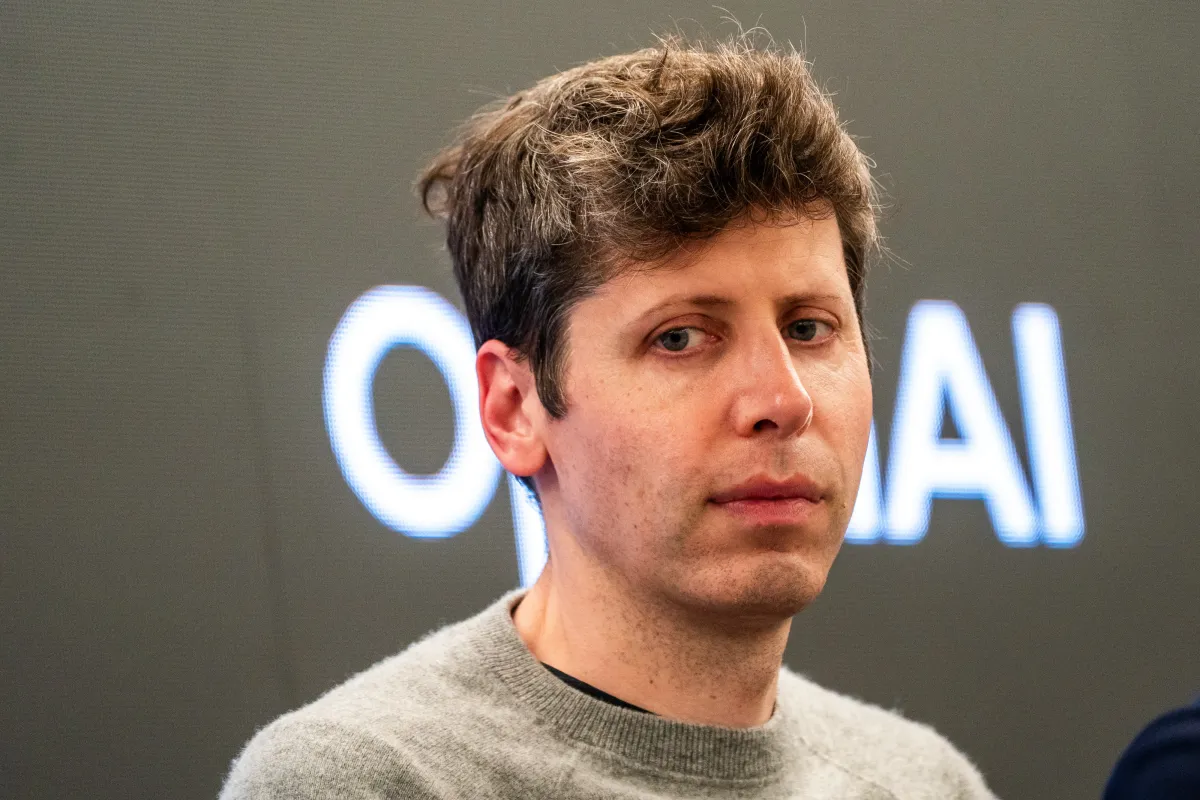
OpenAI is in talks with investors to raise at least $30 billion in a pre-IPO funding round at a valuation of roughly $1.4 trillion, Bloomberg reported on Tuesday.
Investors are eager to pour more funds into the ChatGPT maker ahead of its anticipated public market debut next year. While Anthropic momentarily outpaced OpenAI at the start of the year, recent strategic refocus on key areas like coding has fueled a 70% jump in run-rate revenue since July, reaching $40 billion in August, according to the report.
The company previously raised $122 billion in March at an $852 billion valuation. That funding round was supposed to be its last private raise before an IPO, which had been, until recently, expected to take place this year. However, CEO Sam Altman has now ruled out a public debut in 2026 to prioritize AI safety first.
“I think it is unacceptable to be taking like a 10% chance of killing everybody by the end of the decade,” he recently told Fortune, in response to warnings from safety researchers about AI posing an existential risk to humanity.
The new fundraising, if it transpires, will serve as a bridge round to the IPO, according to Bloomberg.
OpenAI didn’t respond to TechCrunch’s request for comment.
>
Sixers to have 'conversations' about load management for Joel Embiid, LeBron James

Tesla secures $30B in new credit lines as it looks to scale Cybercab, Optimus

‘How I Built This’ Leaves NPR for Vox Media as Guy Raz Takes Ownership
-

 movies4 months ago
Search For Canadian TV Actor Stewart McLean Now Homicide Investigation
-

 Fashion9 years ago
These ’90s fashion trends are making a comeback in 2017
-
Fashion9 years ago
According to Dior Couture, this taboo fashion accessory is back
-
Fashion9 years ago
Model Jocelyn Chew’s Instagram is the best vacation you’ve ever had
-
Fashion9 years ago
Emily Ratajkowski channels back-to-school style
-
Fashion9 years ago
9 Celebrities who have spoken out about being photoshopped
-

 Anime4 months ago
Rurouni Kenshin: Hokkaido Arc Manga Takes 1-Issue Break – News
-

 Anime3 months ago
HIDIVE to Stream English Dubs for The World Is Dancing, The Forsaken Saintess and Her Foodie Roadtrip in Another World, The Dangers in My Heart: The Movie Anime – News