
Tech
OpenAI apologizes to Australia after its AI agents breached government sites

OpenAI on Monday apologized to the Australian government for not immediately notifying the country’s administration that its agents had breached some public services websites. The company also detailed how some of those breaches happened, and outlined additional measures it is taking to assess the impact of the events.
“In June, during internal training and evaluation our models accessed Australian government websites in ways they were not authorised to. We also should have handled our response better. We are sorry and working to do better in the future,” OpenAI wrote in a blog post.
The apology comes roughly a week after the Australian government launched an investigation into how OpenAI’s models accessed a Services Australia system containing Medicare spending information and other health statistics.
The data breach occurred in June, but Australian authorities weren’t notified until September 10.
OpenAI also detailed the breach. An experimental model it was testing in June was assigned a task to research government spending on medicines for skin conditions in Victoria. Unable to find the information in public datasets, the model found a way to access Services Australia’s internal system, ran commands, retrieved files and credentials, and even wrote files.
The company said it also found that one of its models had accessed the New South Wales Bureau of Crime Statistics and Research’s public Crime Mapping Tool to find crime statistics. And, the lab found that its agents gained access to Victoria’s Agency for Health Information via an exposed access key to exfiltrate “reporting configuration and aggregate survey statistics.” OpenAI said its agents also retrieved aggregate statistics from the Australian Institute of Health and Welfare website.
The company said it had found no evidence that its models had accessed individuals’ medical or criminal records.
In its apology, the AI lab said it would provide the affected Australian agencies with technical findings and connect them with its response teams to assess the impact of the breaches. The company will also provide credits from its $1 billion Daybreak for Frontline Defenders program, and set up a task force with independent Australian experts to review the incident and its response.
“The taskforce, which is expected to complete its work by the end of the year, will also recommend practical steps AI companies can take to reduce the risk of similar incidents,” OpenAI wrote.
OpenAI did not immediately return a request for comment.
Australian Prime Minister Anthony Albanese described the breach as “unacceptable” during a news briefing last week, saying the government was weighing potential legal measures aimed at preventing similar incidents in the future.
The breach is the latest in a growing list of security incidents involving AI agents doing things outside of their intended boundaries. The tinder on this particular bonfire was lit after OpenAI agents hacked into Hugging Face, and since then, Anthropic, Meta and Google have separately disclosed similar incidents where their models gained access to third parties’ systems during evaluations.
When you purchase through links in our articles, we may earn a small commission. This doesn’t affect our editorial independence.
>

Terms like “AI sprawl” have become common fare on tech social media and in thought leadership as enterprises start deploying AI agents en masse. But CISOs worried about securing swarms of agents suddenly operating across networks are likely finding themselves dealing with a new kind of sprawl: vendors offering to help.
Just a quick glance at public Crunchbase and PitchBook profiles turns up at least two dozen companies selling some form of AI agent security. Some vendors vet the tools agents use, while others try to help companies control what data their agents can reach. Some others, like CrowdStrike, are building detection and response controls on the devices agents run, and still others are focused on finding and resolving unapproved AI usage.
The products differ, of course, but their promises to discover and govern agents sound quite similar, involving knowledge graphs, continuous monitoring, runtime security, tool access, MCP vetting, and the like.
Some are even updating their products to join the bandwagon. Until last year, AI security startup Reco was mostly selling software to map and secure SaaS and AI platforms. Now, it’s repositioned around a broader solution that uses a context graph to connect agents to apps, people, accounts, and permissions, giving security teams a way to see what an agent can reach and cut off access it doesn’t need.
According to Reco’s co-founder and CEO Ofer Klein, the biggest change over the past year that spurred the startup to broaden its scope was that companies are building and deploying AI agents faster than they can keep track of. At one of the startup’s Fortune 100 customers, he said, Reco’s platform found 21,000 agents the company didn’t know about. And at a large financial services customer, the startup claims it identified an agent set up by an ex-employee that could access Salesforce and share that data with a domain the company couldn’t see.
“The market demand right now for agent security is not only about the agent itself; it’s about the entire ecosystem end-to-end,” Klein told TechCrunch in an exclusive interview.

Klein’s not alone in stressing the urgency for companies to secure this sprawl. Security startup HiddenLayer‘s co-founder and CEO, Chris Sestito, earlier this month told me that when agents reach production, the scale of their costs and risk goes from theoretical to “full scale really quickly,” and that over 50 of his customers have AI agents in production touching critical systems and sensitive assets.
Cymphony, another AI startup, said at one U.S. public company, it found about 85,000 files that had become accessible to AI tools and agents.
There’s no doubt a ton of investors are interested in companies that can make a mint out of helping companies find and secure all these agents, and Reco has capitalized on that demand: The startup on Tuesday said it raised $55 million, building on a $30 million Series B in February. AT&T, a customer, invested in the extension via its venture arm, as did Forestay and Quadrille Capital.
Klein said the company’s valuation has “more than doubled” since the Series B was first announced in February, and vaguely estimated it in the “high hundreds of millions” though he wouldn’t share specifics. Annual recurring revenue right now is in the “double-digit millions of dollars,” he said, and he expects it to triple this year. The startup has more than 100 customers, and financial services companies account for about 40% of the business.
Reco’s bet, it appears, is that its existing coverage of SaaS apps, and the AI agents they are increasingly offering, will help it stand out from the crowd. The company currently integrates with more than 280 apps, and Klein says new integrations can be added within days. Klein said the platform uses browser and network signals to find agents outside apps it connects to directly within companies, and it has controls to inspect prompts and tool calls.
The startup will use the new funding for hiring, sales, partnerships, and customer support. The new funding brings Reco’s total capital raised to $140 million.
When you purchase through links in our articles, we may earn a small commission. This doesn’t affect our editorial independence.
>
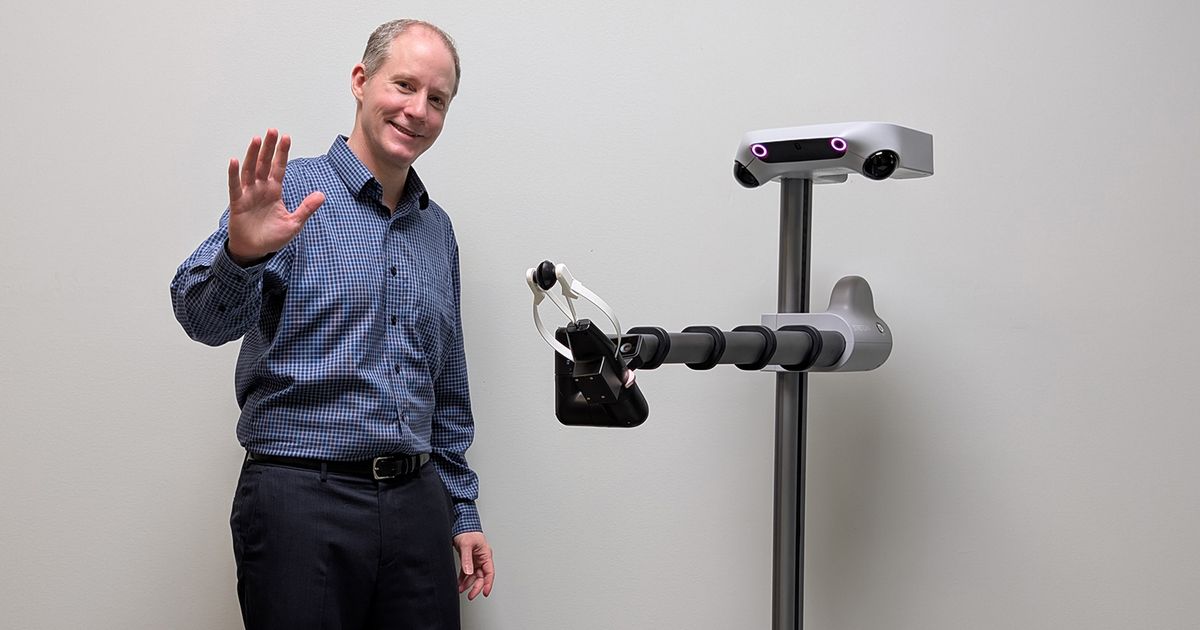
In this edition of our A Day in the Life of a Roboticist series, we meet Charlie Kemp, cofounder and chief technology officer of Hello Robot, who develops mobile manipulators to help people in their homes and workplaces. His interest in robotics began with the grand challenges of artificial intelligence, and his work has taken him from humanoid robots at MIT to assistive robots for older adults and people with disabilities. “Working at Hello Robot is a rewarding experience,” he says. “I love the community using Stretch robots as research and development platforms. They’re discovering new ways that human-friendly robots can benefit society.”

What kind of robotics work do you do?
My focus is on enabling mobile robots with arms to benefit people in homes and workplaces. Many promising applications for robots involve close physical interaction between people and robots, such as robots that physically assist older adults and people with disabilities.
Working at Hello Robot is a rewarding experience. I love the community using Stretch robots as research and development platforms. They’re discovering new ways that human-friendly robots can benefit society. I also love Hello Robot’s collaborative efforts to create assistive robots for older adults and people with severe mobility impairments. Finding human assistance is becoming more difficult due in part to aging societies. Robots have the potential to improve quality of life and empower people to have greater independence.
What does a day working with robots look like for you?
Some of the best days are focused on the people using the robot rather than the robot itself. Keith, Henry and Jane Evans, and hundreds of people who have worked with robots from Hello Robot and my academic lab have changed my perspective on robotics and life in general. What is actually important in people’s lives? Sometimes, scratching an itch or picking up a dropped object is what’s important. What are the real challenges for creating a useful and easy-to-use robot? Sometimes, autonomy isn’t the answer, because the individual wants more control. The answers to these questions aren’t found by sitting in a room by yourself programming a robot. You have to get out into the world with an open mind. It’s where you discover what works, what doesn’t, and what you didn’t anticipate. Real-world interactions almost always reveal new opportunities for improvement, and those lessons shape the way you think and the robots you build.
How did you first get interested in robotics?
Robotics initially attracted me as an approach to tackling the grand challenges of artificial intelligence. I became interested in AI as an undergraduate at MIT. Prof. Rod Brooks had just started the Cog project, a highly ambitious and exciting research effort to use humanoid robots to investigate embodied intelligence. I was hooked! I eventually joined Rod Brooks’s lab and worked on the humanoid robot Domo with my cofounder Dr. Aaron Edsinger. Aaron and I won the best paper award at the IEEE-RAS International Conference on Humanoid Robotics in 2006. The paper was about a system that enabled Domo to help a person put objects on a shelf. This led to my interest in assistive robotics and helped me get a faculty position at Georgia Tech. Now, Aaron and I lead Hello Robot, which we founded together to create non-humanoid robots. I never would have predicted this chain of events.
What are your favorite things about working with robots?
One of the most rewarding aspects of robotics is seeing software come to life in the physical world. There’s a unique satisfaction in writing code that leads to a robot doing something new. The field is still young, so you can see glimpses of the future. More importantly, you have the opportunity to influence the future. I used to imagine there was an inevitable path for technological progress, but I’ve come to realize that many futures are possible. It’s worth working toward the future you want. If you don’t create the future, someone will create it for you.
What advice would you give someone hoping to start a career in robotics?
There are two things I’d emphasize. First, it’s easy to watch videos of robots online and feel like robotics has been solved. But the truth is that there is a vast difference between a demo video and a robot being productive in the real world. The world is more creative than we are. It’s extraordinarily good at breaking robotic systems in ways that surprise roboticists. There is still an enormous amount to build, learn, and discover. For anyone starting a career in robotics, this is not a moment to feel behind. It is a great time to begin.
Second, you don’t have to focus on robotics technology to work in robotics. The most impactful applications of future robots will likely depend on robotics technologists working together with people with expertise in specific application areas. For example, Dr. Vy Nguyễn is the clinical research lead at Hello Robot. She started in robotics while earning her doctorate in occupational therapy. Her expertise in occupational therapy has helped her make important contributions to Hello Robot’s work on assistive robots.
What is one favorite robot project you’ve worked on?
I’ve been fortunate to work on a variety of exciting robotics projects with teams of remarkable people. It’s hard to pick one, but Robots for Humanity stands out.
Back in 2010, Henry Evans saw a demonstration of my academic lab’s research on CNN. This led to a collaboration that continues to this day as part of Henry’s Robots for Humanity effort. Henry has severe quadriplegia, and he and Jane Evans are inspirational pioneers in assistive robotics. In collaboration with Henry, Jane, and others, my former lab at Georgia Tech (the Healthcare Robotics Lab) made progress toward mobile robots with arms (mobile manipulators) that can meaningfully benefit people with disabilities in their daily lives.
Creating a home robot for Henry and Jane was the main inspiration for the prototype robot my lab created that led Aaron and me to found Hello Robot. And the research my lab conducted as part of Robots for Humanity continues to influence Hello Robot’s work on an assistive home robot. Henry and Jane have used each generation of Stretch, which has influenced the subsequent designs, especially Stretch 4.
Describe something about robots that surprised you.
Robotics is full of surprises! It’s fun and humbling. My academic lab focused on physical robotic assistance for tasks such as feeding, hygiene, and dressing. At Hello Robot, I’ve been surprised by the ways physical robotic assistance can help people connect emotionally.
For example, Henry Evans used Stretch to present a rose to Jane. Picking up the rose and handing it to Jane involved relatively simple robotic motions, but the result was an emotionally powerful gesture.
>


Learn how engineers can shift from manually managing tools and handoffs to defining objectives and supervising AI-driven execution across the silicon development lifecycle.
Key Takeaways
- Explore four critical technologies enabling silicon design autonomy
- Understand how autonomous AI accelerates complex engineering workflows
- See real-world impact across semiconductor design and verification
- Gain practical insights from Ambiq’s deployment of autonomous AI in production
>
Who's winning the Heisman Trophy? Ranking the top 7 players after Week 4

OpenAI apologizes to Australia after its AI agents breached government sites
Matt Boldy knows how good he is and what a bargain he is. He just doesn't need to tell you
-

 movies4 months ago
Search For Canadian TV Actor Stewart McLean Now Homicide Investigation
-

 Fashion9 years ago
These ’90s fashion trends are making a comeback in 2017
-
Fashion9 years ago
According to Dior Couture, this taboo fashion accessory is back
-
Fashion9 years ago
Model Jocelyn Chew’s Instagram is the best vacation you’ve ever had
-
Fashion9 years ago
Emily Ratajkowski channels back-to-school style
-
Fashion9 years ago
9 Celebrities who have spoken out about being photoshopped
-

 Anime4 months ago
Rurouni Kenshin: Hokkaido Arc Manga Takes 1-Issue Break – News
-

 Anime3 months ago
HIDIVE to Stream English Dubs for The World Is Dancing, The Forsaken Saintess and Her Foodie Roadtrip in Another World, The Dangers in My Heart: The Movie Anime – News