
Tech
Fireflies adds dictation to its desktop notetaking apps


Voice AI has gained particular traction for a few consumer use cases: The biggest category is meeting note-taking, and the other is AI-powered dictation, in which filter words are removed and the text is formatted neatly. Fireflies.ai, having gained a solid foothold in the meeting note-taking space, is now venturing into dictation by way of a new feature on its Mac and Windows apps.
Called Fireflies Talk, the dictation feature works just like any of the others on the market like Wispr Flow, Willow or SuperWhisper. Users can press the Fn key on Mac or Ctrl + Win on Windows to start speaking, no matter which app is open, and Fireflies will record their voice and transcribe it neatly in the text field of the app.
“People speak roughly 3x faster than they type, and voice is a much more natural way to get work done. Meetings were just the starting point; the bigger vision has always been Fred as your AI teammate throughout the day. Talk takes Fireflies beyond meetings into email, Slack, docs, prompts, and wherever else you work,” Fireflies CEO Krish Ramineni told TechCrunch over email.
The company has bundled the dictation into its existing subscription plans rather than charging for it separately. This is not entirely a new strategy. Wispr took the opposite route, releasing its meeting notetaker for free for its existing dictation app users. Speechify has also introduced dictation capabilities across different apps.
Fireflies said that the company doesn’t keep any recordings and stores dictation transcripts locally.
Like other meeting notetakers and productivity suites, Fireflies is aiming to automate workflows based on meeting transcriptions and the context it builds on its users, and has plans to build an assistant that taps that context.
Last year, the company introduced “mini-apps” to extract insights in different ways from meetings, and last month, it launched a feature to manage your inbox and draft emails on your behalf.
When you purchase through links in our articles, we may earn a small commission. This doesn’t affect our editorial independence.
>

When former Yahoo CEO Marissa Mayer earlier this month told me she was finally ready to unveil Dazzle, the personal AI assistant that raised an $8 million seed round last December, I couldn’t help but wonder if she’s playing copycat to Meta’s Muse, Instinct, and the flood of similar tools that have flooded the market over the past month.
But when Mayer finally gave me a demo, Dazzle proved it’s taking a different approach. Instead of building context about you from text-heavy apps like email, calendars and shopping histories, Dazzle’s AI assistant gets all its context from a single source: your camera roll.
“I think that photos are an underappreciated source of information,” Mayer said. “You’ll be surprised what we can learn about you and how good a job we can do with your photos.”
Mayer argues that if a photo is worth a thousand words, your camera roll is worth millions. By analyzing all the photos stored on your phone, Dazzle claims to understand your hobbies, interests, food and style preferences, how you like to spend their time, and with whom.
“We understand whether or not you like to ski, where your most recent trip was, what types of things your kids are into,” Mayer said.
It’s no surprise that Mayer has built an assistant centered around photos. Her previous startup, Sunshine, launched an AI-powered photo-sharing tool called Shine in 2024. While that product was widely criticized for its outdated design, failed to attract widespread usage, and eventually shut down, Mayer says it nevertheless built “interesting IP.”
I was eager to try Dazzle, which users can use through its app or via text. Dazzle splits its functionality into two core experiences. For immediate tasks, it can scan recent photos to pull details — like populating your calendar from an event flyer, or finding a repair-person after spotting a broken garage door in your camera roll.
Second, it mines your photo library to come up with personalized ideas for everything from holiday vacations to birthday gifts.

Given that plenty of tools can parse pictures — like looking up where to buy a product, or searching information on an interesting art piece — I was far more curious to test what Dazzle could learn from my photo history.
For instance, Mayer uses Dazzle to brainstorm family outings. By scanning her photos, she says, the assistant deduced that her family loves escape rooms, and subsequently suggested multiple SF Bay Area locations she’d never heard of.
When I tested Dazzle with a request for vacation recommendations, it suggested several Mediterranean spots, likely picking up on my past trips to Spain and Greece. But it also threw in Sicily, which surprised me since I was there four years ago. After some more tinkering, I noticed it has blind spots — it failed to remember my daughter already knows how to roller skate when I asked if I should buy her a pair for her next birthday.
Despite the hiccups, though, I appreciated Dazzle’s ideas for activities, like suggesting a local pottery studio down the street, or a bioluminescent kayak tour in Tomales Bay.
I’m sure the product will improve with time, and while I’m undecided on whether I’ll keep using it, I like that its suggestions feel more personal than what you’d get from a generic AI assistant that only knows your calendar.
In the meantime, Mayer contends that given security concerns with products like Instinct and Muse, users may feel more comfortable handing over their photo libraries to an AI instead of granting it access to sensitive data like emails and messages.
She emphasized that Dazzle prioritizes privacy, and discards any personal information the AI flags as sensitive.
This flurry of new AI assistants is an exciting time for consumers. And while Dazzle isn’t as broadly useful as other offerings quite yet, it offers a glimpse of a future in which AI can do more than just execute tasks; it actually knows who you are.
When you purchase through links in our articles, we may earn a small commission. This doesn’t affect our editorial independence.
>

Meta announced on Tuesday that it’s expanding its AI agent Muse to small businesses and adding new integrations including Shopify, Dropbox, Slack, and more. The tech giant says the agent can help owners run their business and find new customers.
By plugging Muse into the software that small business owners are already using to manage sales, operations, and marketing, Meta is betting that an AI agent with context of a company’s whole operation will be more useful than a standalone chatbot, as it continues to compete against rivals like OpenAI and Google.
Muse can also link to Instagram professional account analytics, Facebook Pages, and Meta ad accounts. Meta says the AI agent also knows what a business sells, how a brand sounds, and what customers ask about most.
Additional integrations include Asana, Box, Canva, Figma, Granola, HighLevel, Intuit QuickBooks, Klaviyo, Lovable, Notion, Stripe, and Zoom.
Muse for Small Business is available for free with usage limits. Businesses that want more usage can purchase a subscription plan.

“Small businesses have been growing on our apps for nearly two decades,” Meta wrote in a blog post. “They told us they’re short on hours, not ideas. So we built Muse for Small Business to help get work done with the tools they already use.”
Meta has been focused on expanding its AI tools beyond the consumer and into the enterprise market. The launch of Muse for Small Business comes a day after Meta introduced “Meta Enterprise Platform,” a new initiative aimed at expanding the company’s AI offerings to businesses and corporate customers. The move could help Meta see a return on all the money it’s pouring into AI.
The tech giant hired Chirantan “CJ” Desai, the CEO of database software giant MongoDB, to lead the new initiative.
Meta says it will focus on bringing its full technology stack, including Muse, Meta Business Agent, Muse API, Muse Code, and more, to businesses and developers.
The rollout of Meta Enterprise Platform is built on the momentum of Muse, which launched earlier this month and topped the U.S. and Canada app charts ahead of ChatGPT.
When you purchase through links in our articles, we may earn a small commission. This doesn’t affect our editorial independence.
>
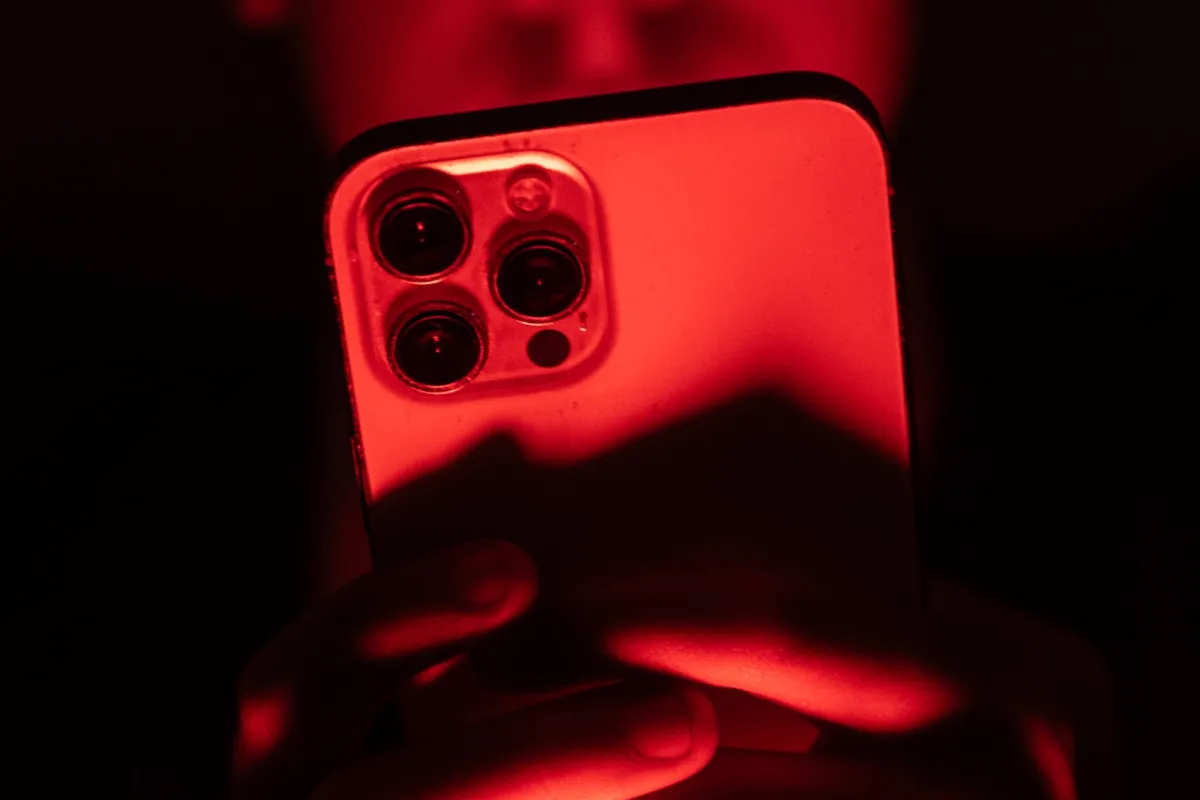
Apple has fixed a security vulnerability in its iOS 26, iPadOS 26 and macOS 26 operating systems that the company says “may have been exploited” by hackers. The tech giant said the now-fixed bug could be used to launch “an extremely sophisticated attack against specific targeted individuals on versions of iOS before iOS 27.”
According to a listing on Apple’s security pages, the bug was found in the main graphics engine that powers the user interface and visuals on iPhones, iPads and Macs.
Meta’s product security team was credited with the discovery.
Details of the bug, officially classed as CVE-2026-86950, were not released, but a device’s graphics engine typically has broad access to the rest of the device’s operating system. A successful exploit could potentially allow a hacker to steal a broad range of personal data from an affected device.
When reached by TechCrunch, spokespeople for Apple and Meta did not provide comment about how the bug was discovered, or how many people had their devices hacked due to this vulnerability, if any. It’s also unclear who may be exploiting the bug, such as government spyware makers or cybercriminals.
While the bug affects Apple’s previous generation of operating systems, it remains in wide usage. Almost four-in-five of Apple’s iPhone owners are still running iOS 26, according to the company’s own statistics. Devices running the latest version, iOS 27, iPadOS 27, and macOS 27, released earlier this month, also received a software update on Tuesday, but are unaffected by the bug under attack.
A separate ‘zero-click’ bug now fixed
News of the security patch comes soon after Apple fixed another critical security bug, known as CVE-2026-86869, which could have allowed hackers to silently steal data from affected iPhones, iPads, or Macs.
Belgian cybersecurity research firm ironPeak published a detailed writeup last week explaining that the bug was a “zero-click” vulnerability that could be invisibly triggered via a maliciously crafted iMessage, without the user’s knowledge. Such bugs require no interaction from the victim, such as clicking a link, and are highly sought-after by surveillance vendors and spyware makers.
Per ironPeak’s post, the bug is capable of bypassing BlastDoor, a security feature that Apple implemented to prevent malicious code, like spyware, from escaping iMessage’s sandbox and hacking the user’s device.
Apple fixed the bug in September with the release of iOS 27, iPadOS 27, and macOS 27, and credited ironPeak’s Niels Hofmans with the discovery, alongside security researchers at Meta who confirmed their findings in a post on X.
It’s not yet known if this bug had been used in cyberattacks before it was fixed.
When you purchase through links in our articles, we may earn a small commission. This doesn’t affect our editorial independence.
>

1 in 100 (GFs) – This Week in Anime

Why Salisbury FC are ‘bigger than many Premier League teams’ in Kuwait
What we're hearing about how the Canucks shaped their season-opening roster
-

 movies4 months ago
Search For Canadian TV Actor Stewart McLean Now Homicide Investigation
-

 Fashion9 years ago
These ’90s fashion trends are making a comeback in 2017
-
Fashion9 years ago
According to Dior Couture, this taboo fashion accessory is back
-
Fashion9 years ago
Model Jocelyn Chew’s Instagram is the best vacation you’ve ever had
-
Fashion9 years ago
Emily Ratajkowski channels back-to-school style
-
Fashion9 years ago
9 Celebrities who have spoken out about being photoshopped
-

 Anime4 months ago
Rurouni Kenshin: Hokkaido Arc Manga Takes 1-Issue Break – News
-

 Anime3 months ago
HIDIVE to Stream English Dubs for The World Is Dancing, The Forsaken Saintess and Her Foodie Roadtrip in Another World, The Dangers in My Heart: The Movie Anime – News