
movies
‘Digger’ Review: Tom Cruise in Iñárritu’s Climate Crisis Satire

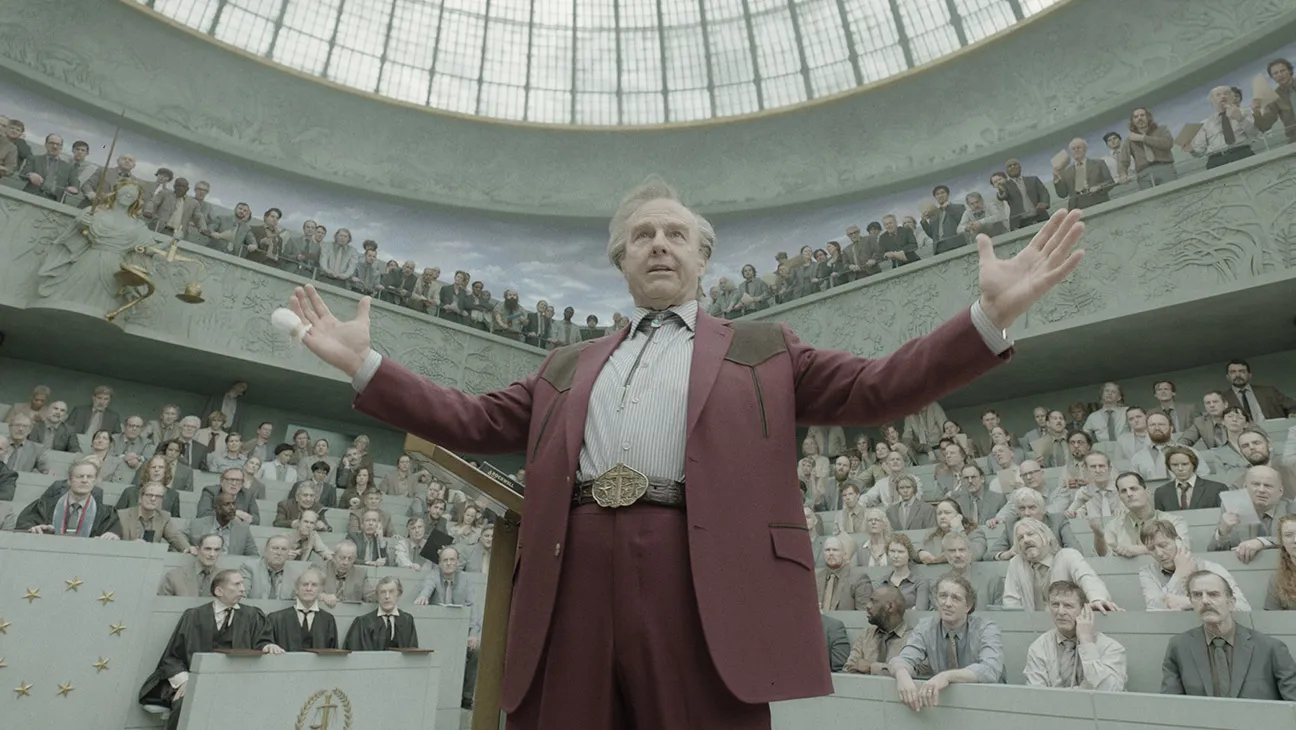
At last, a climate crisis satire so smug and bombastic it makes Adam McKay’s Don’t Look Up seem almost innocuous. Digger is basically what happens when you put two outsize egos together with nobody holding the reins to keep their most self-indulgent impulses in check. Piloted by a spectacularly obnoxious Tom Cruise, who evidently spent hours in the makeup chair each day to look his age, Alejandro G. Iñárritu’s wannabe Dr. Strangelove is a heavy-handed cataclysm scenario built around the blunt point that any attempt to halt global warming this late in the game is pure political theater.
It’s a movie that sets out to be divisive, and no doubt many will applaud its extravagant display of what passes for audaciousness and originality. But put me in the camp of those who most definitely did not dig it. Though Iñárritu mined a fertile vein of sardonic humor in 2014’s Birdman or (The Unexpected Virtue of Ignorance), comedy has never been this grandiose director’s forte. His eighth feature is so meta that you watch in excruciating weariness as it disappears up its own ass and then realize to your dismay that there’s another eardrum-shattering hour left to endure.
Digger
The Bottom Line
Dead and buried, or ought to be.
Release date: Friday, Oct. 2
Cast: Tom Cruise, Riz Ahmed, John Goodman, Sandra Hüller, Michael Stuhlbarg, Jesse Plemons, Emma D’Arcy, Sophie Wilde, Robert John Burke
Director: Alejandro G. Iñárritu
Screenwriters: Alejandro G. Iñárritu, Alexander Dinelaris, Nicolás Giacobone, Sabina Berman
Rated R,
2 hours 9 minutes
I was reminded of colossal misfires like Damien Chazelle’s Babylon and David O. Russell’s Amsterdam, bloated movies by directors so drunk on their exalted reputations they forgot there was an audience to consider.
Digger epitomizes the difference between big swing and hubristic folly more than any film since Francis Ford Coppola’s Megalopolis, another wildly ambitious bid to skewer the chaos of contemporary reality. But Coppola’s film, irrespective of its fatal flaws and excesses, at least meant something in the context of his career. It also tempered its despair for humanity with illuminating glimmers of hope.
There’s no such relief in Iñárritu’s film, which boils down to, “Look at the hopeless mess we’re stuck in, hahaha! All we have left is great subversive art.” That last part is debatable.
Coming after the handsomely crafted but thematically overstuffed existential navel-gazing of the 2022 Netflix feature Bardo, False Chronicle of a Handful of Truths, which was Iñárritu’s answer to Fellini’s Otto e mezzo, Digger furthers the impression that the director is now primarily interested in making films about his own genius for mythmaking, as both an artist and a truth-teller pulling away the gauze to expose the alarming quagmire of our 21st century world. Unless that anxiety is not already entrenched in your recurring thoughts — and if not, wake up — it’s unlikely this film has much to tell you.
In a performance that melds his cocky motivational speaker from Magnolia with his belligerent, prosthetics-clad studio executive from Tropic Thunder, Cruise plays powerful oil baron Digger Rockwell, an overbearing boor named for the shovel with which his granddaddy dug his way to a family fortune. He has the entire U.S. government in his pocket, including President Compson (John Goodman), another bellowing windbag, and enough clout to get around pesky regulations and environmental concerns.
For some reason that has zero bearing on the plot, Digger loves his mangy cat and is determined to keep the ailing creature, half-blind and incontinent, alive at any cost. The shoddy feline puppet is one of the first clues that the world of Digger’s palatial mansion — stuffed with hunting trophies and surrounded by sweeping landscapes — might not be exactly what it seems. The curtain rising on a proscenium stage is another, as is a lingering shot of a poster for Cassavetes’ Opening Night, held for so long I might have involuntarily groaned.
But before the big reveal intended to shift our perspective on everything we have seen, including the strident overacting, Cruise’s Digger swaggers from room to room barking orders in his Texas twang, his paunchy silicone dad bod adorned with cowboy boots, 10-gallon hats and bolo ties. Iñárritu seems to think this visual alone is funny, but that would require getting past the persistently dull and witless writing. Not to mention that Cruise’s performance starts at an abrasive 11, leaving him nowhere to go.
Digger is so used to being cocooned among yes men that he’s almost affronted when his head of environmental security (Danny Kirrane) gets through on a video call from the Arctic oil field where the Rockwell workforce has been pumping 9,000 barrels a day, with nine months remaining on the company’s lease.
The oil tycoon does not like to be told anything he doesn’t want to hear, so he’s more annoyed than concerned when informed that methane gas bubbling up from the ocean floor as a result of his drilling operations has caused a rapidly expanding crack in a glacial ice bed, threatening its stability.
When an explosion is reported at the drilling site, Digger is more worried about the damage to the oil rig than he is the human casualties or the massive dislodged ice shelf headed for Europe, where scientists predict its impact will trigger a tsunami and displace millions of people. That potential disaster of course is something Digger and his father before him have known about for decades (“CO2 is just the fuse, methane is the bomb”) but have managed to hush up thanks to bribes and backroom government deals.
It’s hard to find the humor in all this with a current administration so gung-ho in its “Drill, baby, drill!” recklessness, having neutered the EPA and scrapped regulatory oversight for fossil fuel extraction. But being unfunny is less Digger’s problem than a story that ties itself in knots trying to be clever, as a completely unconvincing big twist alters the picture and opens a window to a grim future. It also means that many of the cast from a certain point on are effectively playing dual roles, not that there’s much virtuosity to admire.
Scenes of laissez-faire politics leave more of a sour taste than a smile — notably when Digger summons President Compson and his senior cabinet to his home for a meeting in which he emphasizes the need to get out in front of the story and control the narrative, using the public’s panic to their advantage.
Hardass Defense Secretary Colonel Fitzgerald (Robert John Burke, basically playing George C. Scott in Dr. Strangelove) just wants to bomb the runaway iceberg. But one of the few voices of reason, scientist Ganesh (Riz Ahmed, also one of the few performances allowed any nuance), speaks up to explain how that would set off a whole new chain of disasters, refusing to sugarcoat the awful truth for the public.
The movie’s best scene, which gives Cruise an opportunity to flex his acting muscles while being simultaneously combative and charming in Digger’s folksy manner, has him addressing the European Parliament in an assembly hall that evokes the Roman Senate. By owning the global crisis unleashed by oil billionaires and a complicit government, Digger causes an uproar. But he hurls the politicians’ anger right back at them, declaring that, “Oil is the mother’s milk of Earth,” and calling the current predicament the price of doing business with a commodity that all of them want.
None of this ever accumulates much weight, however, since the conflicts are all dulled by the one-note absurdity of the farcical plotting. Even the few characters willing to stand up to Digger, like his truculent younger sister Emma (a very shouty Sandra Hüller, wasted), his level-headed assistant Lina (Emma D’Arcy) and Vice President Fryman (Michael Stuhlbarg), are drowned out in all the racket. Jesse Plemons plays a global intel company owner with a behind-the-scenes role, but the actor remains stuck on the sidelines.
Considering the grim future scenario these remarkably unpleasant two hours dump on us, and the exhausting effect of all its aggressive auteurist grandstanding — blame Iñárritu and his co-writers, not Cruise — Digger ultimately just prompts a worn-down shrug. Shot in VistaVision and reuniting the director with cinematographer Emmanuel Lubezki, it looks suitably big and imposing but is less interesting for its visual textures than for Dennis Gassner and Richard Johnson’s elaborate production design.
The IMAX Countdown that precedes the film reads: “Watch a movie or be a part of one.” It’s difficult to imagine mainstream audiences ever wanting to be a part of this bludgeoning ordeal.
>

EXCLUSIVE: As the worlds of entertainment and brands move closer together, The Now Agency has a plan to scale content.
The New York-based social media agency is launching a social distribution network (SDN), which is aimed at helping brands push their content towards a network of more than 50,000 third-party publishers.
“Great content alone is no longer enough to win on social,” said Gabe Feldman, co-founder and Managing Partner of The Now Agency. “Brands need to think just as critically about how that content is engineered to break through the discovery mechanisms that determine its reach, and how distribution can scale that reach beyond a brand’s owned channels.”
In effect, the social distribution network will allow content such as podcasts, interviews, live streams, YouTube programing and other types of long-form content to reach vetted third parties, who turn the content into social-native clips and distribute them through their own channels. The content will span the entertainment, lifestyle, sports and culture spaces.
The Now Agency says content discovery that was once tied to a creator or brand’s follower base, but that platforms are now sharing based on signals such as watch time, engagement, discussion and shares.
“The opportunity isn’t simply to produce more content,” added Jonathan Chanti, Co-Founder of The Now. “It’s to build a system that gives every strong piece of content more chances to find its audience. Social distribution should be treated as infrastructure, not an afterthought.”
>
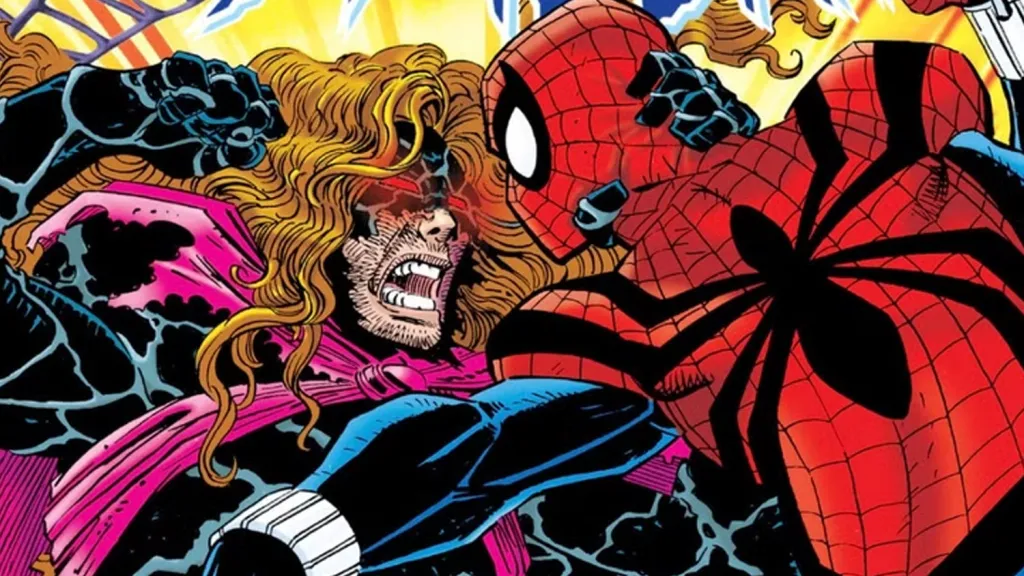
EXCLUSIVE: Will the real Ben Reilly please stand up? Prime Video is closing in on an order for a new series set in Sony Pictures’ Universe of Marvel Characters based on the popular Clone Saga storyline from the Marvel Comics, more specifically the second Clone Saga story arc that focuses on two Spider-Man clones, Ben Reilly and Kaine Parker, sources tell Deadline.
Reps for Amazon MGM Studios and Sony TV declined comment.
The new series, written by American Born Chinese creator Kelvin Yu, will succeed Spider-Noir, which was recently canceled by Prime Video after one season. It starred Nicolas Cage as Ben Reilly whose alter ego was the title character. In the comic books, Spider-Man Noir is Peter Parker, with the identity switched for the TV series because of rights carveouts.
Details about the new series are scarce.
In the comics, Ben Reilly is a successful, stable Spider-Man clone whose name is a combination of the first name of Peter’s uncle Ben and the maiden name of his aunt May and who develops a superhero identity of his own, the Scarlet Spider. Kaine Parker is the flawed first clone of Spider-Man.
Sources caution that, while the comics serve as source material and inspiration, there may be significant changes in the screen adaptation.
There is some conflicting information, with some saying that the TV series would follow Ben and Kaine as they grapple with their newly discovered identities as clones while also facing other clones. (Another clone in the comics becomes the villain Spidercide.)
Others claim that the series may alter Ben and Kaine’s origins as clones, and they could take on new identities.
In what is considered Clone Saga’s most controversial twist in the books, Ben Reilly at one point is declared the real Spider-Man and Peter Parker the clone, a switch that was eventually reversed after backlash from fans.
Like Spider-Noir, the new series falls under the multi-title deal between Amazon MGM Studios and Sony Pictures Television aimed at generating a suite of TV series based on IP from Sony’ Universe of Marvel Characters, most of them in the world of Spider-Man. It also will have a linear debut on Amazon’s MGM+ platform followed by a streaming release on sibling Prime Video.
Amy Pascal, Phil Lord and Christopher Miller, who oversee the universe for Sony TV and executive produced Spider-Noir, are expected to also executive produce the Clone Saga series with Yu.
As Deadline reported at the time of the Spider-Noir cancellation earlier this month, Amazon and Sony TV were continuing to develop multiple projects under the pact, with one of them nearing a series order.
>

The White House has been hit with a cease-and-desist letter from a musician whose song was featured in a promotional ad featuring Donald Trump that was paid for using tax dollars rather than campaign funds.

An attorney for JMSN, whose real name is Christian Berishaj, fired off a cease-and-desist letter to White House Chief of Staff Susie Wiles on Monday, objecting to the use of his song “Love Me” in the ad, known as “The Country He Loves.” The ad was one of a series of spots that have run on TV in the past week, with the White House claiming they are public service announcements yet Democrats and even some Republicans contending that they are campaign propaganda.
The letter alleges that the song was used without proper clearances and claims violation of federal copyright law. Norm Eisen of Democracy Defenders Action wrote in the letter that “JMSN does not want to be viewed as directly or indirectly affiliated with the President or his Administration. As he said in his Instagram post denouncing the Advertisement, he ‘would never authorize [his] music to be used for ANY political agenda or campaign.’ Thus, the use of the Song in this context, as part of an overtly partisan, political advertisement, is particularly damaging, as it could cause others to call into question JMSN’s artistic independence and integrity.”
A White House spokesperson did not immediately return a request for comment. Yashar Ali first reported on the cease-and-desist letter.
The ads contain messages that they are “paid for by the U.S. government.” Per NBC News, AdImpact estimates that $1.7 million has been spent to run the spots.
>
Super Bowl odds: What history portends for Rams, Patriots, Cowboys after 1-2 starts

‘Avengers Endgame: Encore’ Proves Box Office Power of Infinity Vision

The Now Agency Opens Social Distribution Network
-

 movies4 months ago
Search For Canadian TV Actor Stewart McLean Now Homicide Investigation
-

 Fashion9 years ago
These ’90s fashion trends are making a comeback in 2017
-
Fashion9 years ago
According to Dior Couture, this taboo fashion accessory is back
-
Fashion9 years ago
Model Jocelyn Chew’s Instagram is the best vacation you’ve ever had
-
Fashion9 years ago
Emily Ratajkowski channels back-to-school style
-
Fashion9 years ago
9 Celebrities who have spoken out about being photoshopped
-

 Anime4 months ago
Rurouni Kenshin: Hokkaido Arc Manga Takes 1-Issue Break – News
-

 Anime3 months ago
HIDIVE to Stream English Dubs for The World Is Dancing, The Forsaken Saintess and Her Foodie Roadtrip in Another World, The Dangers in My Heart: The Movie Anime – News