
Tech
AI-powered app maker Wabi pivots to a messaging experience

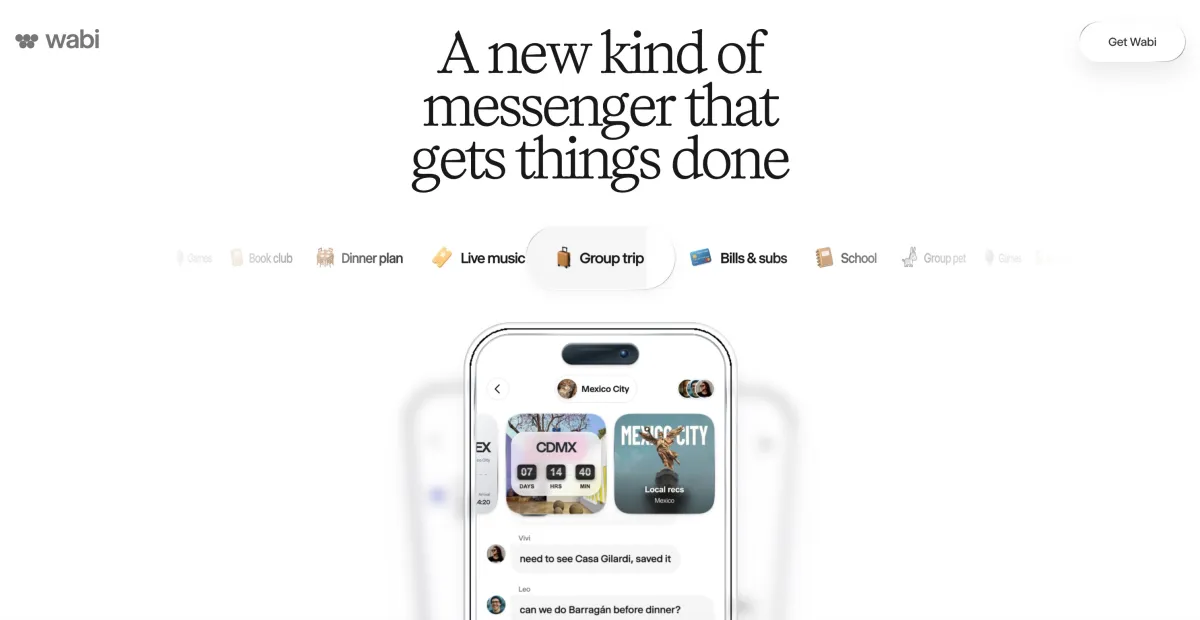
Wabi, the AI startup that allowed anyone to use prompts to build apps, is undergoing a slight pivot as demand for AI agents, like Meta’s Muse and Instinct, takes off. The company announced this week that Wabi is now becoming an AI messenger of sorts — but one that’s still capable of making apps to help you get things done.
The startup’s founder Eugenia Kuyda, who previously founded the AI companion startup Replika, described Wabi 2.0, as the new experience is called, as a “personal agent that does stuff for you and builds the interface you need in the moment.”
It’s a similar value proposition to that offered by the original version of Wabi — but one that users will interact with in a different way. Instead of positioning itself up against other vibe-coding tools, Wabi 2.0 aims to compete more directly with AI agents that combine both conversations and productivity tasks in a single interface.
It also comes as companies like OpenAI and others are thinking about how apps will work inside their more generalized chatbot user interfaces; for instance, OpenAI today announced at its Dev Day an update to ChatGPT’s plugins, which will allow apps to offer interactive experiences within ChatGPT, and where the app’s name gets pinned in a more visible spot on ChatGPT’s sidebar.
In a post on X, Kudya explained how Wabi’s new experience will make more sense for consumers, who want to do more than just type to an agent.
“The more you use a chat-only agent, the worse the experience gets. Your history and ongoing tasks end up buried in one endless scroll. People don’t just want to type-type-type; They want to tap-tap-tap, scroll, and look. They love what agents can do, but they also like software,” she wrote. “The most powerful agent will be the one that combines both.”
The idea is that as a user asks the agent to perform a task, it could create a user interface on demand to help complete whatever the request may be. For instance, Kudya suggested users could build things like a calorie tracker, a weightlifting log, and a weight tracker, which would be accessible in her thread about health-related topics.
In another thread focused on family, users could create a calendar of the kids’ activities, a language learning app, an app that keeps up with local kid-friendly events, and other things that relate to parenting, household management, or the kids’ interests.
“So far, personal agents have been one person, one chat, a stream of one-off tasks. We think the future is your agent, your apps, and your people in one place, running the parts of life that matter most, together,” wrote Kudya.
The new Wabi 2.0 app is currently only available by invite code, which are being doled out on X, too.
When you purchase through links in our articles, we may earn a small commission. This doesn’t affect our editorial independence.
>
The focus of OpenAI’s Dev Day on Tuesday may have been on its agentic assistants known as Dots, or its new AI models, but combined, the AI company’s announcements pointed towards a bigger plan: a disruption of the traditional app store model. Taken together, today’s announcements turn ChatGPT itself into the place where software can be discovered, launched, and used by people and agents alike.
In addition, OpenAI introduced a way for people to bring their ChatGPT identity with them, while also allowing them to use their existing AI allowance in third-party apps.
This isn’t the first time OpenAI has experimented with how apps could operate within its familiar chatbot interface, but the current vision feels more fleshed out than before.
For starters, the comapny is turning ChatGPT itself into a surface for launching apps. The chatbot, which the company says now has 1.2 billion weekly users, has yet to fully capitalize on its potential as a discovery mechanism for finding and using apps that work with AI.
To change that, ChatGPT will begin to make app suggestions within the flow of conversation when it recognizes that a particular app could help the user complete their task. From there, the user will be able to connect the app and begin using it directly within ChatGPT.
This is also aided by the expansion of ChatGPT’s plugin architecture, which now supports extensions.
This allows app developers to build interactive panels where users can work with their tools while they’re chatting with ChatGPT. This essentially turns the apps and services that users would have previously used via the web or through a native desktop or mobile app into something that’s operated directly within ChatGPT.
Developers that sign on with the system can build AI-native versions of their apps through ChatGPT, the same way they would through the open web or a mobile app store. As more and more discovery happens through AI chat, it’s a distribution channel that’s hard to pass up.

Users get an incentive to use that channel too, because “Sign in with ChatGPT” will let them bring their AI allowance with them. (OpenAI has 16 launch partners on this effort, including Cognition’s Devin, Notion, Vercel, T3, OpenClaw, and Dactyl, but plans to add more soon, it says.)
In a demo at OpenAI’s Dev Day event, the company showed off how its own new meeting app could work inside ChatGPT, showing upcoming meetings from the user’s calendar. Here, the user could easily choose to use AI to take meeting notes, then receive a summary of follow-up items when the meeting wrapped.
In another example, users would work with design-focused apps like those from Figma and Adobe to work on revisions of their current project or use a particular feature that would have otherwise required a standalone app.
The apps can be shared with others, like work colleagues, in the lightweight websites ChatGPT now produces. From these ChatGPT sites, a user’s coworkers could sign in to the app with their own credentials and permissions, making the software experience personalized to them.
OpenAI also talked about improvements to how developers submit plugins for review — OpenAI’s version of Apple’s App Review process, if you wil. Now, developers will be able to track their review, see what needs to be fixed, request a human review, and update their plugin’s tools without starting their whole submission over.
The company also announced a new enterprise app marketplace where partners can market their services. At launch, there are some 30-plus partners offering their app through the OpenAI Marketplace, including Adobe, Figma, Sierra, Decagon, HubSpot, Salesforce, ServiceNow, Harvey, Legora, Palo Alto Networks, CrowdStrike, Baseten, and others. Eligible customers can apply part of their OpenAI commitment toward approved partner software, OpenAI said.
Beyond turning ChatGPT into an app discovery tool where users connect with apps directly, OpenAI’s embrace of agents is gently pushing users into a new era where they don’t have to think as much about which app to use or why, relying instead on their AI agents’ suggestions.
With the launch of its autonomous AI agents known as Dots, agents will navigate the web for you, executing the tasks that need to be done in their own cloud infrastructure. Each Dot has its own cloud computer and browser, and can also use connected apps. Compare this to the old model, where users who wanted to manage some type of project — like building a website or coordinating a meeting calendar — would have to download different apps to their computer or phone to make that happen.

Now, users will instead tell an AI agent what they want to have done, and it will simply do it for them. In some cases, the agent’s work may require access to another AI model or a particular application. But this is something the agent may bring to the user, rather than the other way around — where the user is the one to go out and seek the particular tool for the job.
As OpenAI explains, the Dots will be able to connect to its ecosystem of now over 4,000 apps.
What’s more, the Dots can be proactive, perhaps jumping in to offer help with a project or bug, or handling a task the user forgot — but all done with the user’s approval. The Dots will perform what OpenAI calls “proactive research” in the background using connected apps in a read-only mode, but users would still have control over the actions they take.
This system could give app makers another way to reach customers outside of Apple and Google’s app stores. For instance, users could subscribe to a service through the app maker’s website, then connect that account to ChatGPT or Codex for their agent to use. OpenAI has not said, however, that these features would eliminate the need for separate third-party subscriptions or other charges.
Notably, OpenAI didn’t tease any plans on this front today, instead focusing on how it’s building the discovery, distribution, and interface pieces to counter the app store model, along with an identity layer and a mechanism for sharing a user’s existing ChatGPT AI allowance. It did not announce plans Tuesday for a billing or revenue-sharing system that’s comparable to the economic layer of traditional app stores.
When you purchase through links in our articles, we may earn a small commission. This doesn’t affect our editorial independence.
>
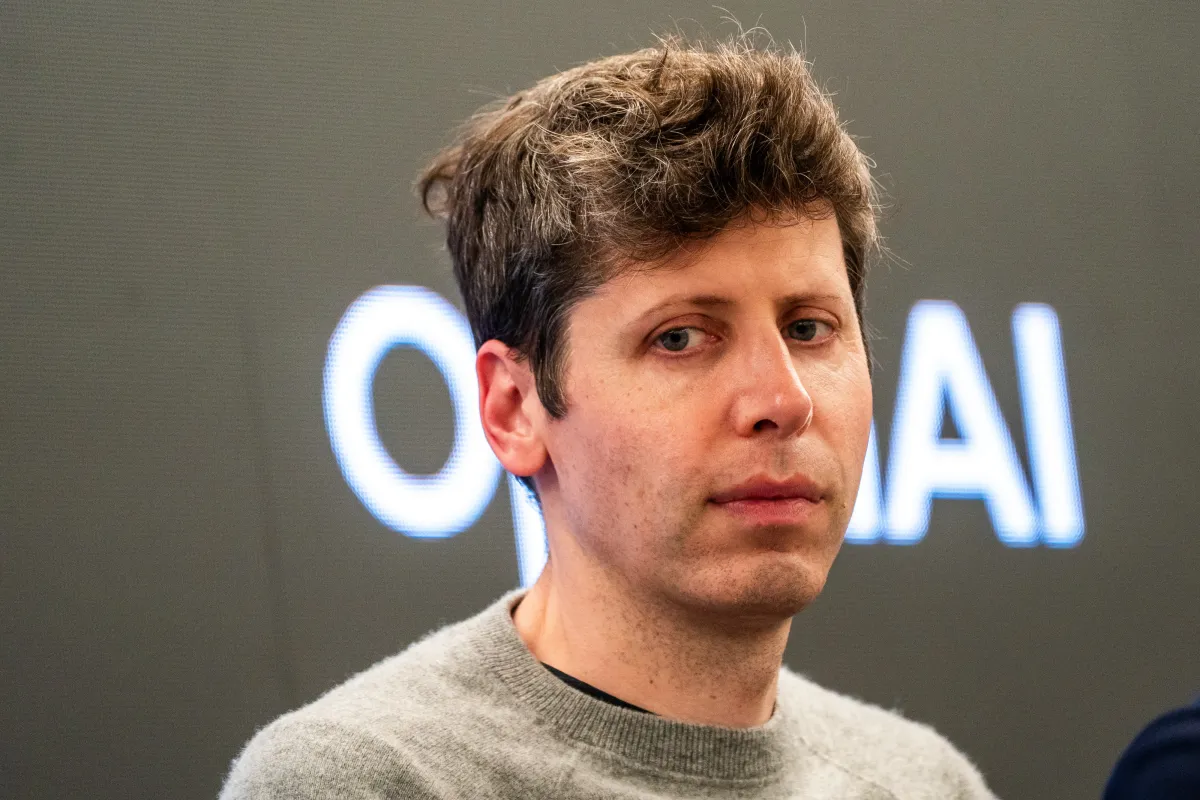
OpenAI is in talks with investors to raise at least $30 billion in a pre-IPO funding round at a valuation of roughly $1.4 trillion, Bloomberg reported on Tuesday.
Investors are eager to pour more funds into the ChatGPT maker ahead of its anticipated public market debut next year. While Anthropic momentarily outpaced OpenAI at the start of the year, recent strategic refocus on key areas like coding has fueled a 70% jump in run-rate revenue since July, reaching $40 billion in August, according to the report.
The company previously raised $122 billion in March at an $852 billion valuation. That funding round was supposed to be its last private raise before an IPO, which had been, until recently, expected to take place this year. However, CEO Sam Altman has now ruled out a public debut in 2026 to prioritize AI safety first.
“I think it is unacceptable to be taking like a 10% chance of killing everybody by the end of the decade,” he recently told Fortune, in response to warnings from safety researchers about AI posing an existential risk to humanity.
The new fundraising, if it transpires, will serve as a bridge round to the IPO, according to Bloomberg.
OpenAI didn’t respond to TechCrunch’s request for comment.
>
Tech
More Ways to Disrupt: New 2026 Side Events from KOTRA, WayFounder, Enterprise Ireland, SafetyWing + Descope
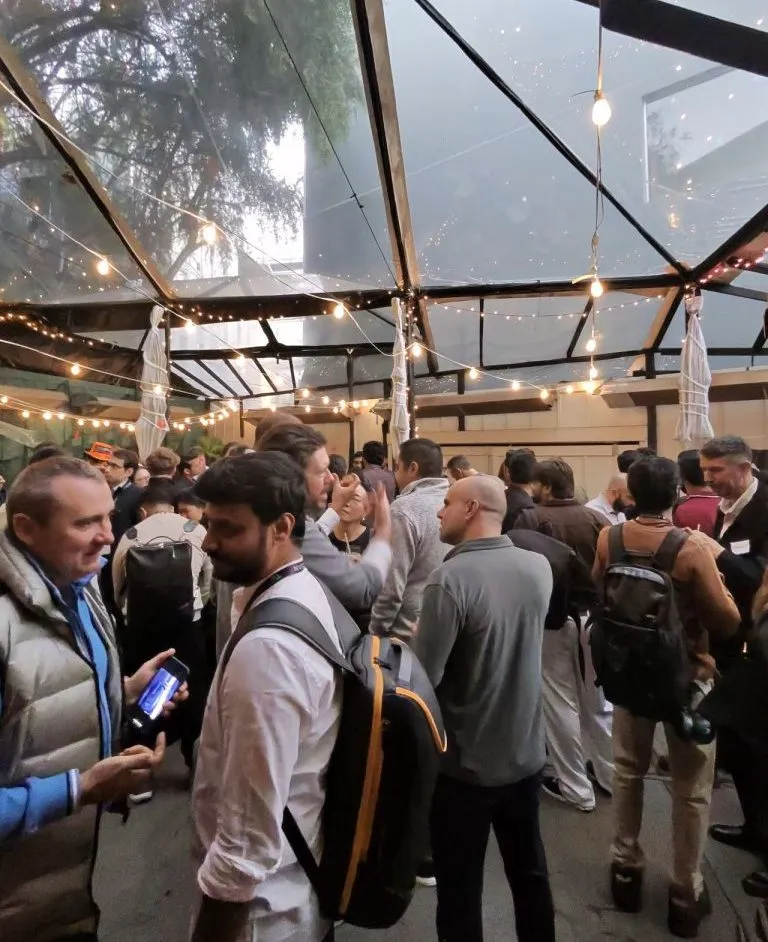
TechCrunch Disrupt is where the tech community comes together to build, debate, and connect. And during Disrupt Week, that conversation doesn’t stop when the doors to Moscone West close.
Our Side Events program brings founders, investors, operators, and tech leaders together across San Francisco for everything from intimate roundtables and founder gatherings to happy hours, dinners, workshops, and community meetups.
Whether you’re looking to make a few new connections, find your next collaborator, go deep on a specific industry, or just get out of conference mode for a minute, there’s a lot happening beyond the show floor.
Explore the 2026 Side Events, and find your people.
Featured Side Events
Korea–US Startup & Investor Networking Night
October 14 | 5:30 p.m. – 8:30 p.m. PT
Join Korean startups, U.S. investors, founders, and technology professionals for an evening of networking and cross-border connection in San Francisco. Organized by KOTRA as part of the Korea Pavilion’s programming, the event brings together Korean startups entering the U.S. market with investors, founders, corporate partners, and members of the Bay Area startup ecosystem.
For those without a ticket to attend TechCrunch Disrupt 2026, KOTRA is offering complimentary Expo+ passes to qualified applicants.
Hosted by: KOTRA Silicon Valley
RSVP
Born2Global Founder Networking Night
October 13 | 6:00 p.m. – 9:00 p.m. PT
Meet 18 emerging startups from the Republic of Korea for an evening of founder conversations, curated introductions, and networking with investors, operators, corporate leaders, and fellow entrepreneurs. Each founder will give a quick introduction before the evening opens up for conversations and connections across the U.S. and global startup ecosystem.
Hosted by: WayFounder
RSVP
The Irish Shark Tank
October 13 | 5:00 p.m. – 8:00 p.m.
Meet and mingle with Ireland’s hottest startups! Enterprise Ireland is BACK at TechCrunch Disrupt 2026, and we’re excited to reconnect with old friends and welcome new faces to The Irish Shark Tank at Ireland House for Happy Hour. Availability is limited!
Hosted by: Enterprise Ireland
RSVP
SafetyWing Happy Hour at Harrington’s
October 13 | 5:00 p.m. – 9:00 p.m. PT
Head to Harrington’s Irish Pub for an evening of drinks and conversation with founders, HR leaders, and members of the startup community. Hosted by SafetyWing during TechCrunch Disrupt, the happy hour offers a casual setting to meet new people and connect with the team behind the startup’s approach to health coverage for remote and global teams.
Hosted by: SafetyWing
RSVP
Vault & Verify: An Evening of Ping Pong, Cocktails & Conversation
October 14 | 6:00 p.m. – 9:00 p.m. PT
Join Skyflow and Descope for an evening of food, cocktails, friendly competition, and conversation with San Francisco’s security, privacy, and identity community. As AI systems become more autonomous, the event brings together leaders working on the challenges of keeping sensitive data and identity secure, with plenty of time to connect away from the conference floor.
Hosted by: Descope
RSVP
More Side Events
Pursuit of Happiness: Revolutionary Demonstration of Whitney Electrolarynx by Uhura Bionics
October 7 | 6:00 p.m. – 10:00 p.m. PT
Experience a live demonstration of voice-restoration technology as Uhura Bionics co-founder Konrad Zieliński showcases the Whitney Electrolarynx for a U.S. audience. The event explores how technology can help people reclaim their voices and agency following cancer treatment.
Hosted by: Uhura Bionics
RSVP
Find the 10x Opportunity Hiding in Your Product
October 10 | 9:00 a.m. – 11:00 a.m. PT
Learn how first-principles thinking can uncover overlooked customer needs, strengthen product-market fit, and reveal opportunities for significant growth. The session will use a real-world case study to explore how founders and product teams can identify new opportunities within products they already have.
Hosted by: PrincipiumX
RSVP
Long Lead Time: A Hardware Happy Hour
October 12 | 6:00 p.m. – 9:00 p.m. PT
Connect with founders, engineers, and operators building robotics, chips, rockets, and other frontier hardware. This casual, presentation-free gathering offers a chance to swap ideas, share experiences, and meet others working on the challenges of building physical technology.
Hosted by: Syntro
RSVP
Real World AI: Connect, Invest & Scale in Taiwan
October 13 | 5:30 p.m. – 8:30 p.m. PT
Explore Taiwan’s emerging AI ecosystem through startup pitches and conversations spanning robotics, intelligent hardware, and advanced manufacturing. Meet founders and investors working across Taiwan’s technology landscape and learn more about opportunities to connect, invest, and build.
Hosted by: Taiwan’s Ministry of Economic Affairs
RSVP
Pets of Disrupt: Founders, Investors & Their Pets
October 13 | 6:00 p.m. – 8:00 p.m. PT
Step away from the conference crowd for an informal evening with founders, investors, operators, builders, creators, and the pets that make San Francisco’s startup community a little more human.
Hosted by: Omelo
RSVP
EdgeM8: B2B Partnership Mixer
October 13 | 6:00 p.m. – 9:00 p.m. PT
Connect with founders, revenue leaders, and executives working across go-to-market, partnerships, distribution, and technology. The evening is designed to bring together people building relationships and creating new opportunities across the Bay Area startup ecosystem.
Hosted by: EdgeM8
RSVP
Fynex x Orion VC | Curated Rooftop Party
October 14 | 5:00 p.m. – 8:00 p.m. PT
Join founders, operators, and AI-focused investors for a rooftop evening centered on networking, food, drinks, and conversations around AI and infrastructure.
Hosted by: Fynex
RSVP
Watch It Run: Live Automation Dinner with Bolter
October 14 | 5:30 p.m. – 8:30 p.m. PT
See business automation happen live as Bolter turns attendees’ most dreaded weekly processes into working automations during dinner. Guests can describe a process in plain language and watch as it is transformed into an automation without writing code.
Hosted by: Improbable
RSVP
The Rooftop Pilaf: An Evening for Tech Founders and Investors
October 14 | 6:00 p.m. – 10:00 p.m. PT
Gather with founders, investors, and growth leaders for a limited-seat rooftop dinner focused on deep tech conversations. The evening pairs a shared meal with an opportunity to connect with others across the technology and investment ecosystem.
Hosted by: INNOVA × BeGlobe PR Agency
RSVP
SQLDoom Deathmatch Night at Disrupt, hosted by CedarDB
October 14 | 6:30 p.m. – 9:30 p.m. PT
Put your SQL skills to the test in a night of SQLDoom deathmatch, arcade games, food, drinks, and conversation. Play alongside the CedarDB team and connect with database engineers, startup founders, and fellow tech enthusiasts.
Hosted by: CedarDB
RSVP
Korea Emerging Tech Showcase
October 15 | 5:00 p.m. – 8:00 p.m. PT
Discover emerging Korean startups working across AI, software, medtech, clean tech, digital platforms, and advanced industry. The evening features rapid-fire pitches and networking with founders, investors, and global partners.
Hosted by: Brinc
RSVP
J-StarX Silicon Valley Extended Program Startup Showcase
October 15 | 5:30 p.m. – 8:30 p.m. PT
Meet 12 Japanese startups building for global markets across AI, enterprise software, health, biotech, defense, agtech, sports tech, and consumer technology. The showcase will feature live demos and opportunities to connect directly with the founders.
Hosted by: 500 Global
RSVP
The Runway 🛫 A Morning Founder Run
October 16 | 10:00 a.m. – 12:00 p.m. PT
Start the day with a casual waterfront run along the Embarcadero, complete with startup-themed “runway” markers. After the run, head to the Ferry Building for coffee and networking with fellow founders and members of the tech community.
Hosted by: Handler
RSVP
Founders @ Alchemy Springs
October 16 | 4:00 p.m. – 6:00 p.m. PT
Combine sauna and cold-plunge experiences with conversations and networking around the startups competing in this year’s Startup Battlefield 200. Connect with founders and members of the Startup Battlefield community in a more relaxed setting after Disrupt.
Hosted by: Press Club
RSVP
Find a Co-founder, Help or Join a Startup
October 16 | 6:00 p.m. – 9:00 p.m. PT
Hear startup pitches before joining breakout groups where attendees can offer feedback, make connections, or explore opportunities to work with the presenting teams. It’s an evening built around meeting founders and finding ways to get involved with early-stage startups.
Hosted by: Startup Oasis
RSVP
Check the chronological schedule regularly as new Side Events are added weekly.
While you’re in San Francisco…
If you’re building your Disrupt Week calendar, don’t forget the main event.
TechCrunch Disrupt 2026 takes over Moscone West October 13-15, bringing thousands of founders, investors, operators, and tech leaders together under one roof. Come for the programming, stay for the hallway conversations, and leave with a calendar full of people you didn’t know you needed to meet.
Tickets are still available. Come be part of it.
When you purchase through links in our articles, we may earn a small commission. This doesn’t affect our editorial independence.
>

Stability AI CEO: In One Year, Our AI Tools Will Be Essential to Making All Music
Wild must survive without the dynamic Quinn Hughes-Brock Faber pair, but for how long?

OpenAI’s latest features take direct aim at the app store model
-

 movies4 months ago
Search For Canadian TV Actor Stewart McLean Now Homicide Investigation
-

 Fashion9 years ago
These ’90s fashion trends are making a comeback in 2017
-
Fashion9 years ago
According to Dior Couture, this taboo fashion accessory is back
-
Fashion9 years ago
Model Jocelyn Chew’s Instagram is the best vacation you’ve ever had
-
Fashion9 years ago
Emily Ratajkowski channels back-to-school style
-
Fashion9 years ago
9 Celebrities who have spoken out about being photoshopped
-

 Anime4 months ago
Rurouni Kenshin: Hokkaido Arc Manga Takes 1-Issue Break – News
-

 Anime3 months ago
HIDIVE to Stream English Dubs for The World Is Dancing, The Forsaken Saintess and Her Foodie Roadtrip in Another World, The Dangers in My Heart: The Movie Anime – News