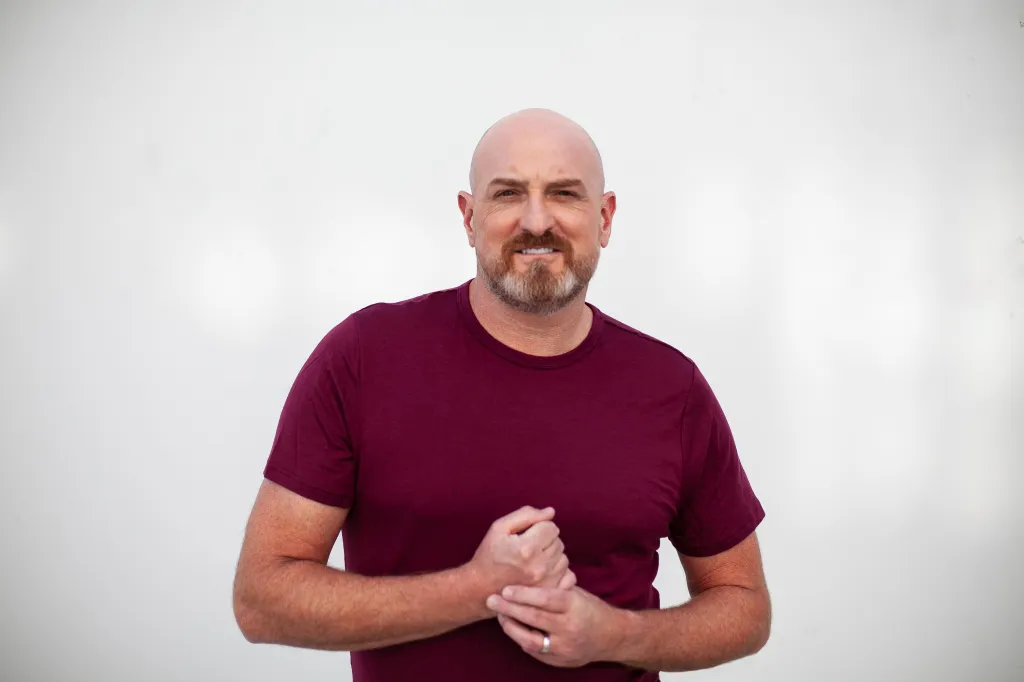
The Flight: Vahid Emami, husband of Sahand Sadeghi and father of Sophie Emami, both of whom died in the Flight PS752 crash.
National Film Board of Canada
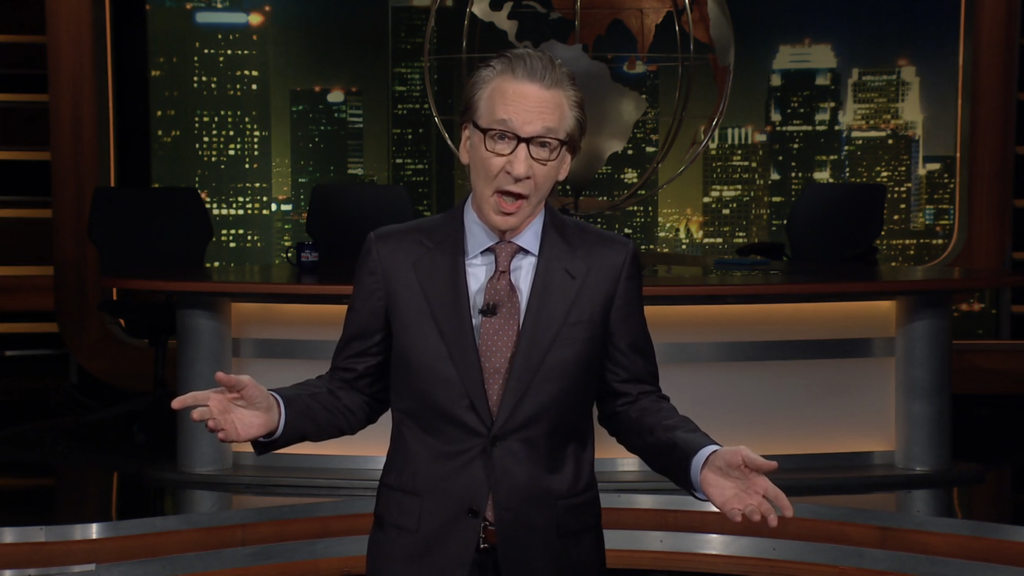
As the Paramount-Warner Bros merger goes through, Bill Maher has a message for his new Skydance bosses.
On Friday’s episode of Real Time, the comedian pleaded with the Ellisons not to listen to their pal Trump’s criticism of him now that they own his show’s longtime home HBO.
“The merger went through. Paramount now owns Warner Discovery, which owns HBO, which owns my ass,” he said during his opening monologue. “Whoever owns me now, don’t believe what Trump is tweeting about me. Did you see what he said about me this weekend? He said my ratings are so low, ‘it’s just sad.’”
Maher continued, “You know what, Mr. President? Your insults don’t bother me. Make up whatever shit you want about me, just don’t mention I went to Cornell.”
On Wednesday, a federal judge cleared the way for the $110 billion deal to close, approving the settlement between Paramount and a group of state AGs that filed an antitrust lawsuit to block the Warner Bros. Discovery acquisition.
CEO David Ellison revealed on Friday that the combined company will now be known as Skydance, under which Paramount and Warner Bros. will supposedly remain individual entities.
>
Kurdish-Canadian director Soran Mardookhi, with his latest documentary feature The Flight, recalls the doomed Ukraine Airlines Flight PS752 that in January 2020 crashed soon after taking off from an airport near Tehran.
All 176 passengers and crew members on board were killed by Iranian surface-to-air missiles that brought the Boeing 737 airliner down, with Iranian authorities at first covering up the tragedy.
But Mardookhi tells The Hollywood Reporter his feature documentary is not about the Middle East or politics.
“Once I start making the film, I kind of forget myself… I gave that space to the families who actually tell their own story,” Mardookhi says ahead of a world premiere for The Flight at the Vancouver Film Festival.
He doesn’t focus on the possible political and legal machinations that drove the Islamic Revolutionary Guard Corps to finally admit missiles were fired at the ill-fated Ukrainian aircraft. His National Film Board of Canada film goes beyond numbers to humanize the Iranian-Canadian victims of Flight PS752 who have long slipped from news headlines, even as their families continue an uphill battle to hold Iran accountable.
The result is a documentary that chronicles how an Iranian-Canadian community with lost family members — many of whom were university students, newlywed couples and young children — launch the Association of Families of Flight PS752 Victims as a force to be reckoned with in in asserting Iran violated international law and regime authorities should reveal what really motivated the missiles strike.

The Flight: Vahid Emami, husband of Sahand Sadeghi and father of Sophie Emami, both of whom died in the Flight PS752 crash.
National Film Board of Canada
“There’s individual families dealing with enormous personal loss, but they realized that together they could do things that would have been impossible on their own,” Mardookhi explains of their collective action. The campaigning families have never accepted the explanations around the tragedy from Iranian authorities.
And they have been put through the wringer by Iran, not being seen or heard by regime authorities in Iran, despite their pleas for justice and redress. “As victims of terrorism, they have no rights,” Mardookhi says of the families.
The Flight includes home videos of the families singing, dancing and laughing before losing their loved ones and launching their collective action. “We’re not talking about the lost people. We actually see them. We see part of their lives, sometimes very ordinary and sometimes best moments of their lives, like their wedding day,” Mardookhi explains.
The Flight also poignantly captures how the lost loved ones sought new lives in Canada tragically cut short when their plane was intentionally shot down. “They came to have a better life,” Mardookhi says of the 55 Canadian citizens and 30 permanent residents that were among the 176 people killed in the Flight PS752 tragedy.
The filmmaker, who is based in Vancouver, himself came to Canada in 2010 from Iranian Kurdistan after making films in Iran for around 10 years. That included his 2007 feature And Thus I Was Born produced underground to avoid entanglement with that country’s infamous censors.
And while he welcomes making movies in Canada free of overt censorship, Mardookhi says it took him many years to break free of the insidious and indirect ways Iranian authorities employ censorship to control filmmakers and silence dissidents. That realization came to him in 2014 on the Vancouver set of Turbulence, a feature drama about a father and his estranged daughter from Iraqi Kurdistan struggling to make Canada their new home.
“I was directing a scene and talking to the cast and, at that moment, I realized, oh my God, I’m censoring myself, even here. So I stopped and said, guys, I need just 10 minutes. And I went out and just thought, ‘what am I doing?’” Mardookhi recalled, as he questioned whether his self-censhorship aimed to help not angering regime leaders should he return to Iran to visit family.
The result, the director adds, is today he uses art in his films as a narrative tool, and not to get round strict censorship as Iranian filmmakers constantly face. The Flight gets its first look on Oct. 8 at the Vancouver Film Festival, which runs through to Oct. 11.
>
This month, Criterion will release The Complete Kubrick, a thirty-disc collector’s edition that will present, for the first time, all 13 films directed by Stanley Kubrick, alongside his three early short films.
All the titles have been given new 4K restorations. The process was overseen by veteran archivist Michael Chaiken, who produced last year’s 4K restoration of Eyes Wide Shut, also released by Criterion. And like all Criterion releases, The Complete Kubrick features a host of behind-the-scenes materials, including over twenty-five hours of interviews, rare photographs, artwork, and documents annotated by Kubrick.
Highlights from the set include Kubrick’s rare international version of The Shining, a new 4K restoration of Vivian Kubrick’s behind-the-scenes documentary Making The Shining, previously unseen Lolita screen tests with actors James Mason and Sue Lyon, and rare Full Metal Jacket behind-the-scenes footage. Criterion will also launch a dedicated Kubrick playlist on its YouTube Channel, with videos exploring Kubrick’s films, creative process, collaborators, and legacy.
“I hope people don’t see this set as the end of the process,” Chaiken said of The Complete Kubrick. “I think it is the beginning of a longer trajectory in which Kubrick’s films return in new editions.”
Below, Chaiken speaks with Deadline in depth about how this new collection was conceived, how he worked with the Kubrick estate to track down rare prints of the filmmaker’s early films, and what he learned about the great American filmmaker after studying his life and career.
“He was not a cold, hard cynic at his core,” Chaiken says.
The Complete Kubrick will be available from October 20.
DEADLINE: How did the project begin? When did the discussions start?
MICHAEL CHAIKEN: My main profession is as an archivist. I work with filmmakers, songwriters, and others on their archives. I was wrapping up the archive of another Bronx-born filmmaker, Paul Morrissey, who made films with Andy Warhol. This was around the end of 2024. I received a call from Kim Hendrickson, one of Criterion’s executive producers. Kim said they were thinking about doing some sort of Kubrick project and asked whether I would be interested. There was no deliberation on my part—I immediately said yes and asked what they were thinking. At that stage, the project’s dimensions weren’t clear. But Kim said they wanted to start with Eyes Wide Shut, because there was no 4K master of the film.
As we worked on Eyes Wide Shut, we began having more serious conversations about what the project could become. Criterion then worked with the different studios to get access to all the features. That’s when it became clear that we could potentially create a complete set. I asked whether it would be possible to include Stanley’s short films and his first feature, Fear and Desire. Criterion immediately said, “Let’s try.” And that became the goal. The short films were especially difficult because Stanley was working independently, so the rights situation was not as straightforward as dealing with Warner Bros., Universal, or Sony. We also had to find the right elements and create new 4K masters.

The Complete Kubrick box set. Credit: Criterion.
DEADLINE: You mention Fear and Desire. I remember reading that Kubrick disowned it and asked people not to screen it. Is that true?
CHAIKEN: Yes. It was essentially his first feature, and he was embarrassed by it. In the late 1950s and early 1960s, he had it withdrawn and prevented screenings. He didn’t want people to see it, including his own family. He considered it a pretentious, amateur effort. I think Kubrick was too hard on himself. In many respects, it is an extraordinary film. When we spoke to the Kubrick estate, one of our first conversations was about Fear and Desire. If we were making a complete set, the film had to be included. Most people now accept it as part of Kubrick’s filmography, and leaving it out would have been problematic. The estate agreed, making this the first official authorised release of Fear and Desire.
However, out of respect for Stanley’s wishes, we presented it differently. When you put in the first disc, the first film you see is Killer’s Kiss, his acknowledged first feature. Fear and Desire and the three short films appear in a section called “Early Works.” We wanted to acknowledge Stanley’s view that Fear and Desire was an amateur effort. If you’ve never seen Kubrick’s films, Killer’s Kiss may be a better place to start—and probably where Kubrick himself would have wanted you to start. Not including Fear and Desire would have created a different set of problems.
DEADLINE: You’d probably need a featurette explaining why it was absent.
CHAIKEN: Exactly. There was no way to ignore it. The trickier issue was Stanley’s very first film, the short Day of the Fight. There are two versions. The version most people know is a longer cut, but the original cut is shorter and represents Stanley’s version before he sold the film to RKO Pictures. RKO added footage Kubrick had not shot, changed the narration, and altered the soundtrack he had commissioned. We felt that a complete set needed Stanley’s original cut. Almost at the eleventh hour, we located it and were able to create a new 4K scan. This is the first time Kubrick’s original version of Day of the Fight has been presented in 4K.
DEADLINE: Where did you find those elements? I assume the Warner Bros. films and the other features were held in accessible archives, but where did the prints and negatives for the shorts come from?
CHAIKEN: The Library of Congress in the United States had the negatives for Fear and Desire and the short films. The rights situation was complicated, so we had to clear the rights with the relevant rights holders, then return to the Library of Congress and prove the chain of copyright ownership. They weren’t aware that they had Stanley’s original cut of Day of the Fight. They knew they had the longer RKO version, but when they searched, they realised they were preserving the original element as well.
At that point, the Kubrick estate stepped in on our behalf and said it wanted Stanley’s cut of his first film to receive a proper 4K restoration. For people primarily interested in 2001, A Clockwork Orange, or The Shining, this may seem like a footnote. But it was important to reinforce the completeness of the set. It was Stanley’s first film and an important moment in his life and career. I’m personally very pleased that we were able to restore his first effort as a producer and director.

Stanley Kubrick’s ‘Day Of The Fight’. Credit: Criterion.
DEADLINE: Stanley was such a specific filmmaker. How did you approach these restorations? Did you bring in his collaborators to review the work?
CHAIKEN: Absolutely. In the case of Eyes Wide Shut, we worked directly with its cinematographer, Larry Smith. Some fans have the misconception that Criterion simply takes a film, turns a few dials, and does whatever it wants. That’s not the case. We worked collaboratively with Warner Bros., which is the primary rights holder, and the Kubrick estate, which has its own considerations about how the films are handled. For Eyes Wide Shut, we also had access to film prints. We created a 4K transfer from the original camera negative, which Warner Bros. had in its vaults.
With many 4K restorations, there is high-resolution detail and HDR. It is easy to overdo both. Films can end up looking too bright or too clean, revealing details in the shadows that Kubrick never intended audiences to see. Working with the cinematographer helped us ensure that the restoration was properly calibrated. It then went back to Warner Bros. for approval, and they provided notes. It is a genuinely collaborative process. Stanley did not live to see the Blu-ray and 4K revolution. He died at the beginning of the DVD revolution, so we cannot know how he would have approached these formats. We have to look at the work he did and speak to the people he worked with. That is how these restorations come together.

Stanley Kubrick’s ‘Eyes Wide Shut’. Credit: Criterion.
DEADLINE: One thing I find interesting is how you approached The Shining, which has probably been revisited more than any other Kubrick film since his death. You’ve added a lot of supplementary material, like the Garrett Brown film. Can you explain how you approached it?
CHAIKEN: It is a real challenge working with a filmmaker like Kubrick because he did not give on-camera interviews. He did written interviews with a few critics he admired, but there is no great filmed interview in which he explains The Shining. He also destroyed his outtakes. Stanley was aware of the director’s-cut trend that emerged in the late 1980s and early 1990s. He did not want that to happen with his films. That meant we had to look beyond the film itself for material that could add context.
Garrett Brown operated the Steadicam on The Shining. In the early 1970s, he made a film called 30 Impossible Shots, essentially a demonstration reel showing how the Steadicam worked. Kubrick saw it, and it was a major influence on his decision to hire Garrett. I contacted Garrett, who still had the original reel, and suggested that it should live alongside The Shining. If we are trying to help viewers understand how the film was made, it is an important piece of context. Kubrick saw it, was influenced by it, and it affected the look of the film. Garrett was fantastic to work with. He even recorded a short voice-over commentary for the piece. This is the first time it has been presented alongside The Shining.
There are also two cuts of The Shining. The version most people have seen differs from the version released in the United States. The American release came out in May 1980, while the international release followed later that summer, so Kubrick had time to alter the film. This is the first time both cuts have been presented back-to-back, with a new voice-over commentary on the international version by Lee Unkrich, who wrote a remarkable book about the making of the film.
DEADLINE: What was it like working with the estate? There is so much written about them these days.
CHAIKEN: They were very easy to work with and extremely accommodating. We had a good experience with Eyes Wide Shut, and I think they felt Criterion was a trustworthy home for the work. We built up a good rapport and a lot of trust. I would suggest things, and they would say, “Yes, we can do that.” I knew there were certain things they probably wouldn’t want, so I didn’t press them about things like outtakes.
One example of material that was available in the archive was a series of screen tests for Lolita. They had never been properly transferred and had certainly never been released. I asked whether the estate would allow us to transfer them for the new edition of Lolita, and they agreed. I hope people don’t see this set as the end of the process. I think it is the beginning of a longer trajectory in which Kubrick’s films return in new editions. I am now working with Criterion on standalone editions, which will begin appearing over the next year or so. It is a good time to be a Kubrick fan.

Stanley Kubrick’s ‘Lolita’. Credit: Criterion.
DEADLINE: TCM has also produced a great podcast about Kubrick, and it is wonderful to learn so many new things about him. Or dispel misconceptions. Did you discover anything during this project that surprised you?
CHAIKEN: The mythology around Stanley is enormous. His perfectionism is real, but I think people misunderstand it. He was willing to let things go if doing so served the film. He was primarily interested in the story, the characters, and the performances. If you were focused on a tiny technical detail instead of watching the film, you were missing the point.
The perfectionism was not all-consuming. Having watched these films dozens of times, I find them messier than people assume. There is more improvisation than people think. The films were developing as they unfolded, and Stanley was searching for ideas. They were not simply rigid constructions. The films are also much more personal than people give him credit for. Nobody thinks of Stanley as an autobiographical filmmaker, and I would not go that far, but there are many personal touches and moments in the films. I don’t want to give it away, but Kubrick has a cameo in 2001. If you listen to Michael Benson’s voice-over commentary, you will learn about it. It is a very moving cameo, and it surprised me. I think people confuse Kubrick’s relationship with fame with his personality. Bob Dylan is a useful comparison. Dylan was arguably one of the most famous people who ever lived, but his relationship with fame and the press was very different from that of other people in his position.
If someone is not constantly promoting themselves, having their picture taken, or giving interviews, people often assume they are a recluse or a weirdo. But that is simply not how some people choose to live. In my experience researching this project and speaking with people who knew Stanley, he was eccentric, but there was much more humanity there than people give him credit for. You probably did not want to be on the bad side of Stanley Kubrick, and I am sure that was not a pleasant place to be. But I would argue that you could not make a film like Paths of Glory, especially its ending, without a deep strain of humanism. He was not a cold, hard cynic at his core. That is my takeaway after spending a couple of years in Kubrickland.

Stanley Kubrick’s ‘2001: A Space Odyssey’. Credit: Criterion.
>
EXCLUSIVE: Fox free streamer Tubi just added a massive stack of Just For Laughs programs in Canada.
The deal will see 800 comedy specials and episodes joining Tubi’s Canadian feed, including the likes of Dave Merheje: I Love You Habibi, Hasan Minhaj: Adult Boy amd Howie Mandell: Don’t Sneeze On Me.
Also part of the package are Jeff Dunham @ JFL: Volume I and II, Rick Mercer: Raise a Little Hell, Tiffany Haddish Top of the World, Trevor Noah @ JFL: Volume I and II, Will Forte Time of My Time and series such as Just for Laughs Gags, Funny As Hell, Just Kidding and LOL Just for Laughs Sketch Show.
“Just for Laughs has a rare ability to bring Canadians of all generations together through the power of comedy,” said Gave Lindo, Vice President and General Manager of Canada, Tubi. “From longtime fans who grew up with its iconic festival and hidden-camera segments to younger audiences discovering its instantly shareable humour, the franchise remains a beloved part of Canada’s entertainment culture.”
Tubi’s content acquisition and partnerships team, which led by Sam Harowitz, oversees global content licensing deals for the platform, with Alonso Carrillo brokered the deal on behalf of Tubi with Véronique Bussières of the Just For Laughs Group.
“For more than four decades, Just For Laughs has been where Canadians discover their next favourite comedy,” said Carlos Pacheco, Director Digital Revenue and Distribution, Just For Laughs. “With hundreds of specials and episodes on Tubi, that entire history, from the stand-up sets that launched careers to the Gags and LOL that made the whole family laugh, is available to the Canadian audience, and free.”
Tubi is set to be joined by another global free streamer, Roku, in the Fox Corp. stable, with a senior Fox exec recently saying a U.S. Department of Justice probe into the $22B deal was “entirely expected.” Fox is planning for the deal to close in the first half of 2027.
>
Search For Canadian TV Actor Stewart McLean Now Homicide Investigation
These ’90s fashion trends are making a comeback in 2017
According to Dior Couture, this taboo fashion accessory is back
Model Jocelyn Chew’s Instagram is the best vacation you’ve ever had
Emily Ratajkowski channels back-to-school style
9 Celebrities who have spoken out about being photoshopped
Rurouni Kenshin: Hokkaido Arc Manga Takes 1-Issue Break – News
HIDIVE to Stream English Dubs for The World Is Dancing, The Forsaken Saintess and Her Foodie Roadtrip in Another World, The Dangers in My Heart: The Movie Anime – News