
Anime
Darkroom Streams Angel Densetsu Anime – News

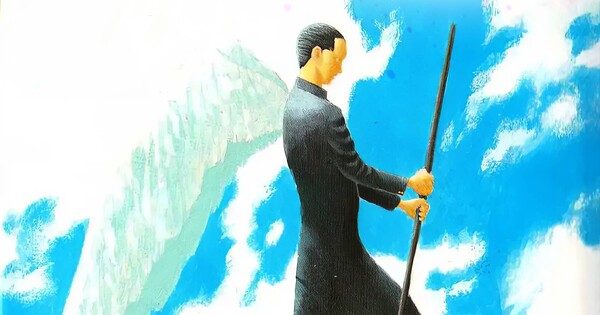

Streaming platform Darkroom began streaming the OAV (original anime video) based on Norihiro Yagi‘s Angel Densetsu manga on Friday.
The two-part OAV originally debuted in September 1996.
Darkroom describes the OAV:
Upon transferring to Hekikuu High School, Kitano soon discovers that his pale skin, sharp features, and awkward social skills make everyone assume he is a vicious delinquent or drug addict. This is compounded by his horrible luck and awkward social skills, which only cause more hijinks. Polite attempts to be friendly or helpful are constantly misinterpreted as threats or brutal acts of violence by students and local thugs.
Through pure coincidence, Kitano accidentally knocks out the school’s top fighters and is crowned the supreme head thug and “School Guardian,” despite remaining completely oblivious to his terrifying reputation. The comedic situations intensify as he tries to reconcile his fierce erroneous reputation with his true self.
Yukio Kaizawa (Digimon Frontier, Maple Town Monogatari) directed the anime at Toei Video Co., Ltd. Naoyuki Sakai (Musashi) wrote the scripts. Ryūichi Katsumata (Initial D, The Wonderful Galaxy of Oz) and Tsuyoshi Itō (Master of Torque) composed the music.
Yagi launched the manga in Shueisha‘s Monthly Shonen Jump in February 1993. The company shipped the 15th and final volume of the manga in April 2000.
Darkroom is a subsidiary of distribution company Synergetic Films, which describes the service as “a portal for treasures of world cinema, perhaps not easily found on other platforms. Something like Criterion, but with more recent discoveries.”
Source: Press release
>
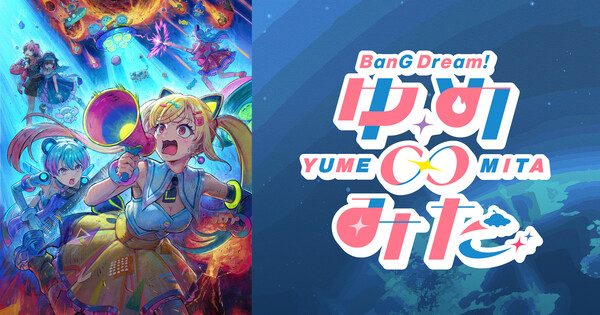
Since its reinvention with It’s MyGO!!!!! in 2023, the arc of BanG Dream! has bent toward stories that get people talking. Obviously, engagement is a measure of any story, but in this current era of BanG Dream! specifically, it feels like it’s been pushing for more surprises! More swerves! More drama! YUME∞MITA, the latest installment in that era, seems similarly engineered. The series debuted with a triple-length premiere, with multiple episodes revealing seemingly unsavory elements about lead character Arale, before showing a successive surprise with the exact nature of full-on villain Viola. These are big, wild swings in line with the series that previously played viewers with Soyo’s self-satisfying machinations or Uika’s incestuous identity theft.
YUME∞MITA doesn’t actually start that way. The anime builds up another distinctive voice to swing from, and it’s every bit as built for getting attention. This series is big and loud, exuberance expressed by Arale in the new band’s riotously colored virtual setting as characters fly, float, and ping-pong around the screen. It’s slapstick energy not really seen in BanG Dream! since the MyGO!!!!!/Mujica changeover. At times it more recalls BanG Dream!‘s former sister series D4DJ (if anyone remembers D4DJ) than anything from the recent girls band anime. And of course it does come off, at least partially, like one more device in YUME∞MITA‘s approach to storytelling, deploying the dramatic plot twists against the extreme-energy elements with such force as to cause whiplash.
What needs to be qualified about the swerves of It’s MyGO!!!!! and Ave Mujica is that while they certainly made for wild fandom social media posting, they weren’t written into the story for their own sake. These were parts of the plot pointedly built up and paid off by Yuniko Ayana, the scribe who had been with BanG Dream! practically since the beginning. But Ave Mujica was also Ayana’s swan song with the franchise, and with her bowing out, YUME∞MITA falls into new hands. Well, old new hands. Series story composer Midori Gotō has been backing Ayana up since the second season of BanG Dream!, writing several scripts across the seasons, now coming to the forefront with YUME∞MITA, and accompanying a once-again refreshed approach to the series.
The result feels at once like even more of a clean break from the initial seasons than It’s MyGO!!!!! did, even after its premiere brought in some of the heavier, headier elements that made those entries stand out. That’s a good thing at its base. BanG Dream! has thrived on reinventing itself before, so it makes sense to continue doing so rather than returning to a rut of darkened drama continuously (and not for nothing, but MyGO!!!!! and Ave Mujica are scheduled to return anyway). It does give YUME∞MITA the sense of using all its energy to throw several elements at the wall, however—these new ideas aren’t as refined, hence the sharp edges seen when the components clash.
Much of that is at the behest of the new technical setting. Placed alongside Akihabara and with the band primarily inhabiting a virtual world, YUME∞MITA tackles the modern subject of online fame for performers like no other entry before it. Arale didn’t simply break it off with her previous group; she was canceled after a seemingly damning video was leaked. The members of the newly christened Mewtype keep up with regular livestreams, and offhand remarks being interpreted by commenters in bad faith form a key component of the storytelling. The ways the lead characters incite and react to those elements define them. Arale is the easiest to grasp, given her conditioned propensity for putting all her feelings out there. She is, as it can be said, a terminal yapper, given to oversharing followed by seeming regret when she realizes what she’s done. Arale honestly rides a close line between the ways characters like this can feel too annoying in and of themselves, and those calculated walk-backs help a lot. Not because her apologizing for herself feels necessary, of course not. But rather, knowing her story, the audience is able to intuit that she’s backing up and clarifying out of fear of having her intent, tone, and true meaning misunderstood. Even with the unkind read that what was glimpsed in her cancellation video was 100% genuine, it paints a strong picture of someone who’s simply a bit tactless and regretful of her issues, rather than one who’s completely callous.
The other band members straddle these same lines between the real self and the perceived online persona—some breaking through more walls than others. Nonoka is possessed of the will to make sure everyone is happy at all times, with her own degree of tactlessness propelling it. It lets her barrel past disingenuous social media comments, while causing equal parts friction and harmony with her bandmates. Her demeanor is ostensibly opposite the withdrawn Yuno, whose arc is limited, yet still kind of remarkable in its execution. On one level, I appreciate the reasoning of her previous band breaking up simply because that’s what 90% of schoolkids do in that situation. But Yuno’s resulting withdrawn, impersonal nature is primarily communicated via her reliance on language-model chatbots to dismissively respond to her messages from her “friends.” She still composes all her music herself, straight from her heart; it’s just connecting with people directly she doesn’t believe she can do. Only when Yuno has grown more personable as a result of some of her bandmates (Nonoka) breaking down her metaphorical walls, does she realize that she always had the capacity to do what the chatbots weren’t particularly good at in the first place. Series like BanG Dream! benefit from new entries embracing ultra-modern amenities, and this is an arc that could only be accomplished in the era of this technology—and its vitriol for how poorly these chatbots perform at connections ultimately makes it sing as an engagement.
It’s not the only point. Yuno and Arale both have story segments predicated on surreptitious social media accounts, while Miyako’s status as an online public figure informs her own personality. Her initial recoiling at the extroverted exuberance of her bandmates feels like a trite enough trait. But as the series goes on and other interactions occur, Miyako becomes her own kind of amusing, ostensibly a cautionary tale against trying too hard to stop yourself from being cringe, and thus, being free. The irony is that her wallowing emo-isms and self-practiced puppet therapy are their own levels of chuuni signifiers, but the real reveal is that Fuji Miyako the anime character is but a vector for reactions by Fuji Miyako the real-life performer, artist, and social media poster, to project on with her feelings and experiences with another character. Which means it’s the last time to talk about Viola, since she necessitates doing so before following up with Mewtype’s final band member.
As far as elements made to elicit a reaction, Viola feels the most plain and, ironically, the most fresh for YUME∞MITA‘s material. Speaking personally, a true antagonist in a series like this is something I’ve longed to see since Saint Snow defiantly danced their way onto stage in Love Live! Sunshine!!, only to see these types of characters dodged or defanged time and time again. The third episode’s reveal of Viola as a true, scheming, mustache-twirling villain, prone to evil laughs and everything, is positioned as the most potent point of the anime making its obligatory swerve. And Viola really does go on to be a definitional pillar of the series. It’s not afraid to use her and play her up as outrageously as possible, though the writing does also know when to pull her back and keep her from overshadowing the proceedings. Whole episodes can pass by with nary a glimpse of Viola’s evilly grinning face, occupied instead by the interpersonal issues between the bandmates being resolved on their own. It’s clearly calculated, because YUME∞MITA also isn’t afraid of having Viola’s villainy intersect with its heavier elements—or directly enacting them.
Viola is the one behind Arale’s cruel online cancellation, which is revealed just in that third episode. But past the too-real rigors of social media, Viola’s manipulations of Ritsu ring extremely accurately of abusive relationships. It’s strikingly written, in such a way that might necessitate a warning for those sensitive to such elements, and also in a way that continues the tonal clashes that define YUME∞MITA. It is ostensibly strange to bounce from the visual slapstick antics of Arale or Nonoka in cyberspace over to Viola cruelly training Ritsu to hate herself. This is arguably an invocation of the emotional dimes fame can cause our interactions to turn on, but it’s no less jarring than the other examples in this show. Though it’s also no less cathartic when, partway through, Arale is able to unleash her earnestness to reach out to Ritsu and rescue her from her abusive situation.
What is there to say about Ritsu beyond her portrayal as a realistic victim of abuse? Her post-rescue rejoining sees her swerve very nearly into joke character territory. She reveals a gargantuan appetite as an ongoing gag. She betrays a lack of critical thinking that makes her the no-thoughts-head-empty butt of background humor while other conversations are happening. And she might be my favorite character in the whole series. The fact is that Ritsu being revealed as a whimsical goober is extremely funny a lot of the time, but also truly works as the repressed version of herself that Viola enforced for her group’s “image.” And so Ritsu reverting to simply sillymoding through her interactions is cathartic in her own way. She’s free to simply be, and not for nothing; that’s a thesis point of the whole anime. It’s how Miyako also frees herself from Viola’s influence. YUME∞MITA really is constructed of these kinds of contrasts.
While the presentation, with its prodigious colors and cacophonous at times character audio, is seemingly built around that resultant contrast, it never quite fits in a way that feels artfully intentional. YUME∞MITA almost feels sketch-based at times, if one sketch was Miyako and Arale eating a bunch of snacks followed by another sketch about Ritsu being driven to a psychological breaking point. Fun! Perhaps there’s less flow to it because there’s less musicality to this music anime. The group doesn’t come together to perform a full song until the seventh episode of the series, and it’s one of only a few across the entire run. This is calculated per the story, but also gives everything else less to lean on when the characters can’t let their feelings explode out into a musical number every few episodes. There’s nothing akin to the backing poetry of Tomori’s songs across montages as It’s MyGO!!!!! so skillfully deployed. The songs that are here are ostensibly constructed out of feelings the characters (particularly Arale) have struggled to articulate otherwise in-universe. And they’re good songs, with an aggressive pop edge plus coordinated synth sounds that make them feel very appropriate for the internet age. It really does beg the question of how YUME∞MITA could have functioned as a more fully musical arrangement, as opposed to recalling, unfortunately at times, the slow piecemeal assemblage of BanG Dream!‘s infamous first season.
What music is here being rich makes it a sigh of relief that the subtitles on Crunchyroll actually include the song lyrics. They also updated the captions to translate most on-screen text after earlier scares that they were skipping those. In general, the subs feel more comprehensible compared to the roughshod treatment Ave Mujica was unfortunately given.
I alluded to IRL Fuji Miyako’s posting through it as a point of interaction with YUME∞MITA, and perhaps that belies the way this series works best as “a ride.” Keeping up with the moment-to-moment posting of episodes, the intentional whiplash they invite, it’s fun. Following this new BanG Dream! is as fun as it has been since it started having characters grovel unglamorously with lesbian yearning or fantasize about shoving each other down flights of stairs. And YUME∞MITA‘s new-ish direction adds plenty of new tricks. But those tricks haven’t quite been practiced to perfection, and it’s still falling back on some of the older tricks.
The anime ends with the same kind of victory lap that previous seasons have tapered off on, the finale concert feeling like an especially egregious rush job (narratively; the production on it in the actual show absolutely sparkles). Viola’s arc coasts to a stop with strong musings on her actual relationship with Arale and a position that comprehends, if never forgives, her villainy. But she still steps off the stage with less resolution, leaving behind tempting potential for another path with Miyako if other seasons with other writing ideas are given the chance.
But the arc is still there, as it is for the other characters. I described what I found so charming and satisfying about Ritsu and Yuno’s storylines, but it covers the others, by degrees. Arale’s plot truly is a parable about the value of finding support networks that can then be extended to others. And the writing’s final word on the cycle of internet hater trends, while not applicable to all situations, is salient as it is satisfying in how it undoes Viola. Maybe it’s a commentary by this rotation of writers on their time with Megendai Mewtype now: there will always be the next thing, the next shift, the next swerve on the horizon. It’s far more valuable to enjoy the time together—build a bonfire, roast some marshmallows—than to stew about what you can’t have. There are strong veins of interpretation and analysis to be mined from YUME∞MITA. Those who came along for the ride already know that. It’s an exuberant exercise in new ideas, and in that respect I think it’s absolutely worth checking out if you’re a fan of BanG Dream!, especially the latter-day spin-off/reboots, and are curious about what other multitudes the series can contain. Just watch out for those extremely sudden key changes in this performance.
>
Series debuted with 2 episodes on Saturday

©入栖・神奈月昇/KADOKAWA/「マジカル★エクスプローラー」製作委員会
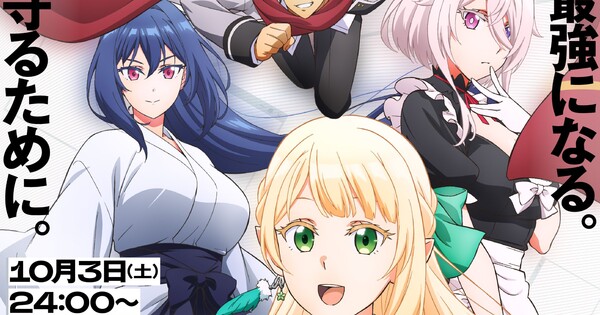
Crunchyroll confirmed on Monday that it has begun streaming a same-day English dub on October 3 for the first two episodes of the television anime of Iris and Noboru Kannatsuki‘s Magical Explorer light novel series. The company revealed the English cast:
The dub staff includes:
The series debuted with two episodes on October 3 at 24:00 (effectively October 4 at 12:00 a.m.) on Tokyo MX, Tochigi TV, Gunma TV, and BS11. The anime also airs on Tohoku Broadcasting, TV Aichi, and YTV.
Kazuki Ohashi (Shadows House) is directing the anime at WHITE FOX. Satoko Sekine (TsukiPro the Animation) is handling series composition. Ryosuke Kimiya (Grimoire of Zero) is designing the characters. Kenichiro Suehiro (Re:ZERO -Starting Life in Another World-) is composing the music.
ASCA performs the show’s opening theme song “Remedy” and the ending theme song “Double Wings.”
Additional staff members include:
Yen Press is publishing the light novel series and Yukari Higa‘s manga adaptation, and it describes the story:
Living in the world of Magical★Explorer, the legendary erotic game, sounds like a dream. Problem is, I reincarnated not as the lady-killer protagonist with his overpowered cheat skills, but as his unlucky comic-relief best friend!
The novel series debuted in February 2018 on the Shōsetsuka ni Narō website. Kadokawa began publishing the light novel series in November 2019. The 14th volume shipped on October 1.
The manga adaptation launched in Young Ace Up in August 2020. Kadokawa published the manga’s fourth compiled book volume on October 2.
Source: Crunchyroll (Liam Dempsey)
Disclosure: Kadokawa World Entertainment (KWE), a wholly owned subsidiary of Kadokawa Corporation, is the majority owner of Anime News Network, LLC. One or more of the companies mentioned in this article are part of the Kadokawa Group of Companies.
>
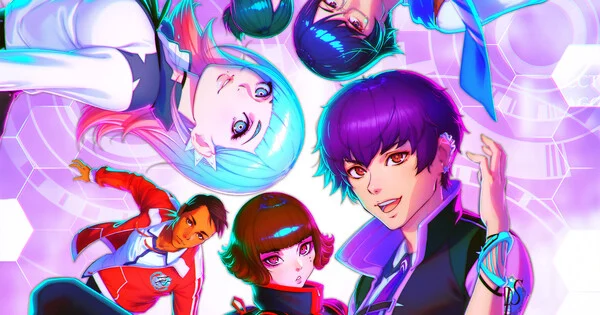

Ilya Kuvshinov is a world-renowned artist, illustrator, and character designer. His stunning work has appeared in many projects since moving to Japan in 2015 to work in the anime industry, including notable titles such as Ghost in the Shell: SAC 2045. Ilya’s latest project is Compile Heart‘s new game Villion:Code, and he was kind enough to take time out of his schedule to answer some of our questions.
Where did you start when developing characters for Villion:Code? Did you start with a particular character and work outward, or do you plan the group out as a whole?
Ilya Kuvshinov:
Yes, the first sketch I ever did for the game was of the group of protagonists lined up together—to grasp the dynamics of their personalities, heights, costume differences and similarities, faces, haircuts, postures, and overall vibes.
Were there any characters that took longer to develop than others? Or did they end up taking a similar amount of time? Could you explain why certain characters took longer than others or why all the characters took the same amount of time?
KUVSHINOV:
Yes, interestingly, some of the characters were basically approved on the spot and remained as they were on the very first sketch, with minor changes and improvements (such as three of the male protagonists). However, some of the characters were redone from scratch a couple of times (like Chloe, whose personality and backstory also changed in the process of finalizing the script). Anastasia went through the greatest number of iterations—we needed her to stand out, so with each revision she gradually became less symmetrical (which I am a big fan of) in both her haircut (diagonal bangs) and in her costume (differences in sleeve length and accessory arrangement).
Presumably, the developers had certain archetypes in mind when planning out Villion:Code‘s narrative, gameplay, and plot points. How much collaboration was there with the developers when creating the main cast? What input did you have?
KUVSHINOV:
My job was to create the characters who live in the story and drive it forward, characters with whom the players will interact and spend hours together. So my responsibility was to grasp the ideas and concepts of this world, story, and gameplay, and reflect them in the characters’ designs and appearances. I didn’t really have any serious input into anything other than writing one sidequest and the visuals.

© IDEA FACTORY/COMPILE HEART/GAIA All rights reserved. Licensed to and published by IDEA FACTORY INTERNATIONAL.
Which portions of the cast were you involved with creating for Villion:Code? Was it the main cast only, or did you also do design work for the supporting cast, GEMs, and so on?
KUVSHINOV:
I worked on the concepts and illustrations for all the characters—protagonists, antagonists, and NPCs—alongside supervising 3D models. I also provided rough concepts for monsters! Other than working on the characters, I also designed the school logo, cutscene illustrations, promotional artwork, cover illustrations, UI portraits, and more.
You have worked on numerous projects, from anime series to films to music videos. Does your character design process change depending on the medium, or do you maintain a consistent approach across all your projects?
KUVSHINOV:
Yes, character design processes for different mediums branch off at a certain point. To give a simple example, 2D anime characters are drawn by hand thousands of times, so their costumes and hair should be less detailed. For 3D (games and/or anime), there are fewer limitations on outfit textures and hair detail, but you need to consider properties uniquely related to polygonal 3D—such as clipping (e.g., long hair, puffy sleeves) or transparent surfaces. For Villion: Code, we also needed some of the characters to move in Live 2D (which was my first experience with it) on top of having them as in-game 3D models, so that was new for me—learned a lot!

© IDEA FACTORY/COMPILE HEART/GAIA All rights reserved. Licensed to and published by IDEA FACTORY INTERNATIONAL.
Are there any unique challenges or opportunities that come with designing video game characters as opposed to anime series, film, etc.?
KUVSHINOV:
In the game, players can freely move the camera around and look at the character from nearly every angle and distance they want, and some characters move around on their own—so I always kept that in mind while designing them. In terms of color and silhouette, characters should be recognizable from any angle and distance, especially with tube-based gameplay where characters could be placed on completely different planes.
How did you come to be involved in working on Villion:Code?
KUVSHINOV:
Kouji Okada-sensei asked me to be involved, and as a big fan of his work, it was a big honor!!
The game is set in a near-future setting, and it’s clear there is a mixture of advanced technology, but also modern-day fashion and concepts. How did you try to capture the futuristic elements without making it seem too far away from the present?
KUVSHINOV:
I was researching a lot about how science has influenced fashion throughout history—the materials, shapes, cost, and even the colors of the clothes were closely dependent on technological advances. I also researched the ways some outfits traditionally stay the same in certain ways, like why serafuku uniforms are shaped how they are or why doctors’ coats are all the same color; it was a lot of fun! The game’s story takes place in a sort of school town, so I researched many things related to school and sports uniforms, as well as many different types of uniforms around the world and throughout history, and imagined how they might look in the near future in a very big, multicultural school environment.
The characters in Villion:Code also appear to have a wide array of strange weaponry and techniques. Were you involved in coming up with those elements as well? Or did the developers send you a list of what they wanted the abilities to look and feel like?
KUVSHINOV:
Weapons and abilities were done without my involvement or supervision, so I haven’t seen all of them myself yet. I’m looking forward to trying them out when the game’s out! (laughing)
Were there any characters that surprised you as they developed, perhaps ending up in an unexpected place versus where you initially conceptualized them?
KUVSHINOV:
Ah yes, there are some characters (nearly most of them, to be honest) whose backstories and development touched me deeply. No spoilers, but those are… moving.

© IDEA FACTORY/COMPILE HEART/GAIA All rights reserved. Licensed to and published by IDEA FACTORY INTERNATIONAL.
Fashion is obviously a huge part of your work. Can you share any insights into how you approached the outfits for the cast of Villion:Code?
KUVSHINOV:
So, back to the school uniform talk! We needed the cast to wear the same school uniform (so, the same clothes basically), while including unique distinctions between the characters at the same time—which is not actually as challenging as it sounds if you know the characters’ personalities, backstories, and unique traits.
The outfits are the same, but how the characters are wearing them can differ drastically: things like rolled-up sleeves, unbuttoned shirts, wearing a parka or sweater, wearing a tie (and is it tied or not?) or a bow tie, wearing their collar up or down—those all say something about the character. For example, Chloe wears her collar way, way up, nearly covering half of her face, hinting at her unconscious desire to hide herself from the outside world.
Your work is very striking, and it has a distinct quality. On a personal level, what do you consider to be the key motifs of your work? Are there elements that you think signify a piece as clearly being yours?
KUVSHINOV:
Thank you so much! On a personal level, I am always trying to say more while showing less (like with Chloe’s collar), but I guess the distinct elements would be the characters’ eyes’ pupil designs.
Art and the creative process are ever-evolving for the creator. Have you noticed a change in your practice as you’ve worked on Villion:Code, or have you refined an existing aspect of your work that was already there?
KUVSHINOV:
For Villion:Code, because I needed to paint many, many characters in the same style consistently (color saturation, the depth of shadows, line art thickness, and more), and then prepare the data for Live2D, I created a painting guideline for myself specifically for this project. It included the palettes, exact brushes for specific tasks, step-by-step pipelines for effects, and guides for layer blending modes and opacity. That helped speed up the process a lot!

© IDEA FACTORY/COMPILE HEART/GAIA All rights reserved. Licensed to and published by IDEA FACTORY INTERNATIONAL.
It can be difficult to play favorites, but is there a particular character design or idea that you are proud of in Villion:Code?
KUVSHINOV:
I love how different the ear devices (Helixes) look! Each one is unique to a specific character and tells you a little about its wearer as a person when you think about what color and shape the character chose for the device.
What would you say to your existing fans about the game that you hope they can experience?
KUVSHINOV:
I am so, so lucky to be part of such a big and important entertainment production. It’s a team effort, and my role in it is not very big, but what I’ve seen from the other aspects—the story, the gameplay, the music, the voices, and more—has made me feel like I am a part of something truly unique and deep. I hope you can try it and decide for yourself!
>

‘What Happened To Doris?’ Director Nick Simon Signs With IAG

BanG Dream! YUME∞MITA Anime Series Review – Review
Fantasy football Week 4 recap, early waivers speed run: Xavier Worthy, Keon Coleman
-

 movies5 months ago
Search For Canadian TV Actor Stewart McLean Now Homicide Investigation
-

 Fashion9 years ago
These ’90s fashion trends are making a comeback in 2017
-
Fashion9 years ago
According to Dior Couture, this taboo fashion accessory is back
-
Fashion9 years ago
Model Jocelyn Chew’s Instagram is the best vacation you’ve ever had
-
Fashion9 years ago
Emily Ratajkowski channels back-to-school style
-
Fashion9 years ago
9 Celebrities who have spoken out about being photoshopped
-

 Anime4 months ago
Rurouni Kenshin: Hokkaido Arc Manga Takes 1-Issue Break – News
-

 Anime3 months ago
HIDIVE to Stream English Dubs for The World Is Dancing, The Forsaken Saintess and Her Foodie Roadtrip in Another World, The Dangers in My Heart: The Movie Anime – News