
Ba’s Book
toronto film festival


John Wilson’s Sundance-premiering The History of Concrete from Magnolia Pictures is oh so solid, eyeing $450k on 160 screens in week three for a cume of over $1.2 million cume, making it the top grossing, platform-release doc of 2026. Acclaimed documentary NAZA is reporting a five-day gross of $86k since its theatrical debut Wednesday.
NAZA opened on one screen at the IFC Center in New York. Yuval Abraham and Rachel Szor, two of the Oscar-winning directors of No Other Land, have been been threatened and there were no Q&As. The film, which won the Special Jury Prize at the Venice Film Festival, sees the pair interview Israeli intelligence officers and soldiers (faces concealed, voices digitally altered) on rooftops in Tel Aviv about the civilian death toll in Gaza. It was made in secret and released independently with the backing of its producer The Guardian, and MK2. The cume so far has been limited mainly by theater capacity, says mTuckman Media, which is assisting with the U.S. rollout. Adds exclusive engagements in over 30 markets next week and will continue to expand through October.
Ketchup Entertainment’s Rolling Loud opened to an estimated $467k at 930 locations, as per ComScore. A father (Owen Wilson) takes his young son to a hip-hop festival, setting off a chaotic adventure through the crowds and backstage. Written and directed by Jeremy Garelick.
Limited: Sumerian Pictures’ release of The Incomer expanded nationally to 230 screens in its second weekend, grossing an estimated $91k for an $111k cume.
Ha Chan, Shake Your Booty! from Sony Pictures Classics added $34.3k on 75 screens in week 2 for a a cume of $364.5k.
Magenta Light Studios’ horror-thriller Appofeniacs by Chris Marrs Piliero debuted to $22.7k in New York and LA. A young man’s deepfake videos unleash paranoia and violence across intersecting lives.
Cannes-premiering psychological drama Atonement from Kino Lorber opened to $18k on two screens. Reed Van Dyk.explores guilt, redemption and forgiveness in the aftermath of wartime trauma in Iraq. Stars Boyd Holbrook, Hiam Abbass and Kenneth Branagh. Expands to more markets next week.
Greenwich Entertainment expanded The Scout to Los Angeles, following its NYC-exclusive opening, grossing $10k across three screens in week two for a $29.3k cume.
Events: Fathom Entertainment’s Met Opera: Così Fan Tutte (2026) grossed an estimated $563.4k from one live showing at 646 locations — the kickoff of the 20th season anniversary of Met Live in HD. Phelim McDermott’s production of the Mozart classic stars Federica Lombardi, Samantha Hankey, Duke Kim, Andrey Zhilikhovsky, Ana María Martínez and Gerald Finley, with Nimrod David Pfeffer conducting. The live transmission was directed for cinema by Gary Halvorson and hosted by soprano Christine Goerke.
Trafalgar Releasing’s music doc Linkin Park: Unshatter grossed $336.1k at 692 locations for a domestic cume of $680.4, as per Comscore. Plotline: Follow’s Linkin Park’s return, from intimate studio sessions through the release of their new album and a concert in São Paulo. Featuring Mike Shinoda, Joe Hahn and their bandmates, it combines archival footage, performances and interviews and is directed by Joe Hahn.
Bollywood Crime thriller Drishyam – The Conclusion from Zee Studios grossed $2.74 million at 541 theaters, as per Comscore. The film by by Abhishek Pathak, the third and final installment of the hit franchise, is no. 8 at the domestic box office.
A24’s Primetime grossed $8 million in week 2 for a $34 million cume on about 2,900 screens.
>
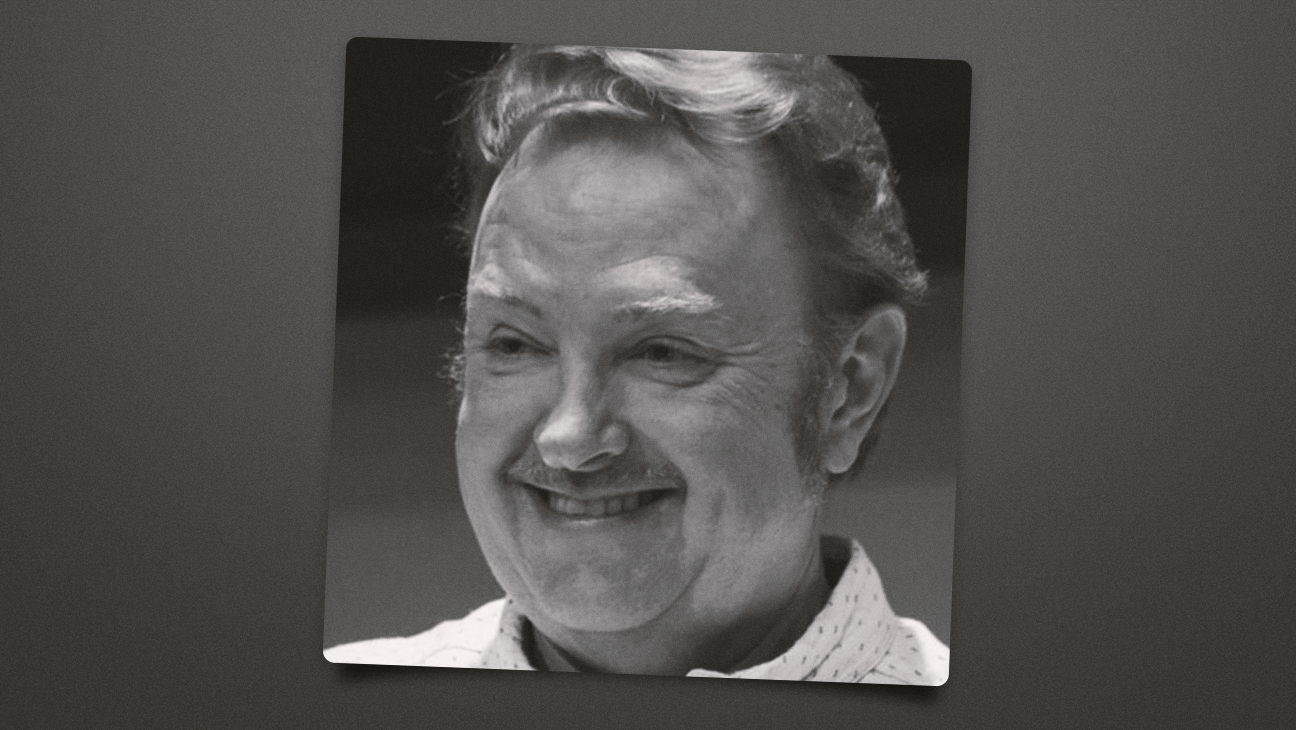
J. Todd Anderson, who worked as a storyboard artist on dozens of films from The Nice Guys and The Tragedy of Macbeth to Hail, Caesar! and The Ballad of Buster Scruggs, died Oct. 1. He was 67.
Anderson died at a hospital in Orange County, California, after a years-long battle with cancer, The Hollywood Reporter has learned.
Born John Todd Anderson in Springfield, Ohio, he started working in Hollywood in the late 1980s. The first film he storyboarded, 1987’s Raising Arizona, launched a long-running collaboration with filmmakers Joel and Ethan Coen, aka the Coen Brothers.
Since then, he storyboarded every one of their movies, including 1990’s Miller’s Crossing, 1996’s Fargo, 1998’s The Big Lebowski, 2004’s The Ladykillers, 2010’s True Grit, 2016’s Hail, Caesar! and 2018’s The Ballad of Buster Scruggs. He also worked on Ethan’s Drive-Away Dolls (2024) and Honey Don’t! (2025), as well as Joel’s The Tragedy of Macbeth (2021).
Throughout his career, Anderson worked with several other auteurs and A-list stars on projects, such as George Clooney’s 2008 Leatherheads; Drew Barrymore’s 2009 Whip It; David Lowery’s 2018 The Old Man & the Gun; 2012’s The Dictator, starring and co-written by Sacha Baron Cohen; and three Shane Black pics, including 2016’s The Nice Guys, starring Russell Crowe and Ryan Gosling, 2018’s The Predator and 2025’s Play Dirty, starring Mark Wahlberg and LaKeith Stanfield.
His other storyboard credits include 1989’s Twister, 1991’s The Addams Family, 1994’s Nadja, 2002’s Confessions of a Dangerous Mind, 2010’s The Big Bang, 2016’s Warcraft and 2023’s Fool’s Paradise.
Anderson also directed two films: 1999’s The Naked Man, which he wrote with Ethan, and 2008’s My Mummy.
In addition to his work behind the camera, he also made a few on-screen appearances in the films Fargo, Leatherheads, The Nice Guys and American Violence (2017), among others.
Anderson is survived by his mother, Donna Lou (Beaver) Anderson; his sister, Kimberly Patterson; and his niece, Haley Christ Patterson.
>
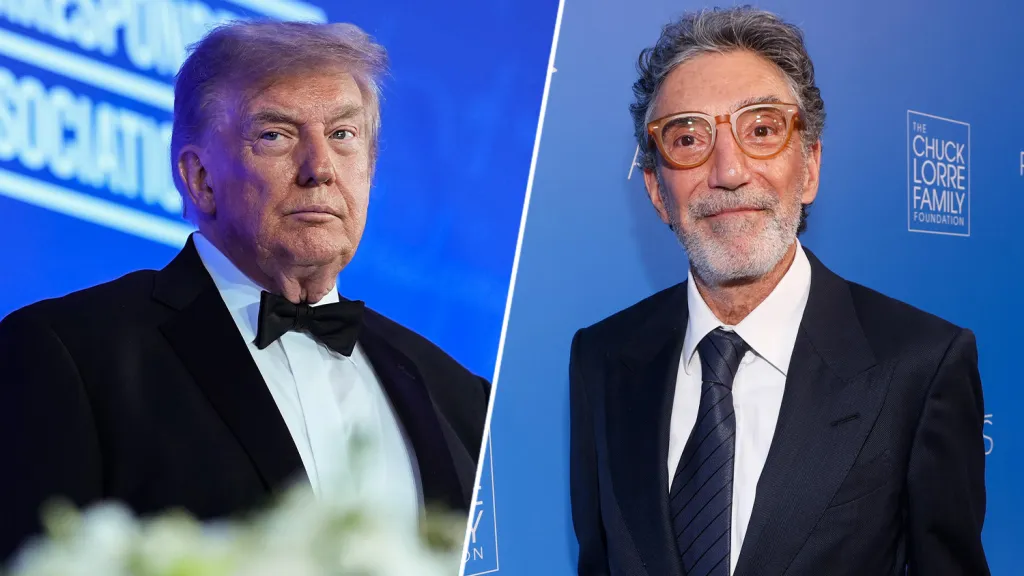
Following his blistering onstage jokes about Trump last weekend, the White House has issued a response to Chuck Lorre.
On Saturday, White House spokesperson Davis Ingle trotted out another Trump Derangement Syndrome diagnosis for the 10x Emmy nominee, who recently called the POTUS a “bloated orange piece of sh*t.”
“Chuck Lorre should immediately seek psychiatric help to treat his severe case of Trump Derangement Syndrome that has completely rotted his peanut-sized brain,” Ingle told Fox News Digital in a statement.
Last Saturday, Lorre gave Trump several shoutouts in his Founders Award acceptance speech at a Project Angel Food fundraiser in Los Angeles.
“Sure, I’d love to stand here and talk about my deep yearning for a more compassionate government, one that prioritizes the health and welfare of its citizens,” he said, according to The Daily Beast. “But the burden of my profession demands that I take this opportunity to say a few words about that bloated orange piece of sh*t in the White House.”
Lorre continued, “I’d love to express my gratitude to all the people who’ve devoted their lives to making Project Angel Food an oasis for those in need. That would be my preference. But because I’m a comedy writer, I have no choice but to explain how I wake up every morning to turn on CNN to see if the president of the United States had a heart attack while straining to take a dump.”
The Stuart Fails to Save the Universe creator’s speech comes after the Big Bang Theory spin-off was renewed for Season 2 at HBO Max, which will bring the show back under the Paramount umbrella after Trump’s friends the Ellisons acquired Warner Bros. Discovery.
On Wednesday, a federal judge cleared the way for the $110 billion deal to close, approving the settlement between Paramount and a group of state AGs that filed an antitrust lawsuit to block the Warner Bros. Discovery acquisition.
CEO David Ellison revealed on Friday that the combined company will now be known as Skydance, under which Paramount and Warner Bros. will supposedly remain individual entities.
>
Montreal documentary maker Ashley Duong saw her father, Anh Duong, end a lifetime of cold silence over his traumatic upbringing in war-torn Vietnam by publishing a memoir shaped as a series of letters to his daughter.
So it wasn’t long before Duong, in her chosen medium, film, adapted her father’s memoir into Ba’s Book, an inventive hybrid film that bends the edges of a documentary with drama and is screening on Sunday night at the Vancouver Film Festival. She pieces together the journey the director’s tight-lipped father, also known as Ba, took through Vietnam during that civil war and as a refugee in 1970s revolutionary Iran, before starting a new life in Canada in 1980.
During that lifetime, Ba kept painful memories hidden from his daughter and family until the 2024 publication of Dear Da-Le: A Father’s Memoir of the Vietnam War and the Iranian Revolution. “There’s all these moments throughout his life where he was really learning how to hide his emotions,” Duong tells The Hollywood Reporter, as her father had a need to navigate political landmines as a witness to wartime brutality in Vietnam and Iran.
Ba’s Book
toronto film festival
But what her father left out of his memoir and Duong captured in her film was the untold torment of Ba leaving his mother, Nguyen Thị Bay, or grandmother Ba Noi, and close relatives behind in their ancestral village in Vietnam. And it’s those siblings with whom Ba reunites — and is brought at times to bruising places as they reveal their own untold family secrets — in Duong’s film that provide the emotional backbone for Ba’s Book.
“I wasn’t sure what to expect from my relatives. But they really put all their heart and soul into the film. They helped with the design of the sets, the casting of the relatives. There was a lot of love shown and that meant so much to me,” Duong explains. But her relatives gave more than off-camera tips as Ba’s Book recreates the director’s father and his life in Vietnam alongside his relatives on camera.
To get her father and his siblings to offer answers to questions no one had ever dared ask in the past until Duong’s cameras rolled, an inventive hybrid documentary-narrative model was hatched for the film. Some archival footage appears in Ba’s Book.
But mostly Duong’s relatives — and actors playing their younger selves as proxies to share wartime experiences — appear on camera and in re-enactments as cast and crew to help the director revisit and reveal secrets of the past as her father’s personal story and a family shaped by the legacy of violence and civil conflict unfolds.
Ba’s Book
Toronto Film Festival
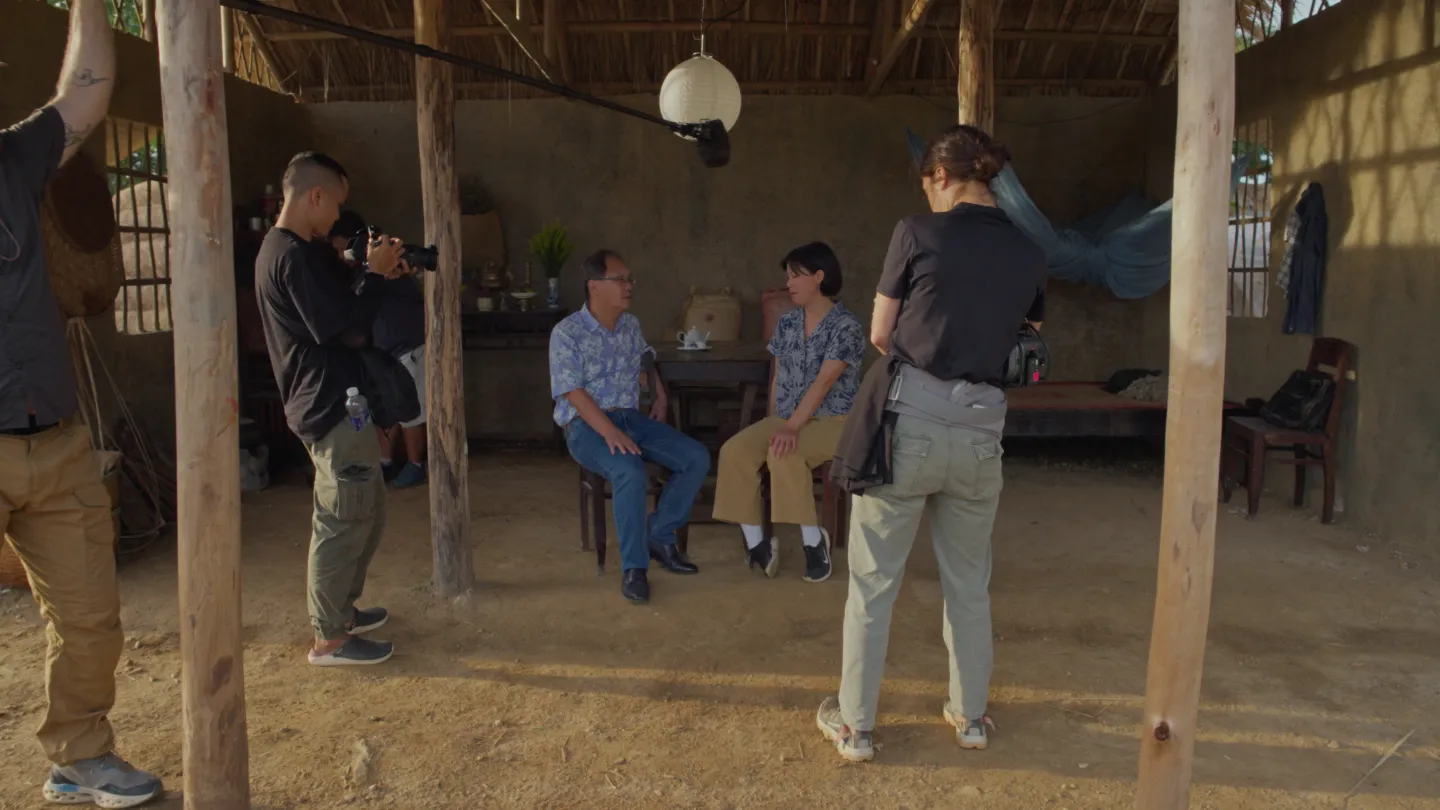
“Not everybody is going to stage recreations with sets and actors and everything. But it’s just our family trying to figure out how to finally talk about things that they’d never spoken about,” the director explains. A hybrid film that moved fluidly between re-enactments and documentary, built on a set in Vietnam, the home Duong’s father and siblings grew up in, but with only three walls and not four to allow the relatives and actors, as if on a stage, to portray their younger selves.
Other inventive scenes include Duong’s father reading from his memoir in Vietnamese, as his relatives do not speak or read English, and so will not have heard his story as written down. And his relatives in turn gave notes to the actors playing their younger selves and were encouraged to interrogate Ba as his coming-of-age story was dramatized.
“I loved it when someone else asked the questions,” Duong recalls, as the veteran documentary maker has never come from behind the camera to appear in front of one. The actor who played the role of a youthful Ba, Duy Nguyen, who himself was born in Vietnam and is a Montreal-based actor today, was especially interested in knowing his character’s backstory.
“We really lucked out with Duy as he could relate to a lot of things my father went through — being the eldest son, the only one in his family who is in Canada and his guilt that comes from being abroad,” Duong explains. Ba’s Book also did not rely on one camera in the corner of a room to capture what goes by.
Duong instead had three cameras rolling at all times on set, with one focused on a documentary that captured mostly unfiltered footage, and another with a more narrative-focused lens zooming in and out and even using reverse angles as a three-person fiction crew followed a loose script she penned along with Steven Sych.
A particular focus in Ba’s Book is Dương Thị Hạnh, or the director’s Aunt Hanh, who reluctantly at first and then eventually reveals anger felt towards her older brother over the rigid patriarchy of wartime Vietnam that had her caring for Anh Duong so he could study and complete an education she was denied.
In the end, director Duong, recognizing Aunt Hanh’s residual indignation, lances that boil. “There’s a point in the film where I want to say thanks to (Aunt Hanh) because I’m thinking if she didn’t free my dad up from domestic labor, he wouldn’t have been able to study as he did. My life would have been totally different. I owe this woman so much. Somebody, and I never knew who, but she had sacrificed this way, having to stop school when she was nine,” Duong explains.
The result is Ba’s Book becoming equal parts observational and performance as Duong uses various camera angles and coverage to allow her father, his siblings and the director herself to share historical traumas, lay bare an emotionally wrenching story of family division and make peace with their past.
That’s far more inclusive healing than might have happened if Duong had only responded to her father’s memoir with her own letters. Instead, she brought a reluctant father to Vietnam to help via film to tell an emotionally wrenching story of family divisions and reconciliation.
“A lot of this film is us realizing the way we show up for each other is by being each other’s narrative devices,” the director explains. Duong recognized her father had really been writing to himself to confront an untold past.
Likewise, Duong used her cameras to create a safe space for her family to act out past memories to, at long last, talk about what each means to one another, good and bad. Duong argues, “It’s 50 years later. It’s not about division so much as how to move on. And a lot of people can relate to that kind of story, people who are in the diaspora, families who are divided by historical and political events and it’s a glimpse of their future.”
Ba’s Book movie poster.
John Godfrey/Chargefield
>


Search For Canadian TV Actor Stewart McLean Now Homicide Investigation


These ’90s fashion trends are making a comeback in 2017
According to Dior Couture, this taboo fashion accessory is back
Model Jocelyn Chew’s Instagram is the best vacation you’ve ever had
Emily Ratajkowski channels back-to-school style
9 Celebrities who have spoken out about being photoshopped


Rurouni Kenshin: Hokkaido Arc Manga Takes 1-Issue Break – News


HIDIVE to Stream English Dubs for The World Is Dancing, The Forsaken Saintess and Her Foodie Roadtrip in Another World, The Dangers in My Heart: The Movie Anime – News