
Politics
The House | Former Prison Governor Ian Acheson: The Public Is Right To Be Outraged By Early Release Schemes



11 min read
In a searing critique, former prison governor Ian Acheson says the public is right to be outraged by early release schemes and overcrowding is being used to cover up entrenched administrative and political failure
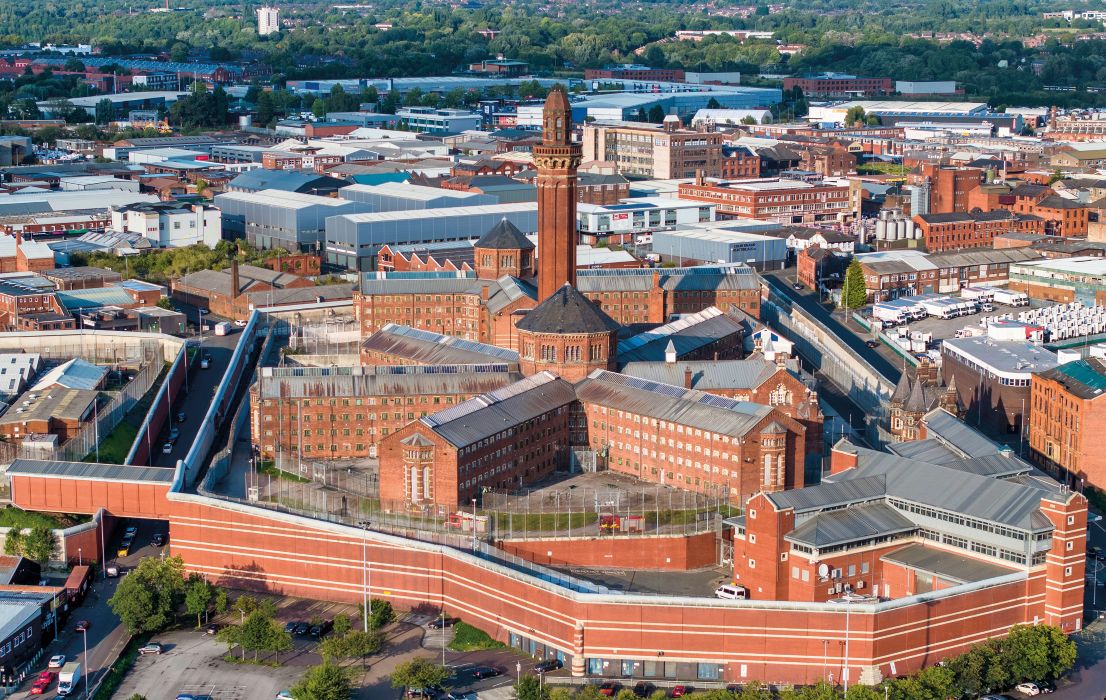
Prison overcrowding is a major issue because it hampers movement, reduces the time offenders can spend outside their cells, interferes with work and education, complicates resource allocation, and makes control much harder to enforce. At the same time, it has turned into a generic excuse used by the Ministry of Justice (MoJ) to explain almost every failure. Whether it is soaring violence, rife drug use, staff shortages, inadequate intelligence, bad management systems or managerial decline, overcrowding is rolled out as the culprit. It has become a convenient substitute for examining whether prisons are being properly managed and run.
That’s a harder truth. A cultural decay exists within the boss class of HM Prison and Probation Service (HMPPS), the last true hermit kingdom in public administration. It shows in their helpless response to a downward slide, and in their readiness to regard basic failure as inevitable, whether a prison is overcrowded or not. The most dangerous failures among our jails are not caused by a lack of cell space. Often, the system rewards the apparatchik who fails upwards because he or she has become skilled in progressive abstractions, rather than the kind of leader who prioritises order, safety, high standards and a purposeful regime.
The public debate has become distorted since ministers have spoken of a capacity crisis.
Reference is made to the tainted Tory legacy, and the only solution proposed is to grant earlier release. The more realistic option – building, staffing, and managing a prison establishment to handle the number of prisoners imposed by the courts’ penalties – has been continually postponed. The most recent official figure available indicates that there were 87,111 people in prison in England and Wales on 14 September 2026. The operational capacity is 88,986, which means the national headroom is 1,875 places.
The global figure by itself does not give the full picture. Prison places are not all the same.
Remand prisoners must be kept within a reasonable distance of the court. High-risk prisoners need high-security jails. Sex offenders must be protected against exploitation and violence. Women, young adults, people with serious mental illness, people with disabilities, prisoners who are subject to gang separation, and terrorists who need confinement all require special types of accommodation. Governors deal with these restrictions every day, but they are not visible when looking at the total number of prisoners.
The most recent population forecasts from the MoJ give the central figure as 100,600 prisoners by March 2030, the range being between 98,000 and 103,600. The department recognises that there is a great deal of uncertainty involved, since its figures are based on assumptions regarding police activity, charging rates, court throughput, sentencing patterns, recalls, policy changes and the speed at which cases progress through the justice system.
Forecasts are needed for the purpose of planning and should not be regarded as definitive proof of a fundamental change in the meaning of sentences.
Even though we are certainly running short of space, the MoJ’s 2024 forecasts predicted 89,100 prisoners by September 2025. The actual total was 87,465. The later central estimate for September 2026 was about 2,100 fewer than the similar forecast that had been made a year before. The ministry explained a large part of this change as being due to policy adjustments, including the greater use of the Home Detention Curfew and the reforms regarding fixed-term recall for some people who are serving shorter sentences.
Those changes make a point that ministers would prefer to avoid. Population projections can change sharply because policy changes sharply. They are models, not destiny. A state that has underbuilt its way out of a capacity problem for more than a decade should not use an uncertain future number as a reason to beg ministers to normalise the early release of thousands of risky prisoners.
That building failure is well-documented. The National Audit Office (NAO) stated that the government’s commitment in 2021 to provide 20,000 extra prison places was unrealistic and had not been given sufficient priority. By September 2024, the HMPPS had delivered 6,518 of these places. The NAO believed that the full number of 20,000 would not be achieved until 2031, which is about five years later than planned.
This is the major failure in public policy. Successive governments have increased policing, introduced tougher sentencing laws, allowed court delays to become longer, and accepted a large number of recall cases – yet they have not built the physical infrastructure needed to accommodate the inevitable increase in prison numbers.
Labour has promised to provide 14,000 new places by 2031 and says it has committed up to £7bn over 2024-25 to 2029-30. This commitment is essential and must be implemented swiftly, with progress to be assessed by the number of prison gates that open to reveal safe, staffed and fully functioning establishments inside. Let’s have no more nonsense spouted by the Justice Secretary Alex Norris on converting laundries. Fatuous press releases, planning applications or artistic impressions can’t securely hold prisoners.
Building cell space is often dismissed as a simplistic law-and-order response. It is an acceptance of responsibility. A state that investigates crime, prosecutes people and asks courts to impose custodial sentences must provide sufficient capacity to enforce the outcome.
Custody should be proportionate. It should be reserved for cases where it is necessary. It cannot be turned into a provisional arrangement whose duration depends on the MoJ’s construction record.
The government’s other option is now becoming more and more chaotic. Emergency release was launched in 2024. The Sentencing Act has altered the automatic release dates for a large number of prisoners who are serving standard determinate sentences. According to the new legislation, individuals who were previously due to be released after 40 or 50 per cent of their sentence can now be released after one third; similarly, those who would have had to serve two thirds can now be released at halfway. The aim of the scheme had been to free up space, but it instead caused a public outcry.
Families, victims’ representatives, and former police colleagues raised alarm when it emerged that two men convicted of the manslaughter of PC Andrew Harper could become eligible for earlier release. Harper was killed in 2019 while investigating the theft of a quad bike. The campaign surrounding his case brought home a simple political fact: the public does not experience early release as a neutral technical adjustment. It sees people convicted in serious and notorious cases leaving prison earlier because the state has not built enough places. One million people signed a petition to show their anger at justice by logistics, not just deserts.
The response was a familiar Whitehall exercise in retrospective exemption. The policy was paused. Ministers reviewed it. They excluded those convicted of unlawful killing, including manslaughter. They added exclusions for death by dangerous driving, indecent assault, historic child-sex offences and causing or allowing a child’s death.
A cultural decay exists within the boss class of HM Prison and Probation Service, the last true hermit kingdom in public administration
The eligibility group reduced from an estimated 6,000 to around 5,000 prisoners. The start date was delayed. Further supervision and protections for victims were promised. Sci-fi magic bracelets for geo-fencing would save us all.
Each individual exclusion here may be defensible. The cumulative result is policy made in public, case by case, only after the consequences become visible and politically embarrassing.
It is a salami-sliced attempt to retain the capacity savings while avoiding the politically intolerable cases. The government is discovering that there is no clean line between the prisoner it is comfortable releasing early and the prisoner whose earlier release will rightly trouble the public.
This matters because the public is at odds with the administrative state on this question. Most people understand that not every offender belongs in prison. Most accept that individual release decisions must be based on risk, progress and law. They understand the value of credible rehabilitation. They also understand that a sentence imposed in open court should carry meaning.
The public sees the contradiction. Ministers promise action on crime, victims are promised confidence in justice, police are expected to make more arrests and courts are urged to deal with cases more quickly. The same state then says that sentences must be cut short because the accommodation has not been built. It is impossible to spin that as an enlightened penal settlement. It looks like a failure to plan and two fingers to victims.
Early release also transfers pressure into a knackered probation service still damaged by years of ideological vandalism, excessive workloads, staff turnover and lethal public protection failures. An offender released earlier than a judge has said they should be locked up needs a credible licence plan, stable accommodation, access to treatment and medication, help into work, and a probation practitioner with sufficient time to assess and manage risk. None of this is remotely in place now, let alone in the coming months as dangerous offenders flood the streets. The police have been crystal clear – managing this additional risk will denude everyday cover, which is hardly flush with capacity as it is.
Recall to custody has become a major driver of population pressure because it shows a system that’s unable to manage instability outside prison: licence breaches, genuine risk, homelessness, addiction, fractured supervision and deficient support.
There are responsible ways to reduce the number of people in prison. Short sentences which involve detention must be used with care. The practice of remand should be subjected to stricter discipline. Non-violent acquisitive offenders in prison because of a drug addiction are a medical problem, not a criminal justice one. The courts need other options than custody which they can rely on. But these reforms need investment, urgency, imagination and competent delivery. And they need public confidence, which is tanking. But they do not make prison capacity optional.
The condition of the estate explains why building and leadership must be addressed together.
In 2024-25, 24.8 per cent of prisoners were held in crowded accommodation. The methodology has changed, so historic comparisons require care. The current figure still means roughly one prisoner in four shares accommodation designed for fewer offenders.
Large parts of the existing estate lie empty because of a failure to recruit and retain staff.
Here’s why: In 2025-26, prisoner-on-prisoner assaults stood at 244 per 1,000 prisoners.
Assaults on staff stood at 113 per 1,000. There were 812 self-harm incidents per 1,000 prisoners and 67 self-inflicted deaths. Drugs, debt, intimidation and violence are harder to control in a crowded system. But they also flourish where leadership is weak, staff are traumatised, and prisoners have nothing to do except wait for the next drone drug delivery.
The workforce situation tells the tale. In March 2026, 21,984 prison staff were employed at Band 3 to 5 levels, down from 22,716 the previous year and fewer than the 23,590 recorded in March 2024. Average sickness absence for front line staff reached an unsustainable 13 working days in the 2025-26 period. The service cannot get to stability just by speeding up the process of shovelling offenders through the gates early.
In 2025-26, 14 prisons were assessed by the MoJ as being ‘of serious concern’ and 25 as being of ‘concern.’ That’s 39 out of 120 establishments requiring great improvement. Many of those jails hold some of the scariest people in Britain. There are good prisons and outstanding staff. There are also too many establishments where the basics of safety, decency, control and purposeful activity are unreliable or completely defunct.
The answer is clear to me. Britain needs a national capacity crisis taskforce led by genuine experts, not retread mandarins and clueless ministers. It needs a genuine operational buffer.
It needs officers recruited, retained and confident to restore order which is foundational to everything hopeful. It needs senior leaders judged openly on safety, order, staff confidence, regime delivery and rehabilitation outcomes. It needs a rebuilt probation service before large-scale early release becomes a normal practice.
Early release may occasionally be necessary. It can’t become a substitute for building a system capable of carrying out the sentences that courts impose. The public is entitled to expect more than an omnicircus of duff projections, panicked exemptions and emergency sticking plasters. It is entitled to a prison system that is properly led, adequately built and worthy of public trust.
>



4 min read
Kemi Badenoch pledged to scrap inheritance tax on family homes in a conference speech that sought to present the Conservatives as the party of the economy.
Speaking in Birmingham on Wednesday, Badenoch said the Conservatives “are and always have been the party of home ownership”.
“The next Conservative government will legislate so nobody will ever pay inheritance tax on their family home,” she said.
“On top of that, couples will be able to leave an additional £1m tax-free, and these changes mean every inheritance tax bill will be cut, and the number of families paying inheritance tax will fall by more than half.”
Addressing reports that she was considering abolishing inheritance tax altogether, Badenoch said she intends to make this pledge “as soon as we can afford it”.
“We could do it, but not if we want to keep our country safe with a Britannia shield,” she added, referring to her party’s pledge of £10bn for a UK air defence system similar to Israel’s Iron Dome.
“Not if we also want to keep people safe with 50,000 new prison places, not if we want to cut the deficit, threatening to bankrupt our country and burdening our children.”
Badenoch repeatedly framed the Conservatives as the party of economic responsibility, and said that “spending money we don’t have on things we cannot afford is not kind; it is reckless”. The Tory leader said the party has already identified potential savings worth more than £70bn.
Badenoch said that there is a “battle for the soul of this nation” and positioned the Conservatives as “a renewed Conservative Party fighting again for the belief that what people earn belongs to them, not government”.
She said the Labour government led by Prime Minister Andy Burnham “wants to wind back the clock to the failed ideas of the past” and accused Labour of wanting to increase taxes and make it “harder and harder to make ends meet”.
The Conservatives have also proposed cuts to employer National Insurance contributions for those aged 21 to 24.

One of the most significant elements of Badenoch’s speech was about Reform UK.
The Tory leader launched a scathing attack on Nigel Farage’s party, in comments that seemingly put to rest the idea that the Conservatives could work with Reform at the next general election.
Badenoch said Reform politicians were “openly questioning people’s identity” based on their race, like black England football players.
“I am black, I am British, I am proud of my country,” Badenoch said.
“I’m proud of our history, all that we have done, and all that we will do in the world. Our best days are not behind us, and we will not let this country go backwards.
“I don’t want to live in a country run by people who threaten journalists, who call veterans traitors, and debate whether my mixed-race children are English. I don’t want to explain to my son when we’re watching our brilliant England team play football, that some people don’t think our black players are English.”
She said the country “must not let these people take us backwards” and said that Reform are “not like us”.
“We are different, we are the Conservative Party.”
She said that one of the challenges facing the Tories was winning back voters who had left them for Reform, describing them as “our people”.
“We let them down, and we want them to come back home. They deserve better than Reform politicians,” the Tory leader said.
Badenoch said her party was on the way back after its heavy defeat at the 2024 general election.
“People were writing us off. Let me tell you, I’m not someone who gets written off, and neither is the Conservative Party.”
She described the Conservatives as the “no drama party”, with infighting a thing of the past, referring to MPs who have left the party for Reform since the last election, which include former cabinet minister Robert Jenrick, as “an export boom of drama queens”.
However, she also acknowledged that the party has work to do to win the next general election.
“There is still a lot of work to do. A lot of work. People are looking through the shop window. They like what they see, but let’s be honest: not enough of them are buying yet. We need to fix that.”
She added: “I want us to win in three years’ time. To be honest, I want us to win next week. We are ready for an election, whenever it’s called, because we are the only party that understands what has gone wrong in Britain and knows how to put it right.”
While Badenoch’s personal ratings are relatively positive, the Conservative Party continues to poll poorly.
The latest YouGov poll puts the Tories on 20 per cent compared to Labour on 27 per cent and Reform on 22 per cent.
>
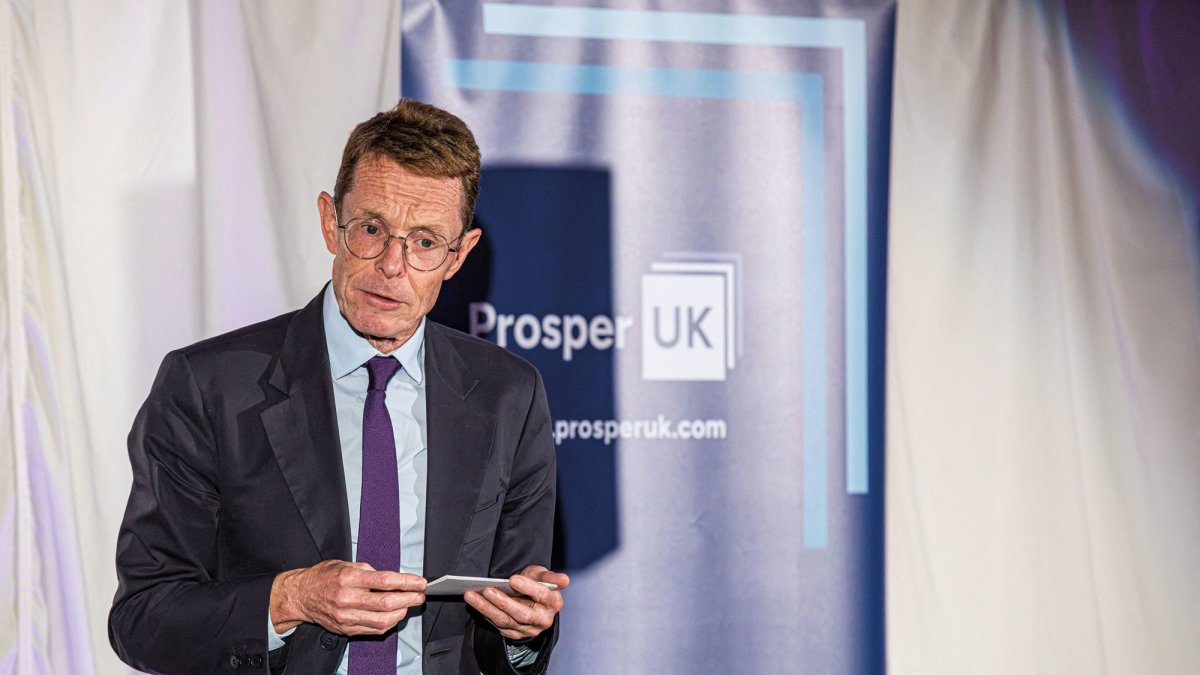
Andy Street speaks at a Prosper UK event in September 2026 (John Rose/Alamy)

10 min read
Prosper UK is on a mission to pull politics – and the Conservative Party – in a centre-right direction. Will it succeed? Noah Vickers reports
In a hotel bar in Newbury, confusion reigns. Seven men have gathered in the bar’s function room to talk about how they can play their part in a new political movement. The trouble is, several of those attending aren’t entirely sure what this movement is, or what its actual objectives are. It’s called Prosper UK and it has so far attracted almost 30,000 supporters across the country.
Co-chaired by former West Midlands mayor Sir Andy Street and the ex-leader of the Scottish Conservatives Baroness (Ruth) Davidson, Prosper styles itself as a “modern, forward-looking centre-right movement with the ideas, energy and reach to shape the country’s next chapter”.
Its mission statement is that “the UK deserves better than a choice between Andy Burnham and Nigel Farage at the next election”, and it is explicit in wanting “the Conservative Party to provide that alternative”.
However, the group argues, the party can only do so “by appealing to the centre ground and reaching beyond its traditional base, to voters who have backed other mainstream parties and to voters who have drifted away from politics altogether”.
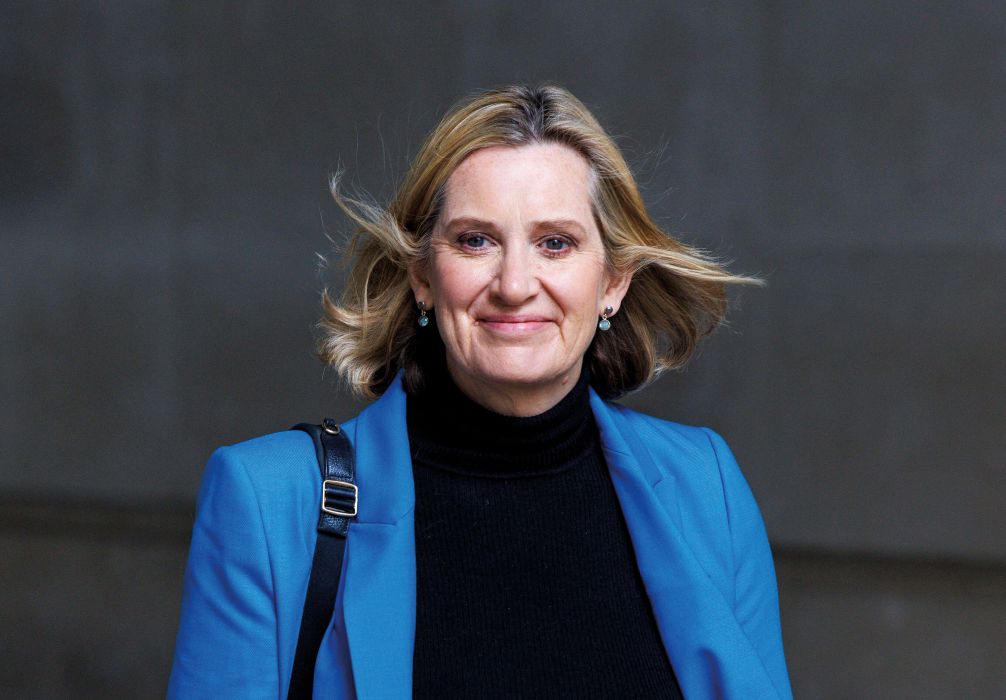
Prosper’s top team includes Amber Rudd, Sir David Gauke, Lord Barwell, Margot James and Sir David Lidington – the former home secretary, justice secretary, Downing Street chief of staff, digital minister and de facto deputy PM to Theresa May respectively. It’s an impressive roster, but one that some believe is also indicative of Prosper’s limitations.
The group “looks a bit like a network of ex-MPs wanting to go back to the ‘golden years’ of Cameron”, says one current Conservative MP, which “doesn’t really resonate because a) they weren’t that golden, b) the political landscape is unrecognisable, and c) the party of 2026 is unrecognisable”.
Notably, all of these senior figures were opposed to Brexit during the 2016 referendum – an event that dramatically ruptured the Tories’ voter coalition and later forced several of the party’s leading lights into the political wilderness. Gauke and James, for example, were both stripped of the Conservative whip by Boris Johnson after they rebelliously attempted to prevent a no-deal Brexit, while Rudd voluntarily surrendered the whip over the same issue.
Though Prosper does not yet have a formal policy on Britain’s relationship with Europe, it is currently consulting with its supporters on it, asking for their “practical views on where co-operation with the EU should be strengthened and where the UK should remain independent”.
Prosper’s launch, back in January this year, was partly drowned out by Tory MP Suella Braverman deciding to defect to Reform UK on the very same day – but the planning had been in place for many months.
“Andy was the person who did the ring-round and really set the ball rolling… sort of late summer last year, getting people together in August and September,” says Davidson.
“Part of the frustration had been that we saw Labour come in, they were talking about growth, but actually doing policies that were the antithesis of that.”
She adds, carefully: “The Conservative Party was picking itself back up off the ground and was talking a lot in the culture kind of space, rather than the economic space at the time.
“We all coalesced around a simple truth, which was we felt there was a gap in British politics and that millions of voters, even coming out of the back of an election where they’d all had their say, still felt politically homeless.
“We wanted to bring those people together and take that conversation out of the Westminster bubble – take it into the West Midlands for Andy, Scotland for me, out into communities across the UK and start listening to why people felt they were so disenfranchised.”
Sir Andy, drawing on his decades in senior roles at John Lewis, says he would not have launched Prosper if he were not certain there was an “addressable market” of people ready to back them.
He is also clear that Prosper is not a think tank or a pressure group – it is a ‘movement’, which is gathering support not just from disaffected Conservative voters and members but also from people who voted for and currently support other parties, like Labour and the Lib Dems.
As well as publishing policy reports, Prosper is holding regional events across the country, and it is hoped that this will eventually give rise to a nationwide structure of local Prosper branches – starting, naturally, with the places where they are accruing most members.
Hence, Newbury – a Tory/Lib Dem swing seat which swung decisively away from the Conservatives in 2024.
Of the seven men gathered in the hotel bar – most of whom look over the age of 50 – four are Conservative members or supporters, one is a former Conservative who has moved to the Lib Dems, and two say they are non-aligned centrist voters.
At least a couple of the group say they first heard about Prosper thanks to Rory Stewart mentioning it on The Rest of Politics, but they are less sure about how exactly it intends to fight for the centre-ground perspective they hold dear.
The assembled supporters are given a brief overview of ‘Rethink the Rates’, a campaign Prosper is running to reform Britain’s “outdated, unfair and broken” system of business rates. But no sooner have they been asked whether anyone would be willing to assist in that campaign, the questions begin.
“What I would like to know is, is this a cross-party group?” asks one attendee. “My recollection is that when I first heard about Prosper UK, it was intended to be cross-party, but I’ve only heard the word ‘Conservative’ so far in this room.”
Another chimes in: “Is it another party? We don’t want a further dissolution of the parties under first-past-the-post.”
“I haven’t got this straight in my own head,” says a third attendee, a little later on. “Some of this messaging is quite confused, regarding where Prosper is and where it’s going.
“Is it politically aligned? Isn’t it politically aligned? Is it speaking for business? Is it speaking for centre/centre-right politics? What is the driver and how do I sell this to people?”
“I think that’s a real challenge,” a fourth supporter admits. “I’ve been to the higher-ups, saying, ‘You need clearer messaging, people’.”
Structurally, it could be argued that Prosper is not all that different to the Jeremy Corbyn-supporting Momentum movement, in that it has its own membership and is trying to steer a particular political party in a particular political direction.
“It looks a bit like a network of ex-MPs wanting to go back to the ‘golden years’ of Cameron”
Sir Andy points to a key difference: “Momentum was within the Labour Party, fighting for a particular version of what they believed in, but the whole point about Prosper is that it has to be additive to the Conservative Party…
“The minority of people who come to our events are existing Conservative supporters, so this is trying to extend the remit of the Conservative Party.”
Has Tory leader Kemi Badenoch welcomed any of what Prosper is doing?
“We wanted to make absolutely sure we spoke to Kemi before we launched,” Sir Andy replies.
“We wanted to explain what we were trying to do.
“Critically, on the day we launched, Ruth answered a very direct question from Laura Kuenssberg, ‘Do you want Kemi Badenoch to be prime minister?’ Answer: ‘Yes’, so let’s not try to disguise that…
“We explained to Kemi we were trying to be additive, trying to attract these people who perhaps the party wasn’t yet winning back – people who voted Lib Dem, people who lent their vote to Labour, and of course people who sat it out.
“So, this point about trying to broaden the church, bring them back so that we can have a Conservative government again, was there.”
But Sir Andy admits that Badenoch’s reaction to Prosper’s launch was somewhat on the “cool” side.
“I’m the leader of the Conservative Party, not anyone else,” she said when asked about Prosper in the week of its launch. “And it is what I think needs to happen that they need to support, because that is what Conservative Party members have voted for.
“Anybody who is trying to push an agenda that is not the platform I stood on is not being helpful.”
Sir Andy says he understands, however, the position his party leader is in: “She’s trying to do two things at once. She’s trying to reinforce the boundary with Reform and at the same time win back those people, so she’s got to be careful about too openly shifting to our view of the world.”
He adds: “Lots of her lieutenants in the leadership of the party have openly engaged and welcomed ideas coming forward.”
Prosper has produced policy papers on welfare, devolution, immigration and, more recently, a report on how young people should be helped in navigating a labour market reshaped by AI. It is also calling for reforms to make student loans fairer and for the triple lock on state pensions to be replaced.
How is all of this research being funded?
“If only there was one crypto-billionaire, it would be easy,” Sir Andy laughs. “It’s just coming from a relatively large number of – by political standards, currently – small donations from business people or individuals… We’re not in hock to anybody.”
Davidson adds that some of its signed-up supporters have donated either on a one-off or regular basis.
Under electoral law, Prosper is a members’ association, and is required to report to the Electoral Commission all permissible donations it receives from a single source which exceed £11,180 in a calendar year. As no single donor has yet reached that threshold, no declarations have been made so far, according to Prosper’s chief executive Simon Saunders.
In the meantime, a general election may still potentially be almost three years away. What else will Prosper do until then?
The answer may have slipped out at a recent Prosper event at Arundells, the former Salisbury home of Sir Edward Heath.
Asked by the former Conservative MP Ben Howlett whether Prosper’s growing supporter base could ultimately be used to influence Tory candidate selections, Sir Andy is said by Howlett to have rejected any suggestion of “entryism” but confirmed that Prosper does want to “help select council candidates and, over time, support people with similar views to come forward” as parliamentary candidates.
“Andy was describing something we are happy to be open about,” says Saunders, when asked about this by The House.
“Over time, we want people who share our outlook to join the Conservative Party, get involved with their local associations, support local candidates and, if they want to, put themselves forward as council or parliamentary candidates through the party’s normal selection processes.”
At the Conservative conference in Birmingham, Prosper is holding several events and receptions both inside and outside the secure zone, in an effort to reach not only conference-attending Tory members but also people interested in Prosper who happen to live in the West Midlands.
Despite its tens of thousands of politically homeless supporters, Prosper has ruled out ever becoming a political party of its own.
“We’re not here to be a shadow Tory Party. We’re not. That’s not what we were set up to do and it’s not what we wish to do,” says Davidson.
“We have a kind of plan up to the election. We will make sure that we have a plan for beyond the election as we get closer to it.
“But everything that we know, all of the research we’ve done, all of the amassed experience we have on our board – which is pretty substantial – indicates that if the Conservatives don’t fight in this economic space, they won’t have a huge amount of success at an election.”
>
Politics
Politics Home | London Tories Call For “Conversation” On Ending Sadiq Khan’s Free School Meal Scheme


The Mayor of London introduced the capital’s free school meal programme in 2023 (Jordan Pettitt/PA Images/Alamy)
5 min read
Senior London Conservatives have called for a “conversation” about scrapping Sadiq Khan’s free school meal programme if the party wins the mayoral election in 2028.
Under the mayor’s programme, launched in 2023, all state primary school children in London receive free school meals on a universal basis. In the rest of England, meals are provided to every child up to the end of Year Two, after which point they become means-tested.
Speaking at a Tory conference fringe event in Birmingham, Emma Best, deputy leader of City Hall Conservatives, said the party needs to have “a big conversation” about the scheme’s future because of its cost.
“I don’t think it’s a commitment that we need to say we’re stopping it right now, but I don’t think the public understand what is happening,” she said.
“Half a billion pounds is being spent on free school meals. Nothing’s free – those are taxpayer-funded meals…
“I’ve got three kids. They’re all getting free school meals. It’s a single parent on a council estate somewhere who is struggling every day, who is paying for my kids to have free meals.”
The mayor allocated £130m to the scheme in its first year, rising to £140m in 2024/25 and £148m in 2025/26. After the government expanded eligibility for free school meals nationally, a further £99m was allocated to the scheme for 2026/27. He has promised to keep the scheme in place for as long as he is mayor.
“This year, the Met [Police] is £200m short in their budget,” said Best. “That is a conversation we need to have. That is a point Londoners have to understand, first and foremost. Once Londoners understand the trade-offs, we can talk about what we’ll do about it.”
The Conservatives’ shadow minister for London, Gareth Bacon, told PoliticsHome he agreed with Best, particularly given that schools policy is not part of the mayor’s statutory remit.
“The truth is that education is not part of the mayor’s devolved powers. The mayor chose to try to invade that territory a year before the last mayoral election, and frankly it looked like an electoral gambit,” he said.
“At a time when he can’t police the streets properly, that seems like the wrong priority to me… If everything else was going very smoothly, that would be fine. It isn’t.
He continued: “He’s nearly doubled the council tax precept in the ten years that he has been mayor. The police haven’t got enough money to police the streets effectively, and he’s spending taxpayers’ money on things that aren’t any of his business. That’s not right.”
The next Conservative mayor, he added, should “make it clear to people, these are the choices – are you happy with this? Are you happy that the policing budget is lower than it should be at the same time that the mayor is spending taxpayers’ money on things that are not within his power?
The last Conservative mayoral candidate, Susan Hall, promised to keep the free school meal programme in place “for as long as the cost of living situation requires it”, though she later questioned whether the scheme should be “targeted” at poorer families – prompting criticism from Khan.
“The mayor wanted that kind of argument, that’s why he did it [introduced the policy] before the election,” said Bacon. “Had there been a crying need for it, I’m sure he would have done it ten years ago.
“He thought he was going to be under some pressure at the election, so I think he was reaching for things he thought might be popular, that he could do very quickly, and he came up with that.”
While Khan has not yet confirmed whether he will run for a fourth term in 2028, four Conservative members are running to be nominated as their party’s mayoral candidate.
The most well-known among them, the former home and foreign secretary James Cleverly, has avoided making detailed policy commitments, and his team declined to comment on whether he would scrap the free school meals scheme when approached by PoliticsHome.
One of his rivals, Westminster councillor Festus Akinbusoye, similarly declined to comment.
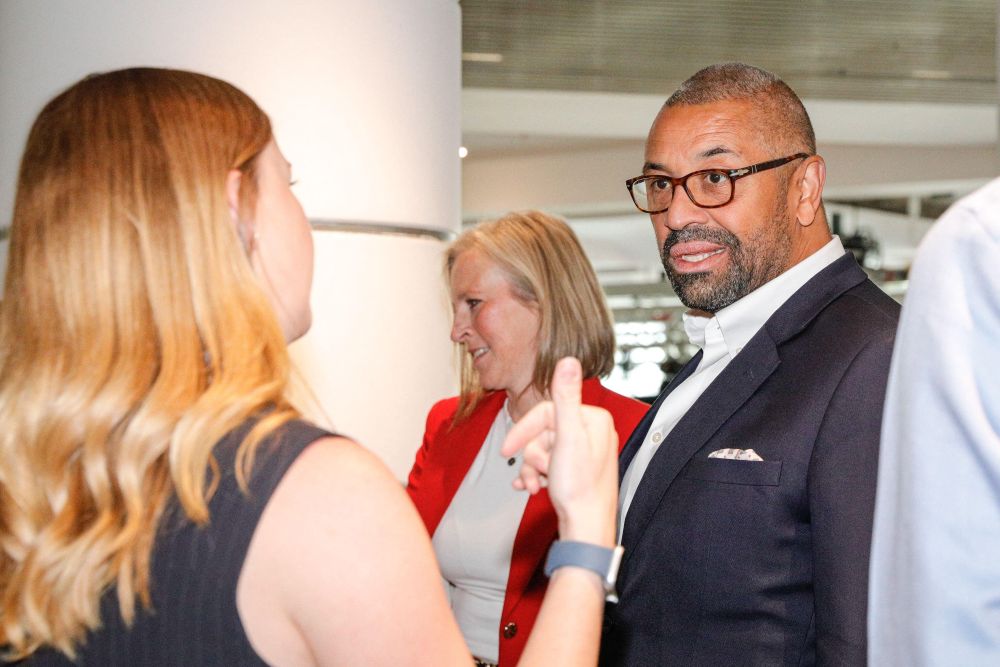
But London Assembly member Andrew Boff, who is on his seventh attempt since 2000 at securing the London mayoral candidacy, told PoliticsHome he would look at whether the scheme should be more limited.
“Free school meals should absolutely be there for children who need them. But Khan chose to make the scheme universal, including for families perfectly able to pay,” he said.
“With more than £500m allocated or approved over four years, we have to ask whether that is the best use of scarce mayoral resources. I would protect support for families who need it, while reviewing whether better-off households should continue to be subsidised.”
Alex Challoner, a party activist also seeking the nomination, went further by saying he would remove the scheme in its entirety.
“Sadiq Khan has spent almost half a billion pounds playing education secretary while the basics of running London go undone. Every pound of that is a pound not spent on the problems only City Hall can fix,” he said.
“The best way to put money in Londoners’ pockets is a good job with rising pay. As mayor, I will make London the easiest city in the world to invest in, so businesses build here, grow here and hire here.
“Parents deserve a mayor focused on the economy their children will work in, not one chasing headlines.”
>

‘Soul Patrol’ Trailer: Black Vietnam War Veterans Reckon with Past

‘Verity‘ Movie House: Location, Design of Colleen Hoover Fever Dream

Love Through a Prism Anime Gets Novel Adaptation – News
-

 movies5 months ago
Search For Canadian TV Actor Stewart McLean Now Homicide Investigation
-

 Fashion9 years ago
These ’90s fashion trends are making a comeback in 2017
-
Fashion9 years ago
According to Dior Couture, this taboo fashion accessory is back
-
Fashion9 years ago
Model Jocelyn Chew’s Instagram is the best vacation you’ve ever had
-
Fashion9 years ago
Emily Ratajkowski channels back-to-school style
-
Fashion9 years ago
9 Celebrities who have spoken out about being photoshopped
-

 Anime4 months ago
Rurouni Kenshin: Hokkaido Arc Manga Takes 1-Issue Break – News
-

 Anime3 months ago
HIDIVE to Stream English Dubs for The World Is Dancing, The Forsaken Saintess and Her Foodie Roadtrip in Another World, The Dangers in My Heart: The Movie Anime – News