
Anime
Battle of the Blue Archives – This Week in Mobile Games

Hello, and welcome once more to the latest edition of the column! Due to having to submit the last issue for publication a bit earlier than usual, I wasn’t able to incorporate much news from the 2026 Tokyo Game Show. And amidst a crunch period related to the release of Fire Emblem: Fortune’s Weave, I didn’t get the chance to watch the announcements as they happened. Jean-Karlo ran down some of the more notable announcements on the console and PC front, and while I spent some time combing through the latest, TGS was surprisingly light on big mobile news, at least of the kind that gets space right here on:

Astrae Oratio and Fareidolia Strut at TGS
While big on-stream announcements were a little bit scarce at TGS 2026 (beyond some interesting-but-not-showstopping new titles like Sanrio Kawaii Me Live! and Fragaria Memories), the show floor offered playable demos of two games on many anime otakus’ hype list: NC and Dynamis One’s Astrae Oratio and Nexon‘s Fareidolia, both due out in the near future on mobile and PC. These two titles are notable because they both have deep roots growing out of Blue Archive, Nexon‘s bishoujo gacha game, and one of the biggest things in the subculture scene this side of Kantai Collection.
Astrae Oratio is the game that’s farther along, having entered a short closed beta test period just last week and with its release window seemingly set for sometime this year (or early next). Publisher NC has fully kicked off the game’s promotional cycle, too, releasing new trailers and previews for both the Japanese and Global/English editions and aiming for a simultaneous worldwide launch. Prior to all this new info coming out, Astrae Oratio was notable mainly for its origins. As mentioned back in May when NC unveiled its official title (and discarded the Project AT codename), Astrae Oratio is developed by Dynamis One, a studio founded by developers who once held key positions on Blue Archive‘s development team at Nexon, including Blue Archive‘s former director, lead scenario writer, art director, and other notable creatives.
Unfortunately, the circumstances of the staffers’ departures, and of its initially announced debut game, Project KV (which was cancelled barely a week after it was announced after igniting a public furor over its similarities to Blue Archive), proved controversial enough that South Korean authorities got involved, with studio leadership currently under investigation over accusations that they unlawfully poached development materials related to an unreleased Nexon project called MX Blade. While there’ve been no publicly announced results from that investigation so far, much of the curiosity surrounding Astrae Oratio and NC’s backing of Dynamis One stemmed from that bit of scandal.
Now, though, the game can at least be seen on something approaching its own merits, and I must say that it makes quite the first impression. Though I didn’t get into the closed beta test, footage that’s emerged from it has revealed a game that seems to have a firm handle on the intriguing sensibilities and cutesy foundations that helped propel Blue Archive to its lead player in the “subculture game” (read: games designed to bait anime nerds and similar otaku) space. In fact, it wouldn’t be reductive to describe Astrae Oratio as “Blue Archive, but about witches instead of vaguely angelic students.” The game trades in the ultramodern urban aesthetics of Kivotos for a more specific place and time: Tokyo, in the early years of Japan’s Heisei era, which started in 1989. For Astrae Oratio‘s “Reisei era,” That means boxy cars, blocky electronics, CRT monitors and TVs, headphones with fuzzy foam earpads, constant shots of Tokyo Tower, and an art style that blends flashy, contemporary anime visual sensibilities with callbacks to the popular character design tropes millennials grew up with. The early-game tutorial characters even have a main menu theme that sounds a heck of a lot like the opening to Cardcaptor Sakura.
In terms of gameplay, Astrae Oratio seems to pull a fair bit from how Honkai: Star Rail does battles, but mixing in character-switching elements from fighting games and other real-time combat systems. Players need to attack an enemy while anticipating and countering their moves on a timeline, with what look like timing-based dodge and parry mechanics to spice things up. I’ve quite enjoyed Blue Archive, but acknowledge that the game feels a bit like it’s in something of a slump, trying to recapture some of the momentum it lost in earlier years and hold onto the goodwill Nexon jettisoned when recent changes to the gacha mechanics angered Japanese fans (and Global fans, by extension).
But if Astrae Oratio seems about ready to exit the gate with all cylinders pumping, seemingly targeted to dethrone its predecessor-turned-rival, Nexon‘s Fareidolia looks like the type of game to try to make space beside Blue Archive rather than take its seat. That makes sense, since it’s coming from the same part of Nexon: internal Studio Io Division. Not too much is known right now about how Fareidolia will turn out, but it’s definitely not a mere Blue Archive spinoff. In fact, judging by Ken’s account of the playable demo at TGS, it’s as different from Blue Archive as Arknights Endfield is from Arknights.
The demo at TGS was pretty much restricted to Fareidolia‘s combat, and where Blue Archive is an isometric auto-battler, with little hands-on control beyond deciding when and where to place a character’s skills, Fareidolia is a hybrid turn-based tactical game reminiscent of something like Sega‘s Valkyria Chronicles. Units move freely in a battle space, and positioning plays a key role in making sure a character’s skills have optimum effect.
The demo didn’t have much to indicate what Fareidolia will be like outside of combat, but early reporting and teasers suggest that the game’s got life sim elements to focus on alongside the combat. Just a handful of playable characters have been revealed so far, and all cohabitate with the player at Twilight Hall, a dorm of sorts that serves as a living space where the player bonds with their squaddies as they solve problems around a mystical world called Anima City, one that blends in Showa-era visual elements, like retro-looking tech and architecture enmeshed with more modern conveniences like smartphones and vending machines.
While most bishoujo gacha games in this vein tend to limit interactions to scripted animations or side stories, reports from Japanese news sites say that Fareidolia‘s daily life segments also feature an option for voice recognition, allowing players to address characters by name and call out to them while they lounge around onscreen. They’ll also be able to select dialog choices in conversations by reading them aloud. If it works (and hopefully isn’t being used to spy on you), it could be a fun immersion-boosting feature. Despite my own dedication to staying muted in as many calls as I can stand, I’ve always had a soft spot for voice-control games, ever since gimmicky titles like Lifeline and Tom Clancy’s Endwar let you talk to computers and control a game while doing so.
Right now, Fareidolia‘s looking more like a work in progress than a game that’s close to any real release window, but if nothing else, it does at least seem to promise a potentially unique experience for fans looking for more than “Blue Archive 2.”
Maiden’s Corner Mini-Edition: Love and Deepspace Promotes Literal Toxicity
One way to keep your game at the top of mind is with attention-grabbing promotions, and that’s an assignment that Love and Deepspace‘s social media team seems to understand well. It’s well understood that LADS rides high on spicy, sexy teaser clips, but it also makes headlines when the team in charge of the game’s Twitter account implies that what’s on offer is too hot for public consumption, as it did with summertime promos from earlier this year, opting to use saucy stick figures instead of footage from the game.
All that said, the latest promo might have backfired a little. On September 29th, the official Love and Deepspace Twitter account launched a web-based “Drink Event,” asking players to suggest ingredients to add to a handful of “Shimmering Blend” mocktails to share with their love interests.
Shake, swirl… and take a sip! One taste of this Special Blend🍸️ and you won’t forget it.
Exotic Fruits picked together are blended into a taste of happiness.
A little of this, a little of that, and one last must-have ingredient…?
🍸️What secret ingredient would you add to this Special Blend made just for him?
🎁Feel free to post with the hashtag #SleeplessBanquet or share in the comments. You can share text, screenshots, or photos!
We will randomly select 5 Hunters to receive a redeem code for [Diamond*100, Stamina*100, and Gold*10,000]!
———
🪐Official Discord: https://t.co/hKmnBAbbgu
🪐Download and Log in Now: https://t.co/bNEP8yM6bZ
#LoveandDeepspace #ANightThatNeverEnds— Love and Deepspace (@Love_Deepspace) September 29, 2026
The mocktails themselves were little more than cutesy juice mixes to serve as cover for a light raffle entry contest, but the promo quickly attracted attention outside the LADS-player sphere for suggesting garnishes of Datura and Fire Lily for two of the drinks. Though garnishes aren’t generally meant to be eaten, Datura and Fire Lily are, in real life, quite toxic plants, and shouldn’t be put anywhere near a person’s digestive system. The post was hit with a warning via Twitter‘s user notes feature, and the account also issued a “Safety Notice” via quote, advising players not to attempt to recreate or consume the drink recipes in reality.
While the kefuffle was ultimately rather harmless, it’s a bit of a shame that the drink recipes themselves are entirely fictional. I still remember the early 2020s, when official brand accounts helped spark a surge of interest in game- and anime-themed cooking pushed by recreating popular fictional food items for home-bound fans to try, like LeBlanc Curry from Persona 5 or Sekiro‘s Ohagi rice balls.
Heaven Burns Red Summons the Phantom Thieves to the Global Edition on October 8th
It took a little while, but the global edition of Wright Flyer Studio and Key‘s Heaven Burns Red finally has a date for the localized edition of its Persona 5 Royal crossover. Operation Takanawa Mementos ~Wake Your Heart~ will launch on October 8, 2026, just a few months after it launched in Japan. The global edition of Heaven Burns Red operates on an accelerated schedule to help it catch up after spending years without a global launch. Players will be able to roll on the gacha for Queen (Makoto Niijima) and Violet (Kasumi Yoshizawa), and participation will grant players a copy of Morgana.
I highly recommend folks give Heaven Burns Red a bit of a try, even if it’s a lot of visual novel to read through. Of the many VN-adjacent gacha games out there, I consider HBR among the best in the scene for character writing, and it benefits from being the baby of Key luminary Jun Maeda. The game’s main story is also on the road to ending for good, at least in Japan, so there’s no danger that you’ll be getting an incomplete experience.
Chaos Zero Nightmare To Tease its 1st Anniversary in October 10 Showcase
Publisher Smilegate is gearing up to celebrate the first anniversary of Chaos Zero Nightmare, its gacha deckbuilder. More details will be released in a showcase broadcast set for October 10th, but the teaser trailer promises a round of spooky stories and something that might strike fear into the hearts of CZN players: a sinisterly smiling Renoa.
As passe as primarily 2D gacha RPGs seem to be these days, I’ve always somewhat preferred that style in my mobile games over the slick full-3D presentation of the market leaders. And when a game is in 3D, the more its style seems to emulate 2D, the more I’m drawn to it (Astrae Oratio is a strong example, to borrow an upcoming title). Though I never really got into Chaos Zero Nightmare, I quite liked the unusual choice of angles used for its battle sequences. It’s just a bit disappointing it didn’t hold to its initial horror and occult-themed roots as strongly as it could’ve, though if nothing else, the spooky story-themed Nightmare Carnival Event might bring some of that vibe back.
Punishing Gray Raven Launches Date A Live V Crossover, with Kurumi Tokisaki Joining
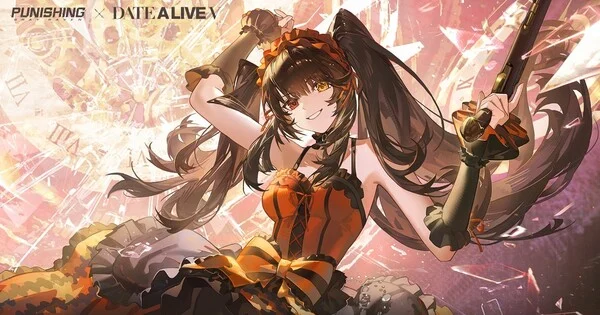
Though Kuro Games is better known these days as the Wuthering Waves developer, Punishing Gray Raven remains a vital, if lower-key feather in the studio’s cap. And if one’s a WuWa main, a glance at PGR does show where the larger title’s appetite for crossovers came from. The latest PGR event, which launched on September 29th, hooks players up with Kurumi Tokisaki, the fan-favorite time-manipulating heroine of Date A Live V.
As in other Date A Live media, Kurumi shows off her signature move, Zafkiel, to teleport around the battlefield and shoot the heck out of her opponents with antique flintlock firearms. Despite not making a huge impression when it was new to the seasonal anime churn, I’ve always found Date A Live to be a series with surprising endurance, coming back again and again despite years of separation between some of the seasons. And whenever the series makes news again (such as the recent announcement of Date A Live F Last Date), Kurumi-lovers are quick to proclaim (or re-proclaim) their love for the heterochromatic yandere.
Mobile MonHun Returns on October 29th with Monster Hunter Outlanders
Long before phones could conceivably play “real” games, Monster Hunter was for many the epitome of modern online “mobile” gaming. It’s hard to understate how influential the ability to play Monster Hunter on PSP with friends was for a huge chunk of the gaming audience (particularly in Japan, where the phenomenon sparked an entire game industry movement searching for hunter-likes built around local wireless multiplayer).
Now CAPCOM and Timi Studio (of Honor of Kings fame) are looking to make a Monster Hunter for the modern mobile age with Monster Hunter Outlanders. Rather than the augmented reality joint Monster Hunter Now, Outlanders bills itself as a real, “proper” Monster Hunter game centered around combat with massive beasts and mastering a variety of wild weapons.
The wrinkle here is that, like many a free-to-play mobile game, this one’s supported by the gacha. In addition to your standard customizable player character, you’ll be able to roll the banner for other adventurers with their own identities, looks, and playstyles. You can set these gacha-recruited characters as party members in an approximation of the classic co-op party or control them directly by putting them in the lead. It remains to be seen whether that style of monetization (and the design-warping pressures it can put on any game) can really translate “classic” Monster Hunter gameplay to the modern mobile environment, but we won’t have long to find out if that’s the case.
Hatsune Miku: Colorful Stage! Set to End its Main Story by 2029
I guess we can file this one under “Wait, it had a story?”
I am of course joking, but to someone who hasn’t played the game or paid it much attention since it launched in 2020, Hatsune Miku: Colorful Stage! (also known as Project SEKAI: Colorful Stage) was nothing more than a mobile, free-to-play Vocaloid-themed rhythm game in the vein of the Project DIVA titles. Such games (and Vocaloids in general) aren’t known for character-driven narrative appeal. Nevertheless, Colorful Stage! now has an ending window for its main story, according to an announcement by producer/director Yūichirō Kondō. Japanese players can expect each group’s core storyline to end by the beginning of 2028, with global players seeing the same by 2029.
One must wonder, given the usual expectation that free-to-play and live service games are meant to go on for as long as they make money, what prompted the announcement. According to Kondo, this ending was always the plan, but, not unlike the Heaven Burns Red story news, the conclusion of the main story doesn’t mean the game is shutting down. Side stories and epilogues will still be added to the game over time, alongside the usual slew of new songs and cosmetics.
For what it’s worth, I think announcing endings like this is a smart move. With the gacha and live service markets cooling off, even in hotspots like Japan and China, more developers and publishers are recognizing that these games, even the best of them, can’t grow eternally, and are developing games with an eventual ending in mind. Having that plan in place from the start helps avoid the dissatisfaction of seeing a beloved game unceremoniously put down, and also potentially gives games a second chance in the future when they pull a Final Fantasy Resonance and get rebooted or rereleased as premium offline titles later on.
Let’s close out this edition with a few news tidbits:
- Restaurant management sim One Piece: Grand Gourmet has a full release date now, and will launch on October 23rd. Rather than the traditionally fighting-focused One Piece game entries, Grand Gourmet‘s a cutesy pixel art character-fest putting players in charge of making their restaurant, Baratie Number Two, the best dang eatery on the Grand Line and beyond.
- Looking for a bit of classic gameplay without having to install an emulator? Konami‘s got you covered, as a mobile port of the original Castlevania is available for free on Android and iOS, in celebration of the series’ 40th anniversary. Console and PC players can also look forward to an entirely new game, Castlevania: Belmont’s Curse.
- Elementa Games’ open-world detective adventure Silver Palace has opened signups for a third round of closed beta testing, with a recruitment survey form open until October 10th. The test date has yet to be announced, but participants in the 2nd round of testing will be grandfathered into this one. This will also be the first testing round for players on Android and iOS (the previous two were PC-only). This test also includes cross-save functionality, allowing players who do get in to play across both mobile and PC, if they wish.
- Developer Sloclap has announced a mobile port of Sifu, its martial arts-themed single-player action game, where getting killed lets you come back, wiser and a bit older. The game is out on PC and consoles, but will hit iOS and Android on October 12th. It’ll be a premium release, costing about $8 USD on the North American stores.
- Truckful, a neat-looking, physics-enabled truck delivery game, will hit on October 9th and challenge players to make deliveries over treacherous terrain and past mysterious threats in a rickety truck that they outfit for the occasion. The game’s a multiplatform release, but notably won’t be hitting iOS at the time of its launch. Instead, it’s a PC and Android exclusive for the time being.
And that’s it from me for now. Despite the prevailing narrative is one of seemingly everybody scrambling to get out of Grand Theft Auto‘s way, it’s looking like a pretty crowded few months for games, particularly if you keep mobile releases in mind. Keep yourselves safe, and I’ll see you next time.
>
Series also streams in Canada, Latin America, Australia, New Zealand, South Africa, India, Southeast Asia, Europe

© BIRD STUDIO/SHUEISHA, TOEI ANIMATION
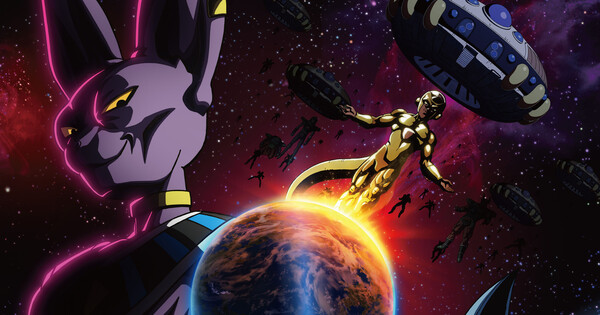
Crunchyroll announced on Monday that it will simultaneously stream the Dragon Ball Super: Beerus television anime series in Japanese with English subtitles on October 11 in the United States, Canada, Latin America including Brazil, Australia, New Zealand, South Africa, India, Southeast Asia, and Europe.
The series will begin airing on the Fuji TV channel and its affiliates on October 11 at 11:15 p.m. JST (10:15 a.m. EDT), taking over the timeslot of the One Piece anime, which aired its last episode for this year on September 27. The series will also stream on Amazon Prime Video and U-NEXT streaming services in Japan 30 minutes after its broadcast at 12:15 a.m. JST.
Netflix will also stream the series in the U.S. on October 17, and is listed to start streaming on October 14 in selected areas/countries.
The first episode will also screen in advance at the Dragon Ball Super: Beerus Special Panel at New York Comic Con on October 8.
The staff for the new anime includes:
The anime will again feature Kōichi Yamadera as Beerus.
MEGATERA・ZERO performs the opening theme song “ONOGAMI,” and VK Blanka performs the ending theme song “Kan Peki No Peki.”
Akio Iyoku stated the work started a few years ago and is an “enhanced” edition of the Dragon Ball Super anime that features a reconstruction of the story, and includes new and redrawn cuts.
The official announcement of the anime stated:
The project features extensive new cuts, revisions to existing scenes, a complete re-rendering of all footage, newly recorded dubbing with added score and sound effects, and a full reconstruction of the story. Living up to the name ENHANCED, this edition employs the latest visual expression to deliver greater power and immersion across all scenes, especially the battle sequences. The result is an ENHANCED edition that expresses Akira Toriyama‘s original idea and worldbuilding more accurately, that will be broadcasted with highly satisfying quality.
The anime staff stated, “the anime Dragon Ball Super … is set to begin anew as Dragon Ball Super: Beerus in Fall 2026.”
The staff describes the story:
Several years have passed since the fierce battle against Majin Buu, and Earth has finally regained a brief moment of peace. At the same time, Beerus, the God of Destruction, awakens from his long, deep sleep. Even Kai and Supreme Kai, aware of Beerus’s overwhelming power to destroy entire planets, watch his awakening with great fear… Meanwhile, Beerus hears rumors of a Saiyan who defeated Frieza—and suddenly appears before Goku.Targeted by Beerus, the strongest being in the universe, Earth is in grave danger. Thus begins an Earth-shattering cosmic battle between the God of Destruction and Goku and his allies—a conflict that will shake the entire universe.
Dragon Ball Super premiered in July 2015 and aired for 131 episodes until March 2018. Funimation and Crunchyroll streamed the series as it aired, and Funimation released the series on home video. Funimation debuted the English dub to its streaming service in December 2016. The English dub premiered on Adult Swim‘s Toonami block in January 2017.
Sources: Press release, email correspondence
>
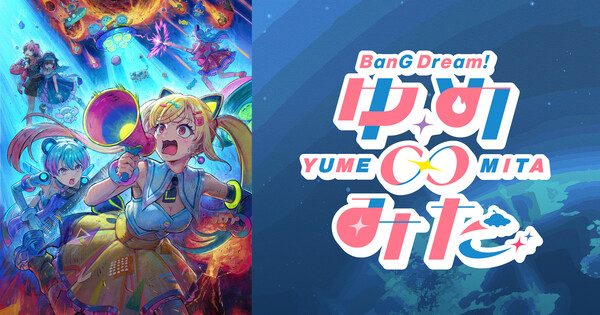
Since its reinvention with It’s MyGO!!!!! in 2023, the arc of BanG Dream! has bent toward stories that get people talking. Obviously, engagement is a measure of any story, but in this current era of BanG Dream! specifically, it feels like it’s been pushing for more surprises! More swerves! More drama! YUME∞MITA, the latest installment in that era, seems similarly engineered. The series debuted with a triple-length premiere, with multiple episodes revealing seemingly unsavory elements about lead character Arale, before showing a successive surprise with the exact nature of full-on villain Viola. These are big, wild swings in line with the series that previously played viewers with Soyo’s self-satisfying machinations or Uika’s incestuous identity theft.
YUME∞MITA doesn’t actually start that way. The anime builds up another distinctive voice to swing from, and it’s every bit as built for getting attention. This series is big and loud, exuberance expressed by Arale in the new band’s riotously colored virtual setting as characters fly, float, and ping-pong around the screen. It’s slapstick energy not really seen in BanG Dream! since the MyGO!!!!!/Mujica changeover. At times it more recalls BanG Dream!‘s former sister series D4DJ (if anyone remembers D4DJ) than anything from the recent girls band anime. And of course it does come off, at least partially, like one more device in YUME∞MITA‘s approach to storytelling, deploying the dramatic plot twists against the extreme-energy elements with such force as to cause whiplash.
What needs to be qualified about the swerves of It’s MyGO!!!!! and Ave Mujica is that while they certainly made for wild fandom social media posting, they weren’t written into the story for their own sake. These were parts of the plot pointedly built up and paid off by Yuniko Ayana, the scribe who had been with BanG Dream! practically since the beginning. But Ave Mujica was also Ayana’s swan song with the franchise, and with her bowing out, YUME∞MITA falls into new hands. Well, old new hands. Series story composer Midori Gotō has been backing Ayana up since the second season of BanG Dream!, writing several scripts across the seasons, now coming to the forefront with YUME∞MITA, and accompanying a once-again refreshed approach to the series.
The result feels at once like even more of a clean break from the initial seasons than It’s MyGO!!!!! did, even after its premiere brought in some of the heavier, headier elements that made those entries stand out. That’s a good thing at its base. BanG Dream! has thrived on reinventing itself before, so it makes sense to continue doing so rather than returning to a rut of darkened drama continuously (and not for nothing, but MyGO!!!!! and Ave Mujica are scheduled to return anyway). It does give YUME∞MITA the sense of using all its energy to throw several elements at the wall, however—these new ideas aren’t as refined, hence the sharp edges seen when the components clash.
Much of that is at the behest of the new technical setting. Placed alongside Akihabara and with the band primarily inhabiting a virtual world, YUME∞MITA tackles the modern subject of online fame for performers like no other entry before it. Arale didn’t simply break it off with her previous group; she was canceled after a seemingly damning video was leaked. The members of the newly christened Mewtype keep up with regular livestreams, and offhand remarks being interpreted by commenters in bad faith form a key component of the storytelling. The ways the lead characters incite and react to those elements define them. Arale is the easiest to grasp, given her conditioned propensity for putting all her feelings out there. She is, as it can be said, a terminal yapper, given to oversharing followed by seeming regret when she realizes what she’s done. Arale honestly rides a close line between the ways characters like this can feel too annoying in and of themselves, and those calculated walk-backs help a lot. Not because her apologizing for herself feels necessary, of course not. But rather, knowing her story, the audience is able to intuit that she’s backing up and clarifying out of fear of having her intent, tone, and true meaning misunderstood. Even with the unkind read that what was glimpsed in her cancellation video was 100% genuine, it paints a strong picture of someone who’s simply a bit tactless and regretful of her issues, rather than one who’s completely callous.
The other band members straddle these same lines between the real self and the perceived online persona—some breaking through more walls than others. Nonoka is possessed of the will to make sure everyone is happy at all times, with her own degree of tactlessness propelling it. It lets her barrel past disingenuous social media comments, while causing equal parts friction and harmony with her bandmates. Her demeanor is ostensibly opposite the withdrawn Yuno, whose arc is limited, yet still kind of remarkable in its execution. On one level, I appreciate the reasoning of her previous band breaking up simply because that’s what 90% of schoolkids do in that situation. But Yuno’s resulting withdrawn, impersonal nature is primarily communicated via her reliance on language-model chatbots to dismissively respond to her messages from her “friends.” She still composes all her music herself, straight from her heart; it’s just connecting with people directly she doesn’t believe she can do. Only when Yuno has grown more personable as a result of some of her bandmates (Nonoka) breaking down her metaphorical walls, does she realize that she always had the capacity to do what the chatbots weren’t particularly good at in the first place. Series like BanG Dream! benefit from new entries embracing ultra-modern amenities, and this is an arc that could only be accomplished in the era of this technology—and its vitriol for how poorly these chatbots perform at connections ultimately makes it sing as an engagement.
It’s not the only point. Yuno and Arale both have story segments predicated on surreptitious social media accounts, while Miyako’s status as an online public figure informs her own personality. Her initial recoiling at the extroverted exuberance of her bandmates feels like a trite enough trait. But as the series goes on and other interactions occur, Miyako becomes her own kind of amusing, ostensibly a cautionary tale against trying too hard to stop yourself from being cringe, and thus, being free. The irony is that her wallowing emo-isms and self-practiced puppet therapy are their own levels of chuuni signifiers, but the real reveal is that Fuji Miyako the anime character is but a vector for reactions by Fuji Miyako the real-life performer, artist, and social media poster, to project on with her feelings and experiences with another character. Which means it’s the last time to talk about Viola, since she necessitates doing so before following up with Mewtype’s final band member.
As far as elements made to elicit a reaction, Viola feels the most plain and, ironically, the most fresh for YUME∞MITA‘s material. Speaking personally, a true antagonist in a series like this is something I’ve longed to see since Saint Snow defiantly danced their way onto stage in Love Live! Sunshine!!, only to see these types of characters dodged or defanged time and time again. The third episode’s reveal of Viola as a true, scheming, mustache-twirling villain, prone to evil laughs and everything, is positioned as the most potent point of the anime making its obligatory swerve. And Viola really does go on to be a definitional pillar of the series. It’s not afraid to use her and play her up as outrageously as possible, though the writing does also know when to pull her back and keep her from overshadowing the proceedings. Whole episodes can pass by with nary a glimpse of Viola’s evilly grinning face, occupied instead by the interpersonal issues between the bandmates being resolved on their own. It’s clearly calculated, because YUME∞MITA also isn’t afraid of having Viola’s villainy intersect with its heavier elements—or directly enacting them.
Viola is the one behind Arale’s cruel online cancellation, which is revealed just in that third episode. But past the too-real rigors of social media, Viola’s manipulations of Ritsu ring extremely accurately of abusive relationships. It’s strikingly written, in such a way that might necessitate a warning for those sensitive to such elements, and also in a way that continues the tonal clashes that define YUME∞MITA. It is ostensibly strange to bounce from the visual slapstick antics of Arale or Nonoka in cyberspace over to Viola cruelly training Ritsu to hate herself. This is arguably an invocation of the emotional dimes fame can cause our interactions to turn on, but it’s no less jarring than the other examples in this show. Though it’s also no less cathartic when, partway through, Arale is able to unleash her earnestness to reach out to Ritsu and rescue her from her abusive situation.
What is there to say about Ritsu beyond her portrayal as a realistic victim of abuse? Her post-rescue rejoining sees her swerve very nearly into joke character territory. She reveals a gargantuan appetite as an ongoing gag. She betrays a lack of critical thinking that makes her the no-thoughts-head-empty butt of background humor while other conversations are happening. And she might be my favorite character in the whole series. The fact is that Ritsu being revealed as a whimsical goober is extremely funny a lot of the time, but also truly works as the repressed version of herself that Viola enforced for her group’s “image.” And so Ritsu reverting to simply sillymoding through her interactions is cathartic in her own way. She’s free to simply be, and not for nothing; that’s a thesis point of the whole anime. It’s how Miyako also frees herself from Viola’s influence. YUME∞MITA really is constructed of these kinds of contrasts.
While the presentation, with its prodigious colors and cacophonous at times character audio, is seemingly built around that resultant contrast, it never quite fits in a way that feels artfully intentional. YUME∞MITA almost feels sketch-based at times, if one sketch was Miyako and Arale eating a bunch of snacks followed by another sketch about Ritsu being driven to a psychological breaking point. Fun! Perhaps there’s less flow to it because there’s less musicality to this music anime. The group doesn’t come together to perform a full song until the seventh episode of the series, and it’s one of only a few across the entire run. This is calculated per the story, but also gives everything else less to lean on when the characters can’t let their feelings explode out into a musical number every few episodes. There’s nothing akin to the backing poetry of Tomori’s songs across montages as It’s MyGO!!!!! so skillfully deployed. The songs that are here are ostensibly constructed out of feelings the characters (particularly Arale) have struggled to articulate otherwise in-universe. And they’re good songs, with an aggressive pop edge plus coordinated synth sounds that make them feel very appropriate for the internet age. It really does beg the question of how YUME∞MITA could have functioned as a more fully musical arrangement, as opposed to recalling, unfortunately at times, the slow piecemeal assemblage of BanG Dream!‘s infamous first season.
What music is here being rich makes it a sigh of relief that the subtitles on Crunchyroll actually include the song lyrics. They also updated the captions to translate most on-screen text after earlier scares that they were skipping those. In general, the subs feel more comprehensible compared to the roughshod treatment Ave Mujica was unfortunately given.
I alluded to IRL Fuji Miyako’s posting through it as a point of interaction with YUME∞MITA, and perhaps that belies the way this series works best as “a ride.” Keeping up with the moment-to-moment posting of episodes, the intentional whiplash they invite, it’s fun. Following this new BanG Dream! is as fun as it has been since it started having characters grovel unglamorously with lesbian yearning or fantasize about shoving each other down flights of stairs. And YUME∞MITA‘s new-ish direction adds plenty of new tricks. But those tricks haven’t quite been practiced to perfection, and it’s still falling back on some of the older tricks.
The anime ends with the same kind of victory lap that previous seasons have tapered off on, the finale concert feeling like an especially egregious rush job (narratively; the production on it in the actual show absolutely sparkles). Viola’s arc coasts to a stop with strong musings on her actual relationship with Arale and a position that comprehends, if never forgives, her villainy. But she still steps off the stage with less resolution, leaving behind tempting potential for another path with Miyako if other seasons with other writing ideas are given the chance.
But the arc is still there, as it is for the other characters. I described what I found so charming and satisfying about Ritsu and Yuno’s storylines, but it covers the others, by degrees. Arale’s plot truly is a parable about the value of finding support networks that can then be extended to others. And the writing’s final word on the cycle of internet hater trends, while not applicable to all situations, is salient as it is satisfying in how it undoes Viola. Maybe it’s a commentary by this rotation of writers on their time with Megendai Mewtype now: there will always be the next thing, the next shift, the next swerve on the horizon. It’s far more valuable to enjoy the time together—build a bonfire, roast some marshmallows—than to stew about what you can’t have. There are strong veins of interpretation and analysis to be mined from YUME∞MITA. Those who came along for the ride already know that. It’s an exuberant exercise in new ideas, and in that respect I think it’s absolutely worth checking out if you’re a fan of BanG Dream!, especially the latter-day spin-off/reboots, and are curious about what other multitudes the series can contain. Just watch out for those extremely sudden key changes in this performance.
>
Series debuted with 2 episodes on Saturday

©入栖・神奈月昇/KADOKAWA/「マジカル★エクスプローラー」製作委員会
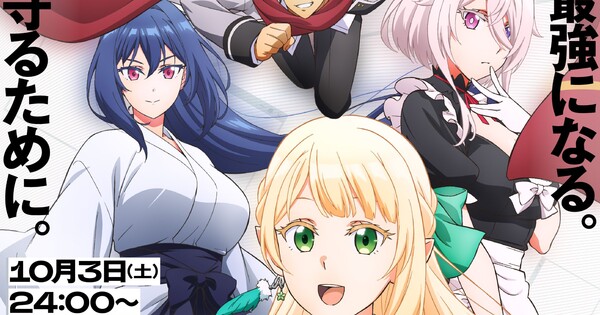
Crunchyroll confirmed on Monday that it has begun streaming a same-day English dub on October 3 for the first two episodes of the television anime of Iris and Noboru Kannatsuki‘s Magical Explorer light novel series. The company revealed the English cast:
The dub staff includes:
The series debuted with two episodes on October 3 at 24:00 (effectively October 4 at 12:00 a.m.) on Tokyo MX, Tochigi TV, Gunma TV, and BS11. The anime also airs on Tohoku Broadcasting, TV Aichi, and YTV.
Kazuki Ohashi (Shadows House) is directing the anime at WHITE FOX. Satoko Sekine (TsukiPro the Animation) is handling series composition. Ryosuke Kimiya (Grimoire of Zero) is designing the characters. Kenichiro Suehiro (Re:ZERO -Starting Life in Another World-) is composing the music.
ASCA performs the show’s opening theme song “Remedy” and the ending theme song “Double Wings.”
Additional staff members include:
Yen Press is publishing the light novel series and Yukari Higa‘s manga adaptation, and it describes the story:
Living in the world of Magical★Explorer, the legendary erotic game, sounds like a dream. Problem is, I reincarnated not as the lady-killer protagonist with his overpowered cheat skills, but as his unlucky comic-relief best friend!
The novel series debuted in February 2018 on the Shōsetsuka ni Narō website. Kadokawa began publishing the light novel series in November 2019. The 14th volume shipped on October 1.
The manga adaptation launched in Young Ace Up in August 2020. Kadokawa published the manga’s fourth compiled book volume on October 2.
Source: Crunchyroll (Liam Dempsey)
Disclosure: Kadokawa World Entertainment (KWE), a wholly owned subsidiary of Kadokawa Corporation, is the majority owner of Anime News Network, LLC. One or more of the companies mentioned in this article are part of the Kadokawa Group of Companies.
>

Inside Verity Book Adaptation: Crafting a Mystery of Uncertainty
Giulio Ciccone 'cannot reconcile' with European title loss after sprint finish vs. Remco Evenepoel

Alcon Eyes UK Series Adaptations Of ‘Insomnia’ & ‘Prisoners’
-

 movies5 months ago
Search For Canadian TV Actor Stewart McLean Now Homicide Investigation
-

 Fashion9 years ago
These ’90s fashion trends are making a comeback in 2017
-
Fashion9 years ago
According to Dior Couture, this taboo fashion accessory is back
-
Fashion9 years ago
Model Jocelyn Chew’s Instagram is the best vacation you’ve ever had
-
Fashion9 years ago
Emily Ratajkowski channels back-to-school style
-
Fashion9 years ago
9 Celebrities who have spoken out about being photoshopped
-

 Anime4 months ago
Rurouni Kenshin: Hokkaido Arc Manga Takes 1-Issue Break – News
-

 Anime3 months ago
HIDIVE to Stream English Dubs for The World Is Dancing, The Forsaken Saintess and Her Foodie Roadtrip in Another World, The Dangers in My Heart: The Movie Anime – News