
Anime
K Manga Adds Sen Sen Senki Manga – News

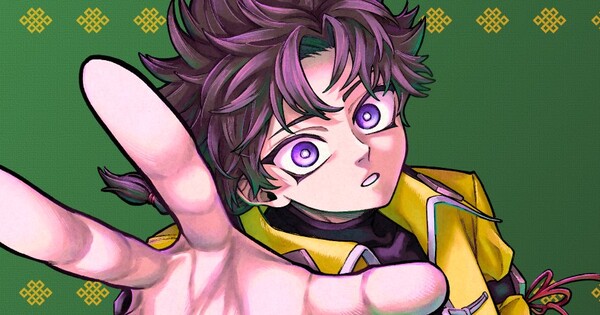
A-10, Ryūga Kawasaki debuted dark fantasy manga on June 10
Kodansha‘s K MANGA platform announced on Tuesday that it will add author A-10 and illustrator Ryūga Kawasaki’s Sen Sen Senki manga on October 13.

A-10 and Kawasaki debuted the manga in Kodansha‘s Weekly Shōnen Magazine on June 10. Kodansha published the first compiled book volume on September 16.
The dark fantasy story takes place during an era in which countries are divisive. After a warlord conquers and destroys a small country, a young boy named Raika is taken prisoner. After Raika escapes and encounters a mysterious sage, he vows to become one himself to save others from the warlord.
>
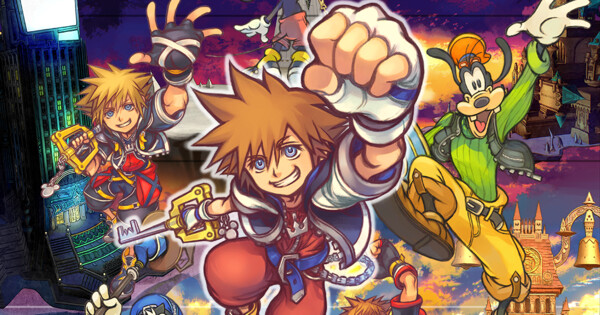
It used to be that when you first heard the name Kingdom Hearts, you would think of it as that kitschy crossover that was cool before crossovers were cool. Before Fortnite (which, man, talk about serendipity with that one) or guest characters making wacky cameos in other games, or anything else like that for that matter, Square Enix and Disney delivered this surreal, culture-bending experience where players were sandwiched between Moogles and friggin’ Huey, Dewey, and Louie as soon as the first hour of gameplay.
It was one of the wildest elevator pitches ever made between two media giants of their respective industries, and as stacked as the odds were that the idea could even find any mainstream success, Holy Nine Old Men Batman did it surely did that and then some—as it changed the landscape of gaming, mainly because it created a unique identity that doesn’t exist for the purpose of being a pipeline to Disney or Final Fantasy fandom, but rather, endeavoring to create its own brand of magic—a “Kingdom Hearts“- flavored magic. Fast forward through the years, however, the series is now infamous for the density of its extensive lore and carries the same intimidating barrier to entry as Eiichiro Oda‘s One Piece, Time skips and all. Much like Monkey D. Luffy’s high-seas adventures on the Grand Line, the cost of admission is most certainly worth it. After years of tepid compilations that were hastily thrown together like reheated leftovers, the Japanese RPG titan has crafted the most comprehensive package to have ever graced the franchise, milieu and all, with KINGDOM HEARTS Collection [I~III], a value-packed bundle that features ten titles from the series in chronological order, each entry optimized with the latest enhancements the current gaming landscape has to offer.

© Disney. © Disney/Pixar. Developed by SQUARE ENIX
While it’s easy to get into the many reasons why now would be the best time to experience Sora’s epic odyssey across various intellectual properties with KINGDOM HEARTS Collection [I~III], I’d honestly like to go into why this new release is also a worthwhile purchase for fans who likely already own all of the titles loaded in this new collection three times over. See, as wild as this may sound, Kingdom Hearts re-releases, at least when it comes to the first three entries on the PS2, were updated through a clunky transition of sorts when it came to the technical performance side of things. The main reason for that, along with Square Enix‘s negligent preservation efforts, is that the studio lost a significant portion of the master data from the source code for the titles internally; as a result, many post-PS2 collections featured a hodgepodge of the source programming mixed in with rebuilt code that Square Enix had extracted from the retail releases, which was mainly the textures, character rigs, and the settings of the levels. Anyone familiar with the product will tell you the differences were negligible, but still noticeable if you’re at all familiar with the source material, especially when it came to choppier framerate. Naturally, the technical enhancements in each subsequent compilation since the initial High-Definition re-releases have been significantly refined, with smoother rendering at a locked 60 frames per second, and a smattering of bugs being removed from the earlier HD ports. Suffice it to say, the iterations of the Kingdom Hearts titles in KINGDOM HEARTS Collection [I~III] have been polished to an even brighter shine.

© Disney. © Disney/Pixar. Developed by SQUARE ENIX
To start, the PlayStation 2 entries are all the most up-to-date versions in terms of content, with Kingdom Hearts: Final Mix, Kingdom Hearts Re:Chain of Memories, and Kingdom Hearts II Final Mix included. The main entries feature additional tweaks, including combat balancing like extra abilities or forms that weren’t in the original, new cutscenes that better flesh out the story, and new modes/difficulty settings for the sickos who can’t get enough of their Keyblade fix. These versions are not only present, but they’re further tuned with better lighting through HDR enhancements, and buttery-smooth precision in both Sora’s swordsmanship and movement, which not only makes the frenetic slashing more fun to engage with, but also helps with some of the more annoying areas of the game that got a little too cute with their platform puzzles too. With the added options of the Switch 2, Steam Deck, and other modern handhelds, these entries thankfully play just as well, with a consistent output of 60 frames per second, and a stable render of the visuals on screen that didn’t produce any sort of visual compression or screen tearing during my playtime with the PS2 entries, at least as far as my time with the Switch 2 version of KINGDOM HEARTS Collection [I~III] is concerned. Audibly, the sound is somewhat consistent with the visual enhancements, as the collection opted for CRI Middleware implementation this time around instead of the proprietary assembly that was in the last compilation, Kingdom Hearts: The Story So Far. The results offer enhanced playback and synchronization that match the ports’ updated graphical fidelity, along with native multichannel support that can be configured in the games directly, instead of the previous efforts having to rely on your hardware to do the upscaling for the surround sound feature.
I know there are quite a few other titles to address before getting to Kingdom Hearts III, but since they’re all of the portable entries, I want to touch on the enhancements the KH III subset of titles have received since they’re brand new candidates for the compilation treatment for the franchise.

© Disney. © Disney/Pixar. Developed by SQUARE ENIX
As was previously mentioned, the version of KINGDOM HEARTS Collection [I~III] being reviewed here is the Switch 2 version, so I had some hope that the version of KH III included in this package would be able to achieve the same locked 60 FPS performance the game masterfully outputs on PlayStation 5 or Xbox Series X. The sad truth of it is that players will get treated to the same “unlocked” setting the original version offered on older hardware like the PlayStation 4 Pro and Xbox One X. Fortunately, the upside is that unlike those platforms, Kingdom Hearts III on the Switch 2 does manage to actually reach 60 FPS far more often than those platforms, with the average falling in the realm of 40FPS, especially when docked. In portable mode, the target for 60 FPS is practically a Final Fantasy to hit (sorry, I really couldn’t help myself), as players often peak in the high 30s to low 40s, especially when there’s a lot of chaos on screen. I’d be remiss to say that there wasn’t some occasional choppiness to framerate as a result; thankfully, it’s nowhere near as bad as we’ve seen with the series before, and while it may not be ideal for some, the performance is perfectly stable when locked to its “stable” mode that runs the game at a reliably consistent 30 FPS. The technical performance matches the stand-alone Kingdom Hearts 0.2 – A Fragmentary Passage –, the sequel that first teased the Unreal Engine tech players would come to expect out of Kingdom Hearts III and the DLC, ReMind, even though they’re all much smaller in both scope and content. However, I can’t completely commit to the content statement, as I haven’t reached a completed status for all of the included games to see whether there are any new Easter Eggs beyond what we’ve already seen in the ReMind DLC.

© Disney. © Disney/Pixar. Developed by SQUARE ENIX
Now for the portable entries—as yet again—the execution of these titles is the most disappointing aspect of the KINGDOM HEARTS Collection [I~III] bundle, as Square Enix has seemingly learned nothing from their previous bundles and doesn’t offer anywhere near the same level of enhancement as the console entries.
Let’s start with the Nintendo DS titles; say what you will about the quality of Kingdom Hearts: 358/2 Days or Kingdom Hearts Re:Coded as games worthy of the property’s pedigree—they’re still unique games in the series that offered a unique take on the formula of Kingdom Hearts‘ gameplay that’s worth preserving, and let’s be honest, perfectly capable of being included in their own right as proper games for the collection.
Instead of properly remaking these entries as games, as the collection’s marketing strongly compels you to believe, Square Enix has packaged them as “movies,” where players can watch High-Definition versions of their chapters unfold within the overall story of Tetsuya Nomura‘s growing saga. These sort of shenanigans were barely acceptable the first time around, but the studio has done it multiple times. It doesn’t make any sense when you look at the sum of the parts they have put together and realize that they have all of the assets needed to remake the actual game portions of the titles for the bundle. Take Kingdom Hearts: 358/2 Days, for example: the flow of the game is actually quite simple and is very similar to that of Crisis Core: Final Fantasy VII in its structure. The story of Roxas’ days in Organization XIII relies on segmented missions that players can take on in varying priority to progress the story in different worlds from the first two games, with the big gimmick being a panel system where character skills, magic spells, and items need to be slotted into a puzzle board-like loadout as if you were Leon S. Kennedy trying to fit a Rocket Launcher into his attaché case. Honest to goodness, there’s a real game here, and Square Enix treats it more like a stilted movie that has a run-time that could keep up with friggin’ Avengers: Endgame. The same can’t exactly be said about Kingdom Hearts Re:Coded, both in terms of its place within the overarching narrative and its tedious gameplay, but even still—it’s still a game in its own right that deserves to be included in a compilation of games that are designed to gather the games of the Kingdom Hearts series, not the “movies.” Hell, even the recent Mobile game, Kingdom Hearts Union χ, would have been a great addition to supplement Kingdom Hearts χ Back Cover, as other projects that were previously destined to be exclusive mobile titles have seen a re-release on consoles or PC’s in some shape or form that, again, wasn’t a purely cinematic production that had the same appeal of watching an in-flight movie to kill time.

© Disney. © Disney/Pixar. Developed by SQUARE ENIX
This other gripe is more of a nitpick than anything else, but I think it bears mentioning since Square Enix is hyping up KINGDOM HEARTS Collection [I~III] to be THE Criterion Collection; the actual Game Boy Advance version of Kingdom Hearts: Chain of Memories should also be included in this fan-centric package. Konami has already shown how seamlessly immaculate the 32-bit handheld can be emulated with the excellent Castlevania Advance Collection, and the original version of the title is 32 MB in size, which is nothing in the grand scheme of the collection’s 80+ GB of data to install anyway. Again, far and away I know that Kingdom Hearts Re:Chain of Memories is the superior version of the two, but it’s just a big facelift; it’s almost an entirely different game, and one that’s still fun in its own right to play in that form—it’s a little strange that the option was never added, considering how little of an effort it would be in terms of bandwidth or performance.
As for the other portable titles in the collection, Kingdom Hearts: Birth by Sleep Final Mix and Kingdom Hearts: Dream Drop Distance HD, these entries are fully intact and loaded with all of the aforementioned bells and whistles that were packed onto the mainline entries, as they were both enhanced with a fluid framerate of 60 FPS, portable or docked, and a poignant surround sound output that will make any system sing with the series iconic chime and dramatic orchestral score, the technical flourishes in these versions alone are valid justification for the cost of the overall collection, especially when they can played in their intended portable format with the promise of the Switch 2 or Steam Deck.
I’ve brought up a lot of points about how fans of the series will find plenty of stock to double-dip with KINGDOM HEARTS Collection [I~III], right, but what about people who are brand new to the franchise? What makes Kingdom Hearts so good that it managed to spring the ‘Norted meme into Cultural Osmosis status?

© Disney. © Disney/Pixar. Developed by SQUARE ENIX
Lots, actually—the core foundation of its deep underlying RPG mechanics fluidly complementing the frenetic action-based combat of its “Keyblade” swordplay is the sort of stuff that both casual action fans and RPG sickos will eat up for meals and meals to come. Beyond the Final Fantasy characters, the franchise‘s iconic spells, items, and elemental affinities are also present, providing the groundwork for the other intricacies that are unique to the Kingdom Hearts property, like skill loadouts and contextual commands for unique attacks in battle. The formula has also managed to get iterated up with each new title, adding multiple new gimmicks that redefine the setup, like the Card-based action system of Chain of Memories, the streamlined Command Deck of Birth by Sleep and Dream Drop Distance, or the Attraction mechanic in KH III; these nuances not only build upon the hallmarks of its series’ established conventions, but also add new twists to freshen up the experience without compromising on the action that’s been proven to work. The only major drawback is that if you’re looking for large areas or world maps to explore, you’ll be disappointed by the hallway-esque, linear level design the franchise is infamous for.
Even when the series advanced to better technology, many of the larger areas available in Birth by Sleep, Dream Drop Distance, and Kingdom Hearts III can be empty areas that are borderline barren, and possess little to no points of interest to explore or uncover beyond the spacious room they offer for the endless swathes of enemy mobs players will contend with against the Heartless, Nobodies, and Unversed. Thankfully, these pain points are more than made up for by the heavy dose of fan service and world-building that will engorge anyone playing it. Beyond the fan-favorite inclusions of characters like Sephiroth or Donald Duck, there are also several deep cuts like My Boy, Scrooge McDuck, Setzer Gabbiani from Final Fantasy III (or VI if ya nasty), and even friggin’ Julius from the controversial 1995 Disney short, “The Runaway Brain.” All of these mentions and everyone else all exist within the conceit of Kingdom Hearts universe and its rules while still being able to contribute their own unique essence in a way that isn’t a concession to the series world-building or the source material of the property in question—people may find it funny that Tetsuya Nomura had browbeaten Masahiro Sakurai with the density of Sora’s character bible when he eventually added to Super Smash Bros. Ultimate‘s roster. Still, the magic behind his world makes it hard to argue with that sense of passion.
Whether you’re a die-hard with a replica Keyblade placed over your mantle, or someone who thinks the idea of Final Fantasy X’ Auron mixing it up with Mickey Mouse is neat, KINGDOM HEARTS Collection [I~III] is the most cost-effective way to engage with the series at just US$74.99 across all platforms, and even with some of its short-comings when it comes to the completeness of its content, this bundle has the juice to convince fanatics to chase down those deep cuts out of the level of care Square Enix has given to the main show-pieces of its set.
>

Season debuts on Wednesday

© A Returner’s Magic Should Be Special Animation Partners
Crunchyroll revealed on Tuesday that it will stream a same-day English dub for the second anime season based on Wookjakga‘s A Returner’s Magic Should Be Special (Kikansha no Mahō wa Tokubetsu Desu in Japanese) Korean webtoon, beginning on Wednesday.
The dub (featuring returning members) stars:
The dub staff includes:
The new season will premiere in Fuji TV‘s “+Ultra” programming block on Wednesday, and it will run on Wednesdays at 24:45 (effectively, Thursdays at 12:45 a.m.). The anime will also run on Kansai TV on Thursday, and on Tōkai TV and AT-X on Saturday. The anime will first stream in Japan on the d Anime Store, d Anime Store Nico Nico Branch, d Anime Store for Prime Video and for LINE Manga, U-NEXT, and Anime Hōdai streaming services on Wednesday at 25:15 JST (effectively Thursday at 1:15 a.m.). It will then stream on other streaming services in Japan on Sunday. Crunchyroll will stream the new season.
The anime lists returning cast members Show Hayami as Jord Exarion and Ayako Kawasumi as Priscilla Heisilkeite. The anime also lists Tarusuke Shingaki as the Bird Mask.
Yen Press is releasing the series in English and it describes the story:
In a time when the Shadow World has taken over and most of humanity is wiped out, a party of six heroes strives and fails to save the world… But magician Desir Herman is given a second chance when he opens his eyes and finds that he’s gone back thirteen years in the past! It’s now up to him to gather his party once more and stop the greatest catastrophe in human history!
The anime’s cast includes:
Taishi Kawaguchi returns to direct the anime at Arvo Animation, nad Takamitsu Kouno (She Professed Herself Pupil of the Wise Man, Absolute Duo, We Without Wings – Under the Innocent Sky) returns to oversee and write the scripts. Hiromi Katō (Violinist of Hamelin, Kobato., Irina: The Vampire Cosmonaut) is designing the characters, and Daisuke Negishi is the art director. Kenta Higashiohji (Pole Princess!!) returns to compose the music. Rock band FLOW perform opening theme song “Sorrow.” Singer-songwriter krage performs the ending theme song “Everlasting.”
Other staff include:
The first season of the anime debuted in October 2023. Crunchyroll streamed the series as it aired in English-speaking, Latin America, and European countries, along with an English dub.
Source: Crunchyroll (Liam Dempsey)
Disclosure: Kadokawa World Entertainment (KWE), a wholly owned subsidiary of Kadokawa Corporation, is the majority owner of Anime News Network, LLC. Yen Press, BookWalker Global, and J-Novel Club are subsidiaries of KWE.
>

I have a lot of respect for Hiromu Arakawa, not just because she made some of my favorite stories of all time, but also because she has never been afraid to discuss her roots before becoming a manga creator. In fact, I personally knew about Arakawa’s background well before watching this series, since I know it also influenced the creation of shows like Silver Spoon, which took place at an agricultural school. Like that show, Hyakusho Kizoku-the farmer’s days is a fun introduction to different elements of farming, but this time it’s framed through a much more direct and personal lens. Each episode is about four minutes long and starts almost the same way: Arakawa, decked out in her iconic cow avatar, sits down with her editor to share stories or go over fun scenarios from her time growing up on a dairy farm.
The style itself is incredibly simple, with most of the animation being very limited. Everything is flat, and it uses a lot of motion tweening. The art style itself is far simpler than almost any other series that Arakawa has drawn. There are still some iconic bits of presentation in the characters’ facial expressions, like when they get shocked or angry, because Arakawa has a very particular way of drawing these types of faces. So even if this is stylistically different from what mainstream fans might be used to, it still has a charm that is unequivocally Arakawa’s. The soundtrack matches the zany tone and fast pace, with a lot of country-themed motifs.
The dialogue itself is very fast-paced and snappy. The back-and-forth between Arakawa and her editor almost feels like a comedy duo, with Arakawa fluctuating between being over the top or incredibly sullen for the sake of a punchline, while her editor Ishii maintains a more even tone throughout until something so shocking happens that even she has to scream at it. The chemistry between them is incredible to the point where I feel like these two could genuinely talk about anything, and I would still find it entertaining. While neither character is played by their real-world counterpart, the acting is so involved and passionate that I have no trouble believing there is at least some truth to this dynamic, mirroring how the two get along in real life.
As for the stories themselves, they often range from being incredibly mundane to wildly fantastical. Most of the stories seem to be based on Arakawa’s actual experiences, like taking care of specific livestock, some of those stories that happened on the farm growing up, stories that she heard from her parents, recent stories that happened after she left the farm, or things that she hopes for the future. Some stories don’t have a point, while others clearly highlight a specific part of farm maintenance that many general audiences don’t know or often overlook. Even if there are some stories that I don’t personally find entertaining, I always feel like I’m walking away learning something either about the world of agriculture or about Arakawa’s personal way of looking at things. Considering that this is a mangaka I deeply respect, that is honestly enough for me.
But is it enough for other people? I think so unless you just really hate Arakawa or agriculture. Not many anime go into these particular topics this way. The fast pace, combined with the short episode length, means that even with three seasons, you could finish all of this in an afternoon. However, even if the series were longer, you can still get a lot of both enjoyment and knowledge from it compared to other shows out there. It’s refreshing and sweet to hear what influenced Arakawa, how much she still appreciates where she came from, and how she never wants that part of her life separated from the success she is experiencing. Trying out a few shorts is worth your time. It might not make you burst out laughing the whole time, but the energy is infectious. Next thing you know, you might’ve just ended up watching all the way until the end like me.
>

Kingdom Hearts I-III Collection Game Review – Game Review
Seahawks won't sign RB Joe Mixon after all, following physical: Sources
HONOR X5d s: Price, Specs, Battery and Rear Display Explained
-

 movies5 months ago
Search For Canadian TV Actor Stewart McLean Now Homicide Investigation
-

 Fashion9 years ago
These ’90s fashion trends are making a comeback in 2017
-
Fashion9 years ago
According to Dior Couture, this taboo fashion accessory is back
-
Fashion9 years ago
Model Jocelyn Chew’s Instagram is the best vacation you’ve ever had
-
Fashion9 years ago
Emily Ratajkowski channels back-to-school style
-
Fashion9 years ago
9 Celebrities who have spoken out about being photoshopped
-

 Anime4 months ago
Rurouni Kenshin: Hokkaido Arc Manga Takes 1-Issue Break – News
-

 Anime3 months ago
HIDIVE to Stream English Dubs for The World Is Dancing, The Forsaken Saintess and Her Foodie Roadtrip in Another World, The Dangers in My Heart: The Movie Anime – News