
movies
Eva Marie Saint Dead: ‘On the Waterfront’ Star Was 102


Eva Marie Saint, the ethereal beauty who won the best supporting actress Oscar in her first motion picture for On the Waterfront, then dazzled audiences as a double agent in North by Northwest, died Tuesday. She was 102.
Saint died Tuesday of natural causes at her home in Los Angeles, a family spokesperson announced.
In between her two great achievements on film, the luminous blonde starred in A Hatful of Rain, playing the pregnant wife of a war veteran and narcotics addict (Don Murray), and stood out as Montgomery Clift’s jilted sweetheart in the Civil War-set drama Raintree Country. Both dramas were released in 1957.
Her résumé also includes That Certain Feeling (1956) with Bob Hope, Exodus (1960) with Paul Newman, The Russians Are Coming, the Russians Are Coming (1966) with Carl Reiner, 36 Hours (1964) and Grand Prix (1966) — both with James Garner — The Sandpiper (1965) with Richard Burton and Raintree co-star Elizabeth Taylor and The Stalking Moon (1968) with Gregory Peck.
And she played the mother of Cybill Shepherd’s character on the hit 1980s ABC series Moonlighting.
In 1953, Saint was cast in a live production of Horton Foote’s The Trip to Bountiful for NBC’s Philco-Goodyear Television Playhouse, and executive producer Fred Coe brought the drama to Broadway. Saint played Thelma opposite Lillian Gish as Carrie Watts in both and attracted the attention of producer Sam Spiegel and director Elia Kazan, who were then casting On the Waterfront, written by Budd Schulberg.
They had Saint read lines and improvise a scene with Marlon Brando, who was already set as boxer-turned-dockhand Terry Malloy. The chemistry was immediate, but she didn’t realize that she had won the coveted part of Edie Doyle until an assistant director called to tell her to appear for costume fittings.
For her portrayal of the virginal Catholic girl who persuades Terry to take a stand and make something of himself, Saint won the best supporting actress Oscar in 1955. Her Academy Award was one of eight collected by On the Waterfront that night, including best picture.
She accepted the trophy in New York (the Oscars were bicoastal then), celebrated with “a Chinese dinner and a few beers” and two days later gave birth to her first child, Darrell.
Saint described how it was to work with Kazan in a 2010 interview with The Santa Barbara Independent.
“My first scene is on top of the tenement house with the pigeon coops when I give [Brando] my brother’s coat,” she recalled. “Kazan took me aside and said, ‘Now, Eva Marie, you’re a Catholic girl who hasn’t had much experience with the opposite sex, so this is terrifying for you.’ He would give you really specific things to think about, but I never knew what he was saying to the other actors.
“He said, ‘Behind every pigeon coop could be a ferocious animal. I want you to remember where you are — you’ve never been on a roof like this before with a young man at night.’ He went on and on, giving me all these images, but I’m thinking to myself, ‘You don’t have to tell me to be nervous, because I’m already so nervous.’ My real nervousness actually helped the scene because the character herself was feeling the same way. I didn’t have to visualize any animals.”
In the Alfred Hitchcock thriller North by Northwest (1959), Saint’s Eve Kendall (the “cool blonde,” in the Hitchcockean vernacular) offers to help advertising exec Roger Thornhill (Cary Grant), who’s on the run from good guys and bad in a case of mistaken identity. He doesn’t realize that she’s on the side of a ruthless spy (James Mason).
Hitchcock famously went shopping with her at Bergdorf Goodman and allowed her to pick out the clothes she would wear in the film.
“He didn’t talk about acting. He worked with me from the outside in. My hair, my makeup, my shoes, my jewelry, my purse, my gloves, everything,” she told Vanity Fair in 2014. “And just from creating that exterior for me, he gave me the sense of a spy lady. But we never talked about emotion. He told me not to use my hands, I have a habit of doing that, and to lower my voice. And always, in my scenes with Cary Grant, look directly into his eyes, which was not difficult.”
She shunned the big screen in the early 1970s and said she never wanted to be a superstar.
Saint was born on July 4, 1924, in Newark, New Jersey, and raised near Albany, New York. Her father was a research chemist for B.F. Goodrich and her mother a teacher. In high school, she played field hockey, and her teacher predicted a brilliant acting career not for her but for her older sister, Adelaide.
Saint followed her sister to Bowling Green State University in Ohio and majored in elementary education. On a dare, she tried out for a school play, the comedy Personal Appearance, and won the lead, playing a Hollywood siren. She switched her major to dramatics.
“Something started in my mind that got me thinking, ‘This was really exciting,’ ” she told the Independent.
At Bowling Green, Saint was named “queen” of practically everything — Dream Girl of the Freshman Class, Sweater Queen, etc. Upon receiving her B.A., she headed to New York, determined to make a living as an actress. (Years later, Bowling Green named a campus theater after her.)
Saint made her professional debut in late 1946 on a variety program called The Borden Show, receiving $10 to applaud off-camera. She played a cheerleader in a Keds sneakers commercial, then uttered two lines as a telephone operator on a 1947 radio soap opera called Rosemary.
At the time, Saint also was modeling and taking classes at Lee Strasberg’s Actors Studio, learning alongside future Waterfront co-stars Karl Malden and Rod Steiger as well as Julie Harris and Ben Gazzara. She became active in radio and TV, working on such popular soaps as Young Dr. Malone and One Man’s Family.
Parts in such TV anthology series as Studio One, Kraft Television Theatre and, most frequently, the Philco-Goodyear show, followed. Her solid performances on Philco caused one critic to call her the “Helen Hayes of television,” and she scored a couple of Emmy nominations.
She won the part of Lieutenant Ann Girard in the play Mister Roberts, which starred Henry Fonda and debuted on Broadway in 1948, but was replaced while the show was testing before its move to New York because the producers thought she “looked too innocent.” That served as a valuable lesson in how to deal with rejection.
She fired her agent and cut back on her movie career after starring opposite George Segal in Loving (1970), choosing to concentrate on raising Darrell and her daughter, Laurette, with her late husband, director-producer Jeffrey Hayden, whom she met on the NYC subway and married in 1951. (They were married for 65 years until his death in December 2016.)
She often took the whole family with her when she was filming overseas, like with Exodus and Grand Prix. During production of the latter, Saint recalled in April 2018 at the TCM Classic Film Festival, she told the woman who was taking care of her children not to bring them to the set for the tragic final scene — but a mistake was made and they were there.
“My daughter thought that I was really screaming and that Yves Montand [playing driver Jean-Pierre Sarti] was really dead,” she said. “She’s 60 now, and I still have horrible thoughts about that day.”
Saint received Emmy noms for her work in How the West Was Won (1977) and the 1978 telefilm Taxi!! (it’s just Martin Sheen as a cab driver and Saint as his passenger), and she won in 1990 for playing a snooty matriarch in NBC’s adaptation of Dominick Dunne’s People Like Us.
Saint also starred in a dramatization of Winesburg, Ohio in Santa Barbara (she had a home in the area) under the direction of her husband, then toured nationally with the production.
She returned to the big screen for the first time in more than a decade as Tom Hanks’ mother in Nothing in Common (1986). Most recently, she played Sam Shepard’s mom in Don’t Come Knocking (2005), was Martha Kent in Superman Returns (2006), appeared in Akiva Goldsman’s Winter’s Tale (2014) and did voice work for the Nickelodeon series The Legend of Korra.
The actress donated much of her memorabilia to the Academy’s Margaret Herrick Library.
In addition to her kids, survivors include her grandchildren, Eli, Stella, Tyler and Molly, and her great-grandchildren, Arlo and Finley.
>
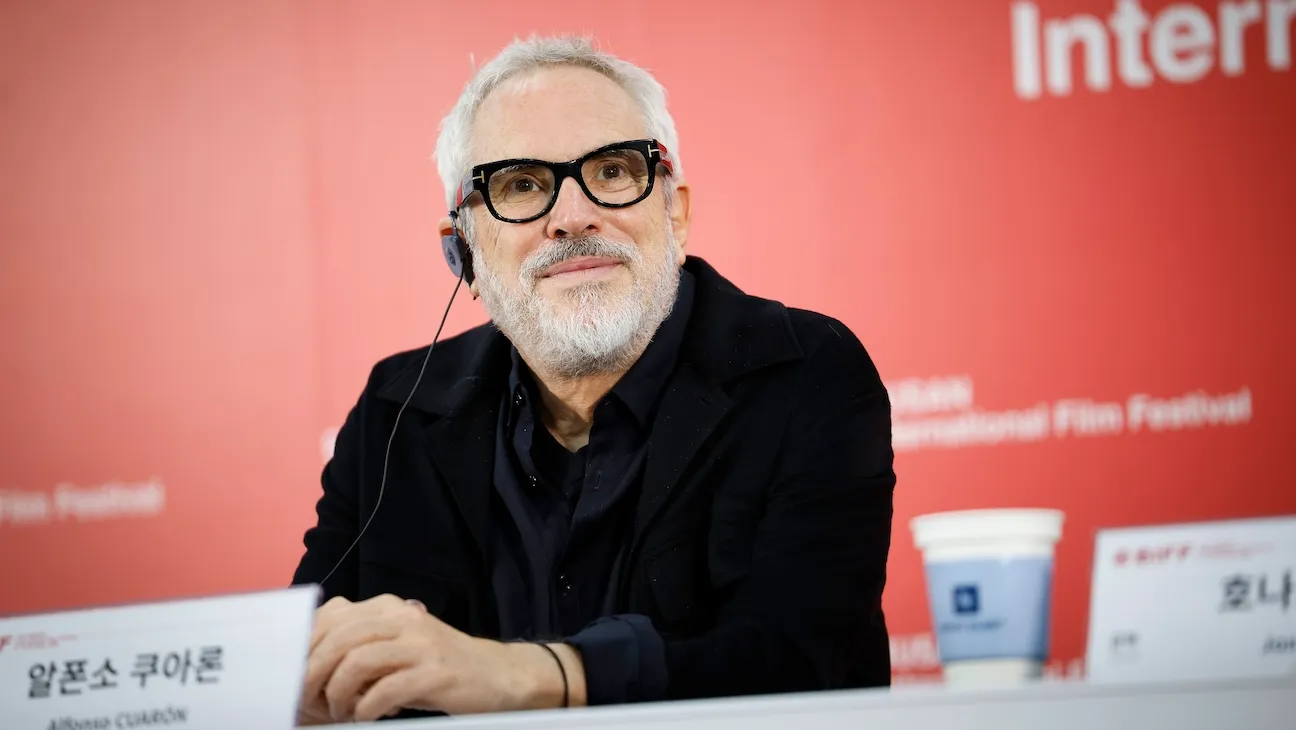
In the impeccable filmography of Alfonso Cuarón, Harry Potter and the Prisoner of Azkaban undoubtedly stands out a little. The film is beloved by fans as one of the strongest installments of the Harry Potter franchise, but it’s also one of the few projects that the multi-Oscar-winning director of Gravity and Roma didn’t develop and write himself.
Cuarón admits he was “a little reluctant to do it” when the opportunity to take on the world of Harry Potter first came his way, but he says making the film was nonetheless one of the most rewarding experiences of his career.
Speaking at the Busan International Film Festival in South Korea on Thursday, Cuarón said, “In many ways, Harry Potter gave me many things — one thing is two of the most beautiful years of my life.”
“I learned so much,” he continued. “I had no idea about visual effects before, but then after Harry Potter it was like second nature. And the whole collaborative work with people who were at the very top of their games — the best production designer, the best cinematographer, like amazing people working together.”
Cuarón also suggested that the industry cachet he gained from the franchise film’s success allowed him to pursue the passion project that has become one of his most acclaimed works among film buffs.
“I had written Children of Men before, and nobody wanted to do it,” he explained. “Then I did Harry Potter, and after, I was able to make Children of Men. So, I have nothing but gratitude towards Harry Potter,” he said.
Cuarón made his first trip to South Korea this week to attend the Busan festival, Asia’s leading cinema event, alongside his filmmaker son Jonás Cuarón, who is presenting his latest feature, Campeón Gabacho, at the event. After attending an Imax screening of his contemporary sci-fi classic Gravity, the elder Cuarón sat down for a master class discussion moderated by Korean director Yeon Sang-ho, best known internationally for his zombie movie sensation Train to Busan. The two directors became acquaintances after that film’s success, with Cuarón later executive producing Yeon’s 2025 mystery thriller Revelations.
The conversation caught Cuarón in a reflective mood, with his observations offering as much life wisdom as insight into filmmaking craft.
“Your films often feel extraordinarily precise and meticulously constructed, yet there is always a sense of life within the frame, as though something unexpected could happen at any moment,” Yeon told Cuarón, adding that he felt this quality particularly strongly in Children of Men. “For a director, do you think control and the unexpected are opposites to each other, or is it only through rigorous control that you can create the conditions to truly embrace the unexpected?” he asked.
“I tend to prepare a lot, and I tend to think and imagine the way that I want the film to be in my head — but then reality starts to shape it,” Cuarón replied. “But isn’t life like that? In many ways, in our lives, we have ideas and expectations. But something I have learned is that if we want to hold onto our expectations against the reality that is presented, we create unhappiness, and also we create a disconnection with the process of life.”
Cuarón said that age and experience have taught him “to prepare and to be ready for things, but at the same time to accept what life brings.”
“That’s when life takes you to incredible places that you would not have expected,” he said, adding, “In that sense, I think the filmmaking process is very connected to the process of life.”
Cuarón said his penchant for long takes — with Children of Men, again, boasting several of recent cinema’s most famous examples — derives from his interest in creating opportunities for instinct and “cinematic miracles” within a process of obsessive technical preparation.
“You prepare and you control in order for the unexpected to happen and to allow it to come to life,” he said.
“I like to shoot very long, continuous takes, because there’s only so much you can control,” he explained. “There’s one thing that you can never control inside those shots, and that is time. Time is flowing completely differently from take to take. The positions, the relationship between actors and camera, and how the light is changing. That’s also the reason I like to shoot natural light as much as possible, because of the accidents of light, the accidents of weather.”
He added: “You have a clarity of what you’re looking for, and then life is just going to not give you that — it’s going to give you something even better, something that you couldn’t have thought of.”
Cuarón said he’s also learned over the course of his career to recalibrate how he measures the success of his creative output, too.
“The rule is that every time I finish a film, I try to dissect what I learned on that film — because I really believe that the only reason to make a film is for what you learn for the next one. Success has nothing to do with the results at the box office, or with critics or awards. It’s about what you learned and how you grow as a filmmaker.”
In comments evocative of his recent social media posts in support of his friend Alejandro González Iñárritu’s frostily received new feature Digger, Cuarón argued that a film’s ultimate value takes time to be perceived.
“I have to say that the film on which I learned the most is probably the film that was least successful on every single front,” he explained. “Children of Men, when it was released, was a film that had very mediocre reviews. It was a box office flop. Nevertheless, nowadays it’s the one that probably people talk about the most. So in that sense, [on] success, only time will tell.”
Yeon later told Cuarón that when he began making films as a younger man, he did so “in an attempt to understand the world.”
“But at a certain point,” he added, “filmmaking made me realize just how little I understand about life. After making films for so many years, has your way of seeing the world become clearer, or has it become more ambiguous?”
“More ambiguous, thank god,” Cuarón replied. “When I was younger, film was everything, and life was only part of film. I guess, now, I embrace life more. Life is just incredible. Film, for me, remains a very important part, but it’s just a part. It doesn’t make the whole of life anymore.”
>
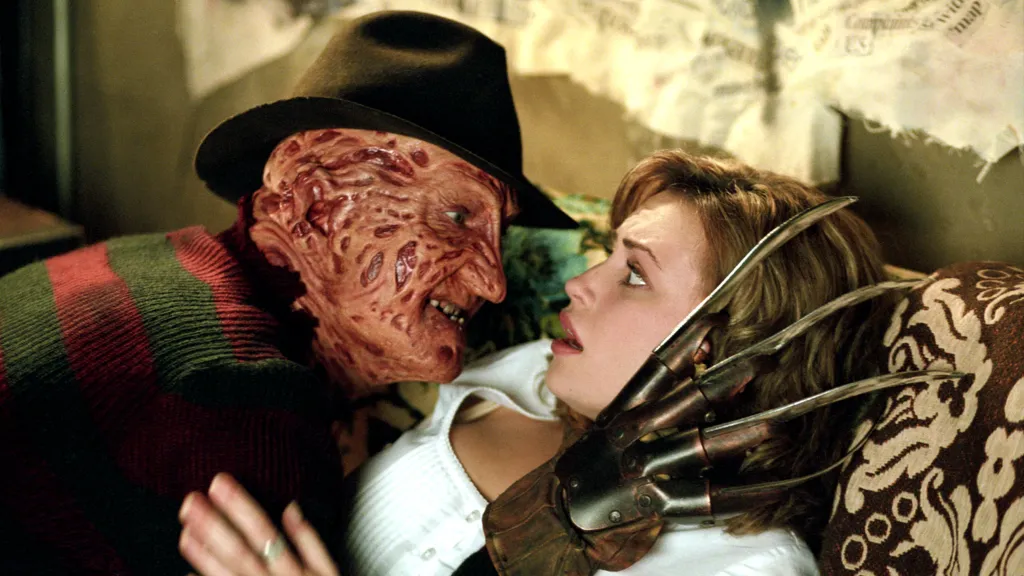
After 23 years, Monica Keena is reliving her “final girl” moment in the ultimate horror crossover.
The Freddy vs. Jason actress recalled why it was “really cathartic” killing off Robert Englund‘s Freddy Krueger in the 2003 Ronny Yu-helmed slasher after his performance in A Nightmare On Elm Street (1984) did a number on her as a kid.
“The first horror movie that I ever saw as a kid was Nightmare on Elm Street, and it really did traumatize me,” she told Nerd Reactor. “I mean, it ruined my childhood. This was in second grade. It was horrible. I had to go to the pediatrician, my mom didn’t know what was wrong with me. I was losing all this weight. Teachers at school thought I was being abused at home.”
Keena continued, “Finally, she takes me to the pediatrician, and he’s like, ‘What’s going on?’ I said, ‘You’re not gonna understand. You’re not gonna believe me because he doesn’t show himself to grown-ups.’ Then he was really concerned. I said, ‘There’s this guy, and his name is Freddy Krueger.’ He explains stuff to me. My mom went to the Brooklyn Public Library, she got a clipping of Robert Englund from a newspaper article … and she showed me, ‘He’s a real guy in real life, he’s not Freddy Krueger. That’s just a character.’ And I had it taped up by my little childhood bed. I had it on my wall for years.”
In Freddy vs. Jason, Keena starred as Springwood teen Lori Campbell, who ultimately decapitates Freddy Krueger after learning he murdered her mother, sending him to a watery grave with Jason Voorhees at Camp Crystal Lake.
“And I always said, ‘When I grow up, I’m gonna become an actress and I’m never gonna make movies that scare little kids.’ And then, here I am,” quipped Keena. “But the whole point is, then it was really cathartic because I got to kill him. I finally got to kill him.”
In her latest horror outing Last Chance Motel, Keena stars alongside Heather Langenkamp, who played Krueger’s original “final girl” Nancy Thompson in the first Nightmare on Elm Street film and multiple sequels.
>

Despite the negative reception from critics, Anne Hathaway is defending Tom Cruise‘s Digger.
The Oscar winner, who recently joined Letterboxd, shared her review of director Alejandro G. Iñárritu’s satirical black comedy, which centers on an egotistical oil tycoon who embarks on a mission to stop a natural disaster he unleashed.
“I loved this brilliant movie,” she wrote. “It’s smart and trippy and aggressive and funny and ambitious. It’s worth making the time see and decide for yourself what you make of it. For me? 10/10.”
While The Odyssey star also gave the film five stars, she listed four other pics as her favorites, including Moonstruck, It Happened One Night, Mirror and Phantom Thread.
Hathaway’s comments came after her new movie Verity — in which she stars opposite Dakota Johnson and Josh Hartnett — battled Digger at the opening box office weekend. Though it wasn’t much of a fight, as Verity completely dominated. As of Thursday, Verity has grossed more than $70.8 million worldwide, while Digger has notched $24.9 million globally.
Cruise’s pic has faced a challenging path, receiving a 52 percent approval from critics on Rotten Tomatoes. The audience score was slightly better at 73 percent. On Letterboxd, Digger boasts an impressive 3.8/5 audience score from almost 350,000 users. In his review for The Hollywood Reporter, however, chief film critic David Rooney dismissed the film as “dead and buried, or ought to be.”
Following the film’s disappointing box office debut, Cruise posted on X, “Digger is officially in theaters and I am so honored to have had the opportunity to create this film alongside such talented artists. Thank you to the entire cast and crew for your dedication, hard work and joy. The experience was truly unforgettable and I’m so proud of what we created.”
Hathaway will next star opposite Cruise in the Days of Thunder sequel at Paramount, which is set to be released on June 2, 2028.
>
Wild find their game, but too late to dig out of early hole vs. Lightning: Takeaways

AHS 13: Inside the Coven Reunion

Animator Kenichirou Katsura Dies at 59
-

 movies5 months ago
Search For Canadian TV Actor Stewart McLean Now Homicide Investigation
-

 Fashion9 years ago
These ’90s fashion trends are making a comeback in 2017
-
Fashion9 years ago
According to Dior Couture, this taboo fashion accessory is back
-
Fashion9 years ago
Model Jocelyn Chew’s Instagram is the best vacation you’ve ever had
-
Fashion9 years ago
Emily Ratajkowski channels back-to-school style
-
Fashion9 years ago
9 Celebrities who have spoken out about being photoshopped
-

 Anime4 months ago
Rurouni Kenshin: Hokkaido Arc Manga Takes 1-Issue Break – News
-

 Anime3 months ago
HIDIVE to Stream English Dubs for The World Is Dancing, The Forsaken Saintess and Her Foodie Roadtrip in Another World, The Dangers in My Heart: The Movie Anime – News