
Tech
Tony Fadell on why the first wave of AI gadgets failed — and what comes next

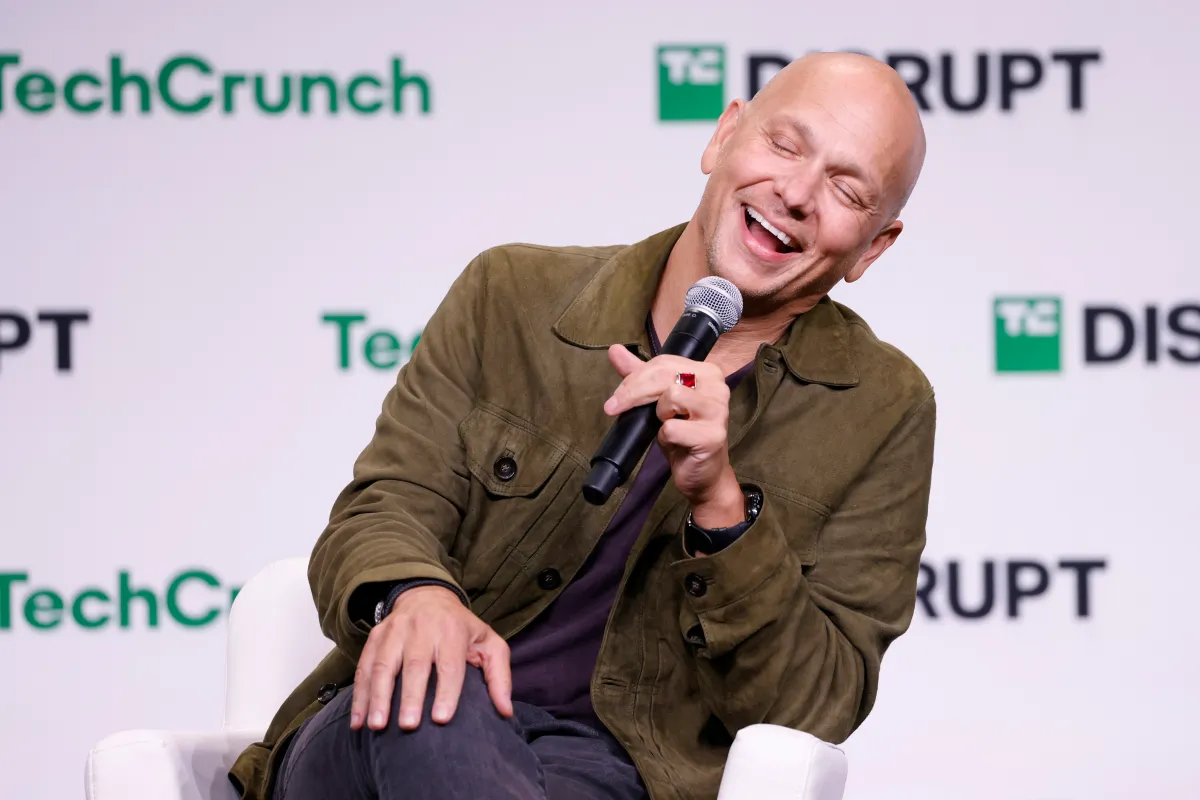
When Tony Fadell takes the stage at the inaugural MIT Future Fest, he projects a slide with three images of once-hyped AI devices that have already been discontinued: the Rabbit R1, the Humane AI pin, and the Limitless pendant.
“These were kind of the ‘Gen 1’ AI products, and because of my background, these companies called me and asked me to help them,” Fadell said. “I didn’t.”
It’s no surprise that these companies want Fadell’s advice. He’s credited as the “father of the iPod,” a co-creator of the iPhone, and the founder of Nest, the smart thermostat company acquired by Google.
“You have to really understand what you’re trying to do, what pain you’re trying to solve,” he said. “In each of these cases, each one of them didn’t meet any kind of need — it was just interesting technology for geeks, and you’re like, ‘Okay, that’s neat, but it doesn’t really apply to my life.’”
These early AI devices promised the convenience of having a personal assistant, but didn’t actually work that well. Even if they did, most people have never had an assistant and know how they would use — or grow to trust — a personal robot helper.
“It’s less than 0.01% of the world population that has ever had a human [assistant] do anything, and so when [companies] say, ‘Oh, we want an assistant,’ that’s a bunch of people who have assistants saying it,” he said. “Most consumers don’t even know what an assistant is.”
Fadell goes on to explain to those of us in the 99.99% that hiring a trustworthy personal assistant isn’t as straightforward as pulling the most promising resume out of a pile of applications.
“It took me a couple of years first to understand how best to utilize [an assistant], and then to trust them with the most sensitive data, and have them be an agent where they’re setting up meetings with people and working with my bank,” he said. “I understand we have this vision of the future, but there’s a lot of steps to get the general consumer and even the general business on this path.”
It’s hard to talk about the struggles of building trust in your personal assistant without sounding a bit entitled, but Fadell has a point. When you hire a human assistant, you’re not giving them your bank account login on day one. We’re heading into a world where anyone can have a personal AI assistant, but these tools are only valuable if we can trust them to be completely secure.
At this point, establishing trust with an AI assistant seems even harder than relying on a human. Meta recently launched Muse, its all-purpose AI assistant, but users have reason to be wary. A security researcher quickly found a serious vulnerability in Muse after launch, and a recent 404 Media report states that some Meta employees discovered security issues that prompted multiple teams to embark upon a “mad dash” to fix these problems before launch, working overtime.
“Trust and safety are going to be paramount with anything that we turn over to some kind of intelligence,” Fadell said. “The only company I could see right now — maybe one other — is Apple who could do this. Apple has all the hardware, they have all the chips, they have all the pieces, but they don’t have all the AI stuff.”
Even if it’s not Apple that ultimately produces the stickiest AI agent, Fadell predicts that a successful agent will have to operate on-device only, both for the sake of privacy and to keep the tech lightweight.
“When you’re hearing all of these things about, ‘Oh, data centers are going to conquer the world,’ … I don’t believe it,” he said. “I’ve seen this before. I’ve seen this play out in the internet days and what have you. We have so much power on the device now, and even more compute, and they’re still battery operated.”
By keeping sensitive data on-device, rather than transmitting it through the cloud, Apple has garnered trust from users to share their biometric data through features like Face ID. As Fadell notes, Apple seems to have more goodwill with consumers than its competitors when it comes to privacy, but unlike other top tech companies, Apple doesn’t have a world-class AI model of its own — the new Siri AI runs on custom-built versions of Google’s Gemini.
While Apple lags in proprietary AI, it is leaps ahead in hardware. Fadell theorizes that companies like Meta and OpenAI are turning their attention toward gadgets because they don’t have billions of devices in circulation like Apple does.
“It’s because they don’t have access to the sensors on your phone. They’re like, ‘Oh, we’ll need video,’ and you have to check, ‘Yes, I’ll give you video.’ Then they say, ‘Well, we need audio.’ Check. ‘We need your GPS location.’ Check. And before you know it, it becomes a list of 20 things or more than you have then allowed them to have,” he said. “So what do they do? They go and make a device with all that stuff in it without a screen… and then they just Bluetooth or Wi-Fi into your phone and then back up to the web, or into a 5G network, so they can get all the sensor data.”
Given his history creating the iPhone and iPod, it might seem like Fadell is still looking at his former employer through rose-colored glasses. While he may give Apple credit where due, he hasn’t been shy to call Apple out when he thinks they’re messing up.
When an audience member asks about the luck involved in finding product-market fit, Fadell points out that it’s more difficult for startups to manufacture that luck, since a failed product can spell the end of the company.
“Because it’s a startup, you get one shot,” he quipped. “It’s not like Apple with the Vision Pro.”
When you purchase through links in our articles, we may earn a small commission. This doesn’t affect our editorial independence.
>

Boston, are you ready?! TechCrunch Founder Summit 2026 is about to explode with energy — and the real magic kicks off with an epic lineup of Side Events lighting up the city from November 3–6!
We’re under a month away and we couldn’t be more pumped to unveil the full Side Events schedule — your ultimate passport to game-changing connections and unforgettable moments. From high-voltage networking mixers to mind-blowing innovation showcases, this is where Boston’s boldest tech minds come to connect, create, and crush it.
Whether you’re a trailblazing founder, a curious startup enthusiast, or a seasoned pro, there’s something here to supercharge your Founder Summit experience.
So don’t just attend — immerse yourself. Mark those calendars, lock in your spot, and get ready to ride the wave of TechCrunch Founder Summit 2026.
Quick Side Event disclaimers:
- Registering/RSVPing to a Side Event does not grant you access/ticket/badge to the main Founder Summit 2026 conference on November 4.
- Each event is organized and operated solely by a host (i.e., not TechCrunch Media or any of its affiliates).
- Attendance is 18+ minimum and some venues are 21+ only.
- Side Events are open to the public unless specified.
- Please register/RSVP for any of the Side Events you want to attend.
November 3
Find the 10X Opportunity Hiding in Your Product
Hosted by: PrincipiumX
Time: 9:00 a.m. – 11:00 a.m. ET
Join us for a first-principles product reimagination breakfast for founders and leaders. You have a product and early traction. Now comes the hard part: How do you break through in a crowded market?
In this workshop, learn how to go beyond brainstorming, competitor copying, AI chasing, and asking customers and start thinking from first principles to gain clarity on what’s truly worth building in a matter of weeks.
Through a real-world case study, learn to uncover enduring first principles, reveal unspoken customer needs, and turn them into clear differentiators, stronger product-market fit, novel use cases, and pathways to 10x growth opportunities.
TBD Angels Mixer (Founders and Investors)
Hosted by: TBD Angels
Time: 5:00 p.m. – 8:00 p.m. ET
Join TBD Angels in Central Square on November 3 for a lively mixer with investors and early-stage founders. Come meet some new faces, catch up with familiar ones, and trade notes on what’s happening across startups and investing right now.
What are you building? What’s catching your attention? What’s changed since your last conversation with a founder or investor? Bring your ideas, questions, and fresh perspectives for an evening of easy conversation and connections that could spark your next move.
Founder Signal: What Actually Gets You Investor-Ready
Hosted by: Prepare 4 VC and Startup Grind Boston
Time: 5:30 p.m. – 8:30 p.m. ET
Most founders think they’re investor-ready. Most are wrong.
This session breaks down what actually signals readiness to investors — and where founders misread their own progress.
We’ll walk through real founder examples; common gaps across narrative, traction, and capital strategy; and how to move from motion to true momentum.
For founders preparing to raise and investors who want to understand real signal vs. noise.
Followed by curated networking with founders, investors, and ecosystem partners.
November 4
Happy Hour: Talent, Capital & Scale
Hosted by: Harmonic Finance, Fidelity Investments and Baker Tilly
Time: 5:00 p.m. – 9:00 p.m. ET
Come wind down after a full day at TechCrunch Founder Summit. Harmonic, Baker Tilly, and Fidelity are teaming up to host an evening of drinks, small bites, and conversation at Barcelona Wine Bar, a relaxed spot to swap notes on the day and meet the people shaping Boston’s startup scene.
You’ll find founders, investors, and finance leaders in the room, plus plenty of familiar faces from the day’s sessions.
Space is limited, so grab your spot below ASAP.
Boston’s Unfair Advantage: When AI Meets the Physical World
Hosted by: Massachusetts AI Coalition and PTC for Startups
Time: 5:00 p.m. – 8:00 p.m. ET
What’s possible now that wasn’t before? And where does Boston have an edge?
Join Mass AI Coalition and PTC for a fireside-style panel on hardware/physical AI, emerging markets, and building products for the physical world. Then step inside PTC’s Corporate Experience Center for tours featuring interactive product demos. Explore startup demo tables and connect over food and drinks as we examine how Boston’s research and industrial strengths create new opportunities.
Cocktails and Conversation — How to Build Your GTM Flywheel
Hosted by: Hyperplane VC
Time: 5:30 p.m. – 7:30 p.m. ET
Please join Hyperplane for cocktails and conversation as we share our lessons learned from helping companies transform their ideas into revenue over the last decade.
Founders After Hours
Hosted by: Deel
Time: 5:30 p.m. – 9:00 p.m. ET
Founder After Hours is an exclusive happy hour for TechCrunch Founder Summit attendees, presented by Deel.
Deel is investing in founders. We started as a startup, and we’re doubling down on the global founder community with everything from our annual “The Pitch” competition to events like this. Connect with fellow founders over food and drinks in a relaxed setting designed for authentic conversation and community building.
November 5
Creatives in Business
Hosted by: Northeastern University Co-Op
Time: 2:00 p.m. – 4:00 p.m. ET
Join us for an inspiring in-person event celebrating women in business! Connect with amazing female leaders, hear their stories during the panel discussion, and mingle with like-minded professionals. It’s the perfect chance to network, share ideas, and empower each other in a relaxed, friendly setting.
Don’t miss out on this awesome opportunity to grow your connections and be inspired!
November 6
South Asian Collective @ TechCrunch Founder Summit
Hosted by: South Asian Collective
Time: 5:30 p.m. – 7:30 p.m. ET
Join us for an evening bringing together South Asian founders, investors, operators, and builders for meaningful connection and conversation.
This gathering is designed for people building companies, backing founders, and shaping the future of technology. Meet others navigating the startup journey, exchange insights on building and scaling, and connect with peers across the global South Asian tech ecosystem.
Expect thoughtful conversations, new connections, and a room full of ambitious builders across startups, venture, and tech.
No panels. No formal agenda. Just great people, real conversations, and community.
When you purchase through links in our articles, we may earn a small commission. This doesn’t affect our editorial independence.
>

Anthropic updated its usage policy on Thursday, codifying new prohibitions on election interference, weapons software, and surveillance. But perhaps the most attention-getting change is a new prohibition against prolonged verbal abuse of the model, which is now expressly forbidden.
Since an update in August, Claude has been trained to end conversations with “persistently harmful or abusive user interactions” — but the new policy explicitly bars users from pursuing those conversations.
“The policy update is meant to apply only in extreme cases, where users repeatedly act cruelly toward our models, with no discernible purpose,” the post explains. “It does not apply to common versions of user frustration, pushback, dark creative themes, or model testing and research.”
The change comes after Anthropic has sought out collaborations with prominent religious scholars — in some cases, seeking to convince them that Claude could be conscious or have a soul.
Separate sections of the usage policy forbid users from engaging in broadly deceptive campaigns, such as using Claude to run fake accounts or fabricated news outlets. The policy also includes rules against deceiving voters or disrupting elections, collected in a section titled “Do Not Undermine Democratic Processes.”
>
At a Google Cloud event on Thursday, the company announced it’s bringing its Gemini AI into the agentic age, with the launch of a unified agent that can not only answer questions but also get things done on the user’s behalf, all from a single interface.
The move comes as AI tools have been moving beyond being just conversational experiences to those that can take ownership of assigned tasks, generate code, schedule meetings, book appointments and travel, and more. It also follows the rise of consumer-facing agents like Meta’s Muse and those that operate over messaging, like Instinct and others, as well as the recent debut of ChatGPT’s Dots.
The company still has a good shot at achieving scale for its agentic efforts: as Google CEO Sundar Pichai pointed out at the event’s start, Gemini today has over 1 billion monthly active users. He also noted that nearly 90% of Fortune 100 businesses now use Gemini Enterprise at work.
Given Gemini’s adoption in the corporate world, Google will initially focus on bringing the agent to businesses before later rolling it out to consumers.

According to Pichai, this will allow the company to solve the “harder problems around security, scale, and performance,” which come with launching powerful agents such as these.
Thomas Kurian, CEO of Google Cloud, explained that the new agent can be given “objectives, not just instructions.” That means it’s able to plan the work, use custom skills and tools, and connect to businesses’ internal systems to accomplish its goals.
By default, the AI will pick the best model to complete the task, but users can also take over to choose a model — including those from third parties, starting with Anthropic’s Claude models. Google said that it will expand the model picker to include open source models and other private models in the future.
The request can include attachments, like files, folders, or other projects designed for specific workstreams, like those that combine files and skills. The agent can connect to the business’s data and systems, like Google Workspace, Microsoft 365, Slack, Jira, Confluence, Git, BigQuery, Databricks, Postgres, Snowflake, and others.
It can also connect and work securely with any Model Context Protocol (MCP) server inside or outside the company’s network.
Users can keep track of what Gemini is doing from a “tasks inbox” interface, where they can see Gemini’s thinking process, delegation of tasks to subagents, loading of special skills, code, and progress.
Notably, the AI will have its own Workspace account, as if it’s just another coworker. That means it has its own email address and its own context, Google said. It knows who at the company is on what team, their time zones, who needs to approve items, what’s on people’s calendars, and more. Users can call the agent by tagging it, emailing it, sharing with it, or adding it to a group chat. As it takes action, it writes an audit trail attributed to the agent, instead of a person.
The agent will be accessible from iOS and Android mobile devices, Windows and Mac desktops, the command line interface, Google Workspace, Microsoft 365, ServiceNow, and Slack.

The agent’s early testers included sportswear brand On, Shopify, and PayPal, and noted that Gemini Enterprise customers include large businesses like BNP Paribas, Bradesco, Merck, Orange Spain, Santee Cooper, SOMPO, Ulta Beauty, and Wesfarmers.
Google said new flexible spending options, including multi-model orchestration, smart routing, and real-time spend caps, will help businesses keep their enterprise AI costs under better control.
When you purchase through links in our articles, we may earn a small commission. This doesn’t affect our editorial independence.
>

Colin Jost & Danny Chun To Launch New Comedy Series ‘6 Bed 1 Bath’

West Ham in final stage of contract talks with Tomas Soucek

‘Cupertino’ Review: Robert & Michelle King’s Slick & Spiky Legal Drama
-

 movies5 months ago
Search For Canadian TV Actor Stewart McLean Now Homicide Investigation
-

 Fashion9 years ago
These ’90s fashion trends are making a comeback in 2017
-
Fashion9 years ago
According to Dior Couture, this taboo fashion accessory is back
-
Fashion9 years ago
Model Jocelyn Chew’s Instagram is the best vacation you’ve ever had
-
Fashion9 years ago
Emily Ratajkowski channels back-to-school style
-
Fashion9 years ago
9 Celebrities who have spoken out about being photoshopped
-

 Anime4 months ago
Rurouni Kenshin: Hokkaido Arc Manga Takes 1-Issue Break – News
-

 Anime3 months ago
HIDIVE to Stream English Dubs for The World Is Dancing, The Forsaken Saintess and Her Foodie Roadtrip in Another World, The Dangers in My Heart: The Movie Anime – News