
Tech
IEEE Report Predicts Tech That Will Transform Lives


By 2028, genetic engineering and gene therapy will be used frequently to treat a variety of diseases, thanks to advances in artificial intelligence, according to the recently released 2030 Technology Megatrends Report from IEEE.
“We are seeing a fundamental shift in how technology evolves,” says IEEE Fellow Dejan Milojicic, chair of the IEEE Future Directions Committee’s Industry Advisory Board, the group responsible for the report. “Artificial intelligence is no longer operating in a vacuum; it is now deeply connected to our energy, infrastructure, and physical systems.” Milojicic, a Hewlett Packard Enterprise Fellow, is a vice president at HPE Labs in Milpitas, Calif.
AI underpins many of the report’s 30 technologies and five “megatrends,” which are technology shifts with the potential to reshape industries and everyday life for decades. A megatrend isn’t a single breakthrough but a collection of related technologies.
For the 2030 report, 166 experts—from 38 countries across six continents—drawn from industry, academia, and government identified 30 breakthrough technologies across the five megatrends: AI, energy, health, space, and physical AI. The experts graded the trends against five criteria: likelihood of success, impact to humanity, maturity, market adoption, and horizon to adoption.
AI as a common thread
Interconnected systems drive the megatrends, and the connection among them is AI.
The report notes that AI technology is advancing faster than any previous revolution, including industrial, electrical, and digital. The pace has turned the technology into general-purpose infrastructure, Milojicic says.
That evolution carries risks, though, the experts say. The report cites the lack of computing infrastructure and energy sources as constraints on the ability to scale up AI, and it says the technology’s growth will require reshaping the workforce.
Workers have always needed to adapt to stay competitive, Milojicic says, adding that AI adoption isn’t an all-or-nothing approach. Businesses should decide when and how to apply it, he says.
The experts say long-term success will require both technical capabilities and attention to the human-AI relationship. Conditions including trust, security, explainability, and policymaking will determine which AI-supported technologies are most likely to scale, they say.
“This report shifts the conversation to something far more important: how these advances will intersect with one another to shape human lives,” Mary Ellen Randall, 2026 IEEE president and CEO, said in a news release about the report. “The data makes clear that trust, safety, and human connection must guide every major breakthrough in the decade ahead.”
Health care is a high-impact bet
The experts scored personalized medicine as the study’s highest-impact technology, at 4.93 out of 5, for its potential to improve human life.
The report credits AI-driven breakthroughs in personalized diagnostics and therapeutic treatments, driven by innovative biotech startups. Within two years, the experts predict, genetic engineering and gene therapy will be used in therapeutic areas.
Within five years, earlier disease diagnoses will move out of the lab and into day-to-day medical practice, the report predicts. Meanwhile, it says, researchers likely will be able to manufacture simple synthetic proteins—molecules engineered from scratch, rather than found in nature—to perform a specific job in the body, such as targeting a tumor or supplying a missing enzyme.
Energy wakes up for AI
Increased power demand by AI is outpacing the energy sector’s ability to keep up. Tech infrastructure—data centers, networks, and computing hardware—already uses an estimated 10 percent of electricity globally, according to the news release.
The experts predict that within two to three years, energy storage will double in developed countries.
The energy industry has been relatively dormant for years, Milojicic says, with little breakthrough innovation since the times of Thomas Edison and Nikola Tesla.
“Data centers can ramp up within milliseconds, yet it takes months for the power and energy sector to ramp up,” he says. “The governments of various countries will have to rethink their approach to power generation to stay ahead of demand.”
The experts cite the Jevons paradox—the idea that efficiency gains tend to increase overall consumption. As AI chip efficiency improves, organizations will run more hardware to build ever-larger frontier models—those advanced AI systems currently in development—the experts say. Data centers will draw as much power as grids can supply, leaving no surplus, the experts predict.
Physical AI moves the fastest
Physical AI refers to systems embedded within machines that sense and act in the world, including robots and autonomous vehicles. In the report, the category originally was called “hyper-automation and robotics,” a broad, software-driven process automation paired with physical machines. The Industry Advisory Board later folded it into the single physical AI megatrend.
The experts found that human-AI interaction has the shortest adoption horizon of any of the 30 scored technologies, at two to three years. They also say physical AI has the biggest chance of technical advancement of any megatrend during the next four years.
“The data makes clear that trust, safety, and human connection must guide every major breakthrough in the decade ahead.” —Mary Ellen Randall, 2026 IEEE president and CEO
Smarter, more efficient robots will substantially cut energy consumption in the next two years, the experts say.
Communications between humans and AI—whether in an android or another device—will shift from text-based commands to predominantly audio and video instructions within two to three years, the experts predict.
Androids used in factories will use tactile and haptic feedback within two to five years, letting them sense what they’re touching and adjust their grip or force in response, the experts say. Bio-inspired skin, tissues, and sensors will advance in the same timeframe, the experts predict, giving robots perception that better mirrors human touch.
Space is just getting started
Space technology, as the report defines it, covers more than exploration. It spans satellite communications, in-space manufacturing, launch technology, and other infrastructure. It is one of the lower-profile megatrends in the report, not for lack of promise but because of where the sector presently sits.
“It’s not lagging,” Milojicic says. “It’s the current state of maturity. People are talking about satellite communication right now because it’s very cool and practical. But it’s a small segment compared to the attention AI gets.”
He says he believes the space sector will be more prominent in the coming years: “This is an area of technology that will become increasingly important, especially as terrestrial communication and transportation push the boundaries for space as well.”
The report highlights two technologies on the near horizon: semiconductor manufacturing that uses parts built in space and more affordable reusable rockets. It also sees clean energy generation in space and the commercialization of orbital garbage collection as potential technologies to watch for in the next decade.
What’s next?
The report recommends that academia, industry, governments, and professional associations work together.
To build a well-trained workforce, the report says, industry should partner with professional organizations on training programs and revive apprenticeships in chemistry, physics, and other physical sciences. It also calls on businesses to treat AI infrastructure—computing, data, and energy—as a long-term strategic asset.
Other recommendations include expanding access to affordable, quality education in STEM coursework and AI competence.
Governments should lead on policy and implement reintegration programs for workers displaced by AI, the report says.
The experts say professional organizations including IEEE should develop new products and services using AI, strengthen safety and data governance standards, and serve as a collaboration platform for industry, academia, and policymakers.
The report also offers recommendations for end users, content creators, investors, and company leadership on strategies for succeeding in an AI-focused future.
The same thread runs through all the report’s recommendations: Don’t lose sight of the human-AI relationship.
“As a public charity dedicated to advancing technology for the benefit of humanity, IEEE believes progress must be measured by more than technology development and implementation speed,” Sophia A. Muirhead, IEEE executive director and chief operating officer, said in the news release. “Whether retraining the global workforce or integrating AI responsibly into daily life, the success of these megatrends depends on ensuring innovation strengthens human well-being and public trust.”
From Your Site Articles
Related Articles Around the Web
>
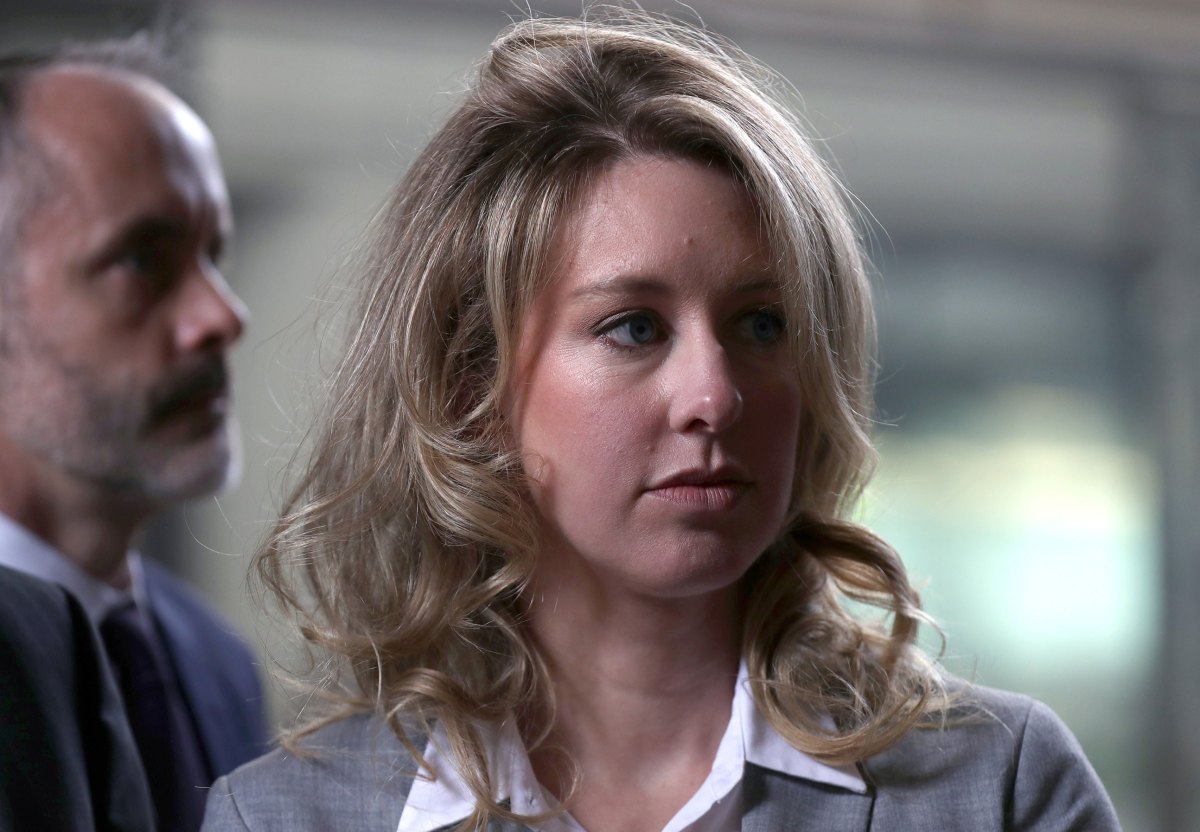
With over a thousand emails, slides, texts, and documents unveiled during the United States v. Elizabeth Holmes trial, Extend engineer Bo Lau created a website that simulates what it might have been like to be the chief executive of Theranos before everything came crashing down.
(Every day, I am grateful to the American legal system for making the discovery process public.)
The environment that Lau created is ambitiously detailed, taking you right back to 2016, a time when iPhones had home buttons, and you had to slide your finger across the screen to unlock it. Even the MacBook Air is running OS X El Capitan.
You can click around the environment, which lets you look through the documents made public from the court case on Holmes’ iPhone and laptop screens. You can even run the Theranos Edison machine, the company’s ill-fated device that was supposed to be able to extract large amounts of health data from one drop of blood.
The project seems like it was mostly made for laughs, but it’s actually an interesting way to peruse the documents from one of the most infamous court cases in tech history — it’s a lot easier to navigate this than to source thousands of PDFs from court websites.
There’s another agenda, though. Lau is promoting a watch party that her company is throwing for Nathan Fielder’s upcoming documentary about Elizabeth Holmes, “You Can See Everything.”
Also, of course, she’s promoting the company itself. So, what exactly does Extend do? Apparently, it can “parse, extract, and split your hardest documents with unmatched accuracy.” (I’m not really sure what that means, but if it makes something like this Holmes desk simulator possible, then I guess that means I’m bullish on b2b SaaS.)
When you purchase through links in our articles, we may earn a small commission. This doesn’t affect our editorial independence.
>
Samsung Wallet is adding USDC transfers to compatible Galaxy phones, allowing eligible US users to send stablecoins to crypto wallets or bank accounts abroad.
The post Samsung Wallet USDC Transfers: How the New Feature Works appeared first on TechRepublic.
>
TP-Link’s Archer 8 Ultra brings Wi-Fi 8 to select markets, but high prices, limited client support, and unfinished features make Wi-Fi 7 the better buy for most users.
The post Wi-Fi 8 vs Wi-Fi 7: Is TP-Link’s Archer 8 Ultra Worth It? appeared first on TechRepublic.
>

Greece vs England: How Ella Toone’s Lionesses snub could boost her World Cup chances | Football News

Emily Hampshire Explains ‘Heated Rivalry’ Special Thanks
Emily Hampshire Explains ‘Heated Rivalry’ Special Thanks
-

 movies5 months ago
Search For Canadian TV Actor Stewart McLean Now Homicide Investigation
-

 Fashion9 years ago
These ’90s fashion trends are making a comeback in 2017
-
Fashion9 years ago
According to Dior Couture, this taboo fashion accessory is back
-
Fashion9 years ago
Model Jocelyn Chew’s Instagram is the best vacation you’ve ever had
-
Fashion9 years ago
Emily Ratajkowski channels back-to-school style
-
Fashion9 years ago
9 Celebrities who have spoken out about being photoshopped
-

 Anime4 months ago
Rurouni Kenshin: Hokkaido Arc Manga Takes 1-Issue Break – News
-

 Anime3 months ago
HIDIVE to Stream English Dubs for The World Is Dancing, The Forsaken Saintess and Her Foodie Roadtrip in Another World, The Dangers in My Heart: The Movie Anime – News