
Tech
Meta’s Muse launches on iPad just a month after its mobile debut


If there’s any doubt about how seriously Meta is taking AI, here’s a new signal: the company on Wednesday announced that its Muse assistant is now available in a dedicated iPad app. That’s a milestone it took Instagram some 15 years to reach, despite constant user demand.
Muse, meanwhile, hit the iPad just a month after launching on iPhone.
(To be fair, it may not be as difficult to bring something like Muse to iPad, given its text-heavy interface, where image and video resolution and formatting matter less.)
Since launching on iOS and Android on September 8, Muse has topped 6.6 million installs, according to estimates from market intelligence firm Sensor Tower. The app, which is now one of dozens of consumer-facing AI agents, lets users connect their accounts to stay on top of email, meetings, bills, and more, and to complete tasks like booking reservations, ordering groceries, setting goals, and making purchases.
To make that work, Meta has been adding partners in the effort, which appear in Muse as “connectors.” Users can add and sign in to them selectively, depending on which parts of their online life they’re comfortable letting an AI agent handle.
With the iPad release, Meta has updated this list with several of its newer additions, including connectors aimed at small businesses, like Asana, Canva, Dropbox, Figma, QuickBooks, GitHub, Klaviyo, and Zoom, as well as connectors for Meta ad accounts. It also added Notion and Granola.
In addition, Meta recently announced more retail partners, like Best Buy, Gap, Sephora, Walmart, and Wayfair. These allow the agent to shop those retailers’ sites and complete transactions on users’ behalf. Because this technology is still new, these experiences can still run into issues as websites mistake agents for bots and block their access.
On Tuesday, Meta announced that it’s working with industry partners on a technological solution to this problem in the form of an open standard that would allow personal AI agents to identify themselves to businesses. That would help businesses sort the good bots from the bad.
When you purchase through links in our articles, we may earn a small commission. This doesn’t affect our editorial independence.
>

For a writer, the mechanical keyboard is a beautiful thing. They’re certainly not necessary for everyone, but a well designed mechanical keyboard can turn a tedious day of typing into an aesthetically pleasing experience.
Given that most of my days involve sitting at a desk for hours, having a keyboard that I enjoy using is a necessity. I first got a mechanical keyboard about two years ago — the Keychron K2 — and I’ve never looked back.
Keychron is one of the most prominent brands within the mechanical keyboard industry, having made a name for itself after initially launching via Kickstarter back in 2017. The company has since produced dozens of different keyboards (as well as keypads), and a variety of mouse models.
Unlike other electronics, there isn’t a whole lot to owning a mechanical keyboard. The simplicity is part of the appeal. You unbox them, set them up (the K2 comes with little tilt legs that give you a slightly better angle from which to type), and plug them in.
From here, you have a couple of different options. The K2 comes with a simple USB cable, but there’s also an option for Bluetooth connection. If you value a clean, minimalist workspace, Bluetooth is probably the way to go.
While I am loyal to my older Keychron K2, there are a few upgraded and newer versions to consider. Keychron has released a variety of new models over the past two years, with a broad range of features and price tags.
In many cases, the form factor is the draw. One of the more interesting releases, called the Keychron K8 HE Wireless Magnetic Switch Custom Keyboard, comes with an all-wood body and is equipped with an LED backlight. That one is substantially more expensive at around $200. The K2, meanwhile, costs $60. But if you’re into the look, maybe it’s worth it.
If you’re a gamer, there’s also Keychron’s C0 HE One-Handed 8K Keyboard, which is a keypad built for convenience and speed and has an industrial aesthetic to it. However, interested gamers will have to wait — as it’s currently sold out.
The company has also updated its K, Q, and V series keyboards, with many of those ranging in price from $100 to $200 depending on the features and model.
One of the appealing elements of owning a mechanical keyboards is the versatility. You can swap out the key caps for a wide variety of others (indeed, there’s a whole sub-market devoted to this) or make your own custom caps (I’ve never gone that overboard).
There is also the sound, of course. Some people balk at the accentuated noise of loudly clacking keys, but I’m a fan. In fact, the sound is one of the key selling points for a lot of consumers. The distinct auditory experience produced by said keyboards has even made its way into ASMR videos.
For me, the Keychron’s biggest selling point is its retro form factor. I get really nostalgic for old school electronics, and Keychron scratches this itch pretty well. It’s a beautiful looking device, that brings to mind a different era of computing, when the style was more workman-like, less minimalist.
As far as home office purchases go, you could do a lot worse than to pick yourself up a piece of hardware that makes your desk look like it just time-traveled from the 1990s.
When you purchase through links in our articles, we may earn a small commission. This doesn’t affect our editorial independence.
>
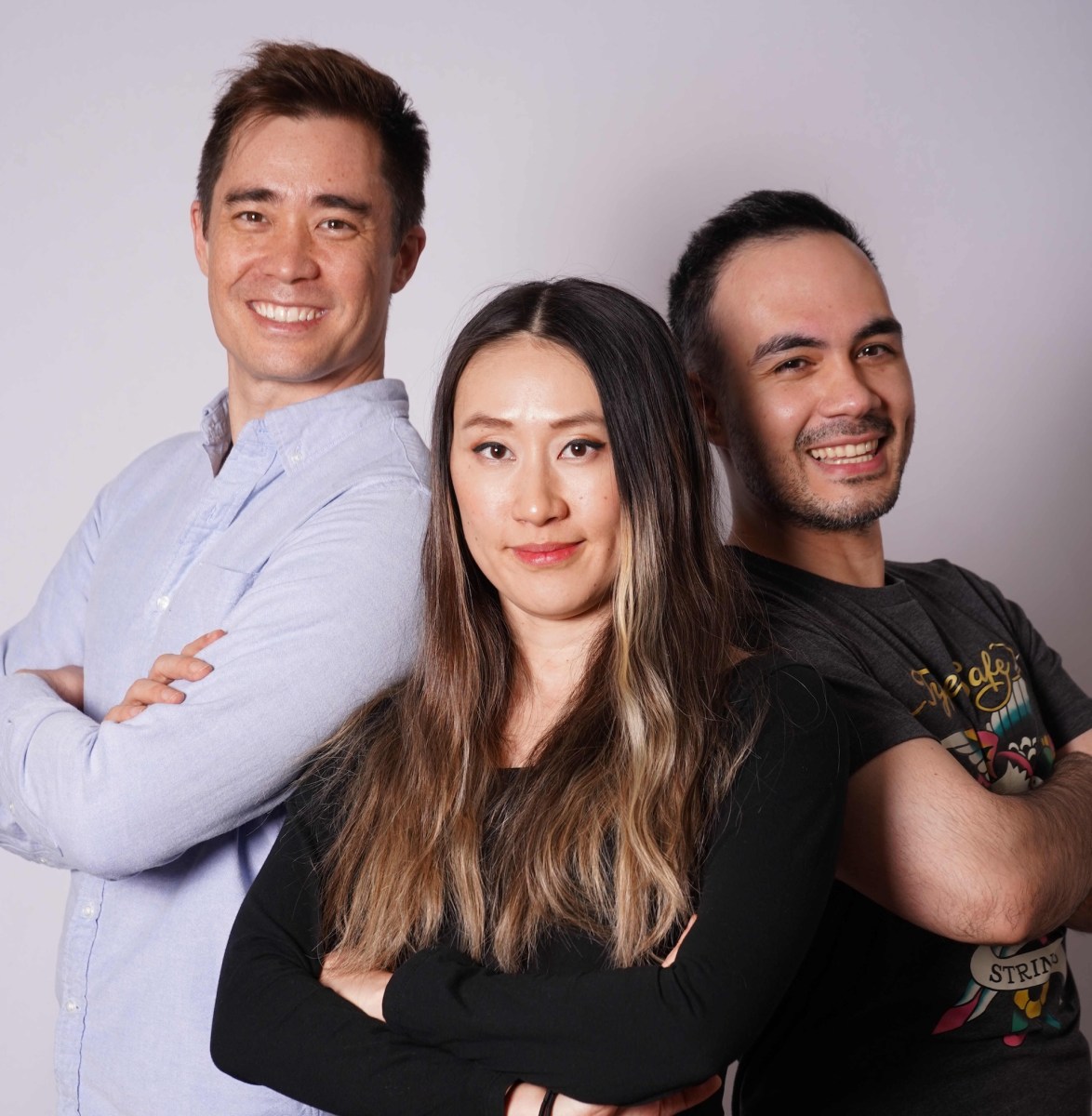
TypeSafe AI, the developer of Jev, a new type of AI model that gained rapid popularity after launching just a few weeks ago, has raised $870 million at a $7.5 billion valuation. The round was led by Andreessen Horowitz, with participation from Sequoia and existing investor DCVC.
The massive fundraise comes as little surprise given Jev went viral almost instantly after its Sept. 15 release. The startup claims that a third of Fortune 500 companies are already using the model, a remarkably swift adoption by enterprises.
Jev is based on a transformer architecture, but it is not a large language model (LLM). It doesn’t output text, but instead produces probabilities, or what the company calls “calibrated decisions.” What has users and large corporations so excited about Jev is TypeSafe’s claim that it works significantly faster and uses far fewer tokens than LLMs. The company positions its approach as uniquely suited for automating tasks rather than generating text or code.
“We have been super good at human language for four years, but it’s not useful for automation because computers speak a different language,” TypeSafe co-founder Diogo Almeida told TechCrunch last month.
Along with Almeida, who was previously a researcher at OpenAI, TypeSafe was co-founded in 2024 by former Meta research engineer Sasha Sheng and Erik Gafni, an engineer and entrepreneur.
>
Explore the latest tech news, from ChatGPT’s interactive AI tools and Microsoft’s new hardware to cybersecurity threats, robotics, and Big Tech shakeups.
The post AI Agents, Local Hardware, and Security Risks Reshape Tech appeared first on TechRepublic.
>

Greece Women 1 – 3 England Women

Open de Espana: Grant Forrest continues good record to take one-stroke lead into the weekend in Madrid | Golf News

Fury vs Joshua will draw the most lucrative gate in British boxing history says Dana White | Boxing News
-

 movies5 months ago
Search For Canadian TV Actor Stewart McLean Now Homicide Investigation
-

 Fashion9 years ago
These ’90s fashion trends are making a comeback in 2017
-
Fashion9 years ago
According to Dior Couture, this taboo fashion accessory is back
-
Fashion9 years ago
Model Jocelyn Chew’s Instagram is the best vacation you’ve ever had
-
Fashion9 years ago
Emily Ratajkowski channels back-to-school style
-
Fashion9 years ago
9 Celebrities who have spoken out about being photoshopped
-

 Anime4 months ago
Rurouni Kenshin: Hokkaido Arc Manga Takes 1-Issue Break – News
-

 Anime3 months ago
HIDIVE to Stream English Dubs for The World Is Dancing, The Forsaken Saintess and Her Foodie Roadtrip in Another World, The Dangers in My Heart: The Movie Anime – News