
Politics
Politics Home Article | Former Green Co-Leader Says Party Brand Suffering From ‘Toxicity’

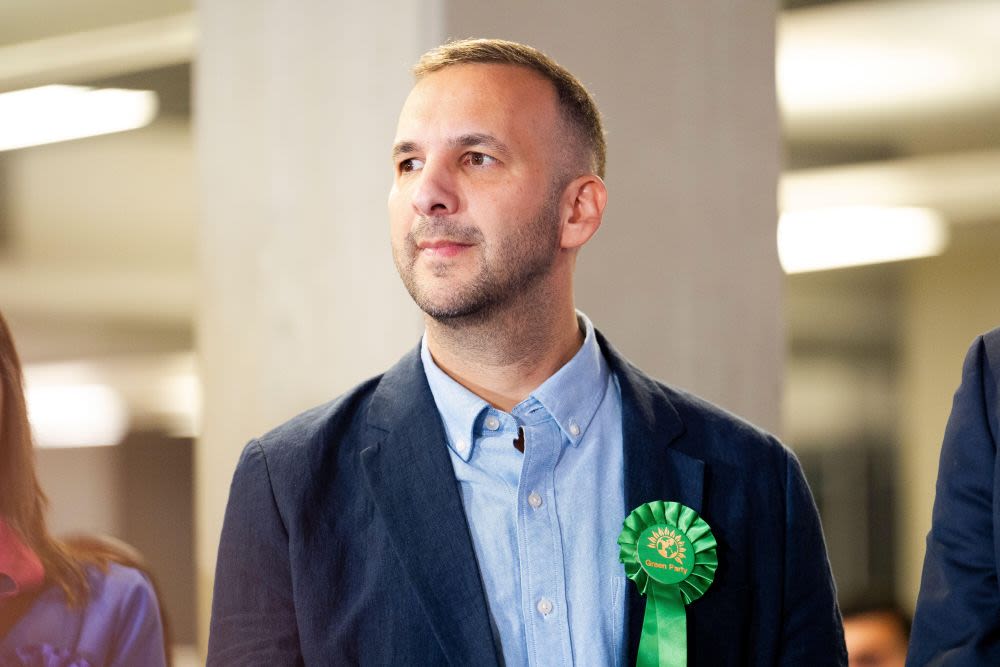

Green Party leader Zack Polanski came second in the by-election (Alamy)
3 min read
Exclusive: A former leader of the Green Party has slammed the by-election result, claiming it will “demand some serious soul searching” in the aftermath of a huge swell of support for the party in the last year.
Jonathan Bartley, who co-led the Green Party between 2016 and 2021 and is now a cabinet member for Lambeth council told PoliticsHome that there is now a “toxicity of the Green party brand” and that allegations of antisemitism, along with the “Zionism is racism” motion “are clearly having an impact”.
Labour swept to victory in the Holborn and St Pancras by-election overnight, winning 45 per cent of the vote, with the Greens’ Zack Polanski coming in second on 33 per cent.
While Labour’s majority fell from 11,000 to 3,000 votes compared to the constituency result in the 2024 general election, the Greens may have been hoping for a bigger boost from the independent candidate Andrew Feinstein two years ago who decided to back Polanski.
While Feinstein polled at 19 per cent in 2024, the Greens’ vote share increased by just 11 per cent.
While support for the Green Party peaked in March, it has fallen since the spring, with the number of Britons willing to consider voting for the party now lower than before Polanski stepped into the role, according to research from YouGov.
“What’s striking about the result is that it isn’t hugely different from 2024 if you consider the vote for Andrew Feinstein – who stood as an independent but backed Zack this time – as essentially Left and Green,” Bartley said.
“And after the huge surge of support for the party over the last year that is going to demand some serious soul searching. “
“What has also changed however is the toxicity of the Green Party brand,” Bartley added.
On Sunday, Green Party conference voted for the controversial “Zionism is racism” motion, making the stance party policy.
Bartley said: “Allegations of anti-semitism against candidates during the local elections in May, the string of stories against Zack and now the Zionism is Racism motion are clearly having an impact. And at a time where people vote against what they don’t like as much as for what they believe in, it would not be surprising if people voted tactically to keep the Greens out.”
He is not the only former leader of the party to speak out in light of the vote.
Caroline Lucas, who also sat as a Green MP for 14 years, told BBC Newsnight on Thursday evening ahead of the result that Polanski had failed to show leadership over the motion.
Lucas, who described the motion as “dangerous” and “divisive” said that she wanted to hear from Polanski: “I want him to show the leadership that was frankly missing on Sunday.”
>
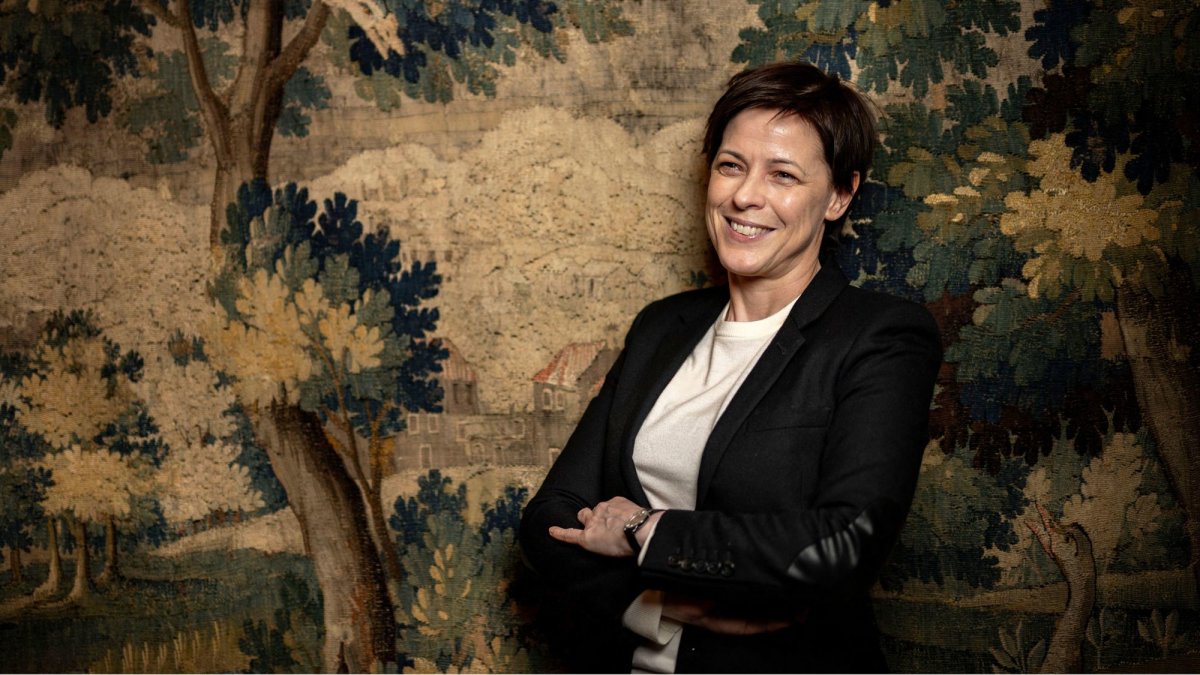

(TT News Agency/Alamy)

7 min read
A chance encounter with a wild hare changed Chloe Dalton’s life and inspired her to champion the campaign to give the species greater legal protection. Zoe Crowther speaks to the author and former political adviser about why a close hunting season for hares is long overdue
When former political adviser Chloe Dalton found a baby hare – a leveret – a few hundred metres from her home in 2021, she had no idea it would change her life and career forever.
Chronicled in her 2024 best-selling debut book, Raising Hare, Dalton hand-raised the tiny leveret in her home, but gave it the freedom to come and go as it pleased as it grew. She lived alongside the hare for years, changed her own habits to fit with its nocturnal cycle, and eventually watched it raise its own young in her presence, all while keeping the wild creature at enough of a distance so it did not lose its natural instincts.
“I’ve come to think [hares] are almost emblematic of something about the character and nature of our country, our society and our particular landscape,” Dalton tells The House.
“So, just by virtue of being small and therefore considered insignificant, they’ve been overlooked, and really they have all the mystery, wonder, and interest that you’d find in any large charismatic animal.”
While Dalton had left a political career behind, politics never truly left her. The hare she raised left a huge impression on her life, so she turned her attention to the challenges faced by the species and has since used her platform to campaign on its behalf.
“Paradoxically, given the historic bloodlust towards hares, many of the most thoughtful and moving accounts of hares that I found were written by hunters, who appeared mesmerised by their strength, subtlety and craftiness of the animal and its ability to escape the jaws of death,” Dalton wrote in Raising Hare.
Yet many hares do not manage to escape the threat posed to them by humans.
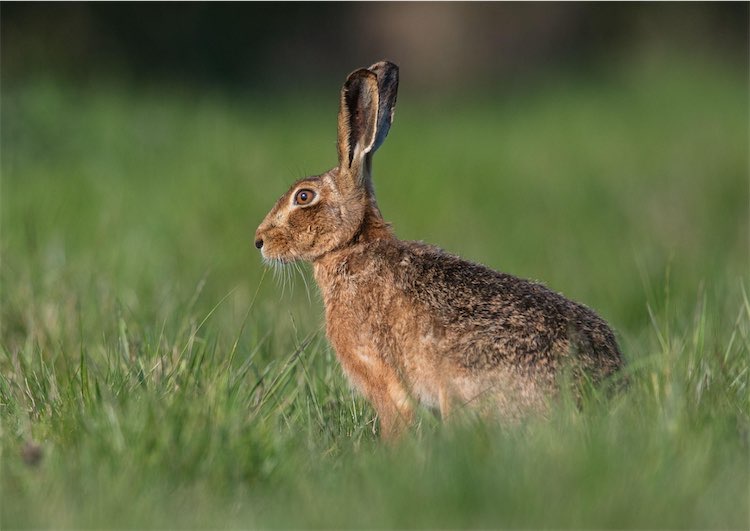
Brown hare populations in England and Wales have declined by 80 per cent over the past century due to intensive farming, habitat loss and hunting. Each year, approximately 200,000 hares are killed in organised commercial shoots, spanning across the hares’ breeding season between February and September. In this period, tens of thousands of pregnant hares are shot, and leverets are left orphaned, therefore starving to death.
“The more I saw that there was this missing piece of legislation, the more I thought I would like to do something about this if I can,” Dalton tells The House.
In the two years since her book was published, Dalton has run dozens of events around the country and promoted a petition calling for a close season for hare hunting that received more than 50,000 signatures. The government responded to the petition last year, affirming its commitment to introduce one, but said it requires a suitable primary legislative vehicle to do so. The government has since introduced the Animal Welfare Strategy in December 2025, setting this intention out, but the law remains unchanged. The government is still considering which legislative vehicle to use.
In June, Labour peer Baroness Hayman of Ullock told the House of Lords she has a “cunning plan” to help get the legislation through.
“I’m very happy to take her at face value and hope that there’s a cunning plan,” Dalton says, but adds that the “onus is very much on the government” after having made “repeated commitments”.
“I would like to be a gently critical but positive and encouraging voice from outside government, along with the many people who have joined our campaign,” she continues.
“If I were to see signs that they were dragging their feet, I would be asking all the people who’ve supported us so far to get noisy again, and I’m sure they’d be ready to do that.
“Hares will be born in this coming breeding season that will yet again lack this protection unless the government moves fast. If your responsibility within government includes the custodianship of British wildlife and British nature, that’s a clock ticking, and I hope they would take that seriously.”
We need the political will to be ratcheted up a few notches
Polling by More in Common in March 2025 found that 66 per cent of the public support a close season for hares, while only six per cent oppose it. Scotland introduced a close season for brown hares under the Wildlife and Natural Environment (Scotland) Act 2011, and the Welsh government is currently running a four-week public consultation on whether to include a close season on hare hunting in its forthcoming Wild Animal Welfare (Wales) Bill.
So, why is it taking England so long to catch up?
“Hares have been traditionally regarded as a pest, and we’ve not shifted that perception of them and, therefore, the idea that they’re not really worthy of protection has stuck around,” Dalton says.
Ultimately, she says, hares are “not quite important enough” to ever make it onto the statute book.
“It’s very hard to get time in Parliament to bring in these kinds of measures,” she explains.
“It’s been a schedule thing, but really that is ultimately a question of political will, and therefore we need the political will and the political imagination to be ratcheted up a few notches.”
For Dalton, who worked as William Hague’s foreign policy adviser in opposition and then in the Coalition government when Hague was foreign secretary, bipartisan support for the cause will be key in finally getting it to pass.
“I’m a huge believer in the power of bipartisanship in politics, and we’ve sort of forgotten in the foreign policy space, in particular post-Brexit, what that actually looked like.”
She says she is keen for the campaign to introduce a close season for hares to not become a “political football” and continue to attract support in all corners of politics.
“There’s also support from people who shoot, people who enjoy traditional countryside sports, but who agree that it shouldn’t be common practice to shoot hares during their breeding season.
“I’ve been out [of politics] for a long time. But I was also in for a long time, so I’m not somebody who has a jaded view of Parliament and politics. I really am passionately convinced that it’s full of people who actually do want to do positive things and make a difference on issues that matter to people in our country and around the world, and so in that spirit, with absolute sincerity, I think this is really doable and it’s overdue.”
Nevertheless, she has been met with both political and personal opposition in the campaign, though she describes it as largely “quiet” in nature.
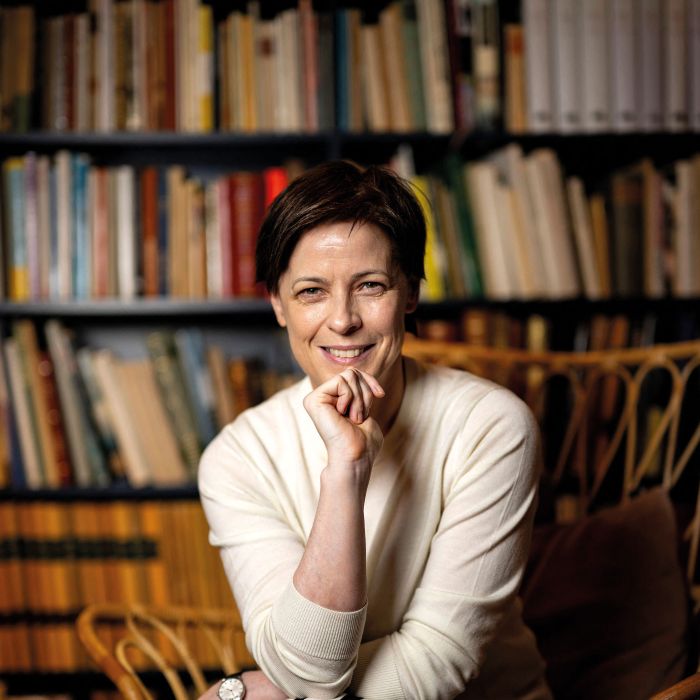
“There have been people who’ve criticised me personally,” she says. “There’s this whole question of who speaks for the countryside. I have, like many people in the country, a feeling about the British countryside that runs through my veins as much as anyone else’s, even if my career has led me to live a lot of time in the city.”
Dalton is not done with writing about the bond between animals and humans yet – she has recently released a children’s edition of Raising Hare, and is set to release a new book called Pet next year, which will explore the relationship between humans and their animal companions. Meanwhile, she keeps “one eye on what’s happening in Westminster and on our foreign policy”.
“It’s hard, if you care about those kinds of issues, not to feel like you should play a role in the future because things are going so badly in the wrong direction in so many areas for all of us,” she says.
“I don’t think I’ve completely got politics out of my system. I am someone who spent my whole career working on issues affecting humans as a result of conflict and insecurity, thinking about human rights and particularly the rights of women affected by these big geopolitical forces. So, this is a shift for me, but I’ve come to see that it’s all connected.”
>
Politics
Politics Home | Labour Believe They Can Win Back Green Voters After Holborn And St Pancras By-Election
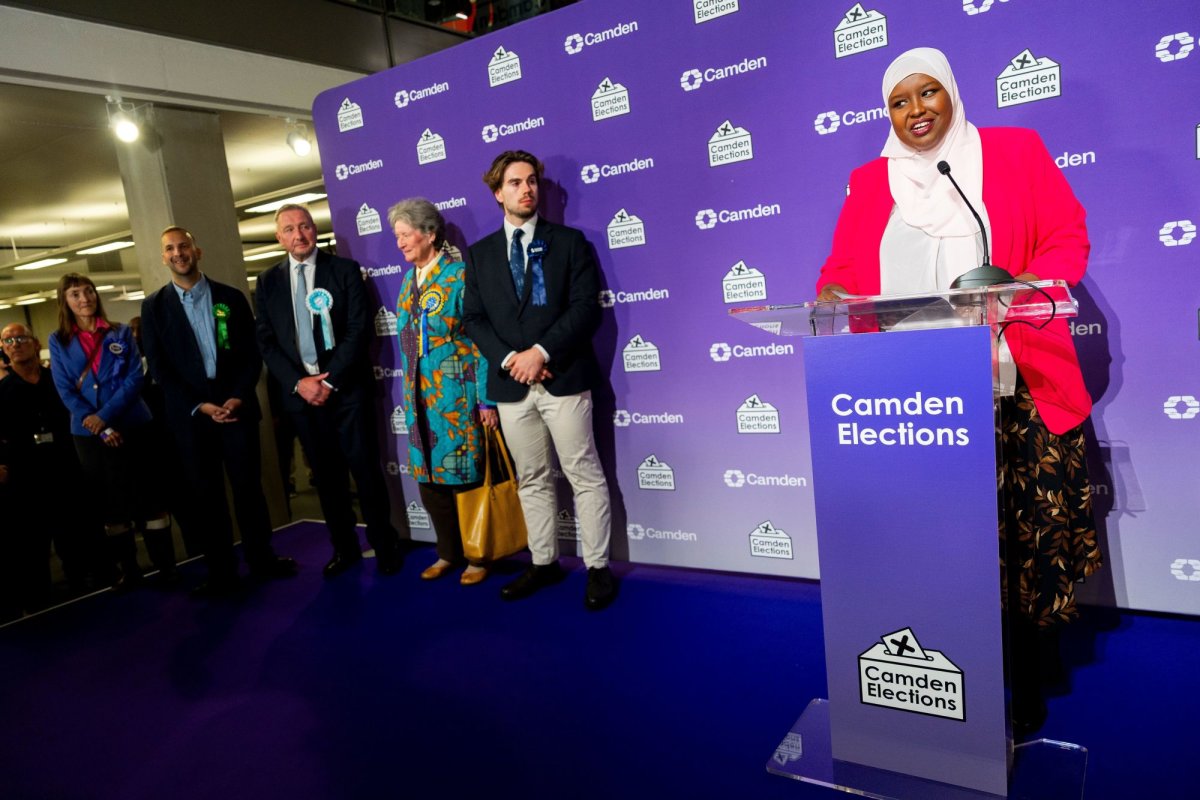
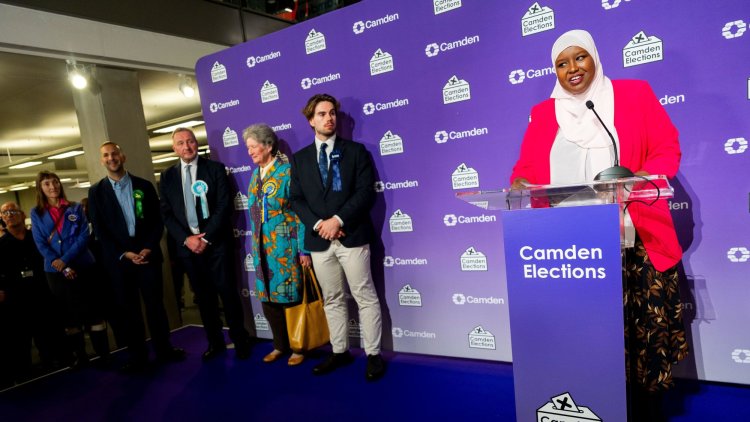
Camden Council leader Sagal Abdi-Wali won the Holborn and St Pancras by-election for the Labour Party (Alamy)
7 min read
Labour figures believe the Holborn and St Pancras by-election result has punctured the idea that Zack Polanski’s Greens are an unstoppable force on the left, but they remain cautious about how far it can be extrapolated to the rest of the country.
Labour’s victory in Holborn and St Pancras has come as a relief to a party that has spent much of the past year watching its support fragment across the political spectrum.
Sagal Abdi-Wali, Labour’s Camden council leader, won the north London seat with 12,292 votes, securing 45 per cent of the vote. Green leader Zack Polanski came second with 8,928 votes, or 33 per cent.
However, there are still reasons for Labour to be concerned: the party’s majority in the seat fell from 11,572 at the 2024 general election to 3,364, and the Greens managed to more than triple their vote share.
The result is therefore a mixed one for both parties. Labour has held an incumbent seat while serving in government, where a Green victory would have represented a significant symbolic breakthrough. However, Green figures insist the seat was never a top target seat to start with, with many anticipating a loss before the votes were counted.
Morale boost for London Labour
For Labour MPs in London, the immediate significance of the result is how it will impact the psychology of voters and activists.
PoliticsHome understands that some London Labour MPs are emailing members to encourage them that now is the best time to get involved in the party, buoyed by the notion that the result has challenged the perception among progressive voters that it is embarrassing to vote Labour in the capital.
One London Labour MP described the result as a “boost” for the party, after the Greens’ victory in the Gorton and Denton by-election and their strong performance in May’s local elections helped create the impression that Polanski’s party was becoming a viable alternative across the country.
“If we want to win these seats again, we need to have people who voted Green in May voting Labour in the next general election, and that is still TBD, but this is a really good sign,” the MP said.
There is, however, considerable caution alongside the optimism. MPs and activists recognise that a by-election in a safe Labour seat cannot simply be extrapolated into a national recovery, especially when it does not resolve the wider problem of voters abandoning Labour for other parties, including Reform.
More in Common external affairs manager Louis O’Geran said Labour had performed well in the context of by-elections, which are usually punishing for incumbents and governing parties, but cautioned against reading too much into the result.
O’Geran argued that winning back Green and independent voters in London was only “half the story” for Labour. “What we’ve seen is him [Burnham] not making enough progress, winning back right defectors.”
Labour MP for Middlesbrough Andy McDonald said that despite representing a seat where Reform came second in 2024, he feels that Labour’s success in the by-election result “applies across the country, whether it’s Greens in the ascendancy or Reform”.
“There has been a response to Andy arriving and just setting out that message of not just hope but ambition as well,” he said.
“That has really resonated across all the constituencies, and I’d like to think that’s reflected in the changing polls in my own seat as well.”
He described a “bullishness” in Labour ranks, tempered by “realism” that the economic consequences of international conflicts remained a major challenge for the government.
How did Labour win?
In Holborn and St Pancras, Labour sources credited the party’s ground campaign with delivering the win, pointing to a strong activist operation and conversations with historic Labour voters who said they were happy to vote for the party again.
Labour MP for Croydon East Natasha Irons, who served as an aide in the campaign, argued that it successfully combined a national message with a candidate rooted in the constituency.
“It has shown that the future of progressive politics sits with the Labour Party, and it always has,” she told PoliticsHome.
Irons added that “uncertainty about Zack Polanski’s Green Party” had come through on the doorstep.
Labour MP for Streatham and Croydon North and former Cabinet minister Steve Reed described the mood among Labour activists as “very calm”, with most expecting the party to win – a contrast with the “manic” atmosphere surrounding the closer Gorton and Denton contest.
“If Polanski stays, then the Greens don’t have a future,” he said.
“They’ve peaked and they’re sliding backwards because the public have seen what the Greens have become and they don’t like it one bit.”
Why did the Greens lose?
While the Greens fell short of victory, their 33 per cent vote share represents a substantial advance in one of Labour’s safest seats.
Former Green leader Baroness Natalie Bennett acknowledged the result was disappointing, but said the party remained within reach of Labour.
“This is one of Labour’s safer seats,” she told PoliticsHome.
“Their vote, you know, just if you look at the graph, just keeps going down. We’re certainly within striking distance of them in that seat next time. But it certainly won’t be our top target by any means.”
However, at the 2024 general election, pro-Gaza independent candidate Andrew Feinstein won 18.9 per cent of the vote in the seat, splitting the anti-Labour left. Feinstein backed Polanski this time around. Combining Feinstein’s previous share with the Greens’ latest performance suggests the wider vote on the left has increased by only around three and a half percentage points since 2024. The swing to the Greens was also less than half the 13 per cent recorded in the Gorton and Denton by-election.
For Russell Warfield, Polanski’s biographer and close ally, the result should not be interpreted as evidence that the party has run out of road.
“If you zoom out from this ‘this is the end of Polanski psychodrama’ kind of framing of the by-election, what it shows is that even in a really bad week for the Greens, and at the height of Burnham’s popularity… they can still get the sort of swings that would get them dozens of seats in the next general election,” he told PoliticsHome.
“In that regard, we’re where we expected to be. It’s a strong position for the Greens to be in.”
Warfield argued that the party had not necessarily lost momentum so much as reached a plateau.
He described the low turnout as one of the most damaging aspects of the campaign for the Greens.
“The ability to motivate your vote was the route to victory here,” he said.
“So that is obviously disappointing for the Greens.”
The Greens also faced questions over the political consequences of their conference motion declaring Zionism to be racism. Former leader Caroline Lucas had previously described the motion as “dangerous” and “divisive”, criticising Polanski’s leadership. After the result, she said that “tripling our vote share was huge”, while urging him to address internal problems.
Green activists acknowledged the motion might have had some impact, although the short period between its passage and polling day made it difficult to assess its overall significance.
Former party co-leader Jonathan Bartley told PoliticsHome the by-election result would “demand some serious soul searching”, warning of a “toxicity of the Green party brand”.
Impact of tactical voting
Tactical voting may also have helped Labour. O’Geran pointed to the Liberal Democrats being squeezed since the local elections, with some voters apparently switching to Labour to keep the Greens out.
“From our conversations in Holborn and St Pancras, there is this sense of real risk aversion from a lot of people around Zack Polanski,” O’Geran said.
“Just this sense that he’s potentially dangerous and divisive.”
A person close to the Lib Dem campaign told PoliticsHome prior to the by-election that the conference motion could encourage voters to back Abdi-Wali instead of the Lib Dems in order to keep Polanski out of Parliament.
A Green Party spokesperson insisted the party remained “here to stay and just getting started”, arguing that voters had sent Labour a message demanding rent controls, action on privatised water and justice for Palestinians.
>
Politics
Holburn And St Pancras By-Election Result Boosts Labour Morale For Winning Green Voters Back
Camden Council leader Sagal Abdi-Wali won the Holborn and St Pancras by-election for the Labour Party (Alamy)
7 min read
Labour figures believe the Holborn and St Pancras by-election result has punctured the idea that Zack Polanski’s Greens are an unstoppable force on the left, but they remain cautious about how far it can be extrapolated to the rest of the country.
Labour’s victory in Holborn and St Pancras has come as a relief to a party that has spent much of the past year watching its support fragment across the political spectrum.
Sagal Abdi-Wali, Labour’s Camden council leader, won the north London seat with 12,292 votes, securing 45 per cent of the vote. Green leader Zack Polanski came second with 8,928 votes, or 33 per cent.
However, there are still reasons for Labour to be concerned: the party’s majority in the seat fell from 11,572 at the 2024 general election to 3,364, and the Greens managed to more than triple their vote share.
The result is therefore a mixed one for both parties. Labour has held an incumbent seat while serving in government, where a Green victory would have represented a significant symbolic breakthrough. However, Green figures insist the seat was never a top target seat to start with, with many anticipating a loss before the votes were counted.
Morale boost for London Labour
For Labour MPs in London, the immediate significance of the result is how it will impact the psychology of voters and activists.
PoliticsHome understands that some London Labour MPs are emailing members to encourage them that now is the best time to get involved in the party, buoyed by the notion that the result has challenged the perception among progressive voters that it is embarrassing to vote Labour in the capital.
One London Labour MP described the result as a “boost” for the party, after the Greens’ victory in the Gorton and Denton by-election and their strong performance in May’s local elections helped create the impression that Polanski’s party was becoming a viable alternative across the country.
“If we want to win these seats again, we need to have people who voted Green in May voting Labour in the next general election, and that is still TBD, but this is a really good sign,” the MP said.
There is, however, considerable caution alongside the optimism. MPs and activists recognise that a by-election in a safe Labour seat cannot simply be extrapolated into a national recovery, especially when it does not resolve the wider problem of voters abandoning Labour for other parties, including Reform.
More in Common external affairs manager Louis O’Geran said Labour had performed well in the context of by-elections, which are usually punishing for incumbents and governing parties, but cautioned against reading too much into the result.
O’Geran argued that winning back Green and independent voters in London was only “half the story” for Labour. “What we’ve seen is him [Burnham] not making enough progress, winning back right defectors.”
Labour MP for Middlesbrough Andy McDonald said that despite representing a seat where Reform came second in 2024, he feels that Labour’s success in the by-election result “applies across the country, whether it’s Greens in the ascendancy or Reform.”
“There has been a response to Andy arriving and just setting out that message of not just hope but ambition as well. That has really resonated across all the constituencies, and I’d like to think that’s reflected in the changing polls in my own seat as well.”
He described a “bullishness” in Labour ranks, tempered by “realism” that the economic consequences of international conflicts remained a major challenge for the government.
How did Labour win?
In Holborn and St Pancras, Labour sources credited the party’s ground campaign with delivering the win, pointing to a strong activist operation and conversations with historic Labour voters who said they were happy to vote for the party again.
Labour MP for Croydon East Natasha Irons, who served as an aide in the campaign, argued that it successfully combined a national message with a candidate rooted in the constituency.
“It has shown that the future of progressive politics sits with the Labour Party, and it always has,” she told PoliticsHome.
Irons added that “uncertainty about Zack Polanski’s Green Party” had come through on the doorstep.
Labour MP for Streatham and Croydon North and former Cabinet minister Steve Reed described the mood among Labour activists as “very calm”, with most expecting the party to win – a contrast with the “manic” atmosphere surrounding the closer Gorton and Denton contest.
“If Polanski stays, then the Greens don’t have a future,” he said.
“They’ve peaked and they’re sliding backwards because the public have seen what the Greens have become and they don’t like it one bit.”
Why did the Greens lose?
While the Greens fell short of victory, their 33 per cent vote share represents a substantial advance in one of Labour’s safest seats.
Former Green leader Baroness Natalie Bennett acknowledged the result was disappointing, but said the party remained within reach of Labour.
“This is one of Labour’s safer seats,” she told PoliticsHome.
“Their vote, you know, just if you look at the graph, just keeps going down. We’re certainly within striking distance of them in that seat next time. But it certainly won’t be our top target by any means.”
However, at the 2024 general election, pro-Gaza independent candidate Andrew Feinstein won 18.9 per cent of the vote in the seat, splitting the anti-Labour left. Feinstein backed Polanski this time around. Combining Feinstein’s previous share with the Greens’ latest performance suggests the wider vote on the left has increased by only around three and a half percentage points since 2024. The swing to the Greens was also less than half the 13 per cent recorded in the Gorton and Denton by-election.
For Russell Warfield, Polanski’s biographer and close ally, the result should not be interpreted as evidence that the party has run out of road.
“If you zoom out from this ‘this is the end of Polanski psychodrama’ kind of framing of the by-election, what it shows is that even in a really bad week for the Greens, and at the height of Burnham’s popularity… they can still get the sort of swings that would get them dozens of seats in the next general election,” he told PoliticsHome.
“In that regard, we’re where we expected to be. It’s a strong position for the Greens to be in.”
Warfield argued that the party had not necessarily lost momentum so much as reached a plateau.
He described the low turnout as one of the most damaging aspects of the campaign for the Greens.
“The ability to motivate your vote was the route to victory here,” he said.
“So that is obviously disappointing for the Greens.”
The Greens also faced questions over the political consequences of their conference motion declaring Zionism to be racism. Former leader Caroline Lucas had previously described the motion as “dangerous” and “divisive”, criticising Polanski’s leadership. After the result, she said that “tripling our vote share was huge”, while urging him to address internal problems.
Green activists acknowledged the motion might have had some impact, although the short period between its passage and polling day made it difficult to assess its overall significance.
Former party co-leader Jonathan Bartley told PoliticsHome the by-election result would “demand some serious soul searching”, warning of a “toxicity of the Green party brand”.
Impact of tactical voting
Tactical voting may also have helped Labour. O’Geran pointed to the Liberal Democrats being squeezed since the local elections, with some voters apparently switching to Labour to keep the Greens out.
“From our conversations in Holborn and St Pancras, there is this sense of real risk aversion from a lot of people around Zack Polanski,” O’Geran said.
“Just this sense that he’s potentially dangerous and divisive.”
A person close to the Lib Dem campaign told PoliticsHome prior to the by-election that the conference motion could encourage voters to back Abdi-Wali instead of the Lib Dems in order to keep Polanski out of Parliament.
A Green Party spokesperson insisted the party remained “here to stay and just getting started”, arguing that voters had sent Labour a message demanding rent controls, action on privatised water and justice for Palestinians.
>

Giro di Lombardia: Competitor safety protest delays start of UCI World Tour race
How to watch Villarreal vs. Real Madrid in the U.S.: TV channel and streaming options for October 10

Léa Seydoux, Marie Kreutzer On The “Earthquake” Of ‘Gentle Monster’
-

 movies5 months ago
Search For Canadian TV Actor Stewart McLean Now Homicide Investigation
-

 Fashion9 years ago
These ’90s fashion trends are making a comeback in 2017
-
Fashion9 years ago
According to Dior Couture, this taboo fashion accessory is back
-
Fashion9 years ago
Model Jocelyn Chew’s Instagram is the best vacation you’ve ever had
-
Fashion9 years ago
Emily Ratajkowski channels back-to-school style
-
Fashion9 years ago
9 Celebrities who have spoken out about being photoshopped
-

 Anime4 months ago
Rurouni Kenshin: Hokkaido Arc Manga Takes 1-Issue Break – News
-

 Anime3 months ago
HIDIVE to Stream English Dubs for The World Is Dancing, The Forsaken Saintess and Her Foodie Roadtrip in Another World, The Dangers in My Heart: The Movie Anime – News